- Product Description Description
- Table of Contents TOC
- List of Table & Figure LOT
- Get Free Sample PDF Sample PDF
Market Size, 2025
$0.36 BnMarket Estimate, 2026
$0.38 BnMarket Forecast, 2034
$0.52 BnCAGR, 2026–2034
4.18%Executive Summary: Middle East and Africa Agricultural Disinfectants Market
- Market Scope: Comprehensive Middle East and Africa agricultural disinfectants market analysis covering high-value horticulture intensification, integrated pest management strategies, liquid formulation compatibility with micro-irrigation, and RNA interference technologies.
- Market Valuation: Valued at USD 381.01 million (2025), estimated at USD 397.39 million (2026), and projected to reach USD 556.54 million by 2034, registering a steady CAGR of 4.3% (2026–2034).
- Primary Growth Drivers: High-value horticulture intensification in Southern/Eastern Europe and MEA ecosystems, integrated pest management alignment, liquid formulations favoring micro-irrigation, and RNA interference innovations. Key challenges include stringent regulatory chemical restrictions, resistance development, and rapid diagnostic tool shortages.
Key Market Segment Metrics (2026–2034)
| Category | Leading Segment (Position) | Fastest-Growing Segment |
|---|---|---|
| By Segment, Formulation & Region | Agricultural segment (dominated the market) & Spain (top regional performer accounting for 22.5% share in 2025) | Agricultural segment (estimated fastest CAGR of 10.8% due to horticulture intensification) & Liquid formulations segment (anticipated fastest CAGR of 11.3% propelled by water-soluble bio-nematicides and micro-irrigation) |
| By Regional Leadership | Spain (22.5% share in 2025 supported by extensive vegetable cultivation and advanced Mediterranean irrigation infrastructure) | Broader Middle East and Africa agricultural zones adopting high-value greenhouse and horticulture practices |
Major Market Players & Market Structure
Market Structure: Highly competitive global agricultural chemical and biotechnology landscape featuring major enterprise leaders driving RNA interference research, digital advisory tools, and holistic nematode management systems.
Key Companies: BASF SE, Bayer CropScience AG, The Dow Chemical Company, E.I. Du Pont De Nemours and Company, Monsanto Company, Syngenta AG, FMC Corporation, Adama Agricultural Solutions Ltd., Ishihara Sangyo Kaisha Ltd., and Valent Corporation.
 Download Free Sample Report
Middle East and Africa Agricultural Disinfectants Market Size
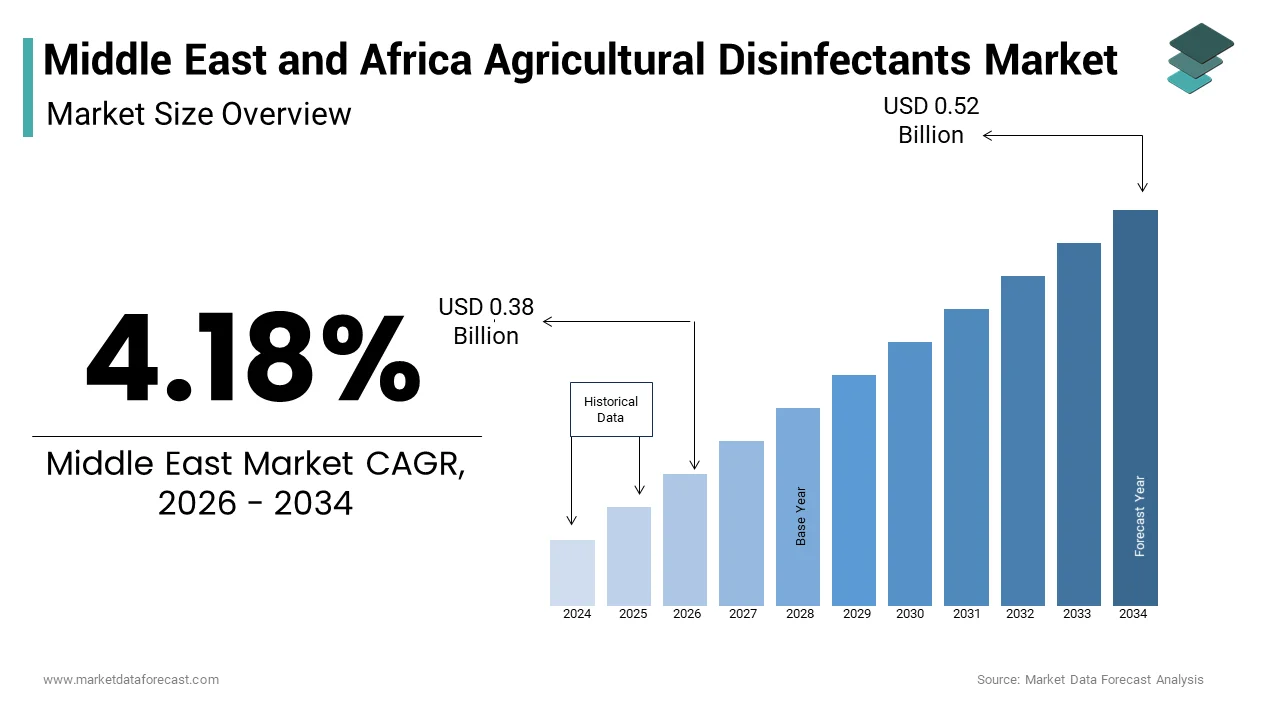
The Middle East and Africa agricultural disinfectants market size was valued at USD 0.36 billion in 2025 and is anticipated to reach USD 0.38 billion in 2026 to reach USD 0.52 billion by 2034, growing at a CAGR of 4.18% from 2026 to 2034.
Introduction to the Middle East and Africa Agricultural Disinfectants Market
The agricultural disinfectants are specialized agrochemicals designed to eliminate pathogens, bacteria, and viruses from farming environments, including livestock facilities, irrigation systems, and crop storage units. These sanitizing agents are for maintaining biosecurity and ensuring the safety of food supply chains across regions characterized by diverse climatic conditions and varying levels of agricultural industrialization. According to the Food and Agriculture Organization of the United Nations, the Middle East and North Africa region imports approximately 50% of its food consumption, which underscores the critical importance of protecting domestic agricultural output through rigorous sanitation protocols. Furthermore, agriculture contributes roughly 14% to the gross domestic product of Sub-Saharan Africa, highlighting the sector's economic significance and the consequent demand for effective disease management solutions. The increasing prevalence of zoonotic diseases and the rising consumer awareness regarding food safety standards have further propelled the adoption of advanced disinfection technologies. Governments across the region are increasingly implementing stricter hygiene regulations for agricultural exports, thereby creating a conducive environment for the proliferation of high quality agricultural disinfectants that meet international compliance standards.
MARKET DRIVERS
Rising Prevalence of Livestock Diseases Drives Demand for Biosecurity Solutions
The escalating incidence of infectious diseases among livestock populations is fuelling the growth iof the Middle East and Africa agricultural disinfectants market. Foot and mouth disease, avian influenza, and African swine fever pose significant threats to animal health and agricultural productivity, necessitating robust sanitation measures. This substantial financial burden compels stakeholders to invest in preventive healthcare strategies, with disinfection being a cornerstone of biosecurity protocols. In the Middle East, the demand for meat and dairy products continues to rise due to population growth and changing dietary preferences, leading to intensified livestock farming practices. As per the Gulf Cooperation Council agricultural statistics, the region's poultry production has increased by 15% over the past five years by creating denser farming environments that are more susceptible to rapid disease transmission. Consequently, farmers and agricultural corporations are prioritizing the use of broad-spectrum disinfectants to sanitize housing units, feeding equipment, and transportation vehicles. The implementation of strict quarantine measures during disease outbreaks further amplifies the requirement for effective sanitizing agents to prevent cross contamination. This heightened focus on animal welfare and disease prevention ensures a steady and growing demand for reliable agricultural disinfectants across the region.
Expansion of Commercial Farming and Export Oriented Agriculture Increases Sanitation Needs
The transition from subsistence farming to large scale commercial agriculture is significantly driving the growth of the Middle East and Africa agricultural disinfectants market. As nations strive to enhance food security and boost non oil exports, there is a marked increase in the establishment of modern farming facilities that adhere to international quality standards. The agribusiness investments in Africa have grown annually, with a particular focus on horticulture and floriculture sectors that require stringent hygiene controls to meet European Union import regulations. These export oriented crops are highly sensitive to microbial contamination, making the use of disinfectants essential for maintaining product integrity and shelf life. In the Middle East, countries like Saudi Arabia and the United Arab Emirates are investing heavily in controlled environment agriculture and hydroponics to reduce reliance on food imports. As per the research, the kingdom aims to increase its self sufficiency in key agricultural products by 30% by 2030, which involves the deployment of advanced farming technologies including automated disinfection systems. The need to comply with global Good Agricultural Practices certifications further mandates the regular use of approved sanitizing agents. This shift towards professionalized and regulated farming operations creates a sustained demand for high efficacy disinfectants that ensure compliance with international trade standards and protect brand reputation in competitive world.
MARKET RESTRAINTS
Limited Awareness and Technical Knowledge Among Smallholder Farmers Restrains Market Growth
The limited awareness and technical knowledge among smallholder farmers regarding proper sanitation practices is hindering the growth of the Middle East and Africa agricultural disinfectants market. The majority of agricultural production in Sub Saharan Africa is carried out by small scale farmers who often lack access to extension services and educational resources on biosecurity. This knowledge gap leads to underutilization of sanitizing products or improper application methods that reduce their effectiveness. In rural areas of the Middle East and Africa, traditional farming methods often prevail, where the use of chemical inputs is viewed with awareness or considered too costly relative to perceived benefits. As per the study, only 35% of smallholder farmers in Africa have access to formal agricultural training, which limits their ability to adopt modern hygiene protocols. Additionally, the complexity of selecting appropriate disinfectants for specific pathogens and surfaces can be overwhelming for farmers without technical support. This lack of expertise results in inconsistent usage patterns and missed opportunities for disease prevention.
High Cost of Advanced Disinfectants and Economic Volatility Impede Adoption
The high cost of advanced agricultural disinfectants coupled with economic volatility in several Middle East and African nations is also inhibiting the growth of the Middel East and Africa agricultural disinfectants market. Many effective disinfecting agents involve sophisticated chemical formulations or biological components that command premium prices, making them less accessible to price sensitive farmers. According to the research, inflation rates in several African countries exceeded 10% in recent years by eroding the purchasing power of agricultural producers and forcing them to prioritize essential inputs like seeds and fertilizers over sanitation products. In the Middle East, currency fluctuations and subsidy reductions in certain nations have increased the operational costs for farmers, leading to cutbacks in non-essential expenditures. As per the International Monetary Fund, economic growth in some parts of the region has been sluggish, limiting the availability of credit and financial resources for agricultural investments. Small and medium sized farms often operate on thin margins and are reluctant to incur additional expenses for disinfectants unless mandated by law or contract. The lack of affordable financing options further exacerbates this issue, preventing farmers from stocking adequate supplies of sanitizing agents. Moreover, the presence of cheaper but less effective alternatives in the informal market diverts demand away from high quality branded products.
MARKET OPPORTUNITIES
Growing Adoption of Organic Farming Creates Demand for Eco Friendly Disinfectants
The rising trend of organic farming that is eco friendly and biodegradable disinfectants is solely ascribed to create new opportunities for the growth of the Middle East and Africa agricultural disinfectants market. Consumers in both regional and international areas are increasingly demanding organic produce that is free from synthetic chemical residues, prompting farmers to seek natural sanitizing alternatives. The area under organic cultivation in Africa has grown by 12% annually, driven by export opportunities to Europe and North America where organic premiums are substantial. In the Middle East, countries like Morocco and Egypt are emerging as key suppliers of organic fruits and vegetables, necessitating the use of certified organic disinfectants that comply with strict regulatory standards. The number of certified organic farms in Egypt has doubled in the last five years, creating a robust demand for permissible sanitation products. Manufacturers that develop disinfectants based on natural ingredients such as essential oils, enzymes, and beneficial microbes can capitalize on this niche segment. These bio based solutions offer effective pathogen control without leaving harmful residues, aligning with the principles of sustainable agriculture. Furthermore, government initiatives promoting sustainable farming practices provide additional incentives for the adoption of green disinfection technologies.
Technological Advancements in Smart Disinfection Systems Offer New Avenues for Growth
The integration of digital technologies and automation in agriculture for the development and deployment of smart disinfection systems is also to elevate the growth of the Middle East and Africa agricultural disinfectants market. Precision farming techniques are gaining traction as farmers seek to optimize resource use and improve operational efficiency. According to the study, mobile penetration in Sub Saharan Africa has reached 46%, facilitating the adoption of digital agricultural solutions including remote monitoring and automated control systems. Smart disinfection devices equipped with sensors and internet of things connectivity can monitor hygiene levels in real time and dispense disinfectants precisely when needed, reducing waste and ensuring consistent protection. In the Middle East, large scale agribusinesses are investing in smart greenhouse technologies that integrate automated sanitation cycles to maintain optimal growing conditions. The adoption of smart agriculture technologies is expected to increase water and resource efficiency, which includes efficient use of cleaning and disinfection inputs. These advanced systems not only enhance biosecurity but also provide valuable data analytics that help farmers make informed decisions about hygiene management. Manufacturers collaborating with technology providers to create integrated disinfection solutions can tap into this growing segment of tech savvy farmers who prioritize precision and sustainability in their operations.
MARKET CHALLENGES
Inconsistent Regulatory Frameworks Across Countries Pose Compliance Challenges
The inconsistency of regulatory frameworks across different countries is significant challenge for the growth of the Middle East and Africa agricultural disinfectants market. Each nation has its own set of guidelines regarding the registration, approval, and usage of agricultural chemicals, creating a complex landscape for manufacturers and distributors. The harmonization of agricultural policies remains a work in progress, with significant variations in safety standards and labeling requirements between member states. This lack of uniformity increases the cost and time required for product registration, discouraging international players from entering smaller areas. In the Middle East, while Gulf Cooperation Council countries have made strides in aligning their regulations, differences still exist in permissible active ingredients and maximum residue limits. As per the World Health Organization, inconsistent enforcement of safety standards can lead to the circulation of substandard or counterfeit disinfectants, undermining consumer trust and posing health risks. Manufacturers must navigate these disparate regulatory environments by conducting separate trials and submissions for each country, which strains resources particularly for small and medium enterprises. The absence of a unified regional regulatory body means that compliance strategies must be tailored to each local jurisdiction, adding layers of administrative complexity.
Supply Chain Disruptions and Infrastructure Deficits Hinder Product Availability
The supply chain disruptions and inadequate infrastructure consistent availability is also to pose as a challenge for the growth of the Middle East and Africa agricultural disinfectants market. Many rural areas lack reliable transportation networks and storage facilities, leading to delays in product delivery and potential degradation of sensitive chemical formulations. In regions with extreme temperatures, the lack of climate-controlled storage can compromise the efficacy of disinfecting agents before they reach the end user. Political instability and conflict in certain parts of the Middle East and Africa further exacerbate supply chain vulnerabilities by causing intermittent shortages and price spikes. As per the study, logistical hurdles at ports and border crossings add significant lead times to the distribution process by making it difficult for farmers to plan their sanitation schedules effectively. Additionally, the reliance on imported raw materials for disinfectant production exposes the market to global supply shocks and currency fluctuations. Addressing these infrastructural gaps requires substantial investment in transportation networks and warehousing capabilities, which remains a long term challenge for the region.
REPORT COVERAGE
| REPORT METRIC | DETAILS |
| Market Size Available | 2025 to 2034 |
| Base Year | 2025 |
| Forecast Period | 2026 to 2034 |
| CAGR | 4.18% |
| Segments Covered | By Type, Application Area, Form, End-User, and Region. |
| Various Analyses Covered | Global, Regional & Country Level Analysis, Segment-Level Analysis, DROC, PESTLE Analysis, Porter’s Five Forces Analysis, Competitive Landscape, Analyst Overview on Investment Opportunities |
| Regions Covered | KSA, UAE, Israel, rest of GCC countries, South Africa, Ethiopia, Kenya, Egypt, Sudan, rest of MEA |
| Market Leaders Profiled | Chemours Company, Zoetis, Nufarm Limited, The Dow Chemical Company, Neogen Corporation, Stepan Company, Thymox Technology, FINK TEC GmbH, Quat-Chem Ltd., and Entaco NV. |
SEGMENTAL ANALYSIS
By Type Insights
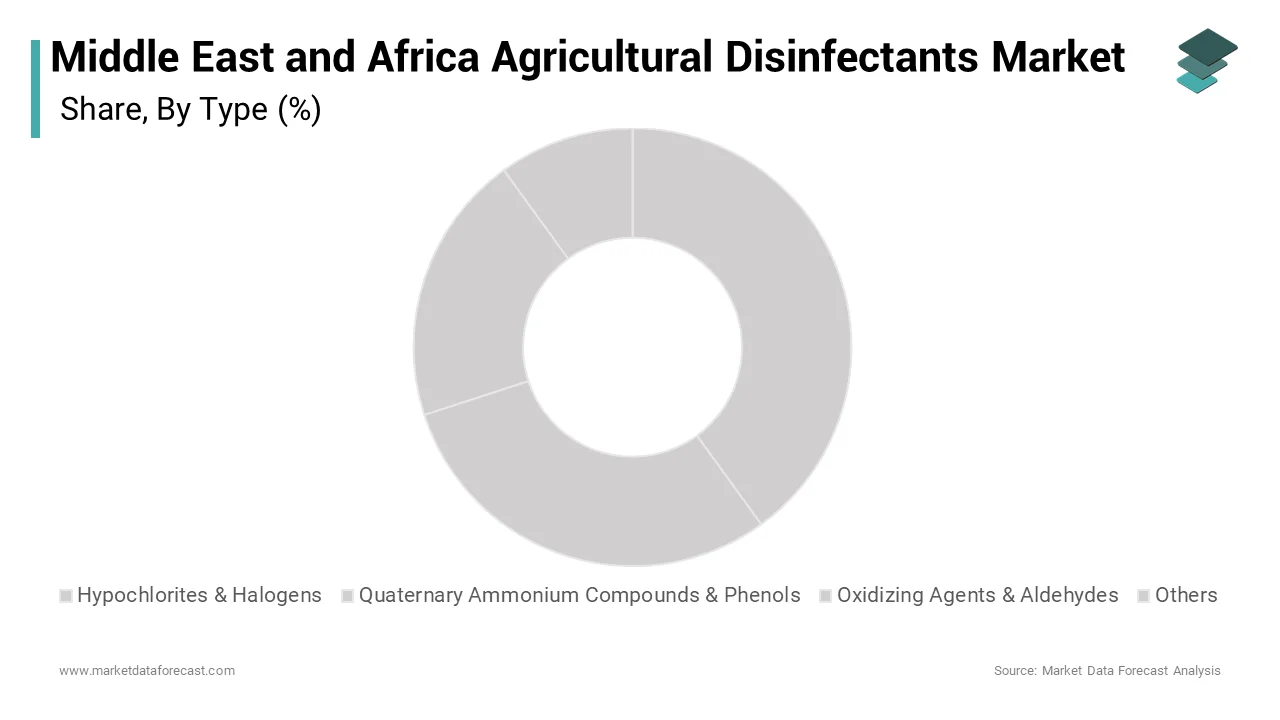
The oxidizing agents and aldehydes segment was accounted in holding 44.3% of the Middle East and Africa agricultural disinfectants market share in 2025 due to their broad spectrum efficacy and cost effectiveness. These chemicals are widely used for sanitizing livestock facilities and processing equipment because they effectively destroy bacterial spores and viruses. According to the study, the use of glutaraldehyde and hydrogen peroxide-based formulations has increased by 18% in commercial poultry farms across the Gulf Cooperation Council region to combat avian influenza outbreaks. The urgent need for high level disinfection in intensive farming operations, where disease transmission risks are elevated is also boosting the growth of the segment. Furthermore, the affordability of these chemicals makes them accessible to smallholder farmers who operate on limited budgets. The established supply chains for basic chemical inputs ensure consistent availability, reinforcing their position as the preferred choice for routine sanitation protocols in both crop and animal agriculture sectors across the region.
Fastest Growing Segment: Quaternary Ammonium Compounds and Phenols
Quaternary ammonium compounds and phenols are projected to be the fastest growing segment with a compound annual growth rate of 6.8% during the forecast period. This accelerated growth is attributed to their superior stability and lower corrosivity compared to traditional oxidizing agents, making them ideal for sensitive agricultural equipment and surfaces. The quaternary ammonium compounds exhibit persistent antimicrobial activity, which reduces the frequency of application required in large scale farming operations. In the Middle East, the expansion of hydroponic and vertical farming systems has increased the demand for non-corrosive disinfectants that do not damage irrigation infrastructure. Additionally, phenolic compounds are gaining traction in veterinary settings due to their effectiveness against enveloped viruses. The increasing awareness of biosecurity measures among commercial farmers and the regulatory push for safer chemical alternatives further propel the growth of the segment.
By Application Insights
The surface sanitizing segment was the largest by holding 40.2% of the Middle East and Africa agricultural disinfectants market share in 2025 due to the need for maintaining hygiene in livestock housing and storage facilities. The prevention of cross contamination through regular cleaning of floors, walls, and feeding troughs is essential for controlling disease outbreaks in dense farming environments. According to the study, the livestock sector accounts for 40% of the agricultural gross domestic product in many African nations, amplifying the economic imperative of protecting animal health through rigorous surface sanitation. In the Middle East, the intensification of dairy and poultry production has led to stricter hygiene protocols mandated by food safety authorities. As per the Saudi Food and Drug Authority, compliance with Good Manufacturing Practices requires documented surface disinfection routines, which drives consistent demand for industrial grade sanitizers. The prevalence of zoonotic diseases further underscores the importance of this application, as contaminated surfaces serve as primary vectors for pathogen transmission. Farmers and agribusinesses prioritize surface treatment to ensure product safety and meet export standards, thereby propelling the growth of the segment.
The water sanitizing segment is likely to foster at a fastest CAGR of 7.2% during the forecast period with the increasing focus on irrigation hygiene and livestock water quality. Contaminated water sources pose significant risks to crop health and animal productivity, necessitating effective disinfection solutions. According to the studies, approximately 30% of irrigation water in the Middle East and North Africa region contains microbial contaminants that can affect yield and soil health. The adoption of drip irrigation systems, which are prone to biofilm formation, has increased the demand for water treatment chemicals to maintain system efficiency. As per the study, the implementation of water quality standards for agricultural use has led to a 20% rise in the usage of chlorine and other disinfectants in farming communities. Furthermore, the outbreak of waterborne diseases in livestock has prompted farmers to invest in continuous water sanitization protocols. The growing scarcity of clean water resources and the need to recycle wastewater for agricultural purposes further accelerate the adoption of advanced water disinfection technologies in the region.
By Form Insights
The liquid form segment held a dominant share of the Middle East and Africa agricultural disinfectants market in 2025 due to its ease of application and rapid dissolution properties. Liquid disinfectants can be easily mixed with water for spraying or fogging by making them suitable for large scale agricultural operations. According to the survey, over 70% of agricultural chemical applications in the region utilize liquid formulations due to their compatibility with existing spraying equipment. The convenience of ready to use solutions reduces labor requirements and ensures uniform coverage across fields and livestock facilities. In the Gulf Cooperation Council countries, the prevalence of automated irrigation and misting systems favors liquid disinfectants that can be integrated into existing infrastructure without modification. As per the study, Land Reform and Rural Development, liquid formulations account for 65% of total disinfectant sales due to their versatility in treating both surfaces and water systems. The immediate availability of active ingredients in liquid form allows for quick response to disease outbreaks by reinforcing its position as the preferred choice for farmers seeking efficient and effective sanitation solutions.
The powder form segment is esteemed to register a fastest CAGR of 5.9% from 2026 to 2034 with its longer shelf life and lower transportation costs. Powdered disinfectants are highly concentrated and stable, making them ideal for storage in regions with limited infrastructure and high temperatures. According to the study, transporting concentrated powders reduces shipping volume by 40% compared to liquid equivalents, which is a significant advantage in landlocked African countries. The ability to mix powder formulations on site allows farmers to adjust concentration levels based on specific sanitation needs, enhancing cost efficiency. The adoption of powdered chlorine and lime based disinfectants has increased among smallholder farmers due to their affordability and ease of storage. Additionally, the reduced risk of leakage and spillage during transport makes powder forms safer and more reliable for remote agricultural areas.
COUNTRY LEVEL ANALYSIS
Saudi Arabia Agricultural Disinfectants Market Analysis
Saudi Arabia was the largest contributor in the Middle East and Africa agricultural disinfectants market by capturing 22.3% of the share in 2025. The kingdom’s aggressive Vision 2030 initiative aims to enhance food security and reduce reliance on imports, driving substantial investments in modern agricultural technologies. According to the research, the sector has witnessed a 20% increase in private sector participation, leading to the establishment of large scale poultry and dairy farms that require rigorous biosecurity measures. The strict regulatory framework enforced by the Saudi Food and Drug Authority mandates regular disinfection protocols by ensuring consistent demand for high quality agricultural sanitizers. Furthermore, the prevalence of extreme climatic conditions necessitates robust hygiene practices to prevent heat stress related diseases in livestock. The government’s support for sustainable farming practices and the adoption of smart agriculture technologies further bolster the market growth.
South Africa Agricultural Disinfectants Market Analysis
South Africa agricultural disinfectants market was ranked second by holding 18.3% of the share in 2025. The country’s well developed commercial farming sector, particularly in livestock and horticulture, drives the demand for advanced sanitation products. According to the study, the agricultural sector contributed 2.5% to the national gross domestic product, with exports of fruits and wine requiring strict adherence to international hygiene standards. The presence of sophisticated supply chains and regulatory bodies, such as the Department of Agriculture Land Reform and Rural Development ensures high compliance with biosecurity protocols. Outbreaks of foot and mouth disease and avian influenza have heightened awareness among farmers, leading to increased procurement of disinfectants. The number of certified export oriented farms has grown by necessitating the use of approved sanitizing agents to maintain market access. The integration of digital farming tools and the emphasis on sustainable practices further support the adoption of effective disinfection solutions.
United Arab Emirates Agricultural Disinfectants Market Analysis
The United Arab Emirates agricultural disinfectants market growth is driven by its focus on technology driven agriculture and food security initiatives. The country’s limited arable land has led to the widespread adoption of controlled environment agriculture, including hydroponics and vertical farming, which require precise hygiene management. The UAE aims to increase local food production by 30% by 2030 by stimulating investment in state of the art farming facilities, according to the study. These modern setups utilize automated disinfection systems to maintain optimal growing conditions and prevent crop diseases. The high purchasing power of consumers and the demand for premium organic produce further drive the adoption of eco-friendly disinfectants. The strict food safety regulations mandate regular sanitation of agricultural premises by ensuring a steady demand for compliant products. The government’s support for research and development in agricultural technologies fosters innovation in disinfection solutions, positioning the UAE as a leader in adopting advanced hygiene practices in the Middle East and Africa region.
Egypt Agricultural Disinfectants Market Analysis
Egypt agricultural disinfectants market growth is likely to grow with its extensive agricultural base and export oriented farming sector. The country is a leading producer of citrus fruits, vegetables, and cotton, all of which require stringent hygiene controls to meet international export standards. The agricultural sector employs with the workforce and contributes significantly to the national economy. The government’s efforts to modernize irrigation systems and improve crop yields have increased the use of water sanitizing agents to prevent microbial contamination. Outbreaks of plant diseases and the need to protect livestock from infectious agents further drive the demand for effective disinfectants. As per the research, the adoption of Good Agricultural Practices has expanded to over 50000 farms, creating a robust market for certified sanitation products. The growing awareness of food safety among local consumers and the push for higher quality exports continue to fuel the growth of the agricultural disinfectants market in Egypt.
Israel Agricultural Disinfectants Market Analysis
Israel agricultural disinfectants market growth is driven with its advanced agricultural technologies and high efficiency farming practices. The country’s expertise in drip irrigation and precision agriculture has set a benchmark for hygiene management in farming operations. The use of innovative disinfection technologies, including ozone and ultraviolet treatments, is widespread in Israeli agriculture to ensure water and surface cleanliness. The government’s strong support for agricultural research and development fosters the creation of cutting-edge sanitizing solutions. The integration of digital monitoring systems in farms has improved disease detection and response times, driving the demand for specialized disinfectants.
COMPETITIVE LANDSCAPE
The competition in the Middle East and Africa agricultural disinfectants market is characterized by the presence of both multinational corporations and regional players who strive to capture significant market share. Multinational companies leverage their extensive research capabilities and global brand recognition to introduce advanced disinfection technologies. They focus on delivering high quality products that comply with international safety standards while adapting to local climatic and regulatory conditions. Regional players compete by offering cost effective solutions and leveraging their deep understanding of local farming practices and distribution networks. The market sees intense rivalry in terms of pricing product efficacy and customer service. Companies frequently engage in strategic collaborations with government bodies and agricultural institutions to promote biosecurity awareness. Innovation remains a key differentiator as firms develop eco friendly formulations to meet rising demand for sustainable agricultural inputs. The fragmented nature of the market in certain African countries provides opportunities for niche players to establish strong local footholds.
KEY MARKET PLAYERS
Major players in the market are
- The Chemours Company
- Zoetis
- Nufarm Limited
- BASF SE
- Ecolab Inc
- Evonik Industries
- The Dow Chemical Company
- Neogen Corporation
- Stepan Company
- Thymox Technology
- FINK TEC GmbH
- Quat-Chem Ltd.
- Entaco NV.
Top Players In The Market
- Ecolab Inc maintains a strong presence in the Middle East and Africa through its comprehensive portfolio of water and hygiene solutions tailored for agricultural applications. The company focuses on providing integrated disinfection systems that help farmers manage biosecurity risks effectively. Ecolab recently expanded its technical support services in key markets such as South Africa and Saudi Arabia to assist clients with customized sanitation protocols. Their involvement includes deploying advanced monitoring technologies that ensure optimal usage of disinfectants in livestock and crop production facilities. By partnering with local distributors and investing in training programs, Ecolab strengthens its position as a trusted provider of sustainable and efficient agricultural hygiene solutions across the region.
- BASF SE contributes significantly to the market by offering high performance chemical solutions designed for diverse agricultural needs. The company emphasizes innovation in developing eco-friendly disinfectants that align with global sustainability standards. BASF has strengthened its footprint in the Middle East and Africa by collaborating with regional agricultural cooperatives to promote best practices in farm hygiene. Recent initiatives include launching specialized product lines for poultry and dairy sectors that address specific pathogen challenges. The company also invests in research and development centers within the region to create formulations suited to local climatic conditions. These efforts enable BASF to deliver reliable and effective disinfection products that support food safety and agricultural productivity.
- Evonik Industries plays a vital role by supplying specialty chemicals that enhance the efficacy of agricultural disinfectants. The company leverages its expertise in hydrogen peroxide and other oxidizing agents to provide robust sanitation solutions for intensive farming operations. Evonik has recently focused on expanding its distribution network in East Africa to reach smallholder farmers and commercial enterprises alike. Their strategic partnerships with local agrochemical manufacturers facilitate the production of cost-effective disinfecting agents. Evonik also engages in educational campaigns to raise awareness about the importance of proper hygiene management in agriculture.
Top Strategies Used By Key Market Participants
Key players in the Middle East and Africa agricultural disinfectants market primarily employ product innovation and strategic partnerships to strengthen their competitive position. Companies invest heavily in research and development to create eco friendly and highly effective formulations that meet stringent regulatory standards. Collaborating with local distributors and agricultural cooperatives allows firms to expand their reach into remote rural areas where demand is growing. Additionally, providing technical support and training programs helps build trust with farmers and ensures proper usage of disinfectants. Mergers and acquisitions are also common strategies used to consolidate market presence and access new customer bases.
MARKET SEGMENTATION
This research report on the Middle East and African agricultural disinfectants market is segmented and sub-segmented into the following categories:
By Type
- Hypochlorites & Halogens
- Quaternary Ammonium Compounds & Phenols
- Oxidizing Agents & Aldehydes
- Others
By Application Area
- Surface
- Aerial
- Water Sanitizing
By Form
- Liquid
- Powder
- Others
By End Use
- Livestock farms
- Agricultural farms
By Country
- KSA
- UAE
- IsrThe ael
- rest of the GCC countries
- South Africa
- Ethiopia
- Kenya
- Egypt
- Sudan
- rest of MEA