- Product Description Description
- Table of Contents TOC
- List of Table & Figure LOT
- Get Free Sample PDF Sample PDF
Market Size, 2025
$20.60 BnMarket Estimate, 2026
$21.19 BnMarket Forecast, 2034
$26.50 BnCAGR, 2026–2034
2.84%Executive Summary: Middle East and Africa Agrochemicals Market
- Market Scope: Comprehensive Middle East and Africa agrochemicals market analysis covering product types, application verticals, country-level leadership frameworks, and adoption metrics.
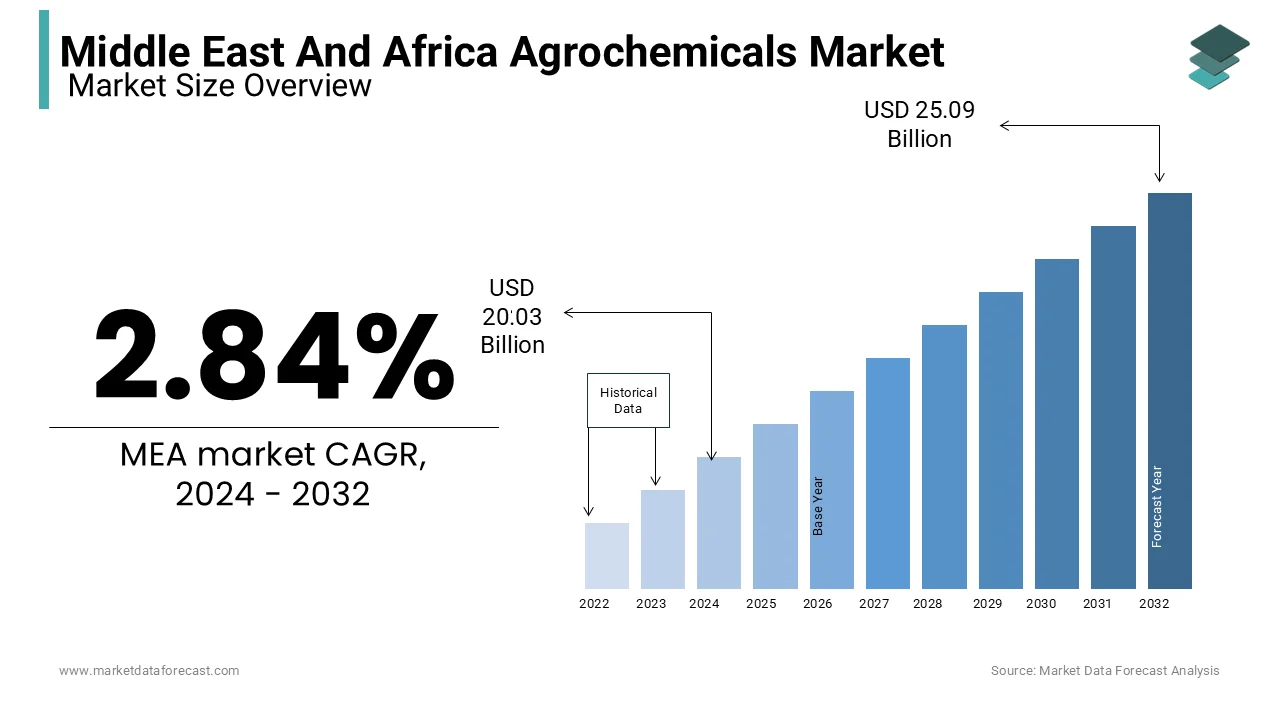
- Market Valuation: Valued at USD 20.60 billion (2025), estimated at USD 21.19 billion (2026), and projected to reach USD 26.50 billion by 2034, registering a solid CAGR of 2.84% (2026–2034).
- Primary Growth Drivers: Food security concerns, high agricultural productivity demands, climate-driven pest and disease pressures, and crop yield enhancement under challenging environments. Key challenges include limited financial access for smallholders, fragmented regulations, and water scarcity.
Key Market Segment Metrics (2026–2034)
| Category | Leading Segment (2025 Position) | Fastest-Growing Segment |
|---|---|---|
| By Type | Fertilizers and Pesticides (dominated regional consumption for soil fertility and crop protection) | Bio-based Agrochemicals and Integrated Pest Management Formulations |
| By Application | Cereals & Grains and Fruits & Vegetables (led demand across major cultivated lands) | Commercial Crops and High-Value Horticultural Produce |
| By Country | Egypt (held the largest market share at 18.5% in 2025 due to established agriculture and Nile irrigation) | South Africa, Saudi Arabia, Kenya, and Ethiopia (expanding commercial farming) |
Major Market Players & Market Structure
Market Structure: Highly competitive regional agricultural inputs landscape featuring major global life sciences and chemical corporations competing intensely on precision agriculture integration, climate-tailored formulations, sustainable crop nutrition, and local distribution networks.
Key Companies: Bayer AG, BASF SE, Syngenta Group, Corteva Agriscience, FMC Corporation, UPL Limited, ADAMA Ltd., Nufarm Limited, Yara International ASA, and Nutrien Ltd.
Middle East and Africa Agrochemicals Market Size
The Middle East and Africa agrochemicals market was valued at USD 20.60 billion in 2025 and is anticipated to reach USD 21.19 billion in 2026 from USD 26.50 billion by 2034, growing at a CAGR of 2.84% during the forecast period 2026 to 2034.
Agrochemicals (or agrichemicals) are chemical products used in agriculture to manage soil health, enhance crop production, and protect plants from pests and diseases. This market operates within a complex environmental context where arid and semiarid conditions dominate approximately 90 percent of the regional land area according to the Food and Agriculture Organization. The agricultural sector in the Middle East and North Africa (MENA) region supports over 84 million people who depend directly on farming, livestock, and fishing for their livelihoods, as per FAO farming system assessments. Within this specific sub-tier, roughly 120 million people live in rural communities. Water scarcity represents a defining characteristic with the Middle East and North Africa region holding only about 1 percent of global freshwater resources according to the International Water Management Institute. Population dynamics further shape market fundamentals with Sub Saharan Africa experiencing annual population growth rates exceeding 1.78 percent as documented by World Bank demographic data. Smallholder farmers constitute approximately 80% of all farms in Sub-Saharan Africa and contribute up to 80% of total food crops across the continent, though this figure climbs up to 90% of regional production within select domestic nations according to International Fund for Agricultural Development (IFAD) briefs. These structural factors create unique demand patterns for agrochemical solutions that address low soil fertility pest pressure and climate variability while navigating limited irrigation infrastructure and fragmented land holdings.
MARKET DRIVERS
Escalating Food Security Imperatives Drive Agrochemical Adoption
Rising population pressures, coupled with persistent food insecurity, create a compelling demand for productivity-enhancing agrochemical solutions within the Middle East and Africa agrochemicals market. Approximately 20 percent of the African population experienced undernourishment between 2019 and 2021 according to Food and Agriculture Organization statistics representing a notable increase from 16 percent in the preceding period. : This nutritional challenge intensifies pressure on agricultural systems to maximize output from existing land resources within Sub-Saharan Africa—a region encompassing a total surface area of approximately 2,456 million hectares, though actual cultivable agricultural area is limited to roughly 1,532 million hectares according to World Bank and academic regional land use data. Agrochemicals including fertilizers and crop protection products enable farmers to achieve yield improvements on staple crops under rainfed conditions. Smallholder farmers who manage plots averaging less than 2 hectares represent the primary adoption segment and increasingly recognize agrochemicals as essential inputs for risk mitigation against pest outbreaks and nutrient depletion. Government initiatives across nations such as Nigeria Ethiopia and Egypt actively promote fertilizer subsidy programs to enhance accessibility for resource constrained producers. The correlation between agrochemical application and cereal yield stability becomes particularly critical in regions experiencing erratic rainfall patterns where chemical inputs buffer production volatility. As urbanization accelerates and dietary preferences shift toward protein-rich foods, the pressure to intensify crop and livestock production further amplifies. Consequently, this drives a growing demand for scientifically formulated agrochemical solutions that support sustainable intensification pathways.
Climate Variability Intensifies Crop Protection Requirements
Increasing climate unpredictability characterized by prolonged droughts erratic precipitation and elevated temperatures substantially elevates crop vulnerability to pest infestations and disease outbreaks across the region, which propels the expansion of the Middle East and Africa agrochemicals market. Mean annual temperatures in the MENA region are projected to increase by 4 to 6 degrees Celsius by the end of the century according to climate research conducted by regional agricultural monitoring bodies. This thermal stress weakens plant defense mechanisms and extends the active seasons for numerous insect pests including fall armyworm and locust species which have caused crop losses exceeding 40 percent in affected areas as per FAO pest surveillance reports. Agrochemical interventions including targeted insecticides and fungicides provide critical protection during vulnerable growth stages and enable farmers to salvage harvests under adverse climatic conditions. The frequency of extreme weather events has risen significantly with drought occurrences affecting over 60 percent of the regional population according to International Water Management Institute assessments. Farmers increasingly adopt integrated pest management strategies that combine chemical controls with biological agents to enhance resilience while minimizing environmental impact. Herbicide imports into West Africa doubled between 2015 and 2020, jumping from 218,948 tonnes to 437,930 tonnes as documented by the Heinrich Böll Stiftung Pesticide Atlas and agricultural trade analyses. This surge reflects growing recognition that proactive crop protection represents a cost effective strategy for safeguarding food production against climate induced biological threats. Climate models project continued warming trends. Therefore, the strategic deployment of agrochemicals will remain indispensable for maintaining agricultural output stability across vulnerable farming systems.
MARKET RESTRAINTS
Limited Financial Access Constrains Smallholder Agrochemical Utilization
Widespread financial exclusion heavily impacts smallholder farmers across the region, which hampers the growth of the Middle East and Africa agrochemicals market. As a result, this lack of capital significantly restricts their consistent access to quality agrochemical inputs. Approximately 60 percent of the population in low income African countries comprises smallholder farmers according to African Development Bank socioeconomic assessments yet formal credit penetration remains below 25 percent in most rural areas. The average cost of an optimized input package for one hectare of maize cultivation ranges between 150 and 300 US dollars, representing a substantial barrier for smallholder farmers living beneath the World Bank international extreme poverty threshold of 2.15 US dollars per day. Informal lending channels often charge interest rates exceeding 30% annually, which discourages long-term investment in productivity-enhancing inputs according to microfinance and rural development sector analyses. Currency volatility in several regional economies further complicates procurement planning as imported agrochemicals become unpredictably expensive during periods of local currency depreciation. Distribution infrastructure gaps in remote rural areas increase transaction costs by 20 percent to 40 percent according to agricultural supply chain studies limiting the economic viability of agrochemical adoption for marginal producers. Government subsidy programs while beneficial often suffer from implementation delays and targeting inefficiencies that exclude the most vulnerable farming households. The cumulative effect of these financial constraints results in suboptimal application rates that diminish potential yield gains and perpetuate cycles of low productivity. Most smallholder farmers will remain unable to fully leverage agrochemical technologies for sustainable intensification. This exclusion is due to a lack of innovative financing mechanisms, such as input credit schemes and digital payment platforms.
Regulatory Fragmentation Impedes Quality Assurance And Market Efficiency
Inconsistent regulatory frameworks across MEA nations create substantial barriers to the Middle East and Africa agrochemicals market. Consequently, these discrepancies hinder agrochemical quality control, market transparency, and farmer protection. : Approximately 34% to 45% of pesticides circulating in major informal African markets are fraudulent, unregistered, or fail to meet international active-ingredient concentration standards according to agrochemical trade analyses published via CropLife International and field data. Registration processes for new agrochemical formulations require an average of 24 to 36 months across regional jurisdictions according to African Union agricultural policy assessments creating delays in accessing innovative solutions. The absence of harmonized labeling requirements and usage guidelines leads to widespread misapplication with studies indicating that up to 70 percent of smallholder farmers lack adequate training on safe handling practices as per FAO extension service evaluations. Cross border trade in unregistered products undermines national regulatory efforts and facilitates the proliferation of counterfeit agrochemicals that compromise crop protection outcomes. Enforcement capacity remains limited with many countries allocating less than 5 percent of agricultural budgets to regulatory oversight according to public expenditure reviews. This governance gap discourages legitimate manufacturers from investing in regional market development and reduces farmer confidence in available products. The resulting market inefficiencies increase transaction costs for compliant suppliers and limit the diffusion of advanced agrochemical technologies that could enhance productivity while minimizing environmental impact. Strengthening regional regulatory coordination through bodies such as the African Continental Free Trade Area represents a critical pathway toward improving market integrity and farmer welfare.
MARKET OPPORTUNITIES
Digital Agriculture Platforms Enable Precision Agrochemical Deployment
Emerging digital technologies offer transformative opportunities for the Middle East and Africa agrochemicals market. This paves the way to optimize agrochemical application efficiency and accessibility across MEA farming systems. : Mobile network coverage in Africa reached approximately 88.4% according to ITU connectivity assessments, though unique mobile internet penetration remains lower at roughly 29% to 38%, creating an expanding yet structurally developing infrastructure for digital agronomic services. Digital platforms leveraging satellite imagery soil sensors and artificial intelligence can reduce agrochemical usage by 20 percent to 35 percent while maintaining or improving crop yields. These technologies enable site specific application recommendations that account for micro variations in soil fertility pest pressure and crop health thereby minimizing waste and environmental contamination. Startups and agribusinesses are increasingly deploying subscription based models that bundle digital advisory services with input financing and market linkages according to African agtech investment analyses. Government and partner-backed initiatives in nations like Kenya and Rwanda actively support digital extension programs, providing highly cost-effective mobile text and advisory channels that reach hundreds of thousands of smallholder farmers according to agronomist evaluations from CEPR VoxEU. The integration of blockchain technology for supply chain transparency further enhances farmer trust in agrochemical quality and application guidance. As connectivity costs decline and smartphone affordability improves the scalability of digital precision agriculture solutions will expand rapidly. This technological convergence positions digital platforms as critical enablers for sustainable agrochemical intensification that balances productivity gains with environmental stewardship across diverse farming contexts.
Bio Based Agrochemical Segments Offer Sustainable Growth Pathways
The expanding global preference for environmentally sustainable agricultural inputs creates significant prospects for bio based agrochemical development and commercialization across the region, which is likely to accelerate the expansion of the Middle East and Africa agrochemicals market. Bio based formulations derived from botanical extracts microbial agents and natural minerals align with increasing consumer demand for residue free produce and reduced chemical exposure according to international food safety trend assessments. Research institutions across the region including the International Center for Agricultural Research in the Dry Areas actively develop locally adapted biopesticide solutions that target region specific pest complexes while preserving beneficial insect populations. Government policies in several nations now provide preferential registration pathways and tax incentives for bio based agrochemical products according to African Union agricultural innovation frameworks. The compatibility of bio based inputs with organic certification schemes opens premium market access for smallholder farmers seeking to diversify income streams. Production costs for bio based formulations have declined by approximately 30 percent over the past five years due to advances in fermentation technology and extraction processes according to biotechnology industry reports. The bio-based agrochemical segment represents a high-growth opportunity that supports both agricultural productivity and ecological resilience. This growth is driven by evolving regulatory frameworks for novel biological products and increasing farmer awareness of integrated pest management principles.
MARKET CHALLENGES
Water Scarcity Constraints Limit Agrochemical Efficacy And Application Timing
Severe water scarcity across the region fundamentally constrains the effective deployment and performance of agrochemical inputs in agricultural production systems, and thereby impedes the expansion of the Middle East and Africa agrochemicals market. The MENA region utilizes approximately 85 percent of available freshwater resources for agricultural purposes according to International Water Management Institute hydrological assessments yet irrigation efficiency averages only 50 percent due to outdated infrastructure and management practices. Agrochemical efficacy, particularly for foliar-applied pesticides and soluble fertilizers, depends critically on adequate soil moisture and plant hydration levels, which remain highly inconsistent under rainfed conditions affecting over 90% of cropland within Sub-Saharan Africa, whereas the MENA region depends on irrigation for over a third of its cultivated lands according to FAO land and water data profiles. Drought stress reduces plant metabolic activity and limits nutrient uptake thereby diminishing the return on investment in fertilizer applications according to agronomic research conducted under water limited conditions. The competition for scarce water resources between urban industrial and agricultural sectors intensifies during dry seasons forcing farmers to prioritize irrigation for crop survival over agrochemical application timing according to regional water allocation studies. Climate projections indicate that two thirds of MENA countries could have less than 200 cubic meters of renewable water per capita annually by 2050 according to World Bank climate vulnerability assessments further exacerbating this constraint. Farmers operating under severe water stress often reduce agrochemical application rates or skip treatments entirely to conserve financial resources creating yield gaps and increasing vulnerability to pest outbreaks. Developing drought tolerant crop varieties and water efficient application technologies represents a critical adaptation pathway but requires sustained investment in research and extension services that remain underfunded across many regional economies.
Knowledge And Extension Gaps Undermine Optimal Agrochemical Management
Persistent deficits in farmer knowledge and agricultural extension services significantly compromise the safe and effective utilization of agrochemical inputs across the regional smallholder farming systems, which challenges the expansion of the Middle East and Africa agrochemicals market. Approximately 70 percent of smallholder farmers in Sub Saharan Africa lack access to formal agricultural training according to International Fund for Agricultural Development extension coverage assessments resulting in widespread misapplication of pesticides and fertilizers. Studies indicate that up to 60 percent of pesticide applications by smallholders occur at incorrect dosages or inappropriate growth stages according to FAO farmer practice surveys increasing the risk of crop damage environmental contamination and human health hazards. The ratio of extension agents to farmers in many regional countries exceeds 1 to 3000 according to World Bank agricultural service delivery evaluations severely limiting the reach of technical guidance on integrated pest management and nutrient stewardship. Language barriers low literacy rates and limited access to printed materials further constrain knowledge transfer particularly among women farmers who constitute approximately 43 percent of the agricultural labor force according to United Nations gender in agriculture reports. The proliferation of counterfeit and substandard agrochemical products in informal markets compounds these challenges as farmers struggle to distinguish quality inputs without adequate technical support. Digital extension platforms show promise but face adoption barriers including limited connectivity in remote areas and low digital literacy among older farmers according to agtech implementation studies. Bridging these knowledge gaps requires innovative approaches including farmer field schools mobile advisory services and peer learning networks that deliver context specific guidance on agrochemical selection application timing and safety protocols to enhance productivity while minimizing adverse impacts.
REPORT COVERAGE
| REPORT METRIC | DETAILS |
| Market Size Available | 2025 to 2034 |
| Base Year | 2025 |
| Forecast Period | 2026 to 2034 |
| CAGR | 2.84% |
| Segments Covered | By Type, Application, and Region. |
| Various Analyses Covered | Global, Regional & Country Level Analysis, Segment-Level Analysis, DROC, PESTLE Analysis, Porter’s Five Forces Analysis, Competitive Landscape, Analyst Overview of Investment Opportunities |
| Regions Covered | KSA, UAE, Israel, rest of GCC countries, South Africa, Ethiopia, Kenya, Egypt, Sudan, rest of MEA |
| Market Leaders Profiled | Bayer Crop Science, Dow-DuPont, Syngenta AG, BASF SE, Agrium Inc., Monsanto Company, Israel Chemicals Ltd., Yara International ASA, Mosaic Company, and Sociedad Química Y Minera S.A. |
SEGMENT ANALYSIS
By Type Insights
In 2025, the fertilizers segment dominated within the Middle East and Africa Agrochemicals Market by accounting for a 50.5% share. This dominance of the segment was driven by pervasive soil nutrient depletion across African agricultural landscapes. According to Food and Agriculture Organization (FAO) land degradation assessments, continuous cropping without adequate replenishment has contributed to an environment where up to 65 percent of Africa's total agricultural land is heavily degraded, creating severe nutrient depletion across key cereal-producing zones. Nitrogenous fertilizers particularly urea and ammonium nitrate constitute the largest sub segment driven by intensive wheat maize and rice cultivation across Egypt Nigeria and Ethiopia. Government subsidy programs in nations such as Nigeria and Kenya have distributed over 2.5 million metric tonnes of subsidized fertilizer annually according to African Development Bank agricultural input reports enabling smallholder access to productivity enhancing nutrients. The phosphatic fertilizer sub-segment benefits from massive regional deposits, with Morocco alone holding approximately 70% of the world's total phosphate rock reserves according to International Fertilizer Association and United States Geological Survey data, serving as a strategic anchor for both international and continental supply chains. Potassic fertilizers demonstrate steady growth as soil testing initiatives reveal potassium deficiencies in over 40 percent of sampled agricultural plots according to regional agronomic research institutions. The segment s leadership position is further reinforced by the integration of controlled release formulations and micronutrient enriched blends that address specific crop needs while minimizing environmental losses through leaching or volatilization.
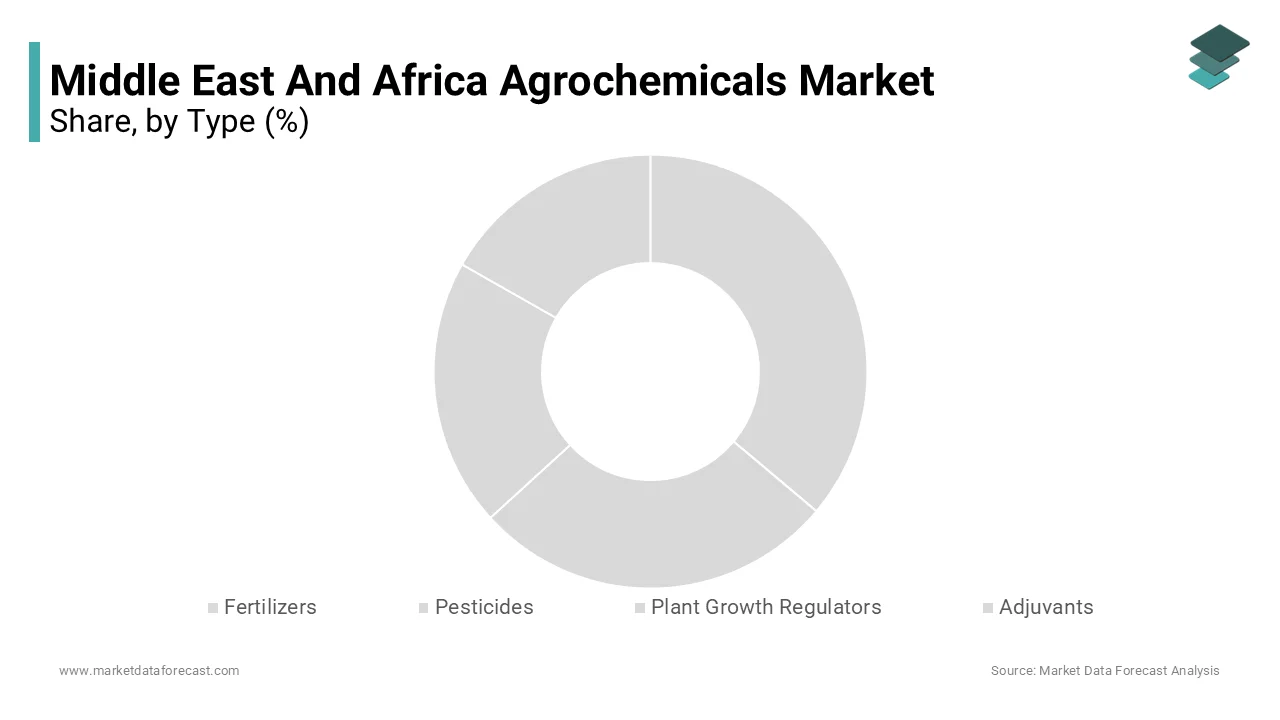
But the plant growth regulators segment is predicted to witness the highest CAGR of 6.8% from 2026 to 2034. This accelerated expansion is propelled by increasing farmer adoption of precision application technologies that optimize crop development stages and enhance stress tolerance under variable climatic conditions. Auxins and cytokinins sub segments demonstrate particular momentum as horticultural producers in Kenya South Africa and Egypt deploy these compounds to improve fruit set uniform ripening and post harvest quality for export markets. According to International Horticultural Innovation research trials plant growth regulator applications have increased marketable yield by 15 percent to 25 percent in high value crops such as citrus grapes and greenhouse vegetables. The segment benefits from rising awareness of integrated crop management practices where growth regulators complement traditional fertilizers and pesticides to achieve balanced plant nutrition and development. Digital agronomy platforms now incorporate growth regulator recommendations based on satellite derived vegetation indices and soil moisture data according to African Agtech Alliance technology adoption studies. Government initiatives promoting climate resilient agriculture further support segment growth as regulators help crops withstand heat stress and water scarcity. The compatibility of modern formulations with drip fertigation systems enables precise delivery while reducing labor requirements a critical advantage in regions experiencing rural labor migration according to International Labour Organization agricultural workforce assessments.
By Application Insights
The grains and cereals segment led the Middle East and Africa agrochemicals market and captured a 45.6% share in 2025. This predominance reflects the strategic importance of maize, wheat, sorghum, and rice as staple food sources. Also, this segment serves over 1.2 billion regional inhabitants who rely on grains as their primary daily source of dietary energy and macronutrients, according to UN and OECD-FAO population and food security databases. Agrochemical demand in this segment concentrates on nitrogenous fertilizers for yield enhancement and herbicides for weed management in labor constrained smallholder systems. According to Food and Agriculture Organization (FAO) crop production statistics, cereal cultivation occupies approximately 102 million to 115 million hectares across Sub-Saharan Africa, representing the largest land-use category for annual crops. Government procurement programs in Egypt Nigeria and Ethiopia guarantee minimum prices for wheat and maize incentivizing farmers to invest in quality agrochemical inputs to maximize eligible output volumes. The segment benefits from mechanization initiatives that enable timely fertilizer application and herbicide spraying during critical growth windows according to African Mechanization Network implementation reports. Climate variability intensifies agrochemical reliance as drought tolerant cereal varieties require balanced nutrient programs to achieve yield potential under stress conditions according to International Maize and Wheat Improvement Center agronomic trials. The integration of conservation agriculture practices including minimum tillage and cover cropping sustains herbicide demand while improving soil health and water retention according to regional sustainable farming assessments.
On the other hand, the fruits and vegetables application segment is estimated to register the fastest CAGR of 5.7% during the forecast period due to rising European and Gulf Cooperation Council demand for fresh produce that meets stringent residue and quality specifications. Agrochemical consumption in this segment emphasizes precision insecticides fungicides and plant growth regulators that ensure visual quality shelf life and food safety attributes required by international buyers. According to horticultural trade statistics, Africa’s fresh fruit and vegetable exports generated well over 15 billion US dollars annually, with South Africa hitting a record $15.1 billion in total agri-exports, heavily driven alongside Egypt and Kenya by global demand for premium citrus, avocados, and fresh market garden produce. Greenhouse and protected cultivation systems which utilize 2 to 3 times higher agrochemical inputs per hectare than open field production are expanding rapidly in peri urban zones according to African Horticultural Council infrastructure reports. The segment benefits from digital traceability platforms that document input application histories enabling exporters to demonstrate compliance with maximum residue limits according to Global Good Agricultural Practices certification bodies. Smallholder integration into export value chains through contract farming arrangements provides access to technical advisory services and quality approved agrochemicals according to International Fund for Agricultural Development inclusion studies. Rising domestic consumption of fresh produce driven by urbanization and income growth further supports segment expansion as supermarkets and food service operators demand consistent quality and safety standards according to African Retail Federation market analyses.
COUNTRY LEVEL ANALYSIS
Egypt Agrochemicals Market Analysis
Egypt maintained the top position within the Middle East And Africa Agrochemicals Market and occupied a 18.5% share in 2025. Extensive irrigation networks along the Nile Valley and Delta drive the nation's agricultural sector. As a result, farmers can intensively cultivate wheat, rice, cotton, and high-value horticultural crops. : According to FAO and World Bank land-use tables, Egypt cultivates approximately 3.8 million hectares of arable land, representing less than 4% of its total national territory, yet structural resource limits require the nation to import a massive portion (roughly 40% to 50%) of its primary cereal and food requirements. Government initiatives, including the New Delta Project and the Toshka reclamation scheme, aim to add over 1.3 million hectares (approximately 3.2 million feddans) of irrigated desert farmland to the country according to Ministry of Agriculture development plans, driving sustained demand for specialized water-soluble fertilizers and crop protection inputs. The adoption of fertigation technologies in desert reclamation zones has increased consumption of water soluble NPK formulations and micronutrient chelates according to International Center for Agricultural Research in the Dry Areas technology adoption surveys. Export oriented citrus and vegetable production requires compliance with European Union maximum residue limits incentivizing adoption of precision crop protection products according to Egyptian Export Council agricultural compliance reports. Currency stabilization measures and natural gas based fertilizer production capacity enhance input affordability and supply reliability according to Central Bank of Egypt economic bulletins.

South Africa Agrochemicals Market Analysis
South Africa was positioned second within the Middle East And Africa Agrochemicals Market and captured a 17.7% share in 2025. The nation’s advanced agricultural infrastructure commercial farming systems and research extension networks support sophisticated agrochemical adoption across maize soybean wheat and high value horticultural crops. According to national land-use databases, South Africa's commercial agricultural sector manages approximately 82 million hectares of total farmland area (predominantly composed of livestock grazing land, with roughly 12 to 13 million hectares dedicated to active crop cultivation), representing one of the most highly developed agribusiness footprints in Sub-Saharan Africa. The Western Cape fruit exporting region drives demand for premium fungicides insecticides and plant growth regulators that ensure compliance with international residue standards according to South African Fruit Exporters Association quality protocols. Government programs including the Agriculture and Agro processing Master Plan encourage private investment in input distribution and precision agriculture technologies according to South African National Treasury sectoral reports. The adoption of controlled release fertilizers and biological crop protection products is accelerating among commercial producers seeking to enhance sustainability credentials according to South African Journal of Plant and Soil research publications. Currency volatility and energy supply constraints present ongoing challenges yet the sector demonstrates resilience through diversified export markets and value added processing.
Nigeria Agrochemicals Market Analysis
Nigeria holds a noteworthy position in the Middle East And Africa Agrochemicals Market. The nation’s large population exceeding 220 million inhabitants according to United Nations demographic databases creates substantial domestic food demand that drives agrochemical adoption across maize cassava rice and vegetable production systems. According to National Bureau of Statistics agricultural surveys smallholder farmers cultivate over 80 percent of Nigeria s arable land yet achieve yields below 40 percent of potential due to limited input access. While government programs under the Presidential Fertiliser Initiative (PFI) have cumulatively delivered over 4.5 million metric tonnes of blended NPK formulations across multiple cycles, annual distributions are constrained by foreign exchange scarcity, with the state shifting away from traditional blanket federal subsidies. The expansion of agro dealer networks and digital input platforms has enhanced last mile distribution reaching remote farming communities according to Nigerian Agribusiness Group market development studies. Currency depreciation and import dependency for active ingredients present affordability challenges yet local blending facilities and regional trade agreements are improving supply chain efficiency. Rising urbanization and processed food demand further stimulate agrochemical consumption as commercial farmers intensify production to supply emerging value chains according to Nigerian Economic Summit Group sectoral analyses.
Kenya Agrochemicals Market Analysis
Kenya grew steadily in the Middle East And Africa Agrochemicals Market. The country’s diverse agroecological zones support cultivation of maize tea coffee horticultural crops and emerging biofuel feedstocks that drive varied agrochemical demand patterns. According to Kenya National Bureau of Statistics agricultural census data smallholder farmers manage approximately 75 percent of cultivated land yet contribute over 70 percent of national food production. Export oriented horticulture particularly flowers French beans and avocados requires compliance with European Union residue standards incentivizing adoption of precision crop protection products according to Horticultural Crops Directorate export compliance reports. Government initiatives including the National Agricultural and Rural Inclusive Growth Project provide input vouchers and technical advisory services to smallholders according to Ministry of Agriculture program implementation documents. The adoption of digital extension platforms and mobile based input financing has expanded agrochemical access among youth and women farmers according to Kenya Agricultural and Livestock Research Organization technology adoption surveys. Climate variability and pest outbreaks including fall armyworm and locust infestations have intensified demand for responsive crop protection solutions according to Kenya Meteorological Department agricultural advisory bulletins.
Ethiopia Agrochemicals Market Analysis
Ethiopia is expected to expand considerably in the Middle East And Africa Agrochemicals Market from 2026 to 2034. Government-backed irrigation, fertilizer subsidies, and commercialization programs are rapidly expanding the national agricultural sector, driving consistent demand for agrochemicals. According to Central Statistical Agency agricultural surveys Ethiopia cultivates approximately 15 million hectares of cropland with maize teff wheat and pulses representing dominant production systems. Grand Ethiopian Renaissance Dam (GERD) operates as a mega-hydropower facility, Ethiopia's expansion of lowland agricultural production and dry-season irrigated wheat is primarily driven by targeted solar-powered pump installations and localized river basin management supported by IWMI climate-smart research. Export growth in coffee sesame and horticultural crops incentivizes adoption of quality enhancing inputs that meet international market specifications according to Ethiopian Export Promotion Agency trade development documents. Challenges including land fragmentation input affordability and extension service coverage persist yet digital advisory platforms and warehouse receipt financing are improving smallholder access according to Ethiopian Economics Association rural development studies.
COMPETITIVE LANDSCAPE
Competition within the Middle East And Africa Agrochemicals Market demonstrates moderate concentration with multinational corporations and regional specialists coexisting across diverse national contexts. Global players leverage extensive research and development capabilities digital agronomy platforms and integrated seed chemical portfolios to serve commercial farming segments and export oriented value chains. Regional manufacturers compete through cost efficient local production tailored formulations and deep distribution networks reaching remote smallholder communities. Market dynamics vary significantly by country reflecting differences in regulatory frameworks subsidy policies infrastructure quality and farmer purchasing power. Innovation competition focuses on climate resilient formulations biological alternatives and precision application technologies that address regional challenges including water scarcity pest resistance and soil degradation. Strategic consolidation through acquisitions and partnerships enhances market reach while regulatory harmonization efforts under African Continental Free Trade Area frameworks may reshape competitive dynamics. Price competition remains intense in commodity fertilizer segments while value based differentiation dominates specialty crop protection and biological input categories.
KEY MARKET PLAYERS
The market for agrochemicals is extremely consolidated and streamlined due to the domination of the market by a handful of companies. Some of the major companies dominating this market are
- Bayer Crop Science
- Dow-DuPont
- Syngenta AG
- BASF SE
- Agrium Inc.
- Monsanto Company
- Israel Chemicals Ltd.
- Yara International ASA
- Mosaic Company
- Sociedad Química Y Minera S.A.
Top Players In The Market
- Bayer AG maintains a prominent position within the global agrochemical industry through its Crop Science division which develops innovative seed traits crop protection solutions and digital farming tools. The company s involvement in the Middle East And Africa Agrochemicals Market focuses on delivering climate resilient seed varieties and precision pesticide formulations tailored to regional pest complexes and cropping systems. Recent strategic actions include partnerships with African research institutions to develop drought tolerant maize hybrids and investments in local formulation facilities to enhance supply chain reliability. Bayer has also expanded its digital agronomy platform Climate FieldView across Kenya South Africa and Egypt enabling data driven input recommendations for smallholder and commercial farmers. The company actively supports farmer training programs on integrated pest management and sustainable application practices strengthening its market position through technical expertise and grower relationships.
- Syngenta Group operates as a leading global provider of agricultural inputs with comprehensive portfolios spanning seeds crop protection and digital agriculture solutions. Within the Middle East And Africa Agrochemicals Market the company emphasizes locally adapted herbicide and fungicide formulations that address region specific weed and disease pressures while supporting export crop compliance requirements. Recent initiatives include the deployment of AI driven crop trait discovery through partnerships with African technology firms accelerating development of climate resilient varieties. Syngenta has also established regional blending facilities in Egypt and South Africa to reduce import dependency and improve product availability during peak seasons. The company s Good Growth Plan framework promotes sustainable intensification practices aligning with regional food security objectives and environmental stewardship goals while strengthening its market position through innovation and farmer support services.
- BASF SE represents a major global chemical enterprise with significant agrochemical capabilities through its Agricultural Solutions division which develops crop protection products seed treatments and digital farming tools. The company s Middle East And Africa strategy emphasizes specialty formulations for high value horticultural crops and cereal production systems that address regional challenges including water scarcity pest resistance and soil degradation. Recent actions include investments in green ammonia production partnerships in Egypt and Morocco supporting sustainable fertilizer supply chains aligned with regional decarbonization objectives. BASF has also expanded its xarvio digital farming platform across African markets enabling precision input recommendations based on satellite imagery and field level data. The company actively collaborates with regional research institutions and farmer organizations to co develop solutions that enhance productivity while minimizing environmental impact strengthening its market position through scientific leadership and localized innovation.
Top Strategies Used By Key Market Participants
Key participants in the Middle East And Africa Agrochemicals Market employ strategic approaches including local formulation and blending facilities to reduce import dependency and currency exposure. Companies invest in digital agronomy platforms that deliver precision input recommendations enhancing product efficacy and farmer loyalty. Strategic partnerships with regional research institutions accelerate development of climate resilient crop varieties and pest management solutions. Expansion of last mile distribution networks through agro dealer partnerships and mobile commerce platforms improves smallholder access to quality inputs. Portfolio diversification toward biological and low residue products addresses tightening export standards and sustainability preferences. Investment in farmer training programs on integrated pest management and safe application practices builds technical capacity and brand trust. Supply chain resilience initiatives including regional warehousing and logistics partnerships mitigate infrastructure constraints and seasonal demand volatility.
RECENT MARKET NEWS
- In November 2024 KBR a technology and engineering solutions company partnered with AMUFERT to construct a 2300 metric tons per day ammonia plant in Soyo Angola. This facility development is anticipated to enhance regional food security and support sustainable agriculture and strengthen the Middle East And Africa Agrochemicals Market presence.
- In December 2023 Bayer AG a life sciences enterprise launched EverGol Energy fungicide seed treatment in South Africa for maize and soybean crops affected by fungal pathogens. This product introduction is anticipated to enhance crop protection and boost yield potential and strengthen the Middle East And Africa Agrochemicals Market presence.
- In July 2024 Misr Fertilizers Production Company a leading Egyptian fertilizer manufacturer partnered with Scatec a Norwegian renewable energy company to build a green ammonia production plant with 150000 metric ton capacity in Damietta Egypt. This sustainable infrastructure investment is anticipated to support decarbonization goals and enhance fertilizer supply reliability and strengthen the Middle East And Africa Agrochemicals Market presence.
MARKET SEGMENTATION
This research report on the Middle East and Africa agrochemicals market has been segmented and sub-segmented into the following categories.
By Type
- Fertilizers
- Nitrogenous
- Phosphate
- Potassic
- Pesticides
- Organophosphates
- Pyrethroids
- Biopesticides
- Plant Growth Regulators
- Auxins
- Cytokinins
- Adjuvants
- Activator Adjuvants
- Utility Adjuvants
By Application
- Crop Based
- Oilseeds
- Fruits & Vegetables
- Grains & Cereals
- Non-Crop Based
- Turf & Ornamental Grass
- Others
By Country
- KSA
- UAE
- IsraelThe
- rest of the GCC countries
- South Africa
- Ethiopia
- Kenya
- Egypt
- Sudan
- rest of MEA