- Product Description Description
- Table of Contents TOC
- List of Table & Figure LOT
- Get Free Sample PDF Sample PDF
Middle East and Africa Almond Oil Market Report Summary
The Middle East and Africa almond oil market was valued at USD 221.17 million in 2024, is estimated to reach USD 242.58 million in 2025, and is projected to reach USD 506.79 million by 2033, growing at a CAGR of 9.65% during the forecast period from 2025 to 2033. The growth of the Middle East and Africa almond oil market is driven by increasing demand for natural and plant-based personal care ingredients, rising consumer awareness of the health benefits of almond oil, and expanding applications in cosmetics, pharmaceuticals, and food products. Growing preference for organic beauty products, rising disposable incomes, and the increasing popularity of aromatherapy and wellness products are further supporting market growth across the region.
Key Market Trends
-
Rising consumer demand for natural and organic personal care products is driving the adoption of almond oil across the Middle East and Africa.
-
Increasing use of almond oil in skincare, haircare, and cosmetic formulations is supporting market expansion.
-
Growing awareness of the nutritional and therapeutic benefits of almond oil is boosting its use in food and wellness applications.
-
Expansion of e-commerce platforms and specialty retail stores is improving product accessibility.
-
Rising demand for clean-label and plant-based ingredients is encouraging manufacturers to develop premium almond oil products.
Segmental Insights
-
Based on product, the sweet almond oil segment dominated the Middle East and Africa almond oil market by accounting for 48.1% of the market share in 2025. The segment's leadership is attributed to its widespread use in cosmetics, personal care products, massage oils, and food applications due to its mild nature and rich nutritional profile.
-
Based on application, the cosmetics segment held the largest share of 53.2% of the Middle East and Africa almond oil market in 2025. The segment's dominance is driven by the increasing use of almond oil in moisturizers, lotions, creams, hair care products, and premium beauty formulations.
Regional Insights
-
The Middle East and Africa almond oil market is witnessing strong growth due to increasing consumer preference for natural ingredients, expanding beauty and wellness industries, and rising demand for premium personal care products.
-
The United Arab Emirates dominated the Middle East and Africa almond oil market by accounting for 34.2% of the regional market share in 2025. The country's leadership is supported by high consumer spending on premium cosmetics, a well-developed retail sector, growing wellness industry, and increasing demand for organic beauty products.
-
Saudi Arabia remains a significant market due to rising disposable incomes, expanding personal care industry, and increasing awareness of natural skincare products.
Competitive Landscape
The Middle East and Africa almond oil market is moderately competitive, with manufacturers focusing on product quality, organic certification, and expansion of product portfolios to strengthen their market positions. Companies are investing in sustainable sourcing, advanced extraction technologies, and strategic partnerships to meet the growing demand across cosmetics, pharmaceuticals, food, and wellness applications. Key players operating in the Middle East and Africa almond oil market include AAK (Aarhus Karlshamn), Frontier Natural Products, Flora, Basset Natural Ingredients, Oil Seed Extractions, Bajaj, Givaudan Active Beauty, Dabur, Caloy, Jiangxi Baicao Pharmaceutical Co., Ltd., Croda International Plc, AOS Products Private Limited, and Mountain Ocean.
Middle East and Africa Almond Oil Market Size
The Middle East and Africa almond oil market size was valued at USD 221.17 million in 2025, and is expected to reach USD 506.79 million by 2034 from USD 242.58 million in 2026. The market's promising CAGR for the predicted period is 9.65%.
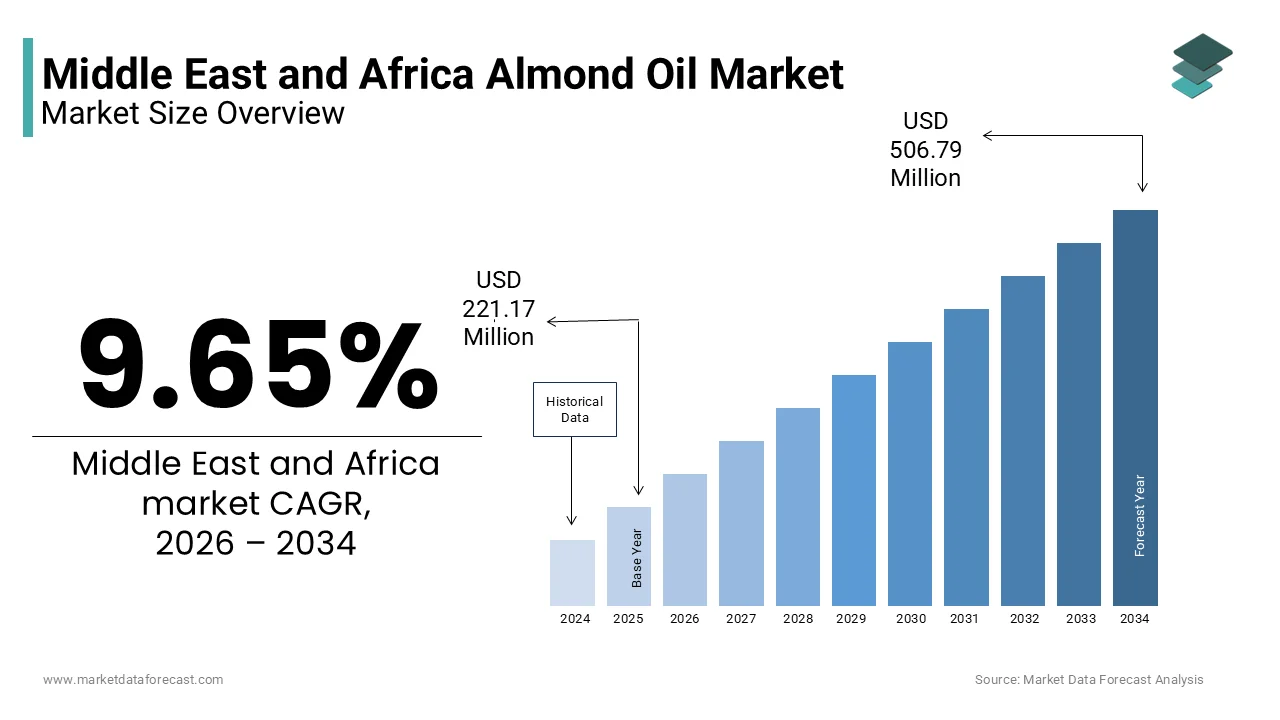
The almond oil is premium positioning and multifaceted applications. Almond oil is extracted from both sweet and bitter almond varieties, serves roles in culinary preparations, personal care formulations, and traditional therapeutic practices across the region. The geographic scope encompasses diverse economies ranging from the affluent Gulf Cooperation Council nations to emerging markets in Sub Saharan Africa, each exhibiting distinct consumption patterns influenced by cultural preferences and economic capabilities. According to the Food and Agriculture Organization of the United Nations, global almond production reached approximately 1.3 million metric tons in recent years, with major exporting countries supplying raw materials to processing facilities worldwide. The regional market benefits from increasing health consciousness among consumers who prefer natural ingredients over synthetic alternatives in their daily routines. The personal care sector in the Middle East demonstrated robust growth trajectories, driven by rising disposable incomes and evolving beauty standards. Climate conditions in certain North African regions allow for limited local cultivation, though most supply relies on imports from California and Mediterranean producers. Regulatory frameworks governing food safety and cosmetic ingredient approvals vary significantly across national boundaries by creating a complex operational landscape for market participants seeking regional expansion.
MARKET DRIVERS
Rising Preference For Natural And Organic Personal Care Products Drives Demand
The escalating consumer inclination toward natural and organic personal care products is propelling the growth of the Middle East and Africa almond oil market. Modern consumers increasingly scrutinize ingredient lists, rejecting synthetic chemicals in favor of botanically derived alternatives that promise efficacy without adverse effects. Almond oil, rich in vitamin E, fatty acids, and antioxidants, aligns perfectly with this clean beauty movement sweeping through urban centers across the region. In Saudi Arabia and the United Arab Emirates, luxury skincare brands incorporating almond oil into their formulations report double digit growth rates as affluent consumers prioritize premium quality ingredients. Social media influence amplifies this shift, with beauty influencers across Instagram and TikTok promoting almond oil based routines for hair nourishment and skin hydration. Retailers respond by dedicating shelf space to certified organic brands, while e commerce platforms feature curated collections highlighting botanical ingredients.
Expanding Culinary Applications In Health Conscious Diets Fuels Market Growth
The integration of almond oil into health-conscious dietary practices is also fuelling the growth of the Middle East and Africa almond oil market. Nutritionists and healthcare professionals increasingly recommend almond oil, as a superior cooking medium due to its favorable fatty acid profile, high smoke point, and abundant micronutrient content. Unlike refined vegetable oils, cold pressed almond oil retains essential vitamins and minerals that support cardiovascular health and metabolic function. According to the World Health Organization, non-communicable diseases including diabetes and heart conditions account for over 60% of deaths in the Eastern Mediterranean region, prompting public health initiatives promoting healthier food choices. In response, consumers substitute traditional frying oils with almond oil for sautéing, baking, and salad dressings. African nations, such as Nigeria and Egypt witness similar transitions among educated demographics who access nutritional information through digital channels. Restaurant chains and hospitality providers incorporate almond oil into menu offerings to attract health aware patrons, further institutionalizing its culinary presence. Government campaigns addressing obesity and lifestyle diseases reinforce these behavioral changes by creating sustained demand from both retail and food service sectors.
MARKET RESTRAINTS
High Production Costs And Limited Local Cultivation Restrict Market Accessibility
The substantial production costs associated with almond oil extraction combined with minimal local cultivation capabilities is restraining the growth of the Middle East and Africa almond oil market. Almonds require specific climatic conditions including cool winters and warm dry summers that few regions within the target geography can provide consistently. Consequently, the majority of raw materials must be imported from primary producing nations, such as the United States, Spain, and Australia, exposing suppliers to volatile international commodity prices and currency fluctuation risks. These elevated input costs translate directly into higher retail prices, limiting almond oil affordability for middle and lower income consumers, who constitute the majority population in many African nations. The poverty rates exceed 40% in several Sub Saharan African countries, rendering premium priced specialty oils inaccessible to large demographic segments, as per recent study. The extraction process itself demands sophisticated machinery and technical expertise, requiring capital investments that small scale local producers cannot afford. Cold pressing methods preserve nutritional integrity but yield lower volumes compared to chemical extraction, further constraining supply availability. Transportation infrastructure deficiencies in remote African regions add logistical expenses, while import tariffs in certain Middle Eastern countries inflate final consumer prices.
Stringent Regulatory Frameworks And Quality Standardization Challenges Impede Expansion
Navigating complex regulatory environments and achieving consistent quality standardization present formidable obstacles for participants is also declining the growth of the Middle East and Africa almond oil market. Each country maintains distinct approval processes for food grade and cosmetic grade oils, requiring separate certifications that demand considerable time and financial resources. The harmonizing product specifications across member states remains an ongoing challenge, with varying requirements for labeling, packaging, and ingredient disclosure creating compliance burdens for multinational suppliers. In African countries, regulatory capacity differs dramatically between nations, with some lacking established frameworks for evaluating natural product safety and efficacy. This regulatory fragmentation forces companies to navigate bureaucratic inconsistencies, delaying market entry and increasing operational costs. Quality standardization proves equally problematic, as almond oil characteristics vary based on extraction methods, almond varieties, and storage conditions. Counterfeit products containing diluted or adulterated oils undermine consumer trust and damage brand reputations, particularly in areas with weak enforcement mechanisms. The absence of unified regional testing laboratories means manufacturers must conduct multiple independent verifications by adding expense without guaranteeing acceptance in all target jurisdictions. Intellectual property protection weaknesses in certain territories enable unauthorized replication of branded formulations by discouraging innovation investment.
MARKET OPPORTUNITIES
Growing E Commerce Penetration Creates Direct To Consumer Distribution Channels
The rapid expansion of e-commerce infrastructure opens lucrative direct to consumer distribution channels for almond oil vendors seeking to bypass traditional retail limitations is to promote new opportunities for the expansion of the Middle East and Africa almond oil market. Digital platform adoption accelerated dramatically following pandemic induced behavioral shifts, with online shopping becoming entrenched in consumer habits across diverse demographic groups. Specialized health and wellness e commerce sites feature curated almond oil selections, providing detailed product information, customer reviews, and educational content that builds consumer confidence in premium pricing. Social commerce integration allows brands to engage directly with target audiences through Instagram Shopping and Facebook Marketplace by reducing customer acquisition costs compared to conventional advertising. Subscription based models offer recurring revenue streams, with consumers receiving regular almond oil deliveries for personal care or culinary use. Mobile payment solutions, including M Pesa in East Africa and STC Pay in Saudi Arabia facilitate seamless transactions, overcoming previous banking infrastructure limitations. Logistics improvements through partnerships with regional courier services ensure reliable delivery even to secondary cities.
Increasing Tourism And Hospitality Sector Investments Boost Commercial Demand
The substantial investments in tourism and hospitality infrastructure, including almond oil in luxury accommodation and dining establishments is additionally to fuel the growth of the Middle East and Africa almond oil market. Governments across the region prioritize tourism development as an economic diversification strategy, launching ambitious projects that attract international visitors seeking authentic cultural experiences combined with world class amenities. Luxury hotels and resorts incorporate almond oil into spa treatments by offering guests traditional hammam rituals and aromatherapy sessions that showcase regional wellness heritage. High end restaurants feature almond oil in signature dishes, appealing to cosmopolitan diners, who appreciate gourmet ingredients and healthy preparation methods. As per STR Global data, hotel occupancy rates in Dubai and Riyadh exceeded 80% during peak seasons, driving consistent bulk purchasing requirements for hospitality suppliers. Cruise line expansions along Mediterranean and Red Sea routes create additional demand points, with onboard spas and restaurants sourcing premium oils for guest services. Event management companies organizing weddings and corporate gatherings specify almond oil based catering and gift packages, reflecting its status symbol appeal. Tourism related retail outlets stock travel sized almond oil products as souvenirs, introducing international visitors to regional brands who may become export customers upon returning home.
MARKET CHALLENGES
Supply Chain Vulnerabilities And Geopolitical Instability Disrupt Consistent Availability
The persistent supply chain vulnerabilities compounded by geopolitical instability disrupt consistent almond oil availability by creating operational uncertainties for participants, which is a major challenge for the growth of the Middle East and Africa almond oil market. The region's heavy reliance on imported raw almonds exposes suppliers to international trade tensions, shipping route disruptions, and political conflicts that intermittently block transportation corridors. Political unrest in North African nations occasionally closes borders or imposes sudden export restrictions, preventing timely raw material deliveries to processing facilities. As per the study, customs clearance delays average 14 days in several African ports, causing inventory shortages and forcing manufacturers to maintain expensive safety stocks. Currency devaluations in countries like Egypt and Nigeria make dollar denominated almond imports prohibitively expensive, squeezing profit margins and triggering price increases that dampen consumer demand. Infrastructure inadequacies including unreliable electricity supply and poor road networks hinder efficient distribution within domestic markets, particularly affecting rural areas where agricultural communities might otherwise participate in value addition activities. Climate change impacts exacerbate these challenges, with extreme weather events damaging storage facilities and disrupting harvest schedules in source countries.
Consumer Awareness Gaps And Misinformation Limit Market Education Effectiveness
The significant consumer awareness gaps combined with widespread misinformation about almond oil properties and applications limit the effectiveness of education efforts, across diverse Middle Eastern and African populations. This factor is also to limit the growth of the Middle East and Africa almond oil market. While urban affluent demographics possess reasonable knowledge about premium oils, rural and lower income communities often lack exposure to accurate nutritional and cosmetic information, relying instead on traditional beliefs or anecdotal evidence. Misinformation spreads rapidly through informal social networks, with false claims about almond oil curing serious medical conditions creating unrealistic expectations that lead to disappointment and brand distrust when results fail to materialize. Language diversity presents additional barriers, with hundreds of dialects spoken across the continent making standardized educational campaigns difficult to implement effectively. Cultural perceptions regarding oil usage differ substantially, with some communities viewing almond oil exclusively, as a luxury item rather than a practical daily staple. Healthcare provider engagement remains limited in remote areas, missing opportunities for professional endorsement that could validate product benefits.
REPORT COVERAGE
| REPORT METRIC | DETAILS |
| Market Size Available | 2024 to 2033 |
| Base Year | 2024 |
| Forecast Period | 2025 to 2033 |
| CAGR | 9.65% |
| Segments Covered | By Product, Application, and Region |
| Various Analyses Covered | Global, Regional, & Country Level Analysis; Segment-Level Analysis; DROC; PESTLE Analysis; Porter’s Five Forces Analysis; Competitive Landscape; Analyst Overview of Investment Opportunities |
| Regions Covered | KSA, UAE, Israel, South Africa, And Ethiopia, Kenya, Egypt, Sudan, Rest of GCC Countries, and Rest of MEA |
| Market Leaders Profiled | AAK (Aarhus Karlshamn), Frontier Natural Products, Flora, Basset Natural Ingredients, Oil Seed Extractions, Bajaj, Givaudan Active Beauty, Dabur, Caloy, Jiangxi Baicao Pharmaceutical Co., Ltd., Croda International Plc, AOS Products Private Limited, and Mountain Ocean |
SEGMENTAL ANALYSIS
By Product Insights
The sweet almond oil segment was the largest by holding 48.1% of the Middle East and Africa almond oil market share in 2025 due to its versatile applications in personal care and culinary sectors without the toxicity concerns associated with bitter varieties. The non-toxic nature of sweet almond oil facilitates its approval across stringent regulatory frameworks governing food and cosmetic products in the Middle East and Africa. Unlike bitter almond oil, which contains amygdalin that converts to cyanide requiring specialized processing, sweet almond oil presents minimal health risks enabling broader market access. According to the European Food Safety Authority, guidelines which influence regional standards, sweet almond oil is classified as generally recognized as safe for human consumption without quantity restrictions. This regulatory ease accelerates product launches as manufacturers avoid complex safety testing protocols required for bitter variants. In the Gulf Cooperation Council countries, health ministries approve sweet almond oil based cosmetics within weeks whereas bitter oil derivatives face months of scrutiny. Consumer awareness campaigns by health organizations further reinforce this preference by highlighting the absence of cyanogenic compounds in sweet almonds. Retailers prioritize shelf space for sweet almond oil knowing it appeals to family-oriented households concerned about accidental ingestion risks.
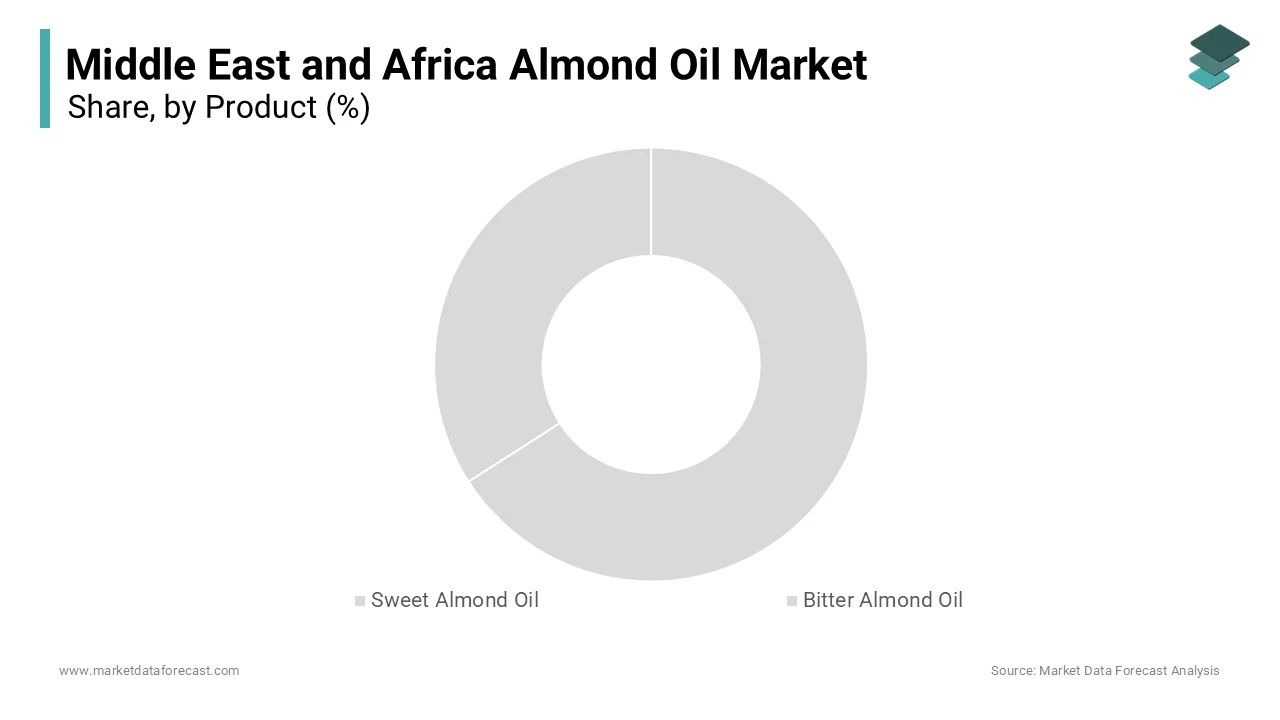
The bitter almond oil segment is likely to grow at a fastest CAGR of 6.8% from 2026 to 2034. The pharmaceutical sector increasingly utilizes bitter almond oil for its benzaldehyde content which serves as a precursor in synthesizing various medicinal compounds and flavoring agents. While toxic in raw form, processed bitter almond oil provides critical active ingredients for cough suppressants and topical analgesics widely prescribed in regional healthcare systems. Pharmaceutical manufacturers in Egypt and South Africa source refined bitter almond oil to produce generic medications affordable for local populations. Regulatory bodies permit controlled use of purified bitter almond oil in specific therapeutic contexts recognizing its efficacy when properly dosed. Research institutions in Israel conduct studies on amygdalin derivatives for potential anticancer properties attracting investment into extraction facilities. This scientific validation enhances commercial viability despite safety constraints. Hospitals and clinics procure these specialized formulations ensuring consistent institutional demand. The high value addition possible through pharmaceutical grading encourages processors to invest in purification technologies improving yield quality.
By Application Insights
The cosmetics application segment held 53.2% of the Middle East and Africa almond oil market share in 2025. Deep rooted cultural practices involving almond oil for hair and skin care maintain steady demand across generations in Middle Eastern and African societies. Traditional hammam rituals in North Africa and the Levant region incorporate almond oil, as a primary moisturizer and exfoliant agent preserving ancestral knowledge in modern spa settings. Women in rural Morocco and Tunisia regularly apply almond oil to protect hair from sun damage and maintain scalp health passing these methods to younger family members. Urban professionals adapt these traditions by purchasing branded almond oil serums and treatments aligning traditional benefits with modern convenience. Beauty salons offer almond oil based services as premium add ons enhancing customer experience and loyalty. Social media influencers showcase before and after results using almond oil reinforcing its efficacy to digital native audiences. Wedding preparations often include extensive almond oil treatments for brides establishing seasonal demand peaks. Economic growth in Gulf states and emerging African economies increases household budgets allocated to high end personal care products featuring almond oil as a key ingredient.
The food application segment is likely to grow at an anticipated CAGR of 7.2% from 2026 to 2034. Growing awareness of cardiovascular health benefits associated with monounsaturated fats in almond oil drives consumers to replace saturated fats in cooking preparations. Medical professionals advocate for almond oil consumption as part of heart healthy diets reducing cholesterol levels and inflammation markers. According to the World Health Organization, noncommunicable diseases cause 74% of deaths globally prompting national health strategies promoting healthier fat consumption. In the Middle East, where diabetes prevalence exceeds 20% in some countries dietary modifications become preventive measures. Nutritionists recommend cold pressed almond oil for low temperature cooking and salad dressings preserving nutritional integrity. Fitness enthusiasts and athletes incorporate almond oil into meal plans for sustained energy and muscle recovery supporting active lifestyle trends. Food bloggers share recipes featuring almond oil demystifying its culinary uses for home cooks. Supermarkets introduce educational signage comparing fatty acid profiles of different oils guiding purchasing decisions. Restaurant menus label dishes prepared with almond oil attracting health-conscious diners willing to pay premiums. This behavioral shift from traditional ghee and palm oil to healthier alternatives creates structural demand growth.
REGIONAL ANALYSIS
United Arab Emirates Almond Oil Market Analysis
The United Arab Emirates was the top performer in the Middle East and Africa almond oil market by capturing 34.2% of share in 2025. The growth of the market is driven by the presence of premier hub for premium almond oil consumption in the Middle East characterized by high disposable incomes and sophisticated retail infrastructure supporting luxury personal care and gourmet food sectors. The country serves as a re-export center distributing almond oil products to neighboring Gulf states leveraging its strategic geographic location and world class logistics facilities. Affluent consumers in Dubai and Abu Dhabi prioritize imported premium brands seeking certified organic almond oil for skincare and haircare routines. As per Euromonitor International, the UAE hosts over 500 luxury beauty boutiques offering exclusive almond oil-based treatments and products catering to discerning clientele. The hospitality sector drives significant commercial demand with five-star hotels incorporating almond oil into spa menus and fine dining establishments. Government initiatives promoting wellness tourism attract international visitors seeking traditional and modern beauty therapies utilizing almond oil. E commerce penetration exceeds 80% enabling seamless access to global brands and niche artisans. Regulatory standards enforced by the Emirates Authority for Standardization and Metrology ensure product quality building consumer trust. The presence of major multinational distributors facilitates efficient supply chain management reducing stockouts. Investment in local manufacturing facilities for cosmetic blending adds value to imported raw almond oil.
Israel Almond Oil Market Analysis
Israel almond oil market was ranked second by holding 24.3% of share in 2025 with the advanced agricultural technology and a robust pharmaceutical industry utilizing bitter almond derivatives for medicinal purposes. The country combines traditional Mediterranean dietary habits with cutting edge research developing innovative almond oil applications in health and wellness sectors. Local startups focus on extracting high purity almond oil for clinical trials exploring anticancer and anti-inflammatory properties attracting venture capital investment. The integrative medicine practices incorporating almond oil therapies gain acceptance in mainstream healthcare facilities. The tech savvy population embraces e-commerce platforms purchasing premium almond oil products for home use. Agricultural cooperatives experiment with almond cultivation in arid regions using drip irrigation technologies though most raw materials remain imported. Cosmetic brands leverage Israeli reputation for scientific rigor marketing almond oil products with clinical backing. The thriving spa industry in Dead Sea resorts utilizes almond oil in therapeutic treatments attracting medical tourists. Regulatory frameworks support innovation while ensuring safety standards met through rigorous testing protocols. Collaboration between universities and private companies accelerates product development cycles. Export orientation drives quality improvements meeting international standards.
Kingdom Of Saudi Arabia Almond Oil Market Analysis
The Kingdom of Saudi Arabia almond oil market growth is driven by the Vision 2030 economic diversification efforts boosting healthcare wellness and tourism sectors. Massive government investments in infrastructure and lifestyle improvements create favorable conditions for premium personal care and healthy food product adoption. The foreign direct investment in personal care manufacturing increased substantially allowing local production of almond oil blends. Traditional use of almond oil in Arabic perfumery and hair care maintains cultural relevance while modern formulations attract younger consumers. The Hajj and Umrah pilgrimages generate seasonal demand for travel sized personal care items, including almond-oil based products. Retail expansion through mega malls and online platforms improves product accessibility across remote regions. Government health campaigns addressing obesity promote healthier cooking oils including almond oil for home use. The entertainment sector growth drives demand for appearance enhancing products among performers and attendees. Local entrepreneurs launch niche brands catering to specific skin types common in desert climates.
South Africa Almond Oil Market Analysis
South Africa almond oil market growth is driven by the established retail chains and a growing middle class prioritizing health and beauty expenditures. The country acts as a gateway for international brands entering the African continent leveraging its sophisticated distribution networks and regulatory frameworks. Urban consumers in Johannesburg and Cape Town demonstrate high awareness of almond oil benefits driving demand for certified organic imports. The tourism industry supports commercial demand through luxury lodges and spas offering almond oil treatments to international guests. Local manufacturers blend imported almond oil with indigenous botanicals creating unique products appealing to export markets. Regulatory oversight by the South African Health Products Regulatory Authority ensures quality standards protecting consumers from adulterated products. E-commerce growth enables direct to consumer sales bypassing traditional retail markups. Health consciousness rises among affluent demographics managing lifestyle diseases through dietary changes. Educational campaigns by nutritionists promote almond oil as heart healthy alternative. The wine industry explores almond oil pairings enhancing gourmet experiences.
Egypt Almond Oil Market Analysis
Egypt almond oil market growth is to grow steadily in coming years with the large population size and growing urbanization although affordability constraints limit premium product penetration. The country balances traditional uses of natural oils in homemade remedies with emerging demand for branded personal care items among educated urbanites. Rising inflation impacts purchasing power directing consumers toward value oriented options rather than luxury imports. The pharmaceutical sector utilizes bitter almond derivatives for generic medication production serving public health needs. Traditional hammam culture sustains demand for bulk almond oil used in community bathhouses and home treatments. Tourism recovery boosts sales in resort areas where visitors purchase almond oil souvenirs. Government initiatives supporting local agriculture explore almond cultivation possibilities to reduce import dependency. E commerce platforms expand reach to secondary cities improving availability outside Cairo and Alexandria. Currency devaluation increases import costs forcing manufacturers to optimize supply chains.
COMPETITIVE LANDSCAPE
The competitive landscape in the Middle East and Africa almond oil market features intense rivalry between multinational ingredient suppliers and specialized regional producers vying for premium positioning. Multinational corporations leverage extensive research capabilities and global supply chains to offer standardized high-quality products meeting international regulatory requirements. Regional players compete through deep cultural understanding and agile responsiveness to local preferences often incorporating indigenous botanicals alongside almond oil in unique formulations. Price competition intensifies in mass market segments where affordability constraints limit premium product adoption, particularly across Sub-Saharan African nations. Innovation serves as a key differentiator as companies invest in novel extraction techniques and bioactive derivatives to create proprietary ingredients commanding higher margins. Brand loyalty remains fragile as consumers experiment with new products influenced heavily by social media trends and influencer recommendations.
KEY MARKET PLAYERS
Some of the key players in the Middle East and Africa almond oil market are
- AAK (Aarhus Karlshamn)
- Frontier Natural Products
- Flora
- Basset Natural Ingredients
- Oil Seed Extractions
- Bajaj
- Givaudan Active Beauty
- Dabur
- Caloy
- Jiangxi Baicao Pharmaceutical Co., Ltd
- Croda International Plc
- AOS Products Private Limited
- Mountain Ocean
Top Players in the Market
- Basset Natural Ingredients maintains a significant presence in the Middle East and Africa almond oil sector by supplying high quality raw materials to regional cosmetic manufacturers. The company focuses on sustainable sourcing practices that appeal to environmentally conscious brands, across the Gulf states. Recently, Basset Natural Ingredients expanded its processing facility in Dubai to enhance local blending capabilities for sweet almond oil products. This strategic investment reduces lead times for regional clients seeking fresh inventory. The firm also partnered with local organic certification bodies to validate product purity standards. These actions demonstrate commitment to serving the growing natural personal care segment, while ensuring supply chain reliability for premium beauty formulators operating throughout the diverse Middle Eastern marketplace.
- Givaudan Active Beauty contributes extensively to the Middle East and Africa almond oil landscape through innovative ingredient solutions tailored for regional skincare needs. The company leverages advanced extraction technologies to produce bioactive almond fractions with enhanced efficacy profiles. Givaudan recently launched a specialized marketing campaign highlighting almond oil benefits for hyperpigmentation concerns prevalent in Middle Eastern demographics. They established a technical support center in Riyadh to assist local formulators with product development challenges. This localized approach strengthens relationships with regional manufacturers seeking customized solutions. Their research initiatives focus on validating traditional almond oil claims through clinical studies providing scientific backing that resonates with increasingly sophisticated consumers demanding evidence based personal care products across African countries.
- Croda International Plc supports the Middle East and Africa almond oil market by offering specialty derivatives designed for high performance cosmetic applications. The company provides ethoxylated almond oil variants that improve formulation stability in hot climate conditions common across the region. Croda recently inaugurated a new innovation hub in South Africa to better serve Sub Saharan African customers requiring technical assistance. They collaborated with regional distributors to expand product availability in secondary cities beyond major metropolitan areas. This distribution enhancement addresses accessibility gaps in emerging countries. Their sustainability programs emphasize responsible sourcing from Mediterranean almond growers aligning with corporate social responsibility expectations of multinational personal care brands operating within the diverse regulatory environments of Middle Eastern and African nations.
Top Strategies Used by Key Market Participants
Key participants in the Middle East and Africa almond oil market prioritize vertical integration strategies to secure consistent raw material supplies amid global volatility. Companies establish direct partnerships with almond growers in Spain and California bypassing intermediaries to control quality and pricing. Localization represents another strategy, as firms build regional processing facilities to reduce import dependencies and respond faster to local demand fluctuations. Product differentiation through organic certifications and clinical validation helps brands justify premium pricing in competitive retail environments. Strategic acquisitions of local distributors enhance market penetration in fragmented African territories, where established networks are essential for reaching diverse consumer segments effectively. Digital transformation initiatives, including e-commerce platform development enable direct consumer engagement reducing reliance on traditional retail channels. Sustainability commitments resonate strongly with younger demographics driving investments in eco-friendly packaging and carbon neutral production processes.
MARKET SEGMENTATION
This research report on the Middle East and Africa almond oil market has been segmented and sub-segmented into the following categories.
By Product
- Sweet Almond Oil
- Bitter Almond Oil
By Application
- Cosmetics
- Food
By Country
- KSA
- UAE
- Israel
- rest of GCC countries
- South Africa
- Ethiopia
- Kenya
- Egypt
- Sudan
- rest of MEA