- Product Description Description
- Table of Contents TOC
- List of Table & Figure LOT
- Get Free Sample PDF Sample PDF
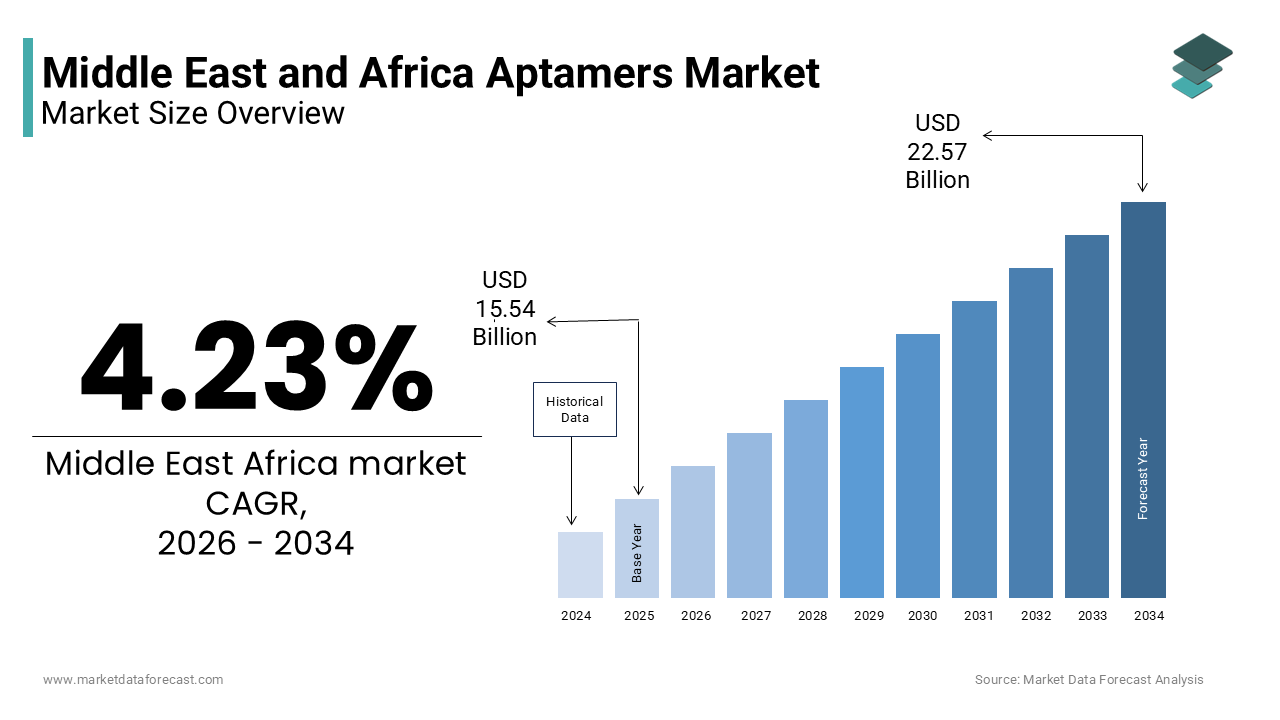
Market Size, 2025
$15.54 BnMarket Estimate, 2026
$16.2 BnMarket Forecast, 2034
$22.57 BnCAGR, 2026–2034
4.23%Executive Summary: Middle East and Africa Aptamers Market
- Market Scope: Comprehensive regional market evaluation covering aptamer classifications (peptide and nucleic acid variations), key application sectors (therapeutics, diagnostics, R&D), diverse end-users, and country-level profiles across the Middle East and Africa.
- Market Valuation: Valued at USD 15.54 billion (2025), estimated at USD 16.20 billion (2026), and projected to reach USD 22.57 billion by 2034, registering a steady CAGR of 4.23% (2026–2034).
- Primary Growth Drivers: Escalating R&D investments across pharmaceutical and biotech sectors, rising prevalence of severe life-threatening conditions (cardiovascular disorders, cancer, neurodegenerative diseases), patent expiries of SELEX technology, and the cost-effective advantages of aptamers over traditional antibodies.
Key Market Segment Metrics (2026–2034)
| Category | Leading Segment (2025 Position) | Fastest-Growing / Key Segment Trends |
|---|---|---|
| By Type | Nucleic Acid Aptamers (DNA/RNA-based structures heavily favored due to strong binding capabilities) | XNA-Based & Peptide Aptamers (growing steadily alongside specialized biochemical and target-specific screening research) |
| By Application & End User | Diagnostics (retaining market dominance due to continuous product rollouts and innovative assay kits) | Therapeutics Development (driven by expanding biotech partnerships and targeted disease management programs) |
| By Region / Country | South Africa (projected to account for the dominant regional share supported by advanced clinical frameworks and R&D incentives) | GCC Countries / UAE / KSA (emerging rapidly through strong healthcare investments and infrastructure growth) |
Major Market Players & Market Structure
Market Structure: Specialized and globally connected ecosystem featuring prominent players investing in regional collaborations, advanced diagnostic kits, and cutting-edge biopharmaceutical tools to overcome localized awareness barriers.
Key Companies: AM Biotechnologies, Aptagen, Aptamer Sciences Inc., Aptamer Solutions Ltd., Aptus Biotech S.L., Base Pair Biotechnologies Inc., NeoVentures Biotechnology Inc., SomaLogic Inc., TriLink BioTechnologies Inc., and Vivonics, Inc.
Middle East and Africa Aptamers Market Size
The Middle East and Africa aptamers market size was valued at USD 15.54 billion in 2025 and is anticipated to reach USD 16.2 billion in 2026 from USD 22.57 billion by 2034, growing at a CAGR of 4.23% during the forecast period from 2026 to 2034.
The high burden of infectious diseases directly favors the Middle East and Africa aptamers market by driving demand for rapid, affordable, and accurate diagnostic solutions. Pathogens such as HIV, malaria, tuberculosis, and emerging viruses require sensitive detection methods to control outbreaks and manage patient care effectively. According to the World Health Organization, sub-Saharan Africa accounts for approximately 70% of the global HIV burden, necessitating continuous monitoring and testing capabilities. Aptamer-based biosensors offer superior stability in tropical climates compared to protein antibodies, making them ideal for point-of-care testing in remote areas. Additionally, as per the Centers for Disease Control and Prevention, rapid diagnostic tests can reduce transmission rates by enabling early intervention and treatment. This public health imperative drives governments and NGOs to invest in innovative diagnostic technologies. The ability of aptamers to be synthesized chemically ensures consistent quality and lower production costs, which is crucial for large-scale screening programs. As healthcare providers seek to decentralize testing from central laboratories to community clinics, the demand for robust aptamer-based kits increases. This shift supports market growth by aligning technological capabilities with regional healthcare needs.
MARKET DRIVERS
The growing focus on precision medicine and oncology research significantly propels the Middle East and Africa aptamers market as these fields require highly specific targeting agents for therapy and diagnosis. Cancer rates are rising across the region due to demographic shifts and environmental factors, creating a need for advanced therapeutic options. According to the International Agency for Research on Cancer, cancer mortality in the Middle East and North Africa is projected to increase by 40% by 2030 if current trends continue. Aptamers can be engineered to target specific tumor markers with high precision, minimizing side effects associated with conventional chemotherapy. The National Cancer Institute emphasizes that targeted therapies improve survival rates and quality of life for patients with complex malignancies. Research institutions in countries like Saudi Arabia and South Africa are increasingly investing in genomic studies to identify unique biomarkers relevant to local populations. Aptamers serve as essential tools in these studies for isolating and detecting rare biomarkers. Government initiatives to establish specialized cancer centers further accelerate the adoption of aptamer technology. This strategic focus on personalized healthcare drives sustained demand for high-quality aptamer products and services.
MARKET RESTRAINTS
Limited Research Infrastructure and Technical Expertise
The lack of advanced research infrastructure and specialized technical expertise is a significant restraint on the Middle East and Africa aptamers market by hindering local development and adoption. Many countries in the region lack well-equipped laboratories and trained personnel required for the complex synthesis and validation of aptamers. According to the United Nations Educational, Scientific and Cultural Organization, research and development expenditure in most African countries remains below 1% of GDP, limiting capacity for innovation. This financial constraint prevents universities and research institutes from acquiring necessary equipment, such as high-throughput sequencers and surface plasmon resonance instruments. Additionally, the World Bank highlights that brain drain results in the loss of skilled scientists who migrate to developed nations for better opportunities. This shortage of human capital slows down the translation of aptamer research into clinical applications. Without local expertise, hospitals and diagnostic centers rely heavily on imported kits, which may not be optimized for local disease strains. The dependency on external support limits the sustainability of aptamer-based projects. Until significant investments are made in education and infrastructure, the market will struggle to achieve self-sufficiency and widespread utilization.
High Cost of Imported Reagents and Supply Chain Instability
The high cost of imported reagents and supply chain instability negatively impact the Middle East and Africa aptamers market by making advanced molecular tools financially inaccessible for many institutions. Most aptamer synthesis materials and specialized buffers are sourced from Europe or North America, leading to high landed costs due to tariffs and logistics. According to the World Trade Organization, trade barriers and inefficient customs procedures in some African countries can increase import costs by up to 30%. This price premium places aptamer-based technologies out of reach for public healthcare facilities with limited budgets. Furthermore, geopolitical tensions and global disruptions often cause delays in shipments, leading to stockouts of critical reagents. The African Union highlights that intra-regional trade in pharmaceutical and biotech products remains low due to poor connectivity and regulatory fragmentation. This reliance on long-distance supply chains creates vulnerability to external shocks. Local manufacturers lack the scale to produce raw materials competitively, exacerbating the cost issue. Consequently, many potential users revert to cheaper but less effective alternatives. Until local production capabilities improve or trade agreements facilitate easier access, the high cost will remain a major barrier to market expansion.
MARKET OPPORTUNITIES
Development of Point-of-Care Diagnostic Devices
The development of point-of-care diagnostic devices is a major opportunity for the Middle East and Africa aptamers market by addressing the need for decentralized healthcare solutions. Aptamers are ideal for integration into portable biosensors due to their stability and ease of modification. The Bill and Melinda Gates Foundation states that point-of-care diagnostics can improve health outcomes in low-resource settings by providing immediate results and reducing patient dropout rates. Governments in the region are prioritizing primary healthcare expansion, which requires simple and reliable testing tools for rural clinics. Aptamer-based lateral flow assays offer a cost-effective alternative to complex laboratory tests for detecting diseases like dengue and Zika. The International Federation of Clinical Chemistry emphasizes that decentralization of testing reduces the burden on central hospitals and speeds up treatment initiation. Local startups and international partners are collaborating to develop user-friendly devices tailored to regional needs. Regulatory bodies are streamlining approval processes for innovative diagnostics to encourage market entry. As mobile health technologies gain traction, the integration of aptamer sensors with smartphones offers new possibilities for remote monitoring. This convergence creates a fertile ground for innovation and commercial growth in the diagnostic sector.
Collaborations with Global Biotech Firms and Academic Institutions
Strategic collaborations with global biotech firms and academic institutions offer a significant opportunity for the Middle East and Africa aptamers market by facilitating technology transfer and capacity building. Partnerships enable local researchers to access advanced platforms and expertise for aptamer discovery and optimization. According to the European Commission, international research collaborations have increased by 20% in recent years, focusing on global health challenges. These partnerships often include funding for joint projects that address region-specific diseases using aptamer technology. Universities in countries like Egypt and Kenya are establishing centers of excellence in biotechnology with support from international donors. Such initiatives help train local scientists and create a sustainable talent pool. The World Health Organization encourages public-private partnerships to accelerate the development of affordable health technologies. By leveraging global knowledge, local entities can adapt aptamer applications to local contexts more effectively. These collaborations also open doors to international markets for locally developed products. As trust and networks strengthen, the ecosystem for aptamer innovation becomes more robust and dynamic.
MARKET CHALLENGES
Regulatory Heterogeneity and Approval Complexities
Regulatory heterogeneity and complex approval processes pose a significant challenge to the Middle East and Africa Aptamers Market by delaying product launches and increasing compliance costs. Each country has its own regulatory framework for medical devices and diagnostics with varying requirements for clinical validation and quality control. According to the World Health Organization, only a few countries in the region have fully functional regulatory authorities capable of evaluating advanced biotech products efficiently. This lack of harmonization forces manufacturers to navigate multiple bureaucratic systems, which is time-consuming and expensive. The African Medicines Agency is working toward harmonization, but implementation remains slow across member states. In the Middle East, regulations differ significantly between Gulf Cooperation Council countries and others, creating fragmentation. Delays in approval prevent timely access to life-saving technologies for patients. Small companies often lack the resources to manage complex regulatory submissions, leading to market exit. Until a unified regulatory pathway is established, the market will face inefficiencies that hinder innovation and accessibility.
Lack of Awareness and Acceptance among Healthcare Providers
The lack of awareness and acceptance among healthcare providers challenges the Middle East and Africa aptamers market by limiting the adoption of new technologies. Many clinicians and laboratory technicians are unfamiliar with aptamer technology and its benefits compared to traditional antibodies. The Journal of Clinical Microbiology notes that resistance to change is common in healthcare settings where established protocols are deeply ingrained. Without proper training and education, providers may doubt the reliability and accuracy of aptamer-based tests. This skepticism hinders the integration of new diagnostics into routine clinical practice. Additionally, the absence of local clinical data demonstrating efficacy in regional populations reduces confidence in these tools. Medical associations play a crucial role in disseminating information, but their reach is often limited in rural areas. Marketing efforts by suppliers are frequently insufficient to overcome deep-seated preferences for familiar methods. Until comprehensive education programs and demonstration projects prove the value of aptamers, the market will struggle to achieve widespread acceptance and utilization.
REPORT COVERAGE
| REPORT METRIC | DETAILS |
| Market Size Available | 2025 to 2034 |
| Base Year | 2025 |
| Forecast Period | 2026 to 2034 |
| CAGR | 4.23% |
| Segments Covered | By Type, Application, End User and Region. |
| Various Analyses Covered | Global, Regional & Country Level Analysis, Segment-Level Analysis, DROC, PESTLE Analysis, Porter’s Five Forces Analysis, Competitive Landscape, Analyst Overview of Investment Opportunities |
| Regions Covered | KSA, UAE, Israel, the rest of GCC countries, South Africa, Ethiopia, Kenya, Egypt, Sudan, and Rest of MEA. |
| Market Leaders Profiled | AM Biotechnologies, Aptagen, Aptamer Sciences Inc., Aptamer Solutions Ltd., Aptus Biotech S.L., Base Pair Biotechnologies Inc., NeoVentures Biotechnology Inc., SomaLogic Inc., TriLink BioTechnologies Inc., and Vivonics, Inc. |
SEGMENTAL ANALYSIS
By Application Insights
The diagnostics segment accounted for the leading share of the Middle East and Africa aptamers market in 2025 due to the urgent need for rapid and accurate detection of infectious diseases. The region faces a dual burden of communicable diseases like HIV and malaria alongside rising non-communicable diseases requiring precise monitoring. According to the World Health Organization, sub-Saharan Africa accounts for 94% of global malaria cases, necessitating millions of diagnostic tests annually. Aptamer-based biosensors offer a sensitive and specific alternative to traditional antibody tests with better stability in hot climates. Additionally, the Centers for Disease Control and Prevention highlights that early diagnosis reduces transmission rates and healthcare costs significantly. This public health imperative drives governments and NGOs to procure aptamer-based diagnostic kits for widespread screening. The simplicity of aptamer assays allows for deployment in resource-limited settings without sophisticated laboratory equipment. Local manufacturers in South Africa and Kenya are developing lateral flow assays using aptamers for dengue and Zika virus detection. The demand for point-of-care testing solutions continues to rise as healthcare systems decentralize. Consequently, the diagnostic sector remains the primary consumer of aptamer technology in the region due to its direct impact on disease control and patient management.
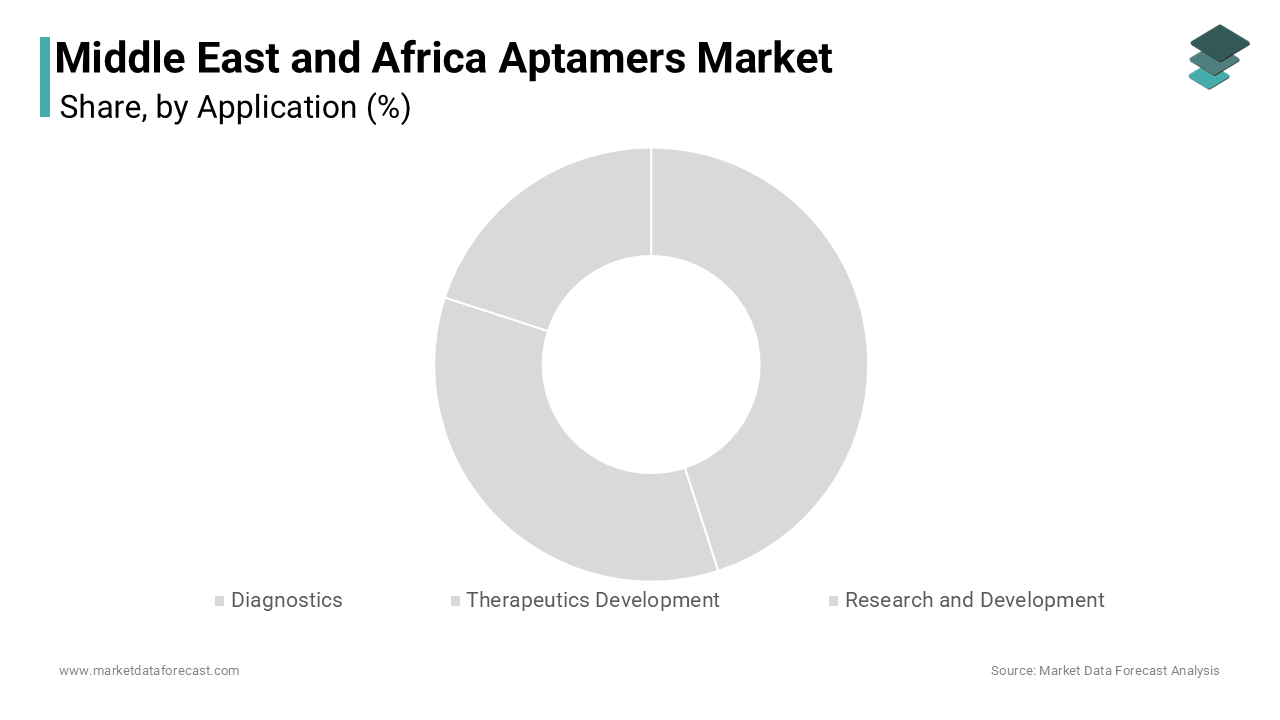
On the other side, the therapeutics development segment is the fastest-growing application segment and is estimated to record a CAGR of 12.7% over the forecast period in the regional market owing to the growing investments in precision medicine and targeted therapies. Governments in the Gulf Cooperation Council are prioritizing the treatment of chronic conditions such as cancer and diabetes, which require innovative therapeutic agents. According to the International Agency for Research on Cancer, cancer incidence in the Middle East is rising by 3% annually, creating a demand for targeted drugs with fewer side effects. Aptamers can be engineered to deliver drugs specifically to tumor cells, minimizing damage to healthy tissue. The National Cancer Institute emphasizes that targeted therapies improve survival rates and quality of life for patients. Pharmaceutical companies in Israel and Saudi Arabia are collaborating with global biotech firms to develop aptamer-drug conjugates. These partnerships facilitate technology transfer and local clinical trials. The ability of aptamers to penetrate tissues effectively and bind with high specificity makes them attractive candidates for next-generation biologics. Regulatory bodies are streamlining approval pathways for novel therapeutics to encourage innovation. As research capabilities expand, the transition from diagnostic to therapeutic applications gains momentum. This shift drives rapid growth in the therapeutics segment as new treatments enter clinical pipelines.
By End User Insights
The academic and research centres segment dominated the market by holding the major share of the Middle East and Africa aptamers market in 2025 due to substantial government funding for scientific research and capacity-building initiatives. Countries like Saudi Arabia and South Africa are investing heavily in establishing world-class research institutions to foster innovation in biotechnology. According to the King Abdullah University of Science and Technology, annual research expenditure in Saudi Arabia has exceeded 1 billion USD, supporting numerous projects in molecular biology and diagnostics. These institutions utilize aptamers extensively for basic research, target identification, and assay development. Additionally, the African Union Agenda 2063 emphasizes the importance of science and technology in driving economic development, leading to increased grants for university laboratories. Researchers in Egypt and Kenya use aptamers to study local disease strains and develop indigenous solutions. The availability of skilled graduates from these programs creates a talent pool for the broader industry. Collaborations with international universities further enhance research capabilities and access to advanced technologies. Consequently, academic centres remain the primary consumers of aptamer reagents and services as they drive the foundational knowledge required for commercial applications.
However, the bio-pharmaceutical companies segment is anticipated to register a CAGR of 13.4% over the forecast period in the regional market owing to the government incentives for local manufacturing and expansion of drug discovery pipelines. Nations across the Middle East and Africa are implementing policies to reduce dependence on imported medicines by promoting domestic production. The Saudi Food and Drug Authority reports that the number of licensed local pharmaceutical manufacturers has increased by 15% in recent years, supporting national health security goals. These companies are increasingly incorporating aptamer technology into their drug discovery platforms to develop novel biologics. The South African Medical Research Council highlights that local biotech firms are partnering with global entities to leverage aptamer expertise for vaccine and therapeutic development. This collaboration accelerates the translation of research into commercial products. The rise of contract research organizations in the region also supports bio-pharmaceutical companies by providing specialized aptamer services. As regulatory frameworks mature and investment flows into the sector, bio-pharmaceutical firms expand their R&D activities. This growth trajectory positions them as key drivers of aptamer adoption in the coming years.
COUNTRY ANALYSIS
Saudi Arabia Aptamers Market Analysis
Saudi Arabia dominated the Middle East and Africa aptamers market in 2025 and is poised to register rapid market acceleration driven by ambitious healthcare localization goals and expansive biotechnology investments over the next few years. Saudi Arabia holds a leading position in the Middle East and Africa Aptamers Market driven by Vision 2030 initiatives to transform the healthcare and biotechnology sectors. The Ministry of Investment reports that the kingdom aims to localize 40% of pharmaceutical manufacturing by 2030, creating demand for advanced molecular tools like aptamers. Significant investments in research infrastructure, such as the King Abdulaziz City for Science and Technology, support innovative projects in diagnostics and therapeutics. The rising prevalence of chronic diseases, including diabetes affecting over 18% of the adult population according to the International Diabetes Federation, drives research into targeted treatments. Government funding for genomic medicine and precision health initiatives further accelerates aptamer adoption. Local universities are producing a growing number of biotechnology graduates who contribute to research and development efforts. Strategic partnerships with international biotech firms facilitate technology transfer and capability building. The regulatory environment is becoming more supportive of innovation, with streamlined approval processes for new medical technologies. These factors combine to make Saudi Arabia a hub for aptamer research and application in the region.
United Arab Emirates Aptamers Market Analysis
The United Arab Emirates is projected to sustain steady, premium-driven expansion anchored by advanced digital healthcare infrastructure and medical tourism initiatives in the coming years. The United Arab Emirates maintains a strong position in the market characterized by advanced healthcare infrastructure and a focus on medical tourism and innovation. The Dubai Health Strategy 2021 aims to establish the UAE as a global center for medical excellence, driving demand for cutting-edge diagnostic and therapeutic tools. The Department of Health Abu Dhabi reports that healthcare spending per capita is among the highest in the region, supporting the adoption of premium technologies. Aptamers are increasingly used in personalized medicine programs offered by leading hospitals to attract international patients. The presence of free zones dedicated to healthcare and life sciences encourages foreign biotech companies to set up regional headquarters. These companies introduce advanced aptamer-based products to the local market. Collaborations between academic institutions like Khalifa University and industry players foster innovation in molecular diagnostics. The government’s emphasis on preventive healthcare also drives the use of aptamer-based screening tests for early disease detection. Regulatory harmonization within the GCC facilitates the distribution of approved products across borders. These elements sustain the UAE’s role as a key market for high-value aptamer applications.
Israel Aptamers Market Analysis
Israel is expected to experience continued technological leadership anchored by a vibrant startup ecosystem and advanced biomedical research over the next few years. Israel holds a unique and technologically advanced position in the regional market driven by its robust innovation ecosystem and strong biomedical research sector. The country is a global leader in biotechnology with hundreds of startups focused on diagnostics and therapeutics. The Israel Innovation Authority reports that the life sciences sector attracts billions in venture capital annually, fueling research into novel molecular tools, including aptamers. High prevalence of certain genetic disorders and cancers drives demand for precision medicine solutions where aptamers play a critical role. Universities such as the Hebrew University of Jerusalem are pioneers in aptamer research, contributing to global scientific knowledge. The Ministry of Health supports clinical trials and regulatory approvals for innovative therapies, ensuring rapid market entry. Israel serves as a bridge between Western markets and the Middle East, facilitating technology transfer. Strong intellectual property protection encourages investment in proprietary aptamer technologies. The integration of artificial intelligence in drug discovery further enhances the efficiency of aptamer development. These factors make Israel a significant contributor to the advancement and application of aptamer technology in the region.
COMPETITIVE LANDSCAPE
The competition in the Middle East and Africa Aptamers Market is characterized by the dominance of global life science giants and a nascent but growing local research sector. International players like Thermo Fisher and Merck leverage their extensive product portfolios and established distribution networks to serve academic and pharmaceutical clients effectively. Local competitors are emerging primarily in South Africa and Israel where strong biotechnology ecosystems support innovation in aptamer development. The market features moderate rivalry due to the specialized nature of aptamer technology which requires significant technical expertise. Strategic alliances between global suppliers and local research institutions are common to facilitate technology transfer and capacity building. Price sensitivity varies across the region with wealthy Gulf nations prioritizing quality while African markets focus on cost effective solutions. Regulatory heterogeneity poses a challenge for new entrants requiring adaptive compliance strategies. Intellectual property protection is strengthening in key markets encouraging investment in proprietary aptamer discoveries. Customer loyalty is driven by technical support reliability and product consistency. Overall the competitive landscape encourages collaboration and innovation to address unique regional health challenges through advanced molecular tools.
KEY MARKET PLAYERS
Companies playing an active role in the Middle East & Africa aptamers market include
- AM Biotechnologies
- Aptagen
- Aptamer Sciences Inc.
- Aptamer Solutions Ltd.
- Aptus Biotech S.L.
- Base Pair Biotechnologies Inc.
- NeoVentures Biotechnology Inc.
- SomaLogic Inc.
- TriLink BioTechnologies Inc.
- Vivonics, Inc.
Top Players in the Middle East and Africa Aptamers Market
Thermo Fisher Scientific Inc
Thermo Fisher Scientific Inc contributes significantly to the Middle East and Africa Aptamers Market by providing high quality reagents and synthesis services for nucleic acid research. The company supplies essential chemicals and automated platforms that enable academic and industrial researchers to develop custom aptamers efficiently. Thermo Fisher recently expanded its distribution network in South Africa and the United Arab Emirates to improve supply chain reliability for local laboratories. This strategic move ensures faster delivery of critical materials required for diagnostic and therapeutic development. The firm also offers technical training programs to enhance the skills of regional scientists in aptamer selection and validation. By combining robust logistics with educational support Thermo Fisher strengthens its position as a trusted partner for life science innovation in the region. Their commitment to quality and accessibility supports the growing demand for advanced molecular tools across diverse healthcare settings.
Merck KGaA
Merck KGaA plays a vital role in the market through its comprehensive portfolio of life science solutions including specialized kits for aptamer discovery and optimization. The company leverages its global expertise to provide tailored support for researchers focusing on infectious diseases and chronic conditions prevalent in the region. Merck recently launched new digital platforms that facilitate remote collaboration and data analysis for aptamer projects in Middle Eastern research institutions. This initiative helps overcome geographical barriers and accelerates the pace of scientific discovery. The company actively partners with local universities to sponsor research grants and provide access to advanced technologies. By fostering a collaborative ecosystem Merck enhances its reputation as a key enabler of biotechnology advancement. Their focus on innovation and customer support drives the adoption of aptamer technologies in both academic and commercial sectors throughout the Middle East and Africa.
Bio Rad Laboratories Inc
Bio Rad Laboratories Inc maintains a strong presence in the market by offering reliable instruments and consumables for nucleic acid analysis and aptamer characterization. The company provides high performance liquid chromatography systems and electrophoresis equipment that are essential for validating aptamer purity and binding affinity. Bio Rad recently established a new technical support center in Egypt to assist local researchers with troubleshooting and method development. This expansion improves service responsiveness and builds stronger relationships with key academic and pharmaceutical clients. The firm also participates in regional scientific conferences to showcase latest advancements in aptamer technology and applications. By delivering consistent quality and localized support Bio Rad reinforces its leadership in the life sciences sector. Their efforts to empower local scientists contribute to the overall growth and sophistication of the aptamer market in the Middle East and Africa.
Top Strategies Used by Key Market Participants
Key players in the Middle East and Africa Aptamers Market primarily focus on strengthening local distribution networks and forming strategic partnerships to enhance market penetration. Companies establish regional hubs in logistical centers like Dubai and Johannesburg to improve supply chain efficiency and reduce lead times for critical reagents. Collaborating with local distributors helps navigate complex regulatory environments and cultural nuances in diverse markets. Investing in training and education programs for healthcare professionals and researchers builds brand loyalty and ensures proper product utilization. Manufacturers also prioritize localization strategies by offering customized kits and technical support tailored to regional disease profiles. Digital transformation initiatives such as online ordering platforms are adopted to streamline procurement processes and improve transparency. These strategies collectively address infrastructure challenges and build resilience in a fragmented market landscape while fostering long term customer relationships.
MARKET SEGMENTATION
This research report has been segmented and sub-segmented the Middle East & Africa Aptamers Market into the following categories:
By Type
- Peptide aptamers
- Nucleic Acid aptamers
- DNA-Based Aptamers
- RNA-Based Aptamers
- XNA-Based Aptamers
By Application
- Diagnostics
- Therapeutics Development
- Research and Development
By End User
- Pharmaceutical Companies
- Bio-Pharmaceutical companies
- Academic and Research Centres
By Country
- KSA
- UAE
- Israel
- The rest of GCC countries
- South Africa
- Ethiopia
- Kenya
- Egypt
- Sudan
- Rest of MEA