- Product Description Description
- Table of Contents TOC
- List of Table & Figure LOT
- Get Free Sample PDF Sample PDF
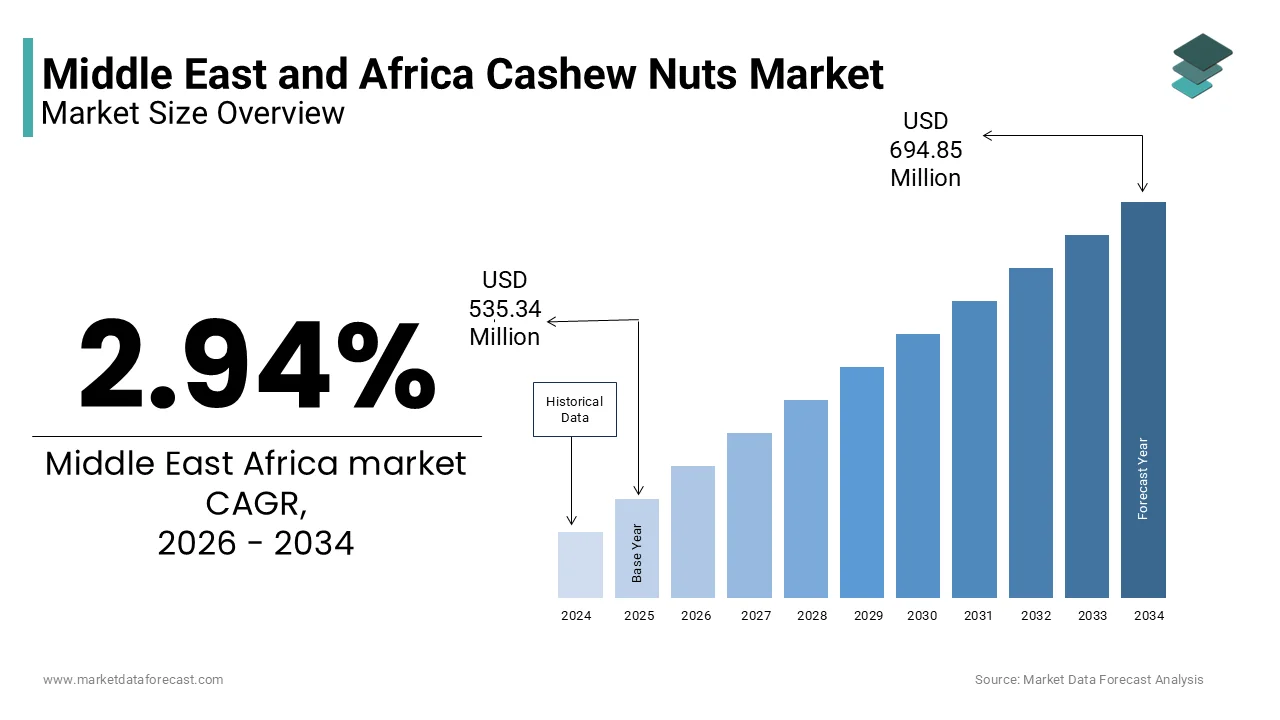
Market Size, 2025
$535 MnMarket Estimate, 2026
$551 MnMarket Forecast, 2034
$694 MnCAGR, 2026–2034
2.94%Middle East and Africa Cashew Nuts Market Report Summary
The Middle East and Africa cashew nuts market was valued at USD 535.34 million in 2025, is estimated to reach USD 551.08 million in 2026, and is projected to reach USD 694.85 million by 2034, growing at a CAGR of 2.94% during the forecast period. Market growth is driven by increasing consumer preference for healthy snack options, rising awareness of the nutritional benefits of nuts, and expanding retail distribution channels. Cashew nuts are widely consumed due to their rich protein, healthy fats, and versatile usage in snacks and food applications. The growing demand for plant based and nutrient rich foods is further supporting steady market growth across the region.
Key Market Trends
- Rising demand for healthy and protein rich snacks is driving market growth.
- Increasing awareness of nutritional benefits of nuts is boosting consumption.
- Growing adoption of plant based and functional foods is supporting market expansion.
- Expansion of organized retail and supermarket chains is enhancing product accessibility.
- Innovation in flavored and packaged cashew products is influencing consumer preferences.
Segmental Insights
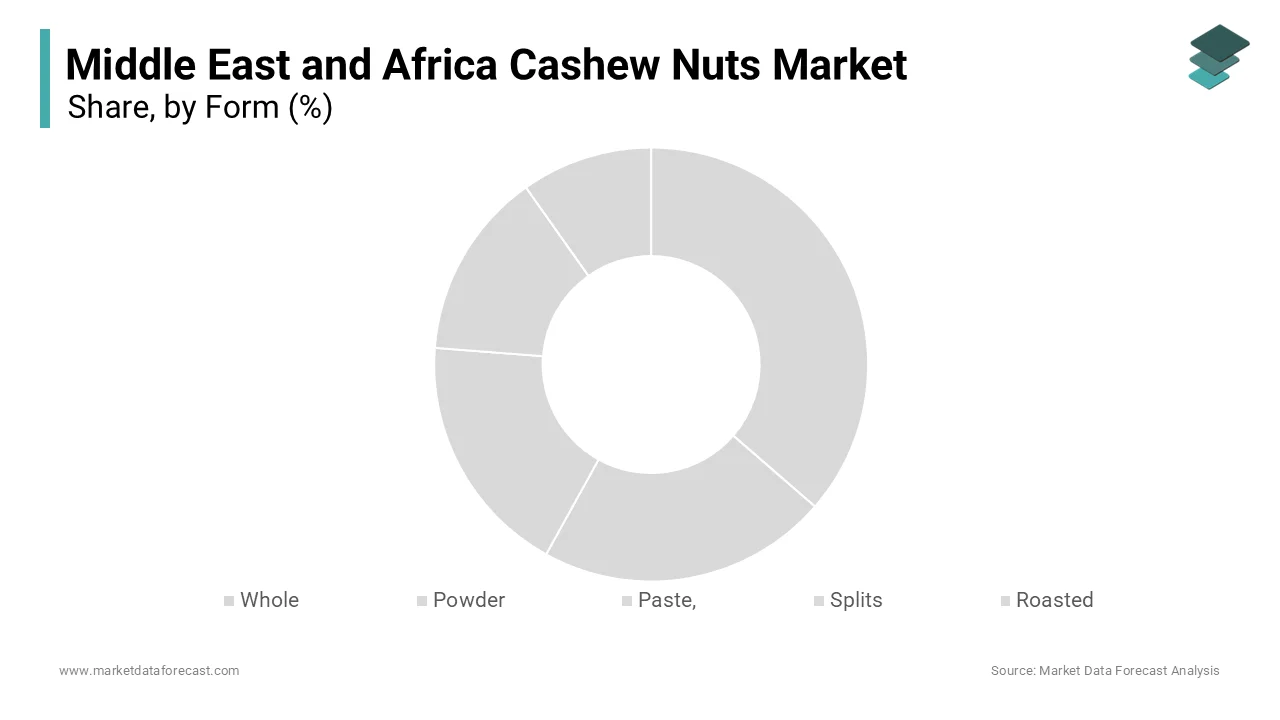
- Based on form, the whole cashew nuts segment accounted for 48.9% of the Middle East and Africa cashew nuts market share in 2025. This dominance is attributed to strong consumer preference for natural and minimally processed nut products.
- Based on usage, the snacks segment held 41.1% of the Middle East and Africa cashew nuts market share in 2025, driven by rising consumption of convenient and nutritious snack products.
- Based on distribution channel, the supermarkets segment accounted for 24.7% of the Middle East and Africa cashew nuts market share in 2025, supported by broad product availability and organized retail expansion.
Competitive Landscape
The Middle East and Africa cashew nuts market is moderately competitive, with key players focusing on product quality, packaging innovation, and expansion of distribution networks to strengthen their market position. Companies are investing in premium nut products, sustainable sourcing, and retail partnerships. Prominent players in the Middle East and Africa cashew nuts market include Ajanta Industries, Achal Cashew nuts, Agrocel Industries, ALIEN GREEN, BATA FOOD, Cascade Agroindustrial S.A, CBL Natural Foods (PVT) LTD, DIVINE FOODS, Delphi Organic, Aryan International, and Tierra Farm.
 Download Free Sample Report
Middle East and Africa Cashew Nuts Market Size
The Middle East and Africa cashew nuts market size was valued at USD 535.34 million in 2025 and is projected to reach USD 694.85 million by 2034 from USD 551.08 million in 2026, growing at a CAGR of 2.94%.
Cashew nuts are the edible, kidney-shaped seeds of the Anacardium occidentale, a tropical evergreen tree. This market is characterized by a unique dichotomy where Africa serves as the primary global supplier of raw cashew nuts while the Middle East acts as a significant consumption hub driven by high disposable incomes and culinary traditions. The definition extends beyond simple agricultural trade to include value added activities such as shelling roasting packaging and export logistics. Africa's share of global raw cashew nut production has grown significantly and now accounts for over 55% to 60% of the global total, surpassing the "approximately 50 percent" figure. West Africa alone (led by Côte d'Ivoire, Nigeria, and Benin) produces a substantial majority of this. Côte d'Ivoire is the world's largest producer, followed by India and Vietnam globally, with Tanzania and Nigeria remaining key African producers. The region's climate provides ideal conditions for Anacardium occidentale cultivation ensuring consistent yields. In the Middle East cashew nuts are integral to traditional cuisines confectionery and hospitality sectors reflecting deep cultural integration. The market dynamics are influenced by global commodity prices regional trade agreements and evolving consumer preferences toward healthy snacking. The African Union’s Agenda 2063 emphasizes agro processing as a key driver for economic transformation highlighting the strategic importance of this sector. This foundational role positions cashew nuts not merely as a commodity but as a vital component of rural livelihoods and regional food security frameworks.
MARKET DRIVERS
Rising Health Consciousness and Demand for Plant Based Proteins
The increasing awareness of health and wellness among consumers in the region is a key reason for the growth of the Middle East and Africa cashew nuts market. This is due to the nut’s rich nutritional profile. Cashews are an excellent source of plant based proteins healthy monounsaturated fats and essential minerals such as magnesium and zinc which align with modern dietary trends. The World Health Organization reports that the prevalence of non-communicable diseases, such as diabetes and cardiovascular issues, is rising in the Eastern Mediterranean Region. Market analysts attribute a consequent shift in consumer demand toward healthier snack alternatives to this growing health burden. The Global Nutrition Report highlights the urgent necessity of making nutrient-dense foods affordable and accessible to combat malnutrition and lifestyle diseases, noting that the world is currently 'off course' to meet global nutrition targets. In the Middle East particularly in Gulf Cooperation Council countries high income levels enable consumers to prioritize premium health foods including organic and raw cashews. The International Diabetes Federation reports that the Middle East and North Africa region has the highest regional prevalence of diabetes globally. Food industry analysts cite this high prevalence as a key driver for the growing market demand for low glycemic index products. Cashew nuts fit this requirement perfectly offering satiety without spiking blood sugar levels. Furthermore the rise of veganism and flexitarian diets in urban centers across South Africa and the United Arab Emirates has boosted the popularity of cashew based dairy alternatives such as milk and cheese. This shift in consumer behavior is supported by extensive marketing campaigns by health organizations promoting the benefits of nuts. Consequently the perception of cashews as a functional food rather than just a treat sustains robust demand across both retail and food service sectors.
Expansion of the Hospitality and Confectionery Industries
The robust growth of the hospitality and confectionery industries in the MEA region is a major factor behind the demand for cashew nuts as a key ingredient in various culinary applications, which fuels the expansion of the Middle East and Africa cashew nuts market. The Middle East especially Dubai and Riyadh has emerged as a global tourism hub with luxury hotels and restaurants utilizing cashews in gourmet dishes desserts and garnishes. The World Travel and Tourism Council projects that the travel and tourism sector in the Middle East will contribute significantly to regional GDP, reaching approximately $385.8 billion. Hospitality sector reports associate this tourism growth with a rising demand for high-quality food and beverage supplies. Cashew nuts are extensively used in traditional sweets such as baklava and modern confectionery items like chocolates and energy bars. In Africa the expanding middle class is increasing expenditure on processed foods and snacks leading to higher consumption of packaged cashew products. The African Development Bank notes that the agro processing sector is gaining momentum with local manufacturers producing value added cashew snacks for domestic and export markets. The proliferation of international fast food chains and coffee shops in major African cities further integrates cashews into mainstream consumption habits. Additionally the Ramadan season sees a spike in nut consumption for Iftar meals and gift boxes reinforcing seasonal demand peaks. The versatility of cashews in both sweet and savory preparations makes them indispensable for chefs and food manufacturers. This structural integration into the food service supply chain ensures consistent and growing demand irrespective of broader economic fluctuations.
MARKET RESTRAINTS
Limited Local Processing Capacity and Infrastructure Deficits
The limited local processing capacity and inadequate infrastructure in many African countries are a significant restraint to the Middle East And Africa Cashew Nuts Market. According to the African Cashew Alliance (ACA) 2024 Industry Report, Africa produces over 55% of the world's raw cashew nuts but currently processes between 15% and 20% of that harvest locally, a significant increase from the sub-10% levels seen a decade ago. Most raw nuts are exported to Asia particularly Vietnam and India for shelling and processing due to the lack of advanced machinery and technical expertise in the region. This reliance on external processing limits value addition and revenue retention within African economies. The World Bank emphasizes that poor transportation networks and unreliable electricity supply increase operational costs for local processors making them less competitive globally. Inadequate storage facilities lead to post harvest losses as raw nuts are susceptible to mold and aflatoxin contamination if not dried and stored properly. The FAO's State of Food and Agriculture (SOFA) reports that while general post-harvest losses in Sub-Saharan Africa can hit 30%, losses specifically for tree nuts like cashews are estimated at 10-15%, usually resulting from high moisture content and inadequate warehouse ventilation. This inefficiency reduces the quality and quantity of kernels available for the domestic and regional markets. Furthermore the Middle East relies heavily on imported processed kernels which subjects the market to global price volatility and supply chain disruptions. The lack of integrated supply chains from farm to factory hinders the development of a robust local industry. The region remains dependent on raw exports due to a lack of significant investment in processing infrastructure and logistics. As a result, it misses out on higher-margin opportunities.
Price Volatility and Dependence on Global Market Fluctuations
Price volatility and dependence on global market fluctuations hinder the expansion of the Middle East and Africa Cashew Nuts Market. This affects both producers and consumers. Cashew nuts are traded as a global commodity with prices determined by international supply and demand dynamics rather than local conditions. According to the International Monetary Fund commodity price shocks can have profound effects on emerging economies relying on agricultural exports. Fluctuations in global prices often result from weather conditions in major producing countries policy changes in importing nations and currency exchange rate variations. The United Nations Conference on Trade and Development notes that smallholder farmers in Africa who produce the majority of raw cashews are particularly vulnerable to these price swings as they lack hedging mechanisms. When global prices drop local incomes decline reducing investment in farm maintenance and quality improvement. Conversely high global prices can make processed cashews expensive for local consumers in the Middle East and Africa limiting domestic consumption. The volatility also discourages long term investments in processing facilities as investors seek stable returns. Additionally the dominance of a few large trading companies in the global cashew market creates an oligopsony where buyers have significant power over pricing. This imbalance restricts the ability of African producers to negotiate fair prices. The uncertainty surrounding future prices complicates planning for both farmers and processors thereby restraining the overall stability and growth potential of the regional market.
MARKET OPPORTUNITIES
Development of Domestic Processing Industries and Value Addition
The development of domestic processing industries and value addition offers a substantial opportunity for the Middle East and Africa Cashew Nuts Market. This enables capture of higher economic value. Governments in African countries such as Côte d'Ivoire Ghana and Tanzania are implementing policies to incentivize local shelling and processing through tax breaks and subsidies. According to the African Union the establishment of local processing plants can create thousands of jobs and significantly increase the export value of cashew products. By processing raw nuts locally Africa can export higher margin kernel products instead of low value raw nuts. The World Bank emphasizes that agro industrialization is key to transforming African economies and reducing poverty. Investments in modern shelling and peeling technologies can improve kernel recovery rates and quality making African cashews more competitive globally. In the Middle East there is an opportunity to establish regional packaging and branding hubs that cater to the premium retail market. Local brands can leverage the proximity to African sources to ensure freshness and traceability appealing to health conscious consumers. The European Union’s deforestation regulations and sustainability standards also favor processed products with verified supply chains. By adopting certified sustainable practices African processors can access premium markets in Europe and the Middle East. Furthermore the production of by products such as cashew apple juice and shell liquid offers additional revenue streams. This diversification enhances the resilience of the industry. The shift toward local value addition aligns with national development goals and offers a pathway to economic independence and growth.
Expansion into Organic and Specialty Cashew Segments
The expansion into organic and specialty cashew segments provides a clear path for market participants to differentiate their products and capture premium prices, which is expected to boost the growth of the Middle East and Africa cashew nuts market. Consumer demand for organic and non GMO food products is rising globally driven by health and environmental concerns. According to the Research Institute of Organic Agriculture the global market for organic food continues to grow with significant potential in emerging markets. African countries with vast areas of uncultivated land are well positioned to produce organic cashews without heavy pesticide use. Certification bodies such as Ecocert and USDA Organic provide frameworks for verifying organic status enabling access to high value markets. In the Middle East affluent consumers are increasingly willing to pay a premium for certified organic and ethically sourced nuts. The introduction of flavored roasted cashews infused with local spices such as za'atar or harissa can appeal to regional tastes and create unique product identities. The International Trade Centre highlights that niche products with strong storytelling and cultural relevance perform well in export markets. Additionally the development of cashew based vegan products such as butter milk and cream caters to the growing plant based diet trend. Social media marketing can effectively target younger demographics interested in healthy and sustainable lifestyles. By focusing on quality certification and innovation companies can build strong brand loyalty. This strategic shift toward premium segments reduces competition with commoditized raw nuts and enhances profitability for growers and processors alike.
MARKET CHALLENGES
Climate Change and Environmental Stressors
Climate change and environmental stressors present a formidable challenge to the Middle East and Africa Cashew Nuts Market. This threatens crop yields and quality. Cashew trees are sensitive to changes in temperature rainfall patterns and extreme weather events which are becoming more frequent due to global warming. According to the Intergovernmental Panel on Climate Change sub Saharan Africa is highly vulnerable to climate impacts with projections indicating increased droughts and erratic rainfall. These conditions can lead to reduced flowering and nut set resulting in lower productivity. The Food and Agriculture Organization of the United Nations reports that climate variability already affects agricultural output in many African nations forcing farmers to adapt or abandon crops. Pests and diseases such as the tea mosquito bug and anthracnose thrive in changing climatic conditions further damaging crops. The lack of irrigation infrastructure in most cashew growing regions means farmers rely entirely on rainfed agriculture making them susceptible to dry spells. In the Middle East water scarcity is a persistent issue limiting the potential for expanding cultivation despite high demand. The United Nations Environment Programme emphasizes that sustainable water management is critical for agricultural resilience. Adaptation strategies such as developing drought resistant varieties and improving soil health require significant research and investment. However smallholder farmers often lack the resources to implement these measures. The uncertainty posed by climate change undermines long term planning and investment in the sector. Mitigating these risks requires coordinated efforts between governments research institutions and the private sector to ensure the sustainability of cashew production.
Pest Infestations and Disease Outbreaks
Pest infestations and disease outbreaks pose a severe obstacle to the quality and quantity of cashew production in the region, which slows down the expansion of the Middle East and Africa cashew nuts market. The tea mosquito bug Helopeltis spp is a major pest that causes significant damage to cashew flowers and young nuts leading to substantial yield losses. According to CABI’s Action on Invasives, specific invasive pests can cause localized yield losses of up to 70-80% (as seen with the Tomato Leafminer), though average annual losses across the region are generally estimated at 30-40% for most major crops. Other pests such as the cashew stem borer and fruit sucking moth also contribute to crop degradation. Diseases like anthracnose and powdery mildew further exacerbate the problem affecting leaf health and nut development. The lack of access to affordable and effective pesticides and biological control methods limits farmers ability to combat these threats. The World Bank notes that extension services in many African countries are underfunded leaving farmers without adequate technical support. Improper application of chemicals can lead to residue issues affecting export compliance and consumer safety. In addition the spread of diseases is facilitated by poor orchard management practices such as overcrowding and lack of pruning. The International Plant Protection Convention highlights the importance of integrated pest management strategies to minimize chemical use and enhance sustainability. However implementing these practices requires training and resources that are often unavailable to smallholders. The resulting variability in crop quality affects marketability and prices. Addressing these biological challenges is essential for stabilizing production and ensuring the long term viability of the cashew industry in the region.
REPORT COVERAGE
| REPORT METRIC | DETAILS |
| Market Size Available | 2025 to 2034 |
| Base Year | 2025 |
| Forecast Period | 2026 to 2034 |
| CAGR | 2.94% |
| Segments Covered | By Form, Usage, Distribution Channel, And Region |
| Various Analyses Covered | Global, Regional and Country Level Analysis; Segment-Level Analysis; DROC; PESTLE Analysis; Porter’s Five Forces Analysis; Competitive Landscape; Analyst Overview of Investment Opportunities |
| Regions Covered | KSA, UAE, Israel, South Africa, Ethiopia, Kenya, Egypt, Sudan and Rest of MEA |
| Market Leaders Profiled | Ajanta Industries, Achal Cashew nuts, Agrocel Industries, ALIEN GREEN, BATA FOOD, Cascade Agroindustrial S.A, CBL Natural Foods (PVT) LTD, DIVINE FOODS, Delphi Organic, Aryan International, Tierra Farm |
SEGMENTAL ANALYSIS
By Form Insights
The whole cashew nuts segment was the largest segment in the Middle East and Africa Cashew Nuts Market and occupied a 48.9% share in 2025. This prominence of the segment is supported by its unparalleled culinary versatility and status as a premium snack item. In the Middle East whole cashews are extensively used in traditional hospitality offerings such as mixed nut platters served with Arabic coffee and are integral ingredients in festive dishes like Kabsa and Mandi. According to the Food and Agriculture Organization of the United Nations the cultural significance of serving whole nuts during Ramadan and Eid celebrations drives substantial seasonal demand. Consumers perceive whole kernels as higher quality compared to splits or pieces which reinforces their preference despite higher price points. The visual appeal of intact white kernels makes them ideal for gifting and high end confectionery applications. In Africa particularly in urban centers like Lagos and Nairobi whole roasted cashews are gaining popularity as a healthy on the go snack among the growing middle class. The World Bank notes that rising disposable incomes in these regions are shifting consumption patterns toward premium packaged foods. Whole cashews retain their texture and flavor better than processed forms making them the preferred choice for both direct consumption and gourmet cooking. Retailers prioritize whole cashews in their inventory due to higher turnover rates and consumer loyalty. The ability of whole cashews to command premium pricing ensures their dominance in terms of revenue share. This segment benefits from strong brand recognition and established supply chains that prioritize the preservation of kernel integrity during processing and transport. The superior shelf stability and export potential of whole cashew nuts further solidify their dominance in the regional market. Whole kernels when properly vacuum packed or nitrogen flushed have a longer shelf life compared to powdered or paste forms which are prone to oxidation and rancidity. According to the International Trade Centre the global demand for whole cashew kernels remains robust with the Middle East serving as a key re export hub to neighboring regions. The ability to store whole cashews for extended periods allows traders to manage inventory effectively and mitigate risks associated with price volatility. In Africa where infrastructure challenges can delay distribution the durability of whole cashews ensures product quality reaches remote markets. The global trade dynamic influences local markets as domestic suppliers align their standards with international requirements to access broader opportunities. The standardization of grading systems for whole cashews such as W180 and W240 facilitates transparent trading and builds trust among buyers. Furthermore the aesthetic uniformity of whole cashews makes them suitable for luxury retail packaging which is increasingly popular in Gulf Cooperation Council countries. The combination of logistical advantages and high global demand ensures that whole cashews remain the cornerstone of the market driving both volume and value growth across the Middle East and Africa.
The cashew paste segment is anticipated to witness the fastest CAGR of 8.5% over the forecast period owing to the increasing adoption of plant based diets and the demand for dairy alternatives in the region. Cashew paste serves as a base for creating creamy vegan milk cheeses and yogurts which are gaining traction among health conscious and lactose intolerant consumers. In countries like the United Arab Emirates and South Africa specialty cafes and restaurants are incorporating cashew based creams into menus appealing to diverse dietary preferences. The smooth texture and neutral flavor of cashew paste make it an ideal substitute for dairy cream in both sweet and savory applications. The Good Food Institute reports that investment in alternative protein sectors is increasing in Africa encouraging local startups to develop innovative cashew based products. Additionally the nutritional profile of cashew paste rich in healthy fats and proteins aligns with wellness trends promoting heart health and weight management. Social media influencers and nutritionists are actively promoting the benefits of plant based diets further driving consumer trial and adoption. This shift toward sustainable and healthy eating habits creates a robust demand pipeline for cashew paste positioning it as a high growth category in the regional market. The expansion of gourmet culinary applications and the convenience food sector contributes significantly to the rapid growth of the cashew paste segment. Chefs and home cooks in the Middle East and Africa are increasingly using cashew paste to add richness and depth to sauces soups and desserts without relying on heavy cream or butter. According to the Culinary Institute of America the use of nut pastes in modern cuisine is trending as consumers seek cleaner and more natural ingredients. Cashew paste is utilized in preparing traditional Middle East dips and spreads offering a unique twist on classic recipes. In Africa the busy urban lifestyle is driving demand for ready to use ingredients that simplify meal preparation. Pre packaged cashew paste offers convenience and consistency saving time for consumers who wish to incorporate premium flavors into their daily meals. Furthermore the versatility of cashew paste allows it to be used in baking smoothies and baby food formulations expanding its application scope. Manufacturers are responding by introducing single serve packs and flavored variants to cater to specific consumer needs. The ease of integration into various recipes enhances the appeal of cashew paste among younger demographics who experiment with global cuisines. This culinary innovation and convenience factor drive the exceptional growth trajectory of the cashew paste segment in the region.
By Usage Insights
The snacks segment led the Middle East And Africa Cashew Nuts Market and captured a 41.1% share in 2025. This leading position of the segment is attributed to the deep rooted cultural tradition of hospitality and social gathering where nuts play a central role. In the Middle East serving mixed nuts including cashews to guests is a symbol of generosity and respect deeply embedded in social etiquette. According to the World Tourism Organization the hospitality sector in Gulf countries is vast with hotels and lounges consuming significant quantities of premium nuts for guest amenities. Cashews are often served alongside dates and chocolates during religious festivals such as Ramadan and Eid creating predictable spikes in demand. In Africa cashew nuts are increasingly consumed as standalone snacks in urban areas where modern retail formats are expanding. The African Development Bank notes that the rise of the middle class is leading to higher expenditure on packaged snacks and convenience foods. Roasted and salted cashews are popular choices for office snacking and school lunches due to their portability and nutritional benefits. The convenience of ready to eat packaged cashews appeals to busy professionals and students alike. Retailers dedicate prominent shelf space to nut snacks reflecting their high turnover and profitability. The perception of cashews as a healthy yet indulgent treat ensures consistent demand across all age groups. This cultural and lifestyle alignment cements the position of snacks as the dominant usage segment in the regional market. The growing health consciousness among consumers in the Middle East and Africa is driving the dominance of the snacks segment as individuals seek nutritious alternatives to sugary and processed junk food. Cashew nuts are recognized for their high content of healthy fats proteins and antioxidants making them an ideal choice for health aware shoppers. According to the World Health Organization the prevalence of obesity and diabetes in the region is prompting government initiatives to promote healthier eating habits. Consumers are actively replacing chips and candies with nuts to manage weight and improve overall well being. The Global Nutrition Report highlights that nut consumption is associated with reduced risk of cardiovascular diseases reinforcing their appeal as a functional snack. In South Africa and the United Arab Emirates fitness enthusiasts and athletes prefer cashews for post workout recovery due to their energy density. Marketing campaigns by major brands emphasize the natural and wholesome attributes of cashew snacks attracting a loyal customer base. The availability of unsalted and raw options caters to those monitoring sodium intake further broadening the market reach. Supermarkets and health food stores report steady growth in nut sales as shoppers prioritize clean label products. This sustained focus on health and wellness ensures that cashew nuts remain a staple in the snack category driving volume and value growth in the Middle East and Africa.
The dairy products segment is likely to experience the fastest CAGR of 9.2% from 2026 to 2034 due to the surge in vegan and lactose free product demand. Cashew milk and cheese are gaining popularity as premium alternatives to cow's milk due to their creamy texture and mild flavor. In cosmopolitan cities like Dubai and Cape Town specialty grocery stores and cafes offer a wide range of cashew based yogurts and creams catering to diverse dietary needs. The lactose intolerant population in the region is substantial creating a dedicated market for dairy free alternatives. The International Dairy Federation notes that the global trend toward plant based dairy is influencing local markets with multinational brands entering the region. Local startups are also emerging to produce artisanal cashew cheeses and milks leveraging indigenous ingredients to create unique flavor profiles. Social media platforms play a crucial role in educating consumers about the benefits of plant based diets driving trial and adoption. The premium positioning of cashew dairy products allows manufacturers to target affluent consumers willing to pay for high quality sustainable options. This convergence of health ethics and culinary innovation drives the rapid expansion of the dairy products segment in the regional market. Innovation in functional and fortified dairy alternatives contributes to the rapid growth of the cashew based dairy segment as manufacturers enhance nutritional value and taste. Companies are fortifying cashew milk with calcium vitamin D and B12 to match the nutritional profile of conventional dairy addressing consumer concerns about nutrient adequacy. According to the Food and Agriculture Organization of the United Nations fortification strategies are essential for promoting the acceptance of plant based milks in regions where dairy is a primary nutrient source. In the Middle East where vitamin D deficiency is common fortified cashew milk offers a viable solution for health conscious individuals. Manufacturers are also experimenting with fermentation techniques to create probiotic rich cashew yogurts that support gut health. The International Probiotics Association highlights the growing interest in functional foods that offer health benefits beyond basic nutrition. These innovations appeal to wellness oriented consumers who seek holistic health solutions. In Africa where access to fresh dairy can be limited in rural areas shelf stable cashew milk offers a nutritious alternative with a longer shelf life. The development of barista edition cashew milks that froth well has expanded their use in the coffee culture prevalent in urban centers. Collaborations with nutritionists and dietitians help validate the health claims of these products building consumer trust. This focus on functionality and quality drives the exceptional growth of the cashew dairy segment in the Middle East and Africa.
By Distribution Channel Insights
The supermarkets segment held the majority share of 24.7% of the Middle East And Africa Cashew Nuts Market in 2025. This supremacy of the segment is credited to its extensive reach organized retail environment and high level of consumer trust. In the Middle East large supermarket chains such as Carrefour Lulu Hypermarket and Spinneys dominate the grocery landscape offering a wide variety of packaged cashew products. The controlled environment of supermarkets ensures product quality and freshness which is critical for perishable items like nuts. Consumers prefer supermarkets for the ability to compare brands prices and packaging sizes before purchasing. In Africa the expansion of modern retail formats in countries like Kenya Nigeria and South Africa has increased access to premium cashew products. Supermarkets often feature promotional displays and loyalty programs that encourage repeat purchases of cashew nuts. The availability of private label and international brands under one roof provides consumers with diverse choices. The reliability of supply and consistent stock levels build shopper confidence. This combination of accessibility variety and trust solidifies the position of supermarkets as the primary distribution channel for cashew nuts in the region. The integration of private label and premium brand offerings in supermarkets further drives their dominance in the cashew nuts market. Supermarket chains are increasingly developing their own private label nut ranges which offer competitive pricing and consistent quality appealing to budget conscious shoppers. At the same time supermarkets dedicate shelf space to premium international and local brands that cater to affluent consumers seeking organic and specialty cashews. This dual strategy allows supermarkets to capture a broad spectrum of customers from different socioeconomic backgrounds. The ability to negotiate directly with suppliers enables supermarkets to offer attractive discounts and bundle deals driving volume sales. Supermarkets also invest in cold chain logistics to maintain the freshness of nuts ensuring a superior shopping experience. The presence of in store bakeries and delis that use cashews in prepared foods further stimulates impulse purchases. This comprehensive approach to merchandising and supply chain management ensures that supermarkets remain the leading channel for cashew nut distribution in the Middle East and Africa.
The specialist stores segment is on the rise and is expected to be the fastest growing segment in the market by witnessing a CAGR of 7.8% during the forecast period. This swift expansion of the segment is propelled by the increasing demand for premium and organic products. These stores including health food shops gourmet boutiques and nut specialty outlets cater to discerning consumers who prioritize quality sourcing and unique varieties. In the Middle East specialist stores offer a curated selection of organic raw and flavored cashews that are not available in mainstream supermarkets. The rise of wellness tourism and expatriate communities in Gulf countries has created a niche market for premium health foods. In Africa urban centers are seeing a proliferation of health food stores that cater to the growing middle class interested in clean eating. Specialist stores provide expert advice and personalized service enhancing the shopping experience for knowledgeable consumers. The ability to offer bulk bins and custom blends allows customers to tailor purchases to their specific needs. This focus on specialization and quality drives the rapid growth of specialist stores as a preferred channel for premium cashew nuts. Experiential retail and direct consumer engagement strategies employed by specialist stores contribute to their rapid growth in the cashew nuts market. These stores often feature tasting stations and interactive displays that allow customers to sample different varieties of cashews before purchasing. Specialist stores educate consumers about the origin processing and benefits of cashew nuts fostering a deeper connection with the product. In the Middle East luxury nut boutiques offer elegant packaging and gift sets appealing to the culture of generous gifting. The ability to customize gifts with personal messages enhances the emotional value of the purchase. In Africa specialist stores collaborate with local farmers to promote traceability and sustainability stories resonating with ethically conscious shoppers. Social media integration allows these stores to engage with customers online sharing recipes and health tips that drive store visits. This focus on experience and education differentiates specialist stores from conventional retailers. The emphasis on community and transparency drives the exceptional growth of this channel in the Middle East and Africa.
REGIONAL ANALYSIS
Saudi Arabia Cashew Nuts Market Analysis
Saudi Arabia maintained dominance by accounting for a 22.7% share of the Middle East and Africa cashew nuts market in 2025. This dominance of the country’s market is driven by its large population and high disposable income. The kingdom serves as a primary consumption hub where cashews are increasingly integrated into both traditional confectionery and modern healthy snacking habits. Data from the General Authority for Statistics (GASTAT) indicates that 63% of Saudi citizens are under the age of 30, a demographic trend often cited by industry analysts as a driver for retail sector growth. The demand for premium roasted and flavored cashew variants is rising due to the influence of global wellness trends and the proliferation of international food chains. The government’s Vision 2030 initiative promotes food security and diversification which encourages imports of high quality nutritious foods including nuts. The Saudi Food and Drug Authority (SFDA) enforces strict technical regulations on imported foods, including maximum residue limits for contaminants in nuts to ensure safety. The expansion of modern retail outlets and e commerce platforms further facilitates access to diverse cashew products across the kingdom. Religious tourism also contributes to demand as visitors purchase packaged nuts as gifts. The market status is characterized by a shift towards value added products such as honey coated or spiced cashews which offer higher margins for retailers. This dynamic environment positions Saudi Arabia as a critical driver of volume and value growth in the regional cashew nuts sector.
United Arab Emirates Cashew Nuts Market Analysis
The United Arab Emirates was the second-largest player in the Middle East and Africa cashew nuts market and captured a share of 18.3% in 2025. It serves as a strategic re export hub and a high value consumption market. The country’s cosmopolitan population drives demand for premium and organic cashew nuts which are widely used in gourmet cuisine and health focused diets. The Dubai Department of Economy and Tourism (DET) identifies the food and beverage sector as a strategic pillar of Dubai's diversified economy, particularly through its focus on gastronomy and tourism. The UAE’s advanced logistics infrastructure enables efficient distribution of cashew nuts to neighboring Gulf Cooperation Council countries and wider African markets. Consumers in the UAE exhibit a strong preference for branded and packaged cashew products due to heightened awareness of food safety and quality standards. Data from the Federal Competitiveness and Statistics Centre (FCSC) confirms that per capita expenditure on food and beverages in the UAE is substantial, reflecting high disposable incomes. The presence of numerous international supermarkets and specialty health stores provides extensive shelf space for diverse cashew offerings. Additionally the growing vegan and plant based food movement in cities like Dubai and Abu Dhabi boosts demand for cashew milk and cheese alternatives. This dual role as a consumer and distributor solidifies the UAE’s influential status in the regional cashew nuts market landscape.
Egypt Cashew Nuts Market Analysis
Egypt is another key player in the Middle East and Africa cashew nuts market by leveraging its large population base and growing urban middle class. While traditional snacks dominate the local palate there is a noticeable shift towards imported nuts like cashews among affluent consumers in Cairo and Alexandria. As per the Central Agency for Public Mobilization and Statistics the population of Egypt exceeds 100 million people creating a vast potential customer base for affordable snack options. The market status is characterized by a mix of informal street vendors selling loose nuts and formal retail channels offering packaged brands. Economic challenges and currency fluctuations impact the affordability of imported cashews making them a luxury item for many households. According to the Food and Agriculture Organization of the United Nations Egypt relies heavily on imports for tree nuts as local production is negligible. The government’s efforts to stabilize the economy and control inflation are crucial for maintaining consumer purchasing power for non essential food items. The hospitality and tourism sectors also contribute to demand as hotels and restaurants use cashews in various dishes and desserts. Despite price sensitivity the increasing exposure to global food trends through social media and travel is driving gradual growth in cashew consumption among younger demographics in urban centers.
Kenya Cashew Nuts Market Analysis
Kenya is moving ahead steadfastly in the Middle East and Africa cashew nuts market. It holds a unique position in the East African segment due to its role as both a producer and a consumer of cashew nuts. Although Tanzania and Mozambique are larger producers in the region Kenya has developed a robust processing industry that adds value to raw cashew apples and nuts. As per the Kenya National Bureau of Statistics the agricultural sector remains a pillar of the economy providing livelihoods for millions of smallholder farmers. The domestic consumption of cashews is growing particularly in urban areas where health consciousness is rising among the middle class. The market status is influenced by the availability of locally processed cashews which are often more affordable than imported varieties. According to the Kenya Agricultural and Livestock Research Organization (KALRO) and the Agriculture and Food Authority (AFA), initiatives to support cashew farmers with better planting materials and processing technology are enhancing product quality and yield. The export of processed cashew kernels to international markets also generates foreign exchange which supports the local industry. However challenges such as post harvest losses and limited access to finance for processors hinder full market potential. The government’s focus on value addition under the Big Four Agenda aims to boost the competitiveness of Kenyan cashew products. This combination of local production and growing domestic demand defines Kenya’s evolving role in the regional market.
Ethiopia Cashew Nuts Market Analysis
Ethiopia is an emerging player in the Middle East and Africa cashew nuts market owing to its vast agricultural potential and growing internal demand for nutritious snacks. While coffee dominates the agricultural export landscape cashew cultivation is gaining traction in the western and southern regions of the country. As per the Central Statistical Agency of Ethiopia the agriculture sector contributes significantly to the gross domestic product and employment offering opportunities for crop diversification. The domestic market for cashew nuts is primarily driven by urban consumers in Addis Ababa who are increasingly adopting healthier eating habits. The market status is largely informal with local producers selling raw or minimally processed nuts in local markets. Research indicates that while cashew adaptation trials have shown potential in specific zones like the Abaya-Chamo watershed and Pawe, the crop remains "hardly known" in most of the country with "limited effort to promote" it to date. The lack of established processing facilities means that much of the raw produce is exported or consumed locally in unprocessed forms. Government initiatives to promote agro processing industries aim to capture more value from cashew production. The growing population and urbanization rates provide a long term growth trajectory for cashew consumption. However infrastructure constraints and limited access to international markets remain barriers to scaling up the industry. Ethiopia’s potential lies in its ability to expand production and develop a domestic processing capability.
Israel Cashew Nuts Market Analysis
Israel is likely to grow notably in the Middle East cashew nuts market from 2026 to 2034 due to high consumer spending power and a strong focus on health and nutrition. The country has a well developed retail sector that offers a wide variety of premium and organic cashew products to health conscious consumers. As per the Central Bureau of Statistics and OECD data, Israel has high per capita food expenditures, primarily driven by food prices that are approximately 52% higher than the OECD average (making it one of the most expensive in the developed world). Cashews are popular as standalone snacks and as ingredients in vegan and gluten free products which align with prevalent dietary trends. The market status is mature with stringent kosher certification requirements influencing product labeling and production processes. According to the Ministry of Agriculture and Rural Development while local fruit production is significant tree nuts like cashews are primarily imported to meet diverse consumer preferences. The presence of sophisticated food manufacturing industries also drives demand for cashew ingredients in confectionery and dairy alternatives. Retailers frequently introduce innovative flavors and packaging formats to attract discerning shoppers. The stability of the supply chain and high regulatory standards ensure consistent product quality. Israel’s market is defined by its demand for premium value added products rather than bulk commodities distinguishing it from other regional markets.
COMPETITIVE LANDSCAPE
The competition in the Middle East And Africa Cashew Nuts Market is characterized by a fragmented landscape with numerous local processors traders and international agribusinesses vying for dominance. Large multinational companies leverage their extensive supply chains and financial resources to secure raw materials and dominate export markets. Local processors compete by offering specialized products tailored to regional tastes and leveraging lower operational costs. The market sees intense rivalry in pricing as buyers seek cost effective solutions amidst fluctuating global commodity prices. Differentiation through quality certifications and sustainable sourcing practices becomes crucial for gaining competitive advantage. Emerging brands focus on niche segments such as organic and fair trade cashews to attract health conscious consumers. The lack of standardized grading systems in some African countries creates opportunities for informal traders but poses challenges for quality consistency. Retailers and distributors play a significant role in shaping competition by influencing shelf space and promotional activities. Strategic alliances between producers and exporters help mitigate risks associated with supply chain disruptions. The dynamic interplay between local traditions and global trends drives innovation and adaptation. Companies must continuously invest in technology and infrastructure to maintain efficiency and meet evolving regulatory requirements. This competitive environment fosters resilience and encourages continuous improvement in product quality and service delivery across the region.
KEY MARKET PLAYERS
Some of the key players of the Middle East and Africa cashew nuts market are
- Ajanta Industries
- Achal Cashew Nuts
- Agrocel Industries
- ALIEN GREEN
- BATA FOOD
- Cascade Agroindustrial S.A
- CBL Natural Foods (PVT) LTD
- DIVINE FOODS
- Delphi Organic
- Aryan International
- Tierra Farm
Top Players in the Market
- Olam International is a leading global agribusiness company with significant involvement in the cashew nuts supply chain across Africa and Asia. The company operates extensive processing facilities in key producing nations ensuring high quality standards and consistent supply for international markets. Olam actively supports smallholder farmers through training programs and access to finance which enhances raw material quality and sustainability. Recent strategic actions include expanding its processing capacity in Côte d'Ivoire and Tanzania to capture more value locally. The company leverages digital platforms to improve traceability and transparency in its supply chain. By investing in research and development Olam develops improved cashew varieties that offer higher yields. These initiatives strengthen its market position by ensuring reliable sourcing and meeting the growing demand for sustainable and ethically sourced cashew products globally.
- Archer Daniels Midland Company plays a pivotal role in the global cashew nuts market through its extensive sourcing and distribution network. The company connects farmers in Africa and Asia with consumers worldwide ensuring efficient movement of high quality kernels. ADM focuses on sustainability by implementing responsible sourcing practices and supporting community development projects in producing regions. Recent efforts to strengthen its position include enhancing its logistics infrastructure to reduce post harvest losses and improve delivery times. The company invests in technology to optimize supply chain efficiency and ensure product safety. ADM also collaborates with local governments and NGOs to promote best agricultural practices. These actions enhance its reputation as a reliable supplier and drive growth in the global cashew market by meeting the diverse needs of retail and industrial customers.
- Blue Diamond Growers is a prominent player in the global nut industry with a strong presence in the cashew segment through its diverse product portfolio. The company sources premium cashews from various regions and processes them into roasted salted and flavored snacks for international markets. Blue Diamond focuses on innovation by introducing new flavors and packaging formats that appeal to health conscious consumers. Recent actions to strengthen its market position include expanding its distribution networks in emerging markets and enhancing its e commerce capabilities. The company emphasizes quality control and food safety ensuring that its products meet stringent international standards. Blue Diamond also engages in marketing campaigns that highlight the nutritional benefits of cashews. These strategies enhance brand loyalty and drive sales growth positioning the company as a leader in the global packaged nut sector.
Top Strategies Used by Key Market Participants
Key players in the Middle East And Africa Cashew Nuts Market predominantly focus on vertical integration to secure raw material supplies and enhance value addition. Companies invest in local processing facilities to reduce dependency on exports and capture higher margins. Strategic partnerships with smallholder farmers ensure consistent quality and sustainable sourcing practices. Product diversification through flavored and organic variants caters to evolving consumer preferences in urban centers. Expansion into modern retail channels and e commerce platforms increases market accessibility and brand visibility. Sustainability initiatives such as certification and community support programs enhance brand reputation and comply with international standards. Investment in supply chain technology improves traceability and operational efficiency. Marketing campaigns emphasize health benefits and culinary versatility to drive consumption. These multifaceted strategies enable participants to navigate market complexities and sustain growth in the region.
MARKET SEGMENTATION
This Research Report on the Middle East and Africa cashew nuts market is segmented and sub segmented into following categories
By Form
- Whole
- Powder
- Paste,
- Splits
- Roasted
By Usage
- Dairy products
- Confectionaries
- Bakery products
- Snacks
- Bars
- Cereals
- Desserts
- Beverages
By Distribution Channel
- Hypermarkets
- Supermarkets
- Specialist stores
- Convenience stores
- Retailers
By Country
- UAE
- Israel
- KSA
- South Africa
- Egypt