- Product Description Description
- Table of Contents TOC
- List of Table & Figure LOT
- Get Free Sample PDF Sample PDF
Market Size, 2025
$325.42 MnMarket Estimate, 2026
$357.73 MnMarket Forecast, 2034
$762.93 MnCAGR, 2026–2034
9.93%Executive Summary: Middle East and Africa Coagulation/Hemostasis Analyzer Market
- Market Scope: Comprehensive Middle East and Africa (MEA) coagulation/hemostasis analyzer market analysis covering test modalities, product systems, technological platforms, clinical end-user frameworks, and country-level growth metrics.
- Market Valuation: Valued at USD 325.42 million in 2025, estimated at USD 357.73 million in 2026, and projected to reach USD 762.93 million by 2034, registering a robust compound annual growth rate (CAGR of 9.93%) from 2026 to 2034.
- Primary Growth Drivers: Rising prevalence of blood disorders (such as sickle cell disease, hemophilia, and thalassemia), increasing incidence of cardiovascular diseases and associated blood clots, technological advancements in automated analyzers, and growing government support for healthcare infrastructure. Key market restraints include high equipment costs, a shortage of skilled laboratory professionals, limited healthcare investments, and stringent device approval timelines.
Key Market Segment Metrics (2026–2034)
| Category | Leading Segment (2025 Position) | Fastest-Growing Segment |
|---|---|---|
| By Test Type | Prothrombin Time (PT) and APTT testing (accounted for highest routine testing volume) | D-dimer testing and specialized platelet function assays |
| By Product | Clinical laboratory analyzers (held the dominant share of high-throughput testing) | Point-of-Care (POC) testing analyzers |
| By Technology | Optical and mechanical detection technologies | Advanced electrochemical hemostasis platforms |
| By Country / Region | Saudi Arabia (led the regional market backed by extensive surgical volumes and research activities) | UAE and South Africa (experiencing accelerated growth through healthcare infrastructure upgrades and aging demographics) |
Major Market Players & Market Structure
Market Structure: Highly consolidated and competitive international diagnostic device landscape featuring global healthcare conglomerates competing on assay accuracy, turnaround times, and automation.
Key Companies: Siemens AG, International Technidyne Corporation, Sysmex Corporation, Nihon Kohden Corporation, Diagnostica Stago, Thermo Fisher Scientific Inc., Roche Diagnostics, Alere Inc., Helena Laboratories, and Instrumentation Laboratory.
Middle East and Africa Coagulation/Hemostasis Analyzer Market Size
The MEA coagulation/hemostasis analyzer market size was valued at USD 325.42 million in 2025. The MEA market size is estimated to grow at a CAGR of 9.93% from 2026 to 2034 and be worth USD 762.93 million by 2034 from USD 357.73 million in 2026.

The coagulation/hemostasis analyzer is in-vitro diagnostics infrastructure, focusing on clinical instruments and reagents designed to evaluate blood clotting functions and monitor therapeutic driven by the escalating burden of cardiovascular conditions, metabolic disorders, and trauma cases. Furthermore, as per the study, the adult population affected by diabetes in the Middle East and North Africa region stood at 73 million in 2021, a metric projected to reach 135 million by 2045. These metabolic complications significantly amplify the risk of venous thromboembolism and arterial thrombosis, necessitating precise automated coagulation monitoring platforms.
MARKET DRIVERS
Surging Cardiovascular and Vascular Disease Prevalence Across Gulf and Sub-Saharan Populations
The escalating incidence rates of chronic cardiovascular disorders and vascular anomalies form a core operational driver for laboratory automation in blood coagulation testing is escalating the growth of the Middle East and Africa coagulation hemostasis analyzer market. In parallel, according to the International Diabetes Federation, over 54% of adults living with diabetes across Sub Saharan Africa currently remain undiagnosed, exposing millions to unmanaged vascular microvascular complications. The relationship between these health metrics and the targeted diagnostic landscape is direct. Cardiovascular interventions, ischemic heart treatments, and vascular surgeries require pre-operative prothrombin time and activated partial thromboplastin time assessments, as well as post-operative monitoring of oral anticoagulants. As cardiovascular surgical volumes surge to address this chronic burden, central clinical laboratories are expanding their reliance on high-throughput automated coagulation units to manage sample workloads accurately.
Regional Infrastructure Modernization and Healthcare Expenditure Expansion
The government-led initiatives and massive state-sponsored capital investments aimed at expanding tertiary healthcare access are expanding automated testing capacities that is leveraging the growth of the Middle East and Africa coagulation hemostasis analyzer market. As per the International Diabetes Federation, regional health expenditure on metabolic conditions in the Middle East and North Africa reached 17 billion dollars in recent regional assessments, with individual Gulf Cooperation Council nations spending between 1000 and 2000 dollars per patient annually. Furthermore, health authorities in low and middle income regions are actively reallocating state budgets to align national health expenditures with the recommended baseline of 5% of gross domestic product. This upward trajectory in systemic capital investments directly channels funds into clinical diagnostic upgrades. High-income public health systems across Saudi Arabia and the United Arab Emirates are modernizing laboratory networks with fully automated microfluidic analyzers, whereas sub-Saharan health systems are adopting benchtop and point-of-care coagulation readers to decentralize testing capabilities.
MARKET RESTRAINTS
High Installation Costs and Reagent Procurement Constraints in Low Income Economies
The significant acquisition costs associated with advanced fully automated coagulation systems and ongoing reagent expenditures limit adoption is hindering the growth of the Middle East and Africa coagulation hemostasis analyzer market. As per the International Diabetes Federation, the Sub-Saharan Africa region accounted for only 12.6 billion dollars in total diabetes-related healthcare expenditure, representing just 1.3% of the global spending total despite housing a massive patient pool. Additionally, premature deaths from noncommunicable diseases occur in developing nations, where basic health coverage and advanced diagnostic tools remain under-resourced. The connection between these economic disparities and the diagnostic sector is clear. High-end optical and mechanical coagulation analyzers require continuous access to proprietary reagents, controls, and maintenance contracts. In low-income countries, limited public budgets force clinical sites to prioritize basic operational supplies over high-capital analyzer acquisitions, restricting automated analyzer installations to a small fraction of private reference laboratories.
Inadequate Clinical Laboratory Infrastructure and Skilled Workforce Deficits
The successful deployment and routine execution of sophisticated coagulation testing rely heavily on standardized specimen handling and expert laboratory staff, which remain scarce in rural regions. The inadequate clinical laboratory infrastructure and skilled workforce deficits is another factor declining the growth of the Middle East and Africa coagulation hemostasis analyzer market. As per the World Health Organization, significant regional health disparities persist because millions of patients lack access to basic primary health care infrastructure capable of performing early disease detection and complex diagnostic panels. Many affected individuals in lower income regional pockets fail to receive timely metabolic diagnostic screenings due to rural healthcare access barriers. Coagulation testing is uniquely sensitive to pre-analytical variables, including blood draw technique, centrifugation speed, storage temperature, and plasma processing timelines.
MARKET OPPORTUNITIES
Strategic Expansion of Decentralized and Point-of-Care Coagulation Testing Platforms
The shift toward decentralized patient monitoring creates immediate growth avenues for compact, portable point-of-care coagulation testing devices designed for near-patient environments. The strategic expansion of decentralized and point of care services is solely to promote new opportunities for the growth of the Middle east and Africa coagulation hemostasis analyzer market. As per the International Diabetes Federation, the total adult population in the Africa region is projected to grow from 527 million to over 1.05 billion by 2045, driving an enormous demand for accessible diagnostic touchpoints. In parallel, according to the World Health Organization, more than 38% of premature deaths caused by noncommunicable conditions require early primary care detection strategies to alter patient outcomes effectively. These demographic trends demand decentralized diagnostic models. Compact point-of-care analyzers that utilize single-use microfluidic cartridges allow clinics, emergency departments, and remote health centers to deliver immediate international normalized ratio results without requiring central laboratory processing.
Integration of Digital Health Networks and Cloud-Connected Diagnostic Systems
The rapid adoption of digital infrastructure and electronic health records across regional clinical hubs is also to level up the growth of the Middle East and Africa coagulation hemostasis analyzer market. According to the International Diabetes Federation, overall direct and indirect economic costs associated with chronic disease management in the Eastern Mediterranean region are projected to reach 1.5 trillion international dollars by 2050, compelling health authorities to adopt cost-effective digital monitoring technologies. Additionally, tracking disease metrics across regional populations requires unified digital health platforms and consolidated diagnostic registries. Modernizing coagulation analyzers with Internet of Things connectivity, automated quality control tracking, and remote calibration diagnostic features allows central hospital networks to supervise distributed testing sites seamlessly. Equipment providers that integrate real-time laboratory information system connectivity into their instrument lines stand to secure large scale procurement contracts from national health ministries executing digital health transformation programs.
MARKET CHALLENGES
Cold Chain Supply Disruptions and Reagent Shelf-Life Vulnerabilities
The structural integrity of temperature-sensitive coagulation reagents across long-distance distribution channels is a major challenge for the growth of the Middle East and Africa coagulation hemostasis analyzer market. The persistent gaps in logistics and healthcare coverage across low- and middle-income territories hinder the steady distribution of vital medical supplies and diagnostic reagents. Furthermore, underdeveloped health infrastructure across major sub-Saharan territories directly contributes to high rates of undiagnosed chronic conditions due to supply shortages. Coagulation reagents, including liquid thromboplastin, thrombin substrates, and lyophilized plasma calibrators, strictly require uninterrupted cold chain storage between 2 and 8 degrees Celsius. Port delays, customs hurdles, and inconsistent refrigeration infrastructure across tropical or politically volatile zones frequently result in compromised reagent batches, elevated lab operating costs, and prolonged testing downtime for installed analyzers.
Complex Regulatory Heterogeneity and Varied National Import Approval Frameworks
Disparate regulatory frameworks, import tariffs, and delayed product certification protocols across different jurisdictions for international equipment manufacturers is also to impede the growth of the Middle East and Africa coagulation hemostasis anlyzer market. The health resource allocation and legislative regulatory frameworks vary drastically across the 22 countries and territories within the Eastern Mediterranean zone. In addition, according to the International Diabetes Federation, individual national healthcare expenditures range from under 120 dollars per patient in developing states to over 2000 dollars in high-income Gulf economies, reflecting vast divergence in public policy and procurement standards. Manufacturers must adapt to completely different compliance standards, such as the Saudi Food and Drug Authority approvals in the Gulf versus varied local ministry registrations across North and Sub-Saharan Africa. This regulatory fragmentation delays the commercial rollout of next-generation optical analyzers and increases compliance overhead for vendor operations across the region.
REPORT COVERAGE
| REPORT METRIC | DETAILS |
| Market Size Available | 2025 to 2034 |
| Base Year | 2025 |
| Forecast Period | 2026 to 2034 |
| CAGR | 9.93% |
| Segments Covered | By Test, Product, End Users, Technology and Region. |
| Various Analyses Covered | Global, Regional & Country Level Analysis, Segment-Level Analysis, DROC, PESTLE Analysis, Porter’s Five Forces Analysis, Competitive Landscape, Analyst Overview of Investment Opportunities |
| Regions Covered | KSA, UAE, Israel, the rest of GCC countries, South Africa, Ethiopia, Kenya, Egypt, Sudan, and Rest of MEA. |
| Market Leaders Profiled | Siemens AG (Germany), International Technidyne Corporation (U.S.), Sysmex Corporation (Japan), Nihon Kohden Corporation (Japan), Diagnostica Stago (France), Thermo Fisher Scientific Inc. (U.S.), Roche Diagnostics (Switzerland), Alere Inc. (U.S.), Helena Laboratories (U.S.), and Instrumentation Laboratory (U.S.) |
SEGMENTAL ANALYSIS
By Test Insights
The prothrombin time testing segment was accounted in holding a significant share of the Middle East & Africa Coagulation/Hemostasis Analyzer Market in 2025. The pervasive rise in cardiovascular events directly increases the volume of routine Prothrombin Time and International Normalized Ratio monitoring across outpatient clinics and tertiary care centers. Furthermore, as per the International Diabetes Federation, over 73 million adults across the Middle East and North Africa were living with diabetes in 2021, a vascular risk factor that heightens thrombotic complications and lifelong anticoagulant requirements. The clinical dependence on Prothrombin Time Testing for monitoring these patient groups creates a recurring operational demand for high volume analyzers and dedicated thromboplastin reagents. Routine pre-operative screening protocols established across regional surgical centers mandate Prothrombin Time testing to quantify hemorrhage risk prior to invasive interventions. As per the World Gastroenterology Organisation, viral hepatitis and liver cirrhosis remain highly prevalent in countries like Egypt, where liver synthetic function evaluation relies heavily on Prothrombin Time determinations.
The D Dimer Testing segment is expected to grow at a fastest CAGR of 8.8% throughout the forecast period owing to the clinical shift toward rapid quantitative exclusion of deep vein thrombosis and pulmonary embolism in emergency medical departments. The growing burden of venous thromboembolism and pulmonary vascular conditions across regional hospital networks accelerates the adoption of automated D Dimer assays. The non-communicable conditions involving vascular complications account for millions of hospital admissions annually across developing regions, where severe infections and physical inactivity elevate thrombotic risk. Additionally, diabetic patients face a two to three fold higher risk of peripheral vascular events, which frequently present in acute settings requiring immediate differential diagnosis. Quantitative D Dimer automated assays provide rapid negative predictive values that allow emergency physicians to exclude venous thromboembolism safely without immediate recourse to expensive imaging modalities.
Expanding Infrastructure in Emergency and Intensive Care Medicine. The investments in crucial care infrastructure are driving the adoption of high sensitivity automated D Dimer testing systems that is also to degrade the growth of the Middle East and Africa coagulation hemostasis analyzer market. The public health strategies are prioritizing emergency response and intensive care capacity upgrades to lower in hospital mortality rates. Furthermore, metabolic syndrome complications account for a high proportion of intensive care unit admissions across high income Gulf Cooperation Council nations.
By Product Insights
The clinical laboratory analyzers segment held a prominent share of the Middle East & Africa Coagulation/Hemostasis Analyzer Market in 2025. The ongoing centralization of hospital network testing and reference laboratories reinforces the requirement for fully automated, high throughput benchtop and floor standing analyzer systems. The large public health networks across the Middle East and Africa process millions of blood samples annually through centralized diagnostic hubs designed to maximize operational efficiency. Clinical Laboratory Analyzers are uniquely engineered to meet these demands, offering automated cap piercing, continuous sample loading, bi directional laboratory information system integration, and extensive assay menus that process hundreds of samples per hour. The clinical necessity to perform comprehensive co-factor, chromogenic, and immunologic assays simultaneously drives reliance on high capacity laboratory platforms. The complex bleeding disorders such as hemophilia and von Willebrand disease require advanced specialized coagulation testing that cannot be performed on simplified portable readers.
The point of care coagulation testing analyzers segment is esteemed to grow at a fastest CAGR of 9.4% during the forecast period. The imperative to deliver basic diagnostic capabilities to underserved populations outside major urban centers accelerates the rollout of compact Point of Care analyzers. According to the World Health Organization, over 40% of the population in lower income African nations resides in rural regions with limited access to centralized laboratory facilities. Additionally, as per the International Diabetes Federation, more than 54% of adults living with diabetes across Sub Saharan Africa remain undiagnosed due to structural barriers in primary healthcare access. Portable Point of Care analyzers utilize single use cartridges and microfluidic channels to provide immediate International Normalized Ratio and Activated Clotting Time measurements at the patient bedside, overcoming geographic barriers and eliminating sample transport requirements. The expansion of dedicated outpatient anticoagulation management services and emergency medical response units drives uptake of handheld Point of Care coagulation monitors.
By Technology Insights
The optical technology segment was the largest by holding 33.2% of the Middle East & Africa Coagulation/Hemostasis Analyzer Market share in 2025. Optical detection principles, including turbidimetric, chromogenic, and nephelometric methodologies, allow clinical laboratories to execute a comprehensive range of hemostatic assays on a unified instrument platform. According to the World Health Organization, standardizing diagnostic accuracy across public health laboratories is essential for managing hematological and cardiovascular diseases effectively. Furthermore, as per the International Diabetes Federation, tracking complex vascular conditions in diabetic populations requires high optical sensitivity to detect subtle variations in plasma turbidity during early clot formation. Global instrument vendors primarily build their flagship laboratory analyzer platforms around optical detection systems by leading to widespread installed bases across regional diagnostic centers. The public health infrastructure investments in the Middle East favor modern automated diagnostic platforms with high throughput capabilities. Additionally, as per the International Diabetes Federation, national health strategies across the region are prioritizing automated diagnostic tools to manage the rising burden of chronic metabolic conditions efficiently.
The electrochemical technology segment is anticipated to grow at a fastest CAGR of 9.1% during the forecast period with the rapid miniaturization of coagulation testing devices and the expanding adoption of microfluidic biosensors in Point of Care applications. Electrochemical detection methods enable the production of compact, maintenance free point of care testing devices that operate using minimal whole blood volumes. The expanding decentralized healthcare access requires durable, low maintenance diagnostic tools that operate effectively outside traditional laboratory environments. In addition, expanding primary health coverage across rural Sub Saharan Africa requires point of care diagnostic solutions that deliver rapid results without complex liquid reagent storage. Electrochemical analyzers measure electrical current or impedance changes caused by fibrin polymer deposition on microfabricated sensor strips by enabling instant bedside testing without optical calibration requirements.
COUNTRY ANALYSIS
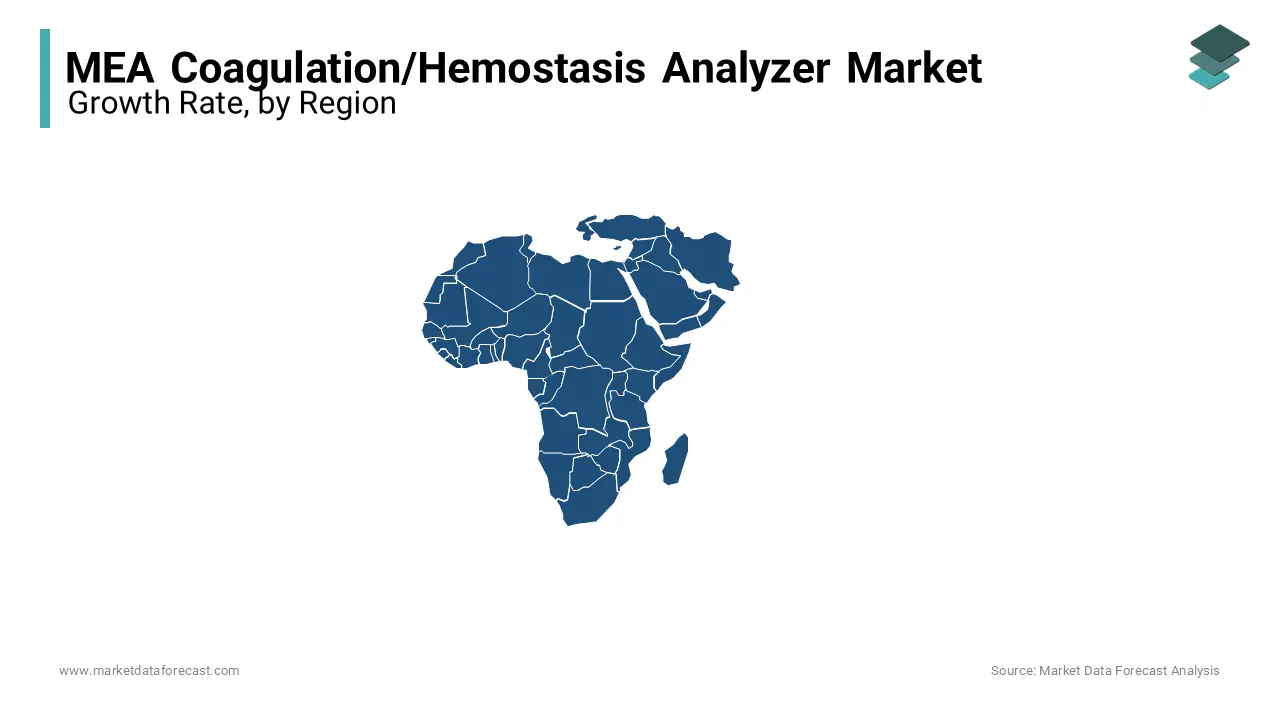
Kingdom of Saudi Arabia (KSA) Coagulation Hemostasis Analyzer Market Analysis
The Kingdom of Saudi Arabia was the top performer in the Middle East & Africa Coagulation/Hemostasis Analyzer Market by capturing 48.1% of the share in 2025 with the state backed healthcare modernization programs under Vision 2030 and substantial public diagnostic investments. Saudi Arabia allocates significant capital toward upgrading secondary and tertiary care infrastructure, resulting in high density medical technology installations across public hospitals. The clinical imperative to monitor cardiovascular and metabolic microvascular complications in this population ensures continuous procurement of high throughput automated coagulation analyzers and specialized diagnostic reagent panels, across Kingdom facilities.
United Arab Emirates (UAE) Coagulation Hemostasis Analyzer Market Analysis
The United Arab Emirates coagulation helostasis analyzer market was next by holding 19.2% of share in 2025 with the presence of technologically advanced regional hub, characterized by rapid private sector expansion and high adoption of digital healthcare platforms. As per the International Diabetes Federation, adult diabetes prevalence in the United Arab Emirates stood at 12.3% in 2021 by creating a constant clinical demand for vascular health assessments and routine clotting function monitoring. The country's emphasis on medical tourism and internationally accredited hospital networks accelerates the replacement of legacy instruments with cloud connected, fully automated coagulation systems.
Israel Coagulation Hemostasis Analyzer Market Analysis
Israel coagulation hemostasis analyzer market growth is likely to exhibit a fastest CAGR throughput the forecast period with the advanced clinical research facilities, universal health coverage, and rapid adoption of cutting edge diagnostic automation. Israel maintains an advanced primary and tertiary healthcare infrastructure with high diagnostic efficiency standards across all public health funds. Furthermore, as per the International Diabetes Federation, chronic disease monitoring protocols in Israel are supported by fully integrated national electronic health record networks, facilitating centralized disease management.
South Africa Coagulation Hemostasis Analyzer Market Analysis
South Africa coagulation hemostasis analyzer market growth is significantly growing with the most developed clinical laboratory network and advanced private hospital sector in the sub region. According to the World Health Organization, South Africa faces a dual disease burden of chronic noncommunicable conditions alongside infectious diseases such as HIV and tuberculosis, both of which contribute to complex hematological complications. Furthermore, as per the International Diabetes Federation, over 4.2 million adults in South Africa were living with diabetes in 2021, emphasizing the growing need for chronic metabolic disease management. The presence of major private pathology networks such as Lancet and Ampath drives consistent demand for high volume automated coagulation analyzers, while public health budgets increasingly support point of care installations in rural provinces.
Ethiopia Coagulation Hemostasis Analyzer Market Analysis
Ethiopia coagulation hemostasis analyzer market growth is likely to grow with the public health investments aimed at expanding basic tertiary healthcare access and strengthening regional diagnostic laboratories. Ethiopia is executing comprehensive national health sector development plans to improve primary health coverage and essential surgical safety across its large population. As per the International Diabetes Federation, over 1.9 million adults in Ethiopia were living with diabetes in 2021, with a majority remaining undiagnosed due to limited rural diagnostic infrastructure.
Kenya Coagulation Hemostasis Analyzer Market Analysis
Kenya coagulation hemostasis analyzer market growth is likely to grow with the hub for medical device distribution and private clinical laboratory expansion, across neighboring territories. Kenya is actively implementing universal health coverage initiatives, which increase patient access to basic diagnostic testing and surgical interventions in county hospitals. Additionally, the expansion of private hospital networks and specialized outpatient diagnostic chains across Nairobi drives steady demand for fully automated coagulation analyzers, while public healthcare facilities focus on adopting point of care testing solutions.
Top Players in the Market
Sysmex Corporation
Sysmex Corporation plays a prominent role in the Middle East & Africa Coagulation/Hemostasis Analyzer Market by supplying high throughput automated coagulation instruments and specialized reagent kits. The company supports large clinical laboratories and hospital networks by delivering versatile optical detection systems capable of running comprehensive clotting, chromogenic, and immunologic assays. To solidify its regional market presence, Sysmex has actively expanded its direct commercial distribution channels and service hubs across the Gulf Cooperation Council and South Africa. Furthermore, the company continues to introduce enhanced automated laboratory connectivity software and compact benchtop models tailored to meet the operational demands of expanding regional healthcare facilities.
Siemens Healthineers
Siemens Healthineers maintains a strong operational footprint in the Middle East & Africa Coagulation/Hemostasis Analyzer Market through its expansive portfolio of fully automated hemostasis systems and integrated multidisciplinary diagnostic solutions. The organization caters to tertiary medical centers and reference laboratories by offering scalable analyzers that streamline complex blood coagulation workflows. Siemens Healthineers has strengthened its regional market standing by forming strategic public private partnerships with health ministries in Saudi Arabia and the United Arab Emirates to modernize central laboratory infrastructure. Additionally, the business focuses on deploying cloud connected laboratory IT solutions that enable remote diagnostic monitoring and predictive maintenance across regional healthcare networks.
Werfen (Instrumentation Laboratory)
Werfen is a specialized leader in the Middle East & Africa Coagulation/Hemostasis Analyzer Market, delivering advanced acute care diagnostics and specialized hemostasis testing systems. The enterprise provides sophisticated optical and mechanical coagulation analyzers along with specialized reagent lines for complex bleeding disorder management. To enhance its commercial capabilities across the region, Werfen has consistently invested in localized clinical support infrastructure and direct educational programs for medical laboratory professionals. The company has reinforced its competitive position by introducing innovative point of care coagulation testing platforms and microfluidic technologies, enabling rapid near patient hemostatic monitoring within emergency and intensive care units across regional hospitals.
Top Strategies Used by the Key Market Participants
Key participants operating within the Middle East & Africa Coagulation/Hemostasis Analyzer Market utilize strategic initiatives to expand their operational presence and secure long term municipal and private procurement contracts. A primary strategy involves forming strategic commercial distribution alliances with local medical supply vendors to navigate complex regional regulatory frameworks and overcome supply chain challenges. Manufacturers also focus heavily on product portfolio expansion through the continuous integration of digital health connectivity, automated quality control tracking, and microfluidic technology into point of care platforms. Furthermore, leading companies actively engage in strategic public private partnerships with regional health ministries to supply fully automated laboratory automation equipment under multi-year reagent rental agreements. These long term equipment and reagent supply contracts ensure consistent recurring revenue streams while expanding the overall installed base of automated coagulation instruments across both established and developing regional healthcare markets.
COMPETITIVE LANDSCAPE
The competitive landscape of the Middle East & Africa Coagulation/Hemostasis Analyzer Market is defined by a blend of multinational diagnostic corporations and expanding regional distributors competing to capture growing public and private healthcare expenditure. Global leaders dominate the high throughput clinical laboratory segment by leveraging advanced optical detection systems, extensive reagent portfolios, and established service networks. Competition in urban centers centers on securing long term reagent rental contracts with major private pathology networks and government hospital hubs. Conversely, mid-tier manufacturers and point of care specialists compete aggressively in developing sub regions by providing cost effective semi automated units and portable microfluidic readers tailored for decentralized primary healthcare facilities. Companies increasingly differentiate their product offerings through digital connectivity features, fast test turnaround times, and robust supply chain logistics capable of managing temperature sensitive reagents across challenging regional climates.
KEY MARKET PLAYERS
Companies playing a dominating role in the Middle East & Africa coagulation/hemostasis analyzer market profiled in the report include
- Siemens AG (Germany)
- International Technidyne Corporation (U.S.)
- Sysmex Corporation (Japan)
- Nihon Kohden Corporation (Japan)
- Diagnostica Stago (France)
- Thermo Fisher Scientific Inc. (U.S.)
- Roche Diagnostics (Switzerland)
- Alere Inc. (U.S.)
- Helena Laboratories (U.S.)
- Instrumentation Laboratory (U.S.)
MARKET SEGMENTATION
This research report on the Middle East & Africa coagulation/hemostasis analyzer market has been segmented and sub-segmented into the following categories.
By Test
- ACT
- APTT
- D Dimer Testing
- Platelet Function Test
- Prothrombin Time Testing
- Anti-Factor XA Test
- Heparin
- Protamine Dose-Response Test For ACT
- Fibrinogen Testing
- Other Coagulation Tests
By Product
- POC Testing Analyzers
- Clinical Laboratory Analyzers
By End User
- Clinical Laboratories
- PoC
By Technology
- Electrochemical
- Optical
- Mechanical
By Country
- KSA
- UAE
- Israel
- The rest of the GCC countries
- South Africa
- Ethiopia
- Kenya
- Egypt
- Sudan
- rest of MEA