- Product Description Description
- Table of Contents TOC
- List of Table & Figure LOT
- Get Free Sample PDF Sample PDF
Market Size, 2025
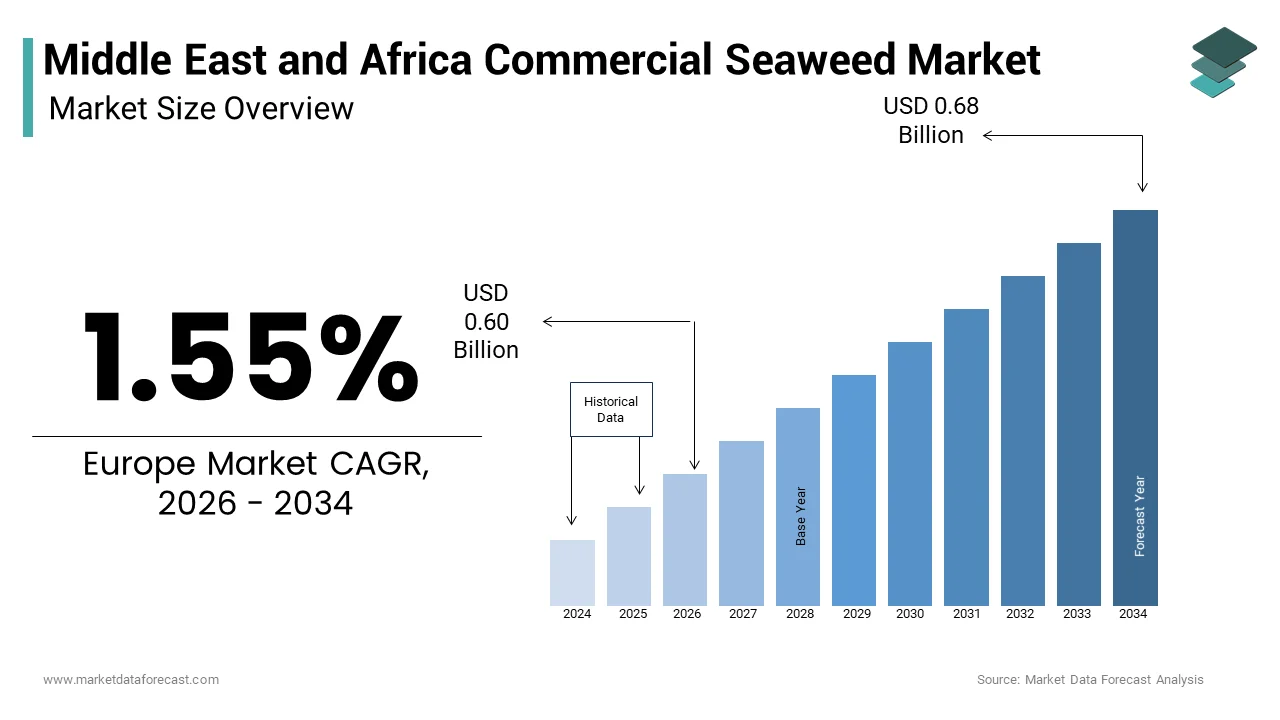
$0.59 BnMarket Estimate, 2026
$0.60 BnMarket Forecast, 2034
$0.68 BnCAGR, 2026–2034
1.55%Executive Summary: Middle East And Africa Commercial Seaweed Market
- Market Scope: Comprehensive Middle East and Africa commercial seaweed industry analysis covering application sectors (agriculture, animal feed, cosmetics, pharmaceuticals, aquaculture), seaweed types (red, brown), physical forms (powdered, liquid), regional leadership frameworks (United Arab Emirates, South Africa), and competitive landscapes.
- Market Valuation: Valued at USD 0.59 billion (2025), estimated at USD 0.60 billion (2026), and projected to reach USD 0.68 billion by 2034, registering a CAGR of 1.55% (2026–2034).
- Primary Growth Drivers: Natural ingredient demand in cosmetics/pharmaceuticals, integrated multi-trophic aquaculture (IMTA) expansion, seaweed-based biofertilizer adoption, and blue economy government strategies. Restraints include limited processing infrastructure, climate vulnerability, skill shortages, and regulatory hurdles.
Key Market Segment Metrics (2026–2034)
| Category | Leading Segment / Region (Position) | Fastest-Growing Segment |
|---|---|---|
| By Application, Type & Form | Agriculture segment (accounted for 38.3% share in 2024 via biofertilizers) • Red seaweed (42.3% share in 2024) • Powdered seaweed (45.3% share in 2024) | Animal feed segment (projected at 9.6% CAGR) • Brown seaweed (growing at a 10.2% CAGR) • Liquid seaweed segment (projected at 11.4% CAGR) |
| By Innovation & Sustainability | Blue economy strategies, IMTA frameworks, and natural cosmetic/pharmaceutical ingredient integration | Biofuel production, renewable energy applications, and international public-private partnerships |
| By Region / Country | United Arab Emirates (largest country-level contributor with 18.3% share in 2024) • South Africa (16.2% share) | Emerging regional hubs enhancing cultivation and processing infrastructure across the Middle East and Africa |
Major Market Players & Market Structure
Market Structure: Fragmented market landscape where multinational corporations, regional enterprises, startups, and public-private partnerships compete through technological expertise, sustainable product development, and localized market knowledge.
Key Companies: Cargill, Incorporated., Ocean Harvest Kenya Ltd., BioMarine Technologies South Africa, Seaweed Solutions MEA, Roullier Group, E. I. du Pont de Nemours and Company, Gelymar SA, Biostadt India Limited, Acadian Seaplants Limited, Compo GmbH, CP Kelco, and Seasol International Pty. Ltd.
Middle East and Africa Commercial Seaweed Market Size
The Middle East and Africa commercial seaweed market was valued at USD 0.59 billion in 2025 and is anticipated to reach 0.60 billion in 2026 from USD 0.68 billion by 2034, growing at a CAGR of 1.55% during the forecast period from 2034.
Countries such as Morocco, Egypt, South Africa, and Tanzania have emerged as key players in seaweed farming and export, particularly red algae like Gracilaria and Gelidium, which are used in agar production. According to the Food and Agriculture Organisation (FAO), seaweed production in Africa accounted for approximately 1.3% of global output in 2022, with most contributions coming from small-scale coastal operations. The Middle East, while lagging in natural seaweed resources, is exploring land-based integrated aquaculture systems to cultivate seaweed for biofuel and animal feed purposes. Moreover, initiatives by regional governments and international development agencies have supported sustainable aquaculture projects that include seaweed farming as a means to improve coastal livelihoods.
MARKET DRIVERS
Increasing Demand for Natural Ingredients in Cosmetics and Pharmaceuticals
The rising demand for natural ingredients in cosmetics and pharmaceutical formulations is driving the growth of the Middle East and Africa Commercial Seaweed Market. Consumers across these regions are increasingly prioritising clean-label products that contain organic, plant-based components. Seaweed extracts rich in minerals, antioxidants, and bioactive compounds are being extensively used in skincare, anti-ageing creams, and hair care products. This trend is especially strong in countries like Saudi Arabia, the United Arab Emirates, and South Africa, where there is a growing consumer base willing to pay premium prices for eco-friendly beauty products. Seaweed-derived alginates and carrageenans are widely used in emulsification, skin hydration, and formulation stabilisation processes. Additionally, the pharmaceutical industry is leveraging seaweed’s antiviral, antibacterial, and anti-inflammatory properties.
Expansion of Aquaculture and Sustainable Agriculture Practices
The expansion of aquaculture and sustainable agriculture practices in coastal regions is propelling the growth of the Middle East and Africa Commercial Seaweed Market. Seaweed serves as an essential component in integrated multi-trophic aquaculture (IMTA) systems, where it helps absorb excess nutrients, reduce water pollution, and enhance biodiversity. As per the Food and Agriculture Organisation (FAO), aquaculture production in Africa grew by nearly 6% annually between 2010 and 2022. Countries like Egypt, Nigeria, and Kenya have been actively promoting IMTA models to support sustainable seafood production and mitigate environmental degradation. Furthermore, seaweed-based biofertilizers are gaining popularity among smallholder farmers in arid regions of the Middle East and Southern Africa. These organic fertilisers enhance soil health, retain moisture, and promote crop resilience against climate stressors. According to the International Centre for Biosaline Agriculture (ICBA), field trials in the UAE demonstrated up to a 20% increase in crop yield when using seaweed-based amendments, encouraging wider adoption in desert agriculture.
MARKET RESTRAINTS
Limited Infrastructure and Post-Harvest Processing Capabilities
The lack of adequate infrastructure and post-harvest processing facilities is limiting the growth of the Middle East and Africa Commercial Seaweed Market. Inadequate cold storage and packaging facilities further limit the shelf life and export potential of seaweed-based products. This is particularly problematic for high-value derivatives like phycocolloids and nutraceuticals, which require advanced processing technologies. In the Middle East, where seaweed farming is still in its infancy, there is minimal investment in research centres or processing units capable of extracting bioactive compounds. The absence of standardised quality control measures also hampers market access to international buyers who demand traceability and compliance with food safety regulations.
Seasonal Variability and Climate Vulnerability
Seasonal variability and climate vulnerability pose a significant challenge to the stability and scalability of the Middle East and Africa Commercial Seaweed Market. According to the Intergovernmental Panel on Climate Change (IPCC), sea surface temperatures in the Western Indian Ocean, which includes key seaweed-producing zones like Zanzibar and Madagascar, have risen by approximately 1°C since the mid-20th century. This warming trend has led to frequent outbreaks of diseases such as ice-ice disease, which causes seaweed to disintegrate and significantly reduces harvest volumes.
In the Middle East, particularly in countries like Oman and Yemen, unpredictable monsoon patterns and increased storm activity affect both wild harvesting and farmed seaweed. These climatic fluctuations make long-term planning difficult for small-scale farmers and discourage private investment in the sector.
MARKET OPPORTUNITIES
Biofuel and Renewable Energy Applications
The application for biofuel and renewable energy generation is expected to boost the growth of the Middle East and Africa Commercial Seaweed Market. Seaweed does not require freshwater or arable land, making it an ideal candidate for large-scale cultivation in arid regions like the Middle East. In Egypt, the National Institute of Oceanography and Fisheries launched a pilot project in 2023 to assess the feasibility of converting locally grown Ulva lactuca into biogas. Early findings suggest that seaweed-based anaerobic digestion could supply clean energy to coastal communities while reducing reliance on imported fuels.
Government Support and International Collaborations
Government support and international collaborations represent a major opportunity for the growth of the Middle East and Africa Commercial Seaweed Market. Many national agencies and multilateral organisations are recognising the potential of seaweed farming to contribute to blue economy strategies, food security, and coastal resilience. In 2023, the African Union included seaweed farming in its Blue Economy Framework, urging member states to invest in marine-based livelihoods. Several African countries have responded by offering subsidies, training programs, and microfinance schemes to encourage seaweed cultivation. In the Middle East, the UAE's Ministry of Climate Change and Environment introduced a strategic plan to integrate seaweed into aquaculture systems as part of its sustainability agenda. Additionally, partnerships with Japanese and Korean firms are facilitating technology transfer and joint ventures focused on seaweed-based innovations.
MARKET CHALLENGES
Lack of Awareness and Technical Expertise Among Local Farmers
The limited awareness and technical expertise among local farmers regarding modern cultivation methods and value-added applications are slowly limiting the growth of the Middle East and Africa Commercial Seaweed Market.
According to the United Nations Development Programme (UNDP), only 30% of seaweed farmers in Kenya and Mozambique have received formal training in best farming practices. Most rely on rudimentary techniques passed down through generations, resulting in low yields and poor-quality outputs. This lack of education extends to post-harvest handling, where improper drying and storage methods lead to spoilage and reduced market value. In the Middle East, where seaweed farming is relatively new, trained personnel are scarce, and academic programs focused on marine agriculture are lacking. Universities in countries like Saudi Arabia and Egypt are beginning to incorporate aquaculture studies into their curricula, but progress remains slow.
Regulatory Gaps and Quality Standardisation Issues
Regulatory gaps and the absence of standardised quality certifications are hampering the growth of the Middle East and Africa Commercial Seaweed Market. As per the World Health Organisation (WHO), inconsistencies in quality standards hinder the export of seaweed-derived products to Europe and North America, where stringent food safety and pharmaceutical regulations apply. In Africa, for instance, only a handful of countries, including South Africa and Morocco, have established clear guidelines for seaweed-based food additives and supplements. This regulatory ambiguity discourages multinational companies from sourcing seaweed from the region, fearing non-compliance issues. Moreover, the absence of certification bodies makes it difficult for local producers to meet international benchmarks such as ISO, HACCP, or Organic Certification. In response, regional organisations like the Common Market for Eastern and Southern Africa (COMESA) are working to harmonise quality protocols across member states.
REPORT COVERAGE
| REPORT METRIC | DETAILS |
| Market Size Available | 2025 to 2034 |
| Base Year | 2025 |
| Forecast Period | 2026 to 2034 |
| CAGR | 1.55% |
| Segments Covered | By Type, Application, Form, and Region. |
| Various Analyses Covered | Global, Regional and Country Level Analysis, Segment-Level Analysis, DROC, PESTLE Analysis, Porter’s Five Forces Analysis, Competitive Landscape, Analyst Overview of Investment Opportunities |
| Regions Covered | KSA, UAE, Israel, rest of GCC countries, South Africa, Ethiopia, Kenya, Egypt, Sudan, rest of MEA |
| Market Leaders Profiled | Cargill, Incorporated. (U.S.), Roullier Group (France), E. I. du Pont de Nemours and Company (U.S.), Gelymar SA (Chile), Biostadt India Limited (India), Acadian Seaplants Limited (Canada), Compo GmbH (Germany), CP Kelco (U.S.), and Seasol International Pty. Ltd. (Australia). |
SEGMENTAL ANALYSIS
By Application Insights
The agriculture segment dominated the Middle East and Africa Commercial Seaweed Market by accounting for 38.3% of the share in 2024, with the growing adoption of seaweed-based biofertilizers and soil enhancers across arid and semi-arid regions where soil degradation and water scarcity are pressing concerns. Seaweed extract, especially that derived from Ascophyllum nodosum, is increasingly used as an organic growth stimulant and stress reliever in crops. In countries like Egypt, Morocco, and South Africa, government-backed agricultural programs have promoted the use of seaweed-based biostimulants to improve crop yields under harsh climatic conditions. According to the Food and Agriculture Organisation (FAO), the application of seaweed-derived fertilisers led to a reported 15–20% increase in yield for staple crops such as wheat and maize in parts of North Africa in 2023. Additionally, research conducted by the International Centre for Biosaline Agriculture (ICBA) found that seaweed-based amendments significantly improved soil moisture retention and nutrient availability in saline soils prevalent in the Gulf region.
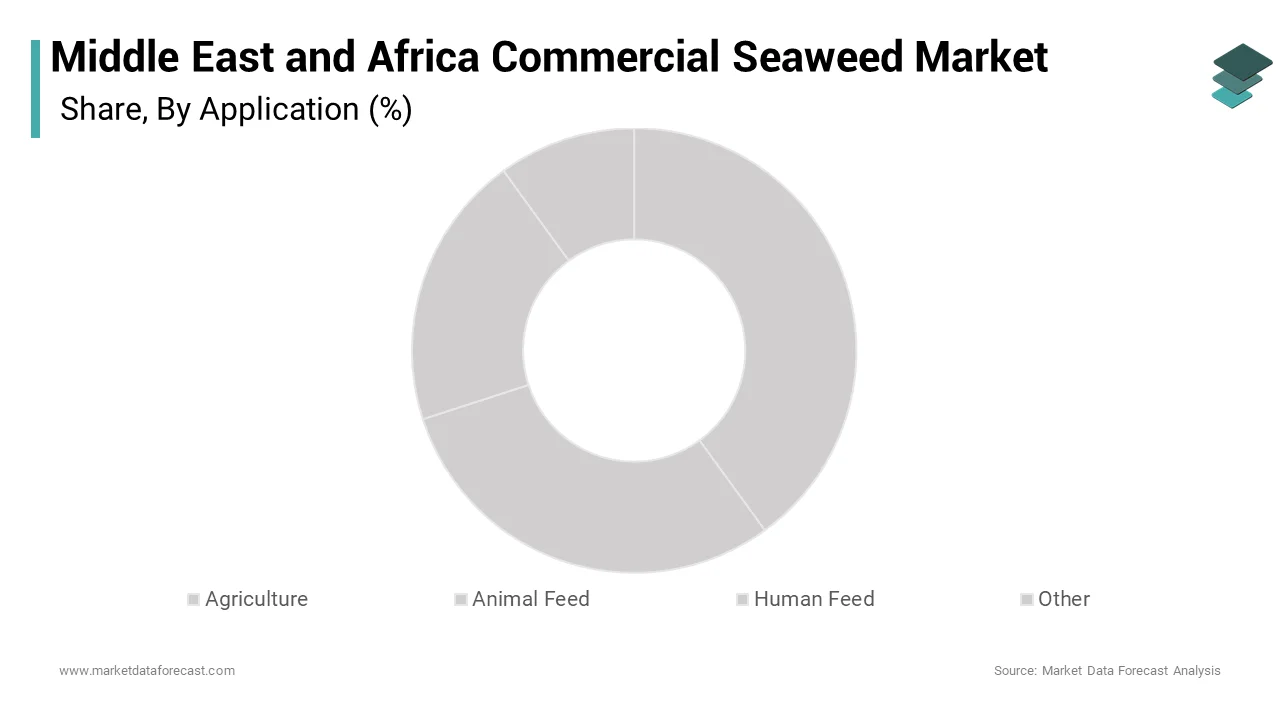
The animal feed segment is projected to register a CAGR of 9.6% during the forecast period. In sub-Saharan Africa, where cattle farming plays a crucial role in rural economies, seaweed-based feed additives are gaining traction due to their ability to improve digestion, reduce methane emissions, and enhance weight gain. Moreover, in the Middle East, particularly in the United Arab Emirates and Qatar, there has been a surge in demand for functional feed ingredients to support high-yield dairy and poultry operations. Research published by the Journal of Animal Physiology and Animal Nutrition indicated that feeding cattle with Gracilaria Sargassum-based supplements reduced enteric methane emissions by nearly 20%, which aligns with regional sustainability goals.
By Type Insights
The red seaweed segment accounted in holding 42.3% of the Middle East and Africa Commercial Seaweed Market share in 2024. Species such as Gelidium, Gracilaria, and Kappaphycus are widely cultivated along the coasts of Tanzania, Madagascar, and Zanzibar. These species form the backbone of export-oriented seaweed industries in East Africa. In addition to traditional uses, red seaweed is being explored for novel applications such as biodegradable packaging materials and nutraceutical formulations.
The brown seaweed segment is anticipated to grow with a CAGR of 10.2% during the forecast period. The surge in brown seaweed harvesting for alginate extraction, which is extensively used in food thickening, textile manufacturing, and medical dressings, is accelerating the growth of the segment. According to the International Seaweed Association, alginate demand from the Middle East alone increased by 18% in 2023, spurred by expanding food processing and pharmaceutical sectors.
Additionally, large-scale Sargassum blooms along the Atlantic coastlines of West Africa have prompted governments in Ghana, Nigeria, and Senegal to explore ways to convert this abundant biomass into economic assets. A 2023 report by the Economic Community of West African States (ECOWAS) estimated that over 1 million tons of Sargassum washed ashore annually, offering significant potential for industrial utilisation.
By Form Insights
The powdered seaweed segment held 45.3% of the Middle East and Africa Commercial Seaweed Market share in 2024. This form is preferred for its ease of integration into various formulations, including organic fertilisers, dietary supplements, and functional foods. In countries like Egypt and Morocco, powdered seaweed is commonly mixed with animal feed or applied directly to soil to boost nutrient content. According to the Egyptian Ministry of Agriculture, over 60,000 farmers adopted powdered seaweed-based fertilisers in 2023, leading to improved crop resilience and higher yields. Furthermore, the pharmaceutical sector is leveraging powdered seaweed for encapsulation and tablet formulation processes.
The liquid seaweed segment is likely to register a CAGR of 11.4% from 2025 to 2033. In agriculture, liquid seaweed extracts serve as foliar sprays and root drenches, delivering essential micronutrients and plant growth hormones directly to crops. Trials conducted by the Agricultural Research Council (ARC) of South Africa revealed that foliar application of Ascophyllum nodosum extract increased tomato yields by 25% under drought conditions. In the beauty and personal care industry, liquid seaweed extracts are incorporated into facial serums, mmoisturisers and hair conditioners due to their hydrating and anti-ageing properties. Additionally, the convenience of storage and application makes liquid forms more attractive for both industrial and small-scale users, which is further accelerating their adoption across MEA markets.
COUNTRY-WISE ANALYSIS
United Arab Emirates Commercial Seaweed Market Analysis
The United Arab Emirates was the largest contributor with 18.3% of the Middle East and Africa Commercial Seaweed Market share in 2024. Positioned as a regional innovation hub, the UAE is investing heavily in marine biotechnology and sustainable aquaculture to diversify its blue economy. Moreover, the UAE's expanding food and beverage sector, coupled with rising demand for natural ingredients in cosmetics, is fueling domestic consumption of seaweed-based products. According to the Dubai Chamber of Commerce, imports of processed seaweed surged by 19% in 2023.
South Africa Commercial Seaweed Market Analysis
South Africa Commercial Seaweed Market held 16.2% of the share in 2024. The country’s well-established marine research institutions, such as the Council for Scientific and Industrial Research (CSIR), have played a pivotal role in advancing kelp-based bioproducts. CSIR studies indicate that South Africa’s indigenous Ecklonia maxima (kelp) has high potential for use in agriculture and pharmaceuticals due to its rich mineral and polysaccharide content.
Egypt Commercial Seaweed Market Analysis
The Egyptian Commercial Seaweed Market is expected to grow with prominent growth opportunities during the forecast period. The Ministry of Water Resources and Irrigation has partnered with international agencies to introduce seaweed-based solutions for water purification and soil restoration in the Nile Delta. Field trials conducted by Cairo University in 2023 demonstrated that seaweed-enriched irrigation techniques improved rice yields by 18% while reducing chemical fertiliser dependency. Simultaneously, the Egyptian pharmaceutical industry is integrating seaweed extracts into nutraceuticals and wound healing formulations.
Saudi Arabia Commercial Seaweed Market Analysis
The Saudi Arabian Commercial Seaweed Market is swiftly growing in the coming years. Positioned within the framework of Vision 2030, the Kingdom is actively developing marine resource-based industries to support economic diversification. NEOM, the futuristic smart city project, includes a dedicated Blue Economy initiative that explores large-scale seaweed farming for carbon sequestration and biofuel production. Initial feasibility studies by NEOM's Environmental Sustainability Division revealed that offshore seaweed farms could capture up to 1 million tons of CO₂ annually by 2030. Moreover, the Saudi Ministry of Environment, Water, and Agriculture has funded pilot projects in Jeddah and Yanbu to assess the viability of seaweed in aquafeed and biofertilizer production.
Kenya Commercial Seaweed Market Analysis
Kenya's commercial seaweed market in 2024 is playing a vital role in East Africa’s seaweed value chain. Positioned as a major exporter of red seaweed, Kenya supports thousands of smallholder farmers, particularly women, engaged in coastal seaweed farming. According to the Kenya Marine and Fisheries Research Institute (KMFRI), the country produced over 15,000 metric tons of dried seaweed in 2023, with most exports directed to Europe and Asia. Government collaboration with Norwegian and Japanese partners has facilitated the introduction of improved farming lines and drying technologies, boosting both quality and yield. Furthermore, local startups are capitalising on seaweed’s versatility by producing innovative products such as seaweed tea, snacks, and organic soaps.
COMPETITIVE LANDSCAPE
The Middle East and Africa Commercial Seaweed Market features a dynamic yet fragmented competitive environment, where both local enterprises and international firms are striving to establish strong footholds. While large multinational companies bring technological expertise and investment capital, regional players leverage their understanding of local ecosystems, community networks, and regulatory landscapes. Competition is intensifying as stakeholders recognise the vast potential of seaweed in addressing food security, environmental sustainability, and economic development. Emerging startups and cooperative models are contributing to market growth, often supported by public-private partnerships. However, challenges such as limited infrastructure, inconsistent product quality, and regulatory gaps create entry barriers.
KEY MARKET PLAYERS
These are the market players that are dominating the Middle East and Africa commercial seaweed market.
- Cargill, Incorporated. (U.S.)
- Ocean Harvest Kenya Ltd. (Mombasa, Kenya)
- BioMarine Technologies South Africa (Cape Town, South Africa)
- Seaweed Solutions MEA (Dubai, UAE)
- Roullier Group (France)
- E. I. du Pont de Nemours and Company (U.S.)
- Gelymar SA (Chile)
- Biostadt India Limited (India)
- Acadian Seaplants Limited (Canada)
- Compo GmbH (Germany)
- CP Kelco (U.S.)
- Seasol International Pty. Ltd. (Australia)
Top Players In The Market
- Seaweed Solutions MEA is a leading regional player specialising in sustainable seaweed cultivation and value-added product development. The company has established integrated marine farms across the Arabian Gulf and collaborates with research institutions to develop biofertilizers, animal feed supplements, and biostimulants. Its focus on innovation and partnerships with local governments has positioned it as a key contributor to advancing commercial seaweed applications in arid environments.
- Ocean Harvest Kenya plays a pivotal role in East Africa’s seaweed economy by supporting smallholder farmers and promoting export-oriented production. The company provides training, seedlings, and post-harvest processing support, ensuring quality control and market access. Ocean Harvest Kenya contributes significantly to enhancing the region's seaweed trade and sustainability by empowering coastal communities and investing in drying and packaging infrastructure.
- BioMarine Technologies South Africa focuses on extracting high-value compounds from indigenous kelp species for use in pharmaceuticals, cosmetics, and agriculture. The company collaborates with scientific institutions to develop novel applications and supports eco-friendly harvesting practices. Its emphasis on research-driven product development has strengthened South Africa’s position in the global seaweed derivatives market and inspired similar initiatives across the continent.
Top Strategies Used by Key Market Participants
One major strategy employed by key players is vertical integration, wherein companies control multiple stages of the supply chain from cultivation and harvesting to processing and distribution. This approach ensures a consistent raw material supply, enhances product quality, and reduces dependency on third-party suppliers. Another widely adopted strategy is strategic partnerships and collaborations, particularly with academic institutions, government agencies, and international organisations. These alliances help in technology transfer, capacity building, and developing tailored seaweed-based solutions that align with regional needs and environmental conditions.
Product diversification and innovation have become essential for maintaining a competitive advantage. Companies are investing in R&D to extract high-value bioactive compounds and develop niche products such as organic fertilisers, nutraceuticals, and cosmetic ingredients.
RECENT MARKET NEWS
- In January 2024, Seaweed Solutions MEA launched a new integrated aquaculture farm in Fujairah, combining seaweed cultivation with fish farming to promote sustainable marine resource management and enhance biomass output.
- In March 2024, Ocean Harvest Kenya initiated a farmer empowerment program in Lamu County, offering technical training, improved seedstock, and access to certified drying facilities to boost productivity and product consistency among local seaweed producers.
- In June 2024, BioMarine Technologies South Africa partnered with Stellenbosch University to develop a line of kelp-based skincare products, which is targeting the growing natural beauty market and expanding its presence in regional and international retail channels.
- In September 2024, Seaweed Solutions MEA signed a memorandum of understanding with Oman’s Ministry of Fisheries to explore large-scale offshore seaweed farming as part of national blue economy initiatives aimed at carbon sequestration and job creation.
- In November 2024, Ocean Harvest Kenya secured an export agreement with a European nutraceutical firm, which is marking a significant step toward global market penetration and reinforcing its role as a reliable supplier of high-quality red seaweed from East Africa.
MARKET SEGMENTATION
This research report on the Middle East and Africa Commercial Seaweed Market is segmented and sub-segmented into the following categories.
By Applications
- Agriculture
- Animal Feed
- Human Feed
- Other
By Type
- Brown
- Red
- Green Seaweed
By Form
- Liquid
- Powdered
- Flakes
By Country
- KSA
- UAE
- Israel
- The rest of the GCC countries
- South Africa
- Ethiopia
- Kenya
- Egypt
- Sudan
- Rest of MEA