- Product Description Description
- Table of Contents TOC
- List of Table & Figure LOT
- Get Free Sample PDF Sample PDF
Market Size, 2025
$0.18 BnMarket Estimate, 2026
$0.188 BnMarket Forecast, 2034
$0.27 BnCAGR, 2026–2034
4.65%Middle East and Africa Customized Premix Market Size
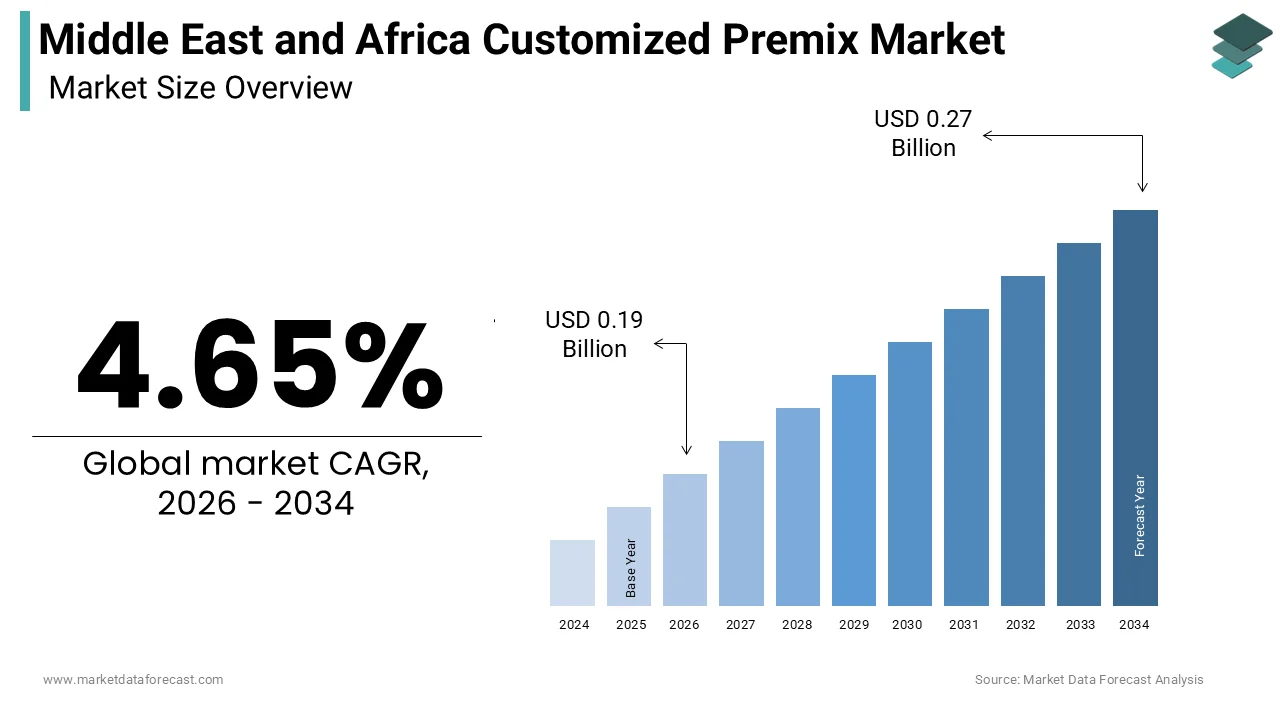
The Middle East and Africa Customized Premix Market size was calculated to be USD 0.18 billion in 2025 and is anticipated to be worth USD 0.27 billion by 2034, from USD 0.19 billion in 2026, growing at a CAGR of 4.65% during the forecast period.
A customized premix is a bespoke blend of specific functional ingredients, such as vitamins, minerals, amino acids, or flavors, manufactured in exact proportions for a specific product. This market serves diverse sectors, including infant nutrition, animal feed, fortified foods, and dietary supplements, addressing regional deficiencies and health priorities. The region exhibits unique demographic and epidemiological characteristics that drive the demand for precise nutritional interventions. According to the World Health Organization, micronutrient deficiencies affect approximately 2 billion people globally, with a significant proportion residing in Africa and parts of the Middle East, where diets often lack diversity. As per the World Health Organization and UNICEF, anemia affects over half a billion women of reproductive age worldwide, with the pooled regional prevalence across Sub-Saharan Africa hovering around 40%. Governments in countries like South Africa and Kenya have implemented mandatory fortification programs for staple foods such as maize meal and wheat flour requiring the use of standardized premixes. Meanwhile, in the Gulf Cooperation Council nations, rising disposable incomes and lifestyle changes are fueling demand for premium fortified products and specialized animal feed to support growing livestock industries. Regulatory frameworks vary significantly across the region, with some nations enforcing strict labeling and composition standards while others rely on voluntary guidelines. This heterogeneous landscape necessitates flexible and locally adapted premix solutions that comply with diverse regulatory requirements while meeting the specific nutritional needs of distinct population groups and agricultural systems.
MARKET DRIVERS
Rising Prevalence of Micronutrient Deficiencies and Public Health Initiatives
The widespread prevalence of micronutrient deficiencies and the subsequent implementation of public health initiatives fuel the growth of the Middle East and Africa's customized premix market. Hidden hunger, characterized by insufficient intake of essential vitamins and minerals, remains a critical public health challenge affecting millions of individuals, particularly children and pregnant women. According to the World Health Organization, iron deficiency is a principal driver of anemia, which impacts approximately 40% of preschool children globally and impairs physical and cognitive development. To combat this, governments and international organizations are launching large-scale fortification programs that mandate the addition of specific nutrients to staple foods. For instance, as per the mandatory industrial regulations enforced in Nigeria, large-scale fortification mandates adding specific vitamins and minerals to wheat flour, vegetable oil, sugar, and salt. These mandates create a consistent and substantial demand for customized premixes that meet exact compositional standards. Similarly, in Egypt, national campaigns to reduce anemia have led to increased fortification of bread and other widely consumed items. The effectiveness of these programs relies heavily on the availability of high-quality, stable, and bioavailable premixes that can withstand local processing conditions. Public-private partnerships further amplify this demand by providing technical assistance and subsidies to local millers and manufacturers. Consequently, the alignment of public health goals with industrial production capabilities drives sustained growth in the customized premix sector.
Expansion of the Livestock and Animal Feed Industry
The rapid expansion of the livestock and animal feed industry in the region significantly propels the demand for customized premixes tailored for animal nutrition, which further boosts the expansion of the Middle East and Africa market. As populations grow and urbanization increases, so does the consumption of animal protein such as meat, milk, and eggs, driving the intensification of livestock production. According to the Food and Agriculture Organization of the United Nations, Africa's aggregate food demand is projected to increase by 50% by 2050, requiring crop diversification and enhanced agricultural productivity. Modern livestock farming relies heavily on balanced diets that include precise levels of vitamins, minerals, and amino acids to optimize growth rates, improve feed conversion ratios, and enhance disease resistance. In Saudi Arabia and the United Arab Emirates, significant investments in dairy and poultry sectors have led to the adoption of advanced feeding protocols that utilize specialized premixes to ensure consistent product quality. Furthermore, the outbreak of diseases such as avian influenza has heightened the focus on immune-boosting additives in feed formulations. Local feed manufacturers are increasingly seeking customized solutions that address specific regional challenges such as heat stress and local fodder quality variations. The shift from traditional grazing to commercial feedlots further accelerates the adoption of scientifically formulated premixes. This structural transformation in the agricultural sector ensures a robust and growing market for customized animal nutrition products.
MARKET RESTRAINTS
Volatility in Raw Material Prices and Supply Chain Disruptions
The volatility in raw material prices and frequent supply chain disruptions hinder the growth of the Middle East and Africa customized premix market. Most key ingredients for premixes, including synthetic vitamins, trace minerals, and amino acids, are imported from global suppliers primarily in Europe, Asia, and North America. According to the World Bank, global demand and supply shocks are the primary drivers of global commodity price volatility. In countries like Egypt and Nigeria, currency devaluation has substantially increased the cost of importing essential nutrients, forcing some producers to reduce fortification levels or switch to lower-quality alternatives. Additionally, logistical challenges such as port congestion, inadequate storage infrastructure, and complex customs procedures lead to delays and increased lead times. The perishable nature of certain vitamins requires strict temperature control during transportation, which is often lacking in parts of Africa, leading to product degradation and waste. Geopolitical tensions and trade restrictions can further exacerbate supply uncertainties, causing sudden shortages of critical ingredients. These factors create an unstable operating environment where manufacturers struggle to maintain consistent pricing and product availability. Small and medium-sized enterprises are particularly vulnerable as they lack the financial buffers to absorb price shocks or invest in extensive inventory management. Cost instability will continue to hinder market growth. This issue will persist until local production capabilities for key nutrients improve or supply chains become more resilient.
Limited Technical Expertise and Quality Control Infrastructure
The limited technical expertise and inadequate quality control infrastructure in many parts of the region restrict the effective adoption and utilization of these premixes, which hampers the expansion of the Middle East and Africa customized premix market. Formulating and handling premixes requires specialized knowledge in nutrition chemistry and process engineering to ensure uniformity, stability, and bioavailability. As per sources, many local manufacturers lack access to trained personnel who can accurately calculate formulation requirements or operate sophisticated mixing equipment. This skills gap often results in inconsistent product quality, uneven distribution of nutrients, and potential safety risks. Furthermore, the absence of robust laboratory facilities for testing nutrient content and contamination levels makes it difficult to verify compliance with regulatory standards. In several African countries, national reference laboratories are either nonexistent or under-equipped, leading to reliance on external testing services, which are costly and time-consuming. The lack of standardized operating procedures and good manufacturing practices further compromises product integrity. Consumers and downstream manufacturers may lose trust in locally produced premixes due to perceived quality issues, preferring imported brands despite higher costs. Addressing these capacity gaps requires significant investment in training, education, and infrastructure development. The market must improve its technical capabilities. Without these upgrades, it cannot fully realize its potential to deliver safe and effective nutritional solutions to the region.
MARKET OPPORTUNITIES
Development of Locally Sourced and Sustainable Ingredients
The development of locally sourced and sustainable ingredients unlocks potential for the Middle East and Africa customized premix market. There is a growing trend toward reducing dependency on imports by utilizing regional agricultural byproducts and native plants rich in nutrients. As per the African Union-led Great Green Wall Initiative, targeted regional strategic efforts support value-addition for climate-resilient local crops like baobab to establish microenterprise market supply lines. These indigenous sources offer viable alternatives for vitamins, minerals, and antioxidants that can be incorporated into customized premixes. For example, moringa leaves are rich in iron and vitamin A and can be processed into powder for use in food fortification blends. By leveraging local resources, manufacturers can reduce costs, mitigate supply chain risks, and appeal to consumers' preference for natural and sustainable products. Governments are supporting these efforts through incentives for agro-processing and research grants. Additionally, the rise of organic and clean label trends creates demand for premixes derived from non-synthetic sources. Companies that invest in developing extraction and stabilization technologies for local ingredients can differentiate themselves in the market. This strategy not only enhances supply security but also contributes to rural economic development and environmental sustainability. Awareness of the benefits of local ingredients is growing. Consequently, the market for such innovative premix solutions is poised for expansion.
Growth in Fortified Specialty Foods and Functional Beverages
The growth in fortified specialty foods and functional beverages offers a promising avenue for the Middle East and Africa customized premix market. This is driven by changing consumer lifestyles and health awareness. Urban consumers in the Middle East and Africa are increasingly seeking convenient, nutritious options that support wellness and prevent chronic diseases. As per sources, sales of fortified dairy products and ready-to-drink beverages are rising in the Middle East and Africa, projected to reach significant market volumes by 2030 due to government nutrition programs and functional ingredient demand. Manufacturers are responding by developing products enriched with specific nutrients such as calcium for bone health, probiotics for digestion, and omega-3 fatty acids for heart health. Customized premixes enable precise incorporation of these functional ingredients without compromising taste or texture. In the Gulf countries, the popularity of sports nutrition and weight management products is driving demand for protein and vitamin blends. Similarly in South Africa, the market for fortified plant-based milks and cereals is expanding as consumers adopt alternative diets. The ability to create tailored formulations for niche segments allows brands to command premium prices and build loyalty. Regulatory support for health claims further encourages innovation in this space. As the middle class expands and health consciousness deepens, the demand for specialized fortified products will continue to grow. This creates ample opportunities for premix.
MARKET CHALLENGES
Regulatory Heterogeneity and Compliance Complexities
The heterogeneity of regulatory frameworks and compliance complexities across the region impedes the growth of the Middle East and Africa customized premix market. Each country has its own set of regulations regarding permitted ingredients, maximum usage levels, labeling requirements, and approval processes for fortified foods and feed additives. For instance, the Gulf Standardization Organization sets standards for GCC countries, but individual nations may have additional requirements or interpretation differences. In Africa, regulatory bodies such as the National Agency for Food and Drug Administration and Control in Nigeria and the South African Department of Health have distinct guidelines that manufacturers must navigate. As per the World Trade Organization, non-tariff barriers, including complex registration procedures and inconsistent enforcement, hinder cross-border trade and market entry. Companies operating in multiple countries must maintain separate formulations and documentation, increasing operational costs and administrative burdens. Frequent changes in regulations without adequate notice further complicate compliance efforts. The lack of harmonization means that a premix approved in one country may not be legal in another, limiting economies of scale. Small manufacturers often struggle to keep up with evolving requirements, risking penalties or product recalls. Achieving regional regulatory alignment remains a distant goal, leaving companies to manage a fragmented and challenging compliance landscape.
Counterfeit Products and Quality Fraud
The prevalence of counterfeit products and quality fraud undermines trust and poses serious health risks in the Middle East and Africa's customized premix market. Due to weak enforcement mechanisms and high demand for affordable inputs, illicit traders often sell substandard or fake premixes that contain incorrect nutrient levels or harmful contaminants. As per research, the trade of substandard and unregistered animal pharmaceuticals, including counterfeit veterinary drugs, causes estimated annual losses of US$400 million and poses a critical threat to livestock productivity. These fraudulent products often mimic reputable brands but fail to deliver the promised nutritional benefits, leading to poor animal performance or human health issues. The lack of effective tracking and tracing systems makes it difficult to distinguish genuine products from fakes. Consumers and farmers may inadvertently purchase inferior goods, resulting in economic losses and eroding confidence in the market. Regulatory agencies often lack the resources to conduct regular inspections and testing, allowing counterfeiters to operate with impunity. This issue is exacerbated by the informal nature of many distribution channels in rural areas. Combating fraud requires coordinated efforts among governments, industry players, and consumers, including the adoption of digital verification technologies and stricter penalties. Quality fraud will remain a significant barrier to market integrity and growth. This is especially true until these measures are effectively implemented.
REPORT COVERAGE
| REPORT METRIC | DETAILS |
| Market Size Available | 2025 to 2034 |
| Base Year | 2025 |
| Forecast Period | 2026 to 2034 |
| CAGR | 4.65% |
| Segments Covered | By Nutrient, Application, Functionality, And Country |
| Various Analyses Covered | Regional and Country Level Analysis; Segment-Level Analysis; DROC; PESTLE Analysis; Porter’s Five Forces Analysis; Competitive Landscape; Analyst Overview of Investment Opportunities |
| Regions Covered | KSA, UAE, Israel, the rest of GCC countries, South Africa, Ethiopia, Kenya, Egypt, Sudan and the Rest of MEA |
| Market Leaders Profiled | Prinova Group LLC, SternVitamin GmbH & Co. KG, Koninklijke DSM N.V, Jubilant Life Sciences, Archer Daniels Midland Company, Fenchem, Glanbia plc, B&H Biotechnology Co. Ltd, Barentz, Farbest Brands, Lycored, Hexagon Nutrition Pvt. Ltd, Archer Daniels Midland Company, and WATSON-INC |
SEGMENTAL ANALYSIS
By Nutrient Insights
The vitamins segment was the largest in the Middle East and Africa customized premix market and occupied a commanding share in 2025. This supremacy of the segment was credited to its critical role in addressing widespread micronutrient deficiencies and supporting mandatory food fortification programs. This category includes essential vitamins such as A, D, E, and B complex, which are frequently added to staple foods and dietary supplements.
The implementation of mandatory food fortification regulations across several countries in the region is a primary driver for the dominance of the vitamins segment. Governments are increasingly recognizing the economic and health burden of vitamin deficiencies and have enacted laws requiring the addition of specific vitamins to widely consumed staples. As per the Food Fortification Initiative, mandatory food fortification policies exist in South Africa and Kenya requiring maize flour and wheat flour to be fortified with zinc, iron, vitamin A, and B-complex vitamins to alleviate severe population-wide micronutrient deficiencies. The regulatory frameworks create a consistent and non-discretionary demand for vitamin premixes from large-scale millers and food processors. Compliance with these standards requires precise and stable vitamin blends that can withstand processing conditions such as high heat and humidity. The sheer volume of staple food production in the region ensures that vitamin premixes remain the most consumed nutrient category. Furthermore, international aid organizations often support these initiatives by providing technical expertise and sourcing high-quality vitamin premixes, thereby reinforcing market stability and growth.
The high prevalence of vitamin deficiencies among the population significantly fuels the demand for vitamin-enriched products and supplements. According to the World Health Organization, vitamin A deficiency affects approximately 19 million pregnant women and 190 million preschool-aged children globally, with a substantial burden in Sub-Saharan Africa. This public health crisis necessitates broad interventions, including the distribution of vitamin-fortified foods and supplements. In many Middle Eastern countries, despite higher income levels, lifestyle factors such as limited sun exposure contribute to widespread vitamin D deficiency affecting up to 80 percent of the population in some Gulf states, as per regional health studies. This has led to a surge in the consumption of vitamin D-fortified dairy products, juices, and dietary supplements. The awareness of these deficiencies among healthcare providers and consumers fuels the demand for customized vitamin premixes that offer high bioavailability and stability. Manufacturers are responding by developing specialized blends tailored to local dietary habits and physiological needs. The continuous need to address these nutritional gaps ensures that vitamins remain the cornerstone of the customized premix market, driving sustained volume and revenue growth across both public and private sectors.
The minerals segment is on the rise and is expected to be the fastest-growing segment in the market, witnessing a CAGR of 7.8% from 2026 to 2034 due to increasing focus on bone health, anemia prevention, and the expansion of the animal feed industry.
The escalating focus on preventing and treating anemia, particularly among women and children, is a key factor for the rapid growth of the minerals segment. Iron, zinc, and iodine are critical minerals required for hemoglobin synthesis and immune function, yet deficiencies remain rampant in the region. According to the World Health Organization, iron deficiency anemia remains highly prevalent across the African continent, impacting an estimated 40% of non-pregnant women of reproductive age and half of all pregnant women. Governments and non-governmental organizations are increasingly promoting the use of mineral-fortified foods such as salt, oil, and cereals to combat this issue. In Sudan and Ethiopia, national programs have expanded to include multi-micronutrient powders containing iron and zinc for home fortification of complementary foods for infants. This shift toward targeted mineral supplementation drives demand for specialized premixes that ensure optimal absorption and minimize gastrointestinal side effects. The growing availability of affordable mineral premixes enables wider adoption in low-resource settings. Additionally, the rising incidence of zinc deficiency, which compromises immune response, has spurred interest in zinc-fortified products. These public health imperatives, combined with increased consumer awareness, create a robust growth trajectory for mineral premixes, outpacing other nutrient categories.
The expansion of the livestock sector and the increasing recognition of the importance of mineral nutrition in animal health significantly contribute to the fast growth of the minerals segment. Modern intensive farming practices require precise mineral supplementation to maximize productivity and prevent metabolic disorders in poultry, cattle, and aquaculture. As per sources, the growing intensification of high-value dairy and poultry production lines in the Middle East is driving substantial market demand for specialized feed additives, including trace mineral premixes. In Saudi Arabia and the United Arab Emirates, the dairy and poultry industries are adopting advanced feeding strategies that utilize customized mineral premixes to improve milk yield, meat quality, and disease resistance. Heat stress in the region further increases the requirement for electrolytes and minerals to maintain animal hydration and physiological balance. Feed manufacturers are increasingly seeking specialized mineral blends that address these specific environmental challenges. The shift from traditional grazing to controlled feeding systems ensures a steady and growing demand for mineral premixes. As the region strives for food security and self-sufficiency in animal protein, the utilization of science-based mineral nutrition continues to accelerate, driving the segment's rapid expansion.
By Application Insights
In 2025, the dairy products segment held the majority share in the Middle East and Africa customized premix market because of high per capita consumption and extensive fortification initiatives. Milk, yogurt, and cheese are staple foods in many cultures across the region, making them ideal vehicles for nutrient delivery.
The high per capita consumption of dairy products and their cultural significance in the Middle East and Africa drive their leadership in the customized premix market. Dairy is a primary source of protein and calcium for millions of people in the region, with countries like Saudi Arabia and Kenya having some of the highest milk consumption rates globally. As per the OECD-FAO, demand for dairy products in Africa continues to rise due to urban migration and rapid population growth, though specific long-term regional annual growth variations differ by micro-market. This high volume of consumption provides a massive platform for fortification with vitamins and minerals. In many Gulf countries, flavored milk and yogurt drinks are popular among children and adults, creating opportunities for adding nutrients such as vitamin D, calcium, and probiotics. The tradition of consuming dairy daily ensures that fortified products reach a wide audience effectively. Manufacturers leverage this habit to introduce value-added products that appeal to health-conscious consumers. The established distribution networks for dairy products also facilitate easy market penetration for fortified variants. Consequently, the sheer scale of the dairy industry combined with its role as a dietary staple makes it the leading application area for customized premixes.
Government-led fortification programs specifically targeting dairy products significantly reinforce their dominant position in the market. Recognizing the high prevalence of vitamin D and calcium deficiencies, public health authorities in several countries have encouraged or mandated the fortification of milk and dairy derivatives. As per the World Food Programme (WFP), the government of Egypt runs wide-reaching national school feeding and food fortification initiatives targeting vulnerable demographics to improve overall micronutrient intake. Similarly, in South Africa, voluntary fortification guidelines for dairy products have led to widespread adoption by major processors. These programs are often supported by public-private partnerships that provide technical assistance and premix supplies to local dairies. The focus on improving bone health and reducing the risk of osteoporosis in aging populations further drives these initiatives. In the Gulf region, where sunlight avoidance leads to high vitamin D deficiency rates, fortified milk is heavily promoted as a key solution. The regulatory support and public health endorsement create a favorable environment for dairy manufacturers to invest in fortification technologies. This institutional backing ensures consistent demand for customized premixes tailored for dairy applications, sustaining the segment's market leadership.
The nutritional products and dietary supplements segment is expected to exhibit a noteworthy CAGR of 8.5% during the forecast period owing to rising health awareness and the expanding middle class.
The rising health consciousness and increasing prevalence of lifestyle-related diseases are key drivers for the swift growth of the nutritional products and dietary supplements segment. Urban populations in the Middle East and Africa are experiencing higher rates of obesity, diabetes, and cardiovascular conditions, prompting a shift toward preventive healthcare. According to the World Health Organization (WHO), non-communicable diseases account for roughly 30% to 37% of total deaths in sub-Saharan Africa, though their prevalence is rapidly expanding across the continent. Consumers are increasingly investing in multivitamins, mineral supplements, and specialized formulations for weight management and energy enhancement. In countries like the United Arab Emirates and South Africa, the wellness industry is booming with a wide variety of supplement products available in pharmacies and online stores. Customized premixes are essential for manufacturing these high-potency and targeted supplements that meet specific consumer needs. The trend toward self-care and proactive health management drives demand for premium supplement products. Manufacturers are innovating with new formats such as gummies and effervescent tablets, which require specialized premix formulations. This dynamic consumer behavior fuels the rapid expansion of the dietary supplement application segment.
The expansion of e-commerce platforms and improved retail access significantly facilitates the growth of the nutritional products and dietary supplements segment. Digital marketplaces have made a wide range of supplement products accessible to consumers in remote and urban areas alike. As per sources, online sales of health and wellness products in the Middle East and Africa have surged in recent years, driven by convenience and product variety. Platforms like Amazon.ae and Jumia offer extensive selections of imported and local supplements, attracting health-conscious shoppers. This digital accessibility allows niche brands to reach target audiences effectively without the need for extensive physical retail presence. Additionally, modern pharmacy chains and health food stores are expanding their supplement sections, offering personalized recommendations and premium brands. The ease of purchase and availability of information online empowers consumers to make informed choices about their nutritional intake. This improved distribution infrastructure supports the launch of new supplement products that rely on customized premixes for efficacy and quality. As digital penetration deepens, the market for dietary supplements continues to grow at an accelerated pace.
By Functionality Insights
The immunity segment led the Middle East and Africa customized premix market and captured a significant share in 2025. This leading position of the segment was attributed to heightened health awareness and the lingering effects of global health crises. Consumers are prioritizing products that support immune system strength to prevent infections and maintain overall well-being.
The heightened health awareness following the global pandemic has solidified immunity as the leading functionality in the customized premix market. Consumers across the Middle East and Africa are actively seeking foods and supplements that boost immune defense against viral and bacterial infections. As per surveys, there has been a significant increase in the consumption of products containing vitamin C, vitamin D, zinc, and selenium, which are known for their immune-supporting properties. In countries like Kenya and Nigeria, herbal remedies and fortified beverages with immune-boosting claims have seen a surge in popularity. Manufacturers are responding by incorporating specialized immunity premixes into a wide range of products from juices to snacks. The perception that strong immunity is the first line of defense against disease drives purchasing decisions. This trend is not temporary but has become a permanent shift in consumer behavior, influencing product development strategies. The demand for scientifically backed immunity solutions ensures that this functionality remains at the forefront of the market. Companies continue to innovate with new combinations of nutrients and botanicals to meet evolving consumer expectations for immune health.
The high burden of infectious diseases in parts of Africa and the Middle East further reinforces the dominance of the immunity segment. Regions with endemic malaria, respiratory infections and gastrointestinal diseases place a premium on products that enhance immune resilience. As per the World Health Organization, infectious diseases remain a leading cause of morbidity in Sub-Saharan Africa, prompting public health campaigns that emphasize nutrition as a tool for disease prevention. Fortified foods and supplements that support immune function are increasingly integrated into community health programs. In Egypt and Sudan, where seasonal flu and other infections are common, consumers rely on fortified dairy and cereal products to maintain health. The economic impact of illness also drives households to invest in preventive nutrition. This structural health challenge creates a consistent and robust demand for immunity-focused premixes. Manufacturers tailor their formulations to address local disease patterns, ensuring relevance and efficacy. The critical role of nutrition in combating infectious diseases ensures that immunity remains the primary functional driver in the customized premix market.
The bone health segment is predicted to witness the highest CAGR of 7.2% between 2026 and 2034. This quick surge of the segment is propelled by aging populations and the high prevalence of vitamin D deficiency.
The aging population in the Middle East and increasing life expectancy in Africa are fuelling the swift growth of the bone health segment. As people live longer, the risk of osteoporosis and bone fractures increases, creating a need for preventive nutritional interventions. As per the United Nations, the proportion of elderly individuals in the Gulf Cooperation Council countries is rising significantly, leading to greater focus on skeletal health. Calcium, vitamin D, and magnesium are essential nutrients for maintaining bone density and strength. Consumers are increasingly aware of the importance of these nutrients and are seeking fortified products and supplements to support bone health. In South Africa and Morocco, the market for calcium-enriched foods and joint health supplements is expanding rapidly. Healthcare providers are recommending bone health products to postmenopausal women and older adults to prevent fractures. This demographic shift creates a sustainable growth trajectory for bone health premixes. Manufacturers are developing specialized blends that offer optimal bioavailability for older adults. The growing emphasis on healthy aging ensures that bone health remains a key area of innovation and expansion in the market.
The widespread prevalence of vitamin D deficiency, particularly in the Middle East, is a major factor in the fast growth of the bone health segment. Despite abundant sunshine, cultural practices, clothing styles, and indoor lifestyles contribute to low vitamin D levels in a large portion of the population. As per studies, up to 90 percent of individuals in some Gulf countries suffer from vitamin D insufficiency. This public health issue has prompted governments and healthcare organizations to promote vitamin D-fortified foods and supplements aggressively. Dairy products, juices, and bread are commonly fortified with vitamin D to improve population status. Consumers are also proactively purchasing vitamin D supplements to address their personal health needs. The recognition of vitamin D's role in bone health and immune function drives dual demand. Manufacturers are leveraging this awareness to launch targeted bone health products. The urgent need to correct vitamin D deficiency ensures that bone health premixes experience robust growth rates outpacing other functional categories.
Saudi Arabia Customized Premix Market Analysis
Saudi Arabia dominated the Middle East and Africa customized premix market and accounted for a substantial share in 2025. This dominance of the segment was driven by its large population, high disposable incomes, and strong government focus on health and food security. The country has a robust food processing industry that extensively uses premixes for fortification and animal feed. As per the Saudi Food and Drug Authority regulations, updated technical standards govern the type and quantity of vitamins and minerals permitted in food products, creating demand for compliant formulations. The Vision 2030 initiative emphasizes healthcare improvement and local manufacturing, which encourages investment in nutrition industries. The high prevalence of vitamin D deficiency and diabetes drives consumer demand for fortified foods and dietary supplements. The livestock sector is also highly developed, requiring specialized feed premixes to support dairy and poultry production. Local manufacturers are increasingly partnering with global premix suppliers to develop products tailored to local tastes and nutritional needs. The stable economic environment and supportive regulatory framework position Saudi Arabia as a key market for premium customized premix solutions.
United Arab Emirates Customized Premix Market Analysis
The United Arab Emirates was positioned second in the regional market because of high health awareness and a diverse consumer base. The country serves as a hub for re-export and distribution of customized premixes to neighboring markets. According to the Dubai Municipality Food Code and food safety guidelines, strict enforcement of labeling, ingredient transparency, and product registration protocols standardizes the processing and safety of processed foods and health supplements. The popularity of fitness and wellness trends in the UAE fuels demand for sports nutrition and functional beverages enriched with specialized premixes. The hospitality sector, which is a major part of the economy, also utilizes fortified ingredients to meet international health standards. The government’s focus on reducing lifestyle diseases through public health campaigns supports the growth of fortified food products. The presence of multinational food companies and local startups fosters innovation in premix formulations. The UAE’s advanced logistics infrastructure ensures efficient supply chain management for temperature-sensitive premix ingredients. These factors combine to make the UAE a dynamic and high-value market in the region.
South Africa Customized Premix Market Analysis
South Africa is another key player in the regional customized premix market due to its advanced industrial base and comprehensive regulatory framework for food fortification. The country has mandatory fortification laws for maize meal and wheat flour, which drive consistent demand for vitamin and mineral premixes. According to the Department of Health in South Africa, the Integrated Nutrition Programme and national food fortification initiatives target micronutrient malnutrition control among vulnerable populations. The well-developed retail sector and high consumer awareness support the growth of fortified packaged foods and dietary supplements. The livestock industry is also sophisticated, utilizing advanced feed premixes for poultry and cattle production. Local manufacturers have strong technical capabilities, allowing them to produce high-quality premixes for domestic and export markets. The presence of major global premix suppliers in the country facilitates technology transfer and innovation. Economic challenges occasionally impact purchasing power, but the essential nature of fortified staples ensures market resilience. South Africa serves as a gateway for premix manufacturers entering the broader African market.
Egypt Customized Premix Market Analysis
Egypt grew steadily in the regional market owing to its substantial population and government-led food security initiatives. The country relies heavily on subsidized bread, which is mandated to be fortified with iron and folic acid, creating a massive volume demand for mineral premixes. As per the Egyptian Ministry of Supply and Internal Trade, the government has moved to revive its national flour fortification program in collaboration with international bodies to combat iron deficiency anemia. The dairy and juice industries are also expanding, introducing fortified products to meet rising consumer health expectations. The animal feed sector is growing rapidly to support poultry and aquaculture production, driving demand for specialized feed premixes. Currency fluctuations pose challenges for importers, but local production of some premix components is increasing. The government’s focus on reducing malnutrition and improving public health outcomes supports long-term market growth. Egypt’s strategic location also makes it a distribution hub for North Africa. The combination of regulatory mandates and growing private sector innovation positions Egypt as a key player in the regional market.
Kenya Customized Premix Market Analysis
Kenya is rapidly becoming an emerging player in the regional market. This position creates growing potential for customized premixes, fueled by advancements in agriculture and public health programs. The country has active fortification initiatives for maize flour and cooking oil supported by international partners. According to the Kenya Bureau of Standards, the implementation of monitoring frameworks like the Kenya Micronutrient Fortification Index tracks and evaluates how effectively local millers satisfy mandatory nutritional enrichment parameters. The growing middle class in urban areas is increasing demand for fortified processed foods and supplements. The livestock sector, particularly dairy and poultry, is expanding, creating opportunities for feed premixes. Local manufacturers are beginning to invest in premix production capabilities to reduce reliance on imports. Challenges include limited technical expertise and supply chain inefficiencies, but these are gradually being addressed through capacity-building programs. The government’s commitment to improving nutrition through the National Nutrition Action Plan provides a supportive policy environment. Kenya’s role as a regional trade hub facilitates the spread of fortified products to neighboring countries. These dynamics suggest strong future growth for the customized premix market in Kenya.
COMPETITION OVERVIEW
The competitive landscape of the Middle East and Africa Customized Premix Market is characterized by the presence of global industry leaders alongside regional distributors and local manufacturers who collectively drive innovation and accessibility. Multinational corporations leverage their extensive research capabilities and global supply chains to dominate the premium segment, particularly in Gulf Cooperation Council countries where quality standards are stringent. These global players compete intensely based on product stability, technical support, and regulatory compliance. Meanwhile, regional distributors and local blenders play a crucial role in penetrating price-sensitive markets in Sub-Saharan Africa by offering cost-effective solutions and navigating complex local regulations. The market witnesses frequent strategic collaborations between international suppliers and local entities to facilitate technology transfer and capacity building. Competition is further intensified by the entry of new participants offering specialized premixes for niche applications such as organic foods and functional beverages. Price sensitivity remains a significant factor in lower-income economies, prompting companies to develop tiered product offerings. The absence of a single dominant player across all sub-regions creates a fragmented yet dynamic environment where continuous innovation and strategic localization are essential for sustaining competitive advantage and meeting the diverse nutritional needs of the population.
KEY MARKET PLAYERS
A few major players in the Middle East and Africa Customized Premix Market include
- Prinova Group LLC
- SternVitamin GmbH & Co. KG
- Koninklijke DSM N.V
- Jubilant Life Sciences
- Archer Daniels Midland Company
- Fenchem
- Glanbia plc
- B&H Biotechnology Co. Ltd
- Barentz
- Farbest Brands
- Lycored
- Hexagon Nutrition Pvt. Ltd
- Archer Daniels Midland Company
- WATSON-INC
Top Strategies Used by Key Market Participants
Key players in the Middle East and Africa Customized Premix Market primarily employ strategic partnerships and localized production capabilities to strengthen their market presence. Companies frequently collaborate with regional governments and international organizations to support mandatory fortification programs and public health initiatives. Product innovation remains a central strategy with firms developing heat-stable and highly bioavailable premixes tailored to local climatic conditions and dietary habits. Manufacturers also focus on expanding their technical support networks by establishing local laboratories and training centers to assist customers with formulation and compliance. Additionally, companies are adopting flexible supply chain models including regional warehousing and local sourcing of carrier materials to mitigate logistical challenges and reduce costs. These multifaceted strategies enable market participants to navigate regulatory complexities and infrastructure gaps while capturing growth opportunities in this emerging and diverse region.
Leading Players in the Middle East and Africa Customized Premix Market
- DSM Firmenich AG maintains a leading position in the Middle East and Africa customized premix market through its extensive portfolio of vitamins, minerals, and carotenoids. The company actively supports national fortification programs in countries like South Africa and Nigeria by providing technical expertise and high-quality premixes. Recently, DSM Firmenich expanded its local presence by enhancing distribution partnerships in Egypt and Kenya to improve supply chain reliability. The company focuses on developing stable premix formulations that withstand harsh regional climatic conditions, ensuring nutrient potency. Their commitment to sustainability and nutrition security strengthens relationships with government bodies and large food manufacturers. By offering tailored solutions for both human nutrition and animal feed, DSM Firmenich addresses diverse regional needs. This strategic focus on innovation and local engagement solidifies their reputation as a trusted partner in improving public health outcomes across the region.
- Balchem Corporation contributes significantly to the Middle East and Africa market through its specialized encapsulation technologies and custom nutrient blends. The company serves the growing animal feed and human nutrition sectors by delivering protected ingredients that ensure bioavailability and stability. Balchem recently strengthened its market position by collaborating with regional feed manufacturers in Saudi Arabia and the United Arab Emirates to optimize livestock nutrition. The company provides customized premix solutions that address specific challenges such as heat stress and local fodder quality. Their technical support teams work closely with clients to develop formulations that enhance productivity and animal health. Balchem’s focus on precision nutrition and customer service differentiates it in the competitive landscape. By leveraging its global expertise and adapting to local requirements, Balchem continues to expand its footprint and influence in the region’s evolving nutritional industry.
- Cargill Incorporated plays a vital role in the Middle East and Africa's customized premix market by integrating nutrition solutions with its broad agricultural supply chain. The company offers a wide range of vitamin and mineral premixes for animal feed and fortified foods, catering to both commercial and smallholder farmers. Cargill recently invested in expanding its technical service centers in South Africa and Morocco to provide better formulation support and training. The company emphasizes sustainable sourcing and quality assurance, which appeals to multinational food processors operating in the region. Cargill’s ability to offer end-to-end solutions from raw material sourcing to final premix delivery enhances its value proposition. By focusing on education and capacity building, Cargill helps local partners improve product quality and compliance. This holistic approach reinforces its strong market presence and drives long-term growth in the diverse Middle East and Africa nutritional landscape.
MARKET SEGMENTATION
This research report on the Middle East and Africa customized premix market has been segmented and sub-segmented based on nutrient, application, functionality, and region.
By Nutrient
- Vitamins
- Minerals
- Amino Acids
- Nutraceuticals
- Nucleotides
By Application
- Beverages
- Dairy Products
- Cereals
- Bakery & Confectionery
- Nutritional Products
- Dietary Supplements
By Functionality
- Bone Health
- Skin Health
- Energy
- Immunity
- Digestion
By Region
- KSA
- UAE
- Israel
- Rest of GCC countries
- South Africa
- Ethiopia
- Kenya
- Egypt
- Sudan
- Rest of MEA