- Product Description Description
- Table of Contents TOC
- List of Table & Figure LOT
- Get Free Sample PDF Sample PDF
Market Size, 2025
$2.16 BnMarket Estimate, 2026
$2.33 BnMarket Forecast, 2034
$4.22 BnCAGR, 2026–2034
7.70%Executive Summary: Customized Premix Market
- Market Scope: Comprehensive global customized premix industry analysis covering nutritional ingredients (vitamins, minerals), physical forms (powder), health functionalities, regional leadership frameworks, strategic corporate developments, and competitive landscapes.
- Market Valuation: Valued at USD 2.16 billion (2025), estimated at USD 2.33 billion (2026), and projected to reach USD 4.22 billion by 2034, registering a steady CAGR of 7.70% (2026–2034).
- Primary Growth Drivers: Personalized nutrition demand, fortified foods/beverages, dietary supplements, infant nutrition, functional foods for immunity/bone health, microencapsulation/precision nutrition tech, and clean-label preferences. Restraints include raw material price volatility, regulatory hurdles, and taste-masking issues.
Key Market Segment Metrics (2026–2034)
| Category | Leading Segment / Region (Position) | Fastest-Growing Segment |
|---|---|---|
| By Ingredient & Form | Vitamins segment (leads projection period, followed by minerals) & Powder form (captures ~70% share via usability/warehousing) | Microencapsulated nutrient blends and precision pea starch premix technology formulations |
| By Functionality & Application | Immunity functionality segment (prominent due to post-pandemic wellness emphasis) | Energy applications (moving forward speedily due to urbanization and busy lifestyles) |
| By Region | North America (holds significant 27% positive nutrition / 36% supplement consumer share) & Asia-Pacific | Europe (registering faster growth via baby foods, dietary supplements, and plant-based protein demand in France/UK) & APAC (Indonesia, Thailand, India) |
Major Market Players & Market Structure
Market Structure: Highly competitive global functional nutrition and premix ecosystem driven by proprietary ingredient innovations (such as Roquette's LYCAGEL Flex pea starch premix) and strategic regional facility expansions (Cargill's APAC factory and innovation center investments).
Key Companies: Prinova Group LLC., SternVitamin GmbH & Co. KG, Koninklijke DSM N.V., Jubilant Life Sciences, Archer Daniels Midland Company, Fenchem, Glanbia plc., B&H Biotechnology Co. Ltd., Barentz, Farbest Brands, Lycored, Hexagon Nutrition Pvt. Ltd., and WATSON-INC.
Global Customized Premix Market Size
The size of the global customized premix market was expected to be worth USD 2.16 billion in 2025 and is anticipated to be worth USD 4.22 billion by 2034 from USD 2.33 billion in 2026, growing at a CAGR of 7.70% during the forecast period.
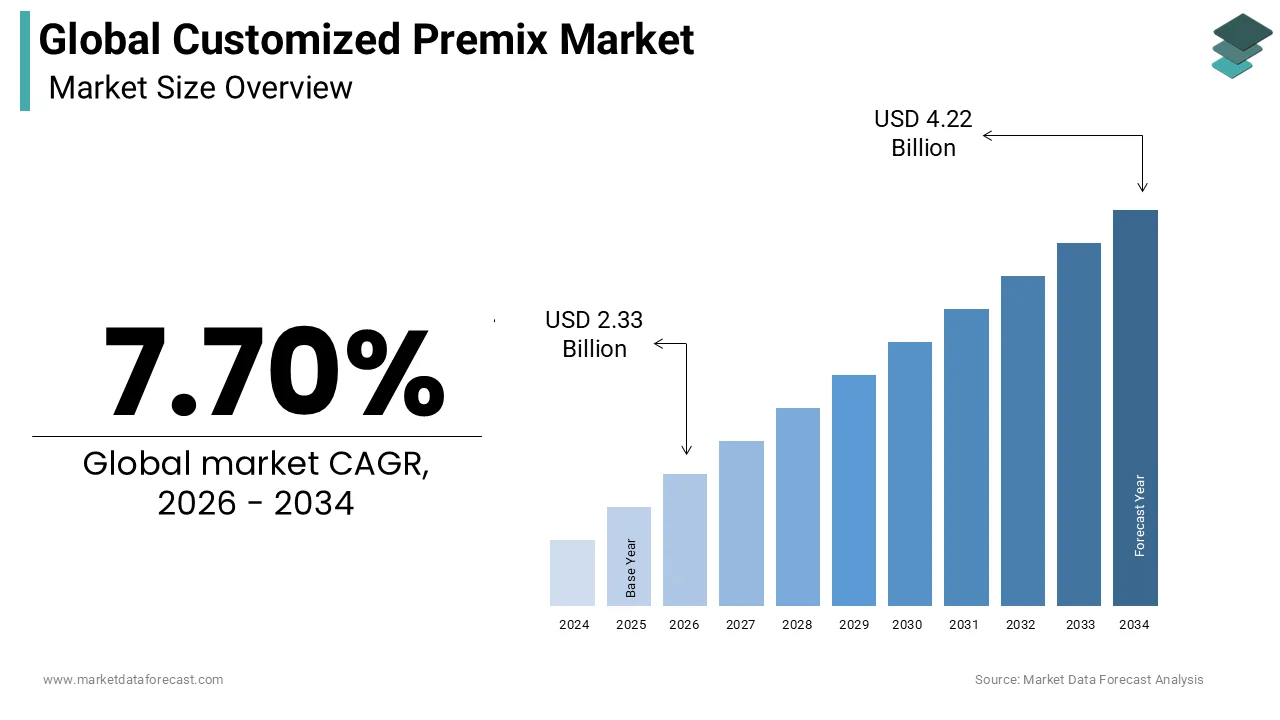
The customized premix is a precise blend of vitamins, minerals, amino acids, and other functional nutrients that are formulated to meet specific client requirements. The complexity of modern nutritional science demands tailored solutions rather than generic additives, driving manufacturers to offer bespoke formulations that address unique health goals or product specifications. According to the World Health Organization, approximately 2 billion people globally suffer from micronutrient deficiencies, underscoring the urgent need for effective fortification strategies that customized premixes facilitate. The European Food Safety Authority emphasizes that accurate dosing is essential to avoid toxicity while achieving therapeutic benefits, a precision that standardized mixes often fail to provide. Regulatory frameworks in regions like North America and Europe mandate strict labeling and potency verification, pushing brands toward reliable premix suppliers who can guarantee batch consistency. The shift toward personalized nutrition further amplifies demand, as consumers seek products aligned with their genetic profiles and lifestyle needs.
MARKET DRIVERS
Rising Prevalence of Chronic Diseases Accelerates Demand for Targeted Nutritional Fortification
The escalating global burden of chronic diseases such as diabetes, cardiovascular conditions, and obesity is boosting the growth of the customized premix market. Health authorities worldwide advocate for preventive nutrition strategies that incorporate specific bioactive compounds to mitigate disease risk and manage existing conditions. According to the Centers for Disease Control and Prevention, 6 in 10 adults in the United States have at least one chronic disease, creating a substantial market for therapeutic food products. Customized premixes allow manufacturers to precisely integrate ingredients like omega-3 fatty acids, plant sterols, and soluble fibers that are clinically proven to support heart health and metabolic function. As per the International Diabetes Federation, 537 million adults live with diabetes, driving demand for low glycemic index products enriched with chromium and magnesium. Premix suppliers collaborate with nutritionists to develop blends that enhance satiety and regulate blood sugar levels without compromising taste or texture. Pharmaceutical companies also utilize these premixes in medical nutrition therapies prescribed for patients recovering from surgery or managing chronic illnesses. This medicalization of food compels brands to move beyond basic fortification toward scientifically validated custom blends that deliver measurable health outcomes.
Expansion of Personalized Nutrition Trends Drives Requirement for Bespoke Ingredient Blends
The rapid evolution of personalized nutrition based on genetic testing, microbiome analysis, and lifestyle data fundamentally transforms how consumers approach dietary supplementation and food choices. The expansion of personalized nutrition is driving the growth of the customized premix market. Individuals increasingly seek products tailored to their unique biological makeup rather than adopting one-size-fits-all approaches, necessitating highly flexible manufacturing capabilities from premix suppliers. Customized premixes enable brands to create niche products targeting specific demographic segments such as athletes, requiring branched-chain amino acids, or seniors needing enhanced vitamin D and calcium absorption. Direct-to-consumerr brands leverage digital platforms to collect user data and formulate bespoke supplement packs using modular premix components. Premix manufacturers respond by developing scalable platforms that allow for small batch production of unique blends without prohibitive cost increases. This agility supports the proliferation of subscription-based nutrition services that adjust formulations based on real-time health metrics. Retailers expand offerings of personalized vitamin packs and functional snacks, relying on premix providers for consistent quality and regulatory compliance. The emergence of technology and nutrition creates a dynamic environment where customization becomes a competitive advantage, driving sustained growth in the demand for flexible and precise premix solutions.
MARKET RESTRAINTS
Stringent Regulatory Compliance Requirements Increase Operational Complexity and Costs
The intricate web of global regulatory standards for nutrient claims, safety limits, and labelling is limiting the growth of the customized premix market. Each jurisdiction imposes distinct maximum permissible levels for vitamins and minerals, requiring suppliers to maintain multiple formulation variants and rigorous documentation protocols. Compliance costs escalate as laboratories charge premium fees for accredited analysis, with single batch verification often exceeding 1000 dollars for comprehensive panels. The Food and Drug Administration in the United States enforces strict Current Good Manufacturing Practices, resulting in frequent audits and potential facility shutdowns for non-compliance. Variations in approved ingredient lists between regions force exporters to reformulate products for different sectors, increasing research and development expenses. The Codex Alimentarius provides international guidelines, but local adaptations often create conflicting requirements that complicate global supply chains. Traceability mandates require digital systems to track every component from source to final blend, demanding substantial IT infrastructure investments. Failure to comply results in costly recalls, legal penalties, and reputational damage that can devastate smaller players. These regulatory burdens disproportionately affect agile startups seeking to innovate, as they lack the resources of larger corporations to navigate complex compliance landscapes efficiently.
Volatility in Raw Material Prices Disrupts Cost Stability and Supply Chain Planning
Fluctuating costs of key vitamins, minerals, and carrier materials create unpredictable pricing environments that challenge the profitability and strategic planning of customized premix producers. Geopolitical tensions, energy price spikes, and weather-related crop failures directly impact the availability and cost of foundational ingredients such as vitamin C, derived from corn, or magnesium sourced from mineral deposits. The United Nations Conference on Trade and Development notes that logistics costs increased by 15% globally due to port congestion and fuel price hikes, further inflating input expenses. Small and medium-sized premix manufacturers face disproportionate pressure as they lack the hedging instruments and bulk purchasing power of larger competitors. Currency fluctuations exacerbate these challenges for import-dependent firms, eroding margins when local currencies weaken against the dollar. Manufacturers struggle to pass these costs to customers in competitive markets where price sensitivity remains high. This instability discourages investment in new formulation capabilities and forces companies to prioritize short-term financial survival over innovation.
MARKET OPPORTUNITIES
Development of Clean Label and Natural Source Premixes Addresses Consumer Transparency Demands
The growing consumer preference for clean label products is driving innovation with natural source ingredients that replace synthetic alternatives, which is likely to promote new opportunities for the growth of the customized premix market. Modern buyers actively scrutinize ingredient lists and reject artificial additives, driving demand for vitamins and minerals derived from whole food sources such as fruits, vegetables, and fermented cultures. According to data, 75% of global consumers prefer products with recognizable and natural ingredients, prompting brands to reformulate using organic premixes. Suppliers leverage advanced extraction technologies to isolate nutrients from acerola cherries for vitamin C or seaweed for iodine, maintaining potency while enhancing market appeal. Manufacturers collaborate with agricultural partners to secure sustainable supplies of raw materials, ensuring traceability and ethical sourcing credentials. This shift allows brands to command premium pricing and build stronger consumer trust through transparent storytelling. Regulatory bodies in Europe and North America increasingly support clean label initiatives by simplifying approval processes for natural extracts compared to synthetic counterparts. Innovation extends to carrier systems that use rice flour or oat fiber instead of chemical anti-caking agents, that is further aligning with clean label expectations. Clinical studies published in the Journal of Agricultural and Food Chemistry confirm that natural source vitamins often exhibit superior bioavailability, providing a scientific advantage for marketing claims.
Integration of Premixes in Plant-Based and Alternative Protein Products Expands Application Scope
The explosive growth of the plant-based food sector to address nutritional gaps inherent in non-animal protein sources is also fueling the growth of the customized premix market. Plant-based meats and dairy alternatives often lack complete amino acid profiles and essential micronutrients like vitamin B12, iron, and zinc found in animal products, necessitating targeted fortification. Suppliers develop bespoke blends that enhance the nutritional parity of plant-based products by making them viable substitutes for health-conscious consumers. For instance, pea and rice protein combinations require specific lysine and methionine adjustments to achieve optimal protein quality scores. Manufacturers also focus on improving texture and flavor-masking properties of premixes to ensure sensory appeal in meat analogues. Innovation includes encapsulated iron sources that prevent oxidation and off-flavors in plant-based burgers. Retailers expand dedicated sections for fortified vegan products, reflecting consumer demand for nutritious options. This expansion diversifies the customer base for premix providers beyond traditional supplement and cereal markets, opening new revenue streams in high-growth categories.
MARKET CHALLENGES
Ensuring Uniform Dispersion and Stability of Active Ingredients Remains a Technical Hurdle
Achieving consistent distribution and long-term stability of sensitive nutrients within customized premix blends poses significant technical challenges for manufacturers and is to pose as a major challenge for the growth of the customized premix market. Vitamins and probiotics are highly susceptible to degradation from heat, moisture, and oxygen exposure during processing and storage, leading to potency loss that compromises product efficacy. These protective coatings add complexity and cost to the manufacturing process, requiring precise control of particle size and coating thickness. Uniform dispersion is critical to ensure each unit of the final product contains the declared nutrient amount, yet differences in particle density and electrostatic charges can cause segregation during blending. Inadequate mixing can result in hot spots of concentrated nutrients, posing safety risks and regulatory violations. Manufacturers must invest in sophisticated blending equipment and real-time monitoring systems to detect and correct inconsistencies. Stability testing under various environmental conditions extends development timelines and increases operational costs. Humidity control in production facilities is essential but expensive, particularly in tropical regions where ambient moisture levels are high. Failure to address these technical issues leads to product recalls and loss of customer trust.
Managing Cross-Contamination Risks in Multi-Product Facilities Impacts Safety and Compliance
Operating facilities that produce multiple customized premix formulations simultaneously introduces severe risks of cross-contamination, particularly when handling allergens or potent bioactive compounds. Managing contamination risks in multi-product facilities impacts safety and compliance and can also negatively affect the growth of the customized premix market. Even trace amounts of unintended ingredients can trigger allergic reactions or violate religious dietary laws, leading to serious legal and reputational consequences. Manufacturers must implement rigorous cleaning procedures and physical separation of production lines, which reduces operational efficiency and increases downtime. Dedicated equipment for specific allergens like soy or gluten is often required, limiting flexibility and raising capital expenditure. The Global Food Safety Initiative mandates comprehensive hazard analysis and critical control points systems that demand extensive documentation and staff training. Advanced detection methods such as DNA testing for allergens are expensive and time-consuming, delaying product release. Small batch production runs typical of customized premixes exacerbate these risks as frequent line changes increase exposure opportunities. Insurance premiums for liability coverage rise accordingly, impacting profitability. Companies must balance the demand for variety with the imperative for safety, often restricting the range of concurrent productions to mitigate risk.
REPORT COVERAGE
| REPORT METRIC | DETAILS |
| Market Size Available | 2025 to 2034 |
| Base Year | 2025 |
| Forecast Period | 2026 to 2034 |
| CAGR | 7.70% |
| Segments Covered | By Nutrient, Application, Functionality, and Region |
| Various Analyses Covered | Global, Regional, & Country Level Analysis; Segment-Level Analysis; DROC; PESTLE Analysis; Porter’s Five Forces Analysis; Competitive Landscape; Analyst Overview of Investment Opportunities |
| Regions Covered | North America, Europe, Asia Pacific, Latin America and Middle East, and Africa |
| Market Leaders Profiled | Prinova Group LLC., SternVitamin GmbH & Co. KG, Koninklijke DSM N.V., Jubilant Life Sciences, Archer Daniels Midland Company, Fenchem, Glanbia plc., B&H Biotechnology Co. Ltd., Barentz, Farbest Brands, Lycored, Hexagon Nutrition Pvt. Ltd., Archer Daniels Midland Company, and WATSON-INC |
SEGMENTAL ANALYSIS
By Nutrient Insights
The vitamins segment was the largest, accounting for 48.3% of the customized premix market share in 2025, with the widespread government mandates for food fortification and growing consumer awareness regarding micronutrient deficiencies. Vitamins such as A, D, E, and the B complex are important for maintaining immune function, bone health, and metabolic processes, making them indispensable in daily diets. According to the World Health Organization, vitamin A deficiency affects 190 million preschool-aged children globally, prompting national health programs to mandate fortification of staple foods like flour and oil. The ready-to-eat cereals in the American market are fortified with essential vitamins, creating a consistent demand for high-quality premixes. Regulatory bodies in Europe and North America enforce strict labeling requirements that encourage manufacturers to use standardized vitamin blends to ensure compliance and avoid liability. The rising prevalence of lifestyle diseases has further amplified demand for vitamin-enriched products, with consumers actively seeking supplements and functional foods that support overall wellness. Manufacturers leverage customized vitamin premixes to differentiate their products by offering specific formulations targeting age groups or health conditions. The stability and bioavailability of vitamins remain key focus areas, with suppliers investing in microencapsulation technologies to protect sensitive compounds during processing.
The nutraceuticals and nucleotides segment is expected to grow at the fastest CAGR of 7.5% during the forecast period owing to the expanding functional food industry and increasing demand for disease prevention solutions. Nutraceuticals encompass bioactive compounds such as antioxidants, probiotics, and herbal extracts that provide therapeutic benefits beyond basic nutrition. Consumers are increasingly incorporating nutraceutical-enriched products into their daily routines to manage stress, improve cognitive function, and enhance gut health. Nucleotides, which are essential for cell growth and repair, gain prominence in infant formula and medical nutrition products due to their role in immune system development. The European Society for Pediatric Gastroenterology, Hepatology and Nutrition highlights that nucleotide supplementation can improve intestinal recovery in infants with diarrhea, driving adoption in specialized nutritional products. Manufacturers innovate by combining multiple nutraceuticals into single premixes to create synergistic effects that appeal to health-conscious buyers. The rise of personalized nutrition further accelerates growth, as consumers seek tailored solutions based on genetic profiles and lifestyle factors.
By Application Insights
The dietary supplements segment was the largest, accounting for a dominant share of the customized premix market in 2025, with an aging global population and heightened awareness regarding preventive healthcare. Consumers increasingly view supplements as essential tools for maintaining vitality and managing chronic conditions, leading to sustained demand for personalized vitamin and mineral blends. According to the Council for Responsible Nutrition, 77% of adults in the United States regularly consume dietary supplements, reflecting deep market penetration and habitual usage. The aging demographic in developed regions requires specific nutrients such as calcium, vitamin D, and omega-3 fatty acids to support bone density and cardiovascular health, creating targeted opportunities for premix suppliers. The World Health Organization projects that the number of people aged 60 years and older will double by 2050, significantly expanding the addressable market for senior-focused nutritional products. Direct-to-consumer brands leverage digital platforms to offer subscription-based supplement packs customized to individual health goals, relying on flexible premix providers for efficient production. Regulatory frameworks in North America and Europe support the safety and efficacy of supplements, encouraging consumer confidence and brand loyalty. The trend toward clean label and natural ingredients further drives innovation, with manufacturers developing plant-based and organic premixes to meet evolving preferences. This scientific backing supports marketing efforts and justifies premium pricing.
The beverages segment is likely to exhibit the fastest CAGR of 18.2% from 2026 to 2034, with the proliferation of functional drinks that offer hydration alongside specific health benefits such as energy boosting, immunity support, and stress relief. Modern consumers seek convenient ways to incorporate nutrients into their busy lifestyles, making fortified beverages an attractive option compared to pills or powders. Energy drinks enriched with B vitamins and amino acids cater to athletes and professionals seeking mental clarity and physical endurance. Immunity-boosting drinks containing vitamin C, zinc, and elderberry extract gained popularity post-pandemic, establishing a lasting consumer habit. Manufacturers utilize customized premixes to ensure precise dosing and stability of sensitive ingredients in liquid formats, addressing previous challenges related to taste and shelf life. Plant-based milk alternatives fortified with calcium and vitamin D also contribute to growth, appealing to lactose-intolerant and vegan consumers. The ease of consumption and immediate gratification provided by functional beverages drive repeat purchases and brand loyalty. Retailers expand shelf space for these products, recognizing their high turnover rates and profit margins. Collaborations between beverage brands and health experts enhance credibility and drive adoption among discerning buyers.
By Functionality Insights
The immunity functionality segment held 52.1% of the customized premix market share in 2025, as consumers prioritize immune system support following the global health crisis. The pandemic heightened awareness regarding the role of nutrition in disease resistance, leading to sustained demand for products enriched with vitamin C, vitamin D, zinc, and selenium. Respiratory illnesses remain a leading cause of morbidity, reinforcing the importance of proactive immune health measures. Consumers actively seek foods and supplements that claim to boost immune response, driving manufacturers to formulate specialized premixes with clinically proven ingredients. The European Food Safety Authority has approved several health claims linking vitamin C and zinc to normal immune function, providing regulatory support for marketing efforts. The trend extends beyond supplements to everyday foods such as juices, yogurts, and snacks, broadening the application scope for premix suppliers. Manufacturers innovate by combining multiple immune-supporting nutrients into single blends to offer comprehensive protection. The aging population further drives demand, as older adults are more susceptible to infections and require enhanced nutritional support.
The skin health segment is projected to register the highest compound annual growth rate of 8.2% during the forecast period, fueled by the growing beauty from within movement and consumer desire for holistic wellness solutions. Individuals increasingly recognize that external skincare products are insufficient without internal nutritional support, leading to rising demand for collagen, hyaluronic acid, and antioxidant-rich premixes. Collagen peptides derived from marine or bovine sources are popular for improving skin elasticity and hydration, with clinical trials showing visible improvements in wrinkle depth after 12 weeks of supplementation. Social media influencers and dermatologists promote the benefits of internal nutrition for radiant skin, accelerating consumer adoption. Manufacturers develop customized premixes that combine collagen with vitamins C and E to enhance synthesis and protection against oxidative stress. The trend appeals to both younger consumers seeking prevention and older demographics looking for reversal of aging signs. Retailers expand offerings of beauty-focused supplements and functional beverages, capitalizing on high margin opportunities.
REGIONAL ANALYSIS
North America Customized Premix Market Analysis
North America was the largest contributor by holding 33.2% of the global customized premix market share in 2025, with high consumer spending on health and wellness products and a well-established regulatory framework. Consumers in the region are highly educated about nutrition and actively seek personalized solutions, driving demand for customized blends. The Food and Drug Administration provides clear guidelines for ingredient safety and labeling, fostering consumer trust and brand accountability. Canada contributes to regional growth with its strong focus on natural health products and organic certifications. The presence of major pharmaceutical and food companies facilitates rapid adoption of new premix technologies and formulations. Research institutions in North America lead global studies on nutrient efficacy, generating evidence that supports marketing claims and product development. The trend toward clean label and non-GMO ingredients is particularly strong in this region, prompting suppliers to invest in sustainable sourcing and transparent supply chains. High disposable income allows consumers to purchase premium products, supporting higher margins for manufacturers.
Europe Customized Premix Market Analysis
Europe customized premix market was ranked second with 21.2% of the share in 2025, owing to stringent quality standards and an aging population shaping demand dynamics. The European Union enforces rigorous regulations on food safety and nutrient claims, ensuring high product quality and consumer protection. According to Eurostat, the proportion of people aged 65 and over in the EU is projected to reach 30% by 2050, creating sustained demand for bone health and cognitive support supplements. Countries like Germany, France, and the United Kingdom lead in supplement consumption, with consumers preferring scientifically validated products. The European Food Safety Authority plays a critical role in evaluating health claims, requiring robust clinical evidence for approval. This regulatory environment encourages manufacturers to invest in research and development to meet high standards. The trend toward natural and organic ingredients is prominent, with consumers willing to pay premiums for certified products. Local producers focus on sustainability and ethical sourcing, aligning with regional values. The pharmaceutical industry in Europe collaborates closely with premix suppliers to develop medical nutrition therapies for chronic disease management. Retail pharmacies serve as key distribution channels, providing professional advice and building consumer trust. The region also leads in innovation for infant formula and specialized medical foods, driven by advanced healthcare systems.
Asia Pacific Customized Premix Market Analysis
Asia Pacific customized premix market growth is likely to grow with rapid economic development, rising disposable incomes, and increasing health awareness. The expanding middle class in countries like China, India, and Japan is shifting toward preventive healthcare and premium nutritional products. Government initiatives in China and India promote food fortification to combat micronutrient deficiencies by creating large-scale demand for standardized premixes. The prevalence of lifestyle diseases such as diabetes and hypertension is rising, driving demand for functional foods and supplements. Local manufacturers are investing in advanced processing facilities to meet international quality standards and compete with global players. The influence of Western wellness trends through social media accelerates adoption of supplements and functional beverages among younger demographics. E-commerce platforms facilitate access to a wide range of products, expanding market reach beyond urban centers. Cultural preferences for traditional herbs and modern nutrients create unique opportunities for hybrid formulations.
Latin America Customized Premix Market Analysis
Latin America customized premix market growth is expected to grow steadily with the abundant agricultural resources and ongoing urbanization. Countries like Brazil and Mexico are major producers of raw materials such as soy and corn, providing a cost-effective base for ingredient manufacturing. Rising obesity and diabetes rates in the region prompt government health campaigns that encourage healthier eating habits and supplement use. Local food manufacturers are increasingly adopting fortification strategies to comply with national regulations and meet consumer expectations. The growing middle class has greater purchasing power for premium health products, including vitamins and minerals. Distribution networks are improving by allowing better access to supplements in rural and semi-urban areas. Cultural emphasis on family health drives household spending on preventive nutrition. Regional trade agreements facilitate the exchange of ingredients and technology, enhancing local production capabilities. However, economic volatility and currency fluctuations pose challenges for import-dependent firms. Investments in local processing infrastructure reduce reliance on imports and improve supply chain resilience.
Middle East And Africa Customized Premix Market Analysis
The Middle East and Africa customised premix market is likely to grow with public health needs and varying levels of economic development. Many countries in this region face high rates of micronutrient deficiencies, creating urgent demand for fortified staples and supplements. As per the World Health Organization, iron deficiency anemia affects 40% of women in some African nations, promoting the critical role of fortification programs. Governments in Gulf Cooperation Council countries have higher spending power and implement mandatory fortification policies for flour and milk, driving structured demand. In sub-Saharan Africa, international aid organizations partner with local manufacturers to distribute fortified foods, creating niche markets for specialized premixes. Urbanization in cities like Lagos and Nairobi is changing dietary patterns, increasing demand for processed and fortified foods. However, limited infrastructure and regulatory fragmentation pose challenges for consistent supply and quality control. Economic instability in some countries affects purchasing power and import capabilities. Mobile health initiatives and digital education campaigns are raising consciousness about nutrition. Local entrepreneurs are beginning to produce affordable supplement options tailored to regional needs.
COMPETITION OVERVIEW
The competition in the customized premix market is characterized by the presence of large multinational corporations alongside numerous regional and local players who compete on quality, innovation, and service reliability. Major companies leverage their scale and global supply networks to offer consistent product availability and competitive pricing, while smaller firms differentiate themselves through niche offerings such as organic certifications and specialized formulations. The market exhibits moderate consolidation as leading players acquire specialized technology startups to enhance their capabilities in personalized nutrition and functional ingredients. Innovation serves as a key differentiator, with companies investing in research to develop ingredients with improved stability and bioavailability. Regulatory compliance and sustainability credentials increasingly influence buyer decisions, forcing competitors to adopt transparent sourcing practices and eco-friendly processing methods. Price volatility of raw materials creates pressure on margins, prompting firms to optimize operational efficiency and hedge against risks. Customer loyalty is driven by technical support and the ability to provide customized solutions for specific applications.
KEY MARKET PLAYERS
A few major key players in the global customized premix market include
- Prinova Group LLC
- SternVitamin GmbH & Co. KG
- Koninklijke DSM N.V
- Jubilant Life Sciences
- Archer Daniels Midland Company
- Fenchem
- Glanbia plc
- B&H Biotechnology Co. Ltd
- Barentz
- Farbest Brands
- Lycored
- Hexagon Nutrition Pvt. Ltd
- Archer Daniels Midland Company
- WATSON-INC
Top Strategies Used by the Key Market Participants
Key players in the customized premix market primarily focus on strategic partnerships and collaborations to expand their product portfolios and access new geographic markets. Companies invest heavily in research and development to innovate functional ingredients such as natural-source vitamins and specialized amino acid blends that align with health trends. Sustainability initiatives form a core strategy where firms adopt green chemistry practices and reduce carbon footprints to appeal to environmentally conscious consumers. Vertical integration is another common approach, allowing companies to control supply chains from raw material sourcing to final blending, ensuring quality and cost efficiency. Manufacturers also prioritize digital transformation by implementing advanced analytics and automation to enhance operational efficiency and traceability. Collaborations with health organizations and regulatory bodies help in creating fortified ingredients that address public health needs.
Leading Players in the Market
- DSM Firmenich AG stands as a global leader in nutrition and health solutions with a strong presence in the customized premix sector. The company leverages its extensive expertise in vitamins, carotenoids, and enzymes to deliver tailored nutrient blends for food, feed, and pharmaceutical applications. DSM Firmenich focuses on sustainability and innovation by developing natural source ingredients and clean label premixes that meet evolving consumer preferences. The company collaborates with major food manufacturers to create fortified products that address specific health concerns such as immunity and bone health. Their commitment to regulatory compliance and quality assurance strengthens trust among global clients. By investing in advanced manufacturing facilities and digital tools for supply chain transparency, DSM Firmenich enhances its ability to provide consistent and high-quality customized premixes.
- BASF SE is a prominent chemical company that plays a prominent role in the global supply of vitamins and customized premixes for various industries. The company utilizes its vast chemical engineering expertise to produce high-purity vitamins and carotenoids that serve as foundational components for premix formulations. BASF focuses on operational excellence and sustainability by optimizing production processes to reduce environmental impact and ensure cost efficiency. The company invests heavily in research to develop novel encapsulation technologies that improve the stability and bioavailability of sensitive nutrients. BASF collaborates with customers to co-create customized solutions that enhance product performance and nutritional value. Its global distribution network ensures reliable delivery and technical support to clients worldwide.
- Glanbia plc is a leading global provider of premium nutrition solutions with a significant focus on customized premixes for sports nutrition and the health and wellness sector. The company specializes in blending proteins, vitamins, and minerals to create targeted formulations for athletes and health-conscious consumers. Glanbia leverages its strong relationships with dairy farmers and ingredient suppliers to secure high-quality raw materials for its premix operations. Recent actions include expanding its manufacturing footprint in North America and Europe to increase production capacity and reduce lead times. The company invests in clinical research to validate the efficacy of its nutritional blends and support scientific marketing claims. Glanbia collaborates with brands to develop innovative products such as ready-to-drink shakes and protein bars that meet specific dietary needs. Its focus on customer-centric innovation and agile manufacturing allows for rapid response to market trends.
DETAILED SEGMENTATION OF THE GLOBAL CUSTOMIZED PREMIX MARKET INCLUDED IN THIS REPORT
This research report on the global customized premix market has been segmented and sub-segmented based on nutrient, form, application, functionality, and region.
By Nutrient
- Vitamins
- Minerals
- Amino Acids
- Nutraceuticals
- Nucleotides
By Form
- Powder
- Liquid
By Application
- Beverages
- Dairy Products
- Cereals
- Bakery and Confectionery
- Nutritional Products
- Dietary Supplements
By Functionality
- Bone Health
- Skin Health
- Energy
- Immunity
- Digestion
By Region
- North America
- Europe
- Middle East and Africa
- Asia and Pacific
- Latin America