- Product Description Description
- Table of Contents TOC
- List of Table & Figure LOT
- Get Free Sample PDF Sample PDF
Market Size, 2025
$485.87 BnMarket Estimate, 2026
$526.2 BnMarket Forecast, 2034
$995.81 BnCAGR, 2026–2034
8.3%Executive Summary: Global Nutraceuticals Market
- Market Scope: Comprehensive global nutraceuticals market analysis spanning functional foods, nutritional supplements, herbal extracts, medicinal nutrients, delivery forms, and regional regulatory frameworks.
- Market Valuation: Valued at USD 485.87 billion (2025), estimated at USD 526.20 billion (2026), and projected to reach USD 995.81 billion by 2034, registering a solid CAGR of 8.30% (2026–2034).
- Primary Growth Drivers: Rising prevalence of chronic lifestyle-related diseases (NCDs), integration of traditional medicine systems with modern clinical science, and increasing demand for preventive healthcare.
Key Market Segment Metrics (2026–2034)
| Category | Leading Segment (2025 Position) | Fastest-Growing Segment |
|---|---|---|
| By Type | Vitamins (dominated by capturing 29.3% of total value in 2025 due to foundational physiological roles and deficiency prevention) | Phytochemicals & Plant Extracts (projected to expand at a leading CAGR of 12.8% driven by botanical science validation) |
| By Form | Dry Form (commanded the largest share at 65.1% in 2025 due to stability, extended shelf life, and manufacturing scalability) | Liquid Form (registering a CAGR of 10.4% fueled by enhanced bioavailability, rapid absorption, and functional beverages) |
| By Region | North America (held the largest share at 33.1% in 2025 backed by advanced R&D and entrenched supplement culture) | Asia-Pacific (expanding rapidly via rising incomes, urbanization, and traditional medicine modernization like TCM and Ayurveda) |
Major Market Players & Market Structure
Market Structure: Highly competitive landscape balancing large multinational corporations, integrated ingredient suppliers, and agile biotech innovators competing on scientific validation, supply chain vertical integration, and personalized nutrition platforms.
Key Companies: Nestlé Health Science, DSM-Firmenich, Glanbia Nutritionals, Archer Daniels Midland Company, Cargill Incorporated, BASF SE, Groupe Danone S.A., PepsiCo Inc., and Amway, among others.
Global Nutraceuticals Market Size
The global nutraceuticals market size was calculated to be USD 485.87 billion in 2025 and is anticipated to be worth USD 995.81 billion by 2034, growing from USD 526.20 billion in 2026 at a CAGR of 8.30% during the forecast period.
Nutraceuticals are bioactive compounds and fortified formulations derived from food sources that deliver specific health benefits beyond basic nutrition, bridging the gap between pharmaceuticals and dietary supplements. These products, which include functional foods, nutritional supplements, herbal extracts, and medicinal nutrients, are scientifically formulated to support physiological functions such as immune modulation, cognitive enhancement, and metabolic regulation.
As per the World Health Organization, over 80% of the global population in low- and middle-income countries relies on plant-based nutraceuticals as part of primary healthcare, underscoring their cultural and therapeutic significance. The European Food Safety Authority has evaluated more than 4,000 health claims since 2010, with 220 authorized for use on nutraceutical labeling, reinforcing scientific rigor in product substantiation. In India, Ayurvedic-derived nutraceuticals have been integrated into public health initiatives, with the Ministry of AYUSH supporting clinical trials on ashwagandha for stress reduction and turmeric for inflammation. Furthermore, NASA has explored algae-based nutraceuticals for long-duration space missions due to their high nutrient density and antioxidant properties, as documented in the agency’s Human Research Program. These developments illustrate that nutraceuticals are no longer confined to wellness trends but are increasingly recognized as integral components of preventive medicine, public health strategies, and personalized nutrition frameworks.
KEY MARKET DRIVERS
Rising Prevalence of Chronic Lifestyle-Related Diseases
The escalating global burden of non-communicable diseases (NCDs) such as type 2 diabetes, cardiovascular disorders, and obesity has become a primary catalyst for nutraceutical adoption. According to the World Health Organization, NCDs account for 74% of all deaths worldwide, with 17.9 million annual fatalities attributed to cardiovascular conditions alone. This public health crisis has prompted both individuals and healthcare systems to prioritize preventive interventions, positioning nutraceuticals as viable tools for risk mitigation. In the United States, the Centers for Disease Control and Prevention reports that 42.4% of adults are obese, driving demand for weight management supplements containing green tea extract, glucomannan, and conjugated linoleic acid. The American Heart Association recognizes the role of plant sterols in reducing LDL cholesterol, with clinical studies showing a reduction when consumed at 2 grams per day. In Europe, the PREDIMED study demonstrated that Mediterranean diets supplemented with polyphenol-rich olive oil reduced cardiovascular events over five years, reinforcing the therapeutic potential of food-derived compounds. As healthcare costs associated with chronic diseases soar, governments and insurers are increasingly endorsing nutraceuticals as cost-effective adjuncts to pharmacological treatment, accelerating their integration into mainstream health management.
Integration of Traditional Medicine Systems with Modern Science
The scientific validation of traditional healing systems has emerged as a powerful driver of nutraceutical demand, particularly in regions with deep-rooted herbal knowledge. Like, in China, the integration of Traditional Chinese Medicine (TCM) into national health policy has led to the commercialization of cordyceps, goji berry, and astragalus-based supplements, with a notable share of urban consumers using TCM-derived nutraceuticals regularly, as per the National Administration of Traditional Chinese Medicine. This convergence of ancestral wisdom and clinical research not only enhances consumer trust but also enables regulatory approval, making traditional medicine a cornerstone of global nutraceutical innovation.
MAJOR RESTRAINTS
Lack of Harmonized Global Regulatory Frameworks
The absence of standardized international regulations for nutraceuticals creates significant barriers to market access, product consistency, and consumer confidence. In the United States, the FDA regulates dietary supplements under the Dietary Supplement Health and Education Act (DSHEA), which does not require pre-market approval, leading to variability in quality and efficacy. The regulatory fragmentation complicates multinational product launches, as a supplement approved in Canada may be prohibited in Australia under the Therapeutic Goods Administration’s stringent criteria. Africa faces even greater challenges. Without global harmonization, manufacturers face prolonged approval timelines and legal risks, undermining the scalability and credibility of the nutraceutical industry.
Persistent Issues of Adulteration and Quality Control
Adulteration and inconsistent product quality remain critical impediments to consumer trust and industry growth in the nutraceutical sector. The problem extends to marine-derived products. The lapses not only endanger public health but also erode brand equity and regulatory goodwill. The lack of mandatory third-party certification in many markets allows substandard products to proliferate, particularly in e-commerce channels where oversight is minimal. Until robust, enforceable quality standards are universally adopted, the sector will continue to grapple with reputational damage and consumer skepticism.
MARKET OPPORTUNITIES
Expansion of Personalized Nutrition and Genetic-Based Supplementation
The emergence of personalized nutrition represents a transformative opportunity for the nutraceutical market, leveraging advances in genomics, metabolomics, and artificial intelligence to tailor dietary interventions to individual biological profiles. Companies like Habit and DNAFit now offer nutrigenomic testing kits that analyze genetic markers related to vitamin metabolism, lactose intolerance, and caffeine sensitivity, enabling targeted supplementation. The integration of wearable biometrics further enhances personalization; devices from Garmin and Oura Ring sync with nutrition apps to recommend real-time adjustments in omega-3, magnesium, or probiotic intake based on sleep, stress, and activity levels. In Japan, startups like Sunstar are developing AI-driven platforms that combine gut microbiome analysis with nutraceutical recommendations for digestive health. Hence, with increasing consumer demand for precision wellness and declining costs of genetic testing, the shift from one-size-fits-all to biologically informed supplementation is poised to redefine the nutraceutical value chain, unlocking new revenue models and deepening customer engagement.
Growth of Plant-Based and Sustainable Nutraceuticals
The global shift toward plant-based diets and environmentally responsible consumption is catalyzing innovation in sustainable nutraceutical sourcing and formulation. Fermentation-derived ingredients, such as heme and bioactive peptides, are being scaled for nutraceutical applications, reducing land and water use compared to traditional extraction. In India, startups are utilizing agricultural by-products, such as mango seed kernels and rice bran, to extract polyphenols and gamma-oryzanol, aligning with circular economy principles. Additionally, blockchain traceability is gaining traction; Nestlé’s ProTect line uses QR codes to provide transparency on ingredient origins and carbon footprint. As environmental awareness intensifies and regulatory pressure mounts on carbon-intensive industries, sustainable nutraceuticals are evolving from niche offerings to mainstream imperatives, reshaping product development and consumer expectations.
MARKET CHALLENGES
Scientific Validation and Clinical Evidence Gaps
The inconsistency and insufficiency of clinical evidence supporting health claims, leading to skepticism among healthcare professionals and regulatory bodies, is a persistent challenge in the nutraceutical market. While pharmaceuticals undergo rigorous Phase I–IV trials, many nutraceuticals are marketed based on observational studies, in vitro data, or small-scale human trials. Like randomized trials on herbal supplements suffered from methodological flaws, including inadequate blinding and short durations. The lack of standardized dosing further complicates evaluation. Regulatory agencies struggle to keep pace. The absence of universally accepted trial protocols undermines credibility and limits integration into evidence-based medicine. Until large-scale, long-term studies become the norm, the sector will face barriers to acceptance in clinical practice and insurance coverage, constraining its therapeutic legitimacy.
Consumer Misinformation and Digital Influence on Supplement Use
The proliferation of health misinformation through social media and influencer marketing has created a distorted perception of nutraceutical efficacy, leading to inappropriate self-medication and unrealistic expectations. The problem is exacerbated by algorithmic amplification—content promoting quick fixes generates more engagement than evidence-based advice. Regulatory bodies are ill-equipped to monitor digital platforms in real time, allowing false claims to spread unchecked. This erosion of trust not only endangers public health but also undermines legitimate scientific advancements, making consumer education and digital accountability critical challenges for the industry’s sustainable growth.
SEGMENTAL ANALYSIS
By Type Insights
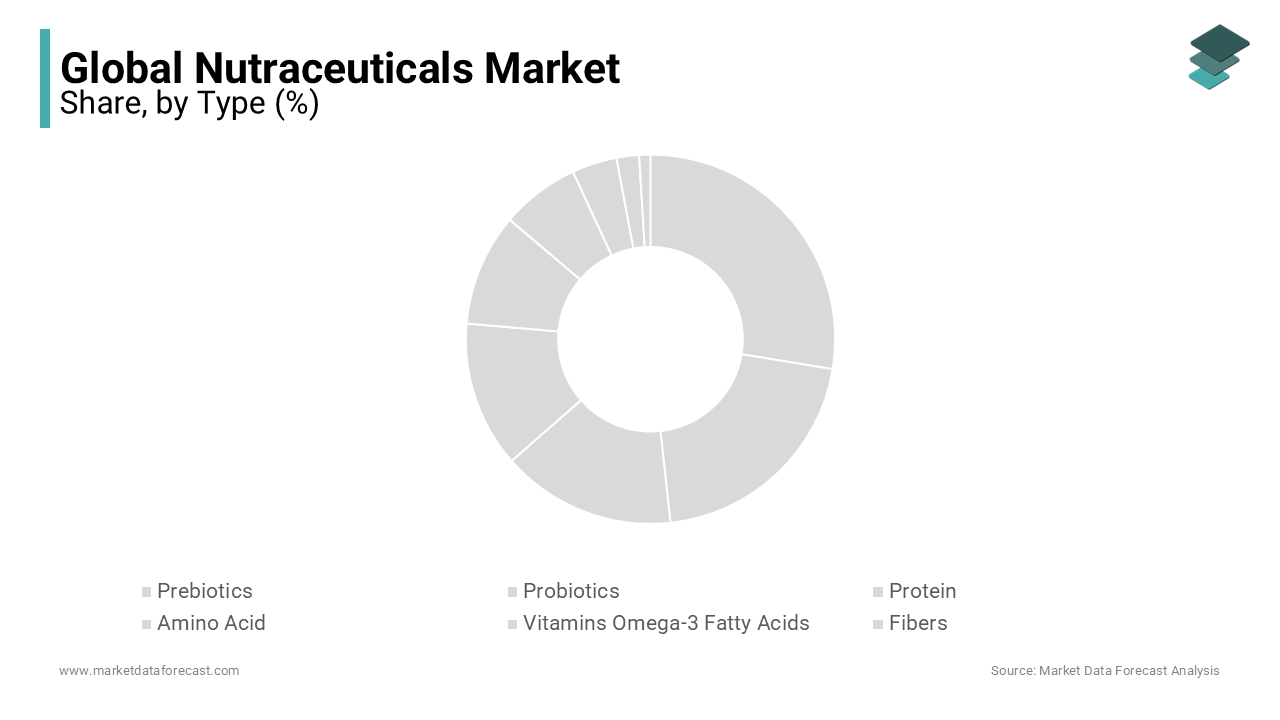
The vitamins segment dominated the global nutraceuticals market by capturing 29.3% of total value in 2025.
This lead position is anchored in widespread deficiency prevalence and the foundational role vitamins play in maintaining physiological function. Vitamin D deficiency affects approximately 1 billion people globally. This has triggered a surge in supplementation, particularly among aging populations and individuals with limited sun exposure. Vitamin C remains a cornerstone of immune support, with global sales of immune-boosting supplements increasing between 2020 and 2022. Besides, prenatal vitamins are universally recommended, with the World Health Organization advocating folic acid supplementation for all women of reproductive age to prevent neural tube defects—a policy adopted in over 80 countries. Given their essential biological roles, regulatory acceptance, and integration into public health strategies, vitamins remain the most entrenched and widely consumed category in the nutraceutical landscape.
The phytochemicals and plant extracts segment is the fastest-growing category in the nutraceuticals market and is projected to expand at a CAGR of 12.8% from 2026 to 2034. This rapid ascent is driven by increasing scientific validation of bioactive plant compounds and rising consumer demand for natural, plant-based health solutions. Curcumin, derived from turmeric, has been the subject of several peer-reviewed studies. Resveratrol, found in grapes and berries, has gained attention for its potential role in cellular longevity, activating sirtuin pathways linked to aging. Furthermore, the global popularity of adaptogens, such as rhodiola, holy basil, and licorice root, has surged. As consumers shift toward holistic, preventive health models rooted in botanical science, phytochemicals are emerging as the vanguard of next-generation nutraceutical innovation.
By Form Insights
The dry form segment commanded the largest share of the nutraceuticals market, accounting for 65.1% of total consumption in 2025. This dominance is primarily driven by superior stability, longer shelf life, and ease of manufacturing and distribution. Dry formulations are less susceptible to microbial contamination and oxidation, making them ideal for sensitive ingredients like probiotics and omega-3 fatty acids when encapsulated. Consumer preference also favors convenience. In India, the Food Safety and Standards Authority of India (FSSAI) mandates that dry supplements undergo fewer preservative requirements than liquids, reducing formulation complexity. Additionally, dry powders are widely used in fortified foods and beverages. The scalability of dry production is evident in the operations of major manufacturers like Amway and Herbalife. These operational, regulatory, and consumer-driven advantages solidify dry formulations as the backbone of the nutraceutical delivery ecosystem.
The liquid form segment is experiencing the fastest growth in the nutraceuticals market and is registering a CAGR of 10.4% from 2026 to 2034. This acceleration is fueled by rising demand for enhanced bioavailability, faster absorption, and improved palatability, particularly among children, elderly consumers, and those with swallowing difficulties. Liquid formulations enable better solubility of fat-soluble vitamins such as A, D, E, and K, increasing their uptake compared to tablets. The elderly population, which accounts for a notable share of supplement users in developed nations, increasingly opts for liquid formats due to dysphagia. Functional beverages are also driving growth—brands like Zint and Liposomal Labs have commercialized liquid vitamin C and glutathione with liposomal encapsulation. Additionally, the rise of ready-to-drink (RTD) wellness shots, such as ginger-turmeric and B12 energy blends, has captured urban consumers seeking on-the-go health solutions. With innovation in emulsification, taste masking, and preservation technologies, liquid nutraceuticals are transitioning from niche to mainstream, redefining delivery expectations.
REGIONAL ANALYSIS
Europe holds a significant market share.
The region’s market is characterized by stringent regulatory oversight and a strong emphasis on scientific substantiation. Germany leads the regional market, contributing notably to total sales, driven by a tradition of Naturheilkunde (natural medicine) and high consumer trust in pharmacy-dispensed supplements. In France, a portion of the population uses dietary supplements regularly, with multivitamins and omega-3s being the most prevalent. The Nordic countries prioritize sustainability—Sweden and Denmark have seen a rise in organic-certified nutraceuticals since 2020. Additionally, the EU’s Farm to Fork Strategy promotes functional foods fortified with vitamins and fibers, integrating nutraceuticals into broader food policy. With harmonized regulations, high literacy, and evolving wellness trends, Europe maintains a balanced, science-led approach to nutraceutical adoption.
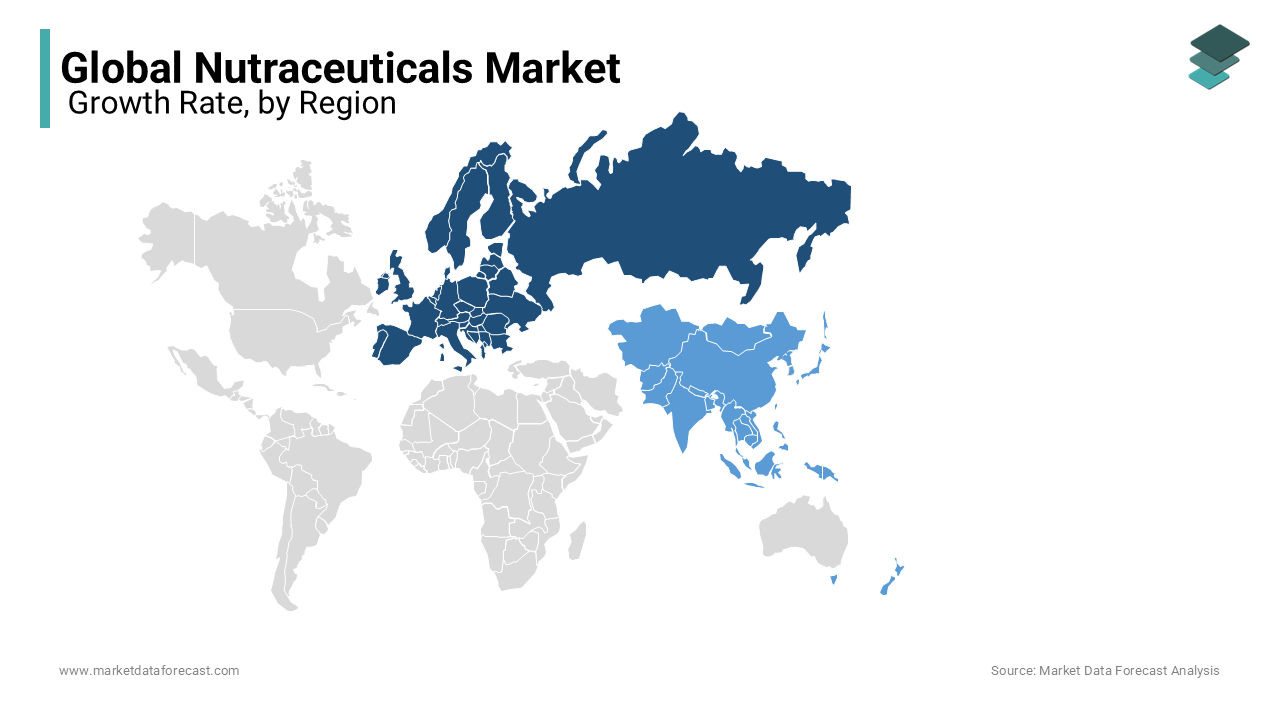
North America held the largest share of the global nutraceuticals market with 33.1% in 2025.
The region’s position is underpinned by high health consciousness, robust R&D infrastructure, and a deeply embedded supplement culture. The United States alone represents a significant portion of North America’s nutraceutical consumption. This widespread adoption is supported by a deregulated yet active regulatory environment, where the FDA permits structure-function claims without pre-market approval, enabling rapid product innovation. Canada complements this trend with strong public trust in natural health products. The presence of major players like Nature Made, Garden of Life, and NOW Foods, combined with rising telehealth integration, has accelerated personalized supplementation. Furthermore, the USDA’s MyPlate guidelines emphasize nutrient gaps in the average diet, reinforcing supplementation as a public health strategy. With high disposable income, digital health adoption, and a culture of preventive care, North America remains the most mature and influential market for nutraceutical innovation.
Asia-Pacific is another key player in the global nutraceuticals market.
The region’s growth is propelled by rising disposable incomes, urbanization, and the integration of traditional medicine into modern health practices. China is the largest national market in the region, contributing significantly to the Asia-Pacific’s sales. The Chinese government’s “Healthy China 2030” initiative promotes preventive healthcare, boosting demand for immunity and liver-protective supplements. Japan’s FOSHU system has set a global benchmark for functional foods. India’s nutraceutical market is expanding rapidly, with the state supporting the commercialization of standardized Ayurvedic extracts like ashwagandha and curcumin. The Australian market is highly regulated. With a young, digitally connected population and growing chronic disease burden, the Asia-Pacific is evolving into a hub of both traditional wisdom and scientific innovation in nutraceuticals.
Latin America holds a key share of the global nutraceuticals market.
The region’s market is nascent but growing, with Brazil and Mexico leading in consumer adoption and regulatory development. Brazil accounts for a notable share of regional sales, driven by a strong fitness culture and rising middle-class health awareness. Mexico has implemented the Norma Oficial Mexicana (NOM-147) to regulate health claims, aligning with international standards. Chile’s front-of-package labeling law has increased demand for fortified foods, boosting nutraceutical integration into everyday products. Argentina has seen a surge in omega-3 and probiotic consumption. However, regulatory fragmentation and import tariffs hinder scalability—Mercosur countries apply varying approval timelines, delaying product launches. Despite challenges, rising urbanization and government initiatives on malnutrition are fostering market expansion, positioning Latin America as an emerging frontier.
The Middle East and Africa collectively account for a small share of the global nutraceuticals market.
The Gulf Cooperation Council (GCC) nations dominate the regional market, with Saudi Arabia and the UAE driving demand through national health transformation programs. Saudi Arabia’s Vision 2030 includes a wellness economy pillar, promoting supplements for diabetes and obesity management. The UAE has established free zones like Dubai Science Park to attract nutraceutical manufacturers, offering tax incentives and regulatory fast-tracking. South Africa is the largest market in Africa. However, access remains limited in sub-Saharan Africa. Traditional herbal use is widespread—Ethiopia and Nigeria rely on moringa, neem, and bitter leaf for daily health, creating opportunities for standardization. With increasing urbanization and public health investment, the region is gradually building a structured nutraceutical ecosystem, though equitable access remains a long-term challenge.
COMPETITIVE LANDSCAPE
The competitive landscape of the nutraceuticals market is characterized by a dynamic interplay between scientific innovation, regulatory navigation, and consumer trust. While large multinational corporations dominate through scale and R&D capabilities, a growing number of specialized biotech firms and regional players are challenging the status quo with novel ingredients and personalized formulations. The race to establish clinical credibility has intensified, with companies investing heavily in human trials and third-party validation to substantiate health claims in an environment of increasing regulatory scrutiny. Differentiation is no longer limited to product efficacy but extends to sustainability, sourcing transparency, and digital engagement—consumers now demand traceability, clean labels, and alignment with ethical values. Geographic expansion into emerging markets is another battleground, where localization of traditional remedies and fortification programs offers growth opportunities. Intellectual property surrounding proprietary delivery systems, fermentation processes, and bioactive compounds has become a key lever of advantage. Moreover, the convergence of nutraceuticals with digital health—through apps, wearables, and AI-driven recommendations—is reshaping how products are developed and consumed. Ultimately, leadership in this market requires more than manufacturing prowess; it demands a fusion of science, storytelling, and social responsibility to earn consumer loyalty in an increasingly discerning and informed marketplace.
Key Market Participants
A few of the companies playing a promising role in the global nutraceuticals market include
- Archer Daniels Midland Company
- Cargill Incorporated
- Royal DSM N.V.
- BASF SE
- Nestlé S.A.
- Groupe Danone S.A
- E. I. du Pont de Nemours and Company
- PepsiCo Inc.
- Aland (Jiangsu) Nutraceutical Co., Ltd
- General Mills, Inc.
- Blytheco
- Gamajet
- Pharmachem Laboratories
- Balchem Corp
- Alpha Packaging
- Aker BioMarine
- Barrington Nutritionals
- Premier Nutraceutical Pvt Ltd
- Sydler India
- Marlyn Nutraceuticals
LEADING PLAYERS IN THE NUTRACEUTICALS MARKET
- Nestlé Health Science has emerged as a pivotal force in the global nutraceutical landscape by redefining the intersection of medical science and nutrition. The company leverages its extensive research infrastructure to develop science-backed therapeutic nutrition products targeting metabolic health, gastrointestinal disorders, and age-related conditions. Its commitment to clinical validation has elevated the credibility of nutraceuticals within healthcare systems, enabling integration into physician-recommended regimens. By acquiring specialized biotech firms and collaborating with academic medical centers, Nestlé Health Science has advanced the development of bioactive formulations that bridge dietary supplements and medical foods. Its global reach ensures the dissemination of evidence-based solutions across diverse populations, while its focus on personalized nutrition positions it at the forefront of next-generation wellness innovation. Through strategic investments in gut microbiome research and digital health platforms, the company continues to shape the evolution of preventive healthcare.
- DSM-Firmenich stands as a leading innovator in the nutraceuticals sector by combining cutting-edge ingredient science with sustainable sourcing and formulation expertise. The company has pioneered the development of highly bioavailable forms of essential nutrients, including omega-3 fatty acids, vitamin D, and carotenoids, which are widely adopted by supplement and functional food manufacturers worldwide. Its deep investment in clinical research ensures that its ingredients meet rigorous safety and efficacy standards, reinforcing trust among brands and consumers alike. DSM-Firmenich actively collaborates with regulatory bodies to advance global nutrition policies and supports fortification programs in underserved regions. By integrating sensory science and stability engineering, the company enables seamless incorporation of nutraceuticals into diverse delivery formats. Its leadership in sustainability, through algae-based DHA and fermentation-derived actives, aligns with evolving consumer demands for eco-conscious products. Through scientific rigor and cross-sector partnerships, DSM-Firmenich sets benchmarks for quality and innovation.
- Glanbia Nutritionals has established itself as a dominant player by specializing in advanced protein and functional ingredient solutions for the global nutraceutical and food industries. The company excels in developing clean-label, highly functional ingredients derived from dairy and plant sources, tailored to support muscle health, immune function, and metabolic wellness. Its research-driven approach enables the creation of proprietary blends with enhanced solubility, stability, and bioactivity, making them ideal for use in supplements, beverages, and medical foods. Glanbia’s vertical integration—from raw material sourcing to finished product development—ensures consistency and traceability across its supply chain. The company actively partners with brands to co-develop customized formulations that meet evolving consumer preferences for transparency and efficacy. With a strong presence in sports nutrition and aging populations, Glanbia has become a preferred supplier for premium supplement manufacturers. Its investment in clinical validation and digital engagement tools further strengthens its position as a science-led enabler of next-generation health products.
TOP STRATEGIES USED BY KEY MARKET PARTICIPANTS
- A primary strategy employed by leading nutraceutical companies is the vertical integration of supply chains to ensure ingredient traceability, quality control, and sustainability. By controlling sourcing, processing, and formulation, firms enhance product consistency and respond more effectively to regulatory and consumer demands for transparency and ethical production.
- Another key approach is the strategic acquisition of niche biotech and ingredient innovation firms to expand proprietary portfolios and access emerging bioactive compounds. These acquisitions enable rapid entry into high-growth categories such as probiotics, adaptogens, and microbiome-modulating actives, reinforcing technological leadership.
- A third critical strategy is the development of science-backed, clinically validated claims to differentiate products in a crowded marketplace. Companies are investing in human trials, peer-reviewed research, and collaborations with academic institutions to establish credibility, support regulatory submissions, and gain acceptance among healthcare professionals, thereby elevating nutraceuticals from wellness products to trusted health interventions.
Nutraceuticals Market Recent News
- In March 2023, Nestlé Health Science launched a digital health platform integrating gut microbiome testing with personalized supplement recommendations. This initiative is anticipated to enhance consumer engagement and position the company at the forefront of precision nutrition.
- In July 2023, DSM-Firmenich acquired a biotech startup specializing in fermentation-derived bioactive peptides. This acquisition is expected to expand the company’s portfolio of sustainable, high-purity nutraceutical ingredients for metabolic and immune health.
- In November 2023, Glanbia Nutritionals introduced a new clean-label protein matrix designed for enhanced solubility in plant-based beverages. This innovation is projected to strengthen its partnerships with functional drink manufacturers and improve product performance.
- In January 2025, Bayer launched a global clinical research program to validate the efficacy of its probiotic strains for women’s health. This effort is anticipated to support regulatory approvals and increase medical community endorsement.
- In April 2025, Amway partnered with a genomic research institute to develop DNA-based supplement personalization tools. This collaboration is expected to deepen customer loyalty and advance the integration of nutrigenomics into mainstream wellness.
Nutraceuticals Market Report Scope
| Metric | Value |
| Base Year | 2025 |
| Market Size Available | 2025 to 2034 |
| Forecast Period | 2026 to 2034 |
| Quantitative Units | Market Size in USD Billion and CAGR from 2026 to 2034 |
| Various Analyses Included | Global, Regional & Country-Level Analysis; Segment-Level Analysis; DROC; PESTLE; Porter's Five Forces; Competitive Landscape; Investment Opportunities |
| Segments Covered | Type, Form |
| Regions Analyzed | North America, Europe, APAC, Latin America, Middle East & Africa |
| Countries Covered | U.S, Canada, Mexico, UK, France, Spain, Germany, Italy, Russia, Sweden, Denmark, Switzerland, Netherlands, Turkey, Czech Republic, India, China, Japan, South Korea, Australia, New Zealand, Thailand, Malaysia, Vietnam, Philippines, Indonesia, Singapore, Brazil, Argentina, Chile, KSA, UAE, Israel, rest of GCC countries, South Africa, Ethiopia, Kenya, Egypt, Sudan and Other Countries |
| Report Format | PDF, Excel, PPT, BI |
| Customization | Report customization as per your requirements with respect to countries, regions, and segmentation. |
MARKET SEGMENTATION
This research report on the global nutraceuticals market has been segmented and sub-segmented based on types, forms, and regions.
By Type
- Prebiotics
- Probiotics
- Protein
- Amino Acid
- Vitamins Omega-3 Fatty Acids
- Fibers
- Carbohydrates
- Phytochemicals
- Plant Extracts
By Form
- Dry
- Liquid
By Region
- North America
- Europe
- Asia-Pacific
- Latin America
- Middle East and Africa