- Product Description Description
- Table of Contents TOC
- List of Table & Figure LOT
- Get Free Sample PDF Sample PDF
Market Size, 2025
$32.37 BnMarket Estimate, 2026
$42.37 BnMarket Forecast, 2034
$365.26 BnCAGR, 2026–2034
30.9%Middle East and Africa Dairy Cattle Feed Market Size, Growth, Trends & Forecast (2026–2034)
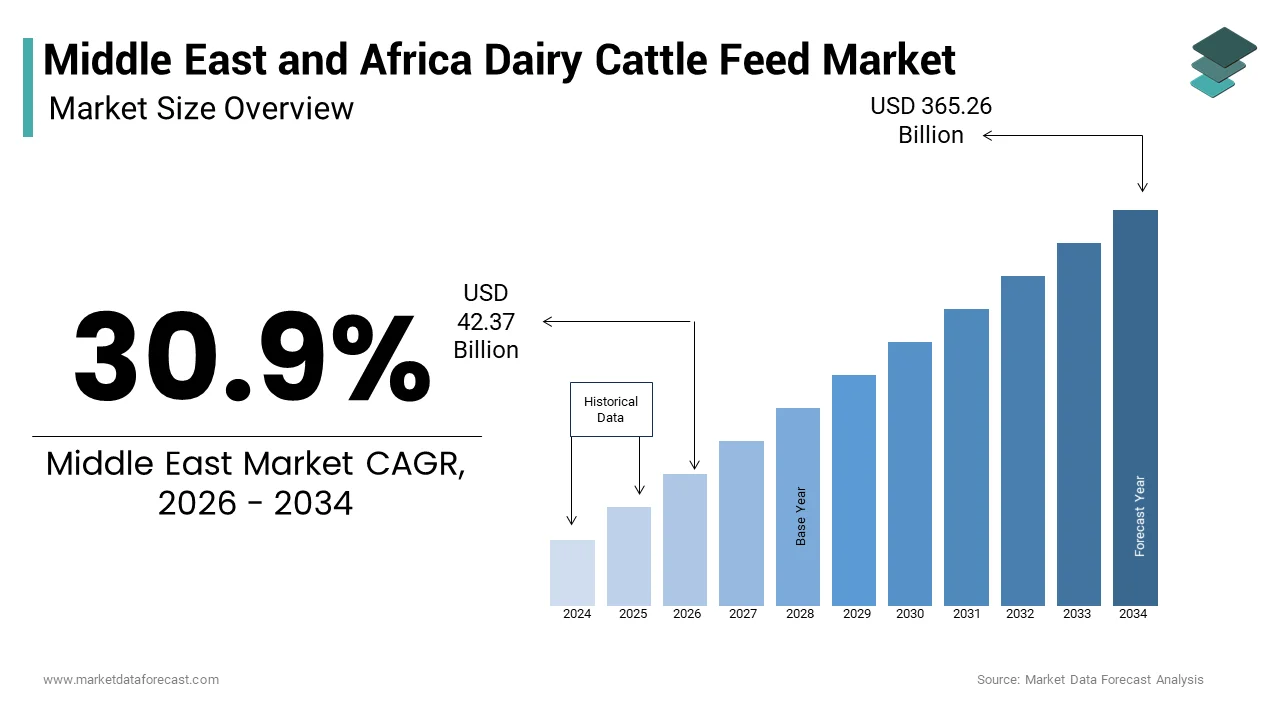
The Middle East and Africa dairy cattle feed market size was valued at USD 32.37 billion in 2025, is anticipated to reach USD 42.37 billion in 2026, and is projected to scale up to USD 365.26 billion by 2034, expanding at a compound annual growth rate (CAGR) of 30.9% from 2026 to 2034. Driven by commercial dairy intensification in arid zones, rising per capita dairy consumption, and urbanization, the regional market demonstrates rapid structural expansion.
Key Executive Metrics (At-a-Glance)
- 2025 Base Valuation: USD 32.37 Billion
- 2026 Current Valuation: USD 42.37 Billion
- 2034 Forecast Valuation: USD 365.26 Billion
- Compound Annual Growth Rate (CAGR): 30.9% (2026–2034)
- Dominant Product Segment: Trace Minerals (holding the majority share in 2025)
- Fastest-Growing Product Segment: Feed Enzymes (9.4% CAGR)
- Dominant Ingredient Segment: Corn (largest share in 2025)
- Fastest-Growing Ingredient Segment: Oilseeds (8.7% CAGR)
- Dominant Country Market: Kingdom of Saudi Arabia - KSA (24.3% share in 2025)
- Fastest-Growing Country Market: UAE and Regional Hubs
Core Market Drivers & Restraints
- System Intensification: Shift from pastoral models to capital-intensive indoor dairies creating inelastic demand for purchased feeds.
- Urbanization & Consumption: Rising demographic shifts and higher per capita milk consumption across urban centers fueling herd expansion.
- Import Vulnerability: Extreme volatility in imported raw material costs driven by currency depreciation and global commodity shocks.
- Water Scarcity: Severe hydrological constraints preventing the development of local roughage and forage supply chains.
Middle East and Africa Dairy Cattle Feed Market Segmentation Breakdown
| Segment Category | Largest (Dominant) Segment | Fastest-Growing Segment |
|---|---|---|
| By Product Type | Trace Minerals (Majority share in 2025) | Feed Enzymes (9.4% CAGR) |
| By Ingredient Type | Corn (Largest share in 2025) | Oilseeds (8.7% CAGR) |
| By Country / Region | Kingdom of Saudi Arabia - KSA (24.3% share) | UAE, South Africa, and Regional Hubs |
Major Industry Players Profiled
Key enterprises shaping the Middle East and Africa dairy cattle feed market include Cargill Incorporated, Archer Daniels Midland Company, BASF SE, De Heus Animal Nutrition, Royal DSM NV, Nutreco NV, Amul, Kent Nutrition Group, Hi-Pro Feeds LP, Purina Animal Nutrition LLC, Kapila Krishi Udyog Limited, and Agro Feed Solutions.
 Download Free Sample Report
Middle East and Africa Dairy Cattle Feed Market Size
The Middle East and Africa dairy cattle feed market size was valued at USD 32.37 billion in 2025 and is anticipated to reach a valuation of USD 42.37 billion in 2026 and USD 365.26 billion by 2034, registering a CAGR of 30.9% during the forecast period from 2026 to 2034.
Dairy cattle feed is a specialized mixture of nutrients given to milk-producing cows and buffaloes. It supplies energy, protein, fiber, vitamins, and minerals to maintain animal health, support body growth, and maximize milk production. Unlike temperate regions where pasture forms the dietary baseline, this market is fundamentally defined by total mixed rations and imported concentrate dependence necessary to maintain metabolic function under thermal loads exceeding 30 degrees Celsius for significant portions of the year. According to the Food and Agriculture Organization, net imports of poultry meat across the Near East and North Africa region are projected to reach over 3.2 million tonnes by 2033 due to growing structural production deficits. As per the Food and Agriculture Organization, per capita milk consumption in Saudi Arabia is projected to rise to 90 kilograms by 2033, accelerating the regional transition toward intensive, industrialised dairy facilities. According to the Food and Agriculture Organization, over 90% of the total land area in the Near East and North Africa region experiences severe hyper-aridity and desertification, making local commercial feed crop farming unviable. Furthermore, as per the African Development Bank, Sub-Saharan Africa allocates less than 5% of its total agricultural land to formal irrigation infrastructure despite supporting millions of smallholder pastoralists and mixed crop-livestock farms. This market is thus intrinsically linked to hydrological scarcity, import logistics, and climate adaptation rather than traditional agronomic cycles.
MARKET DRIVERS
Intensification of Commercial Dairy Systems in Arid Zones
Industrial Scale Farming Models Create Concentrated Feed Demand Volumes
The transition from pastoral and subsistence systems to capital intensive indoor dairies is driving the growth of the Middle East and Africa dairy cattle feed market. According to the Ministry of Environment, Water and Agriculture of Saudi Arabia, internal agricultural water constraints have driven policies where domestic fodder crops consume approximately 79% of water used for farming purposes. As per the Food and Agriculture Organization, the national average dairy cow milk yield in Israel leads global production at over 11,000 liters annually, demonstrating advanced intensive herd management in an arid climate. According to the Ministry of Agriculture and Livestock Development of Kenya, a single acre of land managed under a zero-grazing structural system can support four to five dairy cows through custom cut-and-carry forage delivery. The structural shift toward confinement agriculture decouples production from rainfall variability while simultaneously creating inelastic demand for purchased feeds that cannot be substituted with seasonal biomass, thereby establishing stable volume baselines independent of climatic fluctuations.
Rising Per Capita Dairy Consumption and Urbanization Trends
Demographic Shifts and Dietary Transitions Expand Nutritional Input Requirements
Rapid urbanization and changing consumer preferences across the region generate sustained demand pull for dairy products that fuels the expansion of the Middle East and Africa dairy cattle feed market. This trend necessitates corresponding expansion in feed supply chains. According to UN-Habitat, rapid continental demographic transitions are projected to result in almost 1.33 billion people living in African urban centers by 2050. As per the National Bureau of Statistics of Nigeria, localized household tracking indicates that approximately 41.5% of total households across the country actively consume milk and milk products. According to the Gulf Research Center, foreign non-nationals represent a significant demographic indicator across the Gulf Cooperation Council states, exceeding 80% of the total population in countries like Qatar. These demographic and policy driven consumption trends create predictable long term demand trajectories that incentivize feed manufacturers to invest in capacity expansion despite near term margin pressures.
MARKET RESTRAINTS
Extreme Volatility in Imported Raw Material Costs
Currency Depreciation and Global Commodity Shocks Erode Margin Stability
The profound reliance on imported feed ingredients exposes the regional dairy feed sector to currency instability and global price shocks that frequently render operations unprofitable and ultimately restrict the growth of the Middle East and Africa dairy cattle feed market. According to the World Bank, the Food Price Index declined noticeably by an average of 9 percent lower in 2023 than in 2022, shifting price baselines across international trade markets. As per the Food and Agriculture Organization, export prices of cereals reached a distinct nine-year high during the 2021 calendar year driven heavily by tight global availabilities and surges in international demand. According to the International Monetary Fund, macroeconomic stabilization arrangements require a careful balancing framework between sub-national localized action and external trade commitments to build comprehensive economic buffers. This external vulnerability creates chronic financial stress that discourages long term investment and forces reactive pricing strategies that undermine customer trust and market stability.
Limited Domestic Forage Production Capacity Due to Water Scarcity
Hydrological Constraints Prevent Development of Local Roughage Supply Chains
Severe water scarcity fundamentally limits domestic cultivation of forage crops needed to balance rations and reduce concentrate dependency, which hampers the expansion of the Middle East and Africa dairy cattle feed market. According to the World Resources Institute, regional agricultural water use models show that farming systems regularly consume up to 85% of total freshwater withdrawals across highly aridity-stressed desert territories. As per the United Nations Convention to Combat Desertification, modern dryland water management strategies prioritize soil-water conservation, floodwater spreading, and upstream revegetation to actively improve groundwater recharge. According to the Food and Agriculture Organization, sub-Saharan Africa represents the global region with the least irrigation capacity, as only 3 percent of its total cultivated land is equipped for irrigation. The hydrological ceiling makes the region permanently dependent on imported fiber sources or expensive hydroponic alternatives, constraining ration formulation flexibility and perpetuating cost structures higher than global benchmarks.
MARKET OPPORTUNITIES
Alternative Protein Sources and Circular Economy Integration
Valorization of Agro Industrial Byproducts Reduces Import Dependency
The integration of locally available agro-industrial residues into dairy rations paves the way to diversify protein supply chains away from volatile imported soybean meal, which is likely to propel the Middle East and Africa dairy cattle feed market. According to the United Nations Industrial Development Organization, agricultural value chain initiatives across sub-Saharan Africa target systemic upgrades in primary processing sectors to build localized economic resilience. As per the International Livestock Research Institute, regional open-access knowledge networks actively distribute digital tools to optimize feed composition parameters for diverse smallholder livestock operations. According to the Food and Agriculture Organization, date palm fruit production contains a high average sugar content that makes its dynamic industrial byproducts valuable for diverse processing sectors. The convergence of waste reduction policy, cost pressure, and development finance enables feed manufacturers to build resilient local supply networks insulated from global commodity volatility while supporting national circular economy objectives.
Heat Stress Mitigation Through Functional Nutrition
Climate Adaptation Feeds Address Physiological Performance Barriers
Developing specialized feed formulations targeting thermoregulation offers opportunities for the Middle East and Africa dairy cattle feed market. This helps to capture value from climate adaptation needs unique to tropical and arid dairy production. According to the Intergovernmental Panel on Climate Change, long-term climate warming projections require a fundamental integration of localized adaptation strategies across sensitive regional agricultural corridors. As per the Food and Agriculture Organization, global cattle production face increasing severe thermal stress indicators, forcing industrial farming operations to restructure animal welfare and nutritional regimes. According to the International Atomic Energy Agency, field-ready spot urine analysis techniques offer a reliable method for tracking and evaluating the nutritional supply dynamics of ruminants. The alignment of climate science, physiological research, and donor funding creates defensible niche markets where technical expertise commands price premiums unavailable in generic commodity feed segments.
MARKET CHALLENGES
Inadequate Cold Chain and Storage Infrastructure
Post Harvest Losses and Quality Degradation Undermine Feed Efficacy
Deficient storage and transportation infrastructure challenges the growth of the Middle East and Africa dairy cattle feed market. This causes significant nutrient loss and contamination risks that compromise feed quality before reaching animals. According to the World Bank, sub-Saharan Africa loses food grains worth an estimated USD 4 billion every year due to postharvest challenges across regional storage networks. As per the Food and Agriculture Organization, international harmonized regulations are being developed with regional bodies like COMESA to actively govern maximum permissible limits for mycotoxins in livestock feeds. According to the World Bank, an average road density of 137 km per 100 square kilometers across sub-Saharan Africa leaves the region far behind other developing global territories. These infrastructural deficits mean that even perfectly formulated feeds may arrive at farm level with compromised nutritional value, eroding farmer trust in commercial products and perpetuating preference for informal local alternatives despite superior theoretical specifications.
Technical Knowledge Gaps Among Smallholder Producers
Limited Extension Services Hinder Adoption of Advanced Nutritional Practices
Widespread gaps in animal nutrition knowledge limit effective feed use among small and medium-scale producers, which inhibits the expansion of the Middle East and Africa dairy cattle feed market. As a result, these producers face constraints that prevent market expansion beyond elite commercial segments. According to the Ministry of Agriculture and Livestock Development of Kenya, agricultural sector updates indicate that an extreme extension worker to farmer ratio of 1 to 3000 directly limits the adoption of good agricultural practices. As per the International Livestock Research Institute, strategic technical assistance programs in Rwanda utilize advanced ration balancing tools to optimize dairy cattle nutrition across regional project sites. According to the World Bank, global financial models track a widening rural development gap where isolated smallholders face challenges transitioning toward commercial agri-food infrastructure. The human capital constraint creates adoption ceilings where market growth depends not on product availability but on slow generational knowledge transfer processes resistant to conventional marketing interventions.
REPORT COVERAGE
| REPORT METRIC | DETAILS |
| Market Size Available | 2025 to 2034 |
| Base Year | 2025 |
| Forecast Period | 2026 to 2034 |
| CAGR | 30.9% |
| Segments Covered | By Product Type, Ingredient Type, and Region. |
| Various Analyses Covered | Global, Regional & Country Level Analysis, Segment-Level Analysis, DROC, PESTLE Analysis, Porter’s Five Forces Analysis, Competitive Landscape, Analyst Overview of Investment Opportunities |
| Regions Covered | KSA, UAE, Israel, rest of GCC countries, South Africa, Ethiopia, Kenya, Egypt, Sudan, rest of MEA |
| Market Leaders Profiled | Cargill Incorporated, Archer Daniels Midland Company, BASF SE, Royal DSM NV, Nutreco NV, Amul, Kent Nutrition Group, Hi-Pro Feeds LP, Purina Animal Nutrition LLC, Kapila Krishi Udyog Limited, Agro Feed Solutions. |
SEGMENT ANALYSIS
By Product Insights
Trace Minerals
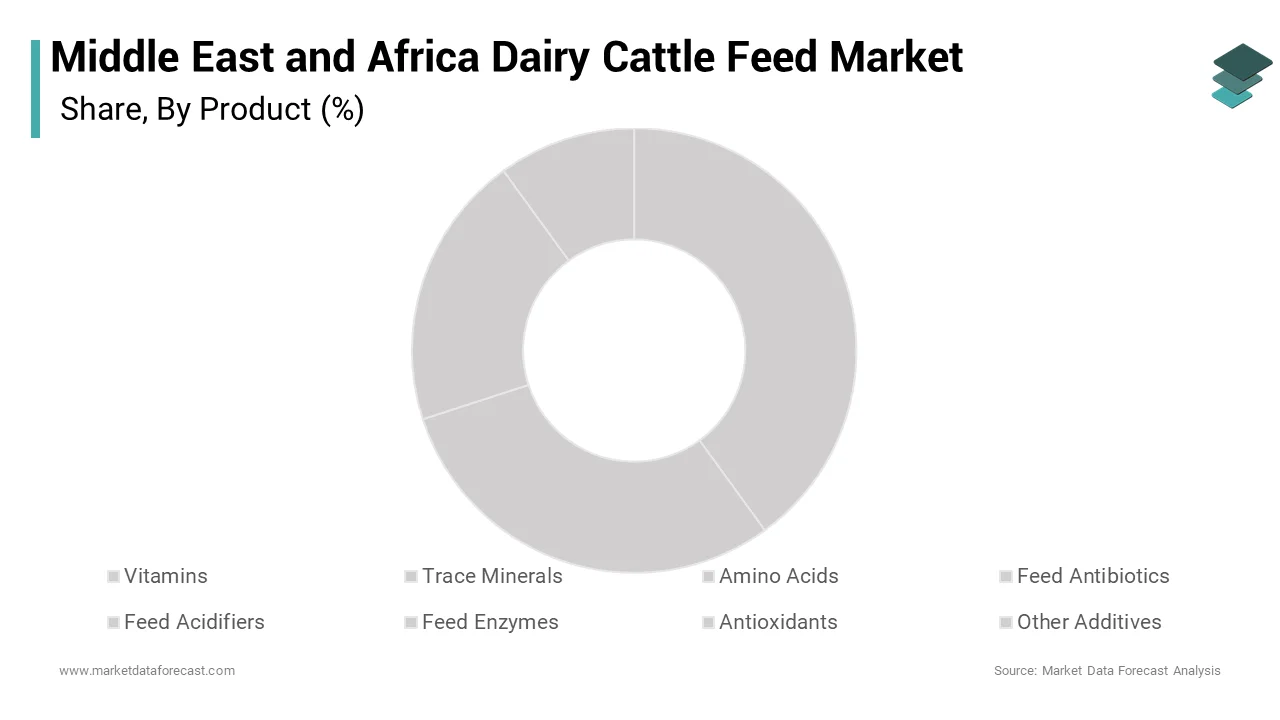
In 2025, the trace minerals segment held the majority share in the Middle East and Africa dairy cattle feed market because of its non-negotiable role in maintaining physiological homeostasis under extreme thermal stress prevalent across the region. According to the Food and Agriculture Organization, long-term regional land framework policies focus on scaling up soil monitoring and testing capacities to actively control widespread micronutrient degradation. As per the International Atomic Energy Agency, nuclear and isotopic techniques are actively deployed across livestock research centers to measure animal feed intake patterns and optimize nutritional balance metrics. According to the World Bank, rural agricultural finance structures prioritize building localized supply chains to help smallholder dairy farmers manage volatile operational input expenses. The combination of environmental depletion, physiological stress response, and policy enforcement establishes trace minerals as foundational inputs whose consumption correlates directly with herd size rather than discretionary spending decisions.
Fueling this segment's ongoing lead is the critical linkage between micronutrient status and fertility outcomes in high-value dairy herds, where replacement costs drive purchasing decisions. According to the International Livestock Research Institute, livestock breeding and genetics programs focus on selecting robust cattle phenotypes to actively improve climate resilience across diverse sub-Saharan dairy farms. As per the University of Florida Institute of Food and Agricultural Sciences, precision nutritional trials evaluate how specific dairy rations can minimize nitrogen excretion and optimize environmental sustainability. According to the African Development Bank, smallholder development investments prioritize the construction of rural agro-processing centers to expand localized milk collection and cooling infrastructure. The biological indispensability for reproductive success transforms trace minerals from optional supplements into insurance products against catastrophic income loss from breeding failures.
Feed Enzymes
The feed enzymes segment is predicted to witness the highest CAGR of 9.4% from 2026 to 2034 due to urgent need to maximize nutrient extraction from variable quality local ingredients. According to the International Livestock Research Institute, participatory extension programs deliver practical feeding guidelines directly to rural pastoralist communities to reduce seasonal herd mortality rates. As per the American Dairy Science Association, peer-reviewed feeding models indicate that varying dietary crude protein density directly influences ruminal microbial nitrogen flow and fluid synthesis efficiency. According to the Food and Agriculture Organization, drought response toolkits promote mobile-enabled animal health monitoring to safeguard core breeding stock among vulnerable pastoralists during intense weather shocks. The convergence of ingredient quality constraints, proven efficacy data, and supplier commitment drives adoption velocity exceeding traditional additive categories.
Multiple factors accelerate this growth, including the global and regional shift away from prophylactic antibiotics toward gut health modulators that maintain performance without antimicrobial resistance risks. According to the World Health Organization, international standard frameworks advocate for the immediate phasing out of medically important antimicrobials used as animal growth promoters to preserve human drug efficacy. As per the European Food Safety Authority, active nutritional reassessments establish strict safety thresholds for exogenous feed enzymes to minimize risk pathways within the animal food manufacturing chain. According to the Bill and Melinda Gates Foundation, agricultural development grants fund international research centers to develop high-yielding, pest-resistant crop varieties for smallholder farming systems. The regulatory and commercial alignment transforms enzymes from niche efficiency tools into mainstream health management platforms, expanding addressable market beyond nutrition optimization to include disease prevention functions previously served by pharmaceuticals.
By Ingredient Insights
Corn
The corn segment remained the largest in 2025 and occupied a commanding share of the Middle East and Africa dairy cattle feed market. This prominence of the segment was credited to its superior metabolizable energy content essential for sustaining lactation in intensive production systems where forage quality is inherently limited. According to the Food and Agriculture Organization, nutrient management targets in global arid livestock systems emphasize strict feed formulation controls to reduce internal enteric fermentation emissions. As per the United States Department of Agriculture Foreign Agricultural Service, regional grain market analyses evaluate how shifting tariff updates affect the total annual consumption volume of coarse grains. According to the World Bank, large-scale commercial dairy operators require strategic structural risk planning to buffer businesses against sudden international grain pricing shocks. The biological and economic optimization lock in sustains corn dominance despite volatility concerns.
The foremost factor securing this segment's leading position is the mature international logistics network that ensures reliable delivery volumes unmatched by alternative grains with more fragmented trade flows. According to the International Grains Council, global grain trade projections confirm that total worldwide maize production is expanding to meet rising market consumption requirements. As per the Food and Agriculture Organization, long-term international trade networks focus heavily on maximizing modern logistics infrastructure to reduce transshipment losses of bulk agrifood products. Additionally, major multinational traders including Cargill and Louis Dreyfus maintain dedicated MEA corn desks with localized risk management capabilities absent for niche ingredients. This infrastructural and financial ecosystem creates formidable barriers to substitution regardless of theoretical nutritional equivalency of alternatives during specific price windows.
Oilseeds
The oilseeds segment is estimated to register the fastest CAGR of 8.7% during the forecast period, owing to strategic efforts to diversify protein sourcing away from single-origin dependency. This segment includes soybean meal, rapeseed cake, and sunflower meal. According to the African Union Commission, ministerial platforms are actively executing the CAADP Malabo Declaration frameworks to double agricultural productivity and improve rural livelihoods. As per the United States Department of Agriculture, international trade models track a steady global expansion of soybean oil and meal exports driven by rising crushing volumes in South America. According to the Food and Agriculture Organization, national agricultural strategies prioritize climate-resilient seed distributions to optimize local crop farming systems against intense seasonal weather shocks. The convergence of policy support, trade diversification, and development finance creates structural expansion dynamics decoupled from pure commodity cycle fluctuations.
The fast development of this segment is heightened by increasing recognition of rumen undegradable protein requirements for high yielding tropical dairy cows that generic protein sources cannot satisfy. According to the International Livestock Research Institute, participatory technical training models deliver practical husbandry guidelines directly to smallholder farming communities to optimize animal welfare. As per the American Dairy Science Association, peer-reviewed dietary models demonstrate that adjusting bypass protein density directly influences ruminal nitrogen flow and amino acid delivery. According to the Ministry of Agriculture and Livestock Development of Kenya, quality-based raw milk pricing frameworks incentivize commercial smallholders to improve sanitary management and fat content. The technical sophistication evolution transforms oilseeds from generic protein commodities into differentiated functional ingredients commanding value based pricing.
COUNTRY LEVEL ANALYSIS
Kingdom of Saudi Arabia Dairy Cattle Feed Market Analysis
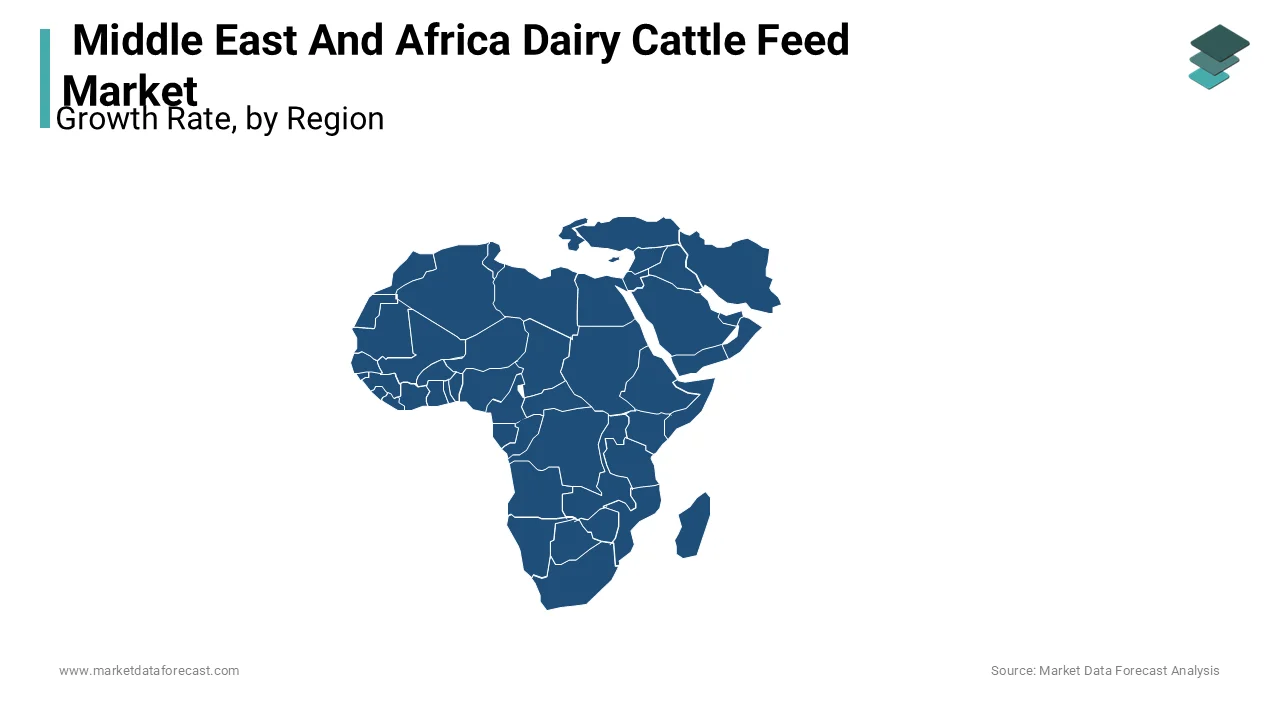
Saudi Arabia maintained the lead in the Middle East and Africa dairy cattle feed market and captured a 24.3% share in 2025. This leading position in the Saudi market was attributed to its concentration of world-class mega dairies operating entirely on imported and compounded rations. According to the Ministry of Environment, Water and Agriculture of Saudi Arabia, national strategic frameworks prioritize targeted veterinary medical controls and localized containment protocols to actively mitigate regional livestock disease transmission risks. As per Almarai corporate disclosures, the company expanded its total dynamic operational processing capacities across regional manufacturing hubs to consistently distribute billions of liters of finished fluid products annually. According to the Saudi Exchange (Tadawul), localized poultry and agribusiness expansion initiatives remain heavily financed by private and sovereign entities to expand commercial cold storage infrastructure. The combination of scale, integration, and policy enforced dependency establishes Saudi Arabia as the undisputed market anchor.
United Arab Emirates Dairy Cattle Feed Market Analysis
The United Arab Emirates was the next prominent country in the Middle East and Africa dairy cattle feed market and accounted for a 12.8% share in 2025. This growth of the UAE's market was driven by ultra-high-tech indoor farming and premium ingredient specifications. According to the Ministry of Climate Change and Environment of the UAE, national agricultural modernization policies emphasize integrated hydroponic and vertical closed-loop framing units to reduce standard irrigation demand. As per Emirates News Agency, the National Food Security Strategy actively promotes public-private capital deployment into local technology-driven agri-tech centers to expand fresh vegetable and protein production volumes. According to the Ministry of Economy of the UAE, specialized commercial logistical hubs within free zones are actively handling broader volumes of re-exported containerized commodities to secure cross-border supply continuity. The focus on technological excellence and supply security creates premium demand segments where quality and consistency trump price sensitivity, distinguishing UAE from volume driven markets elsewhere.
Israel Dairy Cattle Feed Market Analysis
Israel holds a significant share in the Middle East and Africa dairy cattle feed market due to its role as a regional technology innovator and high-efficiency producer. According to the Israel Dairy Board, average milk production per cow in cooperative kibbutz farms has reached an industry-leading 12,025 kilograms per year under specialized herd management. As per the Volcani Center, innovative research programs focus on optimizing food waste processing to overcome physiological heat stress limits and secure sustainable nutrient lines for industrial poultry production. According to the Ministry of Foreign Affairs of Israel, the nation recycles roughly 90% of its total municipal wastewater to supply over half of the aggregate water demand for agricultural irrigation. The fusion of biological excellence, resource innovation, and diplomatic outreach sustains disproportionate market influence relative to domestic herd size.
South Africa Dairy Cattle Feed Market Analysis
South Africa is another key player in the Middle East and Africa dairy cattle feed market, owing to its advanced commercial dairy sector and well-developed feed manufacturing base. According to the Department of Agriculture, Land Reform and Rural Development of South Africa, the national dairy sector maintains around 1.4 million cattle that contribute to an annual raw milk volume of approximately 3.34 billion liters. As per the Milk Producers Organisation of South Africa, rapid operational consolidation has seen the domestic industry face a sharp 60% drop in active commercial dairy producers over the past decade. According to the Department of Agriculture, Land Reform and Rural Development of South Africa, recurring regional detections of Foot-and-Mouth Disease complicate trade logistics and pressure localized livestock production zones. The combination of scale, sophistication, and regional centrality establishes South Africa as Sub Saharan anchor distinct from frontier markets.
COMPETITIVE LANDSCAPE
Competition in the Middle East and Africa dairy cattle feed market features intense rivalry between multinational corporations, regional conglomerates, and emerging local processors vying for position across highly fragmented national markets with distinct infrastructural and regulatory characteristics. Global players compete on technical expertise and supply chain integration while regional firms leverage political connections and distribution networks to defend volume positions in underserved segments. Differentiation increasingly occurs through climate adapted formulations, digital service bundling, and local ingredient sourcing rather than price alone due to commoditization of basic nutritional specifications. Government procurement and donor funded programs create additional competitive dimensions where compliance capabilities and development alignment matter as much as manufacturing efficiency. Market consolidation continues as scale economies become necessary to fund infrastructure investments exceeding smaller player capacities. New entrants face significant barriers including logistics deficits, currency controls, and established customer relationships built over decades. Cross border competition remains limited by trade barriers and heterogeneous standards despite regional integration aspirations. Ultimately sustainable advantage derives from balancing global technical resources with deep local embeddedness and risk tolerance in this uniquely complex environment characterized by simultaneous growth opportunities and systemic operational challenges requiring patient capital and adaptive business models.
KEY MARKET PLAYERS
These are the market players that are dominating the Middle East and Africa dairy cattle feed market.
- Cargill Incorporated
- Archer Daniels Midland Company
- BASF SE
- De Heus Animal Nutrition
- Royal DSM NV
- Nutreco NV
- Amul
- Kent Nutrition Group
- Hi-Pro Feeds LP
- Purina Animal Nutrition LLC
- Kapila Krishi Udyog Limited
- Agro Feed Solutions
Top Players In The Market
- De Heus Animal Nutrition maintains extensive involvement across the Middle East and Africa dairy cattle feed market through localized manufacturing and technical support tailored to tropical production challenges. The company recently strengthened its regional position by expanding feed mill capacity in Ethiopia and Kenya to serve growing smallholder commercialization segments with affordable concentrate products. De Heus launched heat stress specific dairy formulations incorporating electrolytes and rumen buffers validated for arid climates, addressing physiological barriers unique to the region. Their partnership with local cooperatives enables last mile distribution networks reaching remote farmers previously excluded from commercial feed supply chains. These strategic initiatives demonstrate commitment to adapting European nutritional expertise for African contexts while building sustainable local ecosystems essential for long term customer retention and market development across diverse production systems throughout the continent.
- Cargill Incorporated contributes significantly to the Middle East and Africa dairy cattle feed landscape through integrated grain origination, processing, and nutrition solutions spanning multiple countries. The company recently expanded port based storage and handling infrastructure in South Africa and Egypt to secure reliable raw material supply chains amid global volatility. Cargill introduced digital ration formulation tools accessible via mobile platforms enabling smallholders to optimize homemade mixtures with commercial supplements, bridging knowledge gaps that limit feed efficacy. Their investment in oilseed crushing facilities in West Africa supports domestic protein sourcing aligned with import substitution policies. These actions reinforce Cargill’s positioning as supply chain integrator balancing global scale with local responsiveness essential for navigating fragmented MEA markets characterized by infrastructure deficits and currency instability affecting consistent feed availability.
- Royal DSM-Firmenich serves the Middle East and Africa dairy cattle feed market through specialty premixes and functional additives targeting metabolic health and efficiency in heat stressed herds. The company recently inaugurated a dedicated ruminant research center in Saudi Arabia to validate methane reducing additives and eubiotics under Gulf climate conditions distinct from temperate testing environments. Royal DSM-Firmenich partnered with major GCC dairies to embed Bovaer methane inhibitor into sustainability premium milk supply chains, creating guaranteed demand channels independent of spot market volatility. Their lifecycle assessment tools enable feed mills to quantify environmental benefits for carbon labeling compliance increasingly required by export customers. These science led initiatives demonstrate leadership in high value functional nutrition segment where intellectual property and regulatory approval create defensible competitive advantages beyond commodity feed manufacturing in resource constrained regions.
Top Strategies Used By Key Market Participants
Key players in the Middle East and Africa dairy cattle feed market prioritize vertical integration of supply chains to mitigate import dependency and currency volatility risks inherent to the region. Companies invest in port infrastructure and domestic oilseed processing to secure raw material flows while capturing value from biofuel co products. Strategic partnerships with local cooperatives and agro dealers enable last mile distribution networks essential for reaching fragmented smallholder segments inaccessible through conventional channels. Product portfolios are adapted to address heat stress and low quality forage challenges through specialized formulations incorporating electrolytes, enzymes, and bypass proteins validated for tropical conditions rather than generic global specifications. Digital advisory platforms delivered via mobile money ecosystems bridge extension service gaps while creating sticky customer relationships beyond transactional feed sales. Joint ventures with regional agribusinesses facilitate market entry and political navigation in complex regulatory environments. Sustainability linked product offerings align with emerging carbon labeling requirements and donor funded climate smart agriculture programs. These multifaceted strategies reflect adaptation to uniquely MEA combination of infrastructural deficits, climatic extremes, and institutional voids absent in developed markets requiring hybrid approaches blending commercial discipline with developmental engagement.
MARKET SEGMENTATION
This market research report on the Middle East and Africa dairy cattle feed market is segmented and sub-segmented into the following categories.
By Product Type
- Vitamins
- Trace Minerals
- Amino Acids
- Feed Antibiotics
- Feed Acidifiers
- Feed Enzymes
- Antioxidants
- Other Additives
By Ingredient Type
- Corn
- Soybean Meal
- Wheat
- Oilseeds
- Grains
- Others
By Country
- KSA The KSAIsraell
- The rest of the GCC countries
- South Africa
- Ethiopia
- Kenya
- Egypt
- Sudan
- Rest of MEA