- Product Description Description
- Table of Contents TOC
- List of Table & Figure LOT
- Get Free Sample PDF Sample PDF
Market Size, 2025
$7.99 BnMarket Estimate, 2026
$8.51 BnMarket Forecast, 2034
$14.11 BnCAGR, 2026–2034
6.52%Middle East and Africa Feed Enzymes Market Size, Growth, Trends & Forecast (2026–2034)
The Middle East and Africa feed enzymes market size was valued at USD 7.99 billion in 2025, is anticipated to reach USD 8.51 billion in 2026, and is projected to scale up to USD 14.11 billion by 2034, registering a compound annual growth rate (CAGR) of 6.52% during the forecast period from 2026 to 2034. Fueled by a rise in per capita meat consumption, growing awareness of feed grade quality, intensifying animal husbandry practices across African nations, and food security initiatives in GCC economies, the regional market continues steady expansion.
Key Executive Metrics (At-a-Glance)
- 2025 Base Valuation: USD 7.99 Billion
- 2026 Current Valuation: USD 8.51 Billion
- 2034 Forecast Valuation: USD 14.11 Billion
- Compound Annual Growth Rate (CAGR): 6.52% (2026–2034)
- Regional Market Share Baseline: ~6% of the global market
- Dominant Country Market: South Africa (largest market within the MEA region)
- Key Ingredient Segments: Carbohydrase, Phytase, and Others
- Key Animal Type Segments: Ruminant, Swine, Poultry, Aquaculture, and Others
Core Market Drivers
- Rising Per Capita Meat Consumption: Growing populations and evolving urban diets increasing demand for efficient animal protein production.
- Feed Grade Awareness: Heightened customer and producer awareness regarding high-quality nutrition, enhanced digestion, and waste reduction.
Primary Market Restraints & Challenges
- Government Regulations: State policies governing product sales, pricing frameworks, and distribution constraints.
- Raw Material Costs: High expenses associated with importing and sourcing quality raw materials across developing markets.
Middle East and Africa Feed Enzymes Market Segmentation Breakdown
| Segment Category | Sub-Segments / Categories Included |
|---|---|
| By Ingredients | Carbohydrase, Phytase, Others |
| By Animal Type | Ruminant, Swine, Poultry, Aquaculture, Others |
| By Country / Region | South Africa (Leader), KSA, UAE, Israel, Rest of GCC, Ethiopia, Kenya, Egypt, Sudan, Rest of MEA |
Major Industry Players Profiled
Key corporations shaping the Middle East and Africa feed enzymes market include DuPont, DSM Nutritional Products, BASF Corporation, Alltech, Novozymes A/S, Adisseo France, AB Enzymes GmbH, Advanced Enzyme Technologies Limited, Amano Enzyme Inc., Bio-Vet JSC, Biocatalysts Ltd., Chr. Hansen Holding A/S, Enmex S.A. de C.V., Lesaffre Group, Puratos Group, Rossari Biotech Limited, Shenzhen Leveking Bio-Engineering Co., Ltd., and Sunson Industry Group Company Limited.
 Download Free Sample Report
Middle East and Africa Feed Enzymes Market Size
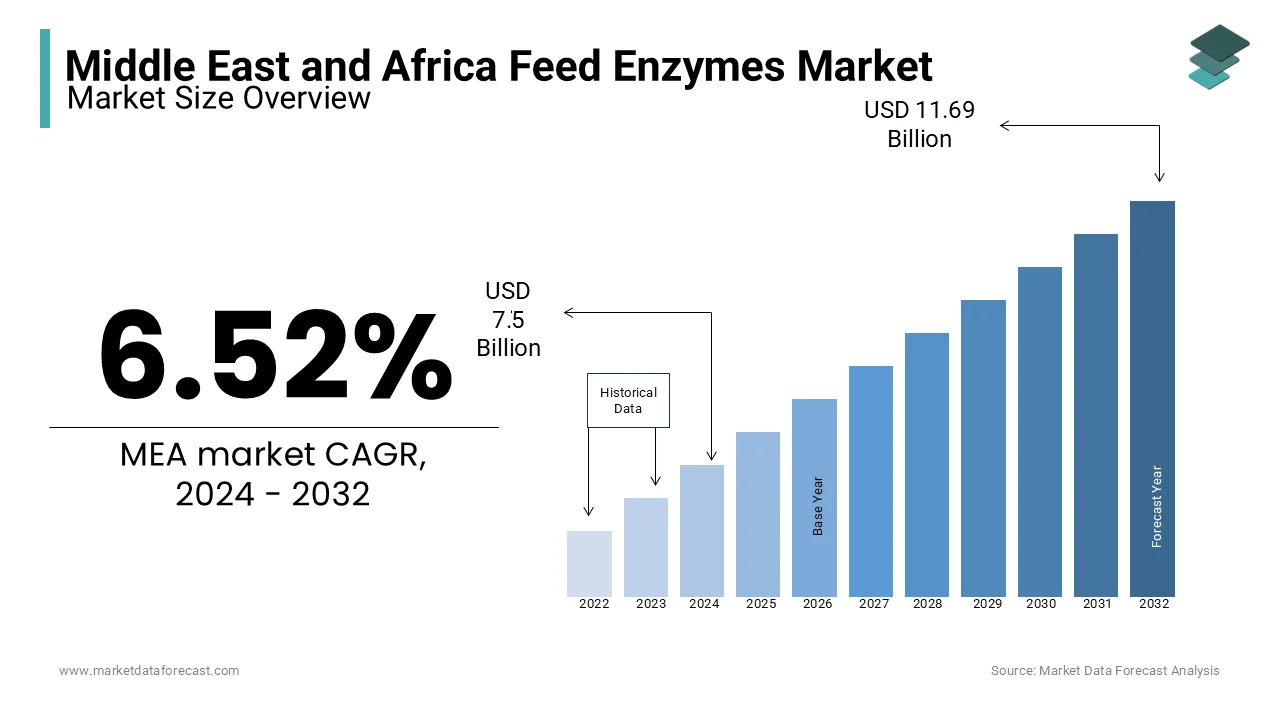
The feed enzymes market size in the Middle East and Africa was valued at USD 7.99 billion in 2025 and is anticipated to reach USD 8.51 billion in 2026 to reach USD 14.11 billion by 2034, growing at a CAGR of 6.52% during the forecast period from 2026 to 2034.
Feed enzymes accelerate biochemical reactions that help improve the nutritional value and quality of feed. They help eliminate the negative effects that volatility and modern diets have on animal digestion. They are useful in the extraction of extra nutrients from animal feed and help reduction of animal waste. They provide considerable economic benefit to the livestock industry globally through their positive effect on animal performance, litter quality, animal welfare and the environment.
MARKET DRIVERS
The feed enzymes market growth in the Middle East and Africa is driven by a rise in per capita meat consumption. Also, rising awareness in customers about the quality and feed grade is slowly increasing the demand in this region and driving the regional market growth.
MARKET RESTRAINTS
However, government regulations over the sales and pricing of the products and high costs of raw materials can affect the market growth.
REGIONAL ANALYSIS
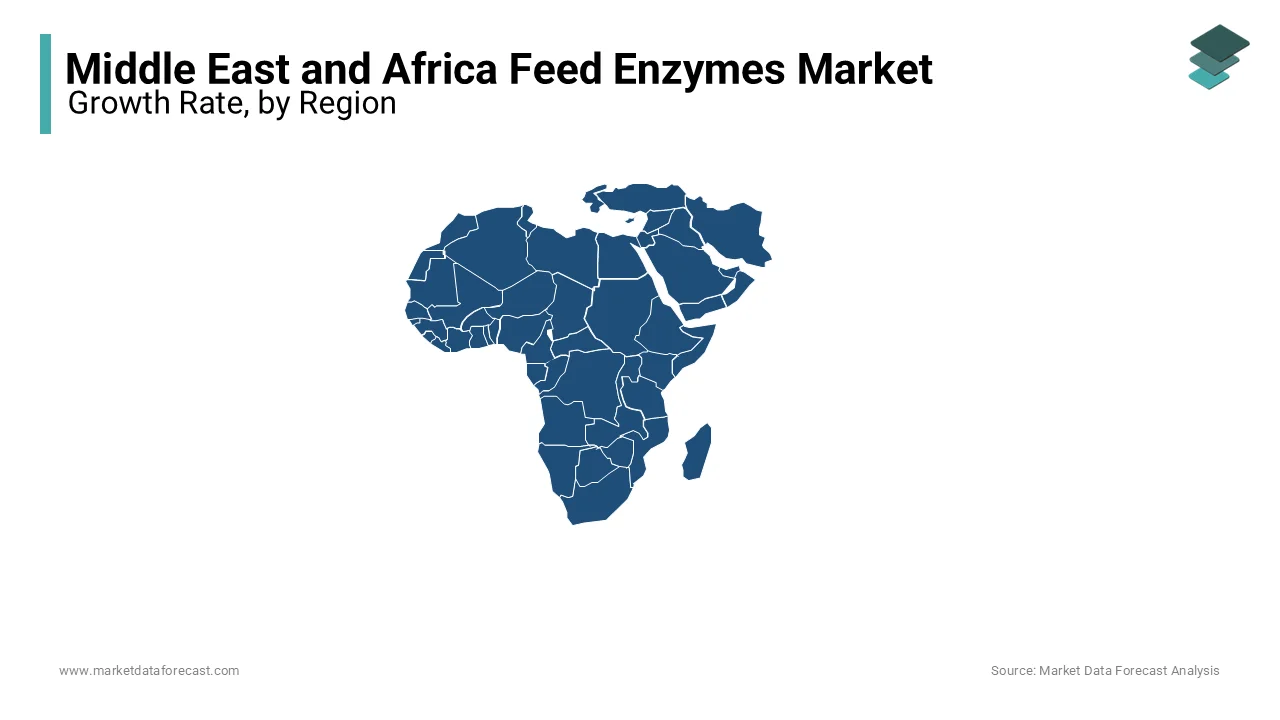
Middle East and African countries are slowly emerging and currently hold a market share of 6%. South Africa is the largest market within the region. The United Arab Emirates has limited agricultural potential and hence relies mostly on imports to satisfy the growing demand for meat. With increased animal husbandry practices in African countries, a great demand for feed enzymes can be witnessed in the near future.
KEY MARKET PLAYERS
These are a few of the major companies are profiled in the Middle East and African feed enzymes market.
- DuPont
- DSM
- BASF Corporation
- Alltech
- Novozymes
- Adisseo France
- AB Enzymes GmbH
- Advanced Enzymes Technologies Limited
- Amano Enzyme Inc. Bio Vet JSC
- Biocatalysts Ltd
- Chr. Hansen Inc
- Enmex Sa De Cv
- Lesaffre Group
- PURATOS GROUP
- Rossari Biotech Limited
- Shenzhen Leveking Bio-Engineering Co. Ltd
- Sunson Industry Group Company Limited
MARKET SEGMENTATION
This research report on the Middle East and Africa feed enzymes market is segmented and sub-segmented into the following categories.
By Ingredients
- Carbohydrase
- Phytase
- others
By Animal Type
- Ruminant
- Swine
- Poultry
- Aquaculture
- Others
By Country
- KSA
- UAE
- Israel
- Rest of the GCC countries
- South Africa
- Ethiopia
- Kenya
- Egypt
- Sudan
- Rest of MEA