- Product Description Description
- Table of Contents TOC
- List of Table & Figure LOT
- Get Free Sample PDF Sample PDF
Market Size, 2025
$229.41 MnMarket Estimate, 2026
$238.01 MnMarket Forecast, 2034
$319.53 MnCAGR, 2026–2034
3.75%Middle East and Africa Feed Palatability Enhancers and Modifiers Market Size, Growth, Trends & Forecast (2026–2034)
The Middle East and Africa feed palatability enhancers and modifiers market size was valued at USD 229.41 million in 2025, is anticipated to reach USD 238.01 million in 2026, and is projected to scale up to USD 319.53 million by the end of 2034, registering a compound annual growth rate (CAGR) of 3.75% during the forecast period from 2026 to 2034. Driven by rapid population growth spurring animal protein demand, extreme climatic heat stress reducing livestock appetite, and the widespread shift toward commercial livestock intensification, the market continues to expand steadily across the region.
Key Executive Metrics (At-a-Glance)
- Base Year: 2025
- 2026 Current Valuation: USD 238.01 Million
- 2034 Forecast Valuation: USD 319.53 Million
- Compound Annual Growth Rate (CAGR): 3.75% (2026–2034)
- Covered Regional & Country Markets: KSA, UAE, Israel, Rest of GCC Countries, South Africa, Ethiopia, Kenya, Egypt, Sudan, and Rest of MEA
Core Market Drivers
- Surging Animal Protein Demand: Demographic expansion across Africa and rising urban disposable incomes driving higher consumption of meat, milk, and eggs.
- Heat Stress Mitigation: Extreme summer temperatures (often exceeding 45°C in the Gulf) necessitating specialized palatability modifiers to stimulate feed intake and combat stress-induced anorexia in livestock.
Primary Market Restraints & Challenges
- Economic Constraints: High procurement costs for premium additives compounded by thin profit margins and limited credit access for smallholder farmers dominating the agricultural landscape.
- Regulatory & Logistical Barriers: Fragmented cross-border compliance standards, ambiguous feed safety laws in parts of Africa, and inadequate cold-chain infrastructure.
Middle East and Africa Feed Palatability Enhancers and Modifiers Market Segmentation Breakdown
| Segment Category | Largest Segment | Fastest-Growing Segment |
|---|---|---|
| By Type | Natural Enhancers | Flavoring Agents |
| By Livestock / End Use | Poultry Farming | Aquatic Species / Aquaculture |
| By Country | Saudi Arabia (KSA) | UAE / Egypt |
Major Industry Players Profiled
Key enterprises shaping the Middle East and Africa feed palatability enhancers and modifiers market include Kemin Industries, Alltech Inc., Cargill Incorporated, Associated British Foods PLC, Diana Group, Kerry Group PLC, E. I. Dupont, Ensign-Bickford Industries Inc., Eli Lilly and Company, Ferrer, Kent Feeds Inc., and Tanke International Group.
Middle East and Africa Feed Palatability Enhancers and Modifiers Market Size
The Middle East and Africa feed palatability enhancers and modifiers market size was valued at USD 229.41 million in 2025 and is anticipated to reach a valuation of USD 238.01 million in 2026 and USD 319.53 million by 2034, growing at a CAGR of 3.75% from 2026 to 2034.
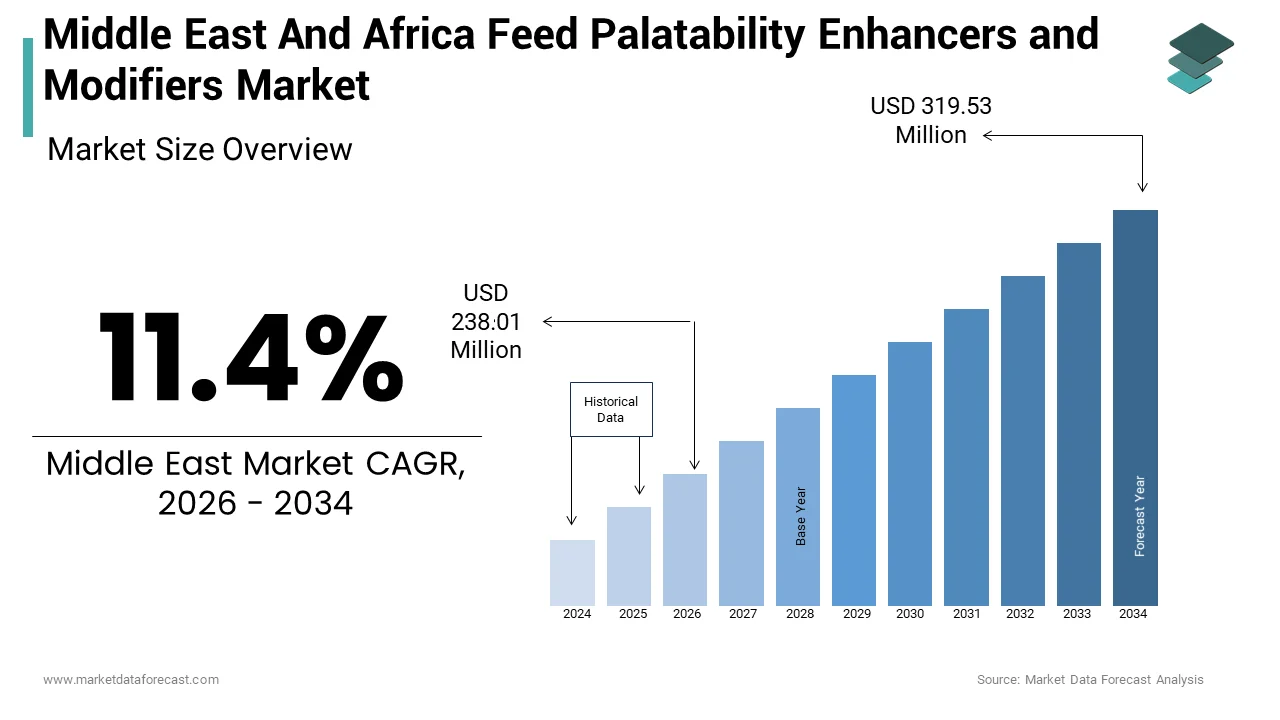
According to the Food and Agriculture Organization of the United Nations, livestock production accounts for 40% of the agricultural gross domestic product in many African nations, underscoring the economic importance of maintaining optimal animal health. Furthermore, according to the International Livestock Research Institute, feed inefficiency causes annual losses exceeding 5 billion USD in sub-Saharan Africa due to poor nutrient absorption and low palatability of locally sourced ingredients. These statistics highlight the urgent need for effective modifiers that can mask bitter tastes from alternative protein sources and enhance overall feed quality. As the region strives for food security and self-sufficiency, the adoption of advanced nutritional technologies becomes imperative. Manufacturers are increasingly focusing on natural extracts and enzymatic solutions to meet regulatory standards and consumer preferences. This strategic focus ensures that palatability enhancers play a pivotal role in optimizing production efficiency and supporting the growing demand for animal protein across diverse climatic conditions in the Middle East and Africa.
MARKET DRIVERS
Rising Demand for Animal Protein Due to Population Growth
The rapid expansion of the population in the Middle East and Africa propels the Middle East and Africa feed palatability enhancers and modifiers market growth. According to the United Nations Department of Economic and Social Affairs, the population of Africa will double to 2.5 billion by 2050, creating an unprecedented demand for affordable animal protein sources such as meat, milk, and eggs. This demographic pressure forces producers to maximize output from existing herds through improved feed efficiency and higher consumption rates. According to the World Bank, per capita meat consumption in the Middle East has increased by 15% over the last decade, driven by rising incomes and urbanization. To meet this surging demand, farmers must ensure that animals consume adequate quantities of feed despite environmental stressors. Palatability enhancers play a crucial role in this context by masking off-flavors from unconventional feed ingredients and stimulating appetite during periods of heat stress. The direct correlation between population growth and protein demand necessitates efficient production systems where every gram of feed counts. Consequently, the integration of taste modifiers becomes essential for sustaining productivity levels and ensuring food security for the growing populace.
Prevalence of Heat Stress Affecting Feed Intake
The extreme climatic conditions prevalent in the Middle East and parts of Africa significantly impact livestock physiology, which is further contributing to the regional market expansion. According to the World Meteorological Organization, average temperatures in the Gulf region frequently exceed 45 degrees Celsius during summer months, causing severe heat stress in cattle, poultry, and sheep. Heat-stressed animals exhibit reduced feed intake by up to 30% as a physiological response to lower metabolic heat production, leading to significant weight loss and decreased milk yield. According to the International Journal of Biometeorology, for every 1 degree Celsius increase above the thermal comfort zone, feed consumption in dairy cows drops by approximately 1.5 kilograms per day. This reduction directly impacts profitability and operational viability for farmers. Palatability enhancers containing cooling agents, sweeteners, and aromatic compounds help mitigate these effects by making feed more appealing and encouraging consumption even under stressful conditions. The relation between climate severity and additive usage is strong, as producers seek reliable methods to stabilize intake fluctuations. By improving the sensory profile of feed, these modifiers help maintain consistent nutritional intake, ensuring that animals remain productive despite harsh environmental challenges.
MARKET RESTRAINTS
High Cost of Premium Additives and Limited Farmer Budgets
The substantial cost associated with high-quality palatability enhancers is a significant restraint on their widespread adoption, particularly among smallholder farmers who dominate the agricultural landscape in Africa. According to the International Fund for Agricultural Development, smallholder farmers produce 80% of the food in sub-Saharan Africa but often operate on extremely thin margins with limited access to credit. For these producers, the additional expense of premium additives can be prohibitive, leading them to rely on basic feeding practices that may lack optimization. According to the World Bank, input costs for livestock farming have risen by 20% in recent years due to inflation and supply chain disruptions, further squeezing household budgets. This financial constraint limits the ability of farmers to invest in value-added products that could improve long-term productivity. While large commercial operations can absorb these costs, the majority of the market remains price-sensitive and reluctant to adopt new technologies without immediate visible returns. The lack of financing options and insurance products for agricultural inputs exacerbates this issue. Consequently, manufacturers face challenges in penetrating the mass market, as price remains the primary decision factor for a significant portion of the potential customer base in the region.
Lack of Technical Awareness and Extension Services
A critical shortage of technical knowledge and inadequate extension services regarding the benefits and application of feed palatability enhancers impedes market growth in rural areas. According to the Food and Agriculture Organization of the United Nations, the ratio of agricultural extension workers to farmers in many African countries is less than 1 to 3000, severely limiting the dissemination of modern farming practices. Without proper guidance, farmers are often unaware of how palatability modifiers can improve feed conversion ratios and overall animal health. According to the International Livestock Research Institute, only 15% of smallholder livestock keepers receive formal training on nutritional management, leading to reliance on traditional methods that may not optimize productivity. This knowledge gap results in skepticism towards new products and a preference for familiar, albeit less efficient, feeding strategies. Misinformation about the safety and efficacy of chemical additives further hinders adoption. The absence of demonstrable success stories in local communities makes it difficult for suppliers to build trust. Consequently, the market struggles to expand beyond educated commercial farmers, as the broader base of livestock owners remains uninformed about the potential economic benefits of using specialized feed modifiers.
MARKET OPPORTUNITIES
Expansion of Commercial Livestock Farming and Intensification
The ongoing shift from subsistence farming to commercial livestock operations presents a significant opportunity for the feed palatability enhancers market in the Middle East and Africa. According to the African Development Bank, investment in commercial agriculture has grown by 12% annually, driven by government initiatives to reduce food imports and enhance local production. Large-scale integrated farms require precise nutritional management to maximize return on investment, making them ideal candidates for advanced feed additives. According to the Ministry of Environment, Water and Agriculture in Saudi Arabia, the number of modern poultry facilities has increased by 25% in the last five years, creating a robust demand for consistent and high-quality feed solutions. These commercial entities prioritize efficiency and uniformity, driving the adoption of standardized palatability enhancers to ensure optimal performance across large herds. The relation between industrialization and additive usage is direct, as scale amplifies the impact of even minor improvements in feed intake. Additionally, the entry of international agribusiness firms brings global best practices and technology transfers to the region. This structural transformation creates a stable and growing customer base for manufacturers offering reliable and scientifically validated palatability solutions.
Utilization of Alternative and Non-Conventional Feed Ingredients
The increasing use of alternative feed ingredients such as agricultural by-products and insect protein offers a major opportunity for palatability enhancers to mask undesirable tastes and textures. According to the Food and Agriculture Organization of the United Nations, up to 30% of total feed costs can be saved by incorporating local by-products like date pits, olive cake, and brewery waste, which are abundant in the Middle East and North Africa. However, these ingredients often possess bitter or astringent flavors that reduce voluntary feed intake by animals. Palatability modifiers containing sweeteners, flavorings, and masking agents are essential to make these cost-effective alternatives acceptable to livestock. According to the International Platform of Insects for Food and Feed, insect-based proteins are gaining traction in Africa due to their sustainability, yet their acceptance depends heavily on sensory improvement. By enabling the use of diverse and cheaper raw materials, palatability enhancers add significant value to feed formulations. This trend aligns with circular economy principles and reduces dependency on imported soy and corn. Manufacturers who develop specialized solutions for these unique ingredient profiles can capture a niche but rapidly expanding segment of the market.
MARKET CHALLENGES
Regulatory Heterogeneity and Approval Complexities
Navigating the fragmented and often unclear regulatory landscape for feed additives poses a substantial challenge for manufacturers operating across multiple countries in the Middle East and Africa. According to the Gulf Standardization Organization, while some harmonization efforts exist, individual member states often have distinct approval processes and labeling requirements for animal feed ingredients. This inconsistency increases compliance costs and delays market entry for new products. In Africa, according to the African Union, only 10 countries have fully implemented comprehensive feed safety regulations, leaving many markets with ambiguous standards that hinder trade and investment. Manufacturers must conduct separate trials and submit extensive documentation for each jurisdiction, which is resource-intensive and time-consuming. The lack of mutual recognition agreements means that a product approved in one country may not be accepted in another, limiting economies of scale. Additionally, frequent changes in import tariffs and bureaucratic hurdles further complicate distribution. These regulatory uncertainties discourage innovation and limit the availability of advanced palatability solutions in smaller markets. Companies must maintain flexible regulatory affairs teams to manage these complexities, adding to operational overhead and slowing down the pace of market expansion.
Supply Chain Instability and Infrastructure Deficits
Weak infrastructure and logistical bottlenecks create significant challenges for the Middle East and Africa feed palatability enhancers and modifiers market. According to the World Bank Logistics Performance Index, many African countries rank in the bottom quartile globally, citing poor road networks and inefficient port operations as major constraints. These deficiencies lead to delayed deliveries and increased transportation costs, which can compromise the quality of sensitive additive products. According to the African Development Bank, post-harvest and supply chain losses in the agricultural sector amount to 40% of total production value, affecting the reliability of input delivery. For perishable or temperature-sensitive modifiers, the lack of cold chain infrastructure poses a serious risk to product integrity. In the Middle East, while infrastructure is generally better, geopolitical tensions can disrupt cross-border trade routes, affecting supply continuity. The relation between logistical efficiency and market reach is critical, as inconsistent availability erodes farmer trust and encourages switching to locally available but inferior alternatives. Manufacturers struggle to maintain service levels in hard-to-reach regions, limiting their ability to capture the full market potential. Addressing these infrastructural gaps requires significant investment and collaboration with local partners, which remains a complex and ongoing challenge.
REPORT COVERAGE
| REPORT METRIC | DETAILS |
| Market Size Available | 2024 to 2033 |
| Base Year | 2024 |
| Forecast Period | 2025 to 2033 |
| CAGR | 3.75% |
| Segments Covered | By Type, Livestock, and Region. |
| Various Analyses Covered | Global, Regional & Country Level Analysis, Segment-Level Analysis, DROC, PESTLE Analysis, Porter’s Five Forces Analysis, Competitive Landscape, Analyst Overview on Investment Opportunities |
| Regions Covered | KSA, UAE, Israel, rest of GCC countries, South Africa, Ethiopia, Kenya, Egypt, Sudan, rest of MEA |
| Market Leaders Profiled | British Foods PLC, Diana Group, Kerry Group PLC, E. I. Dupont, Ensign-Bickford Industries Inc., Eli Lilly and Company, Ferrer, Kent Feeds Inc., Kemin Europa, Tanke International Group. |
SEGMENTAL ANALYSIS
By Type Insights
The natural enhancers segment accounted for the dominating share of the Middle East and Africa feed palatability enhancers and modifiers market in 2025 due to the increasing global and regional demand for clean-label animal products and organic farming practices. According to the Food and Agriculture Organization of the United Nations, the market for organic food in the Middle East has grown by 12% annually, driven by health-conscious consumers who are wary of synthetic additives. This trend translates directly to the livestock sector, where producers seek natural ingredients such as herbal extracts, essential oils, and yeast derivatives to improve feed taste without chemical residues. According to the International Federation of Organic Agriculture Movements, certified organic land in Africa has increased by 8%, creating a robust base for natural feed solutions. The relation between consumer health awareness and input selection is direct, as retailers and processors increasingly mandate residue-free meat and dairy products. Natural enhancers align with these stringent quality standards while offering additional health benefits such as antimicrobial and antioxidant properties. This dual functionality makes them highly attractive to premium segment farmers who prioritize both palatability and animal wellness. Consequently, manufacturers are shifting their research and development focus toward botanical sources, reinforcing the dominance of this segment in a market that values purity and sustainability.
On the other end, the flavoring agents segment is estimated to record a CAGR of 7.2% over the forecast period in the Middle East and Africa feed palatability enhancers and modifiers market owing to the rapid expansion of intensive poultry and livestock operations that rely on high energy-dense diets often lacking in natural appeal. According to the International Poultry Council, poultry production in the Middle East has increased by 20% over the past decade, necessitating efficient feed conversion strategies to maintain profitability. High-density farming environments often lead to stress-induced anorexia in animals, making flavorful feed essential to maintain consistent intake levels. According to the Food and Agriculture Organization of the United Nations, feed accounts for up to 70% of total production costs in poultry farming, highlighting the economic imperative of maximizing consumption. Flavoring agents containing specific profiles such as citrus, garlic, or vanilla help mask the bitter taste of medicinal additives and alternative protein sources like insect meal. The relation between operational scale and additive usage is strong, as large integrators standardize feed formulations to ensure uniform growth across thousands of birds. This industrialization of agriculture creates a sustained demand for reliable and effective flavoring solutions that can be easily integrated into automated feeding systems. As production intensifies to meet rising protein demand, the adoption of specialized flavoring agents will continue to accelerate.
By End Use Insights
The poultry farming segment held the leading share of the end-use market in 2025 due to its high-volume production nature and short production cycles, which require continuous and efficient feed consumption. According to the Food and Agriculture Organization of the United Nations, poultry meat accounts for over 35% of total meat consumption in the Middle East and Africa, making it the primary source of animal protein for millions of people. This massive scale of production creates a consistent and large-volume demand for palatability enhancers to ensure optimal growth rates and feed conversion ratios. According to the International Poultry Council, the average broiler cycle in the region is 35 to 40 days, meaning that any reduction in feed intake during this critical window can significantly impact final weight and profitability. Palatability modifiers are essential to maintain steady consumption, especially during the starter phase when chicks are developing their taste preferences. The relation between production intensity and additive usage is direct, as even a small improvement in daily intake can translate to substantial economic gains for large-scale integrators. Furthermore, the widespread adoption of commercial hybrid breeds that are genetically selected for rapid growth increases their sensitivity to feed quality, further driving the need for enhanced palatability solutions.
However, the aquatic species segment represent the fastest-growing end-use segment and is estimated to showcase a CAGR of 8.04% over the forecast period in the regional market owing to the rising consumption of seafood and significant government investments in aquaculture infrastructure. According to the Food and Agriculture Organization of the United Nations, fish provides more than 20% of animal protein intake in many African coastal nations, driving efforts to boost local production through aquaculture. Countries like Egypt and Nigeria are expanding their fish farming capacities to reduce reliance on wild-caught stocks and imports. According to the Egyptian General Authority for Fish Resources Development, aquaculture production has grown by 10% annually, creating a burgeoning market for specialized fish feed additives. Palatability enhancers are critical in aquaculture because fish rely heavily on chemosensory cues to locate and accept feed in water. Without effective attractants, feed wastage is high, leading to water pollution and economic losses. The relation between production expansion and additive demand is strong, as new farms require optimized feed formulations to achieve viable growth rates. As the sector modernizes and shifts towards intensive systems, the need for precise nutritional management, including palatability modification, becomes increasingly important.
COUNTRY LEVEL ANALYSIS
Saudi Arabia Feed Palatability Enhancers And Modifiers Market Analysis
Saudi Arabia held 23.4% of the regional market share in 2025. The dominance of Saudi Arabia in the Middle East and African market is attributed to its ambitious Vision 2030 strategy, which prioritizes food security and agricultural self-sufficiency. According to the Ministry of Environment, Water and Agriculture, the kingdom aims to increase local livestock production by 30% by 2030, necessitating significant improvements in feed efficiency and animal health. This national goal drives substantial investment in modern feed mills and the adoption of advanced nutritional technologies, including palatability enhancers. The high ambient temperatures in the region make these additives essential for maintaining feed intake in cattle and poultry during summer months. According to the Saudi Food and Drug Authority, strict regulations on feed safety are implemented, encouraging the use of approved natural and safe synthetic modifiers. The presence of large integrated agribusinesses such as Almarai and NADEC further accelerates market growth as they prioritize consistent quality and high productivity. These corporations have the financial resources to invest in premium feed solutions that optimize performance. Additionally, government subsidies for feed grains and additives lower the barrier to entry for farmers. The combination of strategic national priorities, regulatory clarity, and strong corporate participation ensures that Saudi Arabia remains the dominant force in the regional market.
United Arab Emirates Feed Palatability Enhancers And Modifiers Market Analysis
The United Arab Emirates is likely to experience steady expansion as a regional technology and trade hub for advanced agricultural inputs over the next few years, supported by ongoing agritech investments. According to the Ministry of Climate Change and Environment, the UAE has invested over 2 billion AED in agricultural technology and food security initiatives, promoting the use of innovative feed additives to maximize output in limited arable land. The country’s hot climate necessitates the use of palatability enhancers to combat heat stress in dairy and poultry operations. According to the Dubai Municipality, rigorous quality standards for animal feed are enforced, favoring products with proven efficacy and safety profiles. The presence of multinational feed manufacturers and research centers in the UAE facilitates the early adoption of new palatability technologies. The government’s National Food Security Strategy 2051 aims to rank the UAE among the top 10 countries in the Global Food Security Index, driving continuous improvement in livestock productivity. High disposable income among residents also supports a growing premium pet food market, which relies heavily on advanced flavoring agents. The UAE serves as a hub for innovation and trade in the region, influencing trends and standards across neighboring countries. Its commitment to sustainability and technology ensures a robust and dynamic market for feed modifiers.
Israel Feed Palatability Enhancers And Modifiers Market Analysis
Israel is likely to continue serving as a leading innovation pioneer in precision livestock farming and agricultural technology within the Middle East over the next few years. According to the Israeli Ministry of Agriculture and Rural Development, the country achieves some of the highest milk yields per cow globally, partly due to advanced nutritional management, including the use of specialized palatability enhancers. The arid climate and limited water resources drive the need for highly efficient feed formulations that maximize nutrient uptake and minimize waste. Israeli companies are pioneers in developing innovative feed additives based on biotechnology and natural extracts, which are exported globally and used domestically. The strong emphasis on research and development allows for the rapid introduction of new and effective palatability solutions. The poultry and dairy sectors are highly industrialized and data-driven, enabling precise measurement of the impact of additives on performance. Government support for agritech startups fosters a culture of innovation that benefits the feed industry. Although smaller in volume compared to Gulf nations, Israel’s influence on technology and best practices is disproportionate. Its market is characterized by high value-added products and a focus on sustainability and efficiency, setting a benchmark for the region.
COMPETITIVE LANDSCAPE
The competitive landscape of the Middle East And Africa Feed Palatability Enhancers And Modifiers Market is characterized by a mix of global multinational corporations and emerging regional specialists. Major players compete on the basis of product efficacy, technical support, and supply chain reliability rather than price alone. The market exhibits moderate barriers to entry due to the need for scientific validation and regulatory approvals in diverse jurisdictions. Incumbent firms leverage their established distribution networks and brand recognition to maintain loyalty among large commercial farms and feed manufacturers. Competition is further intensified by the growing demand for natural and sustainable alternatives, prompting continuous innovation in botanical and enzymatic solutions. Strategic alliances with local distributors are essential for navigating fragmented markets and reaching smallholder farmers. The presence of state owned enterprises in some countries adds complexity to procurement processes. Smaller niche players compete by offering specialized products for specific species or conditions. This dynamic environment fosters collaboration and knowledge sharing while driving improvements in product quality and service delivery. Companies must balance global standards with local adaptability to succeed in this evolving market.
KEY MARKET PLAYERS
Some of the major companies dominating the market, by their products and services, include
- Associated British Foods PLC
- Diana Group
- Kerry Group PLC
- Alltech Inc.
- Cargill Incorporated
- E. I. Dupont
- Ensign-Bickford Industries Inc.
- Eli Lilly and Company
- Ferrer
- Kent Feeds Inc
- Kemin Europa
- Tanke International Group.
Top Players In the Market
- Kemin Industries is a global leader in animal nutrition with a strong presence in the Middle East and Africa through its specialized feed efficiency solutions. The company recently expanded its manufacturing capabilities in South Africa to better serve the regional market with localized production of palatability enhancers. This strategic move reduces lead times and ensures consistent supply for key livestock and poultry customers. Kemin also launched new natural flavoring products designed specifically to combat heat stress in high temperature environments common in the Gulf region. These innovations help maintain feed intake during challenging climatic conditions. The company actively collaborates with local universities and research institutions to validate product efficacy in regional contexts. By focusing on science backed solutions and customer support, Kemin strengthens its reputation as a trusted partner for improving animal performance and profitability in the region.
- Alltech Inc. contributes significantly to the market through its broad portfolio of natural feed additives including yeast based palatability enhancers and organic trace minerals. The company recently partnered with major dairy cooperatives in Egypt and Kenya to implement precision nutrition programs that include advanced taste modifiers. This collaboration helps farmers optimize feed usage and improve milk production efficiency. Alltech also invested in digital platforms that provide real time data on animal health and feed consumption, enabling more precise application of palatability solutions. The company emphasizes sustainability by promoting ingredients that reduce environmental impact while enhancing animal welfare. Its strong focus on education and technical training empowers local veterinarians and nutritionists to recommend effective products. These efforts solidify Alltech’s position as a key innovator in the regional feed additive sector.
- Cargill Incorporated leverages its extensive global supply chain and deep agricultural expertise to deliver high quality palatability enhancers across the Middle East and Africa. The company recently acquired a specialty feed ingredient manufacturer in Morocco to expand its portfolio of natural flavorings and aromas for ruminant feed. This acquisition enhances Cargill’s ability to offer customized solutions for local feed mills and large integrated farms. Cargill also launched a new line of heat stable flavoring agents tailored for the harsh climatic conditions of the Arabian Peninsula. These products ensure consistent palatability even during extreme summer temperatures. The company integrates these additives into its comprehensive feed formulations, providing a holistic approach to animal nutrition. By combining global innovation with local execution, Cargill strengthens its market presence and supports the growth of sustainable livestock production in the region.
Top Strategies Used by Key Market Participants
Key players in the Middle East And Africa Feed Palatability Enhancers And Modifiers Market primarily focus on product localization and strategic partnerships to address regional challenges. Companies invest heavily in research and development to create heat stable and natural formulations suitable for harsh climatic conditions. They frequently collaborate with local feed mills and integrators to customize solutions that meet specific dietary preferences and ingredient availability. Mergers and acquisitions are used to expand geographic reach and acquire specialized technologies. Leading participants also emphasize technical education and extension services to build trust and demonstrate value to farmers. Digital tools are increasingly employed to monitor animal performance and optimize additive usage. Pricing strategies often involve volume discounts for large commercial operations to secure long term contracts. Additionally, companies prioritize regulatory compliance and sustainability certifications to differentiate their products in a competitive landscape. These multifaceted approaches enable firms to navigate market complexities and drive adoption.
MARKET SEGMENTATION
This research report on the Middle East and Africa feed palatability enhancers and modifiers market is segmented and sub-segmented into the following categories:
By Type
- Sweeteners
- Texturants
- Flavors
By Livestock
- Poultry
- Swine
- Cattle
- Pet foods
- Aquaculture
- Others
By Country
- KSA
- UAE
- IsraeThe l
- rest of the GCC countries
- South Africa
- Ethiopia
- Kenya
- Egypt
- Sudan
- rest of MEA