- Product Description Description
- Table of Contents TOC
- List of Table & Figure LOT
- Get Free Sample PDF Sample PDF
Market Size, 2025
$47.46 BnMarket Estimate, 2026
$50.21 BnMarket Forecast, 2034
$78.83 BnCAGR, 2026–2034
5.8%Global Feed Additives Market Size, Growth, Trends & Forecast (2026–2034)
The global feed additives market size was valued at USD 47.46 billion in 2025, is anticipated to reach USD 50.21 billion in 2026, and is projected to scale up to USD 78.83 billion by 2034, registering a compound annual growth rate (CAGR) of 5.80% during the forecast period from 2026 to 2034. Driven by surging demand for animal protein, rising populations, sustainability and emission-reduction mandates, and technical advancements in amino acids and enzymes, the market is expanding robustly across global agricultural and livestock sectors.
Key Executive Metrics (At-a-Glance)
- 2025 Base Valuation: USD 47.46 Billion
- 2026 Current Valuation: USD 50.21 Billion
- 2034 Forecast Valuation: USD 78.83 Billion
- Compound Annual Growth Rate (CAGR): 5.80% (2026–2034)
- Dominant Type Segment: Amino Acids (anchored by vital protein synthesis, livestock growth, and high performance flexibility)
- Fastest-Growing Type Segment: Preservatives & Enzymes (driven by product shelf life extensions, nutrient digestibility, and alternative protein utilization)
- Dominant Source Segment: Synthetic (holding the highest share due to cost efficiency, extended shelf life, and reduced waste)
- Fastest-Growing Source Segment: Natural / Organic (propelled by ecological impact reduction and consumer preferences for clean-label animal food products)
- Dominant Livestock Segment: Poultry (capturing the lion's share supported by skyrocketing demand for affordable chicken and egg products globally)
- Dominant Form Segment: Dry Form (prominent due to storage stability, transport ease, and adaptability across diverse feeding systems)
- Dominant Region / Country: Asia Pacific (top market performer led by India, China, and Japan backed by expanding livestock industries and rising meat/dairy consumption)
Core Market Drivers
- Animal Protein Demand: Rising global populations and disposable incomes increasing daily consumption of meat, milk, and eggs.
- Sustainability & Technology: Shift toward eco-friendly, low-emission, and disease-preventative feed additives through advanced biotechnology and precision feeding.
Primary Market Restraints & Challenges
- Antibiotic Residues & Cost Volatility: Concerns over leftover antibiotic health hazards, along with price fluctuations in raw minerals, vitamins, and antioxidants.
- Trade Barriers & Perceptions: Stringent export regulations, geopolitical supply chain bottlenecks, and consumer resistance toward synthetic additives.
Global Feed Additives Market Segmentation Breakdown
| Segment Category | Largest (Dominant) Sub-Segment | Fastest-Growing Sub-Segment |
|---|---|---|
| By Type | Amino Acids (vital for protein synthesis, animal growth performance, and customized nutritional formulations) | Preservatives & Enzymes (driven by extended shelf life, enhanced nutrient digestibility, and eco-friendly digestion) |
| By Source | Synthetic (dominates market share via cost savings, product longevity, and reduced leakage/wastage) | Natural Alternatives (accelerating due to ecological mandates and consumer demand for organic farming inputs) |
| By Livestock | Poultry (holds lion's share anchored by massive global demand for affordable chicken, turkey, and egg products) | Ruminants & Aquaculture (growing rapidly via international cuisine trends and expanding fish feed production) |
| By Form | Dry Form (prominent share due to long storage life, measurement simplicity, and feeding system adaptability) | Liquid Form (expanding via automated dosing and precise integration into advanced liquid feeding setups) |
| By Region | Asia Pacific (top market leader driven by high-density populations, China/India farming, and rising meat consumption) | North America & Europe (expanding via strict food safety standards, pork/beef consumption, and trade agreements) |
Major Industry Players Profiled
Key enterprises shaping the competitive global feed additives market include Cargill, Inc., DSM, BASF SE, Archer Daniels Midland Co. (ADM), Ajinomoto Co., Inc., International Flavors & Fragrances, Inc. (IFF), Evonik Industries AG, Novozymes, CHR Hansen, SHV (Nutreco NV), Kemin Industries, Inc., DuPont, Adisseo, Alltech, Inc., Sumitomo Chemical Co., Ltd., and Megamix LLC.
Global Feed Additives Market Size
The global feed additives market was valued at USD 47.46 billion in 2025 and is anticipated to reach USD 50.21 billion in 2026 from USD 78.83 billion by 2034, growing at a CAGR of 5.8% from 2026 to 2034.
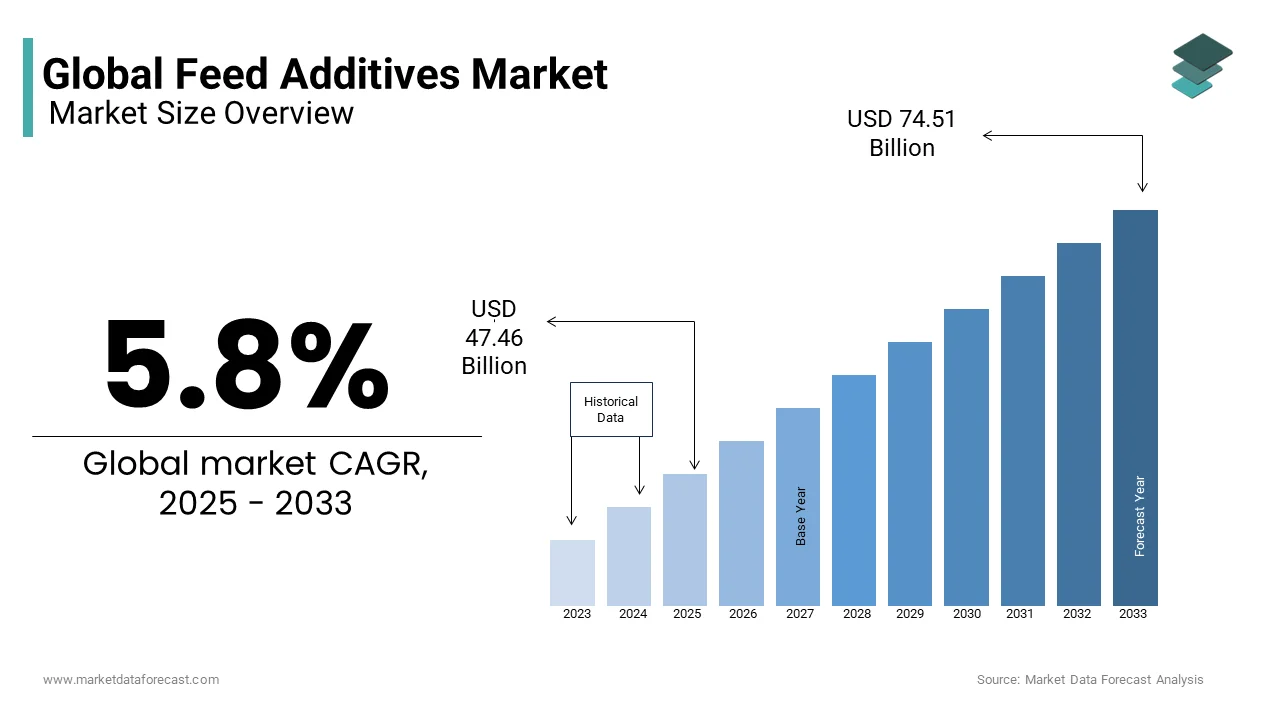
Feed additives are the additional nutritional elements, such as vitamins, minerals, amino acids, fatty acids, antioxidants, and fungal components, to enhance the health of livestock. Feed additives are products used in animal nutrition to improve the quality of feed and food from animal origin, which helps improve animal health. Feed Additives need to be authorized, stating the scientific evaluation demonstrating that the additive has no harmful effects on human and animal health and the environment. These additives can include vitamins, minerals, amino acids, enzymes, and other bioactive compounds. The global feed additives market accounted for significant growth in the past years and is anticipated to grow considerably during the forecast period. The global increase in demand for animal-derived products due to the growing population and rising disposable incomes is a significant contributor to the global feed additives market revenue. According to a few reports, 2022 compound feed production increased by 13.1% over the previous year, and fish feed production increased by 46.3% between 2017 and 2022. The animal feed additives market is expected to grow substantially due to ongoing research and development to produce innovative and sustainable feed additives. The escalating demand for organic and natural alternatives and rising technological advancements will provide market growth opportunities to the market players in expanding the market size.
MARKET DRIVERS
Rising Demand for Animal Protein and Organic Food Driving Growth of the Feed Additives Market
The demand for products like milk, eggs, and meat is on the rise, which is also driving the need for feed additives. The primary factors contributing to the demand in the global feed additives market are the rising population and the demand for meat products as a part of daily protein requirements. Also, the consumer shift towards organic food products is pushing farm owners to employ healthy practices like natural feed additives for the growth of poultry animals. In addition, the strict government standards related to the safety of food products and the welfare of animals are supporting growth in the feed additives market.
Technological Advancements, Sustainability Concerns, and Global Food Safety Standards Driving the Feed Additives Market
The recent technological developments have resulted in improved feed additives with more efficiency, quality, and nutrient intake. Besides, to control the spread of diseases in livestock, farmers are turning towards feed additives with antioxidants, antimicrobial features, and immunity boosters. The surge in concerns related to greenhouse gas emissions and environmental pollution created more demand for sustainable and eco-friendly feed additives. Also, with the globalization trend, livestock exports have skyrocketed in recent years, which indirectly promoted the feed additives market as the exported products should follow stringent national and international standards for food safety. Moreover, the boom in the adoption of advanced food processing technologies is supposed to create lucrative opportunities for the food additives market in the coming years.
MARKET RESTRAINTS
Antibiotic Residue Issues and Rising Input Costs Challenging the Feed Additives Industry
The concerns related to antibiotic leftovers that can affect the health of people while consuming meat products are majorly hampering the global market growth. The environmental damage as a result of extracting feed additives from animal sources is creating a negative influence on the rapid development of this business. In addition, the volatility in the international markets for the prices of minerals, vitamins, antioxidants, and others used in the production of feed additives is causing a spike in the expenses for the manufacturers and high prices for the end users.
Trade Barriers, Consumer Perceptions, and Economic Uncertainty: Challenging the Feed Additives Market
Although globalization opened doors to new markets, the stringent trade and export regulations are acting as a barrier for multinational companies. Besides, the consumer perceptions related to the use of synthetic additives and emphasis on animal welfare are also pulling the feed additives market down. Also, the economic uncertainties in several parts of the world are affecting the purchasing power of individuals and decreasing investments in research and development activities. The geopolitical conditions leading to the supply chain challenges, coupled with the intense business competition,n are acting as a serious threat to the global feed additives market.
REPORT COVERAGE
| REPORT METRIC | DETAILS |
| Market Size Available | 2025 to 2034 |
| 3Base Year | 2025 |
| Forecast Period | 2026 to 2034 |
| CAGR | 5.8% |
| Segments Covered | By Type, Form, Source, Livestock, and Region |
| Various Analyses Covered | Global, Regional, and Country-Level Analysis; Segment-Level Analysis; DROC; PESTLE Analysis; Porter’s Five Forces Analysis; Competitive Landscape; Analyst Overview of Investment Opportunities |
| Regions Covered | North America, Europe, APAC, Latin America, Middle East & Africa |
| Market Leaders Profiled | Cargill, Inc., DSM, BASF, Archer Daniels Midland Co., Ajinomoto, International Flavors & Fragrances, Inc., Evonik Industries AG, Novozymes, CHR Hansen, Tegasa, SHV (Nutreco NV), Kemin Industries, Inc., DuPont, Adisseo, Anova Group, Alltech, Inc., Addison Group, Sumitomo Chemical Co., Ltd., and Megamix LLC |
SEGMENTAL ANALYSIS
By Type Insights
The amino acids are likely to record the highest demand in the global feed additives market in the forecast period due to their significance in protein synthesis and the growth of livestock products. In particular, the improved performance and flexibility offered by amino acids are propelling their adoption in feed additive manufacturing.
The preservatives segment is likely to increase in the forecast period because of the rising demand for improved product shelf life. Similarly, minerals, acidifiers, binders, antioxidants, and prebiotics are anticipated to witness immense growth in the coming years.
By Source Insights
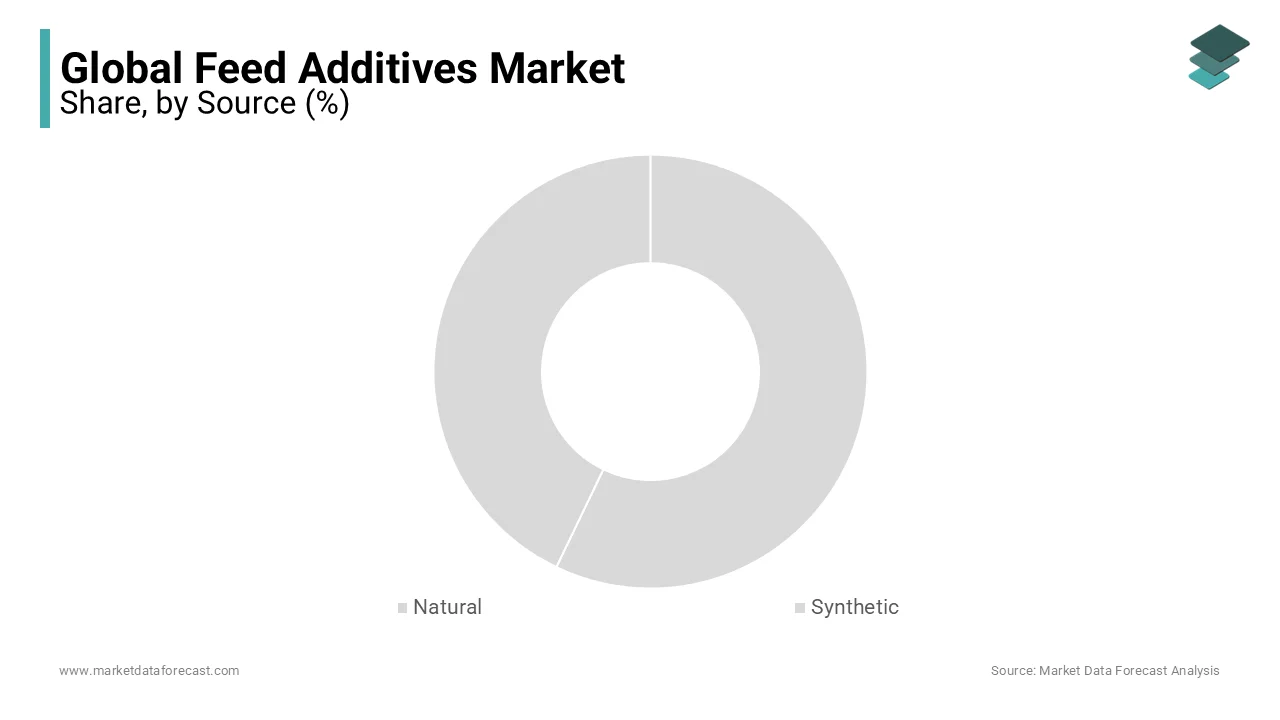
The synthetic segment recorded the highest share in the market owing to the increasing requirement among manufacturers. The advantages of synthetic feed additives, like enhanced shelf life, reduced wastage and leakage, and cost savings, are promoting the adoption of the synthetic segment. However, with the growing emphasis on decreasing ecological impacts, naturally extracted feed additives are anticipated to find more demand worldwide.
By Livestock Insights
The poultry segment held the lion’s share in the feed additives market owing to the skyrocketing demand for chicken and eggs to meet the nutritional requirements of humans. The rapid growth in the geriatric population,n coupled with the affordable prices, is majorly boosting the sales in the poultry segment. In addition to chicken, turkey, goose, and duck, they are also a part of poultry livestock that have a huge demand in all parts of the world. On the other hand, ruminants like cattle and buffalo are finding huge requirements in international cuisines, supporting the growth of the feed additives market. Similarly, swine and seafood types are also predicted to register steady growth in the coming days.
By Form Insights
The dry form segment accounted for a prominent share of the feed additives market because of its stability and ability to be stored for longer periods. The benefits of dry form, like easy transportation, measurements, and adaptability in different feeding systems, are fuelling the adoption of this segment globally.
REGIONAL ANALYSIS
Asia Pacific Market Analysis
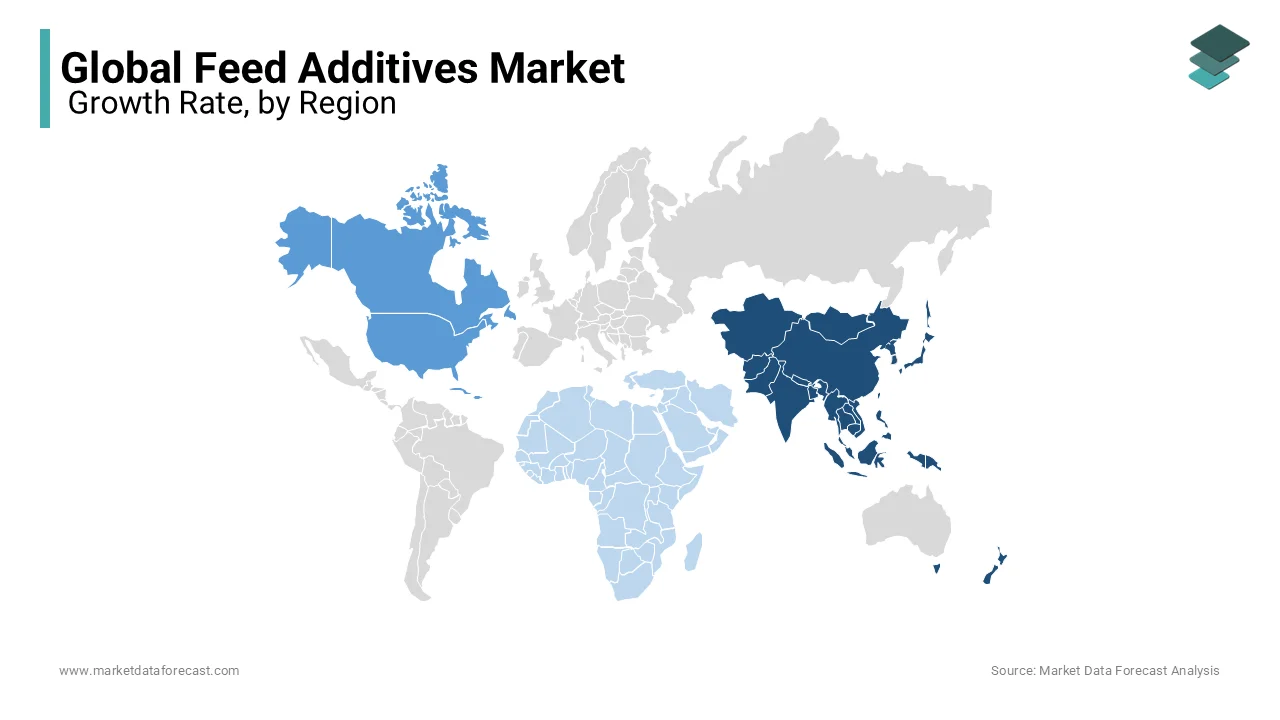
The Asia Pacific region dominated the feed additives market and is expected to have the highest growth rate in this market, with the increasing population in nations like India, China, and Japan. The surge in the consumption of meat and dairy products, along with the rising consumer income, is increasing the need for high-quality feed nutrition. China and India are the leading players in this region, with the expanding agriculture sector and implementation of technological processes in the livestock industry.
North America Market Analysis
North America is also a significant region in the global feed additives market. The United States is the leading nation in this region because of the extensive consumption of pork and beef in daily consumer food intake. The rising urbanization, coupled with the purchasing power of the population, is driving the demand for more divestock, which supports the feed additives business.
Europe Market Analysis
Europe is also a prominent player in this market, with an established feed additives industry in nations like the United Kingdom and Spain. The free trade agreement between the European nations is boosting exports in the area. Besides, the rise in exports of swine products is also benefiting the feed additives market in European nations.
Latin America Market Analysis
Latin America, with nations like Brazil and Mexico, is a crucial player in the global feed additives market. Government-regulated agriculture and the increasing need for meat products are driving the business in this locale. In addition, the availability of corn and soybeans to be used in the production of feed additives is supposed to create growth potential in this region.
Middle East And Africa Market Analysis
Middle East and Africa are a comparatively smaller market for the feed additives market. However, there is a huge untapped opportunity in these nations because of the availability of raw materials and augmented consumption of meat.
COMPETITIVE LANDSCAPE
The feed additives market is fiercely competitive, characterized by global chemical and biotech giants vying with specialized nutrition firms. Competition centers on innovation in gut health, emission reduction, and feed efficiency, driven by tightening regulations and sustainability demands. Companies differentiate through proprietary biotech strains, digital nutrition tools, and customized premix solutions. Strategic M&A activity is high, as firms seek to consolidate capabilities in enzymes, probiotics, and organic acids. Partnerships with integrators and certification bodies enhance credibility and adoption. Regional players compete on cost and local formulation expertise, while multinationals leverage global R&D and supply chains. Rising focus on antibiotic alternatives and climate-smart feeds reshapes product development.
KEY MARKET PLAYERS
These are some of the major players in the global feed additives market.
- Cargill, Inc.
- DSM
- BASF
- Archer Daniels Midland Co.
- Ajinomoto
- International Flavors & Fragrances, Inc.
- Evonik Industries AG
- Novozymes
- CHR Hansengasa
- SHV (Nutreco NV),
- Kemin Industries, Inc.
- DuPont
- Adisseo
- Anova Group
- Alltech, Inc.
- Addison Group
- Sumitomo Chemical Co., Ltd.
- Megamix LLC.
Top Players in the Market
- DSM is a global science-driven leader in nutritional feed additives, offering enzymes, vitamins, probiotics, and mycotoxin risk management solutions. Its innovations enhance animal health, feed efficiency, and sustainability across livestock, poultry, and aquaculture sectors. Recently, DSM launched next-generation enzyme blends targeting alternative protein sources and reduced-phosphorus diets to meet environmental regulations. It also expanded digital nutrition platforms, enabling precision feeding and carbon footprint tracking. Collaborations with integrators and sustainability certification bodies reinforce its ESG positioning.
- BASF contributes significantly to the feed additives market through its portfolio of vitamins, carotenoids, and organic acids that support animal health and performance. The company leverages its chemical and biotech expertise to develop stable, bioavailable nutrient forms tailored for diverse species and production systems. Recently, BASF invested in fermentation capacity for key vitamins and launched gut health-focused additives using microbiome insights. It has deepened partnerships with feed mills and integrators to co-develop customized premixes. Sustainability remains central.l BASF promotes life-cycle assessments and low-carbon manufacturing.
- Novozymes leads the feed enzymes segment with biotechnology-driven solutions that improve nutrient digestibility, reduce feed costs, and lower environmental emissions. Its enzyme products enable producers to utilize alternative feed ingredients while maintaining performance. Recently, Novozymes expanded its probiotic and microbiome offerings through partnerships and internal R&D, targeting gut resilience and antibiotic reduction. It launched digital advisory tools for enzyme dosing optimization and co-developed climate-smart feed programs with major producers. Collaborations with universities and sustainability initiatives validate emission-reduction claims.
Top Strategies Used by Key Market Participants
Key players prioritize R&D in enzymes, probiotics, and organic acids to enhance digestibility and reduce environmental impact. Strategic acquisitions and partnerships expand portfolios and geographic reach. Direct collaboration with integrators and feed mills enables customized solutions. Certification and lifecycle analysis validate environmental claims. Geographic expansion targets high-growth livestock regions. Educational outreach and technical support build customer loyalty. Emphasis on alternative protein compatibility and circular feed ingredients future-proofs offerings. Integration of biotech and data analytics drives next-generation feed efficiency and resilience.
RECENT MARKET NEWS
- In January 2023, Novus International, a renowned animal and health nutrition company, confirmed its acquisition of Agrivida Inc., a biotech company. Novus strives to improve its feed additives market share with the complete ownership of Agrivida’s INTERIUS technology that inserts feed additives into grains.
- In February 2023, Nutreco, a leading company in animal nutrition, confirmed its purchase of a minority stake in BiomEdit, a microbiome biotech firm. Utilizing BiomEdit’s advanced microbiome discovery platform, Nutreco aims to enhance its livestock health solutions.
- In June 2023, Evonik Industries introduced its updated product Biolys, which offers lysine for livestock. Biolys provides the essential amino acid L-lysine to improve the protein content of livestock with reduced carbon emissions.
MARKET SEGMENTATION
This research report on the global feed additives market has been segmented and sub-segmented into the following categories.
By Type
- Amino Acids
- Vitamins
- Acidifiers
- Enzymes
- Antibiotics
- Minerals
- Antioxidants
- Probiotics
- Preservatives
- Phosphates
- Carotenoids
- Mycotoxin Detoxifiers
- Flavors & Sweeteners
- Binders
- Phytogenics
By Source
- Natural
- Synthetic
By Livestock
- Poultry
- Swine
- Aquatic Animals
- Ruminants
- Others
By Form
- Dry
- Liquid
By Region
- North America
- Europe
- Asia Pacific
- Latin America
- Middle East and Africa