- Product Description Description
- Table of Contents TOC
- List of Table & Figure LOT
- Get Free Sample PDF Sample PDF
Market Size, 2025
$22 MnMarket Estimate, 2026
$23.41 BnMarket Forecast, 2034
$39 BnCAGR, 2026–2034
6.42%Middle East and Africa Infant Incubator Market Size, Trends, and Forecast (2026–2034)
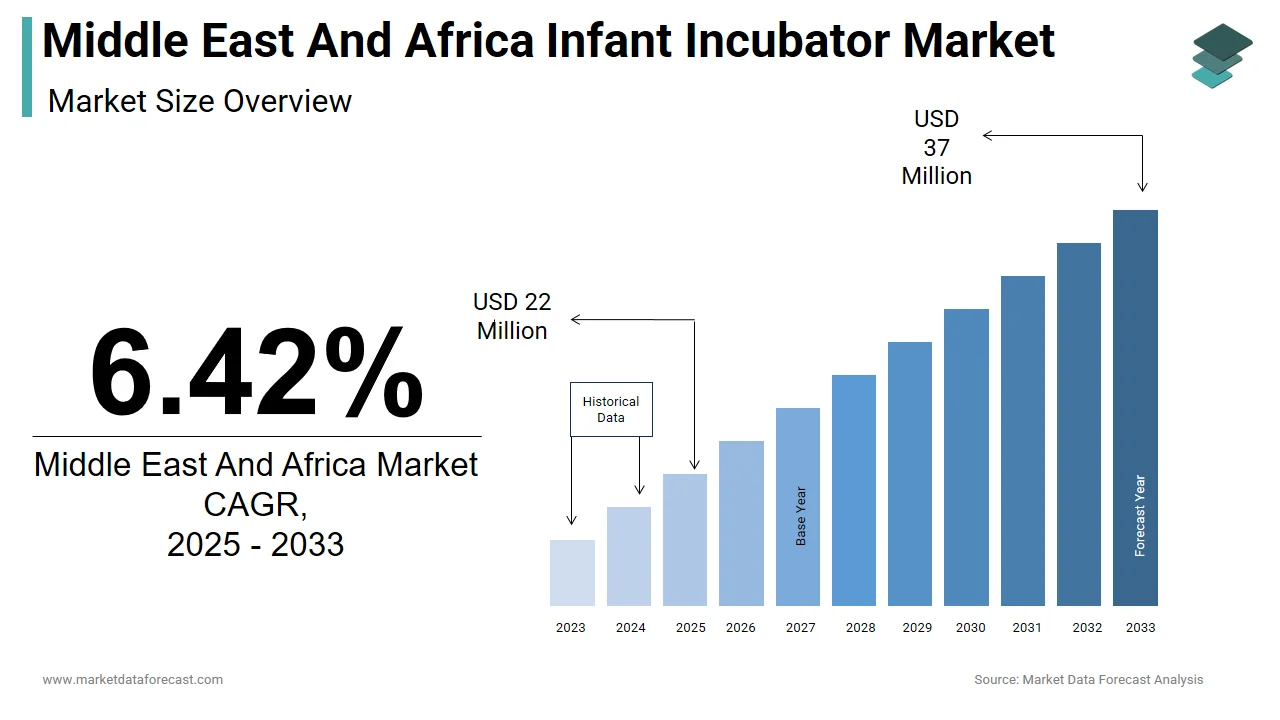
The Middle East and Africa infant incubator market size was valued at USD 22.00 million in 2025, stands at USD 23.41 million in 2026, and is anticipated to reach USD 39.00 million by 2034, expanding at a compound annual growth rate (CAGR) of 6.42% during the forecast period from 2026 to 2034. Growth is driven by the rising incidence of premature births, increasing pregnancy complications, and expanding investments by regional governments and health organizations to improve neonatal care infrastructure.
Key Executive Metrics (At-a-Glance)
- 2025 Base Valuation: USD 22.00 Million
- 2026 Current Valuation: USD 23.41 Million
- 2034 Forecast Valuation: USD 39.00 Million
- Forecast Period: 2026–2034
- Compound Annual Growth Rate (CAGR): 6.42%
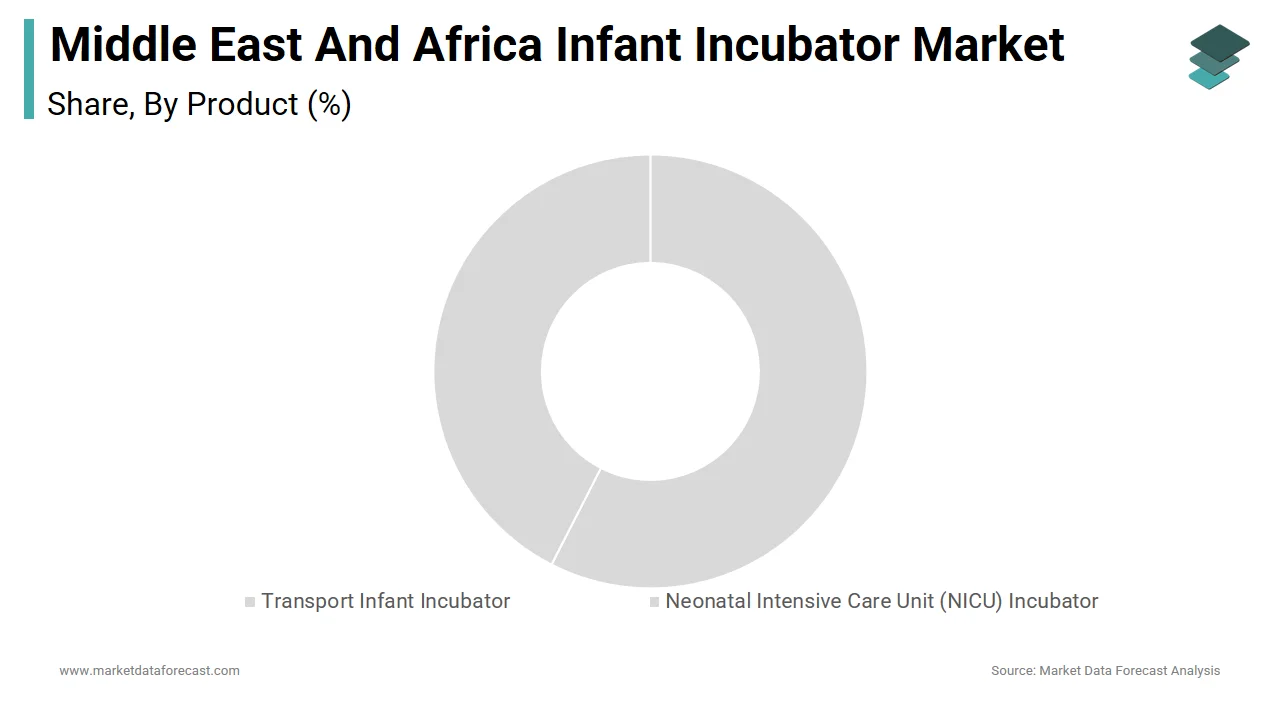
- Dominant Product Segment: Neonatal Intensive Care Unit (NICU) Incubators
- Dominant Application Segment: Lower Birth Weight and Neonatal Hypothermia
- Leading Regional Market: Middle East (led by Saudi Arabia and UAE)
Core Market Drivers
- Preterm Birth Rates: High and rising volume of premature deliveries and associated complications driving urgent clinical demand for advanced thermal and life-support incubator systems.
- Healthcare Modernization: Upgrades to neonatal care facilities, increased healthcare spending, and targeted medical supply programs across African and Middle Eastern emerging economies.
Primary Market Restraints & Challenges
- Financial & Infrastructural Limits: High device acquisition costs, limited reimbursement coverage in developing sub-regions, and insufficient healthcare infrastructure.
- Alternative Devices: Preference for lower-cost alternative modes such as baby warmers in resource-constrained clinics.
Middle East and Africa Infant Incubator Market Segmentation Breakdown
| Segment Category | Leading / Dominant Sub-Segment | Key Sub-Segments / Details |
|---|---|---|
| By Product | Neonatal Intensive Care Unit (NICU) Incubators | Transport Infant Incubators |
| By Application | Lower Birth Weight & Neonatal Hypothermia | Genetic Defects and Others |
| By Country | KSA, UAE, and South Africa | Israel, Egypt, Kenya, Ethiopia, Sudan, and Rest of MEA |
Major Industry Players Profiled
Key global and regional manufacturers active in the Middle East and Africa market include GE Healthcare, Novos Medical Systems, Atom Medical Corporation, Ningbo David Medical Device Co., Ltd., Natus Medical Incorporated, Fanem Ltd., Cobams SRL, AVI Healthcare Private Limited, Gammer International, and Ardo.
Middle East and Africa Infant Incubator Market Size
The size of the Middle East and Africa infant incubator market was worth USD 22 million in 2025. The market is anticipated to grow at a CAGR of 6.42% from 2026 to 2034, reaching USD 39 million by 2034, up from USD 23.41 million in 2026.
MARKET DRIVERS
Rise in Premature Births and Infant Mortality Boosts Demand for Infant Incubators in MEA
The demand for newborn infant incubators has increased exponentially in the Middle East and Africa region due to the increase in premature births, the increase in complications, and the growing demand for advanced products for the management of jaundice. An increase in premature birth rate is also increasing the infant mortality rate. According to the WHO, the number of premature births exceeds 16 million each year and is expected to increase. Saudi Arabia's infant mortality rate in the year 2022 in 5,699 deaths per 1,000 live births, a decrease of 3.42% from 2020. Saudi Arabia's infant mortality rate in 2020 was 5,901 deaths per 1,000 live births, a reduction of 3.31% compared to 2019.
The increase in pregnancy complications, such as pre-eclampsia, gestational diabetes, infection, and malnutrition, increases the rate of premature delivery, thereby increasing the demand for infant incubators. The survival rates of newborns and mothers are at risk with early delivery, history of miscarriage, and stillbirth. In Egypt, in 2022, the mortality rate is 14,150 deaths per 1,000 live births, a decrease of over 3% was observed in comparison to the 2020 infant mortality rate of 14,650 deaths per 1,000 live births, going down from 3.23% in 2019. According to the World Health Organization, more than 62% of premature babies occur in Southeast Asia and Africa. The preterm birth rate in low-income countries was around 13%, with 9.5% in high-income countries. One of the driving forces behind the market's growth is the increased investment by regional governments and major manufacturers in various developing countries. For example, MTTS Asia joined Business Call to Action (BCtA) provided approximately 496,000 low-income patients, providing medical supplies to nearly 200 hospitals in African countries.
Advanced technologies coupled with technology improvements are aiming to provide lucrative opportunities for manufacturers of infant incubators. These factors are expected to create more significant opportunities for the widespread growth of the Middle East and Africa infant incubator during the forecast period.
MARKET RESTRAINTS
High Costs and Poor Infrastructure Limiting Market Growth
However, factors such as the high cost of infant incubators, lack of reimbursement policies, the availability of alternative modes such as baby warmers, and poor healthcare infrastructure in developing and under-developing regions are expected to restrain the market's growth during the forecast period.
SEGMENTAL ANALYSIS
By Product Insights
GEOGRAPHICAL ANALYSIS
Within the Middle East and Africa region, the Middle East region will dominate the Middle East and Africa infant incubator market during the projected period. In many countries, the demand for infant incubators increases with the increase in complications of preterm delivery. In addition, increased healthcare infrastructure and high birth rates in these emerging economies provide the market with better opportunities. Technological advancements in neonatal care and improving medical facilities with reimbursement policies drive the market in Saudi Arabia, United Arab Emirates, Qatar, etc. In addition, technological advancements associated with modifications and automation of medical devices with improvements such as closed incubator systems with double-walled incubators, these advances will attract great sales in the years to come.
African countries have a large population of preterm infants, where preterm births are at their peak. In 2022, the South African infant mortality rate is 25,040 deaths per 1,000 live births, 2.85% less than the previous year. In 2020, the infant mortality rate was over 25,700 deaths per 1,000 live births, decreasing 2.78% compared to 2019. The African region is gaining international attention with increasing healthcare spending in emerging economies. Major manufacturers and emerging players of infant incubators aim to achieve market distribution in the Middle East and Africa region to meet the unmet market demand.
KEY MARKET PLAYERS
Companies playing a significant role in the Middle East and Africa Infant Incubator Market profiled in this report are GE Healthcare, Novos Medical Systems, Atom Medical Corporation, Ningbo David Medical Device Co., Ltd, Natus Medical Incorporated, Fanem Ltd, Cobams SRL, AVI Healthcare Private Limited, Gammer International, and Ardo.
MARKET SEGMENTATION
This Middle East and Africa infant incubator market research report is segmented and sub-segmented into the following categories.
By Product
- Transport Infant Incubator
- Neonatal Intensive Care Unit (NICU) Incubator
By Application
- Neonatal Hypothermia
- Lower Birth Weight
- Genetic Defects
- Others
By Country
- KSA
- UAE
- Israel
- Rest of the GCC countries
- South Africa
- Ethiopia
- Kenya
- Egypt
- Sudan
- rest of MEA