- Product Description Description
- Table of Contents TOC
- List of Table & Figure LOT
- Get Free Sample PDF Sample PDF
Market Size, 2025
$429 BnMarket Estimate, 2026
$460 MnMarket Forecast, 2034
$802.1 MnCAGR, 2026–2034
7.2%Global Infant Incubator Market Report Summary
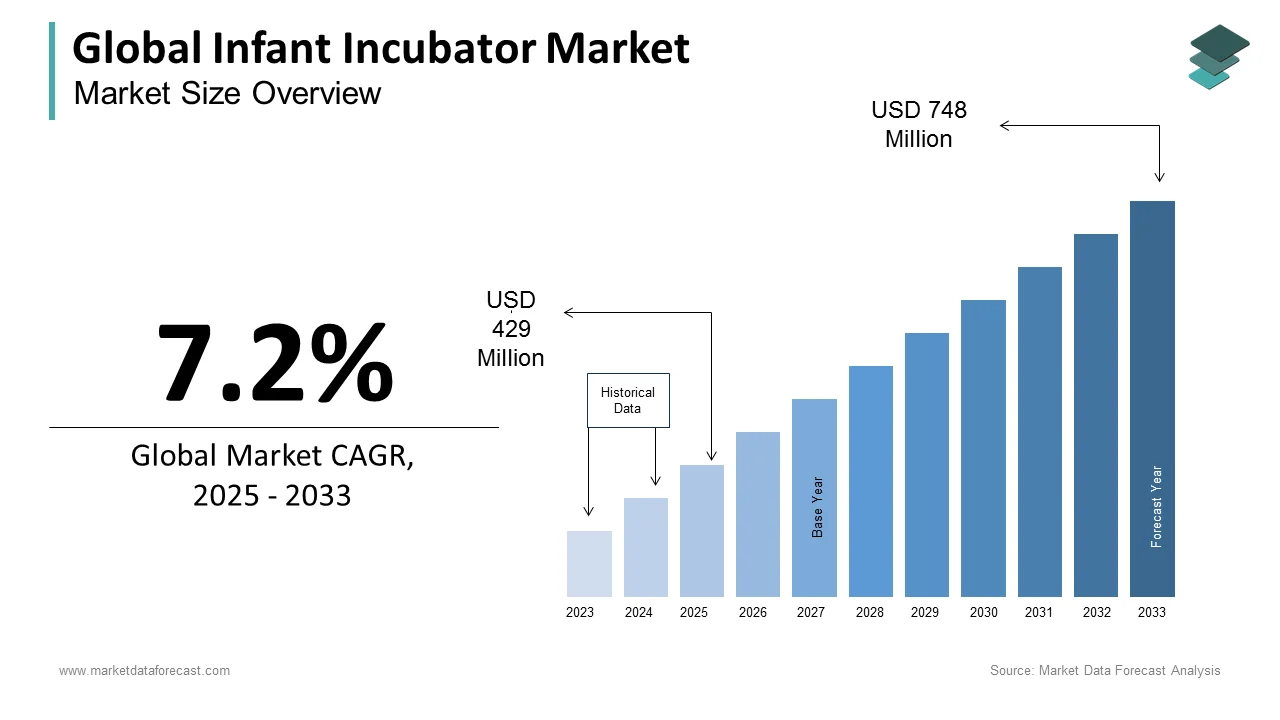
The global infant incubator market was valued at USD 429 million in 2025 and is projected to grow from USD 459.89 million in 2026 to USD 802.07 million by 2034, registering a CAGR of 7.2% from 2026 to 2034. Market growth is driven by the increasing incidence of preterm births, rising prevalence of low birth weight infants, and growing investments in neonatal intensive care infrastructure worldwide. Infant incubators play a critical role in maintaining optimal temperature, humidity, and environmental conditions for newborns requiring specialized medical care. The expansion of neonatal healthcare services, advancements in incubator technologies, and increasing awareness regarding infant survival and developmental outcomes are further supporting market growth globally.
Key Market Trends
- Rising incidence of preterm births and low birth weight infants worldwide.
- Increasing investments in neonatal intensive care units (NICUs) and maternal healthcare infrastructure.
- Growing adoption of advanced infant incubators with integrated monitoring systems.
- Expansion of healthcare access in emerging economies through neonatal care initiatives.
- Continuous technological advancements in temperature regulation, infection control, and patient monitoring capabilities.
Segmental Insights
- Based on product, the neonatal intensive care unit (NICU) incubator segment dominated the global infant incubator market by accounting for 64.3% market share in 2025, driven by its widespread use in managing premature and critically ill newborns requiring continuous monitoring and specialized care.
- Based on application, the low birth weight segment led the market by capturing 54.6% share in 2025, supported by the increasing number of infants requiring thermal regulation, respiratory support, and intensive neonatal care following birth.
Regional Insights
The global infant incubator market is witnessing steady growth across major regions, supported by advancements in neonatal care, expanding healthcare infrastructure, and increasing focus on infant survival outcomes.
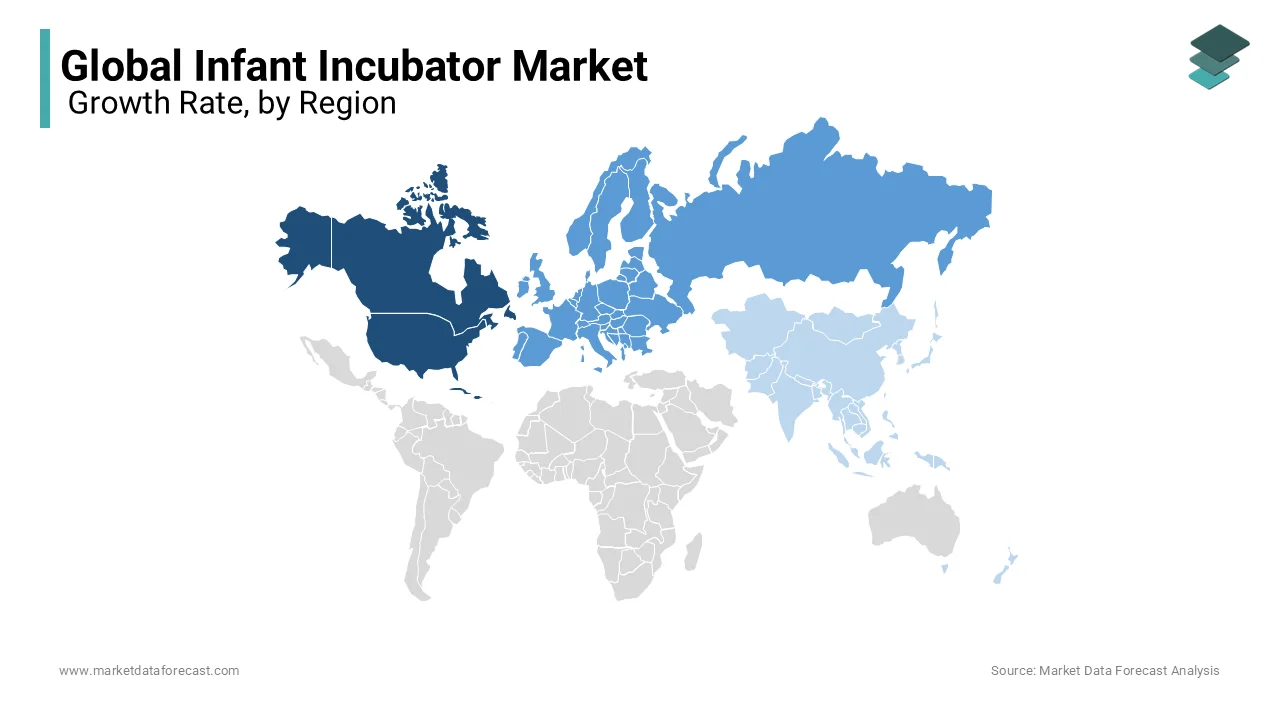
- North America dominated the global market in 2025 with 36.3% share, driven by advanced neonatal care facilities, high healthcare expenditure, and widespread adoption of technologically advanced infant care equipment.
- Europe maintains a significant position in the global market, supported by modernized healthcare infrastructure, specialized neonatal care centers, and strong government initiatives focused on maternal and infant health.
- Asia-Pacific is projected to register the fastest growth during the forecast period, driven by expanding healthcare access, rising birth rates, increasing investments in neonatal healthcare infrastructure, and government-led maternal and child health programs.
Competitive Landscape
The global infant incubator market is characterized by the presence of established medical device manufacturers focusing on innovation, patient safety, and advanced neonatal care solutions. Market participants are emphasizing product development, integration of monitoring technologies, and expansion into emerging healthcare markets to strengthen their market position. Strategic partnerships, technological advancements, and investments in neonatal healthcare equipment continue to shape competitive dynamics across the market.
Prominent companies operating in the global infant incubator market include GE Healthcare, Novos Medical Systems, Atom Medical Corporation, Ningbo David Medical Device Co., Ltd., Natus Medical Incorporated, Philips Healthcare, Fanem Ltd., Cobams Srl, AVI Healthcare Private Limited, Gammer International, and Ardo Medical AG.
Global Infant Incubator Market Size
The size of the global infant incubator market was worth USD 429 million in 2025. The global market is anticipated to grow at a CAGR of 7.2% from 2026 to 2034 and be worth USD 802.07 million by 2034 from USD 459.89 million in 2026.
Infant incubators encompass specialized medical devices designed to provide a controlled thermal environment for premature and low birth weight neonates. These critical care units regulate temperature, humidity, and oxygen levels to mimic intrauterine conditions, thereby enhancing survival rates among vulnerable newborns. The clinical necessity of these devices is underscored by global health metrics regarding preterm births. According to the World Health Organization, approximately 13.4 million babies are born preterm every year, which translates to roughly 1 in 10 births worldwide. This substantial volume of preterm deliveries creates an inherent demand for neonatal intensive care infrastructure. According to the World Health Organization, almost 1 million children die each year due to complications from preterm birth, making it the leading cause of death among children under 5 years of age. The technological evolution of incubators has shifted from simple warming boxes to sophisticated systems integrated with monitoring sensors and alarm systems. Healthcare facilities in developed regions prioritize advanced models with minimal handling features, while emerging economies focus on basic yet reliable units. The integration of these devices into neonatal intensive care units remains a cornerstone of modern pediatric healthcare strategies aiming to reduce neonatal mortality and improve long-term developmental outcomes for infants born before 37 weeks of gestation.
MARKET DRIVERS
Rising Prevalence of Preterm Births Due to Maternal Health Factors
The escalating incidence of preterm births is a major factor driving the expansion of the global infant incubators market. Medical literature indicates that maternal health conditions such as hypertension, diabetes, and obesity significantly contribute to early labor onset. As per the Centers for Disease Control and Prevention, the preterm birth rate in the United States rose to 10.4% in recent years, marking a continuous upward trend over the past decade. This statistical increase directly correlates with the need for expanded neonatal intensive care unit capacities. According to medical research data, the situation presents varied dynamics in Europe, where countries like Greece report preterm birth rates exceeding 11%. The physiological immaturity of infants born before 37 weeks necessitates immediate placement in thermoregulated environments to prevent hypothermia, which is a major risk factor for neonatal mortality. According to the World Health Organization, maintaining normothermia is critical for metabolic stability in preterm infants. Consequently, hospitals are compelled to upgrade their existing inventory and acquire additional units to accommodate the growing patient load. The correlation between maternal age and preterm delivery further exacerbates this demand as delayed childbirth becomes more common in urban populations. Advanced maternal age is associated with higher risks of pregnancy complications requiring intensive neonatal support immediately postpartum. This demographic shift ensures a steady and growing requirement for reliable incubation technology across both public and private healthcare sectors.
Advancements in Neonatal Intensive Care Infrastructure in Emerging Economies
The systematic enhancement of neonatal intensive care infrastructure in developing nations is another significant driver for market expansion. Governments and international health organizations are increasingly prioritizing the reduction of neonatal mortality through improved facility standards. As per the World Bank data, many low and middle-income countries have increased their health expenditure per capita by over 15% in the last five years, directing funds toward critical care equipment procurement. India, for instance, has launched various national health missions aiming to establish special newborn care units in district hospitals. According to the Ministry of Health and Family Welfare in India, the number of functional special newborn care units increased to over 6000 in recent years, reflecting a massive infrastructural push. Similarly, in Sub-Saharan Africa, initiatives supported by the Global Fund and other NGOs have facilitated the installation of thousands of new incubators in rural and semi-urban hospitals. These efforts are driven by the recognition that accessible neonatal care can reduce mortality rates by up to 50% for preterm infants. The transition from traditional kangaroo mother care alone to hybrid models incorporating modern incubators allows for better management of critically ill newborns. This infrastructural development is not limited to procurement but includes training programs for healthcare workers, ensuring optimal utilization of the technology. The commitment to achieving sustainable development goals related to child survival continues to fuel investments in neonatal care facilities across emerging markets.
MARKET RESTRAINTS
High Initial Capital Investment and Maintenance Costs
The substantial financial burden associated with acquiring and maintaining advanced infant incubators restricts market penetration, particularly in resource-constrained settings. Modern neonatal incubators equipped with servo control mechanisms, humidity regulation, and integrated monitoring systems command premium prices that often exceed 20000 USD per unit. For many public healthcare facilities in developing regions, this cost represents a significant portion of their annual equipment budget. As per data from the World Health Organization, nearly 50% of medical equipment in some low-income countries is non-functional due to a lack of maintenance resources or spare parts. The operational costs extend beyond the initial purchase to include regular calibration servicing and replacement of consumables such as filters and sensors. As per a study published in the Journal of Tropical Pediatrics, maintenance costs can account for up to 15% of the total lifecycle cost of medical devices in low-resource settings. This financial strain forces hospital administrators to prioritize essential purchases, often delaying upgrades or expansions of neonatal units. Furthermore, the complexity of modern devices requires specialized biomedical engineers for repairs, who are scarce in many rural areas. The reliance on imported components for repairs further escalates costs due to tariffs and logistics delays. Consequently, many healthcare providers opt for lower-cost alternatives that may lack advanced features, potentially compromising the quality of care for the most vulnerable infants. This economic barrier remains a persistent obstacle to universal access to high-quality neonatal thermal care.
Shortage of Trained Neonatal Care Professionals
The acute scarcity of skilled healthcare professionals capable of operating and managing infant incubators poses a significant restraint to market growth. Effective utilization of advanced incubation technology requires specialized training in neonatal physiology, device operation, and emergency response protocols. As per the International Council of Nurses, there is a global shortfall of approximately 5.9 million nurses, with the greatest deficits observed in low and lower-middle-income countries. This workforce gap directly impacts the ability of healthcare facilities to maximize the utility of installed incubators. In many regions, newly acquired equipment remains underutilized or misused due to inadequate staff training, leading to suboptimal patient outcomes. According to the World Federation of Public Health Associations, insufficient staffing ratios in neonatal intensive care units correlate with higher rates of medical errors and device-related complications. Training programs for neonatal nurses are time-intensive and expensive, requiring ongoing education to keep pace with technological advancements. The turnover rate among specialized nursing staff further exacerbates the problem as experienced personnel migrate to better-paying positions in developed countries or the private sector. This brain drain leaves public hospitals with a constant need to train new staff, diverting resources from other critical areas. Without a competent workforce, even the most sophisticated incubators cannot deliver their intended clinical benefits, rendering the investment less effective. Addressing this human resource challenge is as critical as addressing financial barriers to ensure equitable access to quality neonatal care.
MARKET OPPORTUNITIES
Integration of Internet of Things and Remote Monitoring Technologies
The convergence of Internet of Things capabilities with infant incubator systems is a promising opportunity for the infant incubator market. Smart incubators equipped with connectivity features enable real-time data transmission to central nursing stations and mobile devices, allowing for continuous remote monitoring of vital parameters. As per a study published in the Journal of Medical Internet Resources, the implementation of IoT-enabled monitoring systems reduced response times to critical alarms by 30% in pilot hospital programs. This technological integration facilitates predictive analytics where machine learning algorithms analyze historical data to anticipate potential health deteriorations before they become critical. The ability to monitor multiple infants simultaneously from a centralized dashboard optimizes nurse workflows and reduces the frequency of physical disturbances to the infants. Furthermore, remote monitoring supports telemedicine applications, enabling specialists in tertiary care centers to guide treatment decisions for patients in rural or underserved hospitals. According to the Global System for Mobile Communications Association, the number of connected healthcare devices will surpass 50 billion by 2030, indicating a robust ecosystem for such innovations. Hospitals adopting these smart solutions report improved documentation accuracy and streamlined regulatory compliance. The data generated also contributes to clinical research, providing insights into best practices for preterm care. As healthcare systems increasingly prioritize value-based care models, the adoption of intelligent incubators offers a pathway to improved patient outcomes alongside operational efficiencies. This digital transformation aligns with broader healthcare IT trends, positioning smart incubators as a key component of future-ready neonatal intensive care units.
Development of Portable and Low-Cost Incubator Solutions
The innovation of portable and cost-effective incubator designs opens significant avenues for the infant incubators market. Traditional incubators are bulky and require stable electricity supplies, making them unsuitable for transport or use in areas with unreliable infrastructure. Newer models utilize battery power, solar energy, and lightweight materials to ensure functionality in diverse environments. As per findings from the Bill and Melinda Gates Foundation, initiatives promoting low-cost incubators have demonstrated survival rate improvements comparable to conventional units in field trials across Africa and Asia. These portable devices often incorporate phase change materials for thermal regulation, eliminating the need for complex electronic heating systems. The simplicity of design reduces manufacturing costs, making them affordable for small clinics and community health centers. The World Health Organization has endorsed several such innovations for inclusion in its model lists of essential medical devices, facilitating procurement by government agencies. The portability feature is particularly valuable during emergencies such as natural disasters or patient transfers between facilities, where maintaining thermal stability is challenging. Additionally, these compact units require less space, allowing for higher-density installations in crowded urban hospitals. The modular nature of some new designs enables easy repair and part replacement, extending the device's lifespan. By addressing the dual challenges of affordability and accessibility, these innovations have the potential to bridge the gap in neonatal care equity, ensuring that geographical location does not determine survival prospects for preterm infants.
MARKET CHALLENGES
Regulatory Compliance and Standardization Hurdles
Navigating the complex landscape of regulatory requirements and standardization protocols is a major challenge for manufacturers in the infant incubator market. Each geographic region imposes distinct certification mandates, such as the CE marking in Europe, FDA approval in the United States, and CDSCO clearance in India. As per the European Commission, medical device regulations have become increasingly stringent following the implementation of the Medical Device Regulation framework, which requires extensive clinical evidence and post-market surveillance data. Compliance with these evolving standards demands significant investment in research documentation and quality assurance processes. The lack of harmonized global standards forces companies to customize products and testing procedures for each market, increasing time to launch and operational costs. Furthermore, variations in electrical safety standards and environmental specifications require engineering adaptations that complicate supply chain management. The International Electrotechnical Commission provides guidelines but local interpretations often differ, leading to unpredictable approval timelines. Small and medium-sized enterprises face disproportionate burdens as they lack the resources to maintain dedicated regulatory affairs teams. Delays in obtaining approvals can result in missed market opportunities and reduced return on investment. Additionally, post-market vigilance requirements mandate continuous monitoring of device performance and adverse events, requiring robust data collection systems. The dynamic nature of regulatory landscapes necessitates constant vigilance and adaptability from manufacturers. Failure to comply can result in product recalls, legal penalties, and reputational damage, underscoring the critical importance of regulatory strategy in market entry and sustainability.
Supply Chain Vulnerabilities and Raw Material Scarcity
The infant incubator manufacturing sector faces persistent challenges related to supply chain disruptions and the scarcity of critical raw materials. The production of these sophisticated medical devices relies on a global network of suppliers for components such as microcontrollers, sensors, plastics, and specialized metals. As per the Semiconductor Industry Association, the global chip shortage that peaked in recent years severely impacted the production timelines of medical equipment manufacturers, including those producing neonatal care devices. Lead times for essential electronic components extended from weeks to months, causing delays in order fulfillment and inventory shortages. Geopolitical tensions and trade restrictions further exacerbate these vulnerabilities by limiting access to key materials and manufacturing hubs. The reliance on single-source suppliers for specialized parts increases the risk of production halts during unforeseen events such as natural disasters or political instability. Additionally, the fluctuating prices of raw materials like medical-grade plastics and stainless steel impact profit margins and pricing strategies. Manufacturers are compelled to maintain higher inventory levels as a buffer, which ties up capital and increases storage costs. The logistical complexities of transporting delicate medical equipment across borders involve strict temperature and handling controls, adding another layer of difficulty. Disruptions in freight services, as seen during global health crises, further delay deliveries to healthcare facilities. Building resilient supply chains through diversification and near-shoring strategies is becoming imperative but requires substantial investment and long-term planning. These structural vulnerabilities continue to pose risks to market stability and the consistent availability of life-saving neonatal care equipment.
REPORT COVERAGE
| REPORT METRIC | DETAILS |
| Market Size Available | 2025 to 2034 |
| Base Year | 2025 |
| Forecast Period | 2026 to 2034 |
| Segments Covered | By Product, Application, and Region. |
| Various Analyses Covered | Global, Regional, and Country-Level Analysis, Segment-Level Analysis, Drivers, Restraints, Opportunities, Challenges; PESTLE Analysis; Porter’s Five Forces Analysis, Competitive Landscape, Analyst Overview of Investment Opportunities |
| Regions Covered | North America, Europe, APAC, Latin America, Middle East & Africa |
| Market Leaders Profiled | GE Healthcare, Novos Medical Systems, Atom Medical Corporation, Ningbo David Medical Device Co., Ltd., Natus Medical Incorporated, Philips Healthcare, Fanem Ltd., Cobams Srl, AVI Healthcare Private Limited, Gammer International, Ardo Medical AG, and Others. |
SEGMENTAL ANALYSIS
By Product Insights
The neonatal intensive care unit incubator segment dominated the market by capturing 64.3% of the global market share in 2025. The substantial global volume of premature births that necessitate prolonged and specialized medical intervention is primarily driving the dominance of the neonatal ICU segment in the global market. According to the World Health Organization, approximately 13.4 million babies are born preterm every year worldwide, which creates an immense and continuous demand for advanced intensive care environments. These vulnerable infants possess immature physiological systems that cannot regulate their own body temperature or maintain adequate respiratory function without external support. Neonatal intensive care unit incubators provide the critical microclimate required for their survival, offering precise control over temperature, humidity, and oxygen concentration. As per the Centers for Disease Control and Prevention, the preterm birth rate in the United States alone reached 10.4% in recent years, reflecting a persistent upward trend that further amplifies the necessity for these specialized devices. Hospitals are therefore compelled to maintain a high inventory of intensive care unit incubators to ensure adequate capacity for the growing number of high-risk neonates. The clinical imperative to reduce neonatal mortality and prevent long-term developmental complications ensures that these advanced units remain the most frequently procured and utilized products in modern healthcare facilities globally.
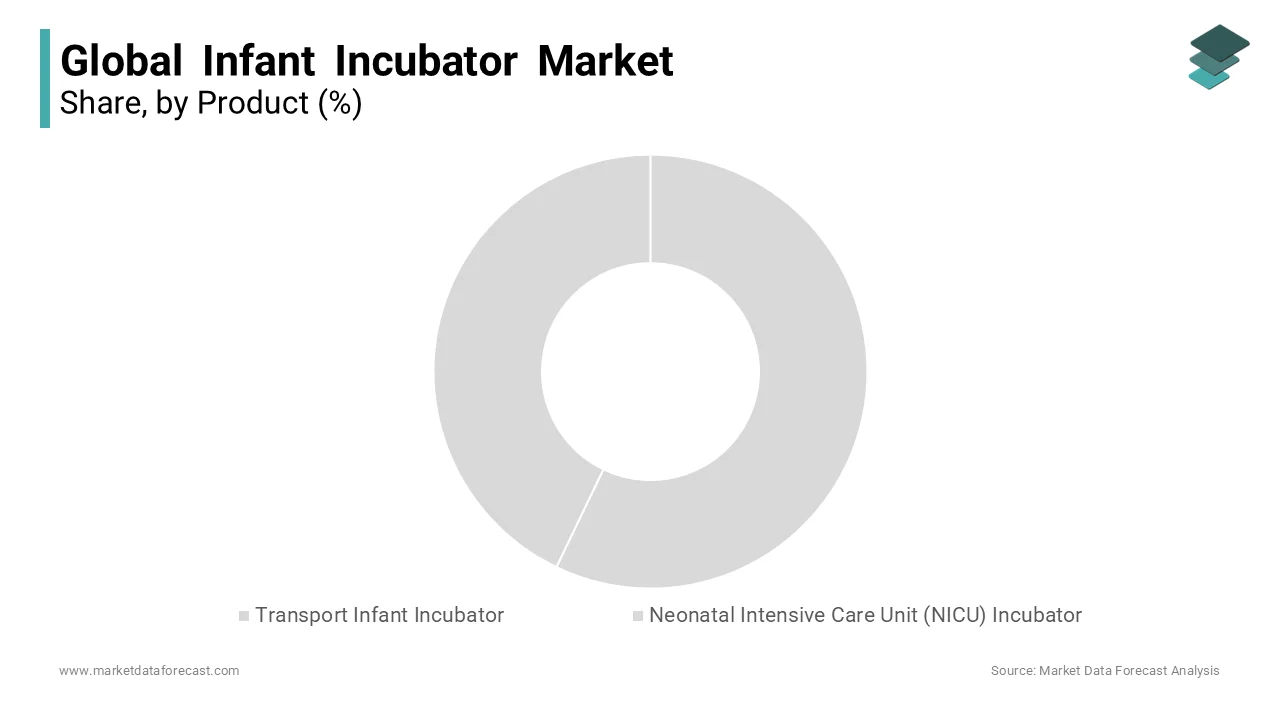
On the other side, the transport infant incubator segment is estimated to showcase a promising CAGR of 8.4% during the forecast period. The critical necessity for safe and stable inter-hospital transfers of critically ill neonates is majorly fuelling the expansion of the transport infant incubator segment in the global market. Many specialized neonatal intensive care units are concentrated in urban tertiary hospitals, meaning that premature or sick babies born in rural or community facilities must be transported to advanced centers for optimal care. According to the American Academy of Pediatrics, nearly 20% of preterm infants require transfer to a higher level of care immediately after birth or during their initial hospital stay. Transport incubators are specifically engineered to maintain a stable thermal environment and provide continuous respiratory support during these vulnerable journeys, which often involve ambulances or aircraft. As per the World Federation of Pediatric Intensive and Critical Care Societies, the use of specialized transport incubators reduces the incidence of severe hypothermia during transit by 40% compared to conventional warming methods. This dramatic improvement in transport safety is driving regional health networks to upgrade their mobile neonatal fleets. The increasing recognition of the direct correlation between stable transport conditions and long-term neurological outcomes ensures that healthcare systems continue to allocate substantial funds toward procuring advanced transport incubators, fueling the rapid expansion of this segment.
By Application Insights
The lower birth weight segment led the market by holding 54.6% of the global market share in 2025. The alarming global incidence of infants born with significantly reduced body mass is propelling the dominance of the lower birth weight segment in the global market. According to the World Health Organization, approximately 20 million infants are born with low birth weight annually, representing over 15% of all births globally. These babies lack the essential subcutaneous fat reserves required to maintain their body temperature, making them highly susceptible to fatal hypothermia and metabolic disturbances. Infant incubators are absolutely mandatory for these neonates to provide the external thermal support their immature bodies cannot generate independently. As per the United Nations Children's Fund, low birth weight is a contributing factor in nearly 60% of neonatal deaths in developing regions, highlighting the critical dependency on incubation technology for survival. The sheer volume of these vulnerable births ensures a constant and massive demand for incubators in maternity wards and neonatal units worldwide. Furthermore, the increasing prevalence of maternal malnutrition and multiple pregnancies in various demographics continues to sustain high numbers of low birth weight deliveries. This persistent clinical reality cements the lower birth weight segment as the primary application area driving the overall market volume for infant incubators across all geographical regions.
On the other hand, the neonatal hypothermia segment is estimated to grow at a CAGR of 9.4% during the forecast period in the global market, owing to the widespread clinical adoption of therapeutic cooling protocols to treat hypoxic ischemic encephalopathy. This severe brain injury occurs when a newborn's brain does not receive enough oxygen and blood flow during birth. According to the World Health Organization, hypoxic ischemic encephalopathy affects approximately 2.5 million newborns globally each year. The standard of care for this condition involves carefully lowering the infant's body temperature to reduce brain inflammation and prevent permanent neurological damage. Modern infant incubators are now being equipped with specialized servo-controlled cooling capabilities to maintain precise hypothermic temperatures for up to 72 hours. As per the American College of Obstetricians and Gynecologists, the implementation of these cooling protocols in equipped incubators reduces the risk of death or severe disability by 40%. This dramatic clinical benefit is driving hospitals to rapidly upgrade their existing incubator fleets to models that support therapeutic hypothermia. The increasing awareness among neonatologists regarding the efficacy of cooling therapy ensures that the demand for incubators capable of managing neonatal hypothermia will continue to grow at an accelerated pace.
REGIONAL ANALYSIS
North America Infant Incubator Market Analysis
North America dominated the market by accounting for 36.3% of the global market share in 2025, and the region is expected to showcase advanced healthcare trends and stable medical infrastructure growth for the next few years. The market status in this region is characterized by the presence of highly advanced healthcare infrastructure and widespread adoption of cutting-edge neonatal technologies. According to the Centers for Medicare and Medicaid Services, a primary driving factor is the exceptionally high healthcare expenditure, which accounts for nearly 18% of the gross domestic product in the United States. This robust financial backing allows hospitals to continuously upgrade their neonatal intensive care units with the latest smart incubators. Furthermore, as per the National Center for Health Statistics, the region faces a significant clinical challenge with the preterm birth rate in the United States reaching 10.4%. This high incidence of premature deliveries necessitates a massive and continuous deployment of infant incubators across both public and private healthcare facilities. The presence of major market manufacturers and favorable reimbursement policies for neonatal intensive care further accelerates the procurement of advanced devices. Consequently, North America maintains its leadership position through a combination of strong economic capacity and high clinical demand for specialized neonatal equipment.
Europe Infant Incubator Market Analysis
Europe holds a formidable position in the regional market, and European countries are anticipated to experience steady demand driven by modernized infrastructure and specialized newborn care expansion over the next few years. The market status across the continent is defined by stringent regulatory frameworks and a strong emphasis on standardized high-quality neonatal care. According to Eurostat, a major driving factor is the substantial government funding allocated to maternal and child health initiatives, where public health expenditure in the European Union increased by 12% over the last five years, with a specific focus on upgrading neonatal intensive care infrastructure. This financial commitment ensures that healthcare facilities can afford premium incubator systems that comply with strict safety standards. Additionally, according to the Organisation for Economic Cooperation and Development, the demographic trend of delayed childbirth contributes to market growth as the average maternal age in Europe has risen to 31 years. Advanced maternal age is associated with a higher risk of pregnancy complications and preterm births, thereby increasing the reliance on incubation technology. The region also benefits from strong domestic manufacturing capabilities and a highly trained neonatal workforce. These factors collectively ensure that Europe remains a highly lucrative and technologically advanced market for infant incubators.
Asia Pacific Infant Incubator Market Analysis
Asia Pacific represents the most dynamic and rapidly evolving region in the market, and the region is projected to lead long-term volume gains due to extensive healthcare outreach and public funding programs over the next few years. The market status in this vast region is transitioning from basic healthcare access to the adoption of advanced neonatal intensive care technologies. According to the World Bank, the primary driving factor is the immense population base, coupled with rising birth rates in key developing nations, where India alone records approximately 23 million live births annually, creating a massive foundational demand for neonatal care equipment. To address this issue, the government launched the India Newborn Action Plan, which aims to reduce neonatal mortality significantly by establishing special newborn care units in every district. As per the Ministry of Health and Family Welfare, this initiative has led to the installation of over 6000 functional special newborn care units equipped with modern incubators. Furthermore, the rapid expansion of private hospital networks in countries like China and Southeast Asia is driving the procurement of premium imported incubator brands. The combination of massive public health initiatives and booming private healthcare investments positions the Asia Pacific as the most lucrative growth engine for the global infant incubator market.
Latin America Infant Incubator Market Analysis
Latin America maintains a developing but steady presence in the regional market, and the region is likely to witness progressive improvements in public clinical access and specialized private facilities over the next few years. The market status in this region is characterized by a dual healthcare system with advanced private facilities coexisting alongside resource-constrained public hospitals. According to the Pan American Health Organization, a significant driving factor is the rising prevalence of maternal health issues such as obesity and hypertension, which directly contribute to premature deliveries, as nearly 25% of pregnant women in the region are classified as obese, significantly increasing the risk of complications that require neonatal intensive care. This growing clinical burden is forcing public health systems to allocate more resources toward neonatal equipment procurement. Additionally, as per the Inter-American Development Bank, the region is witnessing a 15% annual growth in private healthcare network expansion. These private hospitals compete for patients by offering state-of-the-art neonatal intensive care units equipped with the latest transport and stationary incubators. The ongoing efforts to standardize neonatal care protocols across the region, coupled with increasing health insurance coverage, are gradually expanding the addressable market for advanced infant incubators in Latin America.
Middle East and Africa Infant Incubator Market Analysis
The Middle East and Africa represent an emerging market with distinct disparities, and the territories are expected to undergo bifurcated medical developments with premium expansions in some areas, and aid-supported upgrades in others for the next few years. The market status in this region is bifurcated between highly advanced healthcare hubs in the Gulf nations and developing infrastructure in Sub-Saharan Africa. According to the Gulf Cooperation Council health ministries, a major driving factor in the Gulf region is the massive investment in healthcare modernization, where medical equipment imports in the region increased by 20% recently as part of national visions to achieve world-class healthcare standards. These investments heavily feature the procurement of premium smart incubators for newly built specialized maternity hospitals. Conversely, in Sub-Saharan Africa, the driving factor is the critical need to reduce extremely high neonatal mortality rates. According to the African Union health directives, the regional average preterm birth rate stands at 10%, creating an urgent demand for basic yet reliable incubators. International non-governmental organizations and global health funds are actively bridging this gap by donating thousands of low-cost and solar-powered incubators to rural clinics. This dual dynamic of high-end procurement in the north and essential aid in the south defines the unique growth trajectory of the infant incubator market in the Middle East and Africa.
COMPETITIVE LANDSCAPE
The competitive landscape of the infant incubator market is characterized by the presence of several established multinational corporations alongside numerous regional manufacturers. These companies are continuously engaged in intense rivalry to capture a larger share of the global healthcare expenditure. Innovation serves as the primary battleground where organizations strive to develop sophisticated devices equipped with advanced thermal regulation and integrated monitoring capabilities. The integration of Internet of Things technology has further intensified competition as firms race to offer smart incubators that facilitate remote patient monitoring and predictive analytics. Price competition remains fierce, particularly in developing regions where healthcare budgets are constrained, prompting manufacturers to introduce cost-effective models without compromising clinical efficacy. Strategic mergers and acquisitions are frequently employed by industry leaders to expand their product portfolios and enter untapped geographical markets. Furthermore, companies are heavily investing in comprehensive training programs and after-sales support to build strong brand loyalty among healthcare professionals. Regulatory compliance also plays a crucial role in shaping competition as stringent approval processes create high barriers to entry for new players. Consequently, the market is witnessing a consolidation trend where smaller firms are either acquired or forced to niche down. Ultimately, balancing technological innovation determines success.
KEY MARKET PLAYERS
Some of the notable participants playing a dominating role in the global infant incubator market profiled in this report are
- GE Healthcare
- Novos Medical Systems
- Atom Medical Corporation
- Ningbo David Medical Device Co., Ltd.
- Natus Medical Incorporated
- Philips Healthcare
- Atom Medical Corporation
- Fanem Ltd.
- Cobams Srl
- AVI Healthcare Private Limited
- Gammer International
- Ardo Medical AG
TOP PLAYERS IN THE MARKET
- GE Healthcare is a prominent multinational corporation deeply involved in the infant incubator market through its extensive portfolio of neonatal care solutions. The company focuses on developing advanced incubators that provide optimal thermal regulation and minimize handling stress for premature infants. Recently, GE Healthcare launched a new portable infant incubator designed to ensure stable temperature control during critical inter-hospital transfers. This innovation significantly enhances the safety and comfort of vulnerable neonates requiring specialized transport. Furthermore, the organization continuously invests in research to integrate smart monitoring capabilities into its devices. These strategic initiatives reinforce the commitment of GE Healthcare globally.
- Philips Healthcare maintains a robust presence in the infant incubator market by delivering integrated neonatal care solutions that combine incubators with advanced patient monitoring systems. The company prioritizes the development of intelligent devices equipped with Internet of Things connectivity to facilitate remote data analysis and predictive clinical alerts. In a recent strategic move, Philips Healthcare launched the Neonatal Incubator Series X, featuring enhanced thermal management and seamless electronic health record integration. This product introduction aims to streamline clinical workflows and reduce the physical disturbance of fragile infants. By continuously focusing on user-centric design and evidence-based innovation, Philips succeeds.
- Atom Medical Corporation is a highly specialized Japanese enterprise recognized for its dedicated focus on perinatal and neonatal care equipment. The company holds a strong reputation for manufacturing reliable infant incubators and radiant warmers that cater to diverse clinical needs ranging from intensive care to routine postpartum recovery. Atom Medical recently expanded its global distribution network to ensure wider accessibility of its advanced neonatal solutions in emerging healthcare markets. The organization continually refines its product lineup by incorporating ergonomic designs and precise humidity control mechanisms to support the delicate physiological development of premature babies. Through unwavering dedication, Atom Medical grows.
TOP STRATEGIES USED BY KEY MARKET PARTICIPANTS
Key participants in the infant incubator market primarily focus on aggressive research and development to introduce technologically advanced products. Companies are heavily investing in integrating Internet of Things capabilities and artificial intelligence into their devices to enable remote monitoring and predictive analytics. Strategic partnerships and collaborations with healthcare institutions are frequently utilized to conduct clinical trials and validate product efficacy. Furthermore, market leaders are expanding their geographical footprint by establishing manufacturing facilities in emerging economies to reduce production costs. Mergers and acquisitions remain a vital strategy to acquire innovative startups and broaden product portfolios. Finally, organizations prioritize training programs globally.
MARKET SEGMENTATION
This research report on the global infant incubator market has been segmented and sub-segmented based on product, application and region.
By Product
- Transport Infant Incubator
- Neonatal Intensive Care Unit (NICU) Incubator
By Application
- Neonatal Hypothermia
- Lower Birth Weight
- Genetic Defects
- Others
By Region
- North America
- Europe
- Asia Pacific
- Latin America
- The Middle East and Africa