- Product Description Description
- Table of Contents TOC
- List of Table & Figure LOT
- Get Free Sample PDF Sample PDF
Global Pediatric Healthcare Market Size
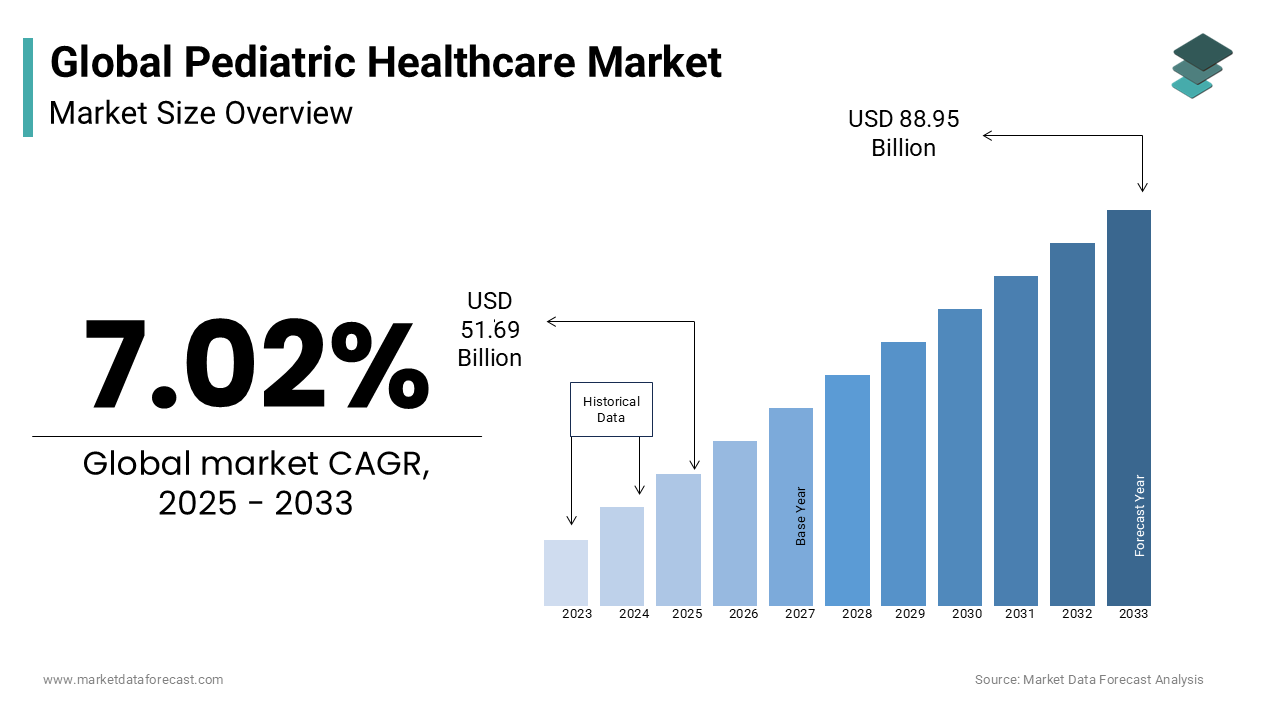
The global pediatric healthcare market was valued at USD 48.3 billion in 2024. The global pediatric healthcare market size is anticipated to value USD 88.95 billion by 2033 from USD 51.69 billion in 2025, growing at a CAGR of 7.02% from 2025 to 2033.
MARKET DRIVERS
The growing incidence of chronic diseases among children propels the pediatric healthcare market.
A spike has been noticed in the number of children suffering from various chronic diseases in the recent past. As a result, the awareness levels among parents have increased, primarily driving the market growth. Moreover, such serious diseases have led to the high adoption of the Pediatric Intensive Care Unit (PICU), which is present in almost every general hospital where the sickest pediatric patients are admitted. Also, the neonatal intensive care unit (NICU) is present in hospitals for preterm babies.
This specialized hospital unit provides the following
- Care For Respiratory Care
- Level II Trauma
- Medical And Surgical Intensive Care
- Neurology
- Open Heart Surgery
Y-O-Y rise in the number of pediatricians across the world is further anticipated to boost the market's growth rate.
There has been a rise in the number of pediatricians worldwide. Pediatricians are specialized professionals for preventing, detecting, and managing various problems affecting the miniature version of adult men and women, the children, who are under continuous growth and development, unlike adults. In addition, most general pediatricians worldwide collaborate with pediatric subspecialists to treat complex diseases and disorders in children and other healthcare professionals to meet the emotional needs of their patients, thereby providing effective treatment to the children. The general duties performed by a pediatric healthcare professional focus on reducing infant and child mortality through better and new treatments, identifying and addressing developmental and behavioral issues, diagnosis and treatment of infections, injuries, diseases, and dysfunctions, providing age-appropriate screenings and vaccinations, promote healthy lifestyles for children to minimize the prevalence of disease, monitoring physical and psychosocial growth and development of every individual child, provide counseling patients and parents on foreseeable developmental issues for better treatment options.
Furthermore, according to research, seeing the same pediatrician would help the child have better overall health since he knows the child and the family well, helping make the best recommendations. In addition, they give effective pediatric care through effective communication, essential services to children and parents, and the latest medical care to children up to 21 years of age, regarded as pediatric by the American Academy of Pediatrics (AAP).
The growing number of R&D activities is further expected to propel the global pediatric healthcare market.
The rise in the efforts of R&D to develop pediatric therapies, which could result in the release of new treatments, is anticipated to drive market expansion. The development of life-saving tools for kids due to the rising burden of illnesses, viral infections, and cases of malnutrition has improved parental awareness of more diagnoses. Furthermore, various infectious disorders, such as diarrhea, pneumonia, malaria, preterm birth and intrapartum complications cases yearly, have further led to market expansion. Moreover, these diseases have led to the introduction of rescue ambulances in most countries with specialized equipment for children, like a more powerful oxygen system, a baby carrier isolator, and a ventilator, since these diseases have continued to stand as the leading causes of death among children worldwide. Thus, driving the overall growth of the global pediatric healthcare market,
MARKET RESTRAINTS
A significant challenge faced by the pediatric healthcare market is funding for Medicaid, estimated at 20% of total funding, which is used for nursing homes in a much smaller population. Also, children requiring hospitalization or specialist care result in a considerable increase in total cost compared to the low cost of ordinary pediatric care, further obstructing market growth. Moreover, the small size of the study population, high cost of research, ethical issues in pediatric research, complications associated with pediatric drugs related to the absorption of antidiarrheal drugs, and use of traditional home remedies which are still prevalent in developing countries are some of the other factors which are further anticipated to restraint the growth of the market.
REPORT COVERAGE
| REPORT METRIC | DETAILS |
| Market Size Available | 2024 to 2033 |
| Base Year | 2024 |
| Forecast Period | 2025 to 2033 |
| Segments Analysed | By type, treatment, indication, and region |
| Various Analyses Covered | Global, Regional & Country Level Analysis; Segment-Level Analysis, Drivers, Restraints, Opportunities, Challenges; PESTLE Analysis; Porter's Five Forces Analysis, Competitive Landscape, Analyst Overview of Investment Opportunities |
| Regions Analysed | North America, Europe, Asia Pacific, Latin America, the Middle East, and Africa. |
| Key Market Players | Gilead Sciences, GlaxoSmithKline Plc., Eli Lilly, Sanofi, Abbott, Bristol-Myers Squibb Company, AxcanPharma USA, Johnson and Johnson, Pfizer, and Wyeth |
SEGMENTAL ANALYSIS
By Type Insights
The chronic illness segment is expected to hold a significant share in the global pediatric healthcare market during the forecast period owing to various disabilities faced by children because of chronic illnesses, such as frequent pain or discomfort, activity limitations, abnormal growth and development, and other severe disabilities, resulting in more outpatient visits, hospitalizations, and medical treatments.
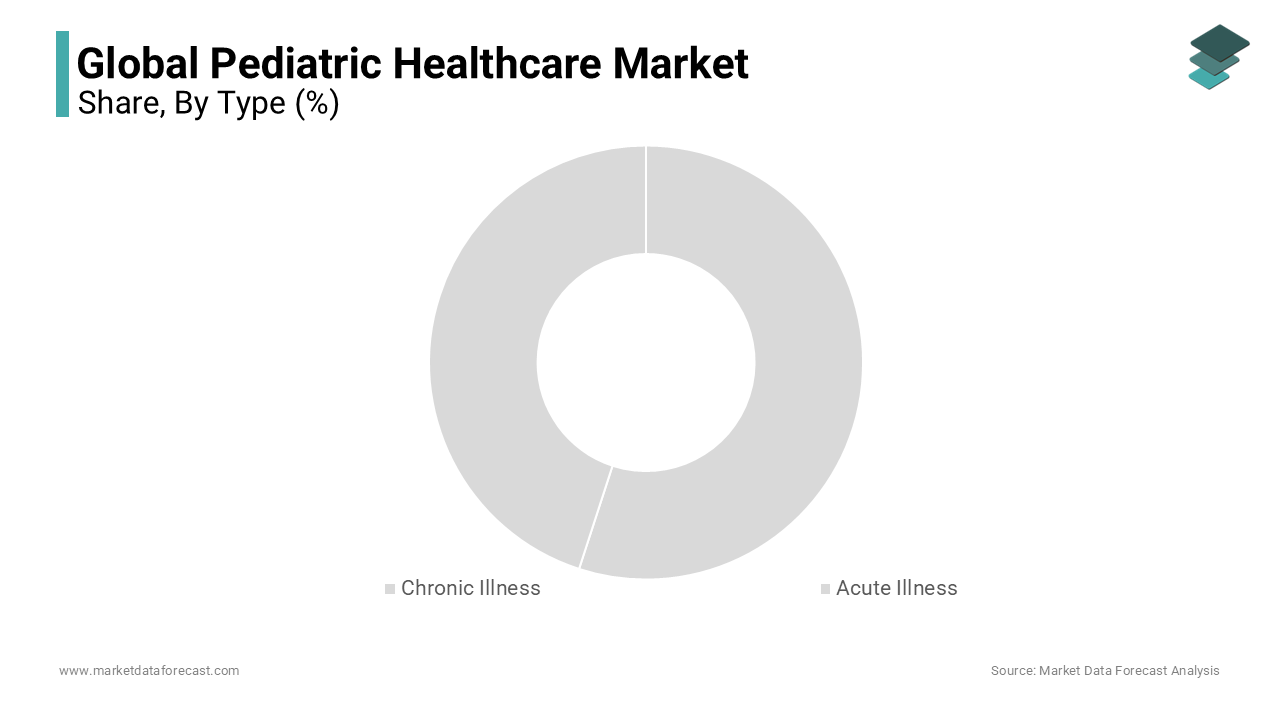
The acute illness segment is also anticipated to grow at a healthy CAGR during the forecast period owing to the facilities provided for pediatric acute care, such as injuries caused by falls and car accidents; serious infections such as pneumonia; traumatic brain injury; cuts and burns; and broken bones challenging to heal. These involve treating less severe injuries and illnesses, requiring the adoption a hospital's children's intensive care unit.
By Treatment Insights
The pediatric vaccines segment is anticipated to lead the market during the forecast period. Pediatric vaccines help the well-being of children. Governments and doctors recommend that they protect children against epidemics of various kinds of diseases. Moreover, the vaccines save families time and prevent them from entering financial burdens.
On the other hand, the pediatric drugs segment is anticipated to hold a considerable share of the global market during the forecast period owing to the optimization and advancement of all aspects of drug therapy for healthcare professionals focusing on developing pediatric drug therapy.
By Indication Insights
The genetic disorders segment is anticipated to dominate over the forecast period owing to the growing number of such diseases among the pediatric population worldwide. These include developmental problems, certain types of congenital disabilities, chronic conditions, and sensory impairments inherited by the child from one or both parents, requiring various tests to detect genetic disorders and promote the segment's growth.
The cardiac disorders segment is anticipated to account for a considerable share of the global market during the forecast period due to the increasing prevalence of various heart disorders in the pediatric population. According to the CDC, in every 1,000 live births, 8 to 10 children are seen with a congenital heart defect, becoming the most common congenital disability worldwide. The congenital heart diseases affecting children may be narrowed valves, hypoplastic chambers, leaking valves, holes in the heart walls, or even in severe cases, a combination of many defects is seen, which require either extensive surgery or correctable with a single procedure. Therefore, this is anticipated to drive market growth in this segment.
REGIONAL ANALYSIS
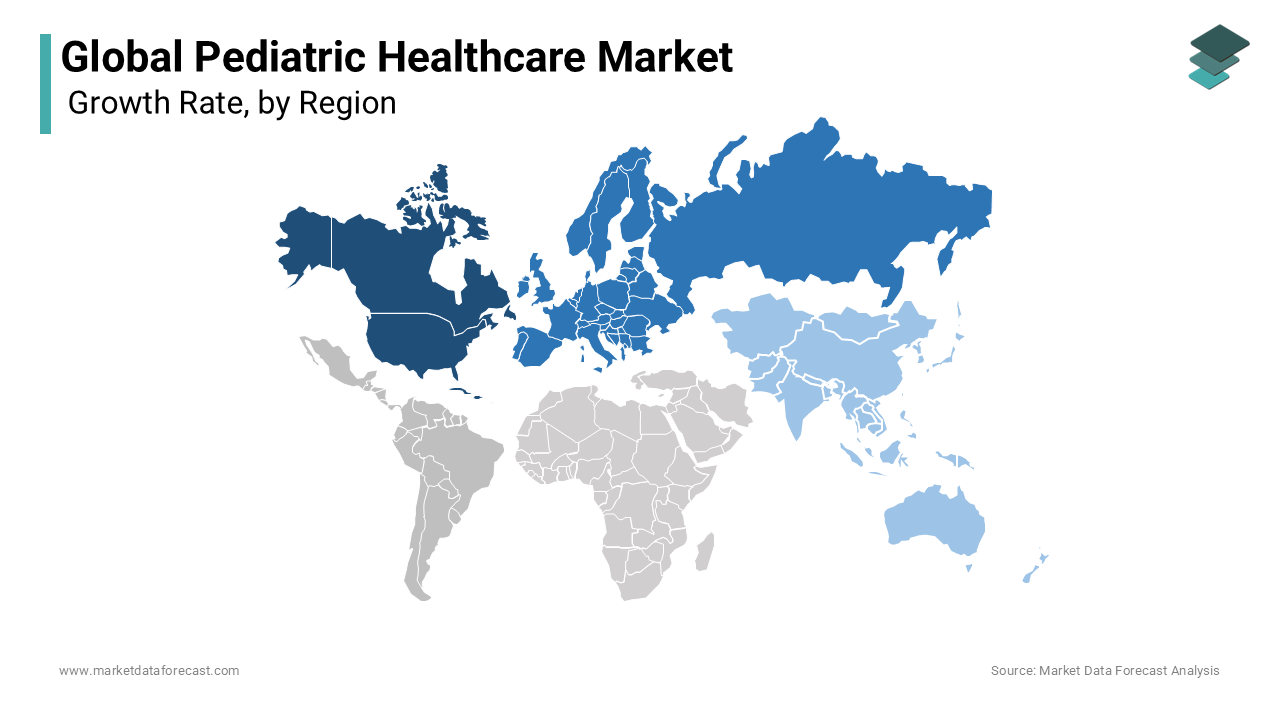
North America dominated the pediatric healthcare market in 2024 and is anticipated to account for a leading global market share throughout the forecast period. The surge in the adoption of advanced technologies in countries such as the United States, the high burden of pediatric disease in the North American region, increasing drug approvals in the United States, and the rising number of pediatric patient cases with children who have cerebral palsy, autism, muscle atrophy, and respiratory disorders are majorly driving the pediatric healthcare market in North America. Moreover, more than 40% of school-aged children and adolescents in the U.S. have at least one chronic health condition, which resulted in the launch of new products by key players for pediatric patients to treat their chronic diseases. In addition, the focus of the key market participants in North America has recently increased to offer cost-effective services in terms of patient care, along with the development and adoption of pediatric therapies in this country, which is further anticipated to boost the market's growth rate.
The European pediatric healthcare market is expected to hold a substantial share of the global market in 2023. Factors such as an increase in government initiatives to raise awareness of pediatric treatments and disorders among the parent population, various service providers offering a wide range of services to meet the growing need and high demand for effective and better treatment procedures by both parents and pediatricians and improved healthcare infrastructure across Europe are boosting the market growth.
The APAC pediatric healthcare market is anticipated to showcase the highest CAGR in the global market during the forecast period. YOY growth in the number of children with diseases in the countries of the Asia-Pacific region, an increase in government initiatives, and other educational institutions to raise awareness of pediatric treatments and disorders are favoring the market growth in this region. In addition, increasing R&D investments, growing awareness among parents regarding the availability of advanced treatments, and new product launches by key players to bring improvements in healthcare infrastructure medical for pediatric patients, leading to high adoption of telehealth services, especially in countries such as Japan, China, and India are supporting the market growth in this region.
KEY MARKET PLAYERS
Some of the companies that are playing a dominating role in the global pediatric healthcare market include
- Gilead Sciences
- GlaxoSmithKline Plc.
- Eli Lilly
- Sanofi
- Abbott
- Bristol-Myers Squibb Company
- Axcan Pharma USA
- Johnson & Johnson
- Pfizer
- Wyeth
RECENT MARKET HAPPENINGS
- In November 2022, the technology company known for developing the award-winning Miku Pro, Miku Care, introduced an in-app software plug-in, Care+, for tracking changes in their child's unique sleeping and breathing patterns and personal wellness tracking for adults. It can also adjust parents' daily habits and nighttime routines, which are key indicators of general well-being.
- In November 2022, Canada will be importing one million bottles of children's pain and fever medicine, as said by federal officials, to help ease a months-long shortage due to rising positive tests for RSV and influenza, which have a significant impact on children.
MARKET SEGMENTATION
The global pediatric healthcare market research report has been segmented and sub-segmented based on the type, treatment, indication, and region.
By Type
- Chronic Illness
- Acute Illness
By Treatment
- Vaccines
- Drugs
- Others
By Indication
- Cardiac Disorders
- Metabolic Disorders
- Asthma and Allergies
- Genetic Disorders
- Other Indications
By Region
- North America
- Europe
- Asia-Pacific
- Latin America
- Middle East and Africa