- Product Description Description
- Table of Contents TOC
- List of Table & Figure LOT
- Get Free Sample PDF Sample PDF
Market Size, 2025
$0.48 BnMarket Estimate, 2026
$0.49 BnMarket Forecast, 2034
$0.61 BnCAGR, 2026–2034
2.83%Executive Summary: Middle East And Africa Jams And Preserves Market
- Market Scope: Comprehensive regional market analysis covering product types, flavor types, distribution channels, regional leadership frameworks, and consumption metrics across the Middle East and Africa.
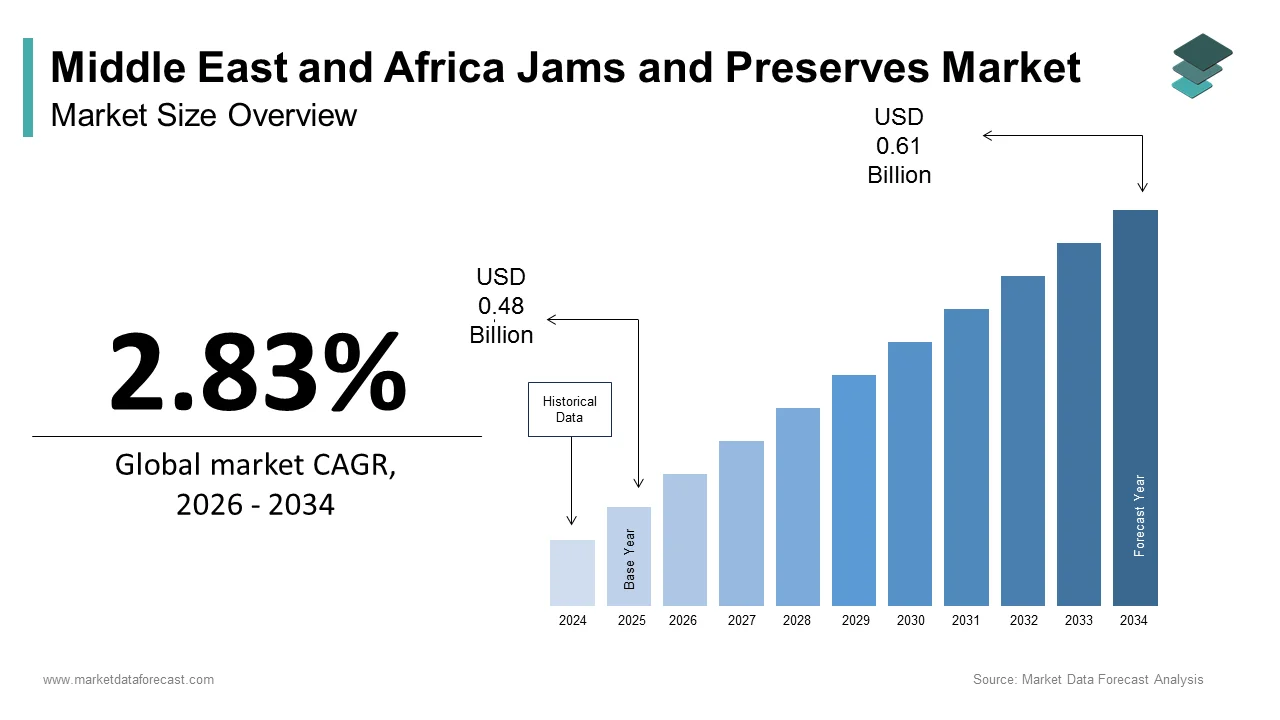
- Market Valuation: Valued at USD 0.48 billion (2025), estimated at USD 0.49 billion (2026), and projected to reach USD 0.61 billion by 2034, registering a robust CAGR of 2.83% (2026–2034).
- Primary Growth Drivers: Rising urbanization, changing lifestyles favoring convenience foods, and high sugar consumption patterns inherent to regional dietary habits. Market challenges include increasing health consciousness regarding diabetes and economic instability, while opportunities lie in low-sugar product innovations, e-commerce growth, and premiumization.
Key Market Segment Metrics (2026–2034)
| Category | Leading Segment (2025 Position) | Fastest-Growing Segment |
|---|---|---|
| By Product Type | Jams and Marmalade (held the largest share at 38.9% in 2025) | Honey (expected to witness the fastest CAGR of 5.8% from 2026 to 2034) |
| By Flavor Type | Strawberry (led the market with a 33.1% share in 2025) | Apricot (projected to grow at a CAGR of 5.2%) |
| By Distribution Channel | Supermarkets (held the majority share at 45.5% in 2025) | Online Retail (expected to grow at a massive CAGR of 14.5%) |
| By Region / Country | Kingdom of Saudi Arabia (top performer with a 25.5% market share in 2025) | United Arab Emirates and South Africa (key growth and premiumization markets) |
Major Market Players & Market Structure
Market Structure: Highly competitive regional market landscape featuring international and regional players focusing on developing low-sugar, organic, and preservative-free jams, leveraging e-commerce platforms to reach remote areas, and targeting affluent segments with gourmet preserves.
Key Companies: J.M. Smucker, Kraft Foods, Unilever Group, Nestle, Al Ain Foods, National Food Products Company (NFPC), and Hero Group.
Middle East and Africa Jams and Preserves Market Size
The Middle East and Africa Jams and Preserves Market size was calculated to be USD 0.48 billion in 2025 and is anticipated to be worth USD 0.61 billion by 2034, from USD 0.49 billion In 2026, growing at a CAGR of 2.83% during the forecast period.
Jams and preserves are a diverse array of fruit-based spreads that serve as essential components in both traditional breakfast routines and modern culinary applications. This market is deeply rooted in the cultural fabric of many nations where sweetened fruit preparations have historically been utilized to extend the shelf life of seasonal harvests. The contemporary landscape reflects a transition from purely homemade preparations to commercially packaged goods that offer convenience and consistent quality for urban households. Consumer preferences are increasingly shaped by a desire for products that balance traditional flavors with modern health considerations such as reduced sugar content and natural ingredients. The region boasts significant agricultural output which provides a robust foundation for local production of raw materials including strawberries apricots and citrus fruits. According to the Food and Agriculture Organization global fruit and vegetable production reached 2.1 billion tonnes in 2023 which supports the availability of key inputs for preserve manufacturing. Urbanization rates are rising steadily, with the Middle East and North Africa region recording an urban population share of over 60% according to development data, which drives demand for convenient food options. The dietary habits in these markets are evolving due to increased exposure to global food trends and higher disposable incomes in certain Gulf Cooperation Council countries. Retail infrastructure is expanding rapidly to meet the needs of a growing middle class that seeks premium and varied food products. As per the International Diabetes Federation the Middle East and North Africa region has 85 million adults living with diabetes which influences consumer scrutiny of sugar content in food items. This dynamic environment creates a complex market where traditional tastes intersect with modern health awareness and logistical advancements.
MARKET DRIVERS
Rising Urbanization And Changing Lifestyles Drive Convenience Food Demand
The rapid pace of urbanization across the region is a major driver for the increased consumption of these fruit-based spreads as consumers seek convenient and ready to eat food solutions, which fuels the growth of the Middle East and Africa jams and preserves market. As more individuals migrate to cities the time available for traditional food preparation diminishes leading to a greater reliance on packaged goods that offer quick meal options. According to World Bank data, the urban population in the Middle East and North Africa region accounted for over 65% of the total population, reflecting a significant shift in living patterns. This demographic transition is accompanied by a rise in dual income households where both partners engage in professional activities thereby reducing the time dedicated to domestic chores such as cooking. Jams and preserves provide an efficient way to enhance simple staples like bread toast and crackers without requiring extensive preparation effort. The expansion of modern retail formats including supermarkets and hypermarkets in urban centers further facilitates access to a wide variety of preserved fruit products. In the United Arab Emirates for instance the online grocery landscape expanded by 13 percent year over year to 1.1 billion dollars in 2024 indicating a strong trend toward convenient shopping and consumption habits. Urban consumers are also more exposed to international culinary trends which often incorporate jams and preserves in diverse ways such as in desserts marinades and gourmet sandwiches. The concentration of population in cities like Cairo Lagos and Johannesburg creates dense markets where distribution networks can operate efficiently to deliver fresh and preserved food items. This urban density supports the economies of scale necessary for manufacturers to introduce new product variants and maintain competitive pricing. The lifestyle changes associated with urban living thus create a sustained and growing demand for convenient food products including jams and preserves.
High Sugar Consumption Patterns Influence Product Formulation And Demand
The historical and cultural preference for sweet tastes in the region significantly influences the demand for these fruit-based spreads which are traditionally high in sugar content, and thereby boosts the expansion of the Middle East and Africa jams and preserves market. Sugar is a key ingredient in these products not only for preservation but also for flavor enhancement aligning with regional palates that favor sweetness. According to recent data consumption of sugar in the Middle East expanded significantly to 11 million tons in 2024 representing a 13 percent increase against the previous year. This high level of sugar consumption indicates a deep seated preference for sweetened foods which supports the continued popularity of traditional jams and preserves. In many African countries sugar remains a staple commodity with per capita consumption projected to reach 15.6 kilograms by 2034 as per the OECD FAO Agricultural Outlook. The affordability and widespread availability of sugar in the region make it an economical choice for both manufacturers and consumers. Traditional breakfast habits in many Middle Eastern households include bread with sweet spreads making jams a regular purchase item. The cultural significance of hospitality and sharing meals also drives the consumption of sweet treats including preserves during social gatherings and festivals. However this high sugar intake is increasingly being scrutinized due to health concerns which is prompting manufacturers to explore alternative formulations. Despite the health warnings the entrenched taste preferences ensure that standard sugar based jams remain a dominant segment in the market. The challenge for producers lies in balancing the traditional sweet profile with emerging health demands without alienating core consumers who expect a certain level of sweetness. This dynamic creates a unique market environment where both high sugar and reduced sugar products coexist and compete for shelf space.
MARKET RESTRAINTS
Health Consciousness And Rising Diabetes Prevalence Restrain Market Growth
The increasing prevalence of lifestyle related diseases, particularly diabetes, is slowing down the growth of the traditional segment within the Middle East and Africa jams and preserves market. Consumers are becoming more aware of the health risks associated with high sugar intake leading to a shift away from conventional sweet spreads. According to the International Diabetes Federation the Middle East and North Africa region has the highest regional prevalence of diabetes at 17.6 percent with 85 million adults living with the condition. This high incidence rate has prompted public health initiatives and personal dietary changes that emphasize sugar reduction and healthier eating habits. Many consumers are actively seeking low sugar or sugar free alternatives which limits the demand for standard high sugar jams and preserves. The fear of developing chronic conditions is driving a segment of the population to replace traditional preserves with fresh fruit or unsweetened nut butters. In addition to diabetes obesity rates are rising in the region which further exacerbates the need for dietary modifications. Government regulations in some countries are also introducing sugar taxes and labeling requirements that discourage the consumption of high sugar products. These regulatory measures increase the cost of production for manufacturers and may lead to higher retail prices which can dampen consumer demand. The stigma associated with sugary foods is growing among educated urban populations who prioritize wellness and fitness. As a result manufacturers face the challenge of reformulating their products to meet health standards while maintaining taste and texture. This transition requires significant investment in research and development which can be a barrier for smaller local producers. The overall effect is a constrained growth trajectory for traditional jams and preserves as the market adjusts to new health realities.
Economic Instability And Food Inflation Impact Consumer Purchasing Power
Economic volatility and high inflation rates in various parts of the region are further restricting the expansion of the Middle East and Africa jams and preserves market. This erodes consumer purchasing power. When inflation rises households prioritize essential food items such as grains vegetables and proteins over discretionary or premium products like specialty jams. According to the International Monetary Fund average inflation in the Middle East and North Africa region was forecast to ease to 15.4 percent in 2024 but remains elevated in several key markets. In Nigeria, food inflation remains in double digits, reaching 16.06% in April 2026, which continues to force consumers to cut back on spending. High inflation increases the cost of raw materials packaging and transportation which squeezes profit margins for manufacturers. These costs are often passed on to consumers in the form of higher retail prices which can reduce sales volumes. Currency fluctuations in many African nations further complicate the import of ingredients and equipment adding to the financial burden on producers. The uncertainty in economic conditions makes long term planning difficult for businesses and can lead to supply chain disruptions. Consumers in lower income brackets are particularly affected as they have less flexibility in their budgets to absorb price increases. This economic pressure leads to a trading down effect where buyers switch from branded premium jams to cheaper local alternatives or generic brands. In some cases consumers may stop purchasing jams altogether and revert to simpler and cheaper breakfast options. The instability in the economic environment thus creates a challenging landscape for market growth and profitability. Manufacturers must navigate these financial headwinds by optimizing costs and offering value oriented products to retain customers.
MARKET OPPORTUNITIES
Expansion Of Modern Retail And E Commerce Platforms Presents Opportunities
The rapid expansion of modern retail channels and e-commerce platforms in the region offer significant opportunities for the Middle East and Africa jams and preserves market. This unlocks new ways to reach a broader customer base. Traditional trade dominated by small independent stores is gradually giving way to organized retail formats that provide better visibility and accessibility for branded products. According to a study, grocery retailers across the Middle East and North Africa are experiencing growth driven by modernization and digital integration. The rise of supermarkets and hypermarkets allows manufacturers to showcase a broader range of products including premium and artisanal jams that appeal to affluent consumers. E commerce is also gaining traction with online grocery sales increasing substantially in key markets. These platforms enable manufacturers to reach consumers in remote areas who may not have access to physical stores. Digital marketing and targeted promotions can help brands build awareness and loyalty among tech savvy shoppers. The convenience of home delivery appeals to busy urban consumers who value time saving solutions. Additionally e commerce allows for the collection of valuable consumer data which can inform product development and marketing strategies. Manufacturers can use this data to identify trending flavors and preferences and adjust their offerings accordingly. The integration of omnichannel strategies ensures that brands can engage with customers across multiple touchpoints. This retail evolution provides a fertile ground for market expansion and innovation in the jams and preserves sector. Companies that invest in digital capabilities and retail partnerships are well positioned to capitalize on these emerging opportunities.
Product Innovation And Health Oriented Formulations Create New Market Segments
The growing demand for healthier food options opens the door for manufacturers to innovate and introduce new product variants in the Middle East and Africa jams and preserves market. Consumers are increasingly seeking products with reduced sugar content natural ingredients and functional benefits such as added vitamins or fiber. According to industry insights health conscious consumers are opting for low sugar and preservative free spreads which prompts manufacturers to innovate with clean label ingredients. This trend allows companies to differentiate their offerings and capture a premium segment of the market. Innovations such as using natural sweeteners like stevia or honey can appeal to health aware buyers without compromising on taste. The introduction of exotic and unique fruit blends can also attract adventurous consumers looking for new culinary experiences. Organic jams made from locally sourced fruits resonate with environmentally conscious shoppers who prioritize sustainability. Manufacturers can also explore fortification with probiotics or antioxidants to enhance the nutritional profile of their products. The development of single serve packs and portable formats caters to the on the go lifestyle of urban professionals. Collaborations with health influencers and nutritionists can help build credibility and trust for these new product lines. Educational campaigns about the benefits of reduced sugar diets can further drive acceptance of these innovative products. By aligning with global health trends manufacturers can expand their customer base and increase brand loyalty. This focus on innovation not only addresses current consumer needs but also future proofs the business against changing dietary preferences. The potential for growth in this segment is substantial as health awareness continues to rise across the region.
MARKET CHALLENGES
Supply Chain Vulnerabilities And Raw Material Sourcing Challenges
Supply chain vulnerabilities and the inconsistent sourcing of raw materials remain a serious challenge to the Middle East and Africa jams and preserves market. Fruit production in the region is heavily dependent on climatic conditions which are becoming increasingly unpredictable due to climate change. Droughts floods and extreme temperatures can severely impact crop yields leading to shortages and price volatility for key ingredients like strawberries apricots and citrus fruits. According to the Food and Agriculture Organization the sustainability of agriculture is a critical concern affecting food security and production stability. Many smallholder farmers who supply raw materials lack access to advanced irrigation and storage technologies which exacerbates the risk of post harvest losses. The fragmented nature of the agricultural sector makes it difficult for manufacturers to secure a consistent and high quality supply of fruits. Logistics infrastructure in some parts of Africa is underdeveloped leading to delays and spoilage during transportation. Poor road networks and limited cold chain facilities increase the cost and complexity of moving perishable goods from farms to processing plants. Political instability in certain regions can also disrupt supply chains and hinder the movement of goods across borders. Import dependencies for certain fruits or packaging materials expose manufacturers to currency fluctuations and trade barriers. These supply chain issues can result in production delays and inconsistent product availability which affects brand reliability. Manufacturers must invest in stronger supplier relationships and diversified sourcing strategies to mitigate these risks. However these measures require significant capital and operational expertise which may be beyond the reach of smaller players. The inherent instability in raw material supply thus remains a persistent challenge for the industry.
Regulatory Compliance And Labeling Standards Impose Operational Burdens
Navigating the complex landscape of regulatory compliance and labeling standards is a significant hindrance to manufacturers in the Middle East and Africa jams and preserves market. Each country in the region has its own set of food safety regulations and labeling requirements which can vary widely and change frequently. Manufacturers must ensure that their products meet strict standards for ingredients additives and nutritional information to avoid penalties and recalls. The introduction of sugar taxes and mandatory warning labels in some countries adds another layer of complexity to product formulation and packaging. According to the Middle East and Africa Food Preservatives Market report regulatory frameworks are evolving to address health concerns which impacts production processes. Compliance with these regulations often requires significant investment in testing certification and legal expertise. Small and medium sized enterprises may struggle to keep up with these demands due to limited resources and technical capacity. Inconsistent enforcement of regulations across different markets can create confusion and inefficiencies for regional operators. The need to adapt packaging and labeling for each market increases production costs and reduces economies of scale. Furthermore consumers are becoming more vigilant about reading labels and demanding transparency which puts pressure on manufacturers to provide accurate and detailed information. Any discrepancy or error in labeling can damage brand reputation and lead to loss of consumer trust. The administrative burden of maintaining compliance across multiple jurisdictions can divert resources away from innovation and marketing. Manufacturers must stay abreast of regulatory changes and engage proactively with authorities to ensure smooth operations. This ongoing need for adaptation and compliance represents a substantial operational challenge for the industry.
REPORT COVERAGE
| REPORT METRIC | DETAILS |
| Market Size Available | 2025 to 2034 |
| Base Year | 2025 |
| Forecast Period | 2026 to 2034 |
| CAGR | 2.83% |
| Segments Covered | By Product Type, Flavour Type, Distribution Channel, And Region |
| Various Analyses Covered | Global, Regional & Country Level Analysis; Segment-Level Analysis; DROC, PESTLE Analysis; Porter’s Five Forces Analysis; Competitive Landscape; Analyst Overview of Investment Opportunities |
| Regions Covered | KSA, UAE, Israel, Rest of the GCC countries, South Africa, Ethiopia, Kenya, Egypt, Sudan, Rest of MEA |
| Market Leaders Profiled | J.M Smucker, Kraft Foods, Unilever Group, ConAgra Foods Inc., B&G Foods Inc., Ferrero Group, Hershey Co, Nestle, Sioux Honey Association, and National Grape Co-operative Association Inc. |
SEGMENTAL ANALYSIS
By Product Type Insights
The jams and marmalade segment dominated the Middle East and Africa jams and preserves market and accounted for a 38.9% share in 2025. Its deep integration into traditional breakfast cultures across the region drives the dominance of this segment. In many Middle Eastern and African households bread accompanied by sweet spreads is a staple morning meal that has remained consistent despite modernization. The versatility of jams and marmalades allows them to be paired with various types of bread including white brown and whole wheat varieties which are widely consumed. According to the Food and Agriculture Organization cereal consumption in the Near East and North Africa region remains high with per capita availability exceeding 200 kilograms annually which supports the demand for complementary spreads like jams . The widespread availability of local fruits such as oranges lemons and apricots facilitates the production of marmalades and fruit jams at competitive prices. Local manufacturers leverage these abundant raw materials to produce affordable products that cater to mass market consumers. The cultural practice of hospitality also drives consumption as jams are often served to guests alongside tea or coffee. In countries like Egypt and Morocco the tradition of serving fresh bread with jam is ingrained in daily life ensuring steady demand. The segment benefits from established distribution networks that reach both urban and rural areas. Consumer loyalty to familiar flavors such as orange marmalade and strawberry jam further solidifies the dominance of this segment. The affordability of standard jams compared to premium alternatives like honey makes them accessible to a broader demographic including lower income households. This broad accessibility combined with cultural relevance ensures that jams and marmalade remain the cornerstone of the regional preserves market.
However, the honey segment is anticipated to witness the fastest CAGR of 5.8% from 2026 to 2034 due to increasing health consciousness and the trend toward premium natural sweeteners. Consumers are increasingly aware of the nutritional benefits of honey including its antioxidant properties and potential immune boosting effects which positions it as a healthier alternative to refined sugar based jams. According to sources, honey consumption is rising steadily worldwide, with the Middle East showing standout growth. This surge is heavily driven by deep-rooted regional cultural preferences for natural, unrefined sweets over processed table sugars. The region has a long history of beekeeping and honey consumption particularly in countries like Yemen Saudi Arabia and Ethiopia where honey is valued for both culinary and medicinal purposes. The rising middle class in Gulf Cooperation Council countries is driving demand for premium and organic honey varieties which are perceived as luxury health products. Retailers are expanding their offerings of specialized honey types such as sidr manuka and acacia to meet this demand. The growth of e commerce platforms has also facilitated access to high quality honey from remote producers allowing consumers to purchase authentic products directly. Government initiatives in some countries support local beekeeping industries which enhances supply and reduces dependency on imports. For instance Saudi Arabia has invested in modernizing its beekeeping sector to boost domestic production. The perception of honey as a natural and unprocessed food aligns with the clean label trend that is gaining traction among urban consumers. As health awareness continues to spread across the region the demand for honey is expected to grow at a compound annual growth rate significantly higher than traditional jams reflecting a shift toward wellness oriented dietary choices.
By Flavour Type Insights
The strawberry flavour segment led the Middle East and Africa jams and preserves market and captured a 33.1% share in 2025. Its universal appeal and the widespread availability of raw materials are attributed to the leading position of this segment. Strawberry is one of the most popular fruit flavours globally and this preference translates strongly to the MEA region where it is favored by consumers of all age groups. The fruit is cultivated in several countries within the region including Egypt Morocco and South Africa which ensures a steady supply of fresh strawberries for jam production. According to the Food and Agriculture Organization Egypt is among the top strawberry producers in Africa with annual production exceeding 500000 tonnes which supports local processing industries . The bright color and sweet taste of strawberry jam make it particularly attractive to children and families who form a significant portion of the consumer base. Major international and local brands prioritize strawberry variants in their product portfolios ensuring wide distribution and visibility in retail outlets. The versatility of strawberry jam allows it to be used in various applications beyond breakfast including baking desserts and snacks which broadens its usage occasions. Marketing campaigns often highlight the natural and fruity aspects of strawberry jam reinforcing its image as a wholesome choice. The affordability of locally sourced strawberries helps keep production costs manageable allowing manufacturers to offer competitive pricing. Consumer familiarity with the flavor reduces the barrier to trial and encourages repeat purchases. Additionally strawberry jam is often perceived as a safe and standard choice for gift giving and household stocking. The combination of local agricultural strength global popularity and versatile usage cements strawberry as the dominant flavour segment in the regional market.
On the other hand, the apricot flavour segment is likely to experience the fastest CAGR of 5.2% during the forecast period owing to strong traditional preferences in key countries and increasing export opportunities. Apricots have deep cultural significance in the Middle East particularly in countries like Turkey Iran and Syria where they are consumed fresh dried and as preserves. Although Turkey is not in MEA its influence on regional tastes is profound and local production in countries like Morocco and South Africa is expanding. The unique sweet and tangy profile of apricot jam appeals to consumers seeking alternatives to common berry flavors. In recent years there has been a resurgence of interest in traditional and heritage foods which has boosted the popularity of apricot preserves. The rise of gourmet and artisanal food trends has also contributed to growth as chefs and food enthusiasts incorporate apricot jam into sophisticated dishes and cheese boards. Export demand from European markets for high quality apricot products encourages local manufacturers to improve standards and increase production. The health benefits associated with apricots including high vitamin A and fiber content resonate with health conscious consumers. Retailers are introducing premium apricot jam variants often labeled as organic or no added sugar to capture this niche. The limited competition in this segment compared to strawberry allows for higher margins and brand differentiation. As consumers become more adventurous in their food choices apricot jam is poised for sustained growth driven by cultural resonance and premium positioning.
By Distribution Channel Insights
The supermarkets segment held the majority share of 45.5% of the Middle East and Africa jams and preserves market in 2025. This supremacy of this segment was credited to the rapid expansion of organized retail infrastructure and growing consumer trust in modern trade formats. The shift from traditional souks and small grocery stores to supermarkets and hypermarkets has transformed the retail landscape in urban centers across the region. According to research, the modern grocery retail sector in the Middle East and North Africa is experiencing robust growth driven by urbanization and changing consumer preferences for convenience and variety . Supermarkets offer a wide assortment of local and international jam brands allowing consumers to compare prices and qualities in a comfortable shopping environment. The controlled storage conditions in supermarkets ensure product freshness and quality which is a key concern for perishable goods like preserves. Promotional activities such as discounts bundle offers and loyalty programs conducted by supermarkets drive higher sales volumes. The presence of private label brands in supermarket chains provides affordable options that attract price sensitive consumers. In countries like the United Arab Emirates Saudi Arabia and South Africa major retail chains such as Carrefour Lulu Hypermarket and Pick n Pay dominate the food retail sector. These retailers invest heavily in supply chain management ensuring consistent stock availability. The one stop shopping experience offered by supermarkets appeals to busy urban families who value time efficiency. Additionally the visual merchandising and strategic placement of jams in breakfast aisles enhance impulse purchases. The credibility associated with established supermarket chains reassures consumers about product safety and authenticity. Urbanization continues to rise. As a result, the dominance of supermarkets as the primary distribution channel is expected to strengthen further.
But the online retail segment is on the rise and is expected to be the fastest growing segment in the market by witnessing a CAGR of 14.5% between 2026 and 2034. This quick surge of the segment is propelled by increasing digital adoption and the demand for convenience. The proliferation of smartphones and internet connectivity has enabled a significant portion of the population to engage in e commerce activities. Platforms such as Amazon Noon and local grocery delivery services like Instashop and Kibsons have made it easier for consumers to purchase food items including jams and preserves from home. The convenience of home delivery appeals to busy professionals and young families who prefer to avoid physical store visits. The COVID 19 pandemic accelerated the adoption of online shopping habits which have persisted post pandemic as consumers appreciate the time savings and safety benefits. Online retailers often offer a wider range of niche and premium products that may not be available in physical stores catering to diverse consumer preferences. Competitive pricing and frequent online exclusive deals further incentivize purchases. The ability to read customer reviews and compare products online enhances consumer confidence in their buying decisions. Logistics improvements including faster delivery times and better cold chain management have addressed previous concerns about product quality. Social media marketing and influencer collaborations drive traffic to online platforms increasing brand visibility. As digital literacy improves and logistics infrastructure develops online retail is set to capture a larger share of the jams and preserves market offering a dynamic growth trajectory.
REGIONAL ANALYSIS
Kingdom Of Saudi Arabia Jams and Preserves Market Analysis
The Kingdom of Saudi Arabia was the top performer in the Middle East and Africa jams and preserves market and accounted for a 25.5% share in 2025. This dominance of the country’s market was driven by a large population high disposable incomes and a strong culture of hospitality. The country represents one of the largest consumer markets in the Gulf region with a population of approximately 35.3 million people. According to the General Authority for Statistics, the retail trade sector in Saudi Arabia has shown positive growth, supported by government initiatives under Vision 2030 to diversify the economy and enhance quality of life. The preference for sweet foods and traditional breakfast items such as bread with jam or honey ensures steady demand. The presence of a large expatriate community also contributes to diverse consumption patterns and increased demand for international brands. Local manufacturing capabilities are expanding as the government encourages food security and self sufficiency initiatives. Investments in agricultural projects aim to increase the production of fruits such as strawberries and dates which are used in preserve manufacturing. The modern retail sector is highly developed with numerous supermarkets and hypermarkets operating across major cities like Riyadh Jeddah and Dammam. E commerce is also gaining traction with online grocery platforms reporting significant growth. The high purchasing power of Saudi consumers allows for the uptake of premium and organic jam variants. Regulatory standards for food safety are strict ensuring high quality products in the market. The combination of demographic factors economic stability and retail development makes Saudi Arabia a key driver of market growth in the region.
United Arab Emirates Jams and Preserves Market Analysis
The United Arab Emirates followed closely behind in the Middle East and Africa market and occupied a 17.3% share in 2025. This growth was supported by high consumer spending and a diverse population. The UAE has one of the highest per capita incomes in the region which supports the demand for luxury and specialty food products. According to the Dubai Department of Economy and Tourism the retail sector continues to expand with a focus on high quality and diverse offerings to cater to the multicultural population . The presence of numerous international hotels and restaurants drives the consumption of premium preserves for breakfast buffets and culinary applications. Consumers in the UAE are highly health conscious and seek organic sugar free and artisanal jams which has led to a proliferation of niche brands in the market. The country acts as a re export hub for the wider region facilitating the distribution of international brands to neighboring countries. Modern retail infrastructure is advanced with state of the art supermarkets and online grocery platforms offering extensive product ranges. The government support for food security initiatives includes investments in local agriculture and food processing technologies. The Expo 2020 legacy has further boosted the food and beverage sector by attracting global brands and innovations. The high level of urbanization and digital connectivity supports the growth of e commerce channels for food retail. The UAE market is distinguished by its openness to new trends and willingness to pay for quality making it a critical market for premium segment growth.
South Africa Jams and Preserves Market Analysis
South Africa witnessed a consistent growth in the regional market due to a well established retail infrastructure and diverse consumer base. The country has a strong agricultural sector that produces a wide variety of fruits including strawberries apricots and citrus which supports local manufacturing. According to Stats SA, the food and beverage manufacturing industry remains a significant contributor to the national economy, although output levels have experienced periodic fluctuations amidst broader manufacturing trends. The retail landscape is dominated by large supermarket chains such as Shoprite Checkers Pick n Pay and Woolworths which offer extensive ranges of local and imported preserves. Consumer preferences are divided between value oriented products for the mass market and premium organic options for higher income segments. The middle class in South Africa is growing although economic challenges such as unemployment and inflation impact purchasing power. Despite these challenges the demand for convenient food items remains resilient. The country serves as a gateway for international brands entering the African market due to its sophisticated distribution networks. Local brands compete effectively by offering traditional flavors and affordable pricing. The trend toward health and wellness is influencing product formulations with increased availability of low sugar and natural jams. Export opportunities to other African countries provide additional growth avenues for South African manufacturers. The combination of agricultural strength retail maturity and strategic location solidifies South Africa s leading role in the regional market.
Egypt Jams and Preserves Market Analysis
Egypt holds a significant share in the Middle East and Africa jams and preserves market owing to its large population and strong agricultural base which drives substantial domestic consumption. With a total population exceeding 116 million people, Egypt represents one of the largest consumer markets in the region. According to the Central Agency for Public Mobilization and Statistics (CAPMAS), the agricultural sector contributes significantly (approx. 12%) to the GDP, providing ample raw materials for food processing industries. Strawberries citrus fruits and mangoes are widely cultivated supporting the local production of jams and preserves. The traditional Egyptian breakfast often includes bread with foul falafel and sweet spreads making jams a staple household item. Economic challenges such as inflation and currency devaluation have impacted consumer purchasing power leading to a preference for affordable local brands over expensive imports. Local manufacturers dominate the market by offering cost effective products that meet the needs of the mass market. The government has implemented initiatives to support the food industry and reduce reliance on imports. Urbanization is increasing demand for packaged and convenient food products in cities like Cairo and Alexandria. The retail sector is evolving with a mix of traditional shops and modern supermarkets catering to different income groups. Export potential exists for Egyptian jams to neighboring African and Arab countries leveraging trade agreements. The sheer size of the consumer base ensures that Egypt remains a critical market for volume driven growth in the jams and preserves sector.
COMPETITION OVERVIEW
The competitive landscape of the Middle East and Africa jams and preserves market is characterized by a mix of established multinational corporations and vibrant local manufacturers. Multinational players leverage their global brand recognition advanced technological capabilities and extensive distribution networks to maintain a strong foothold in urban centers and premium segments. These companies often lead in product innovation introducing health conscious variants such as low sugar organic and fortified jams that align with global wellness trends. Local manufacturers compete effectively by offering affordable products tailored to traditional tastes and preferences which resonate deeply with mass market consumers. They benefit from lower operational costs and agile supply chains that allow quick responses to market changes. The market sees intense competition in pricing particularly in value driven segments where private label brands from major retailers also exert pressure. Differentiation through unique flavors packaging and sustainability initiatives becomes crucial for brands seeking to stand out. Regulatory compliance and food safety standards act as barriers to entry for smaller players requiring significant investment in quality assurance. The rise of e commerce has intensified competition by enabling direct to consumer sales and greater price transparency. Companies are increasingly focusing on building brand loyalty through engaging marketing campaigns and community involvement. Strategic partnerships with local farmers and suppliers help secure raw material availability and enhance corporate social responsibility profiles. Overall the market remains dynamic with continuous entry of new products and brands vying for consumer attention amidst evolving dietary habits and economic conditions.
KEY MARKET PLAYERS
A few major players of the Middle East and Africa jams and preserves market include
- J.M Smucker
- Kraft Foods
- Unilever Group
- ConAgra Foods Inc
- B&G Foods Inc
- Ferrero Group
- Hershey Co
- Nestle
- Sioux Honey Association
- National Grape Co-operative Association Inc
Top Strategies Used By Key Market Participants
Key players in the Middle East and Africa jams and preserves market employ several strategic initiatives to maintain competitiveness and drive growth. Product innovation remains a central strategy with companies launching reduced sugar organic and functional variants to meet rising health demands. Brands are increasingly focusing on clean label formulations to appeal to wellness oriented consumers who prioritize natural ingredients. Expansion of distribution networks through partnerships with modern retail chains and e commerce platforms enhances market accessibility and visibility. Companies are investing in digital marketing and social media engagement to build brand awareness and connect with younger audiences. Local sourcing of raw materials is another critical strategy that reduces costs and supports sustainability goals while ensuring fresh inputs. Strategic acquisitions and collaborations allow firms to enter new geographic markets or expand product portfolios efficiently. Packaging innovation featuring convenient sizes and eco friendly materials addresses consumer convenience and environmental concerns. Premiumization strategies target affluent segments with gourmet and artisanal offerings that command higher margins. These combined approaches enable manufacturers to navigate economic challenges and capitalize on evolving consumer preferences in the dynamic MEA landscape.
Leading Players In The Middle East And Africa Jams And Preserves Market
- Al Ain Foods stands as a prominent regional manufacturer with a strong footprint across the Gulf Cooperation Council countries and broader Middle East markets. The company specializes in producing high quality fruit preserves jams and honey products that cater to local tastes and preferences. Their extensive distribution network ensures widespread availability in supermarkets and traditional retail outlets throughout the region. Recently Al Ain Foods has focused on expanding its product portfolio to include organic and reduced sugar variants aligning with growing health consciousness among consumers. The company invests heavily in modern processing facilities to maintain strict quality standards and ensure product freshness. By leveraging local fruit sourcing strategies Al Ain Foods supports regional agriculture while maintaining cost efficiency. Their commitment to innovation is evident in the introduction of unique flavor combinations that appeal to diverse demographic segments. Strategic partnerships with major retail chains have further strengthened their market presence allowing for enhanced visibility and promotional opportunities. The company continues to prioritize sustainability initiatives in its packaging and production processes to meet evolving consumer expectations and regulatory requirements.
- National Food Products Company known as NFPC is a leading food and beverage manufacturer in the United Arab Emirates with a significant influence on the regional jams and preserves sector. The company operates under well recognized brands that are household names in the Middle East. NFPC has consistently demonstrated agility in adapting to changing consumer trends by introducing healthier options such as no added sugar jams and natural fruit spreads. Their robust supply chain infrastructure enables efficient distribution across multiple countries ensuring consistent product availability. Recent efforts have been directed toward digital transformation and e commerce integration to reach tech savvy consumers directly. NFPC actively engages in community initiatives and sustainability programs which enhance brand loyalty and corporate reputation. The company collaborates with local farmers to source high quality raw materials thereby supporting the regional agricultural ecosystem. Continuous investment in research and development allows NFPC to innovate with new textures and flavors that differentiate their offerings from competitors. Their strategic focus on premiumization has helped capture the growing segment of affluent consumers seeking gourmet food experiences.
- Hero Group is a global leader in fruit processing with a substantial presence in the Middle East and Africa through its localized operations and partnerships. The company brings international expertise in jam and preserve manufacturing combined with deep understanding of regional consumer preferences. Hero Group emphasizes sustainability and ethical sourcing which resonates strongly with environmentally conscious consumers in the region. Their product range includes classic jams as well as innovative fruit snacks and spreads that appeal to younger demographics. In recent years Hero Group has expanded its manufacturing capabilities in key markets to reduce lead times and improve service levels. The company actively participates in industry forums and collaborations to promote best practices in food safety and quality assurance. By focusing on clean label ingredients and transparent sourcing Hero Group builds trust with health aware shoppers. Their marketing campaigns highlight the natural goodness of fruits and the joy of sharing meals fostering emotional connections with consumers. Hero Group continues to explore opportunities for growth through strategic alliances and product innovations that address emerging dietary needs in the MEA region.
MARKET SEGMENTATION
This research report on the Middle East and Africa jams and preserves market has been segmented and sub-segmented based on product type, flavour type, distribution channel & region.
By Product Type
- Jams and marmalade
- Honey
- Sweet spreads
- Others
By Flavour Type
- Strawberry
- Grape
- Raspberry
- Blackberry
- Apricot
- Others
By Distribution Channel
- Supermarkets
- Grocery stores
- Wholesale
- Others
By Region
- KSA
- UAE
- Israel
- Rest of the GCC countries
- South Africa
- Ethiopia
- Kenya
- Egypt
- Sudan
- Rest of MEA