- Product Description Description
- Table of Contents TOC
- List of Table & Figure LOT
- Get Free Sample PDF Sample PDF
Market Size, 2025
$630 MnMarket Estimate, 2026
$672.15 MnMarket Forecast, 2034
$1,128 MnCAGR, 2026–2034
6.69%Executive Summary: Middle East and Africa Lateral Flow Assay Market
- Market Scope: Comprehensive regional evaluation of the lateral flow assay (LFA) industry in the Middle East and Africa, encompassing product variations, clinical and veterinary applications, testing techniques, end-user settings, and country-level adoption landscapes.
- Market Valuation: Valued at USD 630 million in 2025, reaching USD 672.15 million in 2026, and projected to expand up to USD 1,128 million by 2034, registering a steady CAGR of 6.69% from 2026 to 2034.
- Primary Growth Drivers: High convenience, portability, and rapid one-step testing benefits of LFAs; rising incidence of infectious diseases and chronic conditions requiring point-of-care diagnostics; and expanding home-care testing kits and favorable government healthcare initiatives. Market restraints include a lingering preference for conventional lab tests and limited healthcare infrastructure in developing parts of the region.
Key Market Segment Metrics (2026–2034)
| Category | Leading Segment (Base Position) | Fastest-Growing Segment |
|---|---|---|
| By Product | Kits (dominates market volume due to high demand for single-use diagnostic test strips for infectious diseases, pregnancy, and biomarkers) | Readers (expanding rapidly through digital health integration and quantitative signal enhancement needs) |
| By Application | Clinical Testing (captures the highest share driven by infectious disease screening, cardiac markers, and fertility tests) | Food Safety & Veterinary Testing (growing steadily alongside rising agricultural inspection protocols) |
| By Technique | Sandwich Assays (preferred for large antigens with multiple epitopes, offering high sensitivity) | Multiplex Assays (scaling fast via simultaneous multi-target detection capabilities) |
| By End User | Hospitals and Diagnostics Laboratories (primary volume consumers for high-throughput clinical workflows) | Home Care Settings (accelerating rapidly due to consumer-friendly, self-testing convenience) |
| By Sub-Region / Country | Middle East (led by mature healthcare hubs like Saudi Arabia and the UAE) | Emerging African Markets (projected to increase adoption as healthcare infrastructure and affordability improve) |
Major Market Players & Market Structure
Market Structure: Highly competitive international healthcare and diagnostics industry characterized by global life science corporations focusing on signal enhancement technologies, rapid point-of-care testing solutions, and strategic regional distribution partnerships.
Key Companies: Alere Inc., F. Hoffmann-La Roche AG, Danaher Corporation, Siemens AG, Becton, Dickinson and Company, bioMérieux SA, Johnson & Johnson, Bio-Rad Laboratories Inc., Thermo Fisher Scientific Inc., QIAGEN N.V., and PerkinElmer Inc.
Middle East and Africa Lateral Flow Assay Market Size
The Middle East and Africa lateral flow assay market was valued at USD 630 million in 2025, is estimated to reach USD 672.15 million in 2026, and is projected to reach USD 1,128 million by 2034, growing at a CAGR of 6.69% from 2026 to 2034.

According to the World Health Organization, the African region bears a disproportionate burden of communicable diseases, with malaria causing an estimated 249 million cases globally in recent years, predominantly affecting sub-Saharan nations. According to the United Nations Children's Fund, over 50% of births in Sub-Saharan Africa occur without skilled attendance, highlighting the necessity for simple maternal health screening tools like lateral flow assays. Furthermore, according to the Centers for Disease Control and Prevention, HIV prevalence remains high in Southern Africa, with countries like Eswatini and Lesotho reporting adult prevalence rates exceeding 20%, necessitating widespread rapid testing initiatives. According to the European Centre for Disease Prevention and Control, travel and migration patterns between Europe and North Africa facilitate the spread of pathogens, requiring robust border screening capabilities. These epidemiological realities underscore the vital role of lateral flow assays in public health strategies, enabling early detection, isolation, and treatment while reducing the strain on centralized healthcare systems in resource-limited settings.
MARKET DRIVERS
High Prevalence of Infectious Diseases and Epidemic Outbreaks
The persistent high incidence of infectious diseases is majorly driving the lateral flow assays market growth across the Middle East and Africa. Malaria, tuberculosis, and HIV remain endemic in many parts of the region, creating a consistent demand for rapid diagnostic tools that can be deployed at the community level. According to the World Health Organization, the African region accounted for 94% of all malaria deaths globally in the most recent reporting period, emphasizing the critical need for accurate and quick diagnosis to prevent mortality. In response, national health ministries have integrated rapid diagnostic tests into their standard care protocols, allowing healthcare workers in rural clinics to confirm cases within minutes. Similarly, the high burden of tuberculosis in countries like South Africa and Nigeria drives the use of lateral flow urine lipoarabinomannan assays for detecting TB in HIV-positive patients who often present with paucibacillary disease. The Global Fund to Fight AIDS, Tuberculosis and Malaria has distributed millions of rapid test kits to support national programs, ensuring that diagnosis is not a barrier to treatment. Recent outbreaks of Ebola in West Africa and Marburg virus in Central Africa have further demonstrated the utility of lateral flow assays in emergency containment scenarios where speed is paramount. The ability to screen large populations quickly during epidemics helps authorities implement timely public health measures. This continuous threat of infectious diseases ensures that lateral flow assays remain a cornerstone of diagnostic infrastructure in the region, supporting both routine care and emergency response efforts.
Expansion of Point-of-Care Testing in Remote Areas
The geographical challenges and limited healthcare infrastructure in many parts of Africa and the Middle East necessitate the expansion of point-of-care testing solutions such as lateral flow assays, which is further aiding the regional market expansion. A significant portion of the population resides in rural areas far from centralized laboratories, making access to traditional diagnostic services difficult. According to the World Bank, approximately 60% of the population in Sub-Saharan Africa lives in rural locations where medical facilities are often understaffed and under-equipped. Lateral flow assays offer a practical solution as they require minimal training, no electricity, and provide results in under 30 minutes. The African Union has prioritized the strengthening of primary healthcare systems through initiatives that promote decentralized diagnostics, enabling community health workers to perform essential tests during home visits. In the Middle East, countries like Yemen and Syria face humanitarian crises where healthcare infrastructure has been compromised, leading non-governmental organizations to rely heavily on portable diagnostic kits for disease surveillance in displacement camps. The simplicity and portability of these devices allow for effective disease management in conflict zones and remote villages. Furthermore, the integration of lateral flow assays into mobile health clinics has improved screening coverage for conditions such as hepatitis and syphilis. This decentralization of diagnostic capabilities empowers local healthcare providers to deliver timely interventions, reducing the need for patient referral and alleviating the burden on tertiary care centers.
MARKET RESTRAINTS
Limited Healthcare Infrastructure and Funding Constraints
Despite the clear need for diagnostics, many countries in the Middle East and Africa face significant restraints due to inadequate healthcare infrastructure and limited financial resources. Public health budgets are often strained by competing priorities such as infrastructure development, education, and social welfare, leaving insufficient funds for comprehensive diagnostic procurement. According to the World Health Organization, health expenditure per capita in low-income African countries averages less than 50 United States Dollars annually; this limits the ability of governments to sustainably supply high-quality diagnostic kits. Many primary health centers lack basic amenities such as reliable electricity, clean water, and waste disposal systems, which are essential for maintaining the integrity of diagnostic supplies and ensuring biosafety. According to the African Development Bank, logistical challenges, including poor road networks and inefficient supply chains, result in frequent stockouts of essential medical commodities, including lateral flow assays. According to service availability assessments, up to 40% of health facilities in some regions experience regular shortages of diagnostic tests. Additionally, the reliance on donor funding for diagnostic programs creates uncertainty and discontinuity in supply when grants expire or priorities shift. Private sector participation is limited in rural areas due to low purchasing power among the population. These structural and financial barriers hinder the widespread and consistent availability of lateral flow assays, preventing optimal disease detection and management across the region.
Regulatory Heterogeneity and Quality Assurance Issues
The lack of harmonized regulatory frameworks and inconsistent quality assurance mechanisms pose a significant restraint on the Middle East and Africa lateral flow assay market. Each country maintains its own regulatory requirements for the approval and importation of medical devices, leading to fragmented markets and delayed product availability. According to the World Health Organization, only a handful of African nations have fully functional regulatory authorities capable of rigorously evaluating diagnostic products, resulting in the proliferation of substandard or falsified tests. According to a study published in the Lancet Global Health, up to 20% of rapid diagnostic tests for malaria in certain African markets failed quality control assessments, posing risks of misdiagnosis and inappropriate treatment. The absence of mutual recognition agreements means that manufacturers must undergo separate registration processes in each country, increasing costs and time to market. In the Middle East, while Gulf Cooperation Council countries have made strides in harmonization, other nations operate under distinct national regulations. This regulatory complexity discourages smaller innovators from entering the market and limits competition. Furthermore, weak post-market surveillance systems fail to detect and remove ineffective products from circulation. Healthcare providers often struggle to distinguish between high-quality and inferior assays, leading to variability in clinical outcomes. Until robust regional regulatory harmonization and stringent quality control measures are implemented, the market will continue to face challenges related to product reliability and consumer trust.
MARKET OPPORTUNITIES
Integration with Digital Health and Mobile Technologies
The convergence of lateral flow assays with digital health platforms is a significant opportunity for the Middle East and Africa lateral flow assay market. Smartphone-enabled lateral flow readers allow healthcare workers to capture test result images and transmit them instantly to central databases, facilitating real-time epidemiological monitoring. According to the International Telecommunication Union, mobile phone penetration in Sub-Saharan Africa has reached over 80%, providing a viable infrastructure for digital health interventions. Projects supported by the Bill and Melinda Gates Foundation have demonstrated that digital connectivity improves the accuracy of result interpretation and reduces reporting delays from weeks to hours. In countries like Kenya and Rwanda, mobile health applications are being used to track malaria and HIV testing outcomes, enabling health ministries to allocate resources more effectively. According to the World Economic Forum, digital health solutions can reduce diagnostic errors by providing decision-support algorithms to community health workers. Additionally, telemedicine platforms integrate lateral flow results into patient records, allowing remote physicians to prescribe treatments accurately. This digital integration also supports supply chain management by predicting demand based on real-time usage data. As smartphone adoption continues to rise and network coverage expands, the synergy between lateral flow assays and digital technologies will drive greater efficiency, transparency, and responsiveness in public health systems across the region.
Growing Focus on Non-Communicable Diseases
While infectious diseases have historically dominated the diagnostic landscape, there is a growing opportunity for lateral flow assays in the screening and management of non-communicable diseases in the Middle East and Africa. Rising urbanization and lifestyle changes have led to an increase in conditions such as diabetes, cardiovascular diseases, and cancer. According to the International Diabetes Federation, the number of adults living with diabetes in the Middle East and North Africa region will reach 82 million by 2030, creating a surge in demand for rapid glucose and HbA1c testing strips, which utilize lateral flow technology. Similarly, the rising incidence of prostate and cervical cancers has spurred interest in rapid biomarker tests for early detection. The World Health Organization emphasizes the importance of early diagnosis for non-communicable diseases to reduce mortality and healthcare costs. Governments are increasingly incorporating NCD screening into primary healthcare packages, recognizing the economic burden of late-stage treatment. Manufacturers are developing multiplex lateral flow assays that can detect multiple cardiac markers or cancer antigens simultaneously, offering a cost-effective alternative to expensive laboratory equipment. The private sector in urban centers is also driving demand for wellness screenings using rapid tests. This shift towards holistic health management opens new revenue streams for diagnostic companies and diversifies the application of lateral flow technology beyond infectious diseases.
MARKET CHALLENGES
Supply Chain Vulnerabilities and Logistics Challenges
Maintaining a consistent supply of lateral flow assays across the Middle East and Africa is fraught with logistical challenges that threaten market stability. The region suffers from inadequate cold chain infrastructure, particularly in tropical climates where temperature-sensitive reagents can degrade if not stored properly. According to the World Health Organization, up to 50% of vaccines and diagnostics in some African countries are wasted due to breaks in the cold chain. Political instability and conflict in countries such as Sudan, Libya, and Yemen disrupt transportation routes, leading to severe shortages of medical supplies. Customs clearance delays at borders further exacerbate supply issues, with some shipments taking weeks to clear due to bureaucratic inefficiencies. According to the African Union, intra-African trade barriers increase the cost and time of moving goods between neighboring countries, hindering regional distribution networks. Additionally, the reliance on imported raw materials for assay manufacturing makes the market vulnerable to global supply chain disruptions, as seen during recent global crises. Local manufacturing capacity is limited, meaning that most products are sourced from Europe, Asia, or North America, exposing the region to currency fluctuations and shipping cost volatility. These logistical vulnerabilities compromise the reliability of diagnostic services and hinder the ability of health systems to respond effectively to disease outbreaks or routine screening needs.
Workforce Shortages and Training Gaps
The effective utilization of lateral flow assays is constrained by a shortage of trained healthcare personnel and gaps in technical expertise across the Middle East and Africa. Many community health workers and nurses who administer these tests receive only basic training, which may not be sufficient for interpreting complex or faint results accurately. According to the World Health Organization, a shortfall of 10 million health workers globally is projected by 2030, with the African region facing the most acute deficit. High turnover rates and migration of skilled professionals to developed countries further deplete the local workforce. According to a study in the Journal of Global Health, incorrect interpretation of lateral flow tests occurred in up to 15% of cases in rural clinics due to inadequate training and supervision. This leads to false positives or negatives, compromising patient care and public health data integrity. Additionally, there is a lack of continuous professional development programs to keep staff updated on new assay technologies and best practices. In conflict-affected areas, the disruption of medical education institutions exacerbates the skills gap. Without a competent workforce, the potential of lateral flow assays to improve health outcomes is significantly diminished. Investing in comprehensive training programs and supportive supervision is essential to ensure that diagnostic tools are used correctly and consistently across all levels of the healthcare system.
REPORT COVERAGE
| REPORT METRIC | DETAILS |
| Market Size Available | 2025 to 2034 |
| Base Year | 2025 |
| Forecast Period | 2026 to 2034 |
| Segments Covered | By Product, Application, Technique, End User, and Region. |
| Various Analyses Covered | Global, Regional and Country-Level Analysis, Segment-Level Analysis, Drivers, Restraints, Opportunities, Challenges; PESTLE Analysis; Porter’s Five Forces Analysis, Competitive Landscape, Analyst Overview of Investment Opportunities |
| Countries Covered | Brazil, Mexico, Argentina, Chile, Rest of Latin America |
| Market Leaders Profiled | Alere Inc., F. Hoffmann-La Roche AG, Danaher Corporation, Siemens AG, Becton, Dickinson and Company, bioMérieux SA, Johnson & Johnson, Bio-Rad Laboratories Inc., Thermo Fisher Scientific Inc., Abbott Laboratories, QIAGEN N.V., and PerkinElmer Inc. |
SEGMENTAL ANALYSIS
By Product Insights
The lateral flow assay kits segment had the leading share of the regional market in 2025 due to their widespread adoption for point-of-care testing across diverse healthcare settings. These kits include test strips, cassettes, and necessary buffers designed for single use, making them ideal for resource-limited environments where complex equipment is unavailable. The dominance is driven by the high volume of infectious disease screening required in the region, particularly for malaria, HIV, and tuberculosis. According to the World Health Organization, over 200 million rapid diagnostic test kits are distributed annually in Africa alone to combat malaria, highlighting the sheer scale of consumption. The simplicity of kit-based assays allows community health workers with minimal training to perform tests accurately, ensuring broad coverage in rural areas. Furthermore, the cost-effectiveness of kits compared to instrument-based systems makes them accessible for public health programs funded by international donors. The African Union supports the procurement of millions of kits through continental health initiatives, ensuring steady demand. Manufacturers focus on producing robust kits that withstand tropical climates without refrigeration, further enhancing their utility. The recurring nature of kit purchases ensures consistent revenue streams for suppliers. As disease surveillance expands into non-communicable conditions, the versatility of kit formats continues to drive their market leadership, providing a foundational tool for diagnostics across the region.
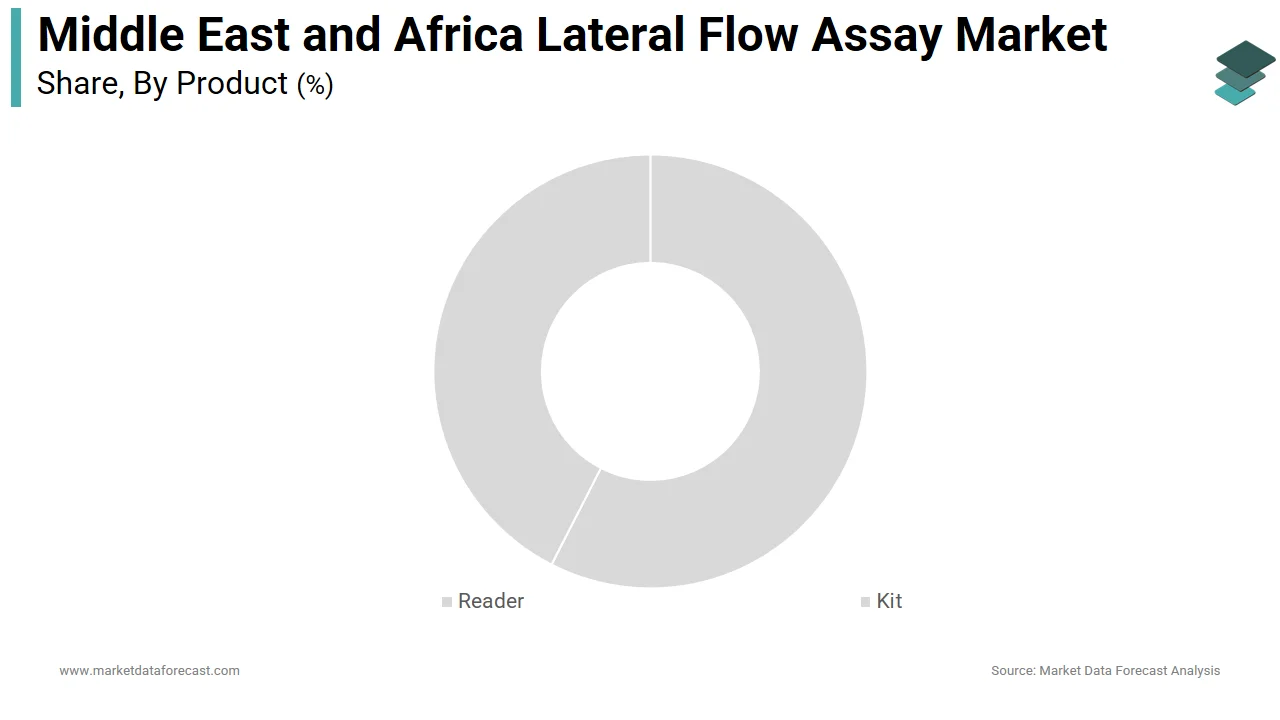
On the other side, the reader segment is projected to be the fastest-growing component and is expected to showcase a CAGR of 8.4% over the forecast period in this regional market owing to the increasing integration of digital health solutions and the need for quantitative results in clinical decision-making. While qualitative kits remain dominant, there is a rising demand for readers that can interpret faint lines accurately and transmit data to central servers. The expansion of smartphone-based readers and portable handheld devices is facilitating this growth by offering semi-quantitative analysis without the bulk of traditional laboratory equipment. According to the International Telecommunication Union, mobile connectivity in Africa is improving rapidly, enabling the use of connected diagnostic devices. Readers help eliminate subjective interpretation errors, which are common in visual readouts, especially in low-light conditions. Governments and NGOs are increasingly investing in digital surveillance systems that require data from readers to track disease trends in real time. The introduction of multiplex readers capable of detecting multiple analytes simultaneously is also gaining traction in urban hospitals. As healthcare systems modernize and seek to improve data accuracy, the adoption of readers is accelerating, particularly in private healthcare facilities and reference laboratories. This technological shift positions readers as a high-growth segment complementing the widespread use of basic kits.
By Application Insights
The clinical application segment led the market by holding the leading share of the regional market in 2025. The growth of the clinical segment in the regional market is attributed to the urgent need for rapid diagnosis of infectious diseases in patient care settings. Hospitals, clinics, and community health centers rely extensively on lateral flow assays for triaging patients and initiating timely treatment. The high prevalence of malaria, HIV, tuberculosis, and hepatitis in the region necessitates routine screening using these rapid tests. According to the Centers for Disease Control and Prevention, millions of clinical consultations in Africa involve rapid diagnostic testing to rule out or confirm infectious etiologies. The simplicity and speed of clinical lateral flow assays allow healthcare providers to make immediate decisions, reducing patient wait times and preventing disease transmission. Public health programs prioritize clinical testing to achieve elimination goals for diseases like malaria and lymphatic filariasis. The World Health Organization recommends lateral flow assays as the standard of care for fever cases in endemic areas, ensuring their widespread use in clinical practice. Additionally, the rise in non-communicable diseases is expanding the clinical application to include cardiac markers and diabetes screening. The established infrastructure for clinical testing and the continuous flow of patients ensure that this segment remains the largest consumer of lateral flow assays. Government policies mandating rapid testing before treatment further reinforce the dominance of the clinical application sector.
On the other end, the veterinary segment is emerging as the fastest-growing segment with a projected CAGR of 8.1% over the forecast period owing to the increasing commercialization of livestock farming and rising awareness of zoonotic diseases. Farmers and veterinarians are adopting rapid tests to monitor animal health and prevent outbreaks that can devastate herds and impact food security. According to the Food and Agriculture Organization of the United Nations, livestock contributes significantly to the agricultural GDP in many African nations, driving investment in animal health solutions. Diseases such as foot-and-mouth disease, avian influenza, and brucellosis are major concerns requiring quick diagnosis to implement control measures. Lateral flow assays offer a convenient way to screen animals in the field without transporting samples to distant laboratories. The growing pet ownership in urban areas of the Middle East is also contributing to demand for veterinary diagnostics, including tests for parvovirus and distemper. Government initiatives to improve livestock productivity and export compliance are further boosting the adoption of veterinary lateral flow tests. As the region seeks to enhance its agricultural output and protect public health from zoonotic threats, the veterinary segment is experiencing rapid expansion.
By End User Insights
The hospitals and clinics segment led the market by capturing the major share of the regional market in 2025 due to their role as primary points of care for the majority of the population. These facilities handle the highest volume of patient encounters, requiring immediate diagnostic results for triage and treatment decisions. The high prevalence of infectious diseases ensures a steady demand for rapid tests in emergency departments, outpatient clinics, and maternal health units. According to the World Health Organization, a significant proportion of healthcare visits in Africa are for febrile illnesses, which routinely require malaria and typhoid testing using lateral flow assays. Public hospitals in countries like Nigeria and Ethiopia are equipped with basic diagnostic kits to manage patient flow efficiently. Private clinics in urban centers also rely on these tests for quick turnarounds to satisfy patient expectations. The integration of lateral flow assays into standard operating procedures in hospitals ensures consistent usage. Government funding and donor support often target hospital-level diagnostics to strengthen health systems. The trust patients place in formal healthcare institutions further drives utilization. As healthcare access improves and hospital capacity expands, the volume of tests performed in these settings continues to grow, maintaining their position as the dominant end-user segment.
On the other end, the home care segment is anticipated to register a 11.4% CAGR over the forecast period in the regional market owing to increasing health literacy, urbanization, and the desire for privacy in testing for sensitive conditions. Consumers are increasingly purchasing over-the-counter lateral flow tests for pregnancy, ovulation, glucose monitoring, and increasingly for infectious diseases like HIV and malaria. The rise of e-commerce platforms in countries like South Africa and Kenya is making these tests more accessible to households. According to Statista, online health product sales in Africa are growing rapidly as internet penetration increases. Home testing offers convenience and confidentiality, which appeals to younger demographics and those stigmatized by certain conditions. The COVID-19 pandemic accelerated the acceptance of self-testing, normalizing the use of lateral flow assays at home. Manufacturers are developing user-friendly kits with clear instructions to support lay users. As disposable incomes rise in urban areas, the ability to pay for personal health monitoring tools is expanding. This shift towards decentralized health management is transforming the home care segment into a dynamic growth area for the lateral flow assay market.
COUNTRY-LEVEL ANALYSIS
Saudi Arabia Lateral Flow Assay Market Analysis
Saudi Arabia dominated the market by holding 21.4% of the regional market in 2025 due to its robust healthcare infrastructure and significant government investment in medical services. The Kingdom is undergoing a major transformation under Vision 2030, which prioritizes healthcare modernization and preventive medicine. The Ministry of Health has implemented extensive screening programs for infectious diseases and non-communicable conditions utilizing rapid diagnostic tools. According to the General Authority for Statistics, healthcare expenditure in Saudi Arabia has increased substantially, supporting the procurement of advanced diagnostic technologies. The presence of numerous private hospitals and clinics in major cities like Riyadh and Jeddah drives demand for high-quality lateral flow assays. The country also hosts large expatriate populations requiring routine health screenings for visa purposes, which boosts test volumes. Regulatory standards set by the Saudi Food and Drug Authority ensure the availability of reliable diagnostic products. The focus on digital health integration is encouraging the adoption of connected lateral flow readers. Saudi Arabia serves as a regional hub for medical distribution, influencing market trends in neighboring Gulf countries. The commitment to improving health outcomes and infrastructure sustainability positions the Kingdom as a leader in the regional diagnostic market.
South Africa Lateral Flow Assay Market Analysis
South Africa is estimated to account for a promising share of the regional market during the forecast period owing to a well-developed private healthcare sector and high disease burden. The country faces a dual burden of infectious diseases like HIV and TB alongside rising non-communicable diseases, driving diverse diagnostic needs. The National Department of Health reports that South Africa has the largest antiretroviral treatment program in the world, requiring millions of rapid HIV tests annually. Private hospitals and laboratories utilize advanced lateral flow assays for comprehensive patient care. According to the Medical Schemes Council, private healthcare spending remains high, supporting the adoption of premium diagnostic products. South Africa is also a manufacturing hub for pharmaceuticals and diagnostics in the region, enhancing local supply capabilities. Regulatory oversight by the South African Health Products Regulatory Authority ensures product quality and safety. The country serves as a gateway for international diagnostic companies entering the African market. Urbanization and health awareness in cities like Cape Town and Durban fuel demand for home care and clinical tests. Despite economic challenges, the strategic importance of health security maintains steady market growth. South Africa's advanced medical infrastructure and high testing volumes make it a critical market player.
COMPETITIVE LANDSCAPE
The Middle East and Africa Lateral Flow Assay Market features intense competition among multinational corporations, regional distributors, and emerging local manufacturers. Global leaders leverage established brand reputation and extensive product portfolios to dominate public sector tenders funded by international donors. Regional players compete through superior local knowledge, agile supply chains, and cost-effective pricing strategies tailored to specific country needs. Innovation in digital connectivity and climate-resilient designs serves as a key differentiator, attracting forward-thinking health ministries. Price sensitivity remains high in many markets, forcing companies to balance quality with affordability. Regulatory fragmentation across countries creates barriers favoring firms with strong compliance capabilities and local registration expertise. Supply chain reliability has become a critical competitive factor following recent global disruptions, prompting investments in regional warehousing and local production. Customer service and training support distinguish leading brands in environments with limited technical expertise. The competitive landscape is dynamic, with continuous product launches and strategic alliances shaping market access. Success requires adapting to diverse epidemiological profiles, economic conditions, and healthcare infrastructures across this vast and heterogeneous region.
KEY MARKET PLAYERS
The leading companies operating in the Middle East and Africa lateral flow assay market include:
- Alere Inc.
- Hoffmann-La Roche AG
- Danaher Corporation
- Siemens AG
- Becton, Dickinson and Company
- bioMérieux SA
- Johnson & Johnson
- Bio-Rad Laboratories Inc.
- Thermo Fisher Scientific Inc.
- Abbott Laboratories
- QIAGEN N.V.
- PerkinElmer Inc.
TOP PLAYERS IN THE MARKET
- Abbott Laboratories maintains a significant presence in the Middle East and Africa Lateral Flow Assay Market through its extensive portfolio of rapid diagnostic tests for infectious diseases. The company supplies millions of malaria and HIV test kits to public health programs across Sub-Saharan Africa, supporting national elimination goals. Recent actions include expanding manufacturing capacity in South Africa to improve regional supply chain resilience and reduce lead times. Abbott collaborates with ministries of health to train healthcare workers on proper test administration, ensuring accurate results. The company also invests in digital health integration, connecting its readers to national surveillance systems. These efforts enhance diagnostic accessibility and quality while strengthening Abbott’s role as a key partner in regional public health initiatives and disease control strategies across diverse healthcare settings.
- Hoffmann-La Roche Ltd contributes significantly to the Middle East and Africa Lateral Flow Assay Market by providing high-quality diagnostic solutions for HIV and tuberculosis management. The company supports large-scale screening programs through partnerships with global health organizations and local governments. Recent initiatives involve launching next-generation lateral flow readers with enhanced connectivity features to support real-time data reporting in remote areas. Roche focuses on capacity building by offering technical training and quality assurance support to laboratory networks. The company also adapts its products to withstand challenging environmental conditions, ensuring reliability in tropical climates. These strategic actions reinforce Roche’s commitment to improving diagnostic accuracy and strengthening health systems across the region through sustainable technology transfer and long-term collaboration.
- Siemens Healthineers AG plays a vital role in the Middle East and Africa Lateral Flow Assay Market by delivering advanced point-of-care testing solutions for both infectious and non-communicable diseases. The company provides comprehensive cardiac and diabetes monitoring kits that cater to rising chronic disease burdens in urban centers. Recent actions include establishing new distribution partnerships in Kenya and Nigeria to expand market reach and improve product availability. Siemens Healthineers integrates its lateral flow platforms with digital health ecosystems, enabling seamless data flow into electronic medical records. The company also conducts extensive user training programs to ensure optimal device utilization. These efforts demonstrate Siemens’ dedication to modernizing diagnostic infrastructure and supporting holistic healthcare delivery across diverse economic and geographic landscapes in the region.
TOP STRATEGIES USED BY KEY MARKET PARTICIPANTS
Key players employ localized manufacturing to mitigate supply chain disruptions and reduce costs. Companies form strategic partnerships with governments and NGOs to secure long-term procurement contracts. Digital integration connects assays to surveillance platforms, enhancing data utility. Extensive training programs build local capacity and ensure correct usage. Product adaptation for tropical climates improves reliability and performance. Diversification into non-communicable disease testing captures emerging opportunities. Regulatory alignment accelerates market entry across multiple countries. These strategies collectively strengthen market positions and address unique regional challenges effectively.
MARKET SEGMENTATION
This research report on the Middle East and Africa lateral flow assay market has been segmented and sub-segmented into the following categories:
By Product
- Reader
- Kit
By Application
- Clinical
- Veterinary
- Drug Development
- Food Safety
By Technique
- Competitive
- Multiplex
- Sandwich
By End User
- Hospitals and Clinics
- Home Care
- Diagnostic Laboratories
- Pharmaceutical and Biotechnology Companies
By Country
- KSA
- UAE
- Israel
- rest of GCC countries
- South Africa
- Ethiopia
- Kenya
- Egypt
- Sudan
- rest of Middle East and Africa