- Product Description Description
- Table of Contents TOC
- List of Table & Figure LOT
- Get Free Sample PDF Sample PDF
Market Size, 2025
$234.02 MnMarket Estimate, 2026
$284.83 MnMarket Forecast, 2034
$1371.80 MnCAGR, 2026–2034
21.71%Middle East and Africa Liquid Biopsy Market Size, Share & Growth Analysis (2025–2034)
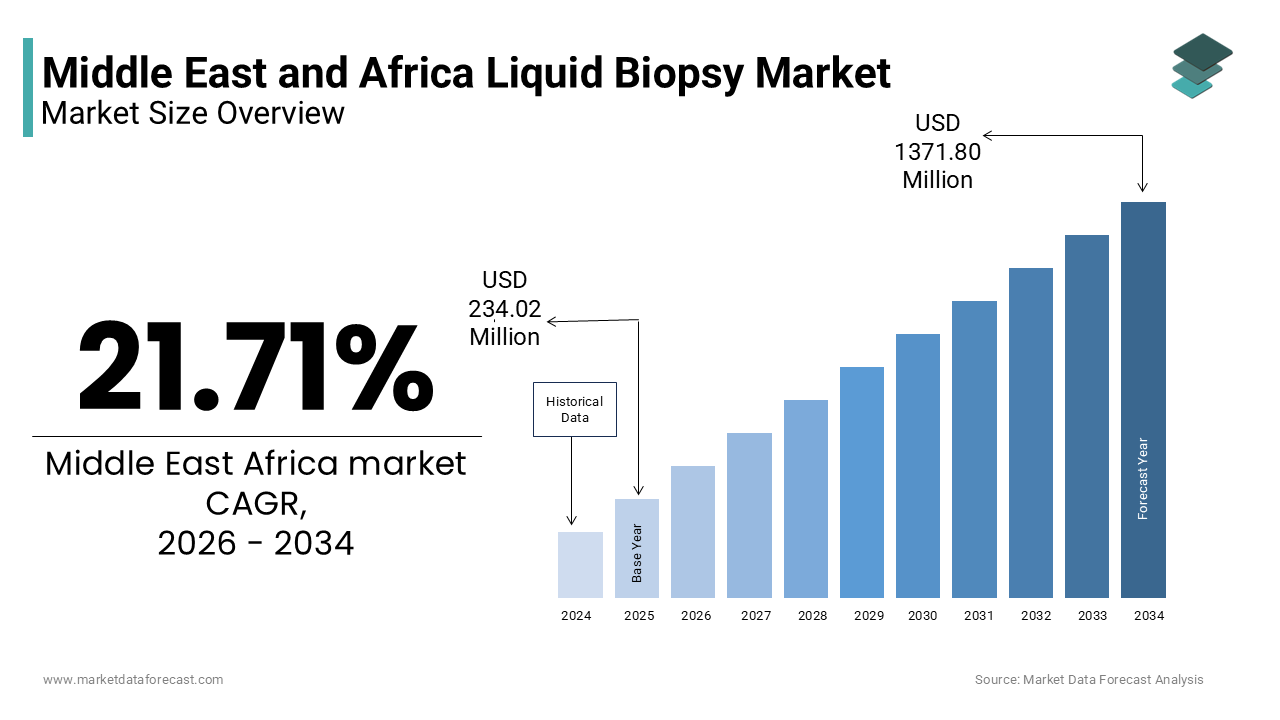
The Middle East and Africa liquid biopsy market was valued at USD 234.02 million in 2025, estimated at USD 284.83 million in 2026, and is projected to reach USD 1,371.80 million by 2034. Growing at a robust CAGR of 21.71% from 2026 to 2034, market expansion is fueled by high late-stage cancer presentation rates, uneven tissue pathology infrastructure, and sovereign-backed precision medicine investments.
- Market Valuation: USD 284.83 million (2026) to USD 1,371.80 million (2034).
- Compound Annual Growth Rate: 21.71% (2026–2034).
- Primary Growth Drivers: Late-stage cancer diagnostic demands, government precision medicine frameworks (e.g., UAE Genome Program, Saudi Vision 2030), and regional reference laboratory networks.
- Core Market Restraints: Regulatory fragmentation, high out-of-pocket costs, reimbursement uncertainty, and a shortage of specialized bioinformatics talent.
Middle East & Africa Liquid Biopsy Market Segmentation & Metrics (2026–2034)
| Category | Leading Segment Focus | Segment Overview & Key Details | Alternative / Growth Focus |
|---|---|---|---|
| By Cancer Type | Lung Cancer | Captured a 38.5% share in 2025 as the leading regional cause of cancer mortality and a primary driver for targeted mutation profiling. | Pancreatic cancer (fastest-growing at a 24.6% CAGR due to tissue biopsy challenges). |
| By Diagnostic Approach | Circulating Tumor DNA (ctDNA) | Held the majority share in 2025 backed by strong analytical validation, high NGS concordance (>94%), and companion diagnostics. | RNA in exosomes (fastest-growing at a 28.3% CAGR due to extreme environment stability). |
| By End User | Reference Laboratories | Captured a 58.9% share in 2025 by centralizing molecular diagnostic infrastructure to bypass local specialist shortages. | Academic & research centers (fastest-growing at a 22.8% CAGR via sovereign genomic funding). |
| By Country / Region | Saudi Arabia & UAE | Saudi Arabia leads the region (32.1% share in 2025) under Vision 2030, closely followed by the UAE (24.7% share) and Israel. | South Africa, Israel, Egypt, Kenya, Ethiopia, Sudan, and Rest of MEA. |
Industry Structure & Key Market Players
Competitive Landscape: The market features multinational diagnostic corporations scaling up molecular assays alongside regional reference laboratories and academic research hubs forming integrated hub-and-spoke testing networks.
Leading Companies Profiled: Janssen Diagnostics, Qiagen, Rarecells SAS, Silicon Biosystems, SRI International, Myriad Genetics, Natera, Personal Genome Diagnostics, Sysmex Inostics, Trovagene, Exosome Diagnostics, Exosome Sciences, and HansaBiomed OU.
Middle East and Africa Liquid Biopsy Market Size
The Middle East and Africa liquid biopsy market size was valued at USD 234.02 million in 2025 and is anticipated to reach USD 284.83 million in 2026 from USD 1371.80 million by 2034, growing at a CAGR of 21.71% during the forecast period from 2026 to 2034.
A liquid biopsy is a fast, simple, and safe test that uses a small sample of blood or other body fluid to find signs of cancer. Instead of cutting out a piece of a tumor with surgery, doctors take a liquid sample to look for floating bits of tumor cells or loose tumor DNA. This technology serves as a critical alternative to traditional tissue sampling in regions where surgical infrastructure remains unevenly distributed across vast geographic territories. According to the World Health Organization, the international health body projected that global cancer cases will increase by approximately 77% by 2050, accelerating the continental adoption of minimally invasive blood-based screening panels across high-burden healthcare jurisdictions. As per the World Health Organization Regional Office for Africa, the regional authority recorded approximately 1.1 million new cancer cases annually across the African continent, triggering a severe deficit in conventional pathology and histological infrastructure. The Gulf Cooperation Council health authorities have prioritized precision medicine within national vision frameworks allocating substantial funding toward genomic infrastructure that supports liquid biopsy integration. Unlike mature markets driven primarily by therapeutic monitoring, adoption in this region is fundamentally shaped by access gaps and late stage presentation patterns where noninvasive testing offers immediate clinical utility. Understanding this market requires analyzing healthcare system disparities and epidemiological transitions rather than assuming uniform technological readiness across diverse national contexts.
MARKET DRIVERS
Late Stage Cancer Presentation Creates Immediate Diagnostic Utility
The rising prevalence of advanced-stage cancer presentations across the region creates an urgent clinical need for rapid, non-invasive diagnostic solutions that guide timely treatment decisions and ultimately drive the growth of the Middle East and Africa liquid biopsy market. According to the World Health Organization, late cancer diagnosis is a major contributor to high mortality rates across the region, boosting the commercial rollout of liquid biopsy collection tubes and biomarker-based testing setups to optimize therapeutic timing. As per the African Organisation for Research and Training in Cancer, clinical infrastructure constraints limit early cancer detection, accelerating regional health partnerships that scale up genetic biomarker distribution networks and community oncology tracking. According to the Ministry of Health and Population of Egypt, national oncology frameworks are expanding biomarker-based surveillance and risk stratification to optimize access to locoregional and systemic therapies for advanced hepatocellular carcinoma patients. This epidemiological reality transforms liquid biopsy from optional convenience to essential diagnostic bridge enabling treatment decisions that would otherwise be delayed indefinitely. Late presentation patterns are structural features of regional healthcare systems ensuring sustained demand independent of economic development trajectories or elective screening adoption rates.
Government Precision Medicine Initiatives Accelerate Infrastructure Development
Government precision medicine initiatives across the region are rapidly accelerating infrastructure development, which further propels the Middle East and Africa liquid biopsy market. These programs fund genomic sequencing networks and centralized molecular laboratories necessary for liquid biopsy integration. According to the UAE Genome Program, Emirati authorities are mapping over 1 million national genomes to enhance regional precision medicine pipelines and expand integrated public biobanking datasets. As per Qatar’s National Health Strategy, public health administrators are building integrated health systems centered on clinical excellence, innovation, and evidence-based oncology models to optimize national patient-reported outcome measures. According to the Presidential Initiative for Cancer Screening and Early Detection in Egypt, national campaign directors are deploying multi-sectoral public funding frameworks to integrate universal medical screening and diagnostic diagnostic protocols across vulnerable communities. These sovereign investments de risk private sector entry by providing validated reference laboratories regulatory frameworks and trained personnel that commercial providers can leverage. Unlike Western markets, adoption in public health systems does not depend on reimbursement negotiations. Instead, government-backed initiatives create guaranteed demand channels and institutional learning curves that accelerate technology normalization.
MARKET RESTRAINTS
Fragmented Regulatory Pathways Delay Commercial Authorization
Navigating highly inconsistent country-specific registration protocols and varied clinical validation requirements is a major constraint to the Middle East and Africa liquid biopsy market. This fragmentation across the Middle East and Africa delays commercial authorization for liquid biopsy developers. According to the World Health Organization, the lack of coordinated medical regulatory infrastructure in low- and middle-income African countries delays patient access to critical healthcare commodities, pushing regional health networks to implement reliance models and harmonized medical device classification rules. As per the Saudi Food and Drug Authority, international diagnostic manufacturers must submit a complete technical documentation file under the mandatory MDMA 2 pathway to obtain regulatory market authorization for medical devices and in vitro diagnostics within the Kingdom. Absence of mutual recognition agreements means each country demands independent clinical performance studies even when identical assays have extensive global evidence bases. This regulatory fragmentation increases commercialization costs. Manufacturers must prioritize larger markets accepting delayed access elsewhere creating uneven availability that undermines regional public health objectives and discourages investment in smaller territories.
Reimbursement Uncertainty Limits Routine Clinical Integration
Reimbursement uncertainty severely limits routine clinical integration across the region, which restricts the expansion of the Middle East and Africa liquid biopsy market. A lack of standardized public health coverage and high out-of-pocket costs restrict liquid biopsy adoption to affluent patient segments. According to the World Bank, high out-of-pocket medical expenditure across sub-Saharan Africa correlates directly with household financial vulnerability, accelerating the regional demand for affordable clinical diagnostics and coordinated health financing reforms. As per the Council for Medical Schemes in South Africa, statutory regulations mandate that all private medical aid schemes provide full financial coverage for the diagnosis and medical management of a defined list of 271 Prescribed Minimum Benefit conditions. According to the Council of Health Insurance in Saudi Arabia, health administrators are enforcing the mandatory Saudi Billing System Coding Standards via the NPHIES platform to standardize hospital claims processing for all local laboratory and molecular pathology procedures. Without predictable reimbursement pathways, liquid biopsy remains an episodic luxury rather than a standardized care component. This limits volume growth despite the clear clinical need.
MARKET OPPORTUNITIES
Regional Reference Laboratory Networks Enable Scalable Access
The expansion of regional reference laboratory networks creates a major opportunity for the Middle East and Africa liquid biopsy market. This growth enables scalable access to liquid biopsy testing by centralizing advanced genomic infrastructure and overcoming local hospital resource constraints. According to the African Society for Laboratory Medicine, national health ministries are standardizing molecular diagnostic infrastructure and biospecimen repository networks across regional diagnostic hubs to scale up universal diagnostic equity. As per the West African Health Organization, regional health directors are harmonizing medical laboratory regulatory standards and biosafety framework training guidelines to reinforce pandemic surveillance networks across member states. According to the Gulf Health Council, member states are establishing joint clinical training modules and standardized reference laboratory guidelines to optimize cross-border technical competencies in complex genomic sequencing. These hub and spoke models overcome individual country limitations by pooling technical expertise equipment and bioinformatics capacity. Private operators have expanded pan African networks covering numerous countries creating commercial distribution channels that manufacturers can leverage without building country specific infrastructure. This networked approach transforms geographic fragmentation from barrier into opportunity for coordinated regional service delivery.
Infectious Disease Co Monitoring Expands Clinical Utility Beyond Oncology
Infectious disease co-monitoring expands the clinical utility of liquid biopsy platforms beyond oncology in the region, which contributes to the growth of the Middle East and Africa liquid biopsy market. This approach utilizes circulating microbial DNA sequencing to concurrently manage opportunistic infections in immunocompromised cancer patients. According to the Africa Centres for Disease Control and Prevention, public health planners are scaling up integrated disease surveillance systems and multiplex diagnostic testing platforms to concurrently track high-burden viral and bacterial pathogens. As per the King Abdullah International Medical Research Center, clinical researchers are validating cell-free DNA fragments and advanced molecular metagenomic sequencing techniques to improve early diagnostic accuracy for severe acute respiratory infections. The multi disease applicability justifies capital investment in regions where oncology volumes alone cannot sustain standalone liquid biopsy programs. Manufacturers developing multiplexed panels targeting both neoplastic and infectious etiologies can access broader funding streams from global health donors and national communicable disease budgets.
MARKET CHALLENGES
Pre Analytical Variable Management Compromises Result Reliability
Inconsistent pre-analytical variable management severely compromises liquid biopsy result reliability across the region, which inhibits the growth of the Middle East and Africa liquid biopsy market. This occurs because inadequate cold chain logistics and unstandardized sample collection protocols lead to ambient degradation and false-negative outcomes. According to the International Organization for Standardization, clinical laboratories must follow standardized pre-analytical requirements for handling, isolating, and storing human specimen materials to prevent nucleic acid degradation prior to molecular testing. As per the College of American Pathologists, international medical laboratories utilize accredited proficiency testing and external quality assessment programs to validate assay precision, reduce diagnostic variability, and satisfy global ISO compliance criteria. High ambient heat extended transit distances and variable electricity supply create environmental challenges absent in temperate climates where most validation studies originated. False negative rates may undermine clinical confidence and perpetuate reliance on inferior diagnostic alternatives. This happens without region-specific stability data and adapted workflows, despite superior theoretical assay sensitivity.
Bioinformatics Workforce Shortage Bottlenecks Data Interpretation
A severe bioinformatics workforce shortage severely bottlenecks liquid biopsy data interpretation, which limits the expansion of the Middle East and Africa market. This scarcity creates a critical operational drag, as the rapid generation of genomic sequencing data far outpaces the regional capacity to analyze and translate complex mutations into actionable clinical reports. According to the Human Heredity and Health in Africa initiative, pan-continental consortium directors are expanding specialized bioinformatics training modules and high-performance computing capacity to cultivate an independent community of African genomic data specialists. As per the Saudi Commission for Health Specialties, the statutory authority regulates professional licensing for genetic counseling practitioners by enforcing strict educational qualifications, minimum clinical training hours, and mandatory certification exams. Interpretation complexity increases as panels expand beyond hotspot mutations to comprehensive genomic profiling requiring expertise in variant classification artifact filtering and clinical correlation. Without parallel investment in human capital alongside technology procurement, liquid biopsy generates uninterpretable data volumes. This frustrates clinicians and delays treatment decisions, negating the speed advantages inherent to blood-based testing.
REPORT COVERAGE
| REPORT METRIC | DETAILS |
| Market Size Available | 2025 to 2034 |
| Base Year | 2025 |
| Forecast Period | 2026 to 2034 |
| CAGR | 21.71% |
| Segments Covered | By Cancer Type, Diagnostic Approach, End Users and Region. |
| Various Analyses Covered | Global, Regional & Country Level Analysis, Segment-Level Analysis, DROC, PESTLE Analysis, Porter’s Five Forces Analysis, Competitive Landscape, Analyst Overview of Investment Opportunities |
| Regions Covered | KSA, UAE, Israel, the rest of GCC countries, South Africa, Ethiopia, Kenya, Egypt, Sudan, and Rest of MEA. |
| Market Leaders Profiled | Janssen Diagnostics, Qiagen, Rarecells SAS, Silicon Biosystems, SRI International, Myriad Genetics, Natera, Personal Genome Diagnostics, Sysmex Inostics, Trovagene, Exosome Diagnostics, Exosome Sciences, and HansaBiomed OU. |
SEGMENTAL ANALYSIS
By Cancer Type Insights
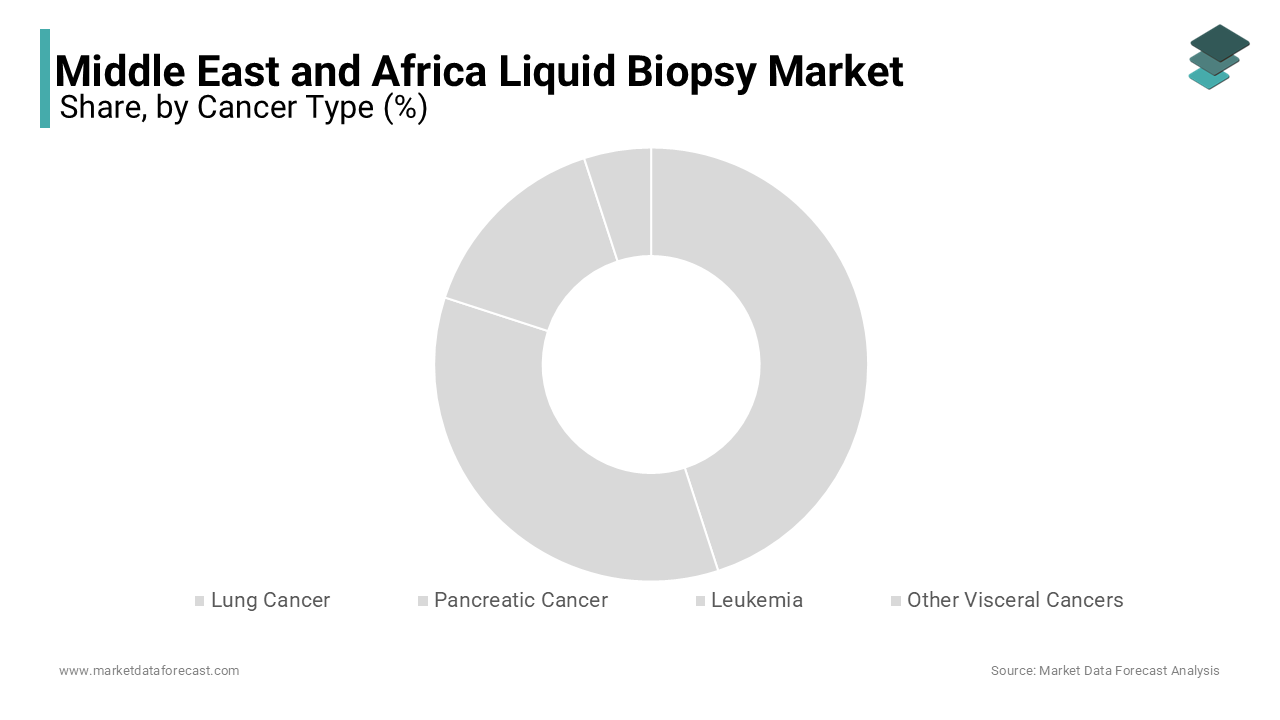
The lung cancer segment dominated the Middle East and Africa liquid biopsy market and accounted for a 38.5% share in 2025. This dominance of the segment was driven by its position as the leading cause of cancer mortality across the region. According to the World Health Organization, regional healthcare strategies emphasize strengthening early cancer diagnosis frameworks and upgrading local laboratories to handle the rising burden of non-communicable diseases. As per the Saudi Cancer Registry, retrospective epidemiological reviews indicate that the majority of clinical lung cancer cases are diagnosed at late or advanced stages, driving the utilization of targetable mutation profiling tools. According to the National Cancer Registry of South Africa, the state registry monitors age-standardised cancer incidence trends and demographic characteristics to guide national oncological resource planning and multi-sectoral health diagnostics. This epidemiological reality establishes lung cancer as foundational volume driver independent of screening program maturity or early detection infrastructure development.
Established clinical guidelines increasingly mandate the integration of molecular testing in lung cancer management. As a result, regional healthcare systems in the Middle East and Africa are adopting liquid biopsy as a standard first-line tool to identify actionable oncogenic drivers. According to the Gulf Health Council, clinical advisory boards are coordinating standardized regional oncology frameworks to align patient care selection with international genomic medicine breakthroughs and targeted therapeutics. As per the African Organisation for Research and Training in Cancer, pan-continental healthcare experts prioritize cultural sensitivity, professional competency training, and upgraded infrastructure to address historical pathology resource constraints. According to the Ministry of Health of Kenya, national cancer control strategies prioritize the deployment of sustainable public funding to reinforce essential diagnostic laboratory screening systems and primary oncology care access. These guideline integrations transform liquid biopsy from optional adjunct to mandatory standard creating predictable demand streams anchored in regulatory and reimbursement frameworks rather than physician preference alone.
The pancreatic cancer liquid biopsy segment is predicted to witness the highest CAGR of 24.6% between 2026 and 2034 due to disease characteristics that make traditional tissue acquisition exceptionally challenging. As per the World Health Organization, public health agencies are accelerating global non-communicable disease control frameworks to reduce premature cancer mortality rates and improve overall survival metrics across low-resource settings. According to King Faisal Specialist Hospital and Research Centre, clinical teams are utilizing advanced molecular techniques on minimal tissue collections to identify severe gastrointestinal tumor profiles and customize targetable protocols. As per the South African Gastroenterology Society, professional medical bodies sponsor advanced training fellowships in specialized endoscopy and gastroenterological care to broaden geographic access to clinical diagnostics. This confluence of technical difficulty geographic limitation and therapeutic urgency positions pancreatic cancer as highest growth opportunity despite lower absolute incidence compared to lung or breast cancers.
Emerging biomarker validation is enabling early detection applications for pancreatic cancer. Specifically, liquid biopsy platforms leveraging novel circulating tumor DNA (ctDNA) and exosome panels offer a vital tool to catch this traditionally late-diagnosed malignancy at a resectable stage. As per research published in Nature Communications, multi-omic blood screening methodologies leverage distinct plasma protein patterns and cell-free DNA methylation configurations to track structural markers of gastrointestinal malignancies. According to the Tel Aviv Sourasky Medical Center, academic laboratory groups execute prospective medical screening protocols and comprehensive biobanking initiatives to identify risk factors associated with localized disease progression. These validation efforts expand addressable market from late stage therapeutic guidance to early detection and surveillance multiplying potential test volumes per patient while addressing disease with historically dismal outcomes.
By Diagnostic Approach Insights
In 2025, the circulating tumor DNA segment held the majority share of the Middle East and Africa liquid biopsy market because of superior analytical validation and clinical utility evidence compared to alternative analytes. According to the College of American Pathologists proficiency testing data, clinical laboratories performing next-generation sequencing on cell-free DNA achieved greater than 94% concordance for the detection of somatic variants. As per the International Organization for Standardization, standard guidelines under ISO technical committees establish international quality frameworks for molecular in vitro diagnostic examinations to harmonize pre-analytical and analytical blood specimen processes. According to the United Arab Emirates Ministry of Health and Prevention, regulatory protocols for liquid biopsy and companion diagnostics support the rapid clinical integration of next-generation sequencing assays within hospital networks. Next generation sequencing platform manufacturers prioritized ctDNA panel optimization for Middle Eastern population genetics improving variant detection accuracy and reducing false negatives. This technological ecosystem maturity creates self reinforcing adoption cycle where physician familiarity guideline integration and payer acceptance all align around ctDNA as default liquid biopsy modality.
Robust therapeutic companion diagnostic linkages directly drive the clinical utility of circulating tumor DNA (ctDNA) assays, cementing this segment's dominance. Oncologists increasingly rely on blood-based genomic profiling to match patients with approved targeted therapies. According to the United States Food and Drug Administration, dozens of oncology targeted therapies are approved alongside specific plasma-based circulating tumor DNA companion diagnostic assays to guide therapeutic selection. As per the Gulf Cooperation Council health authorities, precision medicine frameworks mandate the identification of actionable mutations through validated molecular diagnostics to clear targeted therapies for non-small cell lung cancer patients. These payer and regulatory linkages transform ctDNA from discretionary test to reimbursed standard ensuring sustained utilization tied directly to treatment decisions rather than exploratory research applications.
The RNA in exosomes segment is estimated to register the fastest CAGR of 28.3% during the forecast period, owing to inherent stability advantages critical for Middle East and Africa logistics challenges. According to the Journal of Extracellular Vesicles, the isolation and analysis of molecular cargo from biofluids require optimized pre-analytical conditions to prevent the degradation of extracellular vesicle RNA by ambient nucleases. As per the African Society for Laboratory Medicine, continental diagnostic standardization initiatives focus on reducing sample rejection rates by implementing robust training and quality control measures across sub-Saharan laboratories. According to the King Abdullah International Medical Research Center, regional clinical research initiatives investigate cellular and molecular stability profiles to improve sample transport logistics under extreme environmental conditions. This environmental resilience addresses fundamental infrastructure limitations that constrain other liquid biopsy modalities making exosomal RNA uniquely suited for decentralized testing networks spanning vast geographic territories with variable logistics reliability.
Multi-omic integration vastly expands the diagnostic information content of the RNA in exosomes segment. This allows clinicians to simultaneously analyze exosomal RNA profiles alongside cell-free DNA to capture a more complete, real-time snapshot of tumor heterogeneity and treatment resistance. According to Nature Biotechnology publications, multi-omic liquid biopsy frameworks integrating plasma proteins, mutations, and structural biomarkers demonstrate high diagnostic sensitivity and specificity for the early detection of pancreatic malignancies. As per the Weizmann Institute of Science, transcriptomic and genomic profiling of tumor microenvironments reveals distinct immune evasion patterns that correlate with patient response to immune checkpoint inhibition therapies. This expanded biological signal beyond genetic mutations enables functional assessment of tumor activity microenvironment interactions and therapeutic vulnerability creating differentiated value proposition justifying premium positioning and accelerated adoption.
By End Users Insights
The reference laboratories segment led the Middle East and Africa liquid biopsy market and captured a 58.9% share in 2025. This leading position of the segment was attributed to structural necessity given severe specialist maldistribution across the region. According to the World Health Organization, infrastructural limitations and specialized workforce shortages in pathology across parts of Africa necessitate the development of centralized diagnostic networks to ensure accurate interpretation of advanced molecular assays. As per the Pan African Clinical Trials Registry, clinical tracking frameworks monitor registered oncology trials across sub-Saharan Africa to support the validation and clinical evaluation of non-invasive circulating tumor DNA methodologies. According to Cerba Lancet Africa corporate updates, centralized laboratory facilities expand regional access to next-generation sequencing and advanced oncology biomarkers across multiple sub-Saharan markets. This hub and spoke model concentrates expensive instrumentation bioinformatics expertise and quality systems in viable locations while extending access through collection networks that would be economically unfeasible at individual hospital level.
Economies of scale enable significant cost reduction and quality standardization within the reference laboratories segment. This allows these centralized facilities to lower per-sample sequencing costs and implement rigid quality control protocols across the region. According to the Saudi Ministry of Health, specialized reference laboratories utilize volume consolidation to lower the operating costs of advanced genetic and molecular testing relative to smaller clinical programs. As per the College of American Pathologists, clinical laboratories participating in external proficiency testing programs must satisfy precise performance criteria to maintain global quality validation standards. These scale efficiencies create sustainable business models enabling continued technology investment and geographic expansion that fragmented hospital based testing cannot replicate.
The academic and research centers segment is anticipated to witness the fastest CAGR of 22.8% from 2026 to 2034. This swift expansion of the segment is fuelled by sovereign wealth investments in genomics research infrastructure across Gulf Cooperation Council states. According to Saudi Arabia's Research, Development and Innovation Authority, national research investment frameworks prioritize biomedical infrastructure modernization and genetic testing platforms across university clinical hospital networks. As per the Qatar National Research Fund, competitive funding allocations for oncology-focused proposals support the local clinical acquisition and technological validation of advanced molecular diagnostics. According to the United Arab Emirates Ministry of Education, targeted government research funding supports university core infrastructure projects to build specialized laboratories for investigator-initiated clinical trials. These directed investments create installed base that subsequently transitions to clinical service provision as validation completes driving sustained growth beyond initial capital expenditure phase.
Surging clinical trial activity within academic and research centers generates vital local validation data and fosters physician familiarity. This positions these institutions as critical hubs for the early adoption and standardization of liquid biopsy assays. According to the ClinicalTrials.gov registry, an expanding volume of active clinical trials evaluating liquid biopsy modalities across global markets generates the real-world evidence required for regional guideline integration. As per the African Organisation for Research and Training in Cancer, multicenter collaborative studies build comprehensive regional datasets to capture population-specific genetic diversity absent from historical Western cohorts. This research activity simultaneously validates technology builds physician comfort and generates publications that influence clinical guidelines creating virtuous cycle accelerating translation from academic discovery to routine clinical practice.
COUNTRY ANALYSIS
Kingdom of Saudi Arabia Liquid Biopsy Market Analysis
The Kingdom of Saudi Arabia was the top performer in the Middle East and Africa liquid biopsy market and occupied a 32.1% share in 2025. This supremacy of the Saudi market was propelled by unprecedented government commitment to precision medicine infrastructure under the Vision 2030 transformation agenda. Government-led development defines the market, leveraging public capital to mitigate private sector risk and build foundational infrastructure for the Gulf. According to the Research Development and Innovation Authority of Saudi Arabia, national strategic frameworks are driving deep-tech financial commitments into biotechnology, genomic research, and health innovation to position the Kingdom as a global leader in precision medicine. As per the Saudi Genome Program, national laboratory teams are building a comprehensive genetic database for the Saudi community to identify regional pathogenic variants and reduce the prevalence of hereditary diseases. According to King Faisal Specialist Hospital and Research Centre, the tertiary medical institution implemented advanced clinical liquid biopsy technology utilizing a small blood sample to identify tumor biomarkers across cancer-related genes. This sovereign backed ecosystem creates gravitational pull attracting global manufacturers and establishing standards that propagate across region.
United Arab Emirates Liquid Biopsy Market Analysis
The United Arab Emirates was positioned second in the Middle East and Africa liquid biopsy market and secured a share of 24.7% in 2025. It serves as a primary entry point for novel technologies and a regulatory innovation hub for the region. The nation's market standing relies on forward-thinking regulatory frameworks and a strategic alignment that bridges Western developers and regional territories. As per the Ministry of Health and Prevention of the United Arab Emirates, federal health administrators are prioritizing expedited evaluation pathways for advanced research reagents, single-cell genomics, and advanced liquid biopsy workflows. According to the Abu Dhabi Department of Health, the regional authority coordinates with federal and local health bodies to integrate licensing procedures, streamline clinical facility setups, and eliminate administrative commercialization delays. As per the UAE Genome Program, scientific teams are collecting nationwide biospecimens at the Abu Dhabi Biobank to establish an advanced genomic reference map for the local population to support personalized clinical outcomes. This innovation friendly environment accelerates technology diffusion while establishing regulatory templates adopted by neighboring jurisdictions.
Israel Liquid Biopsy Market Analysis
Israel continues to be a major player in the Middle East and Africa liquid biopsy market, due to its disproportionate innovation output relative to population size, driven by a dense academic-industry collaboration ecosystem. The country features a tech-forward, export-driven market that leverages local consumers to test products before international rollout. According to the Israel Innovation Authority, national financing initiatives prioritize public-private co-investments in advanced artificial intelligence consortiums and personalized biomedical databases to advance precision diagnostics. As per Sheba Medical Center, the clinical research hub is accelerating international oncology pipelines by expanding patient access to cutting-edge cell therapies, genomic profiling, and customized immunotherapies. According to Clalit Health Services, the healthcare organization leverages comprehensive longitudinal electronic medical record databases to conduct real-world evidence studies on diagnostic efficacy and population health outcomes. This innovation density creates spillover effects benefiting broader region through technology transfer and collaborative research partnerships.
South Africa Liquid Biopsy Market Analysis
South Africa holds a significant share of the Middle East and Africa liquid biopsy market. It functions as the most mature landscape in sub-Saharan Africa, driven by a sophisticated private healthcare sector and research infrastructure. The nation's market topology is inherently bifurcated, balancing private sector-driven innovation against public sector mandates for equitable access achieved through strategic collaborations. As per the Council for Medical Schemes in South Africa, statutory guidelines require all local medical schemes to fund the diagnosis, medical management, and therapy costs of a defined list of 271 Prescribed Minimum Benefit conditions. According to Lancet Laboratories, private pathology networks across sub-Saharan Africa are deploying automated workflows and comprehensive genetic arrays to optimize regional clinical diagnostic volume. As per the National Health Laboratory Service of South Africa, the state utility coordinates national pathology training and laboratory networks to support essential medical diagnostic equity throughout the public healthcare sector. University of Cape Town and Witwatersrand operate liquid biopsy research cores training next generation specialists serving entire southern African region. This private public partnership model creates scalable template replicable in other middle income African nations.
COMPETITIVE LANDSCAPE
Competition in the Middle East and Africa liquid biopsy market is characterized by extreme heterogeneity where multinational corporations compete alongside emerging local players across vastly different regulatory and economic environments. Established diagnostics companies leverage global technology portfolios but face adaptation challenges requiring significant localization investments to address infrastructure gaps and population specific needs. Regional reference laboratories function as both customers and competitors developing proprietary assays that challenge multinational dominance in specific indications or geographies. Government backed initiatives in Gulf states create protected markets favoring partners willing to commit to technology transfer and local capacity building over pure commercial arrangements. Price sensitivity in sub Saharan Africa enables lower cost alternatives from Asian manufacturers to gain traction despite inferior performance characteristics. Regulatory fragmentation prevents unified competitive strategies forcing country by country approaches that favor well resourced incumbents. Academic institutions increasingly develop indigenous platforms addressing neglected diseases creating niche competition outside mainstream oncology focus. Future competitive advantage will derive from integrated solutions combining technology training logistics and regulatory navigation capabilities rather than standalone product superiority. Winners will be those treating regional diversity as opportunity for differentiated value creation rather than obstacle to standardized global deployment.
KEY MARKET PLAYERS
Some promising companies operating in the MEA Liquid Biopsy Market include
- Janssen Diagnostics
- Qiagen
- Rarecells SAS
- Silicon Biosystems
- SRI International
- Myriad Genetics
- Natera
- Personal Genome Diagnostics
- Sysmex Inostics
- Trovagene
- Exosome Diagnostics
- Exosome Sciences
- HansaBiomed OU
Top Players in the Middle East and Africa Liquid Biopsy Market
Roche Holding AG
Roche Holding AG maintains significant involvement across Middle East and Africa through comprehensive liquid biopsy portfolio spanning oncology and infectious disease applications tailored to regional epidemiological priorities. Roche collaborated with Gulf Cooperation Council health authorities to validate circulating tumor DNA assays for population specific genetic variants improving diagnostic accuracy for indigenous populations. Manufacturing facility in Dubai serves as regional distribution hub ensuring supply chain resilience amid logistics challenges. These localized investments strengthen clinical integration beyond mere product commercialization.
Illumina Inc
Illumina Inc contributes foundational sequencing infrastructure powering majority of liquid biopsy testing across Middle East and Africa through Next Generation Sequencing platform dominance in reference laboratories. Illumina partnered with King Faisal Specialist Hospital and Weizmann Institute establishing centers of excellence that train regional specialists while generating local validation data. Service center expansion in Riyadh and Johannesburg reduced equipment downtime improving laboratory operational reliability. These ecosystem development efforts create sustainable adoption foundations beyond instrument sales.
Thermo Fisher Scientific
Thermo Fisher Scientific strengthens Middle East and Africa liquid biopsy market presence through integrated sample preparation and analysis solutions addressing pre analytical challenges unique to region. Thermo Fisher established regional technical support teams in Dubai and Nairobi providing on site troubleshooting reducing assay failure rates. Collaboration with African Society for Laboratory Medicine developed standardized operating procedures adapted to resource constrained settings. Recent regulatory approvals in UAE and Saudi Arabia accelerated market access for novel ctDNA panels. Manufacturing partnership in Egypt enables local production of consumables reducing import dependency and costs. These adaptations demonstrate commitment to regional specificity rather than generic global strategies.
Top Strategies Used by Key Market Participants
Key players prioritize localization strategies adapting products to regional environmental and infrastructure constraints rather than deploying unmodified global offerings. Companies establish reference laboratory partnerships concentrating technical expertise where specialist workforce remains scarce enabling quality assurance and training simultaneously. Regulatory engagement focuses on building local validation datasets addressing population specific genetic diversity absent from Western studies supporting approval pathways. Supply chain resilience investments include regional distribution hubs and temperature stable formulations overcoming logistics challenges inherent to vast geographic territories. Academic collaborations generate indigenous evidence while training next generation specialists creating sustainable adoption ecosystems. Public private partnerships align commercial objectives with national health priorities securing government backing and reimbursement pathways. Multi disease platform development expands addressable market beyond oncology leveraging shared infrastructure for infectious disease applications improving cost effectiveness. Tiered pricing models accommodate varying economic capacities across heterogeneous markets ensuring broader access. These interconnected strategies create defensible positions through ecosystem integration rather than product differentiation alone.
MARKET SEGMENTATION
This research report on the North American Liquid Biopsy Market has segmented and sub-segmented the market into the following categories:
By Cancer Type
- Lung Cancer
- Pancreatic Cancer
- Leukemia
- Other Visceral Cancers
By Diagnostic Approach
- Circulating Tumour DNA (ctDNA)
- RNA in exosomes
- Circulating Tumour Cells (CTC)
- Extra-Cellular Vesicles
By End-Users
- Reference Laboratories
- Academic and Research Centers
- Hospital/Physician Laboratories
- Other End Users
By Country
- UK
- France
- Spain
- Germany
- Italy
- Russia
- Sweden
- Denmark
- Switzerland
- Netherlands
- Turkey
- Czech Republic
- Rest of Europe