- Product Description Description
- Table of Contents TOC
- List of Table & Figure LOT
- Get Free Sample PDF Sample PDF
Market Size, 2025
$0.29 BnMarket Estimate, 2026
$0.31 BnMarket Forecast, 2034
$0.53 BnCAGR, 2026–2034
6.95%Middle East and Africa Multiplex Assays Market Size, Growth, Trends & Forecast (2026–2034)
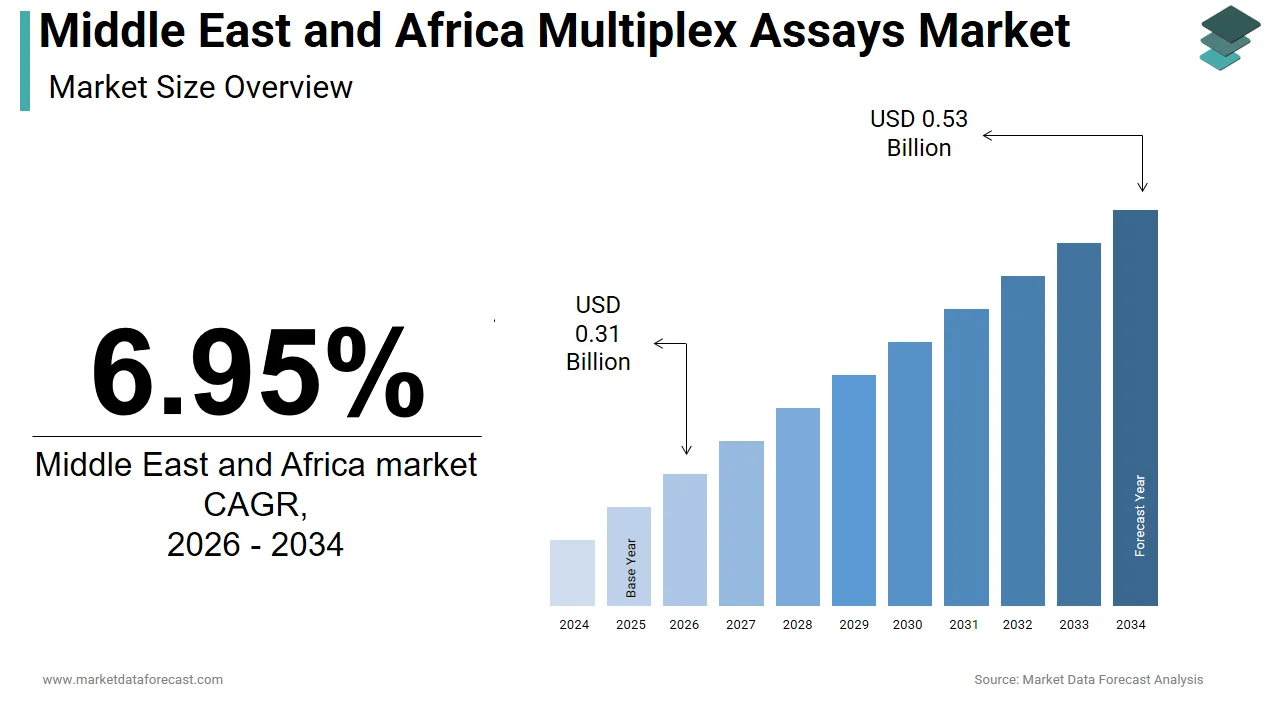
The Middle East and Africa multiplex assays market size was valued at USD 0.29 billion in 2025, is estimated to reach USD 0.31 billion in 2026, and is projected to scale up to USD 0.53 billion by 2034, registering a compound annual growth rate (CAGR) of 6.95% during the forecast period from 2026 to 2034. Driven by the rising burden of infectious diseases and metabolic disorders, aggressive government infrastructure modernization, and an industry shift toward precision medicine, the regional market continues to expand steadily.
Key Executive Metrics (At-a-Glance)
- 2025 Base Valuation: USD 0.29 Billion
- 2026 Current Valuation: USD 0.31 Billion
- 2034 Forecast Valuation: USD 0.53 Billion
- Compound Annual Growth Rate (CAGR): 6.95% (2026–2034)
- Dominant Product Segment: Kits and Reagents (largest share owing to recurring, high-volume consumption and razor-and-blade distribution models)
- Fastest-Growing Product Segment: Panels (projected at a rapid 14.2% CAGR due to clinical demand for comprehensive syndromic screening)
- Dominant Technology Segment: Polymerase Chain Reaction (PCR) (holding the majority share backed by high sensitivity, specificity, and established lab infrastructure)
- Fastest-Growing Technology Segment: Multiplex Arrays (projected at a 16.5% CAGR driven by precision medicine and high-throughput multi-omic profiling)
- Dominant Regional Hubs: Gulf Cooperation Council (GCC) states (KSA and UAE) and South Africa (leading through heavy healthcare investments and modernization programs)
Core Market Drivers
- Escalating Burden of Infectious & Chronic Diseases: High regional prevalence of malaria, tuberculosis, HIV, and diabetes requiring simultaneous, multi-target diagnostics.
- Government Initiatives & Modernization: Large-scale transformations like Saudi Vision 2030 and Africa CDC programs upgrading laboratory networks and digital health capabilities.
Primary Market Restraints & Challenges
- High Capital Costs & Limited Reimbursement: Expensive equipment and proprietary consumables coupled with sparse insurance coverage for multiplex testing.
- Logistical Bottlenecks & Skill Shortages: Severe cold-chain requirements, import/customs delays, and an acute deficit of specialized molecular laboratory professionals.
Middle East and Africa Multiplex Assays Market Segmentation Breakdown
| Segment Category | Leading Sub-Segment (Largest) | Fastest-Growing Sub-Segment |
|---|---|---|
| By Product | Kits & Reagents (dominant share via essential, recurring consumption in daily lab operations) | Panels (14.2% CAGR; fueled by clinical demand for comprehensive syndromic testing) |
| By Technology | Polymerase Chain Reaction (PCR) (majority share due to gold-standard sensitivity and robust infrastructure) | Multiplex Arrays (16.5% CAGR; scaling via precision medicine and multi-omic profiling needs) |
| By Region / Country | GCC States & South Africa (lead regional adoption through advanced healthcare infrastructure) | Expanding Public Health Networks across Sub-Saharan Africa and the Middle East |
Major Industry Players Profiled
Key enterprises shaping the Middle East and Africa multiplex assays market include Luminex Corporation, Thermo Fisher Scientific Inc., Illumina Inc., Bio-Rad Laboratories Inc., Roche Diagnostics, QIAGEN N.V., Abcam Plc, Becton, Dickinson and Company, bioMérieux, Meso Scale Diagnostics, Randox Laboratories Ltd, and Seegene Inc..
 Download Free Sample Report
Middle East and Africa Multiplex Assays Market Size
The Middle East and Africa multiplex assays market was valued at USD 0.29 billion in 2025, is estimated to reach USD 0.31 billion in 2026, and is projected to reach USD 0.53 billion by 2034, growing at a CAGR of 6.95% from 2026 to 2034.
Multiplex assays are advanced laboratory tests that measure multiple targets, or analytes, like proteins or genes, in a single sample all at once. They use special tools like colour-coded beads or flat chips instead of testing for just one thing at a time. This technology is increasingly vital in regions grappling with complex disease burdens where co-infections and comorbidities are prevalent. The adoption of multiplex platforms such as polymerase chain reaction-based panels and next-generation sequencing solutions is transforming clinical decision-making by reducing turnaround times and conserving precious biological samples. According to the World Health Organisation, public healthcare networks across the African region are expanding the deployment of molecular multiplex assays because the continent bears 94% of global malaria cases and 95% of malaria-related deaths. In the Middle East, rising prevalence of metabolic disorders drives demand for comprehensive profiling capabilities. As per the International Diabetes Federation, clinical diagnostics markets in the Middle East and North Africa are rapidly shifting toward advanced multiplex monitoring panels given that approximately 1 in 6 adults in the region lives with diabetes. Government initiatives in countries like Saudi Arabia and South Africa are prioritising laboratory infrastructure modernisation to support these advanced technologies. The integration of artificial intelligence with multiplex data analysis further enhances diagnostic accuracy, enabling personalised treatment strategies. As healthcare systems transition from reactive to preventive models, the ability to screen for numerous conditions simultaneously becomes indispensable. This shift is supported by increasing investment in genomic research and public health surveillance programs aimed at controlling infectious disease outbreaks and managing chronic conditions more effectively across diverse populations.
MARKET DRIVERS
Escalating Burden of Infectious Diseases Necessitates Comprehensive Diagnostic Solutions
The persistent and escalating burden of infectious diseases is a key factor behind the growth of the Middle East and Africa multiplex assays market. These regions face unique epidemiological challenges, including high rates of tuberculosis, HIV and emerging viral threats that often present with overlapping symptoms. Traditional single-target tests are insufficient for rapid differential diagnosis, leading to delayed treatment and increased transmission risks. According to the World Health Organisation, tuberculosis remains the leading cause of death from a single infectious agent worldwide, with the African region accounting for 23% of the global tuberculosis disease burden. As per the World Health Organisation, public health agencies are scaling up multi-target multiplex molecular assays to differentiate Mycobacterium tuberculosis complex from atypical mycobacteria and non-specific respiratory infections in a single diagnostic procedure. In West Africa, recurrent outbreaks of Lassa fever and Ebola virus disease require robust surveillance systems capable of identifying multiple hemorrhagic fever agents simultaneously. According to the Bill and Melinda Gates Foundation, strategic investments are expanding decentralised multi-pathogen diagnostic platforms across low-income healthcare sectors to integrate pathogen surveillance with direct primary care treatment pathways. Healthcare providers in rural areas benefit from these consolidated testing platforms, which minimise the need for multiple patient visits and separate sample collections. This operational efficiency is crucial in regions with limited healthcare access and staffing shortages. Furthermore, the ability to monitor antimicrobial resistance patterns through multiplex genotyping supports stewardship programs aimed at preserving the efficacy of existing antibiotics. As global health security concerns intensify, the strategic value of multiplex diagnostics in early outbreak detection and containment continues to grow. This growing value drives procurement and implementation efforts across national health systems.
Government Initiatives and Infrastructure Modernisation Accelerate Technology Adoption
Aggressive government initiatives and substantial investments in healthcare infrastructure modernisation are pivotal drivers propelling the Middle East and Africa Multiplex Assays Market forward. Nations across the Gulf Cooperation Council and select African economies are prioritising the development of state-of-the-art laboratory networks to enhance national health security and medical tourism appeal. As per the Saudi Vision 2030 Health Sector Transformation Program, public healthcare structures are undergoing massive structural modernisation to transition services into unified health clusters and expand integrated digital diagnostic platforms. According to the Saudi Ministry of Health, national healthcare asset development is actively constructing 12 new medical cities to decentralise speciality clinical laboratory operations across domestic health zones. Similarly, South Africa’s National Health Laboratory Service has embarked on a multi-year upgrade program to integrate molecular diagnostics into routine public health workflows. As per the Africa Centres for Disease Control and Prevention, regional health networks are increasing procurement demand for localised real-time PCR tools by aligning the Partnership for African Vaccine Manufacturing with continental molecular diagnostic localisation initiatives. These institutional commitments create a favourable regulatory and financial environment for multinational diagnostic companies to introduce their latest multiplex solutions. Training programs for laboratory technicians ensure proper utilisation of complex assays, maximising return on investment. Public-private partnerships facilitate technology transfer and knowledge sharing, bridging the gap between advanced scientific innovations and practical clinical application. This top-down support structure ensures sustained demand for multiplex assays as governments seek to meet international health standards and improve population health outcomes through precision medicine approaches.
MARKET RESTRAINTS
High Capital Costs and Limited Reimbursement Frameworks Restrict Market Penetration
The prohibitive capital costs associated with acquiring and maintaining multiplex assay platforms, coupled with underdeveloped reimbursement frameworks, are significant impediments to the growth of the Middle East and Africa multiplex assays market. As per regional diagnostics procurement records, pathology providers are adjusting capital budgets because entry-level multiplex platforms average between $10,000 and $30,000, while high-throughput, fully automated multi-target instruments can exceed $100,000 per unit. For many public hospitals and private clinics operating on tight budgets, this expenditure is difficult to justify without clear revenue streams. According to the World Health Organisation, clinical diagnostic adoption rates face severe budgetary constraints given that current annual health expenditure per capita averages approximately $39 across low-income countries. Reimbursement policies in most African nations do not adequately cover the higher costs of multiplex tests compared to conventional single-analyte assays. Patients are often required to pay out of pocket for these premium diagnostics, which restricts access to affluent urban populations. In the Middle East, while insurance coverage is more widespread, pricing negotiations with payers remain challenging due to a lack of standardised health economic data demonstrating the long-term cost-effectiveness of multiplex testing. Budget holders frequently prioritise essential medicines and basic infrastructure over advanced diagnostics during fiscal planning cycles. The total cost of ownership includes expensive proprietary reagents, regular maintenance contracts and specialised software licenses, which strain operational budgets. Small and medium-sized laboratories struggle to achieve the volume necessary to amortise these fixed costs, leading to underutilization of installed equipment. This financial barrier prevents widespread dissemination of multiplex technology, particularly in secondary and tertiary care facilities serving the majority of the population, thereby limiting overall market expansion potential.
Shortage of Skilled Personnel and Technical Expertise Impedes Effective Utilisation
An acute shortage of skilled personnel and technical expertise is a formidable restraint to the effective deployment and utilisation of multiplex assays in the Middle East and Africa market. Operating sophisticated multiplex platforms requires specialised training in molecular biology, bioinformatics, and quality assurance protocols, which are not universally available in regional educational institutions. According to the World Health Organisation, public and private health networks are contending with severe diagnostic service barriers as the African region faces a projected shortage of 5.85 million health workers by 2030. This workforce gap is exacerbated by brain drain as trained professionals emigrate to Europe and North America seeking better remuneration and working conditions. Complex data interpretation from multiplex assays demands analytical skills beyond traditional microscopy or culture-based methods, leading to potential misdiagnosis if staff are inadequately trained. Vendor-provided training is often brief and insufficient for mastering troubleshooting and advanced application development. High staff turnover rates in public sector laboratories disrupt continuity of operations and compromise quality control standards. In remote areas, the absence of onsite technical support means minor instrument malfunctions can render expensive equipment idle for weeks waiting for engineer visits. Language barriers further complicate the adoption of user interfaces and documentation predominantly available in English. Without a robust pipeline of locally trained experts, the full diagnostic potential of multiplex assays remains unrealised. Healthcare administrators hesitate to invest in technologies they cannot reliably operate, leading to a preference for simpler albeit less informative diagnostic methods. Addressing this human capital deficiency is critical for sustainable market growth and improved patient outcomes.
MARKET OPPORTUNITIES
Expansion of Point of Care Testing Networks Creates New Growth Avenues
The rapid expansion of point of care testing networks offers a significant opportunity for manufacturers in the Middle East and Africa multiplex assays market. This helps to penetrate underserved markets in the region. Traditional central laboratory models are often inaccessible to rural populations due to geographical barriers and logistical challenges. Portable and handheld multiplex devices offer the promise of decentralised diagnostics, bringing advanced testing capabilities closer to patients. According to the Global Fund, regional procurement networks are expanding remote diagnostic capacity after a US$2.7 billion strategic investment in 2024 to systematically fortify resilient health and community systems. Manufacturers are developing ruggedised battery-operated multiplex platforms designed to withstand harsh environmental conditions, including high temperatures and humidity common in tropical regions. These devices enable community health workers to perform comprehensive screening for malaria, HIV and syphilis during home visits, improving case detection rates. Integration with mobile health applications allows real-time data transmission to central databases supporting epidemiological surveillance and resource allocation. Governments are increasingly recognising the value of point-of-care multiplex testing in achieving universal health coverage goals by reducing referral burdens on tertiary hospitals. Partnerships with non-governmental organisations provide funding and distribution channels for these innovative solutions. The ability to deliver rapid, accurate results at the site of care enhances patient compliance with treatment protocols and reduces loss to follow-up. As connectivity improves through satellite and mobile networks, the scope for remote monitoring and telemedicine support expands further, amplifying the impact of point-of-care multiplex diagnostics. This shift toward decentralised testing models opens vast untapped markets beyond urban centres, driving volume growth and social impact.
Integration with Digital Health Platforms Enhances Data Utility and Clinical Decision Support
The integration of multiplex assay systems with digital health platforms provides a transformative prospect to enhance data utility and support evidence-based clinical decision-making in the region, which is expected to fuel the expansion of the Middle East and Africa multiplex assays market. Standalone diagnostic results often fail to inform broader patient management strategies due to fragmented health information systems. Modern multiplex instruments equipped with connectivity features can seamlessly transmit complex multi-parameter data to electronic health records and cloud-based analytics engines. According to the International Telecommunication Union, localised clinical data-sharing integration faces significant structural barriers since only 38 per cent of the population across the African region uses the Internet. Artificial intelligence algorithms can analyse multiplex data patterns to predict disease progression, identify high-risk patients and recommend personalised treatment plans. This capability is particularly valuable in managing chronic diseases such as diabetes and hypertension, where multiple biomarkers need continuous monitoring. Digital dashboards enable public health officials to visualise disease trends in real time, facilitating proactive intervention strategies. Telepathology services allow expert pathologists in urban centres to review complex multiplex results from peripheral labs, improving diagnostic accuracy in resource-limited settings. Standardised data formats promote interoperability between different healthcare providers, ensuring continuity of care. Mobile alerts can notify clinicians of critical results, enabling timely interventions. By embedding multiplex diagnostics within a broader digital ecosystem, manufacturers add value beyond the test itself, fostering long-term customer loyalty. This holistic approach aligns with national digital health strategies and attracts investment from technology-focused venture capital firms interested in scalable health solutions.
MARKET CHALLENGES
Supply Chain Vulnerabilities and Cold Chain Requirements Complicate Logistics
Supply chain vulnerabilities and stringent cold chain requirements are major challenges for the distribution and reliability of these assays in the Middle East and Africa multiplex assays market. Many reagents and controls used in multiplex platforms are temperature-sensitive, requiring uninterrupted refrigeration from manufacturing sites to end users. According to the World Health Organisation, temperature-sensitive diagnostics face prominent logistical distribution challenges given that up to 50% of vaccines are wasted globally every year due to inadequate cold chain logistics. Inadequate transportation infrastructure, including poor road networks and unreliable electricity supply, exacerbates these logistical hurdles. Remote laboratories often lack consistent power for refrigerators, leading to spoilage of expensive inventory. Import delays due to customs bottlenecks and bureaucratic red tape further disrupt supply continuity, causing stockouts that interrupt patient care. Political instability in certain regions poses additional risks to supply route security. Manufacturers must invest in specialised packaging and monitoring devices such as temperature data loggers to ensure product integrity, adding to overall costs. Local distributors often lack the technical capacity to manage complex cold chain logistics effectively. Dependence on imported reagents exposes healthcare systems to global supply shocks, as seen during recent pandemics. Developing local manufacturing capabilities is hindered by a lack of technical expertise and raw material availability. These logistical complexities increase the total cost of ownership and reduce confidence in the reliability of multiplex testing services. Ensuring consistent product availability requires robust contingency planning and investment in resilient infrastructure, which remains a significant barrier to widespread adoption.
Regulatory Fragmentation and Lengthy Approval Processes Delay Market Entry
Regulatory fragmentation and lengthy approval processes across diverse jurisdictions in the region significantly delay the entry of new products in the Middle East and Africa multiplex assays market. Unlike unified markets such as the European Union, each country maintains its own regulatory authority with distinct requirements for registration, quality control, and post-market surveillance. As per the African Union, multi-market manufacturers are synchronising regulatory approvals through ongoing African Medicines Agency-led convergence programs to transition the continent away from fragmented national compliance systems. Obtaining approval in major markets like Nigeria, Kenya and Egypt can take a significant number of months, involving extensive documentation, clinical validation and local inspections. This prolonged timeline increases time to market and erodes competitive advantage for innovative products. Smaller diagnostic companies lack the resources to manage parallel regulatory submissions across multiple countries, limiting their geographic reach. Inconsistent enforcement of standards creates uncertainty regarding compliance expectations and potential liability. Changes in regulatory personnel or policies can abruptly alter approval pathways, causing further delays. Lack of mutual recognition agreements means that approvals in one country do not facilitate entry into neighbouring markets, requiring redundant testing and paperwork. This regulatory burden discourages investment in region-specific product adaptations and limits the availability of advanced diagnostics. Manufacturers must maintain dedicated regulatory affairs teams familiar with local nuances, increasing operational overhead. Streamlining these processes through regional harmonisation and digital submission portals is essential to accelerate access to life-saving multiplex technologies for patients across the continent.
REPORT COVERAGE
| REPORT METRIC | DETAILS |
| Market Size Available | 2025 to 2034 |
| Base Year | 2025 |
| Forecast Period | 2026 to 2034 |
| Segments Covered | By Product, Type, Technology, Application, End User, and Region. |
| Various Analyses Covered | Global, Regional and Country-Level Analysis, Segment-Level Analysis, Drivers, Restraints, Opportunities, Challenges; PESTLE Analysis; Porter’s Five Forces Analysis, Competitive Landscape, Analyst Overview of Investment Opportunities |
| Countries Covered | KSA, UAE, Israel, rest of GCC countries, South Africa, Ethiopia, Kenya, Egypt, Sudan, rest of Middle East and Africa |
| Market Leaders Profiled | Luminex Corporation, Thermo Fisher Scientific Inc., Illumina Inc., Bio-Rad Laboratories Inc., Roche Diagnostics, QIAGEN N.V., Abcam Plc, Becton, Dickinson and Company, Luminex Corporation, BioMérieux, Meso Scale Diagnostics, Randox Laboratories Ltd and Seegene Inc. |
SEGMENTAL ANALYSIS
By Product Insights
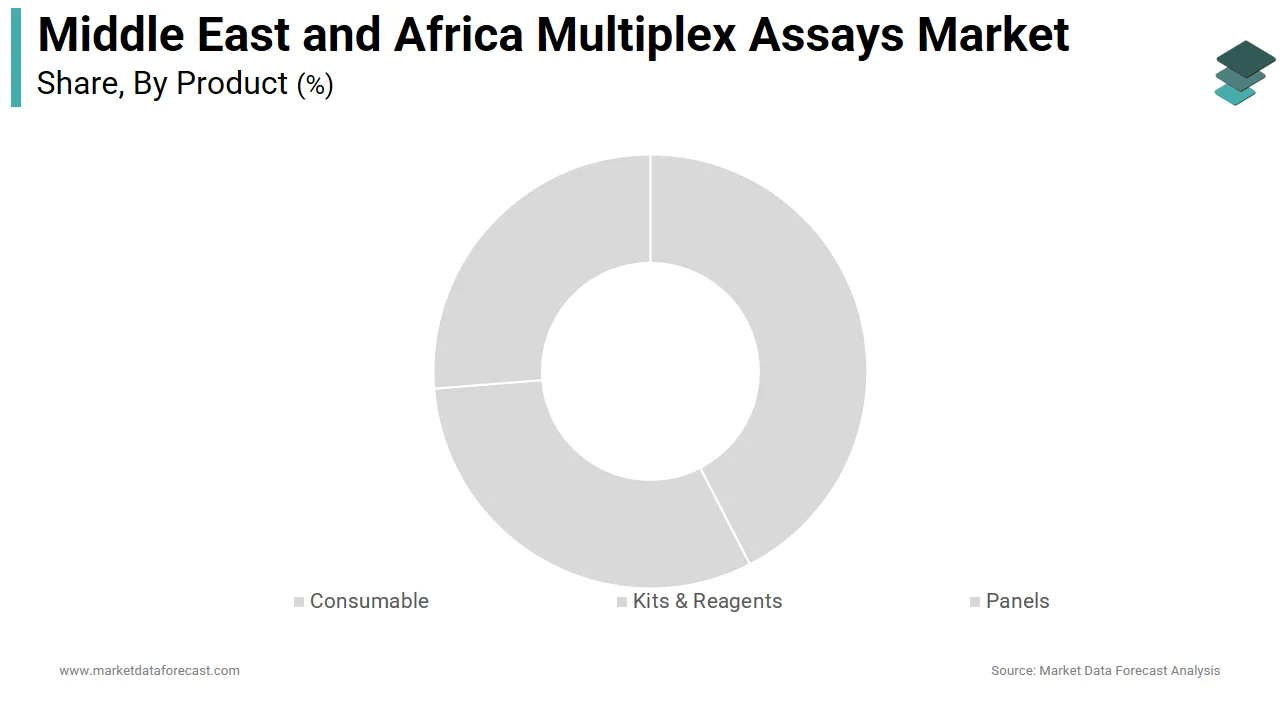
The kits and reagents segment was the largest in the Middle East and Africa multiplex assays market and occupied a commanding share in 2025. This dominance of the segment was supported by its recurring consumption nature and essential role in daily diagnostic operations. Unlike instruments, which represent one-time capital expenditures, kits and reagents generate consistent revenue streams as laboratories process increasing sample volumes. According to the World Health Organisation, clinical diagnostic testing rates across sub-Saharan Africa face critical infrastructure constraints given that over 30% of tuberculosis cases globally remain undiagnosed or unreported annually. On the other hand, manufacturers often employ a razor-and-blade business model where instruments are subsidised or leased at lower costs to secure long-term contracts for high-margin consumables. The shelf life and storage requirements of these reagents necessitate regular replenishment, ensuring steady market turnover. In regions with high prevalence of seasonal infections such as influenza and respiratory syncytial virus, laboratories maintain substantial inventory buffers, further boosting sales volumes. Regulatory approvals for specific kit formulations create barriers to entry for competitors, locking in customer loyalty to established brands. The complexity of multiplex chemistry requires optimised buffer systems and enzyme mixes that are difficult to replicate independently, forcing laboratories to rely on original equipment manufacturer supplies. This dependency ensures that kits and reagents remain the financial backbone of the multiplex assays industry, sustaining market leadership through predictable and scalable demand patterns across both public and private healthcare sectors.
The dominance of the kits and reagents segment is further reinforced by the critical need for standardisation and quality control in diagnostic procedures across diverse healthcare settings in the Middle East and Africa. Variability in manual preparation of assay components can lead to inconsistent results, compromising patient care and public health surveillance efforts. Pre-packaged kits offer validated protocols and calibrated reagents that minimise human error and ensure reproducibility across different laboratory environments. As per the International Organisation for Standardisation, clinical medical laboratories leverage the ISO 15189 standard specifically to establish quality management systems and objective technical competence guidelines. This regulatory push drives laboratories away from homemade solutions toward commercial kit providers who guarantee compliance with international quality benchmarks. Furthermore, the integration of internal controls within multiplex kits allows for real-time monitoring of assay performance, detecting potential failures before results are reported. This feature is particularly valuable in resource-limited settings where technical expertise may be scarce. Training programs provided by kit manufacturers simplify adoption, reducing the learning curve for new staff. The convenience of ready-to-use formats accelerates turnaround times, enabling laboratories to handle higher throughput during outbreak situations. As healthcare systems prioritise accuracy and efficiency, the preference for standardised kits continues to grow, solidifying their position as the primary product category in the regional multiplex assays market.
The panels segment is likely to experience the fastest CAGR of 14.2% between 2026 and 2034 due to the clinical demand for comprehensive diagnostic solutions that can identify multiple pathogens or biomarkers simultaneously from a single specimen. Syndromic panels for respiratory, gastrointestinal, and central nervous system infections are gaining traction as they reduce the need for sequential testing and accelerate diagnosis. According to the Centers for Disease Control and Prevention, pathology networks are adopting rapid multiplex molecular tests because syndromic panel diagnostic screening platforms simultaneously identify numerous diverse viral and bacterial pathogens in a single clinical sample. In the Middle East, where medical tourism is a significant economic driver, hospitals are investing in advanced panel-based diagnostics to offer premium services comparable to Western standards. The ability to detect co-infections, which are common in tropical regions, enhances clinical utility and justifies the higher cost of panel tests. Pharmaceutical companies are also utilising these panels in clinical trials to stratify patients based on specific pathogen profiles, improving study outcomes. Government initiatives to combat antimicrobial resistance support the adoption of panels that include resistance gene detection, aiding in stewardship programs. The versatility of panels in addressing complex clinical presentations makes them indispensable tools in modern medicine, driving their accelerated adoption across the region.
Demand for clinical efficiency is a primary factor for the rapid growth of the panels segment as healthcare providers seek to optimise resource utilisation and improve patient flow. Traditional diagnostic workflows often involve multiple separate tests requiring distinct sample collections and extended waiting periods for results. Multiplex panels consolidate these steps into a single analytical run, significantly reducing laboratory workload and turnaround time. As per the African Journal of Laboratory Medicine, clinical implementation studies demonstrate that deploying decentralised point-of-care test platforms effectively mitigates diagnostic delivery delays across resource-limited public healthcare facilities. This operational efficiency is crucial in overcrowded public hospitals where bed availability is limited. Faster diagnosis enables timely isolation of infectious patients, reducing nosocomial transmission rates and protecting vulnerable populations. Insurance providers are increasingly recognising the cost-effectiveness of panel-based diagnostics and expanding coverage policies to include these advanced tests. The comprehensive nature of panels reduces the likelihood of missed diagnoses, ensuring that patients receive appropriate treatment from the outset. This reduction in diagnostic uncertainty improves patient satisfaction and trust in the healthcare system. As pressure mounts on healthcare systems to deliver high-quality care with limited resources, the adoption of efficient panel-based solutions continues to accelerate, driving robust growth in this segment.
By Technology Insights
In 2025, the Polymerase Chain Reaction (PCR) segment held the majority share in the Middle East and Africa Multiplex Assays Market because of its unparalleled sensitivity, specificity, and established infrastructure. PCR-based multiplex assays are the gold standard for detecting nucleic acids of pathogens, making them indispensable for diagnosing infectious diseases such as HIV, tuberculosis, and hepatitis. According to the World Health Organisation, regional reference networks are expanding the integration of multi-target molecular real-time PCR instrumentation to accelerate the detection of severe multi-drug-resistant bacterial mutations. The widespread familiarity with PCR protocols among laboratory technicians facilitates easier adoption of multiplex variants without extensive retraining. The technology’s ability to amplify trace amounts of genetic material ensures accurate detection even in samples with low viral loads, which is critical for early diagnosis and monitoring treatment efficacy. Established supply chains for PCR reagents and instruments provide reliability and consistency in procurement, minimising disruptions. Regulatory bodies in countries like Saudi Arabia and Egypt have extensively validated PCR-based methods for national disease surveillance programs, creating a stable demand base. The adaptability of PCR to various sample types, including blood, sputum and cerebrospinal fluid, enhances its clinical utility across different medical specialities. Continuous advancements in real-time PCR and digital PCR technologies further extend its capabilities, allowing for quantitative analysis and rare variant detection. This technological maturity combined with proven clinical performance cements PCR’s dominance in the regional multiplex assays landscape.
Substantial investments in molecular laboratory infrastructure reinforce the dominance of PCR technology. Governments and private investors are prioritising the establishment of centralised reference laboratories equipped with state-of-the-art PCR instruments to enhance national health security. As per the Ministry of Health and Prevention of the United Arab Emirates, public health networks are systematically upgrading molecular reference laboratory capacities to enhance comprehensive clinical pathogen sequencing and reinforce national health preparedness. These facilities serve as hubs for training and quality assurance, promoting the widespread adoption of PCR-based methodologies across peripheral hospitals. The availability of funded grants and international aid specifically targeted at strengthening molecular diagnostics further supports this infrastructure expansion. Partnerships with global diagnostic leaders facilitate technology transfer and local assembly of PCR instruments, reducing costs and improving access. The robustness of PCR platforms in handling high sample volumes makes them suitable for large-scale screening campaigns during outbreaks. Integration with laboratory information systems enables automated data management and reporting, enhancing operational efficiency. As more laboratories achieve accreditation for molecular testing, the confidence in PCR results grows among clinicians and policymakers. This institutional support creates a self-reinforcing cycle where increased infrastructure leads to greater usage, which in turn justifies further investment sustaining PCR’s leadership position in the market.
The multiplex array segment is on the rise and is expected to be the fastest-growing segment in the market with a CAGR of 16.5% during the forecast period, owing to the technology’s ability to simultaneously analyse hundreds of proteins, antibodies or genes, providing a holistic view of biological processes. Unlike PCR, which focuses on nucleic acids, multiplex arrays enable comprehensive proteomic and genomic profiling essential for personalised medicine and complex disease research. According to Nature Biotechnology, oncological translational research workflows are expanding high-throughput single-cell multi-omic profiling technologies to identify rare disease microenvironment biomarkers and isolate precise targets for personalised therapeutics. In the Middle East, the rising incidence of cancer and autoimmune disorders is stimulating demand for these advanced profiling tools in academic and clinical research institutions. The scalability of array platforms allows for customisation based on specific research questions, offering flexibility unmatched by fixed panel tests. Decreasing costs of array fabrication and data analysis software are making this technology more accessible to mid-sized laboratories. Collaborations between universities and pharmaceutical companies are driving innovation in array applications, accelerating clinical translation. As precision medicine gains momentum in the region, the demand for high-dimensional data provided by multiplex arrays is expected to surge, driving exceptional growth rates in this segment.
Precision medicine initiatives serve as a powerful catalyst for the growth of the multiplex array segment as healthcare systems shift toward tailored therapeutic approaches. Multiplex arrays provide the detailed molecular signatures necessary to stratify patients based on genetic predispositions and protein expression profiles, enabling more effective treatment selection. As per the Saudi Human Genome Program, national genomics facilities successfully transitioned beyond initial infrastructure building by sequencing the human genomes of over 100,000 citizens to construct a comprehensive population-specific genetic variation map. Clinical oncologists are increasingly relying on array results to guide immunotherapy decisions, improving patient outcomes and reducing unnecessary side effects. The ability to monitor dynamic changes in biomarker levels over time allows for real-time adjustment of treatment plans, enhancing disease management. Regulatory agencies are beginning to approve array-based companion diagnostics, further validating their clinical utility. Investment in bioinformatics infrastructure supports the interpretation of complex array data, bridging the gap between raw information and actionable clinical insights. As precision medicine becomes mainstream practice, the reliance on multiplex arrays for comprehensive molecular characterisation will continue to expand, driving sustained growth in this technologically advanced segment.
By Application Insights
The research and development segment led the Middle East and Africa Multiplex Assays Market and captured a significant share in 2025. This leading position of the segment was attributed to vigorous academic inquiry and government-funded scientific initiatives. Universities and research institutes across the region are increasingly utilising multiplex assays to explore the genetic and proteomic basis of prevalent diseases such as diabetes, cardiovascular conditions, and infectious outbreaks. According to the UNESCO Science Report, regional knowledge-based economies are growing through targeted research investments, with the United Arab Emirates raising its gross domestic expenditure on research and development to a regional peak of 1.30% of GDP. Multiplex technologies enable researchers to conduct high-throughput screens identifying potential drug targets and biomarkers with greater efficiency than traditional methods. Collaborative projects between regional institutions and international partners often mandate the use of advanced multiplex platforms to ensure data comparability and quality. The availability of grant funding from organisations such as the Wellcome Trust and the Bill and Melinda Gates Foundation specifically supports projects employing multiplex diagnostics for global health challenges. This financial support facilitates the acquisition of expensive instrumentation and reagents, sustaining demand in the R&D sector. Furthermore, the publication of high-impact studies using multiplex data enhances the reputation of local research centres, attracting further investment and talent. The continuous quest for scientific discovery and innovation ensures that R&D remains the primary driver of multiplex assay adoption in the region.
The leadership of the research and development segment is sustained by the emergence of vibrant innovation ecosystems and technology parks dedicated to life sciences in the Middle East and Africa. As per the Israel Innovation Authority, commercial life science startups are leveraging strategic state funding structures, including a NIS 70 million biological AI consortium infrastructure investment to advance local molecular multi-omic therapeutic platforms. Incubators and accelerators provide mentorship and funding for early-stage ventures focusing on multiplex technology applications. The presence of venture capital firms interested in healthcare innovation further fuels growth in this segment. Conferences and workshops focused on multiplex technologies facilitate knowledge exchange and networking, strengthening the regional research community. Intellectual property protections encourage investment in proprietary assay developments, enhancing competitive advantage. As these ecosystems mature, they create a self-sustaining cycle of innovation where successful outcomes attract more resources and talent. This supportive environment ensures that R&D activities continue to drive the majority of multiplex assay consumption in the region, maintaining its dominant market position.
The companion diagnostics segment is expected to exhibit a noteworthy CAGR of 18.3% from 2026 to 2034. This rapid expansion is propelled by the increasing adoption of targeted therapies and immunotherapies, which require precise patient selection based on molecular markers. Multiplex assays offer the capability to detect multiple predictive biomarkers simultaneously, ensuring that patients receive the most effective treatment while avoiding ineffective or harmful interventions. According to the European Society for Medical Oncology, precision cancer care paradigms are prioritising companion diagnostic assays to evaluate tumour biomarker status and accurately identify targeted chemotherapy candidate groups. Pharmaceutical companies are increasingly bundling diagnostic tests with their drug launches, creating integrated solutions that drive demand for multiplex platforms. Regulatory approvals for companion diagnostics are becoming more streamlined in key markets such as Saudi Arabia, facilitating faster market entry. The rising prevalence of cancer and chronic diseases in the region amplifies the need for personalised treatment strategies supported by robust diagnostic tools. Healthcare providers are recognising the cost benefits of avoiding trial-and-error prescribing, further encouraging the adoption of companion diagnostics. As precision oncology becomes standard of care, the demand for multiplex-based companion diagnostics will continue to accelerate, driving exceptional growth in this segment.
Strategic partnerships between diagnostic manufacturers and pharmaceutical companies are driving the growth of the companion diagnostics segment by aligning product development and commercialisation strategies. These collaborations ensure that multiplex assays are optimised for specific drug indications, enhancing clinical utility and regulatory acceptance. As per Pfizer, oncological pharmaceutical supply pipelines are advancing targeted treatment delivery by matching specific precision therapeutics with validated multi-analyte corporate diagnostic platform assets. These partnerships facilitate joint marketing efforts educating clinicians about the importance of biomarker testing in treatment selection. Co-development agreements reduce time to market for both drugs and diagnostics, creating synergistic value propositions. Pharmaceutical companies provide funding and clinical data supporting the validation of multiplex assays for specific indications. This alignment ensures that diagnostic tests are available when new therapies are launched, maximising patient access and treatment outcomes. Regulatory harmonisation efforts between drug and diagnostic authorities further streamline approval processes for paired products. The mutual dependence of drugs and diagnostics creates a locked-in market dynamic where success of one drives demand for the other. As more targeted therapies enter the market, the role of companion diagnostics in guiding treatment decisions will become increasingly critical, sustaining robust growth in this application segment.
By End User Insights
The hospitals segment dominated the Middle East and Africa Multiplex Assays Market and accounted for a substantial share in 2025. This dominance of the segment was driven by its central role in patient care and extensive diagnostic capabilities. Large tertiary care hospitals possess the financial resources and technical expertise to invest in advanced multiplex platforms for routine clinical use. According to World Bank Open Data, national healthcare infrastructure indices measure inpatient surge capacities through localised indicators, tracking wide disparities in hospital beds per 1,000 people across regional systems. These institutions handle high patient volumes requiring efficient diagnostic tools to manage workflow and reduce waiting times. Multiplex assays enable hospitals to offer comprehensive testing services under one roof, improving patient convenience and satisfaction. Accreditation standards such as Joint Commission International require hospitals to maintain high-quality diagnostic services, driving adoption of validated multiplex technologies. Emergency departments benefit from rapid multiplex testing for infectious diseases, enabling quick isolation and treatment decisions. The integration of multiplex results into electronic health records facilitates seamless communication among multidisciplinary teams, enhancing coordinated care. Government mandates for universal health coverage in countries like Saudi Arabia increase patient access to hospital services, further boosting diagnostic volumes. The reputation of hospitals as centres of excellence attracts patients seeking advanced diagnostics, reinforcing their market leadership.
Integrated care models adopted by major hospital networks support the dominance of the hospital segment by emphasising continuity and comprehensiveness in patient management. Multiplex assays fit seamlessly into these models by providing holistic data that informs treatment plans across different specialities. As per the World Economic Forum, clinical diagnostic efficiency in Abu Dhabi is expanding via the Malaffi Health Information Exchange, utilising real-time AI-driven monitoring networks to drastically reduce diagnostic waste. Multiplex platforms allow for simultaneous assessment of multiple organ systems, which is crucial for managing complex comorbidities common in ageing populations. Hospital administrators value the ability to standardise testing protocols across multiple facilities within their network, ensuring consistent quality of care. Bulk purchasing agreements enable hospitals to negotiate favourable pricing for multiplex kits and reagents, lowering overall costs. Training programs for hospital staff ensure proper utilisation of advanced technologies, maximising return on investment. Patient-centred care initiatives prioritise rapid and accurate diagnosis, which multiplex assays deliver effectively. The trust patients place in hospital-based diagnostics further reinforces demand for these services. As healthcare systems evolve toward value-based care models, the role of hospitals in delivering efficient and effective diagnostic services will remain paramount, sustaining their leading position in the market.
The clinical laboratories segment is predicted to witness the highest CAGR of 15.8% over the forecast period. This swift growth of the segment is fuelled by the trend toward outsourcing diagnostic services from hospitals to specialised independent laboratories that offer economies of scale and specialised expertise. Independent labs can invest in high-throughput multiplex platforms that may be prohibitively expensive for smaller hospitals. According to the National Health Laboratory Service of South Africa, national diagnostic quality networks implement rigorous proficiency testing schemes to validate clinical laboratory standard compliance and monitor operational competency across domestic paths. Centralised testing models improve quality control and standardisation, enhancing result reliability. Insurance companies prefer contracting with independent labs due to lower negotiated rates, encouraging referral patterns. The ability of independent labs to offer niche multiplex tests not available in general hospitals attracts specialised referrals. Digital connectivity allows seamless transmission of results to referring physicians, maintaining care continuity. As healthcare systems seek to optimise costs and improve efficiency, the reliance on specialised clinical laboratories for multiplex diagnostics will continue to expand, driving rapid growth in this segment.
Consolidation trends in the clinical laboratory sector are fueling the growth of this end-user segment as larger entities acquire smaller players to expand geographic reach and service offerings. Mergers and acquisitions create laboratory networks with sufficient volume to justify investment in advanced multiplex technologies. As per a study, corporate medical technology investments are accelerating rapidly across the Gulf Cooperation Council, with Saudi Arabia and the United Arab Emirates driving nearly 92% of regional healthcare transactions. Consolidated laboratories can leverage centralised procurement to reduce costs of multiplex reagents and instruments. Standardisation of processes across acquired entities ensures consistent quality and efficiency. Larger laboratories have the financial stability to invest in research and development of proprietary multiplex assays differentiating their services. They can also afford to hire specialised personnel such as molecular biologists and bioinformaticians, enhancing technical capabilities. Economies of scale allow consolidated labs to offer competitive pricing, attracting more clients. Regulatory compliance is easier to manage at scale, reducing administrative burdens. The enhanced brand recognition of large laboratory chains builds trust among patients and providers. As consolidation continues, the capacity and capability of clinical laboratories to adopt and utilise multiplex assays will grow significantly, driving sustained expansion in this segment.
REGIONAL ANALYSIS
Saudi Arabia Multiplex Assays Market Analysis
Saudi Arabia was the top performer in the Middle East and Africa Multiplex Assays Market and held a 35.3% share in 2025. This position of the country’s market was driven by the Kingdom’s Vision 2030 strategy, which prioritises healthcare transformation and localisation of medical industries. Massive investments in new medical cities and specialised reference laboratories have created robust demand for advanced diagnostic technologies. According to the Saudi Vision 2030 Health Sector Transformation Program, public-private partnerships are scaling medical technology investments as the government restructures the national healthcare model to transition primary services away from direct public management. High prevalence of genetic disorders and metabolic diseases such as diabetes drives demand for comprehensive profiling capabilities. The Saudi Human Genome Program serves as a major catalyst for adopting multiplex genomic assays, facilitating personalised medicine initiatives. Regulatory reforms by the Saudi Food and Drug Authority have streamlined approval processes for innovative diagnostic tools, accelerating market entry. Local manufacturing initiatives under the National Industrial Strategy encourage production of multiplex reagents, reducing import dependency. The presence of leading multinational diagnostic companies alongside emerging local players creates a dynamic competitive landscape. Strong government funding for research and development supports continuous innovation in multiplex technologies. This combination of strategic vision, financial backing and regulatory support cements Saudi Arabia’s leadership position in the regional market.
United Arab Emirates Multiplex Assays Market Analysis
The United Arab Emirates followed closely in the Middle East and Africa Multiplex Assays Market and secured a 20.1% share in 2025. In addition, the country’s status as a global medical tourism hub propels demand for premium diagnostic services including advanced multiplex assays. Patients from across the region and beyond seek high-quality healthcare in Dubai and Abu Dhabi, necessitating state-of-the-art diagnostic infrastructure. As per the Dubai Health Authority, regional healthcare systems are implementing standardised clinical diagnostic protocols under the Dubai Health Strategy 2026 to elevate local clinical imaging and multi-parametric laboratory capabilities. High disposable incomes and comprehensive insurance coverage enable access to expensive diagnostic tests. The establishment of free zones for healthcare businesses attracts international diagnostic companies setting up regional headquarters and distribution centres. Regulatory harmonisation with international standards ensures quick adoption of new multiplex platforms. Collaborations with global research institutions facilitate knowledge transfer and clinical trials involving multiplex assays. The government’s emphasis on smart health initiatives integrates multiplex data with digital health records, enhancing patient care. Continuous investment in healthcare infrastructure and talent development sustains the UAE’s strong market position. The focus on innovation and quality positions the UAE as a key driver of advanced diagnostic adoption in the region.
South Africa Multiplex Assays Market Analysis
South Africa maintains a significant share of the Middle East and Africa Multiplex Assays Market because of its advanced healthcare infrastructure and strong focus on public health challenges. The high burden of infectious diseases such as HIV, tuberculosis, and malaria drives significant demand for multiplex diagnostic solutions in both public and private sectors. The National Health Laboratory Service operates one of the largest laboratory networks in Africa utilizing multiplex assays for large-scale screening and surveillance programs. Government initiatives to strengthen primary healthcare include the deployment of care multiplex devices in rural clinics, improving access to diagnostics. The presence of leading academic institutions fosters research and development in multiplex technologies addressing local health priorities. According to the South African Health Products Regulatory Authority, clinical laboratories are expanding access to molecular diagnostic tools via updated, internationally aligned regulatory pathways that expedite the licensing of imported high-complexity medical devices. Private healthcare providers cater to affluent populations seeking premium diagnostic services, including comprehensive genetic testing. Economic challenges, however, limit widespread adoption in the public sector, requiring innovative financing models. Partnerships with global health organisations provide funding and technical support for multiplex diagnostic programs. Despite constraints, South Africa’s robust laboratory infrastructure and committed public health agenda sustain its significant market share.
Israel Multiplex Assays Market Analysis
Israel holds a notable share of the Middle East and Africa Multiplex Assays Market due to its role as a global innovation leader in life sciences and diagnostics. Although geographically part of the Middle East, its market dynamics are closely tied to global trends due to advanced technological capabilities. As per the Israel Innovation Authority, national technology consortiums are injecting NIS 70 million into shared biological AI and advanced computing infrastructures to accelerate personalised medicine and clinical assay workflows. Strong government support for R&D through grants and tax incentives fosters a vibrant ecosystem for diagnostic innovation. Israeli companies are pioneers in developing novel multiplex platforms for cancer diagnostics, infectious disease detection and genetic screening. Export-oriented strategies mean that much of the production is destined for global markets, but domestic adoption remains high due to advanced healthcare standards. Universal health coverage ensures broad access to advanced diagnostics, including multiplex tests. Collaboration between universities, hospitals and industry accelerates clinical translation of new technologies. The presence of venture capital firms interested in healthcare tech drives continuous innovation. Israel’s reputation for quality and innovation influences regional adoption patterns as neighbouring countries look to Israeli solutions for their diagnostic needs. This unique position as an innovation hub sustains Israel’s relevance in the regional market despite its smaller population size.
Egypt Multiplex Assays Market Analysis
Egypt is likely to expand significantly in the Middle East and Africa Multiplex Assays Market from 2026 to 2034 owing to its large population and ongoing healthcare reforms. According to the Egyptian Ministry of Health and Population, decentralised diagnostic infrastructure is undergoing systemic modernisation through the National Digital Health Strategy 2025–2029 to unify patient health records and enhance clinical testing delivery. The government’s Universal Health Insurance System aims to provide comprehensive coverage including advanced diagnostics to all citizens, creating new demand avenues. High prevalence of hepatitis C and other infectious diseases necessitates efficient screening tools, making multiplex assays valuable for public health programs. Recent investments in upgrading public laboratory infrastructure are improving access to molecular diagnostics. Local manufacturing initiatives aim to reduce reliance on imports and lower costs for multiplex reagents. Economic challenges, however, constrain purchasing power, limiting adoption of premium multiplex platforms in the private sector. International aid and partnerships support specific disease control programs utilising multiplex diagnostics. The growing middle class is increasingly demanding higher quality healthcare services, driving private sector growth. Regulatory improvements are streamlining registration processes for new diagnostic technologies. As healthcare access expands and infrastructure improves, Egypt’s market potential continues to rise, positioning it as a key growth engine in the region.
COMPETITIVE LANDSCAPE
The competition in the Middle East and Africa Multiplex Assays Market is characterized by the presence of established global diagnostics giants and emerging regional players striving for technological superiority. Multinational corporations leverage their extensive product portfolios and strong brand recognition to maintain dominance while adapting to local regulatory requirements. These leaders invest heavily in research and development to introduce innovative multiplex platforms that address specific regional health challenges such as infectious diseases and genetic disorders. Regional competitors focus on cost-effective solutions and localized support services to capture market share in price-sensitive segments. Strategic collaborations with government bodies and academic institutions are common as companies seek to influence policy and drive adoption of advanced diagnostics. The market sees intense rivalry in terms of pricing, service quality, and technical support. Companies differentiate themselves through superior after-sales service and comprehensive training programs. As healthcare infrastructure improves across the region, the competitive landscape evolves with new entrants introducing niche products. This dynamic environment fosters continuous innovation and drives improvements in diagnostic accessibility and accuracy for patients throughout the Middle East and Africa.
KEY MARKET PLAYERS
The leading companies operating in the Middle East and Africa multiplex assays market include:
- Luminex Corporation
- Thermo Fisher Scientific Inc.
- Illumina Inc.
- Bio-Rad Laboratories Inc.
- Roche Diagnostics
- QIAGEN N.V.
- Abcam Plc
- Becton, Dickinson and Company
- bioMérieux
- Meso Scale Diagnostics
- Randox Laboratories Ltd.
- Seegene Inc.
TOP PLAYERS IN THE MARKET
- Thermo Fisher Scientific maintains a robust presence in the Middle East and Africa Multiplex Assays Market through its comprehensive portfolio of molecular diagnostic solutions. The company actively supports regional healthcare infrastructure by providing advanced polymerase chain reaction platforms and specialized reagent kits tailored for infectious disease detection. Recent initiatives include expanding distribution networks in Saudi Arabia and South Africa to ensure consistent supply of critical diagnostic consumables. Thermo Fisher collaborates with local governments to enhance laboratory capacity through training programs and technical support services. Their commitment to innovation is evident in the launch of high-throughput multiplex panels designed for rapid pathogen identification. By integrating digital health tools with their assay systems, the company enables real-time data sharing and improved clinical decision-making. These strategic efforts reinforce their position as a trusted partner in advancing diagnostic capabilities across diverse healthcare settings in the region.
- Roche Diagnostics plays a pivotal role in shaping the Middle East and Africa Multiplex Assays Market by delivering high-quality molecular testing solutions. The company focuses on addressing prevalent health challenges such as tuberculosis and respiratory infections through its cobas platform, which offers seamless multiplex testing capabilities. Roche has strengthened its market position by establishing regional training centers in the United Arab Emirates and Egypt to educate healthcare professionals on advanced diagnostic techniques. Recent collaborations with public health authorities have facilitated the deployment of automated multiplex systems in national reference laboratories. The company emphasizes sustainability by optimizing supply chain logistics to reduce environmental impact while ensuring product availability. Roche continues to invest in research and development to create assays that meet the specific needs of regional populations. Their proactive approach to regulatory compliance and customer support ensures reliable performance and fosters long term relationships with key stakeholders in the healthcare sector.
- BioMérieux contributes significantly to the Middle East and Africa Multiplex Assays Market by offering innovative diagnostic solutions for infectious diseases and antimicrobial resistance. The company’s expertise in microbiology and molecular biology enables the development of sensitive and specific multiplex assays for clinical and public health applications. BioMérieux has recently expanded its footprint in Kenya and Nigeria by partnering with local distributors to improve access to its FILMARRAY technology. This platform allows for rapid simultaneous detection of multiple pathogens, enhancing patient care in resource-limited settings. The company actively participates in regional health initiatives supporting outbreak response and surveillance programs. BioMérieux prioritizes education by conducting workshops and webinars for laboratory staff to maximize the utility of their diagnostic tools. Their focus on quality assurance and regulatory adherence ensures that healthcare providers receive reliable and accurate results. Through continuous innovation and strategic partnerships, BioMérieux remains a key driver of diagnostic advancement in the region.
TOP STRATEGIES USED BY THE KEY MARKET PARTICIPANTS
Key players in the Middle East and Africa Multiplex Assays Market primarily employ strategic partnerships and localized manufacturing to strengthen their competitive position. Companies frequently collaborate with regional governments and healthcare institutions to align product offerings with national health priorities. This approach facilitates faster regulatory approvals and enhances market access. Investment in training and education programs is another critical strategy used to build technical capacity among laboratory personnel. By empowering the local workforce, these companies ensure proper utilization of advanced multiplex technologies. Expanding distribution networks through alliances with local distributors helps overcome logistical challenges and improves product availability in remote areas. Innovation remains central to their strategies, with firms continuously developing assays tailored to regional disease profiles. Digital integration is also prioritized to enable seamless data flow and remote monitoring. These combined efforts allow key participants to navigate complex market dynamics while delivering value to healthcare providers and patients across the Middle East and Africa.
MARKET SEGMENTATION
This research report on the Middle East and Africa Multiplex Assays Market has been segmented and sub-segmented into the following categories:
By Product
- Consumable
- Kits & Reagents
- Panels
By Type
- Nucleic Acid-Based
- Protein-Based
By Technology
- PCR
- Multiplex Array
By Application
- R&D
- Companion Diagnostics
By End User
- Hospitals
- Clinical Laboratory
By Country:
- KSA
- UAE
- Israel
- Rest of GCC countries
- South Africa
- Ethiopia
- Kenya
- Egypt
- Sudan
- Rest of Middle East and Africa