- Product Description Description
- Table of Contents TOC
- List of Table & Figure LOT
- Get Free Sample PDF Sample PDF
Market Size, 2025
$0.46 BnMarket Estimate, 2026
$0.49 BnMarket Forecast, 2034
$0.84 BnCAGR, 2026–2034
6.95%Executive Summary: Latin America Multiplex Assays Market
- Market Scope: Comprehensive market analysis of the Latin American multiplex assays industry covering products, assay types, technologies, clinical applications, end-users, and country-level growth across Brazil, Mexico, Argentina, and Chile.
- Market Valuation: Valued at USD 0.46 billion in 2025, estimated at USD 0.49 billion in 2026, and projected to reach USD 0.84 billion by 2034, registering a strong CAGR of 6.95% (2026–2034).
- Primary Growth Drivers: High regional prevalence of endemic and epidemic vector-borne infections (dengue, Zika, chikungunya), expanding precision medicine and oncology research, and public health investments in multi-target differential diagnostic platforms.
Key Market Segment Metrics (2026–2034)
| Category | Leading Segment (2025 Position) | Fastest-Growing Segment |
|---|---|---|
| By Product | Consumables (commanding the largest share due to recurring daily diagnostic and research procurement needs) | Software & Services (projected at a 9.5% CAGR driven by data analytics and cloud tools) |
| By Type | Nucleic Acid-Based Multiplex Assays (leading via essential PCR and sequencing infectious disease panels) | Bead-Based Protein Assays (projected at an 8.8% CAGR for proteomics and oncology) |
| By Application | Infectious Diseases (holding the majority share due to high regional viral outbreaks and public health surveillance) | Oncology & Precision Biomarker Profiling |
| By Country | Brazil (dominating regional market share supported by public infrastructure and ANVISA regulations) | Mexico & Argentina (expanding reference laboratory networks) |
Major Market Players & Market Structure
Market Structure: Highly competitive and specialized in vitro diagnostics market populated by global life science corporations partnering with regional healthcare reference centers and private laboratory chains.
Key Companies: Luminex Corporation, Thermo Fisher Scientific Inc., Illumina Inc., Bio-Rad Laboratories Inc., QIAGEN N.V., Abcam Plc, Becton, Dickinson and Company, Merck KGaA, Meso Scale Diagnostics, Randox Laboratories Ltd., and Seegene Inc.
 Download Free Sample Report
Latin America Multiplex Assays Market Size
The Latin America multiplex assays market was valued at USD 0.46 billion in 2025. The market is estimated at USD 0.49 billion in 2026 and is projected to reach USD 0.84 billion by 2034, growing at a CAGR of 6.95% from 2026 to 2034.
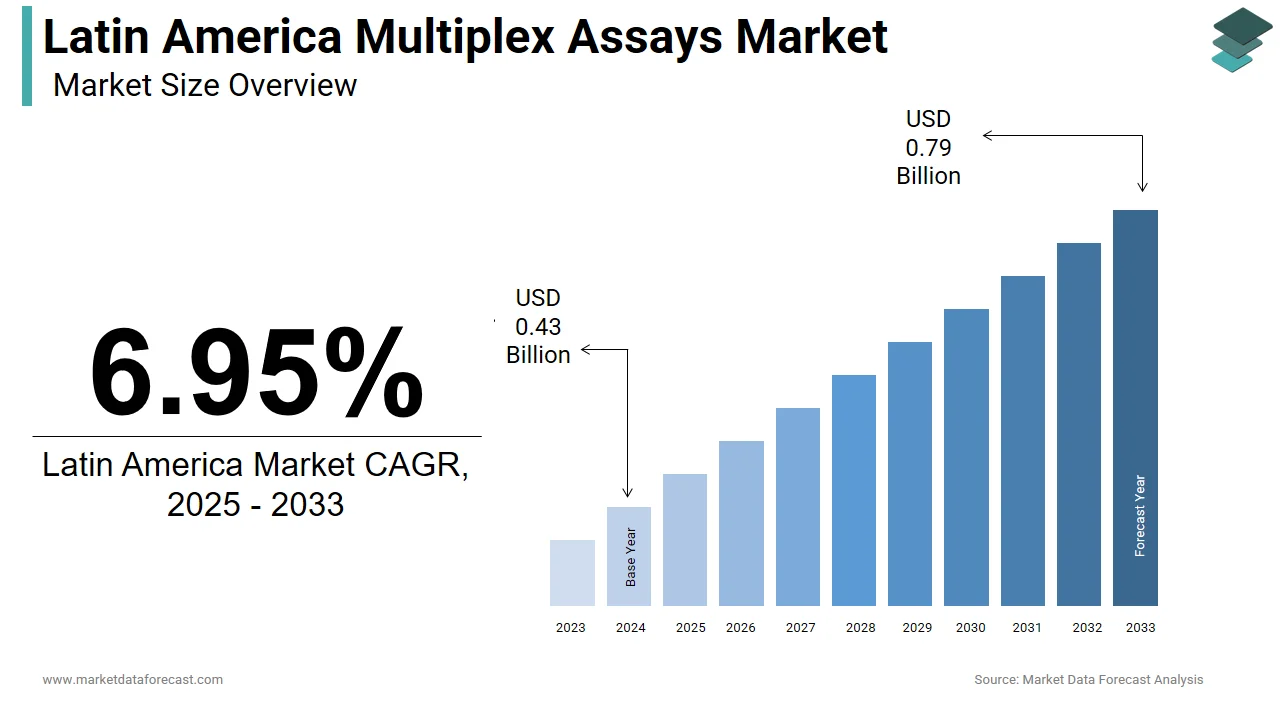
Multiplex assays are a specialized segment of the in vitro diagnostics industry focused on technologies that enable the simultaneous detection and quantification of multiple analytes from a single sample. This advanced diagnostic approach utilizes platforms such as bead-based immunoassays, microarrays, and polymerase chain reaction panels to analyze proteins, nucleic acids, and other biomarkers with high throughput and efficiency. The region is witnessing a gradual transition from traditional singleplex testing to multiplex solutions driven by the need for comprehensive disease profiling and resource optimization in clinical and research settings. As per the Pan American Health Organization, regional arboviral disease notifications surged by 169.3% heading into 2024, expanding the demand for multiplex molecular panels to differentiate between concurrent epidemics. According to the U.S. International Trade Administration, the Brazilian Ministry of Health's expanding public infrastructure is driving the domestic arbovirus diagnostic kit market toward a projected value of $120 million annually by 2028. Furthermore, the rising prevalence of chronic conditions such as cancer and autoimmune disorders across countries like Mexico and Argentina creates demand for precise biomarker analysis to guide personalized treatment strategies. Regulatory bodies, including the National Health Surveillance Agency in Brazil, are increasingly aligning standards with international guidelines to facilitate the adoption of novel diagnostic technologies. As healthcare systems strive to improve diagnostic accuracy while managing costs, the integration of multiplex assays into routine laboratory workflows becomes critical. This market evolution is supported by growing investments in biomedical research and the expansion of reference laboratories equipped with advanced analytical instruments.
MARKET DRIVERS
Rising Prevalence of Infectious Diseases and Outbreak Management
The persistent threat of infectious diseases and the frequency of epidemic outbreaks contribute to the growth of the Latin America multiplex assays market. The region’s tropical climate and urbanization patterns create favorable conditions for the transmission of vector-borne diseases such as dengue, malaria, and Zika virus, which often present with overlapping clinical symptoms. According to the World Health Organization, global dengue outbreaks escalated significantly to an unprecedented high of over 14 million cases reported, highlighting the acute regional demand for accurate multi-target differential diagnostic testing. Multiplex assays offer a distinct advantage by allowing clinicians to test for multiple pathogens simultaneously from a single specimen, thereby reducing turnaround time and conserving limited sample volumes. This capability is crucial during outbreak scenarios where rapid identification of the causative agent is essential for implementing effective public health interventions. In countries like Colombia and Peru, government health agencies have prioritized the strengthening of diagnostic networks to enhance surveillance capabilities. The ability to detect co-infections, which are common in endemic areas, further underscores the clinical utility of multiplex platforms. Additionally, the recent experiences with respiratory viruses have highlighted the importance of comprehensive respiratory panels that can distinguish between influenza, SARS-CoV-2, and other pathogens. These factors drive healthcare providers to invest in multiplex technologies that offer superior diagnostic speed and breadth compared to conventional methods.
Expansion of Precision Medicine and Oncology Research
The growing emphasis on precision medicine and the expansion of oncology research initiatives significantly propel the demand for these assays in the regional healthcare sector, which boosts the expansion of the Latin America multiplex assays market. Cancer remains a leading cause of mortality in the region, with increasing incidence rates of breast, prostate, and colorectal cancers driving the need for advanced diagnostic tools. As per the International Agency for Research on Cancer, the total collective burden of new cancer diagnoses across Latin America and the Caribbean reached over 1.5 million estimated cases annually. Multiplex assays enable the simultaneous analysis of multiple genetic mutations, protein markers, and immune responses, providing a holistic view of tumor biology. This comprehensive data is essential for selecting appropriate immunotherapies and monitoring treatment efficacy. In Brazil and Mexico, leading cancer institutes are integrating next-generation sequencing and multiplex protein arrays into their diagnostic workflows to support personalized treatment plans. The shift toward value-based healthcare encourages the use of diagnostics that can predict patient outcomes and reduce unnecessary treatments. Furthermore, pharmaceutical companies conducting clinical trials in the region utilize multiplex assays for biomarker discovery and patient stratification. The availability of these advanced technologies attracts international research collaborations and investments, fostering a conducive environment for market growth. Awareness of the benefits of genetic testing is growing among physicians and patients. Consequently, the adoption of multiplex assays in oncology continues to accelerate.
MARKET RESTRAINTS
High Cost of Advanced Diagnostic Equipment and Reagents
The substantial financial burden associated with acquiring and maintaining advanced multiplex assay platforms is a significant restraint on the penetration of the Latin American market. These sophisticated instruments require considerable capital expenditure, which many public healthcare facilities and smaller private laboratories cannot afford. According to the Inter-American Development Bank, per capita health expenditures across Latin American countries are expanding rapidly and are projected to double on average across the region by the year 2050. The recurring cost of proprietary reagent kits and maintenance contracts further strains limited laboratory budgets, forcing facilities to prioritize essential tests over advanced multiplex panels. In countries experiencing economic volatility such as Argentina and Venezuela, currency devaluation exacerbates the affordability issue since most diagnostic supplies are imported and priced in US dollars or euros. This economic barrier prevents the widespread adoption of standardized multiplex protocols, resulting in variability in test availability across different regions. Public hospitals often rely on outdated equipment due to budget constraints hindering their ability to offer comprehensive diagnostic services. The lack of local manufacturing capabilities for high-complexity assay components means that supply chain disruptions can lead to price spikes and shortages. Consequently, the high total cost of ownership limits the scalability of multiplex assay services, restricting access to precise diagnostics for a large portion of the population, particularly in underserved areas.
Limited Technical Expertise and Infrastructure Gaps
The shortage of skilled personnel and inadequate laboratory infrastructure are critical barriers impeding the optimal functioning of the Latin America multiplex assays market. Operating complex multiplex platforms requires specialized training in molecular biology, bioinformatics, and data interpretation, which is not uniformly available across the region. As per the World Health Organization, target regional allocations in the Americas prioritized over 41% of planned deployment directly toward communicable and non-communicable disease service access to resolve structural delivery imbalances. This scarcity leads to difficulties in validating new assays, troubleshooting technical issues, and ensuring quality control, which are essential for reliable results. In addition, many laboratories lack the necessary infrastructure, such as stable electricity supply, climate-controlled environments, and robust information technology systems required for high-throughput diagnostics. The absence of standardized accreditation processes in some countries further complicates the implementation of advanced testing protocols. Training programs for multiplex technologies are limited and often expensive, requiring professionals to travel abroad or rely on online resources that may not address local contextual challenges. The reliance on expatriate experts for initial setup and training creates sustainability issues once external support withdraws. Without concurrent investment in education and infrastructure development, hardware advancements in multiplex assays cannot translate into improved clinical outcomes. Consequently, this restrains overall market potential and limits the effective utilization of these powerful diagnostic tools.
MARKET OPPORTUNITIES
Integration of Artificial Intelligence and Data Analytics
The integration of artificial intelligence and advanced data analytics with multiplex assay platforms paves the way for enhancing diagnostic accuracy and efficiency in the region, which is likely to accelerate the growth of the Latin America multiplex assays market. Multiplex technologies generate vast amounts of complex data that require sophisticated algorithms for interpretation and pattern recognition. According to Bio-Rad Laboratories, commercial multiplex immunoassay system platforms are experiencing expanded adoption by integrating digital fluorescent bead arrays that process up to 100 distinct biomolecules simultaneously in a single well. In countries like Chile and Brazil, research institutions are beginning to collaborate with technology firms to develop AI-driven diagnostic tools tailored to local disease profiles. These innovations enable the creation of predictive models for disease progression and treatment response, which are valuable for personalized medicine. The growing availability of cloud computing resources facilitates the storage and analysis of large datasets, allowing smaller laboratories to access powerful analytical tools without heavy upfront investments. Furthermore, digital health initiatives supported by governments are promoting the adoption of electronic health records that can integrate multiplex assay results for comprehensive patient monitoring. This technological convergence offers a pathway to overcome expertise gaps by providing decision support systems for healthcare providers. As internet connectivity improves across the region, the feasibility of remote data analysis and telepathology increases, encouraging more facilities to adopt multiplex assays. This digital transformation positions the market for sustained growth by adding value beyond simple detection to actionable clinical insights.
Growth in Public-Private Partnerships and Reference Laboratories
The expansion of public-private partnerships and the establishment of centralized reference laboratories offer significant opportunities for the Latin America multiplex assays market. Governments are increasingly recognizing the efficiency gains of consolidating complex diagnostic services in specialized centers that can achieve economies of scale. According to the Pan American Health Organization, structural health system updates focus on accelerating early clinical suspicion protocols and optimizing primary medical facility triage responses to effectively manage epidemic surges. These facilities are better equipped to handle high-volume multiplex testing for infectious diseases and rare conditions, serving both public and private sectors. Partnerships with international diagnostic companies facilitate technology transfer training and access to cutting-edge assays that might otherwise be unavailable. In Mexico and Colombia, private laboratory chains are expanding their reach into rural areas by offering sample collection services that feed into central hubs equipped with multiplex platforms. This model reduces the need for expensive equipment in every local clinic while ensuring high-quality results. Additionally, these partnerships often include provisions for subsidized testing for low-income populations, improving access to advanced diagnostics. The standardization of procedures in reference laboratories enhances data comparability and supports regional health initiatives. By leveraging collaborative models, stakeholders can overcome individual resource limitations. This approach drives the widespread adoption of multiplex assays to create a more resilient and efficient diagnostic ecosystem.
MARKET CHALLENGES
Regulatory Heterogeneity and Approval Delays
The lack of harmonized regulatory frameworks and prolonged approval processes for new diagnostic devices are significant challenges to the Latin America multiplex assays market. Each country maintains its own regulatory agency with varying requirements for product registration, clinical validation, and post-market surveillance. According to the World Bank, the institution completely discontinued the publication of the historical Doing Business report series following a comprehensive methodology audit uncovering data irregularities. This fragmentation forces companies to navigate complex bureaucratic landscapes in each target market, requiring dedicated local expertise and resources. The absence of mutual recognition agreements means that approvals obtained in one country do not automatically apply to others, leading to redundant testing and documentation. Furthermore, frequent changes in regulatory policies create uncertainty for suppliers and distributors, affecting long-term planning. The delay in approving innovative multiplex panels means that patients may not have timely access to the latest diagnostic advancements. Small and medium-sized enterprises often struggle to meet these diverse regulatory demands, limiting competition and innovation. Addressing these disparities requires coordinated efforts among national health authorities, which remain a complex and ongoing challenge hindering the seamless expansion of multiplex assay technologies across the region.
Supply Chain Vulnerabilities and Logistics Constraints
The reliability of supply chains for multiplex assay reagents and equipment remains a persistent obstacle for the Latin American market. This is due to logistical inefficiencies and geopolitical instabilities in certain parts of the region. Many critical components such as specialized beads, enzymes, and fluorescent dyes have limited shelf lives and require strict temperature control during transportation. As per the World Bank, international trade bottlenecks are evaluated by measuring raw compliance hours and actual document procurement costs under standard cost modeling. Customs clearance procedures are often cumbersome and unpredictable, leading to prolonged storage times at ports where temperature-sensitive items may degrade. The dependence on imports for nearly all high-complexity assay materials makes the market vulnerable to global supply chain disruptions as seen during recent health crises. Local manufacturing capabilities for these specialized inputs are minimal, meaning there is little buffer against external shocks. Political unrest or economic sanctions in specific countries can further disrupt transportation routes, causing delays in the delivery of critical diagnostic supplies. Healthcare providers must maintain excessive inventory levels to mitigate stockout risks, tying up capital and increasing waste due to expiration. Strengthening regional distribution networks and investing in local cold chain infrastructure are essential but difficult steps to overcome these entrenched supply chain vulnerabilities that threaten the consistency of diagnostic services.
REPORT COVERAGE
| REPORT METRIC | DETAILS |
| Market Size Available | 2025 to 2034 |
| Base Year | 2025 |
| Forecast Period | 2026 to 2034 |
| Segments Covered | By Product, Type, Technology, Application, End User, and Country. |
| Various Analyses Covered | Global, Regional, and Country-Level Analysis, Segment-Level Analysis, Drivers, Restraints, Opportunities, Challenges; PESTLE Analysis; Porter’s Five Forces Analysis, Competitive Landscape, Analyst Overview of Investment Opportunities |
| Countries Covered |
|
| Market Leaders Profiled | Luminex Corporation, Thermo Fisher Scientific Inc., Illumina Inc., Bio-Rad Laboratories Inc., QIAGEN N.V., Abcam Plc, Becton, Dickinson and Company, Merck KGaA, Luminex Corporation, Meso Scale Diagnostics, Randox Laboratories Ltd, and Seegene Inc. |
SEGMENTAL ANALYSIS
By Product Insights
The consumables segment was the largest in the Latin America Multiplex Assays market and occupied a commanding share in 2025. Its recurring nature and essential role in daily diagnostic and research operations have contributed to the supremacy of this segment. This category includes reagent kits, antibodies, and specialized beads required for running assays on various platforms.
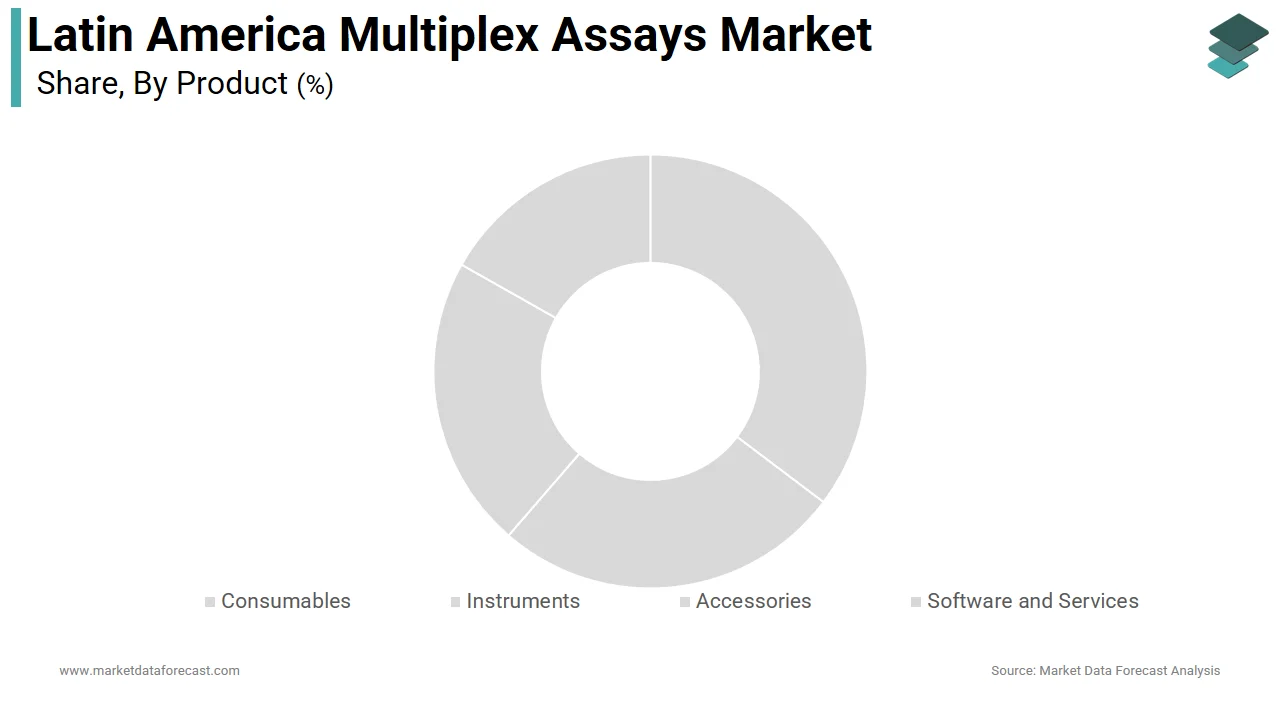
The perpetual requirement for assay-specific reagents drives the consumables segment dominance, as every test performed necessitates these materials. Unlike instruments, which are one-time capital expenditures, consumables generate continuous revenue streams for manufacturers. According to Bio-Rad Laboratories, commercial multiplex reader platforms accelerate high-throughput tracking by utilizing microplate configurations that process up to 100 unique bio-analyte targets simultaneously per well. In Brazil, reference laboratories processing high volumes of infectious disease tests consume vast quantities of nucleic acid extraction kits and PCR master mixes. The shift toward routine clinical use of multiplex panels for respiratory and gastrointestinal pathogens further amplifies this demand. Laboratories cannot operate without a consistent supply of these consumables, making them a non-discretionary expenditure. Furthermore, the expiration dates of many biological reagents necessitate regular replenishment, preventing bulk long-term stockpiling and ensuring frequent procurement cycles. This recurring revenue model provides stability for manufacturers and distributors, allowing them to maintain strong market positions despite fluctuations in instrument sales. The lack of local manufacturing for specialized assay components means that most Latin American laboratories rely on imported consumables, sustaining high import volumes and reinforcing the segment's financial leadership within the broader market ecosystem.
The widespread adoption of closed system multiplex platforms significantly boosts the consumption of proprietary reagents and kits designed specifically for these machines. Modern laboratories in the Gulf Cooperation Council countries are increasingly replacing manual staining methods with automated systems to improve reproducibility and reduce technician workload. Each automated cycle requires precise volumes of wash buffers, detection systems, and chromogens, which are often sold as integrated kits by instrument manufacturers. This vendor lock-in strategy ensures that hospitals purchasing advanced instrumentation must also commit to ongoing consumable purchases from the same supplier. According to QIAGEN N.V., strategic public health partnerships focus on deploying localized diagnostic kits directly within regional screening programs to scale centralized outbreak detection networks. The transition to digital pathology also relies on high-quality stained slides, further emphasizing the importance of premium consumables. Additionally, the introduction of new biomarkers for personalized medicine requires specialized staining protocols, expanding the variety of consumables needed. This technological evolution creates a symbiotic relationship between instrument installation and consumable sales, solidifying the latter's position as the leading revenue generator in the tissue diagnostics market.
The software and services segment is likely to experience the fastest CAGR of 9.5% during the forecast period. This swift expansion of the segment is fueled by the increasing complexity of data generated by multiplex assays and the need for advanced analytical tools.
The escalating volume of complex data generated by multiplex assays necessitates sophisticated software solutions for accurate interpretation and reporting. Traditional manual analysis is insufficient for handling the multidimensional data produced by simultaneous detection of multiple analytes. As per sources, research capabilities and molecular software accessibility face significant headwinds due to an unprecedented 32.9% reduction in national science sector funding allocations. These software platforms enable researchers to identify patterns, correlate biomarkers, and generate actionable insights from large datasets. In countries like Chile and Brazil, academic centers are investing in cloud-based analytics tools to facilitate collaboration and remote data access. The integration of artificial intelligence algorithms further enhances the value proposition of these software solutions by automating quality control and improving diagnostic accuracy. As laboratories strive to meet accreditation standards, the demand for validated software packages that ensure data integrity and compliance increases. This technological shift represents a fundamental change in workflow, driving a new wave of expenditure focused on digital infrastructure rather than just hardware alone.
The expansion of managed services and comprehensive technical support offerings significantly contributes to the fast growth of the software and services segment. Many laboratories in Latin America lack the in-house expertise to manage complex multiplex platforms effectively, leading them to outsource maintenance and data analysis tasks. According to the World Bank Archive, historical business operation indicators and general service commercial trends were formally discontinued following comprehensive internal audits revealing data manipulation. These contracts include regular calibration software updates and troubleshooting support, ensuring optimal instrument performance and minimizing downtime. In Mexico and Argentina, private laboratory chains are partnering with global diagnostic companies to access specialized technical expertise and training programs. The availability of remote monitoring services allows manufacturers to proactively address issues before they impact laboratory operations. Additionally, the rise of telepathology and remote consultation services creates new opportunities for software providers to offer secure data transmission and storage solutions. This trend toward service-oriented business models enables manufacturers to build long-term relationships with customers and generate recurring revenue streams beyond initial product sales.
By Type Insights
The nucleic acid-based multiplex assays segment led the Latin American market and captured a significant share in 2025. This leading position of the segment was attributed to its critical role in infectious disease diagnosis and genetic testing. These assays detect DNA or RNA sequences, allowing for the simultaneous identification of multiple pathogens or genetic markers.
The imperative for rapid and accurate diagnosis of infectious diseases firmly establishes nucleic acid-based multiplex assays as the leading type. The region faces a high burden of vector-borne and respiratory infections, which often present with similar symptoms, requiring differential diagnosis. According to the World Health Organization, global dengue burdens escalated to a record high of over 14 million reported cases, necessitating robust molecular systems to differentiate concurrent viral pathogens. Multiplex PCR panels allow clinicians to test for multiple pathogens such as Zika, Chikungunya, and Dengue from a single sample, reducing turnaround time and conserving resources. As per genomic surveillance of the dengue virus, during the 2024 outbreak, local health surveillance frameworks are pairing multiplex assays directly with real-time whole-genome sequencing workflows to track circulating viral lineages during severe epidemics. The high sensitivity and specificity of nucleic acid assays make them the gold standard for confirming infections, especially in early stages when antibody levels may be low. This diagnostic precision reduces the risk of misdiagnosis and ensures appropriate patient management. Furthermore, the expansion of respiratory panels following the pandemic has institutionalized the use of multiplex nucleic acid tests in hospitals and clinics. As healthcare systems prioritize preparedness for future outbreaks, the demand for these comprehensive diagnostic tools continues to rise, solidifying their market leadership.
The increasing standardization of molecular testing protocols and adherence to international guidelines reinforce the prominence of nucleic acid-based multiplex assays. Accreditation bodies and health ministries are promoting the use of validated molecular methods to ensure consistency and reliability of results. As per the Pan American Health Organization, structural programmatic adaptations prioritize the immediate implementation of early clinical suspicion algorithms and localized triage optimization inside primary facilities. These platforms offer standardized reagents and protocols that minimize variability between laboratories and operators. Training programs for laboratory technicians increasingly focus on molecular techniques, enhancing the competence of local professionals. The availability of commercial kits with internal controls simplifies the validation process and ensures quality assurance. Additionally, the inclusion of nucleic acid testing in national screening programs for diseases such as HIV and tuberculosis further institutionalizes its use. As laboratories seek to achieve international accreditation, the adoption of standardized multiplex assays becomes a prerequisite. This regulatory and professional alignment ensures that nucleic acid-based methods remain central to diagnostic workflows, maintaining their leading position in the market.
The bead-based protein assays segment is on the rise and is expected to be the fastest-growing segment in the market, witnessing a CAGR of 8.8% from 2026 to 2034 owing to the rising demand for proteomics research and biomarker discovery in oncology and autoimmune diseases.
The escalating demand for proteomics research and biomarker discovery fuels the rapid growth of bead-based protein assays. These assays allow for the simultaneous quantification of multiple proteins, cytokines, and growth factors, providing insights into disease mechanisms and therapeutic responses. According to Biohit Healthcare, regional disease profiling efforts expanded via the systemic integration of specialized GastroPanel blood biomarkers for targeted non-invasive stomach risk screening. These technologies offer superior sensitivity and dynamic range compared to traditional ELISA methods, making them ideal for detecting low-abundance biomarkers. The ability to analyze complex biological samples with minimal volume requirements appeals to researchers working with limited clinical specimens. Furthermore, the versatility of bead-based platforms allows for customization of panels targeting specific disease pathways. This flexibility supports diverse research applications from drug development to clinical trials. As the focus on personalized medicine intensifies, the need for comprehensive protein profiling grows, accelerating the adoption of bead-based assays. This trend positions bead-based protein assays as a key area of innovation and expansion in the multiplex market.
Technological advancements and the automation of bead-based protein assay workflows significantly contribute to their rapid market expansion. Modern automated systems offer improved precision, throughput, and reproducibility, reducing hands-on time and human error. As per studies, multicenter molecular laboratory verification setups enhance analytical throughput safety by implementing multivariate statistical techniques to identify correlated target drift patterns. These systems integrate seamlessly with laboratory information management systems, streamlining data capture and analysis. In Brazil, leading research hospitals are investing in automated bead-based platforms to handle the increasing volume of proteomics studies. The development of brighter and more stable fluorescent beads has improved signal detection and reduced background noise, enhancing data quality. Additionally, the compatibility of these systems with small sample volumes makes them suitable for pediatric and rare disease research. As these technological barriers are lowered, more mid-tier laboratories are able to adopt bead-based protein assays. This democratization of advanced proteomics tools fuels the segment's rapid growth, positioning it as a dynamic area of the market.
By Application Insights
In 2025, the infectious diseases segment held the majority share of the Latin America Multiplex Assays Market because of the high prevalence of endemic and epidemic infections in the region and the critical need for rapid diagnosis.
The sheer volume of infectious disease cases in Latin America propels the leadership of this application segment. The region is endemic for diseases such as malaria, dengue, and Chagas disease, which require accurate and timely diagnosis for effective management. According to the World Health Organization, vector-borne diseases account for more than 17% of all infectious diseases globally, prompting an expanding regional market for specialized diagnostic detection platforms. Multiplex assays offer the advantage of detecting multiple pathogens simultaneously, which is crucial in areas where coinfections are common. Public health agencies rely on these tests for surveillance and outbreak response, ensuring rapid containment of spread. In countries like Colombia and Peru, government-funded programs prioritize the procurement of multiplex diagnostic kits for public hospitals. The economic impact of infectious diseases further justifies the investment in advanced diagnostic tools that can reduce hospital stays and complications. As urbanization and climate change influence disease patterns, the need for versatile diagnostic solutions remains high. This persistent public health challenge ensures that infectious diseases remain the primary driver of multiplex assay consumption in the region.
Substantial government funding and ongoing surveillance initiatives significantly bolster the leading position of infectious diseases in the multiplex assays market. Governments across Latin America are prioritizing the improvement of diagnostic capabilities to meet international health regulations. As per the Pan American Health Organization, regional infrastructure scaling is executed through the ReLAVRA+ framework to significantly reinforce antimicrobial resistance monitoring and standardized data-sharing methodologies. These investments include the procurement of multiplex PCR systems and reagents for reference laboratories. The establishment of regional surveillance centers facilitates data sharing and coordinated response to cross-border health threats. Additionally, international aid organizations support the implementation of multiplex diagnostics in resource-limited settings. The focus on achieving universal health coverage also drives the expansion of diagnostic services in primary care settings. As public health systems become more capable and accessible, they capture a larger share of the diagnostic market, maintaining the dominance of infectious disease applications.
The cancer segment is expected to exhibit a noteworthy CAGR of 9.2% over the forecast period. This quick surge of the segment is propelled by the rising incidence of cancer and the shift toward personalized medicine.
The escalating incidence of cancer in Latin America is a key factor for the swift growth of multiplex assays in oncology. According to the International Agency for Research on Cancer, the collective oncological burden across Latin America and the Caribbean has advanced to an estimated 1,581,498 new cancer diagnoses recorded annually. Multiplex assays enable the simultaneous analysis of multiple genetic mutations and protein markers essential for selecting targeted therapies. This precision approach improves treatment outcomes and reduces unnecessary toxicity. In Brazil and Mexico, leading cancer centers are adopting multiplex genomic panels to guide clinical decisions. The availability of novel immunotherapies further drives the demand for comprehensive biomarker testing. Patients and physicians are increasingly aware of the benefits of personalized treatment plans, fostering demand for advanced diagnostics. As healthcare systems integrate oncology services, the utilization of multiplex assays for cancer diagnosis and monitoring accelerates. This trend positions cancer as a key growth engine in the multiplex assays market.
The expansion of clinical trials and biomedical research in Latin America significantly contributes to the fast growth of the cancer application segment. Pharmaceutical companies are increasingly conducting trials in the region due to diverse patient populations and cost advantages. As per Fortrea, regional precision medicine clinical study models optimize enrollment cycles by gathering detailed molecular characterization from over 10,000 new patients each year. Multiplex assays are critical for identifying eligible patients and monitoring therapeutic responses. Research institutions are collaborating with global partners to access advanced technologies and expertise. The growth of biobanks and genomic databases supports large-scale studies that rely on multiplex profiling. This research activity drives demand for high-throughput and sensitive assay platforms. As the region becomes a hub for clinical innovation, the adoption of multiplex assays in cancer research continues to expand, sustaining its high growth rate.
By End-User Insights
The clinical laboratories segment dominated the Latin America Multiplex Assays Market and accounted for a substantial share in 2025. This dominance of the segment was driven by the high volume of diagnostic tests and the centralization of testing services. These facilities serve both public and private healthcare providers.
The trend toward centralizing diagnostic services in large reference laboratories drives their leadership in the multiplex assays market. These laboratories benefit from economies of scale, allowing them to invest in advanced multiplex platforms and employ skilled personnel. According to Biohit Healthcare, clinical laboratory utilization rates are scaling up via the programmatic incorporation of advanced, non-invasive enzyme-linked biomarker profiles into national healthcare screening frameworks. These facilities handle high volumes of samples from smaller clinics and hospitals that lack in-house capabilities. The ability to offer comprehensive testing panels including multiplex assays makes them attractive partners for healthcare providers. In South Africa and Brazil, large private laboratory groups have established extensive networks that serve millions of patients. The efficiency and accuracy of centralized testing improve patient care and reduce costs. As healthcare systems optimize resource allocation, the reliance on reference laboratories continues to grow, reinforcing their market dominance.
The pursuit of international accreditation and adherence to quality standards significantly bolster the position of clinical laboratories. Accreditation bodies require rigorous quality control and validation processes, which favor the use of standardized multiplex assays. As per the U.S. International Trade Administration, public procurement programs are driving high-volume technology shifts toward automated multiplex systems and real-time PCR kits within primary laboratory networks. This regulatory pressure drives the adoption of validated multiplex platforms that ensure consistent results. Training programs for laboratory staff focus on best practices in multiplex testing, enhancing operational excellence. The trust placed in accredited laboratories by physicians and patients further consolidates their market position. As quality expectations rise, clinical laboratories continue to lead in the adoption of innovative diagnostic technologies.
The pharmaceutical and biotechnology companies segment is predicted to witness the highest CAGR of 8.5% between 2026 and 2034. This swift expansion of the segment is fuelled by increased R&D investment and clinical trial activity.
The rising investment in research and development by pharmaceutical and biotechnology companies supports their rapid growth in the multiplex assays market. These companies utilize multiplex technologies for target identification, biomarker discovery, and drug safety profiling. According to Bio-Rad Laboratories, multinational biotechnology supply streams expand commercial penetration by engineering microplate readers capable of processing up to 100 distinct protein analytes simultaneously. The ability to analyze multiple biological parameters simultaneously accelerates the drug discovery process and reduces development costs. Multiplex assays provide valuable insights into mechanism of action and pharmacodynamics, supporting decision-making. In Brazil and Mexico, the presence of innovative biotech startups fosters a dynamic research environment. These companies leverage multiplex platforms to differentiate their pipelines and attract investment. As the focus on innovative therapies intensifies, the demand for advanced analytical tools grows, fueling segment expansion.
The increasing number of clinical trials conducted in Latin America significantly contributes to the fast growth of this segment. The region offers diverse patient populations and regulatory frameworks that support efficient trial execution. As per Xtalks, modern drug development design trends are shifting toward utilizing innovative multiplexed liquid biopsy panels to capture multidimensional circulating tumor markers. Multiplex assays are essential for patient stratification and monitoring treatment effects in these trials. Pharmaceutical companies partner with local contract research organizations to access specialized testing capabilities. This collaboration drives demand for high-quality multiplex services and reagents. As Latin America becomes a key location for global clinical research, the utilization of multiplex assays by pharmaceutical companies continues to accelerate.
COUNTRY LEVEL ANALYSIS
Brazil Multiplex Assays Market Analysis
Brazil was the top performer in the Latin America Multiplex Assays market and held the largest share in 2025. Factors such as its large population, robust healthcare system, and active research sector are the reasons behind the leading position of the Brazilian market. The country has a well-established network of public and private laboratories that utilize advanced diagnostic technologies. As per the U.S. International Trade Administration, public-sector healthcare procurement is expanding domestic diagnostic infrastructure with a focus on advanced real-time PCR assays and automated multiplex platforms to address epidemic viral outbreaks. The prevalence of diseases such as dengue and Zika drives consistent demand for multiplex PCR assays. Additionally, Brazil is a hub for biomedical research with numerous universities and institutes conducting proteomics and genomics studies. The regulatory framework under ANVISA is evolving to facilitate the approval of innovative diagnostic tools. Local manufacturing initiatives are also emerging, reducing dependency on imports. The combination of public health needs and research activity positions Brazil as the dominant market in the region.
Mexico Multiplex Assays Market Analysis
Mexico was positioned second in the Latin America multiplex assays market and captured a considerable share in 2025 because of a strong pharmaceutical industry and increasing healthcare spending. The country serves as a key location for clinical trials and drug manufacturing, attracting global pharmaceutical companies. As per sources, the national medical infrastructure modernization strategy prioritized a MX$298 million public funding deployment specifically for high-volume equipment procurement, including new electric hospital beds and comprehensive surgical operating room renovations. The rising incidence of chronic diseases such as diabetes and cancer drives demand for biomarker testing. Private laboratories in major cities like Mexico City and Guadalajara are early adopters of multiplex technologies. Trade agreements with the United States facilitate the import of advanced diagnostic equipment and reagents. The growing middle class and increasing health awareness further support market expansion. Mexico’s strategic position and economic stability make it a vital contributor to the regional market.
Argentina Multiplex Assays Market Analysis
Argentina secured a notable position in the Latin America Multiplex Assays market, supported by a highly educated workforce and a strong scientific tradition. The country has a reputable biomedical research sector with institutions participating in international collaborations. As per a study, national life science and technology programs underwent an unprecedented 32.9% reduction in overall public science investments under recent fiscal reforms. The private healthcare sector in Buenos Aires and other major cities utilizes multiplex assays for personalized medicine and complex diagnostics. Economic challenges pose constraints, but the demand for high-quality diagnostics remains resilient among affluent segments. Local distributors maintain strong relationships with global manufacturers, ensuring product availability. The focus on innovation and education sustains Argentina’s role as a key market for advanced diagnostic technologies.
Chile Multiplex Assays Market Analysis
Chile continues to be a mature player in the regional market due to high healthcare standards and efficient public health programs. The country has one of the most advanced healthcare systems in Latin America, with a strong emphasis on preventive care. According to Biohit Healthcare, the Chilean national cancer prevention strategy integrated the specialized GastroPanel gastric serological panel into its primary care workflows to optimize non-invasive stomach risk screening. The stability of the regulatory environment attracts international diagnostic companies to establish a presence. Private insurers cover advanced diagnostic tests, encouraging adoption in the private sector. Research institutions in Santiago are actively involved in genomic and proteomic studies driving demand for multiplex platforms. Chile’s commitment to quality and efficiency ensures steady market growth and adoption of innovative solutions.
COMPETITIVE LANDSCAPE
The competitive landscape of the Latin America Multiplex Assays Market is characterized by the presence of global industry leaders alongside emerging regional distributors who collectively drive innovation and accessibility. Multinational corporations leverage their extensive product portfolios and technological expertise to dominate the premium segment, particularly in countries with advanced healthcare infrastructure like Brazil and Chile. These global players compete intensely based on product reliability, assay sensitivity, and after-sales service quality. Meanwhile, regional distributors play a crucial role in penetrating remote and underserved areas by offering cost-effective solutions and navigating local regulatory requirements. The market witnesses frequent strategic collaborations between manufacturers and local research institutions to facilitate technology transfer and capacity building. Competition is further intensified by the entry of new participants offering specialized assay kits for tropical diseases. Price sensitivity remains a significant factor in lower-income economies, prompting companies to develop tiered product offerings. The absence of a single dominant player across all sub-regions creates a fragmented yet dynamic environment where continuous innovation and strategic localization are essential for sustaining competitive advantage and meeting the diverse diagnostic needs of the population.
KEY MARKET PLAYERS
The leading companies operating in the Latin America multiplex assays market include:
- Luminex Corporation
- Thermo Fisher Scientific Inc.
- Illumina Inc.
- Bio-Rad Laboratories Inc.
- QIAGEN N.V.
- Abcam Plc
- Becton, Dickinson and Company
- Merck KGaA
- Meso Scale Diagnostics
- Randox Laboratories Ltd.
- Seegene Inc.
TOP PLAYERS IN THE MARKET
- Thermo Fisher Scientific maintains a robust presence in the Latin America multiplex assays market through its comprehensive portfolio of molecular and protein analysis tools. The company provides advanced platforms such as Luminex technology and Applied Biosystems systems, which are widely adopted in research and clinical laboratories across Brazil and Mexico. The company actively collaborates with regional academic institutions to promote training programs on multiplex assay workflows. By introducing customized reagent kits for infectious disease surveillance, Thermo Fisher addresses specific regional health needs. Their commitment to innovation and regulatory compliance strengthens their reputation as a trusted partner for high-quality diagnostic solutions in the region.
- Bio Rad Laboratories contributes significantly to the Latin America multiplex assays market by offering versatile bead-based and planar array technologies for protein and nucleic acid detection. The company’s Bio Plex platform is well recognized for its reliability in cytokine profiling and autoimmune disease research. The company strengthens its market position by establishing strategic partnerships with local distributors to improve product accessibility in remote areas. Bio Rad also invests in educational initiatives, providing workshops and webinars for scientists and laboratory technicians. These efforts enhance user proficiency and foster brand loyalty, ensuring sustained adoption of their multiplex solutions across diverse healthcare settings.
- Merck KGaA serves the Latin America multiplex assays market through its MilliporeSigma brand, which provides high-quality reagents, antibodies, and assay kits. The company offers a wide range of multiplex immunoassay solutions that support biomarker discovery and drug development activities. The company engages in collaborative projects with pharmaceutical companies in Argentina and Chile to support clinical trial biomarker analysis. By focusing on supply chain resilience, Merck ensures consistent availability of critical assay components despite global logistical challenges. Their emphasis on scientific excellence and customer support reinforces their competitive stance in the evolving Latin American diagnostics landscape.
TOP STRATEGIES USED BY KEY MARKET PARTICIPANTS
Key players in the Latin America Multiplex Assays Market primarily employ strategic partnerships and localized distribution networks to strengthen their market presence. Companies frequently collaborate with regional governments and healthcare providers to align their offerings with national health priorities and surveillance needs. Product innovation remains a central strategy with firms introducing customized multiplex panels for endemic diseases such as dengue and Zika. Manufacturers also focus on expanding their service infrastructure by establishing local technical support centers to ensure rapid maintenance and minimize equipment downtime. Educational initiatives such as training workshops for researchers and laboratory technicians help build local expertise and foster brand loyalty. Additionally, companies are increasingly adopting flexible pricing models and financing options to make advanced diagnostic technologies accessible to budget-constrained public healthcare facilities. These multifaceted strategies enable market participants to navigate regulatory complexities and logistical challenges while capturing growth opportunities in this emerging region.
MARKET SEGMENTATION
This Latin America multiplex assays market research report is segmented and sub-segmented into the following categories.
By Product
- Consumables
- Instruments
- Accessories
- Software and Services
By Type
- Nucleic Acid-Based Multiplex Assays
- Planar Nucleic Acid Assays
- Bead-Based Nucleic Acid Assays
- Protein-Based Multiplex Assays
- Planar Protein Assays
- Bead-Based Protein Assays
By Application
- Research & Development
- Drug Development
- Biomarker Discovery and Validation
- Infectious Diseases
- Cancer
- Cardiac Diseases
- Autoimmune Diseases
- Alzheimer’s Disease
- Allergies
- Companion Diagnostics
- Other Applications
By Technology
- Multiplex PCR
- Multiplex Arrays
- Multiplex Planar Arrays
- Multiplex Bead-Based Array
- Other Technologies
By End-User
- Pharmaceutical & Biotechnology Companies
- Academic & Research Institutes
- Clinical Laboratories
- Hospitals
- Other End Users
By Country
- Brazil
- Mexico
- Argentina
- Chile
- Rest of Latin America