- Product Description Description
- Table of Contents TOC
- List of Table & Figure LOT
- Get Free Sample PDF Sample PDF
Market Size, 2025
$100 MnMarket Estimate, 2026
$112.66 MnMarket Forecast, 2034
$292 MnCAGR, 2026–2034
12.66%Executive Summary: Middle East and Africa Non-Invasive Fat Reduction Market
- Market Scope: Comprehensive regional non-invasive fat reduction market analysis covering technology segments, clinical end-users, obesity-driven demand frameworks, and country-level leadership dynamics.
- Market Valuation: Valued at USD 100 million (2025), estimated at USD 112.66 million (2026), and projected to reach USD 292 million by 2034, registering a strong CAGR of 12.66% (2026–2034).
- Primary Growth Drivers: Rising obesity awareness and health risks, increasing preference for minimally and non-invasive body sculpting procedures over surgeries, and heavy R&D investments by manufacturers for faster, user-friendly results.
Key Market Segment Metrics (2026–2034)
| Category | Leading Segment (2025 Position) | Fastest-Growing Segment (2026–2034) |
|---|---|---|
| By Technology | Cryolipolysis (leading technology segment favored for its proven efficacy and non-surgical fat cell destruction) | Ultrasound and Low-Level Lasers (experiencing rapid growth due to technological advancements delivering faster body contouring results) |
| By End User | Dermatology Clinics and Cosmetic Centers (capturing the largest share due to high patient preference for specialized aesthetic care) | Hospitals and Specialized Aesthetic Clinics (expanding as advanced fat reduction technologies become mainstream clinical options) |
| By Country | UAE and Saudi Arabia (KSA) (holding prominent regional shares driven by rising disposable incomes and high obesity prevalence) | South Africa and Rest of GCC (projected to grow significantly due to expanding adoption of body sculpting and aesthetic treatments) |
Major Market Players & Market Structure
Market Structure: Moderately competitive landscape featuring global medical aesthetic device manufacturers and specialized technology providers. Key competitive strategies focus on continuous product innovation, R&D investments for novel non-invasive devices, and expansion across high-growth urban hubs in the MEA region.
Key Companies: Fosun Pharmaceutical Co., Ltd., ZELTIQ Aesthetics, Inc., Solta Medical, Cutera, Inc., BTL Industries, Invasix Aesthetic Solutions, Cynosure, Inc., Syneron Medical Ltd., and Venus Concept.
Middle East and Africa Non-Invasive Fat Reduction Market Size
The Middle East and Africa non-invasive fat reduction market was valued at USD 100 million in 2025, is estimated to reach USD 112.66 million in 2026, and is projected to reach USD 292 million by 2034, growing at a CAGR of 12.66% from 2026 to 2034.

Non-invasive fat reduction is an advanced aesthetic procedures that eliminate localized adipose tissue without surgical incisions, anesthesia or extended recovery periods. Technologies such as cryolipolysis, radiofrequency, laser lipolysis, and high-intensity focused ultrasound enable practitioners to contour body shapes safely, while minimizing downtime for patients. According to the World Health Organization, obesity rates in the Gulf Cooperation Council countries have surpassed 35% among adults, creating a substantial clinical need for effective weight management and body contouring solutions. Cultural emphasis on physical appearance combined with rising disposable incomes in urban centers drives consumer interest in minimally invasive alternatives to traditional liposuction. Regulatory bodies in the United Arab Emirates and South Africa are establishing stricter guidelines for device safety and practitioner certification, ensuring higher standards of care. The proliferation of medical tourism hubs in Dubai and Cairo further accelerates market expansion as international patients seek high-quality affordable aesthetic services.
MARKET DRIVERS
Rising Prevalence Of Obesity And Lifestyle-Related Conditions Drives Clinical Demand
The escalating burden of obesity and metabolic disorders that complement traditional weight loss methods is driving the growth of the Middle East and Africa non-invasive fat reduction market. According to the African Union Commission on Human Rights, urbanization and sedentary lifestyles in major cities like Lagos, Johannesburg, and Nairobi have led to a 40% increase in overweight individuals over the past decade, driving demand for aesthetic solutions that address stubborn fat deposits. These statistics directly correlate with market expansion as patients seek non-surgical options to improve body image and health markers without the risks associated with invasive surgery. Clinics report increased inquiries for cryolipolysis and radiofrequency treatments as part of holistic wellness programs that combine diet, exercise, and technology. The psychological impact of obesity further motivates individuals to pursue visible improvements in body shape, enhancing self-esteem and social confidence. This sustained health crisis ensures a steady pipeline of potential clients who view non-invasive fat reduction as a viable and safe method to achieve their aesthetic and health goals.
Increasing Disposable Income And Expansion Of Medical Tourism Boost Accessibility
The growing economic prosperity in key Middle Eastern economies and the strategic development of medical tourism infrastructure are significantly enhancing access to premium non-invasive aesthetic treatments for both local and international patients. The increasing disposable income and expansion of medical tourism is boosting the growth of the Middle East and Africa non-invasive fat reduction market. This influx of capital supports the acquisition of advanced devices by clinics and encourages the entry of international aesthetic chains into the region. High net worth individuals in the United Arab Emirates and Qatar prioritize luxury wellness experiences, driving demand for cutting-edge technologies like laser lipolysis and injectable fat dissolvers. The presence of world-class facilities and English-speaking specialists further attracts affluent patients who value privacy and efficiency. This economic dynamism transforms non-invasive fat reduction from a niche service into a mainstream offering accessible to a broader demographic segment.
MARKET RESTRAINTS
High Cost Of Advanced Aesthetic Devices Limits Clinic Adoption
The substantial capital investment required to purchase and maintain state-of-the-art non-invasive fat reduction devices is hindering the growth of the Middle East and Africanon-invasive fat reduction market. According to the analysis, the initial cost for a single cryolipolysis or high intensity focused ultrasound machine ranges from 50000 to 100000 dollars, excluding maintenance contracts and disposable applicators, which can add 10000 dollars annually to operational expenses. The financial constraint restricts market growth, with wealthy urban centers and large hospital groups leaving vast rural and semi-urban populations underserved. Small practitioners often rely on outdated or less effective technologies, which may yield inconsistent results and damage consumer trust in non-invasive procedures. Additionally, high import duties and taxes on medical devices in countries like Egypt and Nigeria further inflate acquisition costs, reducing profit margins for providers. The inability to scale operations due to high fixed costs forces many clinics to limit their service offerings, thereby slowing overall market growth and limiting patient access to the latest innovations in body contouring.
Lack Of Standardized Regulatory Frameworks And Qualified Practitioners Creates Safety Risks
The absence of harmonized regulatory standards and a shortage of properly trained aesthetic professionals is another factor declining the growth of the Middle East and Africa non-invasive fat reduction market. According to the World Health Organization, only 15 African countries have specific regulations governing the use of energy-based aesthetic devices, leading to widespread use of unapproved or counterfeit equipment in informal settings. These safety issues erode public trust and discourage potential patients from seeking legitimate treatments, fearing complications such as burns, paradoxical adipose hyperplasia, or skin necrosis. In many regions, aesthetic services are provided by non-medical personnel in spas or beauty salons without medical oversight, increasing the risk of malpractice. The lack of standardized certification programs means that quality of care varies widely, making it difficult for consumers to distinguish between reputable clinics and unsafe providers.
MARKET OPPORTUNITIES
Integration Of AI And Personalized Treatment Protocols Enhances Efficacy
The adoption of artificial intelligence and data-driven personalized treatment planning to improve precision and outcomes is expected to propel new opportunities for the growth of the Middle East and Africa non-invasive fat reduction market. According to McKinsey & Company, AI-enabled imaging systems can analyze body composition and fat distribution with 95% accuracy by allowing practitioners to customize energy levels and treatment zones for optimal results. The technological integration allows for real-time monitoring of tissue response during procedures, reducing the risk of under- or over-treatment and enhancing safety profiles. Clinics that offer personalized digital consultations and virtual simulation of results can better manage patient expectations and increase conversion rates. Furthermore, AI algorithms can predict long-term fat recurrence patterns, enabling practitioners to recommend complementary lifestyle interventions that sustain results. This shift toward precision aesthetics differentiates providers in a crowded market and justifies premium pricing by delivering superior value and consistency. As digital health literacy grows in the region, patients increasingly demand evidence-based customized care, driving adoption of smart aesthetic technologies.
Expansion Into Underserved Urban Centers In Emerging Economies
The rapid urbanization of cities across Africa and secondary cities in the Middle East, where rising middle-class populations seek accessible aesthetic solutions that is accelerating new opportunities for the growth of the Middle East and Africa non-invasive fat reduction market. According to the United Nations Department of Economic and Social Affairs, the urban population in Africa is projected to double by 2050, creating new consumer bases with increased exposure to global beauty standards and disposable income. Establishing satellite clinics or partnering with existing dermatology practices in these emerging hubs allows providers to capture early market share before competition intensifies. Offering tiered pricing models and payment plans can make treatments accessible to a broader demographic beyond the ultra-wealthy. Mobile aesthetic units equipped with portable devices can also reach semi-urban areas with limited infrastructure. This geographic expansion diversifies revenue streams and reduces dependence on saturated primary countries like Dubai and Riyadh.
MARKET CHALLENGES
Cultural Stigma And Privacy Concerns Deter Open Consultation
The deep-rooted cultural norms regarding body image and modesty in certain Middle Eastern and African communities create psychological barriers that prevent individuals from openly seeking fat reduction treatments. The cultural stigma and privacy concerns deter open consultation, which is a major challenge for the growth of the Middle East and Africa non-invasive fat reduction market. According to a study, 45% of women in conservative regions hesitate to visit aesthetic clinics due to fear of social judgment or breach of confidentiality regarding their body shape concerns. The Arab Center for Research and Policy Studies notes that discussions about weight and body image are often considered private matters, leading to low visibility of aesthetic services in public marketing channels. This stigma forces providers to operate with extreme discretion, limiting their ability to conduct broad awareness campaigns or showcase before-and-after results, which are critical for building trust in aesthetic medicine. Patients may prefer traveling abroad for treatments to maintain anonymity, increasing leakage of revenue to international markets. Clinics must invest heavily in private consultation rooms and discreet entryways to accommodate these preferences, adding to operational costs. Overcoming this cultural hurdle requires sensitive marketing strategies that emphasize health and wellness rather than vanity, along with strict adherence to privacy protocols.
Counterfeit Devices And Unregulated Products Compromise Market Integrity
The proliferation of counterfeit non-invasive fat reduction devices and unapproved consumables in informal markets poses a severe threat to patient safety and brand reputation for legitimate manufacturers and providers. This factor also inhibits the growth of the Middle East and Africa non-invasive fat reduction market. The aesthetic devices sold through online platforms are unregistered and potentially dangerous, leading to serious injuries such as severe burns and permanent scarring. These illicit products undercut legitimate businesses by offering significantly lower prices, attracting price-sensitive consumers who are unaware of the risks. The resulting adverse events damage the overall perception of non-invasive fat reduction technologies by making it difficult for reputable clinics to justify higher costs for certified equipment. Legal enforcement against counterfeiters is challenging due to cross-border trade complexities and limited regulatory resources in many African nations. Manufacturers must invest in anti-counterfeit technologies and consumer education campaigns to differentiate genuine products. However, the persistent availability of cheap alternatives continues to distort market dynamics and endanger public health, undermining the credibility of the entire sector.
REPORT COVERAGE
| REPORT METRIC | DETAILS |
| Market Size Available | 2025 to 2034 |
| Base Year | 2025 |
| Forecast Period | 2026 to 2034 |
| Segments Covered | By Technology, End User, and Region. |
| Various Analyses Covered | Global, Regional and Country-Level Analysis, Segment-Level Analysis, Drivers, Restraints, Opportunities, Challenges; PESTLE Analysis; Porter’s Five Forces Analysis, Competitive Landscape, Analyst Overview of Investment Opportunities |
| Countries Covered | KSA, UAE, Israel, rest of GCC countries, South Africa, Ethiopia, Kenya, Egypt, Sudan, rest of Middle East and Africa |
| Market Leaders Profiled | Fosun Pharmaceutical Co., Ltd., ZELTIQ Aesthetics, Inc., Solta Medical, Cutera, Inc., BTL Industries, Allergan Aesthetics, Cynosure, Inc., BTL Medical Solutions, Syneron Medical Ltd., Alma Lasers, and Venus Concept. |
SEGMENTAL ANALYSIS
By Technology Insights
The cryolipolysis segment was the largest, accounting for 38.2% of the Middle East & Africa Non-Invasive Fat Reduction Market share in 2025 due to its proven efficacy, high safety profile, and strong brand recognition among consumers seeking non-surgical body contouring solutions. This technology utilizes controlled cooling to eliminate fat cells without damaging surrounding tissues, making it a preferred choice for patients with localized adipose deposits. Cryolipolysis has established itself as the gold standard in non-invasive fat reduction through extensive clinical validation and long-term safety data, which significantly enhances consumer confidence in the procedure compared to newer or less studied technologies. In the Middle East, where aesthetic outcomes are highly valued, this reliability is crucial for maintaining clinic reputations and encouraging repeat business. Furthermore, the lack of downtime allows patients in busy urban centers like Dubai and Riyadh to undergo treatment without disrupting their professional or social schedules.
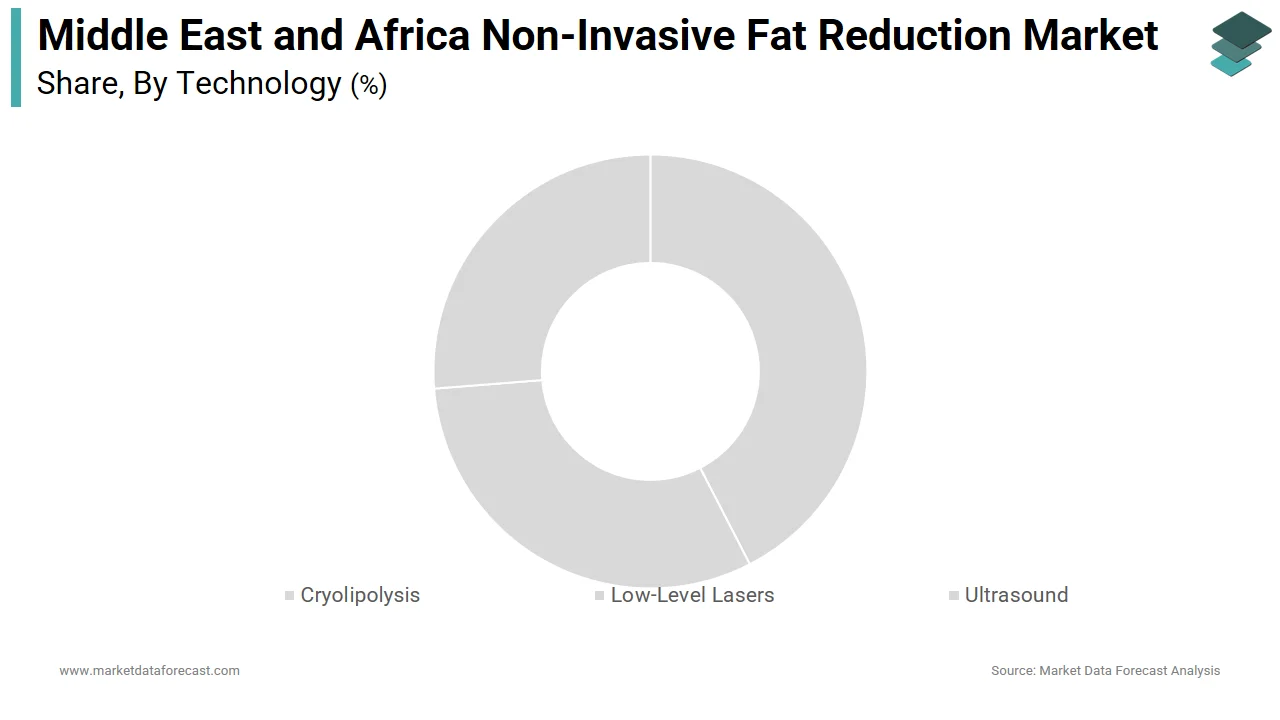
The ultrasound segment is projected to register the fastest CAGR of 14.8% during the forecast period, driven by technological advancements in high-intensity focused ultrasound systems that offer deeper tissue penetration and simultaneous skin-tightening benefits appealing to a broader patient demographic. High-intensity focused ultrasound technology offers the unique advantage of simultaneously reducing subcutaneous fat and stimulating collagen production for skin tightening, which addresses two major aesthetic concerns in a single treatment session. This dual functionality provides greater value for money, appealing to cost-conscious consumers in emerging markets like Kenya and Nigeria. The ability to treat larger areas such as the abdomen and thighs with precision enhances patient satisfaction and word-of-mouth referrals.
By End User Insights
The cosmetic centers segment held a significant share of the Middle East & Africa Non-Invasive Fat Reduction Market in 2025. Cosmetic centers differentiate themselves by providing a comprehensive suite of aesthetic treatments under one roof along with premium amenities and personalized care that cater to the expectations of affluent clients in the Middle East and Africa. According to the Global Wellness Institute, the luxury wellness market in the Gulf Cooperation Council countries grew by 15% in 2023, with cosmetic centers leading the segment by offering holistic packages that combine fat reduction with spa services and nutritional counseling. The centers invest heavily in interior design and customer service to create a relaxing atmosphere that reduces anxiety associated with medical procedures. The availability of multiple technologies allows practitioners to customize treatment plans for optimal results, enhancing patient satisfaction. Privacy is a critical factor in conservative societies, and cosmetic centers often provide discreet entrances and private suites to protect client confidentiality.
The dermatology clinics segment is likely to witness the fastest CAGR of 16.2% from 2026 to 2034, with increasing patient trust in medical professionals for aesthetic procedures and the integration of non-invasive fat reduction into comprehensive skin health management plans. Patients are increasingly preferring dermatology clinics for non-invasive fat reduction due to the medical expertise and clinical rigor provided by board-certified dermatologists, which minimizes risks and ensures evidence-based treatment protocols. The Israeli Ministry of Health reports that dermatology clinics have seen an increase in referrals for body contouring procedures as general practitioners recognize the safety and efficacy of medically supervised treatments. This trust is particularly important in regions where regulatory oversight may be inconsistent as patients seek assurance from qualified professionals. Dermatologists can also address concurrent skin conditions such as cellulite or stretch marks, providing a holistic approach to body aesthetics. The ability to manage adverse events immediately if they occur further reinforces patient confidence.
COUNTRY LEVEL ANALYSIS
Saudi Arabia Non-Invasive Fat Reduction Market Analysis
Saudi Arabia was the top performer of the Middle East & Africa Non-Invasive Fat Reduction Market by accounting for 45.3% of the share in 2025, with high disposable incomes, a strong cultural emphasis on aesthetics, and government support for healthcare privatization. The Saudi Food and Drug Authority has streamlined approval processes for aesthetic devices, encouraging international manufacturers to enter the market. High obesity rates drive clinical demand for effective fat reduction solutions. The Vision 2030 initiative promotes medical tourism and local healthcare excellence, fostering a competitive landscape. Major cities like Riyadh and Jeddah host numerous high-end cosmetic centers catering to affluent locals and regional visitors. Cultural shifts towards body positivity and self-care further stimulate market growth.
UAE Non-Invasive Fat Reduction Market Analysis
The United Arab Emirates non-invasive fat reduction market was ranked second by capturing a 22.7% share in 2025, with its status as a global medical tourism destination and high concentration of luxury aesthetic clinics. The UAE has stringent regulatory standards ensuring high quality and safe practices, which attract international patients seeking reliable treatments. Dubai and Abu Dhabi are home to world-class facilities equipped with the latest technologies. A high expatriate population with diverse aesthetic preferences drives demand for varied treatments. The government’s focus on healthcare innovation supports adoption of AI and personalized medicine.
Israel Non-Invasive Fat Reduction Market Analysis
Israel non-invasive fat reduction market is likely to grow at the fastest CAGR during the forecast period, with strong local manufacturing of aesthetic devices and high adoption rates among its population. The country is a leader in research and development for ultrasound and laser technologies, exporting innovations globally. Domestic consumption is high due to cultural acceptance of aesthetic procedures and high health literacy. The dense network of dermatology clinics ensures widespread access to treatments. Regulatory frameworks are rigorous, promoting safety and efficacy. The small geographic size facilitates rapid dissemination of new technologies. Consumers prioritize scientific evidence and clinical results.
South Africa Non-Invasive Fat Reduction Market Analysis
South Africa's non-invasive fat reduction market growth is driven by the well-developed private healthcare sector and high demand for aesthetic procedures among the middle and upper classes. Cape Town and Johannesburg are hubs for medical tourism, attracting patients from neighboring countries. High levels of body consciousness drive demand for fat reduction. Availability of advanced technologies is comparable to developed countries. Economic challenges affect affordability for some segments, but luxury remains robust.
Ethiopia Non-Invasive Fat Reduction Market Analysis
Ethiopia non-invasive fat reduction market growth is driven by urbanization and a growing middle class in Addis Ababa. Limited availability of advanced devices restricts market size to high-end clinics. Rising awareness through social media creates latent demand. Import duties and foreign exchange constraints challenge equipment acquisition. Local practitioners seek training abroad to build expertise. The market is in early stages with significant growth potential as the economy develops. Cultural attitudes towards body image are evolving. International brands are beginning to explore entry strategies. Infrastructure improvements will facilitate future expansion.
COMPETITIVE LANDSCAPE
The competitive landscape of the Middle East and Africa Non-Invasive Fat Reduction Market features intense rivalry among global medical device manufacturers and regional distributors striving to capture growing demand for aesthetic procedures. Major participants compete primarily on technological innovation, clinical efficacy, and brand reputation while navigating diverse regulatory frameworks across different countries. Price competition is significant in emerging markets, prompting companies to offer flexible financing and bundled service packages to attract cost-sensitive clinics. Differentiation increasingly depends on comprehensive training support and after-sales service rather than just hardware specifications. New entrants from Asia bring cost-effective alternatives, challenging established Western brands on price while maintaining acceptable quality standards. Strategic alliances with local healthcare providers facilitate entry and ensure compliance with cultural and legal requirements. Intellectual property protection remains critical as counterfeit devices pose risks to patient safety and brand integrity.
KEY MARKET PLAYERS
The leading companies operating in the Middle East and Africa non-invasive fat reduction market include:
- Fosun Pharmaceutical Co., Ltd.
- ZELTIQ Aesthetics, Inc.
- Solta Medical
- Cutera, Inc.
- BTL Industries
- Allergan Aesthetics
- Cynosure, Inc.
- BTL Medical Solutions
- Syneron Medical Ltd.
- Alma Lasers
- Venus Concept
TOP PLAYERS IN THE MARKET
- Allergan Aesthetics maintains a dominant presence in the Middle East and Africa non-invasive fat reduction market through its flagship CoolSculpting technology, which is widely recognized for safety and efficacy. The company recently expanded its educational initiatives by launching specialized training academies in Dubai and Riyadh to certify local practitioners in advanced cryolipolysis techniques. Allergan actively collaborates with leading cosmetic centers to introduce next-generation applicators that reduce treatment time and enhance patient comfort. Their strategic focus on digital marketing campaigns targeting high-net-worth individuals strengthens brand loyalty across the Gulf region. This commitment to quality and education solidifies their leadership position in the regional aesthetic landscape.
- BTL Medical Solutions contributes significantly to the market with its innovative Exilis Ultra device, which combines radiofrequency and ultrasound technologies for simultaneous fat reduction and skin tightening. The company recently established a regional distribution hub in Johannesburg to improve supply chain efficiency and service response times across Sub-Saharan Africa. BTL strengthens its market position by partnering with dermatology clinics in Egypt and Kenya to offer comprehensive body contouring packages. Their emphasis on clinical evidence and peer-reviewed studies builds credibility among medical practitioners seeking reliable outcomes. The company also invests in user-friendly interfaces that simplify operation for technicians, reducing the learning curve.
- Alma Lasers leverages its strong manufacturing base in Israel to deliver high-quality laser and energy-based devices such as BodyTite and Forma to the Middle East and Africa regions. The company recently launched upgraded versions of its non-invasive platforms featuring enhanced cooling systems and faster processing speeds to meet growing demand in Saudi Arabia and the United Arab Emirates. Alma strengthens its position by participating in major regional medical conferences to showcase technological advancements and engage with key opinion leaders. Their extensive network of authorized service centers ensures minimal downtime for clinics maintaining operational continuity. This approach democratizes access to advanced aesthetic treatments while fostering long term relationships with healthcare providers.
TOP STRATEGIES USED BY KEY MARKET PARTICIPANTS
Key players in the Middle East and Africa Non-Invasive Fat Reduction Market prioritize strategic partnerships with local distributors and medical institutions to navigate complex regulatory environments and enhance market penetration. Companies invest heavily in practitioner training and certification programs to ensure safe and effective use of devices, thereby building trust and credibility among healthcare providers. Expansion of service centers and technical support networks improves after-sales service quality, reducing equipment downtime and increasing customer satisfaction. Focus on digital marketing and influencer collaborations raises consumer awareness and drives demand for non-invasive procedures in urban centers. Development of multi-functional devices that offer combined benefits like fat reduction and skin tightening provides competitive differentiation.
MARKET SEGMENTATION
This research report on the Middle East & Africa Non-Invasive Fat Reduction Market has been segmented and sub-segmented into the following categories.
By Technology
- Cryolipolysis
- Low-Level Lasers
- Ultrasound
By End User
- Cosmetic Centers
- Dermatology Clinics
- Hospitals
By Country
- KSA
- UAE
- Israel
- The rest of GCC countries
- South Africa
- Ethiopia
- Kenya
- Egypt
- Sudan
- Rest of MEA