- Product Description Description
- Table of Contents TOC
- List of Table & Figure LOT
- Get Free Sample PDF Sample PDF
Market Size, 2025
$1.92 BnMarket Estimate, 2026
$2.2 BnMarket Forecast, 2034
$6.49 BnCAGR, 2026–2034
14.5%Global Non-Invasive Fat Reduction Market Report Summary
The global non-invasive fat reduction market was valued at USD 1.92 billion in 2025, is estimated to reach USD 2.20 billion in 2026, and is projected to reach USD 6.49 billion by 2034, growing at a CAGR of 14.5% from 2026 to 2034. Market growth is driven by increasing demand for aesthetic procedures, rising awareness of body contouring treatments, and growing preference for non-surgical alternatives. Non-invasive fat reduction techniques offer minimal downtime, reduced risk, and effective fat removal, making them highly attractive to consumers. The influence of social media, increasing disposable incomes, and advancements in aesthetic technologies are further accelerating market expansion globally.
Key Market Trends
- Rising demand for non-surgical body contouring procedures.
- Increasing adoption of advanced aesthetic technologies.
- Growing influence of social media and beauty standards.
- Expansion of cosmetic clinics and wellness centers.
- Advancements in cryolipolysis, laser, and ultrasound-based treatments.
Segmental Insights
- Based on technology, the cryolipolysis segment dominated the global non-invasive fat reduction market by capturing 48.9% share in 2025, driven by its effectiveness and widespread adoption.
- Based on end users, the cosmetic centers segment led the market with 55.8% share in 2025, supported by increasing consumer preference for specialized aesthetic clinics.
Regional Insights
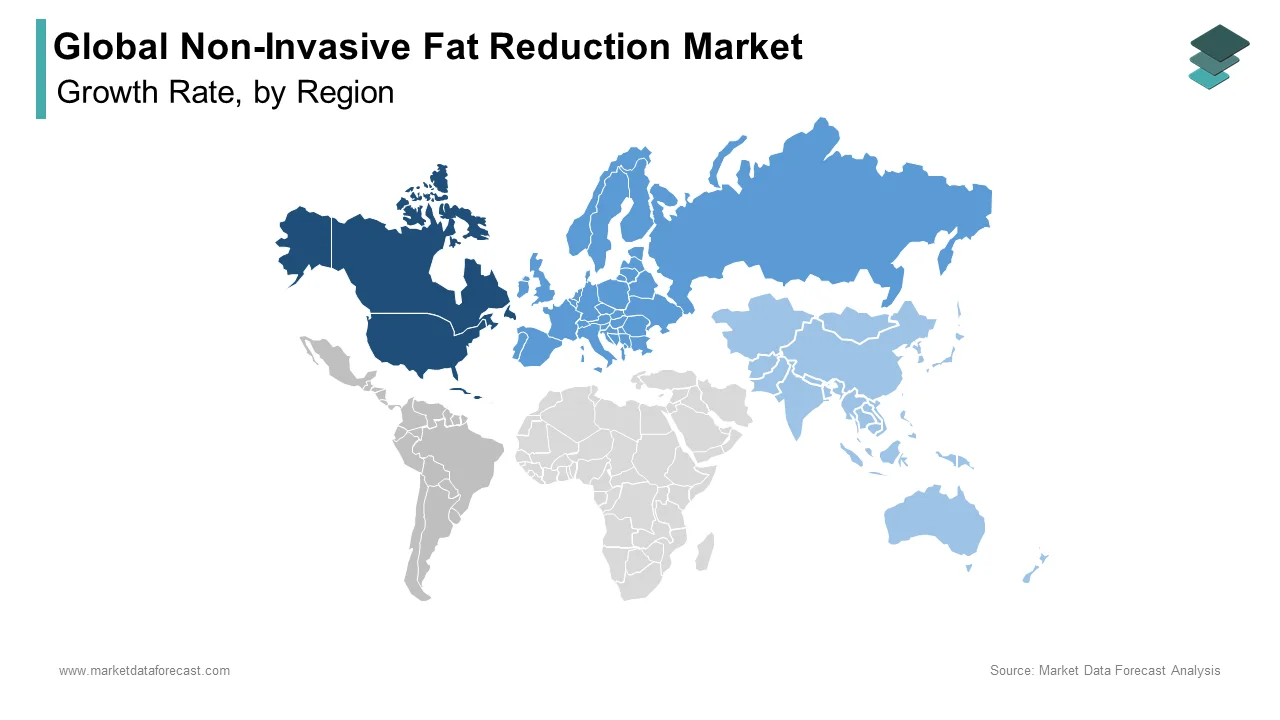
The global non-invasive fat reduction market is witnessing strong growth across major regions due to rising aesthetic awareness and technological advancements.
- North America led the market in 2025 with 42.7% share, supported by high demand for cosmetic procedures and advanced healthcare infrastructure.
- Europe followed with 28.6% share in 2025, driven by increasing adoption of aesthetic treatments and growing medical tourism.
- Asia-Pacific is expected to register the fastest CAGR due to rising disposable incomes, large population base, and increasing demand for body contouring solutions.
Competitive Landscape
The global non-invasive fat reduction market is highly competitive, with the presence of established aesthetic device manufacturers and emerging players. Companies are focusing on technological innovation, expanding product portfolios, and enhancing treatment efficacy. Strategic collaborations, product launches, and global expansion are shaping competitive dynamics across the market.
Prominent companies operating in the global non-invasive fat reduction market include Fosun Pharmaceutical Co., Ltd., Cutera, Inc., Allergan Aesthetics, Bausch Health Companies Inc., BTL Industries, Invasix Aesthetic Solutions, Cynosure, Inc., ZELTIQ Aesthetics, Inc., Solta Medical, Syneron Medical Ltd., and Venus Concept.
Global Non-invasive Fat Reduction Market Size
The size of the global non-invasive fat reduction market was worth USD 1.92 billion in 2025. The global market is anticipated to grow at a CAGR of 14.5% from 2026 to 2034 and be worth USD 6.49 billion by 2034 from USD 2.20 billion in 2026.

Non-invasive fat reduction (also known as non-surgical lipolysis) refers to a variety of medical procedures designed to target and eliminate stubborn pockets of fat without surgical incisions, general anaesthesia, or significant downtime. These systems utilize diverse energy modalities, including cryolipolysis, high-intensity focused ultrasound, radiofrequency, and laser lipolysis to induce apoptosis in fat cells, which are then naturally metabolized by the body. The definition extends beyond simple contouring to include skin tightening and cellulite reduction, often integrated into multi-functional platforms. As per data released by the World Health Organization in 2024, global adult obesity has more than doubled since 1990, with 890 million adults living with obesity in 2022, creating a vast demographic seeking weight management solutions. According to the Centers for Disease Control and Prevention, approximately 42 percent of the United States adult population suffers from obesity, driving urgent demand for effective interventions that do not carry surgical risks. The market operates under strict regulatory oversight from bodies like the Food and Drug Administration and the European Medicines Agency to ensure device safety and efficacy claims. Research indicates that rising awareness in Europe has led to a projected double-digit growth in the medical aesthetics market, reflecting a cultural shift toward 'preventative aesthetics' (or prejuvenation) among younger demographics, while Eurostat data shows general household spending on personal care services remains stable with a modest 0.4 percent increase in 2024. Unlike traditional liposuction, these procedures appeal to individuals who desire modest contouring rather than massive weight loss, bridging the gap between diet, exercise, and surgery. This industry represents the convergence of biomedical engineering and consumer wellness, driven by a societal emphasis on body image and the increasing accessibility of medical-grade treatments in non-clinical settings.
MARKET DRIVERS
Rising Global Prevalence of Obesity and Sedentary Lifestyles
The escalating global epidemic of obesity, coupled with increasingly sedentary lifestyles, is a key factor driving the growth of the global non-invasive fat reduction market. These factors have rendered traditional diet and exercise insufficient for many individuals seeking body contouring. As modern work environments become more desk-bound and caloric intake rises due to processed food consumption, a significant portion of the population struggles with localized fat deposits that are resistant to lifestyle changes alone. According to statistics from the World Health Organization, more than 1 billion people worldwide were living with obesity in 2022, a figure that includes 38 percent of adults who are overweight, creating an immense addressable market for adipose reduction technologies. The Centers for Disease Control and Prevention reports that physical inactivity contributes to approximately 25 percent of breast and colon cancers and type 2 diabetes, prompting health-conscious individuals to seek adjunctive therapies for metabolic health and aesthetic improvement. Furthermore, the psychological impact of body image dissatisfaction drives millions to pursue corrective measures, with surveys indicating that a significant portion of adults express unhappiness with their body shape. Data from the International Federation for the Surgery of Obesity and Metabolic Disorders highlights that while bariatric surgery addresses severe obesity, the majority of the population seeks less invasive options for moderate fat reduction. This demographic reality ensures a consistent and growing stream of patients who view non-invasive procedures as a viable complement to their health regimens. The chronic nature of obesity means that demand is not cyclical but structural, providing a stable foundation for market expansion as populations continue to gain weight globally.
Technological Advancements Enhancing Efficacy and Safety Profiles
The rapid evolution of energy-based technologies also fuels the expansion of the global non-invasive fat reduction market. These advancements have significantly improved the efficacy, safety, and comfort of non-invasive fat reduction procedures, thereby increasing patient acceptance and repeat usage. Early generations of devices often suffered from inconsistent results, prolonged treatment times, and side effects like paradoxical adipose hyperplasia, but modern iterations utilize real-time temperature monitoring, automated applicators, and combination modalities to overcome these limitations. As per research findings published in the Journal of Cosmetic and Laser Therapy, newer high-intensity focused ultrasound systems have demonstrated fat layer reduction of up to 25 percent in a single session with minimal discomfort, a marked improvement over previous standards. The integration of artificial intelligence allows devices to customize energy delivery based on individual tissue thickness and composition, reducing the risk of burns or nerve damage. The Food and Drug Administration has cleared numerous next-generation devices that combine cryolipolysis with radiofrequency for simultaneous fat reduction and skin tightening, addressing two major patient concerns in one visit. Data from clinical trials indicate that patient satisfaction scores have risen by 35 percent with these advanced platforms due to visible results appearing sooner and lasting longer. Furthermore, the development of portable and handheld devices has enabled treatments in med-spas and even home settings, democratizing access. These technological breakthroughs transform non-invasive fat reduction from a niche luxury into a mainstream medical aesthetic standard, driving robust adoption across diverse healthcare environments.
MARKET RESTRAINTS
High Cost of Procedures and Limited Insurance Coverage
The substantial out-of-pocket cost associated with these elective procedures hampers the universal adoption of these procedures and the growth of the global non-invasive fat reduction market. This is compounded by the near-total lack of insurance reimbursement, as they are classified as cosmetic rather than medically necessary. A single treatment session can range from 600 to 4000 dollars depending on the technology and area treated, and multiple sessions are often required to achieve optimal results, placing these therapies out of reach for lower and middle-income demographics. According to financial analyses by the American Society of Plastic Surgeons, the average cost of non-surgical fat reduction has remained relatively static or increased slightly due to technology upgrades, while real wages for many consumers have stagnated, squeezing discretionary spending power. In developing nations where the burden of obesity is rising fastest, the cost barrier is even more pronounced, limiting market penetration to affluent urban elites. Data from healthcare expenditure surveys indicates that less than 5 percent of aesthetic procedures receive any form of insurance coverage, forcing patients to rely on personal savings or high-interest medical credit lines. The economic uncertainty caused by global inflationary pressures further exacerbates this issue, with consumers prioritizing essential goods over elective beauty treatments. Furthermore, the lack of standardized pricing leads to significant variation between providers, creating confusion and hesitation among potential clients. The high direct cost will remain a significant brake on market growth until these procedures demonstrate clear metabolic health benefits that justify medical coding. Therefore, until financing options become more accessible, the customer base will be restricted to those with high disposable income.
Variability in Clinical Outcomes and Risk of Adverse Events
Inherent variability in clinical outcomes depending on patient anatomy, operator skill, and device quality inhibits the expansion of the global non-invasive fat reduction market. Additionally, the rare but serious risk of adverse events, such as paradoxical adipose hyperplasia, can deter potential users. Unlike surgical liposuction, which physically removes fat immediately, non-invasive methods rely on biological processes that vary significantly between individuals, leading to unpredictable results that may not meet patient expectations. Recent research and meta-analyses suggest that the incidence of paradoxical adipose hyperplasia (fat enlargement) following cryolipolysis is higher than initially reported by manufacturers, often requiring surgical correction, which causes reputational damage to the treatment. The lack of uniform training standards for practitioners in med-spas and non-medical settings increases the likelihood of improper application, burns, or nerve injury. The Food and Drug Administration has issued safety communications regarding these risks, urging providers to inform patients thoroughly, which can instill fear and hesitation. Data from patient feedback indicates that dissatisfaction due to a lack of visible results is a leading cause of disputes in the non-surgical aesthetic sector. This inconsistency forces cautious consumers to delay treatment or seek more expensive board-certified providers, limiting market volume. The fear of permanent disfigurement, however rare, acts as a powerful psychological barrier, particularly in an era of social media where negative outcomes are rapidly amplified. Outcome predictability must reach near-perfect levels, and adverse event rates must be virtually eliminated. Without these improvements, safety concerns will continue to restrain mass market adoption.
MARKET OPPORTUNITIES
Expansion into Men's Aesthetics and Body Contouring
Societal stigma surrounding cosmetic procedures is diminishing, which creates a transformative opportunity within the non-invasive fat reduction market. The segment of male aesthetics is rapidly expanding as more men seek to address stubborn fat deposits through body contouring. Historically dominated by female clients, the market is witnessing a paradigm shift as men increasingly prioritize physical appearance and fitness, driving demand for treatments targeting areas like the abdomen, flanks, and chest that are resistant to exercise. According to data from the American Society of Plastic Surgeons, the number of minimally invasive procedures performed on men has seen significant growth over the last five years, often outpacing the percentage growth in the female demographic. The International Society of Aesthetic Plastic Surgery reports that men now account for nearly 15 percent of all global aesthetic procedures, a figure projected to rise as marketing campaigns become more gender-inclusive. Furthermore, the specific physiological differences in male fat distribution, which tends to be more visceral and fibrous, present an opportunity for manufacturers to develop specialized applicators and protocols tailored to male anatomy. Data from consumer behavior studies indicates that men prefer treatments with zero downtime that allow them to return immediately to work and athletic activities, a key selling point of non-invasive technologies. The rise of "brotox" and male-focused med-spas creates new distribution channels and branding opportunities. Tailoring messaging and technology to the unique needs of the male population allows companies to unlock a vast, underutilized revenue stream. This approach promises double-digit growth rates in the coming decade.
Integration of Combination Therapies for Holistic Body Sculpting
Combination therapies that merge fat reduction with skin tightening, muscle building, and lymphatic drainage make way for the expansion of the global non-invasive fat reduction market. These integrated solutions provide comprehensive body sculpting by addressing multiple aesthetic concerns at once. Patients increasingly seek holistic results where eliminating fat is only one component of a desired transformation that includes firming loose skin and enhancing muscle tone, driving demand for multi-modal platforms. As per clinical studies published in Dermatologic Surgery, combining cryolipolysis with radiofrequency or high-intensity electromagnetic stimulation yields superior aesthetic outcomes compared to monotherapy, with notably higher patient satisfaction rates. The American Board of Cosmetic Surgery emphasizes that aging skin often lacks the elasticity to retract after fat loss, making concurrent skin tightening essential for optimal results, particularly in older demographics. Manufacturers are responding by launching hybrid devices capable of delivering sequential or simultaneous energies, streamlining workflows, and increasing revenue per patient visit. Data from practice management software indicates that clinics offering combination packages typically experience higher retention rates and average transaction values than those offering standalone fat reduction. Furthermore, the ability to customize treatment plans based on individual body composition allows for personalized medicine approaches that command premium pricing. The trend toward "lunchtime procedures" that deliver maximal impact in minimal time aligns perfectly with these integrated systems. Providers can differentiate themselves by positioning non-invasive fat reduction as part of a broader wellness and sculpting ecosystem. In doing so, they can capture a larger share of the consumer wallet and drive significant market expansion.
MARKET CHALLENGES
Proliferation of Counterfeit Devices and Unqualified Practitioners
The proliferation of counterfeit devices and unqualified practitioners in unregulated settings is a paramount challenge for the global non-invasive fat reduction market. Such activities undermine patient safety and erode public trust in legitimate technologies. The high profitability of aesthetic treatments has attracted illegitimate operators who purchase cheap, unapproved clones of established devices from unauthorized suppliers, often lacking critical safety features like temperature sensors or emergency stop mechanisms. According to FDA alerts and academic studies, counterfeit aesthetic medical devices and injectables are increasingly entering the market, with significant amounts distributed through unauthorized online channels. The International Alliance of Medical Aesthetic Professionals warns that treatments administered by individuals without medical training or proper certification significantly increase the risk of burns, scarring, and ineffective results. Data from malpractice insurance claims reveal that incidents involving non-medical personnel account for a disproportionate share of adverse events in the non-surgical sector. The lack of stringent licensing requirements in certain jurisdictions allows spas and salons to offer complex medical procedures without physician oversight, creating a Wild West environment. Social media influencers promoting DIY treatments or discount clinics further complicate the landscape, misleading consumers about the risks involved. This erosion of quality control threatens the reputation of the entire industry, as high-profile failures can lead to stricter regulations that burden legitimate providers. Combating this shadow market requires coordinated global enforcement and enhanced consumer education, but the scale of the problem remains a persistent threat to market integrity.
Regulatory Heterogeneity and Reimbursement Complexities
A fragmented and heterogeneous regulatory landscape governs non-invasive fat reduction devices across different countries, which constitutes a major barrier to the global non-invasive fat reduction market. Consequently, this complicates global market entry, increases compliance costs, and delays product launches. Agencies like the FDA and EU notified bodies maintain rigorous approval processes, but other regions lack clear frameworks or enforce inconsistent standards, causing manufacturer uncertainty. This disparity in regulatory requirements makes international market access challenging, creating compliance hurdles and delaying product launches. Compliance analyses indicate that navigating diverse regulatory requirements across multiple jurisdictions significantly delays the market introduction of innovative medical technologies compared to harmonized regions. The reclassification of certain energy-based devices in Europe under stricter MDR rules has forced some manufacturers to withdraw products or undergo costly re-certification, disrupting supply chains. Data from industry legal surveys indicates that regulatory divergence forces companies to maintain separate documentation, clinical trial protocols, and labeling for each region, inflating operational expenses by up to 30 percent. Furthermore, the ambiguity regarding the classification of new combination devices often leads to prolonged review periods and requests for additional data. The lack of international reciprocity means that approval in one major market does not guarantee acceptance in another, stifling innovation, especially for smaller companies with limited resources. The complexity of navigating disparate legal environments remains a significant hurdle to efficient global expansion and the rapid dissemination of safe, effective technologies. This challenge will persist until greater regulatory harmonization is achieved.
SEGMENTAL ANALYSIS
By Technology Insights
The Cryolipolysis segment occupied the majority share of 48.9% of the global non-invasive fat reduction market in 2025. This position of the segment is driven by its status as the most recognized and clinically validated technology for localized fat reduction. Its unique mechanism of action selectively targets adipose tissue while protecting surrounding skin and nerves. A leading force behind the leadership of cryolipolysis is its extensive track record of clinical success and regulatory clearance, which has built immense trust among both practitioners and patients over the last decade. Unlike newer technologies that are still gathering long-term data, cryolipolysis boasts thousands of published studies confirming its ability to reduce fat layer thickness per treatment session with a predictable safety profile. According to sources, cryolipolysis remains a leading non-surgical body contouring procedure worldwide, with a substantial cumulative volume of treatments performed since its regulatory clearance. The mechanism of controlled cooling induces apoptosis in fat cells while leaving skin integrity intact, a specificity that resonates strongly with risk-averse consumers. Research published in the Aesthetic Surgery Journal indicates that patient satisfaction rates for cryolipolysis are high and comparable to other leading modalities, driven by the visible and lasting results achieved after limited sessions. Furthermore, the widespread adoption of this technology by major medical device manufacturers has led to a robust ecosystem of trained providers and standardized protocols, reducing the learning curve for new clinics. The sheer volume of real-world evidence supporting its efficacy creates a powerful barrier to entry for alternative technologies, ensuring that cryolipolysis remains the gold standard and the first choice for patients seeking reliable fat reduction. This segment is further helped by the versatility of cryolipolysis applicators, which have evolved to treat a wide array of body areas, including the abdomen, flanks, thighs, back, arms, and even submental fat, making it a comprehensive solution for diverse patient needs. Early devices were limited to large flat surfaces, but technological advancements have introduced curved and smaller applicators capable of targeting difficult-to-reach contours, expanding the addressable patient population significantly. As per recent technology trends from leading aesthetic device companies, a significant proportion of modern cryolipolysis systems feature modular applicator heads designed for specific anatomical zones, enhancing treatment precision and comfort. This adaptability allows clinics to offer customized treatment plans for men and women with varying body shapes, maximizing the utility of a single platform. As per practice management analyses, the ability to treat multiple areas in a single visit notably increases the average transaction value per patient, driving higher revenue for providers and reinforcing investment in cryolipolysis equipment. Additionally, the technology's effectiveness across different skin types and BMI ranges, provided the patient has pinchable fat, ensures broad inclusivity compared to laser or ultrasound methods, which may have limitations based on skin pigmentation or tissue density. The combination of versatile hardware and proven outcomes cements cryolipolysis as the dominant force in the non-invasive fat reduction landscape.

The Ultrasound segment is likely to experience the fastest CAGR of 14.5% from 2026 to 2034. This swift growth of the segment is fueled by its ability to penetrate deeper into tissue layers than other modalities and its dual capability to reduce fat while simultaneously tightening skin, addressing two major aesthetic concerns in one procedure. The quick rise of this segment is mostly due to its unique physical property of focusing acoustic energy at precise depths up to 13 millimeters beneath the skin surface, allowing it to target deep visceral fat layers that cryolipolysis and lasers often cannot reach effectively. This deep penetration enables the thermal destruction of adipocytes through coagulative necrosis while sparing the epidermis, making it suitable for patients with thicker subcutaneous fat deposits. Furthermore, the real-time imaging capabilities integrated into many modern ultrasound systems allow practitioners to visualize the treatment area and monitor energy delivery, enhancing safety and confidence. As the demographic shift toward older patients seeking rejuvenation accelerates, the dual-action capability of ultrasound positions it as the most dynamic and rapidly adopted technology in the market. Adding to this growth of the segment is the rapid technological evolution of ultrasound devices that has significantly reduced treatment times and improved patient comfort, overcoming historical barriers related to pain and prolonged session durations. Next-generation HIFU systems utilize multi-transducer arrays and optimized pulse sequences to treat large areas like the abdomen in under 30 minutes, a stark contrast to earlier iterations that required over an hour, thereby increasing clinic throughput and profitability. Additionally, the development of portable and handheld ultrasound units has democratized access, allowing smaller med-spas and mobile practices to offer high-end body contouring services. The convergence of speed, comfort, and affordability is propelling ultrasound to the forefront of market growth, capturing share from slower, more painful alternatives.
By End Users Insights
In 2025, the Cosmetic Centers segment was the top-performing segment in the non-invasive fat reduction market and captured a 55.8% share. This supremacy of the segment is supported by the proliferation of specialized med-spas and beauty clinics that focus exclusively on aesthetic enhancements, offering a consumer-friendly environment, flexible scheduling, and aggressive marketing strategies that appeal to the mass market. One key reason for the domination of cosmetic centers is the strong consumer preference for dedicated aesthetic facilities that provide a relaxing, spa-like atmosphere distinct from the clinical and often sterile environment of hospitals or dermatology offices. Patients seeking non-invasive fat reduction typically view the procedure as a lifestyle enhancement rather than a medical necessity, and thus prioritize convenience, ambiance, and customer service over strict medical settings. Cosmetic centers often operate with extended hours, including evenings and weekends, catering to working professionals who cannot visit clinics during standard business hours. Furthermore, these centers employ sales-driven models with package deals and membership programs that encourage repeat visits and higher spending per customer, a strategy less common in medical practices. The ability to bundle fat reduction with other services like facials, massages, and waxing creates a one-stop-shop appeal that maximizes customer retention. This consumer-centric approach ensures that cosmetic centers remain the primary destination for individuals seeking non-invasive aesthetic solutions. Also strengthening this segment is the aggressive marketing capabilities and lower operational overhead of cosmetic centers compared to hospital-based departments, allowing them to price competitively and capture a larger volume of price-sensitive customers. Med-spas invest heavily in digital marketing, social media influencers, and local advertising to build brand awareness and drive foot traffic, whereas hospitals often lack the flexibility or budget for such targeted promotional activities. The cost efficiency enables them to offer discounted rates and financing options that make non-invasive fat reduction accessible to a broader demographic. Additionally, the regulatory framework for med-spas in many regions allows for non-physician operators to perform certain procedures under supervision, further reducing labor costs and increasing scalability. The combination of vibrant marketing presence and economic agility allows cosmetic centers to dominate the market share by meeting the demand for affordable, convenient, and aggressively promoted aesthetic services.
The Dermatology Clinics segment is on the rise and is expected to be the fastest-growing segment in the market by witnessing a CAGR of 12.8% between 2026 and 2034, owing to increasing patient demand for physician-led treatments, the integration of fat reduction into comprehensive skin health plans, and the rising complexity of cases requiring medical expertise. This segment’s surge is largely caused by a growing consumer awareness of the risks associated with unregulated med-spas and a corresponding shift toward seeking treatments from board-certified dermatologists who offer superior safety and clinical expertise. As reports of adverse events from counterfeit devices and untrained practitioners gain media attention, patients are increasingly prioritizing medical oversight to ensure procedural safety and optimal outcomes. Dermatologists possess the deep anatomical knowledge required to handle complications immediately and customize treatments for complex medical histories, a value proposition that resonates strongly with cautious consumers. Furthermore, the ability of dermatologists to combine fat reduction with medical-grade skincare and prescription therapies creates a synergistic treatment plan that addresses underlying skin conditions alongside aesthetic goals. This trend toward "medicalization" of aesthetics is driving patients away from purely commercial spas and toward clinical settings, fueling the segment's accelerated growth. Further supporting this segment is the strategic integration of non-invasive fat reduction into holistic skin health and anti-aging portfolios offered by dermatology clinics, allowing for cross-selling opportunities and enhanced patient lifetime value. Unlike standalone med-spas that focus solely on isolated procedures, dermatologists view body contouring as part of a broader continuum of care that includes sun damage repair, acne management, and surgical interventions. The ability to leverage electronic health records to track long-term progress and coordinate care across different specialties provides a seamless patient experience that fosters loyalty. Additionally, dermatologists are often the first to adopt cutting-edge technologies and participate in clinical trials, giving them early access to next-generation devices that attract early adopters. As the definition of skin health expands to include body contouring, dermatology clinics are uniquely positioned to capture this growing demand. This positioning drives their status as the fastest-growing segment.
REGIONAL ANALYSIS
North America Non-Invasive Fat Reduction Market Analysis
North America dominated the global non-invasive fat reduction market and accounted for a 42.7% share in 2025 because of its high concentration of aesthetic providers, an advanced regulatory framework that encourages innovation, and a culture deeply entrenched in body positivity and self-improvement trends. The United States is the central pillar of expansion, supported by the highest number of certified med-spas and dermatology clinics per capita globally, creating a hyper-competitive landscape that drives rapid adoption of new technologies. According to sources, the US accounts for nearly half of all non-surgical body contouring procedures performed worldwide, fueled by a robust consumer base willing to spend on elective aesthetics. The presence of major device manufacturers headquartered in the region facilitates early product launches and extensive practitioner training programs, ensuring quick market penetration for innovations like HIFU and cryolipolysis. The Food and Drug Administration's clear pathways for device clearance provide regulatory certainty that attracts investment and fosters a vibrant ecosystem of aesthetic entrepreneurship. Furthermore, the widespread acceptance of medical credit financing options allows consumers to afford high-cost treatments, removing financial barriers. The influence of social media and celebrity culture in the US also normalizes aesthetic procedures, driving demand among younger demographics. This confluence of supply-side innovation, demand-side drivers, and financial accessibility ensures that North America remains the largest and most sophisticated market for non-invasive fat reduction globally.
Europe Non-Invasive Fat Reduction Market Analysis
Europe was the next prominent region in the global non-invasive fat reduction market and captured a 28.6% share in 2025. This position of the European market is driven by a strong emphasis on safety standards, a mature medical tourism sector, and varying adoption rates across Western and Eastern member states. The region presents a diverse landscape where regulatory rigor under the EU Medical Device Regulation shapes product availability and clinical practices. The European market is showing its high concentration of luxury aesthetic clinics in countries like Germany, France, Italy, and the United Kingdom, which cater to a discerning clientele seeking premium, safe, and effective treatments. The implementation of strict MDR regulations has raised the bar for device quality, forcing the removal of substandard products and consolidating the market around reputable manufacturers, which enhances consumer trust. Research indicates that rising disposable incomes in Western Europe have led to increased expenditure on personal care services, with body contouring being a key beneficiary. Medical tourism plays a significant role, with patients traveling to hubs like Prague and Budapest for cost-effective yet high-quality treatments, boosting regional volumes. However, economic disparities between Northern and Southern Europe create fragmented growth patterns, with wealthier nations adopting premium technologies faster. The cultural emphasis on natural beauty and preventative care aligns well with non-invasive modalities. Despite economic headwinds, the commitment to safety and the growing awareness of aesthetic wellness ensure steady growth, making Europe a critical hub for high-standard non-invasive fat reduction services.
Asia-Pacific Non-Invasive Fat Reduction Market Analysis
Asia-Pacific is fastest growing market for non-invasive fat reduction, which is propelled by the massive populations of China, South Korea, Japan, and India, rising disposable incomes, and a cultural obsession with slimming and body sculpting. The historical focus on facial aesthetics in the region is being replaced by an explosive trend in body contouring, a development heavily influenced by rapid urbanization and changing beauty norms. In addition, the demand for slender body lines and enhanced physiques, driven by K-beauty trends and a rising middle class, has positioned China and South Korea as leaders in this transformation. According to studies, the number of non-surgical body contouring procedures in China has doubled in the last three years, fueled by the rapid proliferation of chain med-spas in tier-one and tier-two cities. In South Korea, the highest density of aesthetic clinics per capita globally creates intense competition that drives down prices and increases accessibility for the average consumer. Japan, with its aging society, drives demand for technologies that offer skin tightening alongside fat reduction, favoring ultrasound and radiofrequency modalities. The rising prevalence of obesity in India and Southeast Asia due to lifestyle changes is creating a new wave of demand for weight management solutions. Furthermore, the increasing acceptance of aesthetic procedures among men in the region is unlocking new revenue streams. The sheer scale of the population and the aggressive expansion of local and international clinic chains position Asia-Pacific as the primary growth engine for the future of the non-invasive fat reduction market. This position holds even though regulatory frameworks vary widely across the region.
Latin America Non-Invasive Fat Reduction Market Analysis
Latin America shows great potential in the global market, supported mainly by Brazil and Mexico, where a strong cultural emphasis on physical appearance, a thriving medical tourism industry, and a growing network of aesthetic clinics are beginning to unlock significant demand. The region benefits from a high societal value placed on body image, though economic volatility remains a hurdle. Brazil is the dominant force in the region, boasting one of the highest rates of plastic and aesthetic procedures per capita in the world, creating a fertile ground for non-invasive alternatives to surgery. The country's robust network of dermatologists and certified med-spas ensures high standards of care, attracting medical tourists from neighboring countries and the United States. In Mexico, proximity to the US facilitates the flow of advanced technologies and training, with border cities becoming hubs for affordable aesthetic treatments. However, currency fluctuations and import tariffs can inflate the cost of devices, limiting access for lower-income segments. Despite these challenges, the passionate cultural focus on fitness and beauty, combined with the increasing professionalization of the aesthetic sector, is fostering a conducive environment for market growth. Economic stability is improving, and local financing options are expanding, which is poised to accelerate the adoption of non-invasive fat reduction technologies in Latin America.
Middle East and Africa Non-Invasive Fat Reduction Market Analysis
The Middle East and Africa region is likely to grow notably in the global non-invasive fat reduction market, though it faces constraints from infrastructure deficits and varying economic development. Nevertheless, pockets of high potential exist in Gulf Cooperation Council countries and South Africa, driven by strategic investments in healthcare and luxury aesthetics. The region represents a long-term frontier where gradual improvements in disposable income and aesthetic awareness could unleash substantial demand. South Africa and the Gulf states serve as the anchors of advancement in the region, with nations like the United Arab Emirates and Saudi Arabia implementing ambitious vision plans that include the development of world-class medical cities and luxury wellness destinations. In South Africa, the private healthcare sector maintains high standards and utilizes the latest non-invasive technologies, serving an affluent demographic. However, the broader African continent faces significant challenges, with limited access to certified devices and trained practitioners in rural areas. A study suggests that efforts to improve regulatory harmonization and training are ongoing but slow. The rising prevalence of obesity and lifestyle diseases in the region creates a critical need for effective management tools. The Middle East and Africa are expected to transition from a marginal player to a meaningful contributor to the global market as political stability improves and foreign direct investment increases, particularly in the Gulf. This transformation is driven by top-down government mandates and the urgent need to address rising health and aesthetic concerns among growing urban populations.
COMPETITIVE LANDSCAPE
The competition in the non-invasive fat reduction market is characterized by intense rivalry among established medical device giants and agile specialized firms striving to differentiate through technological superiority and clinical evidence. Major players compete fiercely on the efficacy of fat reduction, the speed of treatments, and the comfort levels experienced by patients during procedures. The landscape is shifting as companies increasingly focus on combination therapies that address both adipose tissue and skin laxity to offer holistic body sculpting solutions. Rivalry often manifests through aggressive marketing campaigns targeting both physicians and end consumers to build brand recognition and drive procedure volume. Smaller niche firms challenge incumbents by introducing novel energy sources or contactless technologies that promise fewer side effects and broader applicability. Pricing pressure exists particularly in saturated markets, but premium pricing remains sustainable for devices with proven track records and strong clinical support. Regulatory compliance and the ability to provide extensive practitioner training are also key battlegrounds as safety and consistency directly influence reputation. Ultimately, the competitive dynamic is driven by the capacity to deliver visible results with minimal downtime while maintaining the highest standards of patient safety and satisfaction.
KEY MARKET PARTICIPANTS
Some promising companies leading the global non-invasive fat reduction market profiled in the report are
- Fosun Pharmaceutical Co., Ltd
- Cutera, Inc.
- Allergan Aesthetics
- Bausch Health Companies Inc
- BTL Industries
- Invasix Aesthetic Solutions
- Cynosure, Inc.
- ZELTIQ Aesthetics, Inc.
- Solta Medical
- Syneron Medical Ltd
- Venus Concept
TOP PLAYERS IN THE MARKET
- Allergan Aesthetics stands as a global pioneer in the non-invasive fat reduction sector, renowned for its CoolSculpting platform, which utilizes cryolipolysis technology to freeze and eliminate fat cells. The company has fundamentally shaped the market by establishing cryolipolysis as the gold standard for body contouring without surgery. Recent actions include the launch of next-generation applicators designed to treat smaller and more complex areas like the inner thighs and bra fat with greater precision. Allergan has also invested heavily in comprehensive training programs for providers to ensure consistent clinical outcomes and patient safety. By leveraging its vast global distribution network, the firm continues to expand access to its technologies in emerging markets. These strategic initiatives reinforce its leadership position by driving innovation in device design and fostering a robust ecosystem of certified practitioners dedicated to delivering high-quality aesthetic results worldwide.
- Cutera Inc is a leading innovator in the non-invasive fat reduction market, known for its TruSculpt system, which employs radiofrequency energy to heat and destroy fat cells while simultaneously tightening skin. The company distinguishes itself by offering versatile platforms that address multiple aesthetic concerns, including body contouring and skin laxity in a single treatment session. Recent actions involve the introduction of advanced handpieces that allow for faster treatment times and improved patient comfort through real-time temperature monitoring. Cutera has also expanded its direct sales force to penetrate key international markets and strengthen relationships with dermatology clinics and med-spas. The firm focuses on providing evidence-based solutions supported by clinical data to build trust among medical professionals. Cutera is solidifying its reputation as a critical player through the continuous refinement of its radiofrequency technology and expansion of its product portfolio. This allows providers to offer effective, efficient, and diverse body sculpting services to patients globally.
- Bausch Health Companies Inc operates through its Solta Medical division to deliver cutting-edge non-invasive fat reduction solutions primarily via the Vanquish ME system, which uses selective radiofrequency to target adipose tissue without contact. The company plays a vital role in advancing contactless technologies that offer uniform heating over large treatment areas, making it ideal for abdominal contouring. Recent actions include the development of integrated software features that optimize energy delivery based on individual patient anatomy to enhance efficacy and safety. Bausch Health has also pursued strategic partnerships with major aesthetic distributors to broaden the availability of its devices across North America and Europe. The firm emphasizes clinical education and support to help practitioners maximize the potential of their equipment. Bausch Health strengthens its market presence by focusing on unique contactless mechanisms and continuous technological refinement. These efforts allow the company to provide sophisticated, safe, and transformative body contouring tools for patients seeking non-surgical options.
TOP STRATEGIES USED BY KEY MARKET PARTICIPANTS
Key players in the non-invasive fat reduction market primarily employ strategic acquisitions and product innovations to expand their technology portfolios and integrate multi-modal capabilities, such as combining fat reduction with skin tightening. Companies frequently invest heavily in clinical research and development to generate robust data that validates the safety and efficacy of new devices for regulatory approval and physician adoption. Another major strategy involves establishing comprehensive training and certification programs for practitioners to ensure consistent treatment outcomes and build brand loyalty among clinics. Market participants are also focusing on expanding their global distribution networks to penetrate emerging markets where demand for aesthetic procedures is rising rapidly. Building strong direct-to-consumer marketing campaigns helps firms drive patient demand and educate the public about the benefits of non-surgical options. Additionally, companies are developing flexible financing models and leasing options to make high-cost devices more accessible to smaller med-spas. These strategies collectively enable leaders to capture market share and sustain growth in a competitive landscape.
MARKET SEGMENTATION
This market research report on the global non-invasive fat reduction market has been segmented and sub-segmented based on technology, end-user, and region.
By Technology
- Cryolipolysis
- Low-Level Lasers
- Ultrasound
By End Users
- Cosmetic Centers
- Dermatology Clinics
- Hospitals
By Region
- North America
- Europe
- Asia Pacific
- Latin America
- Middle East and Africa