- Product Description Description
- Table of Contents TOC
- List of Table & Figure LOT
- Get Free Sample PDF Sample PDF
Market Size, 2025
$2.09 BnMarket Estimate, 2026
$2.39 BnMarket Forecast, 2034
$6.9 BnCAGR, 2026–2034
14.2%Executive Summary: Global Body Contouring Devices Market
- Market Scope: Comprehensive global medical aesthetics assessment covering device types (non-invasive, minimally invasive, invasive), energy-based modalities (cryolipolysis, radiofrequency, laser, high-intensity focused electromagnetic), applications, and regional geographies.
- Market Valuation: Valued at USD 2.09 billion (2025), estimated at USD 2.39 billion (2026), and projected to reach USD 6.90 billion by 2034, registering a robust CAGR of 14.2% (2026–2034).
- Primary Growth Drivers: Escalating global obesity rates and sedentary lifestyles, rising consumer preference for low-downtime non-surgical cosmetic treatments, technological integration of AI and multi-energy platforms, and expanding male aesthetic and wellness trends.
Key Market Segment Metrics (2026–2034)
| Category | Leading Segment (2025 Position) | Fastest-Growing Segment |
|---|---|---|
| By Product / Modality | Non-invasive devices (capturing a dominant 60.8% share driven by zero incision and zero recovery requirements) | Cryolipolysis and high-intensity focused electromagnetic (HIFEM) muscle toning platforms (projected at a 12.5% CAGR) |
| By Application | Fat reduction and localized adiposity contouring (abdominal, flanks, and thighs) | Simultaneous muscle building and skin tightening procedures |
| By Region | North America (holding the leading 40.8% market share backed by high disposable incomes and mature aesthetic infrastructure) | Asia-Pacific (growing rapidly due to a booming medical tourism sector and rising urban middle classes in China, South Korea, and India) |
Major Market Players & Market Structure
Market Structure: Highly competitive global medical technology and aesthetics market featuring established multi-national corporations and specialized innovators competing through rigorous FDA clinical clearances, ergonomic multi-frequency applicators, and digital health platform integrations.
Key Companies: Meridian Co., Cynosure, Ltd., Lumenis, Bausch Health Corporation, Alma Lasers, Ltd., Syneron Medical Ltd., Solta Medical, Palomar Medical Technologies, and others.
 Download Free Sample Report
Global Body Contouring Devices Market Size
The size of the global contouring devices market was worth USD 2.09 billion in 2025. The global market is anticipated to grow at a CAGR of 14.2% from 2026 to 2034 and be worth USD 6.90 billion by 2034 from USD 2.39 billion in 2026.

Body contouring devices are technologies used to reshape the body by eliminating stubborn fat deposits, building muscle, and tightening sagging skin. These devices utilize diverse energy-based modalities, including radiofrequency, laser, ultrasound, cryolipolysis, and high-intensity focused electromagnetic fields, to target adipose tissue and stimulate collagen production without surgical intervention. According to the American Society of Plastic Surgeons (ASPS), medical professionals performed over 28 million minimally invasive cosmetic procedures in 2023 alone, underscoring a massive demand for low-downtime aesthetic wellness options. Consumer behavior is increasingly driven by the desire for natural-looking results that avoid the risks and recovery periods associated with traditional liposuction or abdominoplasty. Regulatory bodies such as the Food and Drug Administration have cleared numerous devices for specific indications, ensuring safety standards while fostering innovation in clinical applications. The demographic profile of users has expanded beyond middle-aged individuals to include younger populations seeking preventive aesthetics and body optimization. Technological advancements have improved the precision and efficacy of these devices, allowing for customized treatment protocols that address individual anatomical variations. The integration of artificial intelligence in device operation further enhances treatment personalization and outcome predictability. This market segment operates at the intersection of medical technology and lifestyle enhancement, catering to a growing consumer base that prioritizes physical appearance and self-confidence through scientifically backed aesthetic solutions.
MARKET DRIVERS
Body contouring devices are technologies used to reshape the body by eliminating stubborn fat deposits, building muscle, and tightening sagging skin. These devices utilize diverse energy-based modalities, including radiofrequency, laser, ultrasound, cryolipolysis, and high-intensity focused electromagnetic fields, to target adipose tissue and stimulate collagen production without surgical intervention. According to the American Society of Plastic Surgeons (ASPS), medical professionals performed over 28 million minimally invasive cosmetic procedures in 2023 alone, underscoring a massive demand for low-downtime aesthetic wellness options. Consumer behavior is increasingly driven by the desire for natural-looking results that avoid the risks and recovery periods associated with traditional liposuction or abdominoplasty. Regulatory bodies such as the Food and Drug Administration have cleared numerous devices for specific indications, ensuring safety standards while fostering innovation in clinical applications. The demographic profile of users has expanded beyond middle-aged individuals to include younger populations seeking preventive aesthetics and body optimization. Technological advancements have improved the precision and efficacy of these devices, allowing for customized treatment protocols that address individual anatomical variations. The integration of artificial intelligence in device operation further enhances treatment personalization and outcome predictability. This market segment operates at the intersection of medical technology and lifestyle enhancement, catering to a growing consumer base that prioritizes physical appearance and self-confidence through scientifically backed aesthetic solutions.
MARKET DRIVERS
Rising Prevalence of Obesity and Sedentary Lifestyles Fuels Demand for Non-Surgical Solutions
The escalating rates of obesity and sedentary behaviors across developed nations are one of the major factors driving the growth of the body contouring devices market. According to the National Center for Health Statistics (NCHS) Data Brief by the Centers for Disease Control and Prevention (CDC), the age-adjusted prevalence of obesity among adults in the United States reached 40.3% between August 2021 and August 2023, expanding the consumer base for non-surgical body contouring modalities. This physiological challenge creates a substantial addressable market for noninvasive fat reduction technologies that offer targeted results without the need for extensive lifestyle overhauls. Consumers often view body contouring as a complementary approach to weight management rather than a substitute, enabling them to address specific problem areas such as the abdomen, thighs, and flanks. The psychological impact of excess weight drives individuals to seek immediate visible improvements, which non-surgical devices can provide with minimal disruption to daily routines. Medical professionals increasingly recommend these treatments for patients who are near their ideal body weight but lack definition due to localized adiposity. The convenience of outpatient procedures that require no anesthesia or hospital stay aligns with the busy schedules of modern professionals. Furthermore, the stigma associated with surgical weight loss interventions encourages patients to opt for discreet noninvasive alternatives. As public health campaigns highlight the dangers of visceral fat, the demand for effective aesthetic solutions continues to grow, positioning body contouring devices as essential tools in comprehensive wellness strategies.
Technological Advancements in Energy-Based Modalities Enhance Treatment Efficacy and Safety.
Rapid technological innovations in energy-based modalities further accelerate the expansion of the body contouring devices market. This improves clinical outcomes and expands treatment possibilities. Manufacturers have developed advanced radiofrequency and laser systems that deliver precise thermal energy to deeper tissue layers, stimulating collagen remodeling and adipocyte apoptosis with greater efficiency. As per PubMed Central (PMC), advancements in synchronized energy platforms, such as combined radiofrequency and electromagnetic technologies, yield predictable localized fat reduction layers and skin tissue contraction based on standardized clinical workflows. The integration of real-time temperature monitoring and cooling mechanisms ensures patient comfort and minimizes the risk of thermal injury, making treatments safer for diverse skin types. High-intensity focused electromagnetic technology has emerged as a novel modality capable of inducing supramaximal muscle contractions, leading to simultaneous fat reduction and muscle toning. These multifunctional capabilities appeal to consumers seeking comprehensive body sculpting solutions in fewer sessions. The development of handheld and portable devices allows practitioners to treat difficult-to-reach areas with improved ergonomics and control. Regulatory approvals for new indications such as cellulite reduction and skin laxity treatment broaden the application scope of existing platforms. Continuous research into combination therapies that layer different energy sources further optimizes results driving adoption among aesthetic clinics. These technological strides reinforce consumer confidence in non-surgical alternatives, accelerating market growth.
MARKET RESTRAINTS
High Cost Of Treatments And Limited Insurance Coverage Restrict Accessibility.
The substantial financial burden associated with body contouring treatments inhibits the growth of the global market. This trend is particularly true for middle- and lower-income demographics. According to the Body Contouring Consumer Pricing Index, a standard non-surgical body contouring regimen generally ranges from $1,500 to $4,500 per target treatment area depending on the specific technologies deployed, with the American Society of Plastic Surgeons (ASPS) confirming that elective body sculpting procedures are completely excluded from health insurance coverage. Most insurance providers classify these procedures as elective cosmetic enhancements, excluding them from coverage plans, which forces patients to bear the full out-of-pocket expense. This lack of financial support limits access to only those with disposable income, creating a socioeconomic barrier to widespread adoption. Multiple sessions are often required to achieve desired results, further escalating the total cost of treatment, which may exceed several thousand dollars. Economic downturns and inflationary pressures reduce consumer spending on discretionary services, causing potential clients to defer or cancel appointments. Clinics face challenges in offering financing options due to high interest rates and credit restrictions limiting their ability to attract price-sensitive customers. The perceived value proposition must be exceptionally high to justify the expense compared to traditional gym memberships or dietary programs. Price transparency issues and hidden fees for consultation or follow-up care erode trust and deter prospective patients. Until costs decrease, market penetration will remain constrained among broader population segments. This will persist unless insurance policies evolve to cover medically necessary aspects of body contouring, such as post-bariatric skin tightening.
Risk Of Adverse Effects And Variable Clinical Outcomes Deter Potential Consumers
Concerns regarding potential adverse effects and inconsistent clinical outcomes are critical restraints that influence consumer decision-making in the body contouring devices market. While generally safe, noninvasive procedures carry risks such as paradoxical adipose hyperplasia, burns, bruising, and temporary nerve damage, which can lead to dissatisfaction and legal liabilities. As per the Aesthetic Surgery Journal, standardization across energy-based body sculpting remains a critical objective because minor adverse events, such as paradoxes in fat distribution or temporary thermal erythema, correlate directly with operator competence and system settings. Paradoxical adipose hyperplasia, a rare condition where treated fat cells enlarge instead of shrink, affects a small but notable percentage of patients undergoing cryolipolysis, requiring corrective surgery. Variability in results stems from differences in individual metabolism, skin elasticity, and adherence to post-treatment protocols, making it difficult to guarantee uniform efficacy. Negative reviews and social media anecdotes highlighting failed treatments or painful experiences dissuade risk-averse consumers from pursuing these options. The lack of mandatory certification for operators in some jurisdictions allows inadequately trained personnel to perform complex procedures, increasing the likelihood of errors. Patients often have unrealistic expectations fueled by marketing claims leading to disappointment when results are subtle or gradual. The need for multiple visits to see noticeable changes tests patient patience and commitment. These factors collectively contribute to hesitation among potential clients who prioritize safety and predictable outcomes over experimental aesthetic enhancements.
MARKET OPPORTUNITIES
Expansion Into Male Aesthetics And Muscular Definition Trends Creates New Revenue Streams
The burgeoning male aesthetics sector is a key growth area for manufacturers in the body contouring devices market. This is because men are increasingly seeking treatments for muscular definition and fat reduction. According to the American Society of Plastic Surgeons (ASPS), overall male cosmetic procedures recorded a 6% increase, with body-focused procedures surging by 18% as male patients increasingly adopt non-invasive muscle-toning technologies. Men specifically target areas such as the abdomen, chest, and love handles, where diet and exercise often fail to produce visible six-pack abs or pectoral definition. High-intensity focused electromagnetic devices are particularly well suited for this demographic, as they simulate intense workouts, inducing muscle hypertrophy alongside fat loss. Marketing campaigns tailored to male interests emphasizing performance strength and athletic aesthetics resonate strongly with this growing customer base. Gyms and wellness centers are partnering with aesthetic clinics to offer integrated packages that combine fitness training with body contouring sessions, creating synergistic revenue models. The stigma surrounding male cosmetic procedures is diminishing as celebrities and influencers openly discuss their treatments, normalizing the practice. Manufacturers can develop specialized applicators and protocols designed for male anatomy, which typically involves thicker skin and denser muscle tissue. Expanding distribution channels to include barbershops, men's spas, and sports medicine clinics broadens market reach. This underserved segment offers high growth potential as men become more proactive about their physical appearance and willing to invest in advanced aesthetic technologies.
Integration With Digital Health Platforms and Personalized Treatment Plans
The integration of these devices with digital health platforms offers significant opportunities for enhancing patient engagement and optimizing treatment outcomes through personalized care, which is anticipated to fuel the expansion of the body contouring devices market. Mobile applications and wearable sensors can track patient progress, monitor lifestyle factors, and provide real-time feedback to practitioners, enabling data-driven adjustments to treatment protocols. According to the U.S. Patent and Trademark Office (USPTO), developers are actively pairing 3D body-mapping diagnostics with AI software solutions to automatically adjust energy dosing profiles based on real-time fat density and tissue impedance parameters. This level of personalization improves efficacy and patient satisfaction by aligning treatments with individual physiological responses and goals. Telemedicine consultations allow for remote monitoring and follow-up, reducing the need for frequent clinic visits and lowering overall healthcare costs. Digital platforms facilitate education and expectation management by showing simulated before-and-after results based on actual patient data. Subscription-based models for ongoing maintenance treatments can be managed through apps, ensuring consistent revenue streams for providers. Partnerships with fitness trackers and nutrition apps create holistic wellness ecosystems that support long-term body composition goals. The collection of anonymized data contributes to research and development, helping manufacturers refine device algorithms and identify new therapeutic indications. This digital transformation positions body contouring not just as a standalone procedure but as part of a continuous health and wellness journey.
MARKET CHALLENGES
Regulatory Heterogeneity and Compliance Complexities Across Global Markets
Navigating the complex and heterogeneous regulatory landscape is a significant challenge for manufacturers aiming for global expansion, a factor that holds back the growth of the body contouring devices market. Different countries have varying classification systems for aesthetic devices, with some categorizing them as medical devices requiring rigorous clinical trials and others as consumer electronics with minimal oversight. As per the U.S. Food and Drug Administration (FDA) and the European Commission Health Portal, manufacturers of energy-based aesthetic devices must navigate separate, multi-year validation frameworks to clear clinical evidence thresholds before achieving commercial market entry. In contrast, emerging markets may lack clear regulatory frameworks, leading to uncertainty and potential legal risks for operators. Changes in regulatory guidelines necessitate continuous monitoring and adaptation of quality management systems, straining operational resources. Counterfeit devices entering unregulated markets undermine brand reputation and pose safety hazards to consumers, complicating enforcement efforts. Manufacturers must invest heavily in regulatory affairs teams and local legal counsel to ensure compliance across diverse jurisdictions. Inconsistent labeling and advertising regulations restrict marketing strategies, forcing companies to tailor messages for each region. These regulatory hurdles slow down innovation diffusion and increase the cost of doing business limiting the availability of advanced technologies in certain regions. Harmonization of international standards remains elusive, leaving manufacturers to manage a fragmented compliance environment.
Shortage Of Skilled Practitioners And Training Gaps Impede Service Quality
The scarcity of adequately trained practitioners to operate advanced body contouring devices is a major barrier to the global market. This affects service quality and patient safety. Effective use of these technologies requires a deep understanding of anatomy, physiology, and device physics, which many aesthetic providers lack due to insufficient training programs. According to the National Coalition of Estheticians Association (NCEA), state-by-state and country-by-country regulatory discrepancies dictate whether an operator requires formal medical licensure or basic vocational certificates to run high-intensity energy-based devices. Improper technique can result in ineffective treatments or adverse events damaging the reputation of the industry and discouraging potential clients. Clinics struggle to recruit qualified staff as competition for skilled aestheticians and nurses intensifies, driving up labor costs. Training programs offered by manufacturers are often brief and product-specific, failing to provide comprehensive clinical education. The rapid pace of technological advancement means that existing practitioners must undergo continuous retraining to stay current with new modalities and protocols. This ongoing educational requirement places a financial and time burden on both employers and employees. High turnover rates in the aesthetic industry further exacerbate staffing shortages, disrupting continuity of care for patients. Without a robust pipeline of well-trained professionals, the market cannot fully realize its potential as consumers hesitate to trust inexperienced operators with their bodies. Addressing this gap requires industry-wide collaboration on standardized accreditation and educational initiatives.
REPORT COVERAGE
| REPORT METRIC | DETAILS |
| Market Size Available | 2025 to 2034 |
| Base Year | 2025 |
| Forecast Period | 2026 to 2034 |
| Segments Covered | |
| Various Analyses Covered | Global, Regional and Country-Level Analysis, Segment-Level Analysis, Drivers, Restraints, Opportunities, Challenges; PESTLE Analysis; Porter’s Five Forces Analysis, Competitive Landscape, Analyst Overview of Investment Opportunities |
| Regions Covered | North America, Europe, Asia Pacific, Latin America, Middle East & Africa |
| Market Leaders Profiled | Meridian Co., Cynosure, Ltd., Lumenis, Bausch Health Corporation, Alma Lasers, Ltd., Syneron Medical Ltd., Solta Medical, Palomar Medical Technologies, and Others. |
SEGMENTAL ANALYSIS
By Product Insights
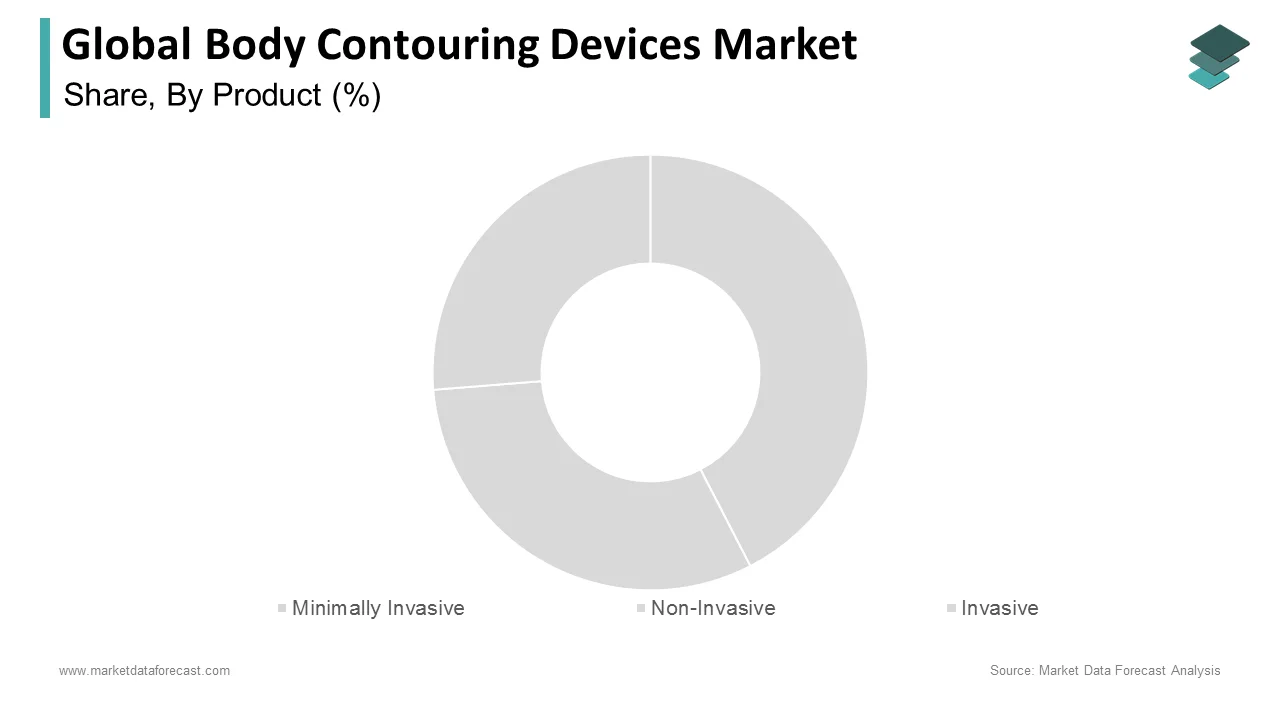
The non-invasive devices segment dominated the body contouring devices market and accounted for a 60.8% share in 2025. This dominance of the segment was driven by the overwhelming consumer preference for procedures that require no incisions, anesthesia, or extended recovery periods. The ability to return to work and daily activities immediately after treatment appeals to busy professionals who cannot afford prolonged downtime. According to the U.S. Food and Drug Administration (FDA), non-invasive therapeutic modalities like cryolipolysis and radiofrequency platforms maintain official regulatory clearances for structural fat layer disruption and non-ablative dermal tissue contraction. As per PubMed Central (PMC), energy-based aesthetic procedures provide a reliable alternative to traditional liposuction by drastically minimizing typical surgical risks like deep infection, permanent dermal scarring, or severe peripheral nerve injuries. The psychological barrier to entry is much lower for noninvasive options, making them accessible to first-time aesthetic patients. Manufacturers have invested heavily in marketing campaigns that emphasize the convenience and comfort of these treatments, further boosting adoption. The proliferation of medical spas and wellness centers has increased accessibility, allowing consumers to access these services outside of traditional clinical settings. Insurance coverage remains limited, but the out-of-pocket cost for noninvasive sessions is generally lower than surgical procedures, making them financially viable for a broader demographic. The cumulative effect of multiple sessions provides gradual, natural-looking results that align with modern aesthetic ideals. This segment benefits from continuous technological improvements that enhance efficacy, reducing the number of sessions required to achieve desired outcomes.
On the other hand, the cryolipolysis segment is expected to exhibit a noteworthy CAGR of 12.5% over the forecast period due to its high efficacy and strong brand recognition. This technology utilizes controlled cooling to freeze and eliminate fat cells without damaging surrounding tissue, offering a predictable and measurable outcome. According to Dermatologic Surgery, multicenter trials confirm that a single cryolipolysis session induces targeted adipocyte apoptosis, reducing subcutaneous fat layer thickness by approximately 20% to 25% within two to six months post-treatment. The procedure has become synonymous with non-surgical fat reduction due to extensive marketing and celebrity endorsements creating high consumer awareness. Patients appreciate the lack of pain during the procedure and the minimal side effects, which are typically limited to temporary redness or numbness. The versatility of applicators allows for treatment of various body parts, including the abdomen, flanks, thighs, and back, catering to diverse aesthetic concerns. Medical providers favor cryolipolysis for its ease of use and standardized protocols, which reduce the learning curve for new practitioners. The availability of multiple device manufacturers has increased competition, driving down prices and making treatments more affordable. Consumer satisfaction rates remain high as results are long-lasting, provided weight stability is maintained. The integration of cryolipolysis into combination therapies with radiofrequency or massage enhances overall results, further fueling demand. This segment continues to expand as newer devices offer faster treatment times and improved comfort features, attracting a wider patient base.
REGIONAL ANALYSIS
North America Body Contouring Devices Market Analysis
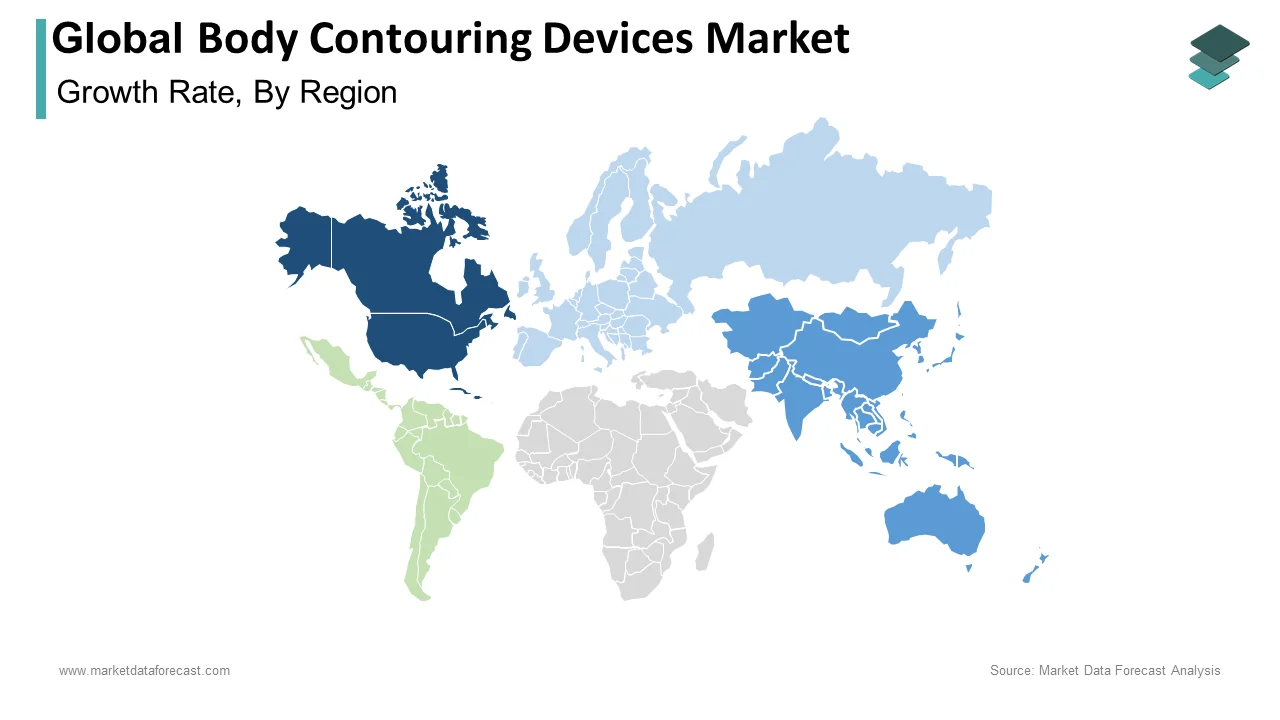
North America led the global body contouring devices market and captured a 40.8% share in 2025. This leading position of the North American market was attributed to high disposable income and widespread aesthetic awareness. The United States is the main driver with a culture that heavily emphasizes physical fitness and appearance. According to the 2023 International Society of Aesthetic Plastic Surgery (ISAPS) Global Survey, there were approximately 631,212 nonsurgical fat reduction procedures performed globally, with North America holding the largest regional market share of 35.2% for body contouring devices. The presence of major device manufacturers such as Allergan and Bausch Health fosters innovation and rapid adoption of new technologies. High healthcare expenditure allows consumers to access premium treatments despite limited insurance coverage. The prevalence of obesity and sedentary lifestyles creates a large addressable market for fat reduction solutions. Regulatory clarity from the Food and Drug Administration ensures product safety, building consumer trust. The dense network of medical spas and dermatology clinics provides easy access to treatments across urban and suburban areas. Marketing efforts by key players educate consumers on the benefits of noninvasive options, driving trial and repeat usage. The trend toward preventive aesthetics among younger demographics further sustains growth. Technological leadership in the region enables early access to advanced modalities such as high-intensity focused electromagnetic devices. This combination of economic strength, cultural drivers, and infrastructure solidifies North America's position as the dominant market.
Europe Body Contouring Devices Market Analysis
Europe saw steady growth in the body contouring devices market and occupied a 25.3% share in 2025. This position of the European market was driven by stringent regulatory standards and an aging population seeking skin-tightening solutions. Germany, France, and the United Kingdom serve as key contributors. As per the European Commission Health Portal, the European Union Medical Device Regulation (MDR) subjects high-risk aesthetic and cosmetic equipment, such as liposuction and energy-based body contouring devices, to stricter pre-market controls and rigorous safety certifications. This regulatory rigor builds consumer confidence, although it may slow initial product launches. According to PubMed Central (PMC), the demand for non-surgical skin tightening and energy-based technologies continues to scale across Europe to address age-related skin laxity using controlled radiofrequency and ultrasound updates. Consumers in Europe tend to prefer subtle, natural-looking results over dramatic changes, influencing treatment preferences. The well-established medical tourism industry in countries like Turkey and Hungary attracts international patients seeking affordable, high-quality aesthetic procedures. Public healthcare systems do not cover cosmetic treatments, but private insurance plans and financing options facilitate access. Cultural attitudes toward beauty emphasize elegance and maintenance, supporting consistent demand for anti-aging and body-sculpting treatments. Local manufacturers collaborate with research institutions to develop innovative solutions tailored to European skin types and anatomical characteristics. The focus on sustainability and ethical sourcing in product development aligns with regional values, enhancing brand appeal.
Asia Pacific Body Contouring Devices Market Analysis
The Asia Pacific region shows rapid expansion in the body contouring devices market because of a rising middle class and a booming medical tourism industry. China, Japan, South Korea, and India are leading the growth in this region. The increasing disposable income in emerging economies enables more consumers to afford elective aesthetic procedures. As per sources, rapid urbanization and rising disposable incomes have fueled a high compound annual growth rate for non-surgical aesthetic devices across South Korea, China, and Southeast Asian clinical hubs. The growing prevalence of obesity in countries like India and Australia creates a substantial market for fat reduction devices. Local distributors partner with global manufacturers to introduce certified devices, ensuring safety and efficacy. Social media influence plays a significant role in driving awareness and desire for body contouring treatments among millennials and Gen Z. Government initiatives to regulate the aesthetic industry improve service quality and consumer protection. The expansion of retail clinics and wellness centers in tier two cities broadens market reach beyond major metropolitan areas. This dynamic environment positions the Asia Pacific as the fastest-growing region with immense future potential.
Latin America Body Contouring Devices Market Analysis
Latin America is an emerging player in the body contouring devices market due to a strong cultural emphasis on physical appearance and body image. Brazil, Mexico, and Colombia are the primary contributors. Brazil consistently ranks among the top countries globally for cosmetic procedures per capita, reflecting deep-seated cultural values regarding beauty. The popularity of beach culture and social events drives demand for body sculpting treatments, particularly before summer seasons. Economic instability in some countries limits access for lower-income groups, but the middle class continues to invest in aesthetic enhancements. According to research, Latin American nations like Mexico and Brazil command a strong share of the global aesthetic device infrastructure due to a steady influx of international patients pursuing competitive medical travel packages. Local clinics adopt advanced technologies to compete with international standards, offering a wide range of non-invasive options. The influence of local celebrities and influencers promotes body positivity and aesthetic ideals, encouraging treatment adoption. Regulatory frameworks vary by country, but major markets have established guidelines to ensure practitioner competency. Financing plans offered by clinics make treatments more accessible to a broader demographic. The growing number of trained aestheticians and dermatologists supports market expansion. This region offers unique opportunities for manufacturers willing to navigate diverse regulatory and economic landscapes.
Middle East and Africa Body Contouring Devices Market Analysis
The Middle East and Africa region displays niche growth in the body contouring devices market owing to luxury wellness trends and rapid urbanization. The United Arab Emirates, Saudi Arabia, and South Africa lead the demand. High disposable income in Gulf countries supports a thriving luxury aesthetic sector where consumers seek premium, exclusive treatments. The cultural importance of privacy and discretion favors noninvasive procedures that can be performed in specialized clinics. According to the Dubai Health Authority (DHA), the emirate welcomed over 691,000 health tourists in a single year, establishing the UAE as one of the fastest-growing medical tourism sectors for cosmetic and wellness procedures globally. Limited local manufacturing means reliance on imports from Europe and North America, ensuring access to high-quality devices. Regulatory bodies in key markets are strengthening oversight to protect consumers from unqualified practitioners. The rise of social media influences beauty perceptions, encouraging younger populations to explore aesthetic options. Challenges related to infrastructure and economic disparity limit market penetration in less developed areas. However, the growing middle class in urban centers presents expanding opportunities. Manufacturers focus on high-end branding and personalized service to appeal to this discerning customer base.
COMPETITIVE LANDSCAPE
The global body contouring devices market features intense competition characterized by a mix of established medical technology giants and agile specialized startups. Large corporations leverage their extensive distribution networks, brand recognition, and financial resources to dominate mainstream segments such as cryolipolysis and radiofrequency. These entities benefit from robust intellectual property portfolios protecting proprietary technologies and preventing easy imitation by competitors. Smaller niche players compete by focusing on specific modalities like high-intensity focused ultrasound or electromagnetic muscle stimulation, offering differentiated value propositions. Innovation in treatment speed, comfort, and efficacy serves as a key differentiator, with companies striving to reduce session times and improve patient experience. Regulatory compliance with strict safety standards creates high entry barriers favoring incumbents with established quality management systems. Price competition is moderate as clinical outcomes and brand reputation often outweigh cost considerations for both providers and patients. Collaborative relationships with aesthetic clinics and key opinion leaders help brands gain credibility and influence treatment protocols. The market rewards companies that can demonstrate superior long-term results and provide comprehensive support services. Continuous education and technical assistance are critical for maintaining loyalty among practitioners who drive purchasing decisions. Overall, the landscape remains dynamic with ongoing consolidation and technological advancement shaping competitive dynamics.
KEY MARKET PLAYERS
Companies playing a prominent role in the global body contouring devices market include
- Meridian Co.
- Cynosure, Ltd.
- Lumenis
- Bausch Health Corporation
- Alma Lasers, Ltd.
- Syneron Medical Ltd
- Solta Medical
- Palomar Medical Technologies
TOP PLAYERS IN THE MARKET
- Bausch Health Corporation maintains a dominant position in the global body contouring market through its flagship CoolSculpting platform, which pioneered cryolipolysis technology. The company continues to innovate by introducing new applicators and treatment protocols that enhance patient comfort and efficacy for various body areas. Recent actions include expanding its educational programs for practitioners to ensure optimal clinical outcomes and patient satisfaction. Bausch strengthens its market presence by leveraging extensive clinical data to support marketing claims and build trust among medical professionals. The corporation actively engages in direct-to-consumer marketing campaigns to raise awareness about non-invasive fat reduction benefits. Strategic partnerships with leading dermatology clinics facilitate broader access to treatments globally. Investment in digital tools allows patients to track progress and share results, enhancing brand loyalty. These initiatives solidify Bausch's reputation as a leader in non-surgical aesthetic solutions while driving consistent revenue growth through device sales and disposable applicator consumption.
- Solta Medical, a division of BTL Medical Solutions, contributes significantly to the market through its innovative Emsculpt technology, which uses high-intensity focused electromagnetic energy. This unique modality induces supramaximal muscle contractions, resulting in simultaneous fat reduction and muscle toning, addressing two major aesthetic concerns at once. Recent actions involve launching next-generation devices with improved cooling systems and faster treatment cycles to enhance practitioner efficiency. Solta strengthens its position by securing regulatory approvals in new geographic markets, expanding its global footprint. The company collaborates with fitness centers and wellness clubs to introduce hybrid models that combine exercise with technological enhancement. Marketing efforts focus on athletic performance and body definition, appealing to a male demographic often underserved in aesthetics. Continuous research into combination therapies with radiofrequency or laser technologies offers comprehensive body sculpting solutions. These strategies differentiate Solta from competitors relying solely on fat reduction and establish it as a key player in muscular definition treatments.
- Cynosure LLC plays a pivotal role in the global body contouring market with its diverse portfolio including SculpSure laser lipolysis and Vantage radiofrequency systems. The company leverages decades of expertise in laser technology to deliver precise and effective fat reduction treatments with minimal downtime. Recent actions include integrating artificial intelligence into device software to optimize energy delivery based on individual patient anatomy. Cynosure strengthens its market position through strategic acquisitions of complementary aesthetic technologies, broadening its product offerings. The firm invests heavily in training academies to certify practitioners, ensuring high standards of care and safety. Collaborations with key opinion leaders help validate clinical efficacy and promote best practices across the industry. Expansion into emerging markets through local distributors increases accessibility in regions with growing aesthetic demand. Focus on user-friendly interfaces and ergonomic design enhances practitioner experience and reduces procedural fatigue. These efforts maintain Cynosure's competitive edge in a rapidly evolving technological landscape.
TOP STRATEGIES USED BY KEY MARKET PARTICIPANTS
Key players in the body contouring devices market primarily focus on technological innovation and strategic partnerships to maintain competitive advantage. Companies invest heavily in research and development to create multifunctional devices that address multiple aesthetic concerns such as fat reduction, skin tightening, and muscle toning simultaneously. Clinical validation through rigorous trials ensures safety and efficacy, building trust among medical professionals and consumers. Expansion into emerging markets via local distributors allows manufacturers to tap into growing middle-class populations with increasing disposable income. Direct-to-consumer marketing campaigns educate potential patients about benefits and manage expectations, driving demand. Training and certification programs for practitioners ensure proper device usage and optimal outcomes, reducing liability risks. Acquisition of smaller innovative firms enables larger corporations to integrate novel technologies quickly. Subscription-based models for disposables provide recurring revenue streams while ensuring consistent supply. Digital health integration enhances patient engagement and tracking, improving long-term satisfaction and retention rates.
MARKET SEGMENTATION
This research report on the global body contouring devices market has been segmented and sub-segmented based on the product and region.
By Product
- Minimally Invasive
- Radio Frequency-Assisted Liposuction Devices
- Laser-Assisted Lipolysis Devices
- Non-Invasive
- Suction Devices
- Radiofrequency Energy Devices
- High-Frequency Focused Ultrasound Devices
- Cryolipolysis
- Low-Level Light Laser Therapy Devices
- Invasive
By Region
- North America
- Europe
- Asia-Pacific
- Latin America
- The Middle East and Africa