- Product Description Description
- Table of Contents TOC
- List of Table & Figure LOT
- Get Free Sample PDF Sample PDF
Market Size, 2025
$0.62 BnMarket Estimate, 2026
$0.70 BnMarket Forecast, 2034
$1.91 BnCAGR, 2026–2034
13.32%Europe Body Contouring Devices Market Size, Growth, Trends & Forecast (2026–2034)
The Europe body contouring devices market size was valued at USD 0.62 billion in 2025, is estimated at USD 0.70 billion in 2026, and is anticipated to reach USD 1.91 billion by 2034, expanding at a compound annual growth rate (CAGR) of 13.32% during the forecast period from 2026 to 2034. Market growth is primarily driven by rising obesity rates, an increased preference for non-invasive aesthetic treatments over traditional surgeries, lifestyle changes, and technological advancements like AI-integrated body sculpting systems.
Key Executive Metrics (At-a-Glance)
- 2025 Base Valuation: USD 0.62 Billion
- 2026 Current Valuation: USD 0.70 Billion
- 2034 Forecast Valuation: USD 1.91 Billion
- Compound Annual Growth Rate (CAGR): 13.32% (2026–2034)
- Key Geographic Footprint: Germany, United Kingdom, France, Italy, Spain, Russia, Sweden, Denmark, Switzerland, Netherlands, Turkey, Czech Republic, and Rest of Europe
Europe Body Contouring Devices Market Segmentation Breakdown
| Segment Category | Leading / Dominant Segment | Fastest-Growing Segment |
|---|---|---|
| By Product | Non-Invasive Segment (58.1% share in 2024) | Minimally Invasive Segment (CAGR of 14.3%) |
| By Country | Germany (18.7% share in 2024) | United Kingdom & France |
Major Industry Players Profiled
Key market participants shaping the European body contouring devices market include Cynosure, Lumenis, Syneron Medical (Candela Corporation), Alma Lasers, Meridian, and Palomar Medical Technologies.
Europe Body Contouring Devices Market Size
The size of the Europe body contouring devices market was valued at USD 0.62 billion in 2025. This market is expected to grow at a CAGR of 13.32% from 2026 to 2034 and be worth USD 1.91 billion by 2034 from USD 0.70 billion in 2026.
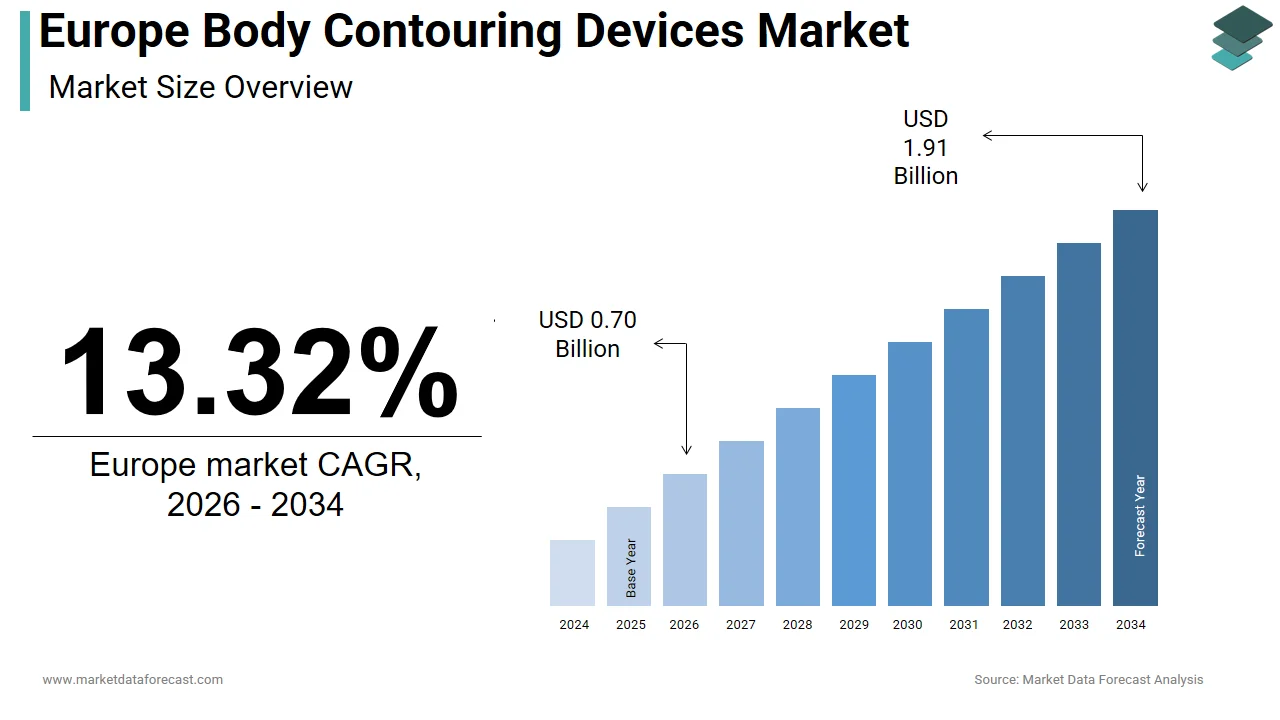
The body contouring devices employ various mechanisms such as cryolipolysis, laser therapy, radiofrequency, ultrasound, and electrostimulation to achieve aesthetic goals sought after by consumers. According to the European Society of Aesthetic Plastic Surgery (ESAPS), there has been a steady rise in demand for non-surgical cosmetic procedures across Europe, with body contouring emerging as one of the fastest-growing categories. The shift away from traditional liposuction toward safer, outpatient-friendly treatments is reshaping the aesthetics industry. Additionally, lifestyle changes, rising disposable incomes, and growing awareness about advanced aesthetic technologies are further fueling market momentum. Countries such as Germany, France, the UK, and Italy are leading adoption due to their well-established healthcare infrastructure and high consumer spending on wellness and beauty.
MARKET DRIVERS
Increasing Prevalence of Obesity and Lifestyle-Related Weight Issues
One of the primary drivers of the Europe body contouring devices market is the rising prevalence of obesity and weight-related health concerns, which have led to an increased desire for post-weight loss body shaping solutions. According to the World Health Organization (WHO), more than 50% of adults in the European Union are overweight or obese, with countries like the United Kingdom and Spain reporting particularly high rates. This trend has created a large pool of individuals seeking targeted fat reduction and skin tightening following weight loss interventions. Body contouring devices offer a non-surgical alternative for those who struggle with stubborn fat pockets that diet and exercise cannot eliminate. Moreover, public health campaigns promoting weight loss have inadvertently increased the demand for body sculpting procedures.
Rising Consumer Demand for Non-Invasive Aesthetic Procedures
Another significant driver of the Europe body contouring devices market is the growing preference for non-invasive aesthetic treatments among consumers. Unlike traditional surgical procedures such as liposuction and abdominoplasty, modern body contouring devices offer minimal discomfort, no hospitalization, and negligible recovery time factors that align with the fast-paced lifestyles of European consumers. According to a report published by the European Board of Plastic Reconstructive and Aesthetic Surgery (EBOPRAS), non-invasive procedures accounted for nearly 60% of all aesthetic treatments performed in Europe in 2023, with body contouring representing a substantial portion of this growth. The appeal of walk-in, walk-out treatments that can be easily incorporated into daily routines is especially strong among working professionals and younger demographics.
MARKET RESTRAINTS
High Cost of Advanced Body Contouring Treatments
A major restraint affecting the Europe body contouring devices market is the high cost associated with advanced non-invasive body contouring treatments, which limits accessibility for a broad section of the population. Although these procedures avoid the risks and recovery time of surgery, they often come with premium price tags that may not be covered by insurance, as they are primarily considered elective. Moreover, despite increasing awareness and acceptance of aesthetic procedures, affordability remains a critical barrier. While some clinics offer installment payment plans, the perceived expense compared to traditional weight loss methods discourages widespread adoption. As a result, the high cost of treatment continues to hinder the full potential of the body contouring devices market in Europe.
Regulatory Hurdles and Compliance Requirements
Another significant challenge impeding the Europe body contouring devices market is the complex regulatory environment governing medical and aesthetic devices. The European Union enforces stringent compliance requirements through directives such as the Medical Device Regulation (MDR) 2017/745, which mandates rigorous clinical evaluations and post-market surveillance for any device used in aesthetic applications. Many smaller companies, particularly startups and regional providers, struggle to meet these requirements, limiting their ability to bring new products to market efficiently. Additionally, varying national regulations within EU member states create further complications. For instance, Germany's Federal Institute for Drugs and Medical Devices (BfArM) imposes additional testing protocols beyond EU-wide standards, while France’s National Agency for Medicines and Health Products Safety (ANSM) requires enhanced safety assessments for aesthetic equipment.
MARKET OPPORTUNITIES
Expansion of Home-Use Body Contouring Devices
One of the most promising opportunities in the Europe body contouring devices market is the growing popularity of home-use body contouring devices. Manufacturers are developing portable, easy-to-use devices that allow individuals to perform body sculpting procedures in the comfort of their homes. Consumers are increasingly drawn to devices that use technologies like low-level laser therapy, microcurrents, and radiofrequency for spot fat reduction and skin tightening. Furthermore, the influence of social media and digital marketing has played a crucial role in raising awareness and driving demand. Brands such as Slendertone and Lipo Laser have successfully leveraged online platforms to educate users and promote their home-use devices directly to consumers.
Integration of AI and Smart Technologies in Body Contouring Systems
Another transformative opportunity in the Europe body contouring devices market lies in the integration of artificial intelligence (AI) and smart technologies into aesthetic treatment systems. The device manufacturers are incorporating AI-powered analytics, real-time monitoring, and adaptive treatment algorithms to enhance outcomes and user experience. According to the European Digital Health Tech Observatory (EDHTO), the convergence of AI and aesthetics is gaining momentum, with several companies launching intelligent body contouring platforms that analyze individual body composition, track progress, and adjust treatment parameters accordingly. For example, in the UK, a London-based medtech startup introduced an AI-integrated body contouring system in 2023 that uses thermal imaging and biometric feedback to optimize fat reduction sessions.
MARKET CHALLENGES
Limited Awareness and Misconceptions About Non-Surgical Treatments
One of the primary challenges facing the Europe body contouring devices market is the limited awareness and persistent misconceptions regarding the efficacy and safety of non-surgical body contouring treatments. According to a survey conducted by the European Society of Plastic, Reconstructive and Aesthetic Surgeons (ESPRES), nearly 40% of respondents believed that non-invasive treatments could completely replace healthy diet and exercise with a gap in consumer education. Additionally, misinformation spread through social media and unverified sources contributes to confusion and unrealistic expectations.
In rural areas and certain Eastern European markets, awareness levels are even lower. The Polish Society of Aesthetic Medicine reported that only 25% of surveyed individuals in smaller towns were familiar with body contouring devices, and fewer understood their intended purpose.
Availability of Unregulated and Substandard Devices
Another pressing challenge in the Europe body contouring devices market is the proliferation of unregulated and substandard body contouring devices in the home-use segment. Many of these products lack proper certification, quality control, and clinical validation, which are raising concerns about their effectiveness and long-term impact. The presence of counterfeit or poorly manufactured devices undermines consumer trust and creates liability issues for legitimate brands. In response, regulatory authorities such as the UK’s Medicines and Healthcare products Regulatory Agency (MHRA) have intensified enforcement actions, including recalls and import restrictions. However, the rapid expansion of e-commerce platforms makes it difficult to fully curb the distribution of unauthorized products. Ensuring product safety and maintaining market integrity remain ongoing challenges for both regulators and established manufacturers in the European body contouring landscape.
REPORT COVERAGE
| REPORT METRIC | DETAILS |
| Market Size Available | 2025 to 2034 |
| Base Year | 2025 |
| Forecast Period | 2026 to 2034 |
| Segments Covered | By Product, and Region. |
| Various Analyses Covered | Global, Regional and Country-Level Analysis, Segment-Level Analysis, Drivers, Restraints, Opportunities, Challenges; PESTLE Analysis; Porter’s Five Forces Analysis, Competitive Landscape, Analyst Overview of Investment Opportunities |
| Countries Covered | UK, France, Spain, Germany, Italy, Russia, Sweden, Denmark, Switzerland, Netherlands, Turkey, Czech Republic and Rest of Europe |
| Market Leaders Profiled | Meridian, Cynosure, Lumenis, Alma Lasers, Syneron, and Palomar Medical Technologies. |
SEGMENTAL ANALYSIS
By Product Insights
The non-invasive segment was the largest and held 58.1% of the Europe body contouring devices market share in 2024. One of the key drivers behind this segment’s growth is the rising awareness and acceptance of aesthetic procedures among individuals who seek body shaping without the risks associated with surgery. Additionally, advancements in technologies such as cryolipolysis, laser lipolysis, and high-intensity focused ultrasound have significantly improved treatment efficacy and patient satisfaction. Moreover, the expansion of medispas, beauty clinics, and wellness centers offering non-invasive services has made these treatments more accessible and affordable.
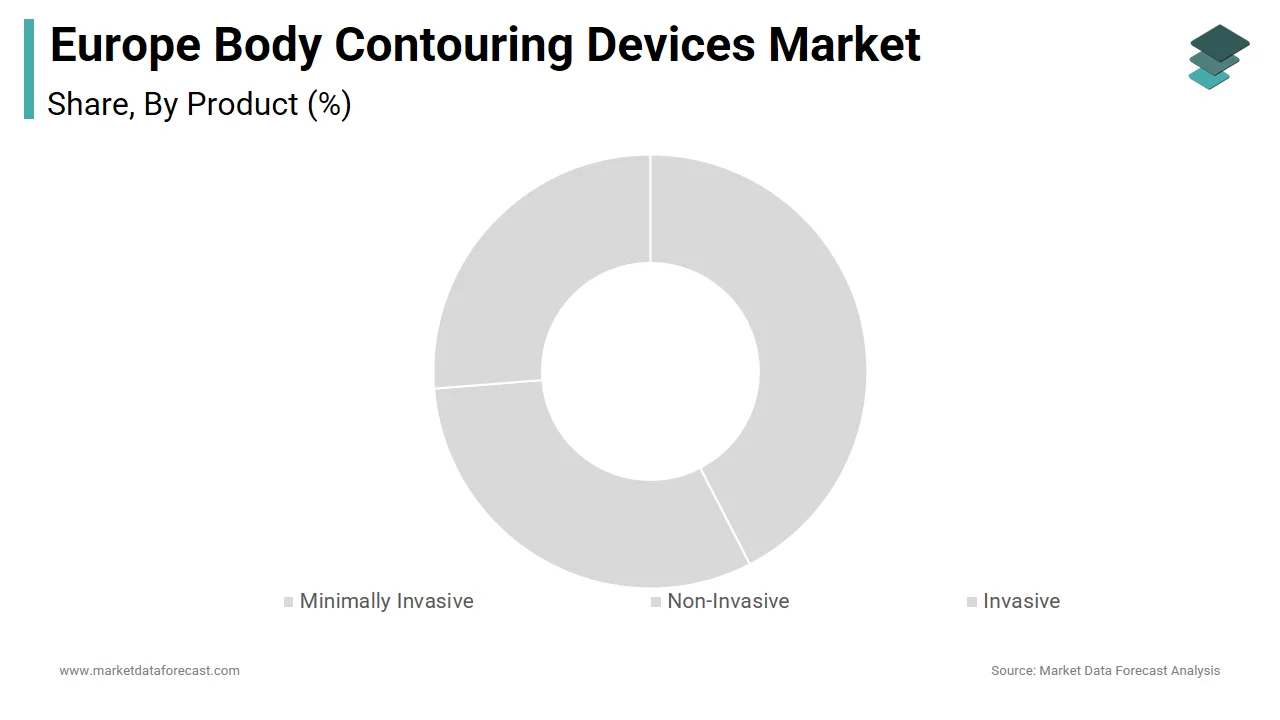
The minimally invasive segment is projected to grow with a CAGR of 14.3% from 2025 to 2033 with the growing demand for procedures that offer more dramatic results than non-invasive options while still maintaining minimal downtime and lower risk compared to traditional surgery. A major factor contributing to this trend is the increasing adoption of radiofrequency-assisted liposuction and thread lifts among patients seeking both fat reduction and skin tightening. Additionally, the integration of smart technologies such as real-time thermal monitoring and automated suction control has enhanced procedural precision, making minimally invasive techniques more appealing to both practitioners and patients.
COUNTRY-LEVEL ANALYSIS
Germany Body Contouring Devices Market Insights
Germany was top positioned by holding 18.7% of the Europe body contouring devices market share in 2024. One of the primary drivers of market growth is the presence of well-established aesthetic clinics and research institutions that continuously adopt new technologies. Furthermore, government-backed initiatives promoting innovation in medical technology have facilitated the development and approval of cutting-edge body contouring devices. The Federal Ministry of Education and Research (BMBF) funded several projects aimed at enhancing the efficiency of fat-reduction systems, encouraging domestic manufacturers to compete globally. Additionally, rising obesity rates and an aging population seeking post-weight-loss body sculpting are contributing to sustained demand.
United Kingdom Body Contouring Devices Market Insights
The United Kingdom was next by holding 14.3% of the Europe body contouring devices market share in 2024. A key driver of this growth is the increasing popularity of non-invasive procedures among younger consumers. Additionally, the UK's regulatory environment, overseen by the Care Quality Commission (CQC) and the Medicines and Healthcare products Regulatory Agency (MHRA), ensures high standards of device safety and practitioner qualifications, boosting consumer confidence. The country also benefits from a thriving private healthcare sector and a growing number of bariatric surgery patients seeking post-operative body contouring.
France Body Contouring Devices Market Insights
The French body contouring devices market is likely to grow with the region’s aesthetic technology landscape, as per the French Society of Plastic Surgery (SFCP). One of the main factors driving market growth is the high level of consumer awareness regarding non-invasive and minimally invasive treatments. Moreover, France is home to several leading aesthetic technology firms and research institutions that collaborate on developing next-generation contouring solutions. The French Institute of Aesthetic Medicine (IFME) has been actively involved in clinical trials assessing the effectiveness of emerging body sculpting technologies. In addition, the country’s fashion and luxury industries play a role in influencing public perception of ideal body shape, further fueling demand for aesthetic enhancements.
Italy Body Contouring Devices Market Insights
The Italian body contouring devices market growth is likely with the growing prominence for aesthetic medicine and cosmetic innovation, as outlined in the Italian Society of Plastic Surgery (SICPRE) annual report. The country has a long-standing tradition of prioritizing physical appearance, which translates into high demand for body contouring procedures. Additionally, the Italian government has implemented policies supporting the safe use of aesthetic devices by ensuring that only certified professionals administer treatments.
Spain Body Contouring Devices Market Insights
Spain's body contouring devices market growth is driven by the warm climate and tourism-driven wellness industry have contributed to the popularity of body contouring treatments among both residents and international visitors. Moreover, Spain has benefited from strategic collaborations between local practitioners and global device manufacturers, facilitating faster adoption of innovative technologies. Companies such as Cynosure and Lutronic have established distribution partnerships with Spanish distributors to enhance product availability. Additionally, lifestyle trends emphasizing fitness and beach culture have led to heightened demand for post-exercise body toning treatments.
COMPETITIVE LANDSCAPE
The competition in the Europe body contouring devices market is marked by a dynamic mix of established multinational corporations and emerging regional players striving to capture a larger share of this rapidly growing sector. Major global brands continue to dominate due to their strong R&D capabilities, extensive product portfolios, and well-established distribution channels. However, an increasing number of local startups and mid-sized companies are challenging these giants by offering innovative, cost-effective, and user-friendly alternatives tailored to specific regional preferences.
Market participants are continuously adapting to shifting consumer demands, regulatory changes, and technological advancements to maintain a competitive edge. Strategic moves such as mergers, acquisitions, and collaborative ventures are becoming more frequent as firms seek to expand their reach and diversify their offerings. Additionally, the integration of smart technologies and personalized treatment solutions is redefining how providers position themselves in the marketplace.
The European market is also witnessing heightened competition from companies entering from adjacent sectors such as skincare and wellness, further intensifying the race for innovation and market expansion. As demand for non-invasive and minimally invasive body contouring continues to rise, the competitive landscape remains fluid, with new entrants and disruptive technologies shaping the future trajectory of the industry.
KEY MARKET PLAYERS
Noteworthy companies leading the European body contouring devices market are
- Meridian
- Cynosure
- Lumenis
- Alma Lasers,
- Syneron,
- Palomar Medical Technologies
TOP LEADING PLAYERS IN THE MARKET
One of the leading players in the Europe body contouring devices market is Cynosure, a global innovator in aesthetic medical technology. The company has made significant contributions to the development and commercialization of advanced body contouring systems, particularly through its popular SculpSure device, which utilizes laser-based lipolysis for non-invasive fat reduction. Cynosure’s strong research focus and continuous product innovation have positioned it as a key player in shaping aesthetic treatment protocols across Europe.
Another major contributor is Lumenis, a pioneer in light-based aesthetic technologies. Known for its versatile platforms that combine laser, intense pulsed light (IPL), and radiofrequency capabilities, Lumenis offers customized body contouring solutions tailored to European consumer preferences. Its emphasis on clinical validation and physician education has reinforced trust among practitioners and patients alike, making it a dominant force in the region’s aesthetics sector.
Syneron Medical Ltd. is now part of the Candela Corporation, is also a major presence in the European market. With a diverse portfolio that includes both invasive and non-invasive body sculpting devices, Syneron has played a crucial role in integrating multi-modal treatments for enhanced patient outcomes. Its commitment to combining energy-based technologies with smart software solutions has helped redefine modern body contouring practices across Europe.
TOP STRATEGIES USED BY KEY MARKET PARTICIPANTS
A key strategy adopted by leading players in the Europe body contouring devices market is expanding their distribution networks through strategic partnerships and local collaborations. Companies are increasingly partnering with regional distributors, aesthetic clinics, and healthcare professionals to enhance product accessibility and ensure efficient after-sales support across diverse European markets.
Another critical approach is investing heavily in research and development to introduce next-generation body contouring technologies. Through targeted social media campaigns, online consultations, and virtual outcome simulations, key players are effectively educating consumers and driving demand for their body contouring solutions across Europe.
RECENT MARKET DEVELOPMENTS
- In February 2023, Cynosure launched a new line of body contouring devices specifically designed for combination therapy by allowing simultaneous fat reduction and skin tightening. This move was aimed at enhancing treatment efficiency and expanding its appeal among aesthetic practitioners across Europe.
- In September 2023, Lumenis formed a strategic partnership with a leading European aesthetic distributor to strengthen its market presence and improve access to its latest generation of laser-based body sculpting systems in Germany and France.
- In May 2024, Syneron introduced a mobile application that enables real-time tracking of patient progress and customized treatment planning, which is reinforcing its commitment to integrating digital tools into aesthetic care pathways across the region.
- In November 2024, a major European medtech firm acquired a local startup specializing in AI-driven body contouring diagnostics by aiming to enhance personalization and precision in non-invasive treatments.
- In March 2025, a prominent U.S.-based aesthetic device manufacturer opened a dedicated training and innovation center in Switzerland, which is designed to support healthcare professionals in mastering advanced body contouring techniques and staying updated on the latest technological developments.
MARKET SEGMENTATION
This Europe body contouring devices market research report is segmented and sub-segmented into the following categories.
By Product
-
Minimally Invasive
-
Radio Frequency Assisted Liposuction Devices
-
Laser-Assisted Lipolysis Devices
-
-
Non-Invasive
-
Suction Devices
-
Radiofrequency Energy Devices
-
High-Frequency Focused Ultrasound Devices
-
Cryolipolysis
-
Low-Level Light Laser Therapy Devices
-
-
Invasive
By Country
- UK
- France
- Spain
- Germany
- Italy
- Russia
- Sweden
- Denmark
- Switzerland
- Netherlands
- Turkey
- Czech Republic
- Rest of Europe