- Product Description Description
- Table of Contents TOC
- List of Table & Figure LOT
- Get Free Sample PDF Sample PDF
Market Size, 2025
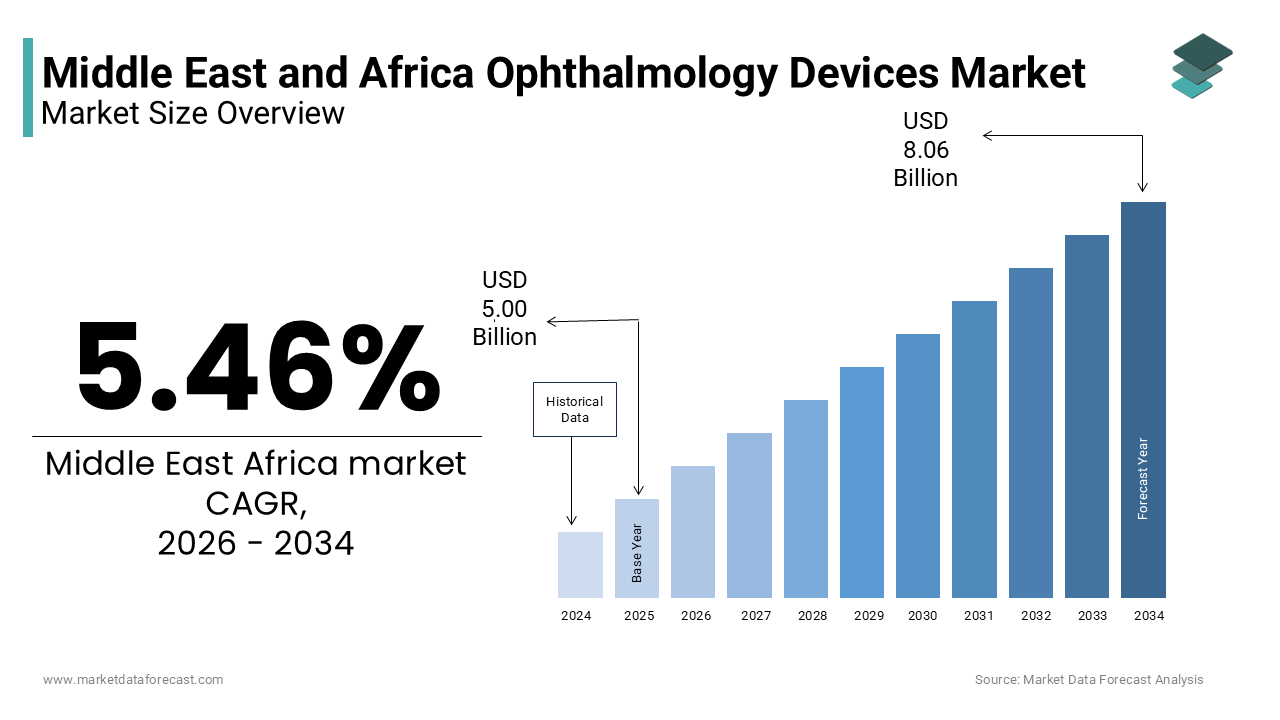
$5.00 BnMarket Estimate, 2026
$5.27 BnMarket Forecast, 2034
$8.06 BnCAGR, 2026–2034
5.46%Middle East and Africa Ophthalmology Devices Market Size, Share, & Growth Analysis (2026–2034)
The Middle East and Africa ophthalmology devices market was valued at USD 5.00 billion in 2025, estimated at USD 5.27 billion in 2026, and is projected to reach USD 8.06 billion by 2034, registering a CAGR of 5.46% from 2026 to 2034. This report outlines device categories, application sectors, disorder types, and country frameworks across the Middle East and Africa region.
- Market Valuation: USD 5.27 billion (2026) to USD 8.06 billion by 2034 (5.46% CAGR).
- Primary Growth Drivers: Escalating prevalence of diabetes driving retinal diagnostic demand, and ambitious government-led infrastructure investments (such as Vision 2030 initiatives in the GCC).
- Key Market Restraints: Fragmented regulatory landscapes across nations and severe shortages of trained ophthalmic personnel and technical staff.
Middle East and Africa Ophthalmology Devices Market Segment Metrics (2026–2034)
| Category | Leading Segment Focus | Segment Overview & Key Details | Alternative / Growth Focus |
|---|---|---|---|
| By Application | Surgery Devices | Dominates the market share driven by the overwhelming burden of cataract blindness requiring surgical intervention. | Diagnostics & monitoring devices record high growth via AI integration and teleophthalmology networks. |
| By Disorders | Cataract | Occupies the leading share fueled by rapidly aging populations across the Middle East and North Africa. | Vitreo-retinal disorders show high growth due to rising regional diabetes epidemics. |
| By Devices | Surgical & Diagnostic Suites | Includes phacoemulsification systems, intraocular lenses, fundus cameras, and automated field analyzers. | Specialized canaloplasty devices and computerized field analyzers. |
| By Country | Saudi Arabia & UAE | Saudi Arabia leads the regional market (26.2% share in 2025) backed by Vision 2030, followed by the UAE and Israel. | Spans GCC countries, South Africa, Ethiopia, Kenya, Egypt, Sudan, and the Rest of MEA. |
Major Market Players & Market Structure
Market Structure: Highly competitive medical technology sector driven by a dynamic interplay between global multinational corporations and regional distributors utilizing localization and strategic partnerships.
Key Companies: Johnson & Johnson, Abbott Medical Optics Inc., Carl Zeiss Meditec, Hoya Corporation, Essilor International, Alcon Inc., Topcon Corporation, HAAG-Streit Group, Ziemer Ophthalmic System, Bausch and Lomb Inc., and Nidek Co Ltd.
 Download Free Sample Report
Middle East and Africa Ophthalmology Devices Market Size
The Middle East and Africa ophthalmology devices market size was valued at USD 5.00 billion in 2025 and is anticipated to reach USD 5.27 billion in 2026 from USD 8.06 billion by 2034, growing at a CAGR of 5.46% during the forecast period from 2026 to 2034.
The Middle East and Africa ophthalmology devices market is defined by the stark contrast between advanced medical hubs in the Gulf Cooperation Council nations and resource-constrained environments in Sub-Saharan Africa. According to the World Health Organization, approximately 32 million people in the African region suffer from visual impairment, with cataracts accounting for nearly 40% of blindness cases. According to the International Agency for the Prevention of Blindness, diabetic retinopathy affects over 15 million adults in the Middle East, driven by some of the highest diabetes prevalence rates globally. As per data from the United Nations Economic and Social Commission for Western Asia, life expectancy in Gulf countries has risen to 78 years, correlating with increased incidence of age-related macular degeneration and glaucoma. Furthermore, according to the African Union, only 1 ophthalmologist serves every 1,000,000 inhabitants in many Sub-Saharan nations, creating a critical dependency on automated diagnostic tools and portable screening devices. These epidemiological and infrastructural realities shape the market dynamics, where device adoption is heavily influenced by public health initiatives, donor funding, and government mandates rather than purely commercial forces. The functional scope extends from high-end refractive surgery centers in Dubai to basic cataract camps in rural Ethiopia, reflecting a dual-tiered demand structure.
MARKET DRIVERS
Escalating Diabetes Prevalence Driving Retinal Diagnostic Demand
The unprecedented rise in diabetes mellitus across the Middle East is primarily driving the Middle East and African ophthalmology devices market growth. According to the International Diabetes Federation, the Middle East and North Africa region recorded a diabetes prevalence rate of 16.2%, which is significantly higher than the global average. This metabolic crisis directly translates into a surge in diabetic retinopathy cases, necessitating widespread deployment of optical coherence tomography machines and fundus cameras. The World Health Organization estimates that a substantial share of individuals with diabetes in Saudi Arabia and Kuwait develop some form of retinal complication over time. In response, national health authorities have mandated annual retinal screenings for all diabetic patients, creating a steady institutional demand for imaging equipment. For instance, the Saudi Ministry of Health launched nationwide diabetic eye care programs to distribute digital retinal cameras to primary care centers. Additionally, according to the World Bank, diabetes-related blindness costs Gulf economies billions of dollars annually in lost productivity, prompting aggressive investment in preventive diagnostics. This public health imperative ensures that retinal diagnostic devices remain a priority procurement item, driving consistent market growth independent of elective surgery trends.
Government-Led Vision 2030 Initiatives Boosting Infrastructure Investment
Ambitious national transformation plans in Gulf Cooperation Council countries are significantly accelerating the modernization of ophthalmology infrastructure, which is further contributing to the regional market expansion. According to the Saudi Vision 2030 framework, the kingdom aims to substantially increase the capacity of its healthcare sector, with a specific focus on specialized care including ophthalmology. The United Arab Emirates Ministry of Health and Prevention reported allocating significant funding for healthcare infrastructure upgrades, a substantial portion of which is directed toward acquiring advanced surgical and diagnostic equipment. These state-led initiatives prioritize the establishment of world-class eye hospitals equipped with the latest phacoemulsification systems and laser platforms. In Qatar, national health strategies emphasize reducing preventable blindness through technology-enabled care, leading to the procurement of automated perimeters and biometry devices for public hospitals. Similar national plans target improved access to specialty care, resulting in tender awards for comprehensive ophthalmology suites in regional hospitals. These strategic government commitments provide a stable and predictable revenue stream for device manufacturers, mitigating the volatility often seen in other emerging markets. The alignment of national development goals with healthcare expansion ensures sustained capital expenditure in the ophthalmology sector.
MARKET RESTRAINTS
Fragmented Regulatory Landscapes Impeding Market Entry
The lack of harmonized regulatory frameworks across Middle Eastern and African nations creates significant barriers to efficient market entry for ophthalmology device manufacturers. According to the World Health Organization, only a limited number of countries in the African region have functional medical device regulatory authorities capable of timely evaluation and approval. In the Middle East, while Gulf Cooperation Council nations have made strides toward harmonization, discrepancies in registration requirements persist. A device approved in Saudi Arabia may still require separate clinical data submissions for approval elsewhere, extending time to market significantly. According to the African Union, inconsistent classification rules force manufacturers to maintain multiple dossier formats, increasing compliance costs. In Nigeria, the National Agency for Food and Drug Administration and Control reported extended approval timelines for Class III ophthalmic devices compared to more streamlined markets. This regulatory fragmentation discourages smaller innovators from entering the region and delays patient access to cutting-edge technologies. Until greater regional convergence is achieved, manufacturers must navigate a complex web of national requirements, slowing overall market penetration and technological diffusion.
Severe Shortage of Trained Ophthalmic Personnel
A critical deficit in trained ophthalmologists and technical staff severely limits the effective utilization of installed ophthalmology devices across much of Africa and parts of the Middle East, which is further impeding the regional market growth. According to the International Council of Ophthalmology, Sub-Saharan Africa has fewer than 1 ophthalmologist per 1,000,000 population, far below recommended healthcare ratios. In Yemen and Sudan, the ratio drops even lower, meaning that even when devices are donated or purchased, there are insufficient skilled professionals to operate them. The World Health Organization highlights that this human resource gap results in a large percentage of donated ophthalmic equipment remaining unused due to a lack of training. In Iraq, the Ministry of Health reported that only a minority of public hospitals had staff competent in maintaining and calibrating advanced diagnostic machines. Training programs are often sporadic and dependent on external funding, lacking sustainable institutional support. Unlike in developed markets, the bottleneck is not device availability but operational capacity. This workforce crisis means that hardware investments alone cannot translate into improved patient outcomes. Without parallel investment in education and vocational training, the potential of modern ophthalmology technology remains largely untapped in resource-limited settings.
MARKET OPPORTUNITIES
Expansion of Teleophthalmology Networks in Rural Areas
The integration of teleophthalmology solutions is a promising opportunity for the Middle East and African ophthalmology devices market. According to the World Bank, over 60% of the population in Sub-Saharan Africa lives in rural areas with no access to specialist eye care. Teleophthalmology platforms equipped with portable fundus cameras and artificial intelligence algorithms allow primary health workers to capture images that are remotely interpreted by specialists. According to the International Telecommunication Union, mobile broadband coverage in Africa reached 50%, enabling real-time data transmission for diagnostic purposes. In Kenya, the Ministry of Health partnered with private tech firms to deploy teleophthalmology units, resulting in a noticeable increase in the early detection of glaucoma and diabetic retinopathy. Similarly, in Jordan, telemedicine initiatives have connected rural clinics with university hospitals in Amman, improving referral efficiency. The World Health Organization includes teleophthalmology in its guidelines for universal eye health coverage, encouraging adoption in low-resource settings. This digital leapfrogging allows health systems to maximize impact without building expensive physical infrastructure, opening new markets for device vendors who offer integrated hardware-software solutions tailored for remote use.
Growth of Medical Tourism in Gulf Healthcare Hubs
The emergence of Gulf countries as premier destinations for medical tourism offers significant opportunities for premium ophthalmology device suppliers. According to the Dubai Health Authority, medical tourism revenues in the United Arab Emirates grew during recent periods, with ophthalmology procedures such as LASIK and cataract surgery being among the most sought-after services. Patients from Europe, Asia, and neighboring countries are attracted by the combination of high-quality care, state-of-the-art technology, and competitive pricing. The Saudi Commission for Health Specialties reported that tens of thousands of international patients underwent eye surgeries in the kingdom, driving demand for advanced refractive and surgical platforms. Private hospitals in Qatar and Bahrain are investing heavily in flagship eye centers equipped with the latest femtosecond lasers and premium intraocular lenses to capture this lucrative segment. According to the World Travel and Tourism Council, medical tourists typically spend significantly more than regular tourists, incentivizing healthcare providers to adopt best-in-class equipment. This trend creates a niche market for high-end devices that may not be viable in public systems, allowing manufacturers to introduce innovative technologies that set regional benchmarks for clinical excellence.
MARKET CHALLENGES
Logistical Complexities in Last Mile Distribution
Inadequate infrastructure and logistical bottlenecks pose significant challenges to the reliable distribution of ophthalmology devices and consumables across Africa. According to the African Development Bank, poor road networks and limited cold chain capabilities increase delivery times significantly in landlocked countries like Chad and Niger. Temperature-sensitive products such as viscoelastics and certain intraocular lenses require strict thermal control, which is often unavailable during last-mile transport. The World Logistics Performance Index ranks several African nations in the bottom quartile for supply chain efficiency, citing frequent port congestions and customs delays. In Somalia, humanitarian agencies reported that a notable share of medical supplies were damaged or spoiled due to inadequate storage facilities. Even in more stable markets like Egypt, inland distribution faces hurdles due to bureaucratic clearance processes. Manufacturers struggle to maintain consistent inventory levels, leading to stockouts that disrupt surgical schedules. The high cost of logistics, which can account for a substantial share of the final product price in remote areas, makes affordable care delivery difficult. These operational fragilities undermine confidence in just-in-time models and force providers to hold excessive safety stock, tying up capital and limiting access to newer technologies.
Economic Instability and Currency Fluctuations
Macroeconomic volatility and currency devaluation in several key African and Middle Eastern markets severely constrain the purchasing power of healthcare institutions. According to the International Monetary Fund, countries like Egypt, Lebanon, and Zimbabwe experienced elevated inflation rates, drastically eroding the real value of health budgets. Since the majority of advanced ophthalmology devices are imported and priced in foreign currencies, local currency depreciation makes them prohibitively expensive. The Central Bank of Egypt reported that currency devaluation caused many private clinics to postpone equipment upgrades. Public tenders often fail because bid prices become obsolete before contract signing, leading to cancelled projects. In Lebanon, public health ministries suspended imports of non-essential medical devices due to foreign exchange shortages, directly impacting access to modern diagnostic tools. This financial uncertainty forces healthcare providers to extend the lifecycle of existing devices well beyond their optimal performance periods. Consequently, patient access to next-generation technology is restricted not by clinical need but by economic fragility, creating a structural barrier to market development despite strong underlying epidemiological demand.
REPORT COVERAGE
| REPORT METRIC | DETAILS |
| Market Size Available | 2025 to 2034 |
| Base Year | 2025 |
| Forecast Period | 2026 to 2034 |
| CAGR | 5.46% |
| Segments Covered | By Application, Disorders, Devices and Region. |
| Various Analyses Covered | Global, Regional & Country Level Analysis, Segment-Level Analysis, DROC, PESTLE Analysis, Porter’s Five Forces Analysis, Competitive Landscape, Analyst Overview of Investment Opportunities |
| Regions Covered | KSA, UAE, Israel, the rest of GCC countries, South Africa, Ethiopia, Kenya, Egypt, Sudan, and Rest of MEA. |
| Market Leaders Profiled | Johnson & Johnson, Abbott Medical Optics Inc., Carl Zeiss Meditec, Hoya Corporation, Essilor International, Alcon Inc., Topcon Corporation, HAAG-Streit Group, Ziemer Ophthalmic System, Bausch and Lomb Inc., and Nidek Co Ltd. |
SEGMENTAL ANALYSIS
By Application Insights
The surgery devices segment dominated the market by holding the major share of the Middle East and Africa ophthalmology market in 2025 and is primarily driven by the overwhelming burden of cataract blindness which requires surgical intervention for vision restoration. According to the World Health Organization, cataracts account for approximately 40% of all blindness cases in the African region and 35% in the Eastern Mediterranean region. According to the International Agency for the Prevention of Blindness, millions of people in these regions require cataract surgery annually to prevent permanent vision loss. In Egypt alone, the Ministry of Health reported performing hundreds of thousands of cataract surgeries in public hospitals to address the growing backlog. Similarly, Saudi Arabia’s healthcare initiatives have prioritized increasing surgical capacity, resulting in year-on-year increases in phacoemulsification procedures. This high procedural volume necessitates continuous procurement of phacoemulsification machines, intraocular lenses, and surgical consumables. Public health campaigns in countries like Kenya and Ethiopia further amplify demand by organizing mass screening camps that identify thousands of eligible patients. The urgent need to restore productivity among working-age adults makes cataract surgery a priority for government health budgets. Consequently, surgery devices remain the largest revenue generator as they are essential for addressing the most prevalent cause of preventable blindness in the region.
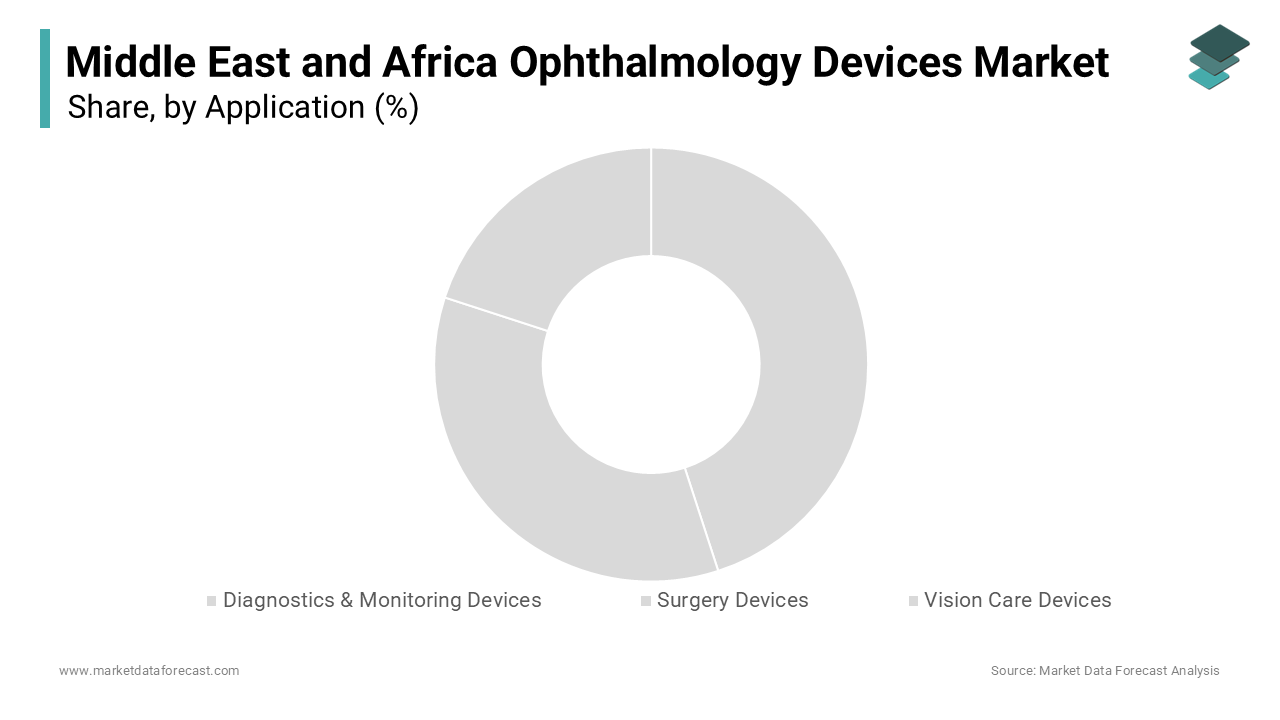
On the other end, the diagnostics and monitoring devices segment is estimated to record a healthy CAGR in the regional market over the forecast period due to the widespread integration of artificial intelligence into national eye screening programs. According to the World Bank, AI-enabled diagnostic tools have improved screening efficiency significantly in pilot projects across Jordan and Morocco. According to the World Health Organization, automated retinal imaging systems can detect diabetic retinopathy with high accuracy, allowing non-specialists to conduct initial assessments in primary care settings. This capability is crucial in regions with severe specialist shortages, such as Sub-Saharan Africa where the ophthalmologist to population ratio is extremely low. In South Africa, the National Department of Health deployed AI-powered fundus cameras in rural clinics, leading to a substantial increase in early disease detection. The technology reduces the dependency on scarce human resources while generating large volumes of data that require robust monitoring infrastructure. Consequently, healthcare providers are investing heavily in digital diagnostic platforms that offer seamless connectivity and cloud-based analysis. This digital transformation is projected to drive the diagnostics segment at a compound annual growth rate of 9.2% through 2030. The scalability of AI solutions makes them particularly attractive to public health systems seeking cost-effective ways to expand coverage without proportional increases in specialist staffing.
By Disorders Insights
The cataracts segment occupied the leading share of the Middle East and African ophthalmology devices market in 2025. The growth of the cataracts segment in the regional market is attributed to the rapidly aging population across the Middle East and parts of North Africa, which directly correlates with higher incidence rates. According to the United Nations Department of Economic and Social Affairs, the proportion of individuals aged 60 and above in the Middle East is expected to reach 12% of the total population by 2030, up from 8% in 2020. According to the estimations of the World Health Organization, a large percentage of people over 60 in the region suffer from some degree of lens opacity requiring intervention. In Egypt, the Ministry of Health reported that cataract-related consultations increased notably, reflecting this demographic shift. Similarly, in Saudi Arabia, statistical authorities noted a steady rise in the elderly population, driving higher demand for surgical services. This age-related prevalence ensures a consistent and growing patient pool that drives device consumption regardless of economic fluctuations. Public health systems prioritize cataract treatment because it offers immediate quality-of-life improvements and restores economic productivity among older adults. Consequently, procurement budgets are heavily skewed toward cataract surgery equipment and diagnostic tools capable of assessing lens density. The sheer volume of cases makes cataract the undisputed leader in disorder based segmentation, underpinning the majority of ophthalmology device sales in the region.
However, the vitreo-retinal disorders segment is predicted to grow at a promising CAGR in this regional market over the forecast period due to the surging diabetes epidemic that fuels severe retinal complications. According to the International Diabetes Federation, the number of adults with diabetes in the Middle East and North Africa reached tens of millions, with projections indicating a further increase over time. The World Health Organization states that diabetic retinopathy is now a leading cause of new-onset blindness among working-age adults in the region, affecting a significant share of diabetic patients. This pathological reality drives urgent demand for vitreoretinal surgical devices and anti-vascular endothelial growth factor injection systems. In Saudi Arabia, national health affairs reported a considerable increase in vitrectomy procedures over recent years, reflecting the worsening burden of disease. Egypt’s Ministry of Health expanded coverage for intravitreal injections, leading to a major spike in related device sales. The chronic nature of diabetic retinopathy requires repeated interventions, creating a recurring revenue model for device manufacturers. Unlike cataract surgery which is typically a one-time event, vitreoretinal care involves ongoing monitoring and multiple procedures per patient. This longitudinal engagement amplifies device utilization and drives faster segment growth compared to other disorder categories.
COUNTRY ANALYSIS
Saudi Arabia Ophthalmology Devices Market Analysis
The Saudi Arabia led the market by holding 26.2% of the Middle East and African ophthalmology devices market share in 2025 and is likely to experience sustained modernization and continued digital health integration across its specialized care network over the next few years. The country serves as the primary hub for medical technology adoption in the Gulf, driven by the Vision 2030 initiative which prioritizes specialized care. According to the Saudi Ministry of Health, the kingdom performed hundreds of thousands of cataract surgeries, creating substantial demand for surgical devices. Simultaneously, the high prevalence of diabetes drives significant investment in retinal diagnostic imaging systems. The Saudi Food and Drug Authority has streamlined regulatory processes, reducing approval times for new ophthalmic technologies. Furthermore, the establishment of new specialized eye hospitals in Riyadh and Jeddah has boosted procurement of advanced surgical and diagnostic equipment. Local manufacturing incentives encourage multinational companies to establish production facilities, enhancing supply chain resilience. The presence of leading ophthalmology societies and research institutions fosters a culture of clinical excellence that prioritizes high-quality devices. This combination of volume, regulatory stability, and strategic investment ensures Saudi Arabia’s continued dominance in the regional market.
United Arab Emirates Ophthalmology Devices Market Analysis
The United Arab Emirates is likely to see accelerated private sector expansion and heightened adoption of cutting-edge surgical technologies throughout the coming years. The country benefits from world-class infrastructure and a regulatory environment that facilitates rapid adoption of innovative technologies. According to the Dubai Health Authority, medical tourism revenues grew during recent periods, with ophthalmology procedures being a key driver. This demand boosts sales of premium refractive and surgical devices in private clinics. The UAE Ministry of Health and Prevention reported increases in equipment procurement to support new specialized eye centers. The country also serves as a regional distribution hub, with many multinational companies basing their Middle East headquarters in Dubai. This strategic location allows for efficient logistics and faster delivery to neighboring markets. Furthermore, the government’s focus on preventive care has led to widespread screening programs for diabetic retinopathy, increasing demand for diagnostic imaging. The high disposable income of the population supports uptake of elective vision correction procedures. These factors collectively sustain the UAE’s strong standing as a key growth engine and technology showcase in the regional ophthalmology landscape.
Israel Ophthalmology Devices Market Analysis
Israel is likely to maintain its position as a leading regional innovation hub while expanding global exports of advanced medical technologies over the next few years. The country is a global leader in ophthalmic technology development, with numerous startups creating cutting-edge diagnostic and surgical solutions. According to the Israeli Ministry of Health, the nation has one of the highest densities of ophthalmologists per capita globally, ensuring high utilization of advanced devices. The healthcare system, which combines public and private insurance, supports rapid adoption of new technologies such as AI-powered diagnostics and minimally invasive surgical tools. Israeli hospitals reported an increase in vitreoretinal procedures, driving demand for specialized surgical platforms. The country also exports a significant portion of its domestically produced ophthalmic devices, influencing regional standards. Regulatory approval through the Ministry of Health is rigorous but efficient, fostering trust in high-quality equipment. Academic collaborations with international institutions facilitate knowledge transfer and clinical validation of new products. This blend of indigenous innovation and clinical excellence allows Israel to maintain its influential position as a technology leader in the regional market.
COMPETITIVE LANDSCAPE
The competition in the Middle East and Africa ophthalmology devices market is characterized by a dynamic interplay between global multinational corporations and emerging regional distributors who strive to capture share through innovation and strategic localization. Major participants compete on the basis of technological superiority clinical evidence and after sales service quality rather than price alone in affluent Gulf markets while affordability drives competition in Africa. The market features a mix of established leaders with broad product portfolios and niche specialists focusing on specific therapeutic areas like glaucoma or retina. Competitive dynamics are influenced by varying regulatory requirements across countries which necessitate agile market entry strategies and localized compliance efforts. Companies differentiate themselves by offering comprehensive training programs and financial solutions to healthcare providers facing budget constraints. The rise of public private partnerships has created new competitive arenas where vendors must demonstrate value based outcomes to secure long term contracts. Local manufacturing initiatives are becoming a key differentiator as they reduce costs and improve supply reliability. This evolving landscape demands continuous adaptation and investment in customer relationships to maintain competitive advantage in a fragmented yet growing regional market.
KEY MARKET PLAYERS
Notable companies in the MEA Ophthalmology Devices Market include
- Johnson & Johnson
- Abbott Medical Optics Inc.
- Carl Zeiss Meditec
- Hoya Corporation
- Essilor International
- Alcon Inc.
- Topcon Corporation
- HAAG-Streit Group
- Ziemer Ophthalmic System
- Bausch and Lomb Inc.
- Nidek Co Ltd.
Top Players in the Market
Alcon
Alcon maintains a dominant presence in the Middle East and Africa by delivering comprehensive surgical and vision care solutions tailored to regional epidemiological needs. The company recently expanded its distribution network in Sub Saharan Africa to improve access to cataract surgery devices in remote areas. Alcon actively collaborates with government health ministries in Saudi Arabia and Egypt to support national blindness prevention programs through equipment donations and surgeon training. Its introduction of advanced phacoemulsification systems has significantly enhanced surgical efficiency in major medical centers across the Gulf. The company also invests in local workforce development by establishing training academies in Dubai and Johannesburg. These strategic initiatives strengthen its reputation as a key partner in public health while ensuring consistent supply of high quality ophthalmic products throughout diverse market segments.
Johnson and Johnson Vision
Johnson and Johnson Vision strengthens its position in the Middle East and Africa through innovative contact lens technologies and premium intraocular lenses designed for complex cases. The company recently launched digital education platforms in the United Arab Emirates and South Africa to support eye care professionals with clinical best practices. It partners with leading hospitals in Israel and Qatar to facilitate adoption of its next generation refractive and cataract surgery platforms. Johnson and Johnson Vision also supports regional research initiatives focusing on diabetic retinopathy management in high prevalence populations. Its commitment to sustainable packaging aligns with growing environmental regulations in Gulf nations. These actions enhance brand loyalty among specialists and drive adoption of its advanced therapeutic solutions across both private and public healthcare sectors.
Bausch + Lomb
Bausch + Lomb serves the Middle East and Africa market with a diverse portfolio of surgical devices, pharmaceuticals, and diagnostic equipment focused on glaucoma and retina care. The company recently upgraded its logistics infrastructure in North Africa to ensure reliable delivery of temperature sensitive products to Egypt and Morocco. It focuses on providing affordable minimally invasive glaucoma surgery devices to address the rising burden of the disease in the region. Bausch + Lomb engages in extensive professional education programs to train ophthalmologists on latest surgical techniques in Kenya and Nigeria. Its participation in regional medical conferences helps build strong relationships with key opinion leaders. The company also supports public private partnerships aimed at increasing access to eye care in underserved communities. These initiatives reinforce its commitment to improving visual outcomes and expanding its footprint in emerging markets.
Top Strategies Used by the Key Market Participants
Key players in the Middle East and Africa ophthalmology devices market primarily employ strategic partnerships with local distributors and government entities to navigate complex regulatory landscapes and enhance market access. Companies increasingly invest in professional education and training programs to build surgeon loyalty and drive adoption of advanced technologies in regions with specialist shortages. Product localization and affordable pricing strategies are critical for penetrating price sensitive segments in Sub Saharan Africa while premium innovation targets affluent Gulf markets. Manufacturers also focus on strengthening supply chain resilience by establishing regional distribution hubs in Dubai and Johannesburg to mitigate logistical challenges. Digital health integration including teleophthalmology and AI diagnostics is another major strategy to address infrastructure gaps. Additionally firms engage in corporate social responsibility initiatives such as equipment donations and screening camps to build brand trust and support public health goals. These multifaceted approaches enable sustained growth and deeper penetration across the heterogeneous healthcare systems of the region.
MARKET SEGMENTATION
This research report on the Middle East and Africa Ophthalmology Devices Market has been segmented and sub-segmented into the following categories
By Application
- Diagnostics & Monitoring Devices
- Surgery Devices
- Vision Care Devices
By Disorders
- Cataract
- Glaucoma
- Refractor Disorders
- Vitreo Retinal Disorder
By Devices
- Canaloplasty Devices
- Computerized Field Analyser
By Country
- KSA
- UAE
- Israel
- Rest of GCC countries
- South Africa
- Ethiopia
- Kenya
- Egypt
- Sudan
- Rest of MEA