- Product Description Description
- Table of Contents TOC
- List of Table & Figure LOT
- Get Free Sample PDF Sample PDF
Market Size, 2025
$0.80 BnMarket Estimate, 2026
$0.85 BnMarket Forecast, 2034
$1.38 BnCAGR, 2026–2034
6.21%Executive Summary: Middle East & Africa Polymerase Chain Reaction Market
- Market Scope: Comprehensive Middle East and Africa polymerase chain reaction market analysis covering product types, application areas, country-level adoption frameworks, and technological shifts towards automated PCR multiplex systems.
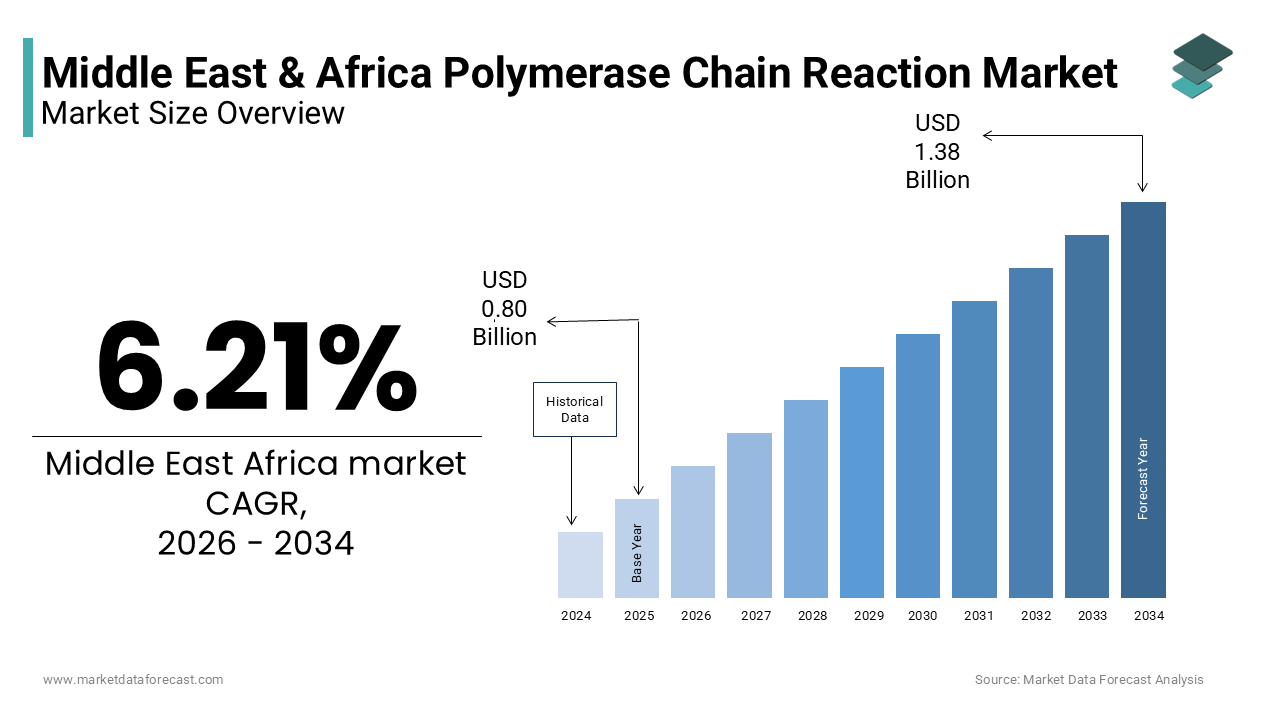
- Market Valuation: Valued at USD 0.80 billion (2025), estimated at USD 0.85 billion (2026), and projected to reach USD 1.38 billion by 2034, registering a solid CAGR of 6.21% (2026–2034).
- Primary Growth Drivers: Evolution of PCR multiplex assays featuring smart capabilities (such as voice commands, facial authentication, and RFID), rising healthcare infrastructure expenditures, and the growing prevalence of chronic diseases and infectious pathogens (e.g., Mycobacterium tuberculosis and influenza viruses). Key operational metrics include cost-effective single-response sequence duplication, expanding diagnostic centers, and increasing R&D investments.
Key Market Segment Metrics (2026–2034)
| Category | Leading Segment (2025 Position) | Fastest-Growing Segment |
|---|---|---|
| By Types | PCR Consumables & Reagents (dominated regional market share through high-volume recurring usage in clinical diagnostics) | PCR Instruments & Automated Systems (expanding rapidly due to technological upgrades and smart multiplex feature adoption) |
| By Type of Application | Gene Expression & Infectious Disease Diagnostics (led application share for pathogen detection and clinical testing) | DNA Sequencing & Cloning (growing fastest driven by increased research and development and drug discovery demands) |
| By Country | United Arab Emirates & Saudi Arabia / KSA (held the leading regional market share backed by rising healthcare capital expenditure and advanced diagnostic infrastructure) | South Africa (exhibiting high growth driven by increased research demand and hospital-based pathogen screening) |
Major Market Players & Market Structure
Market Structure: Highly competitive Middle Eastern and African molecular diagnostics market featuring international life science leaders competing on assay precision, smart automation, cost-effective multiplexing, and robust regional distribution networks.
Key Companies: Beckman Coulter, Becton, Dickinson and Company, Cepheid, Clontech Laboratories, Eppendorf, Fluidigm, PerkinElmer, bioMérieux, GE, Harvard Bioscience, Maxim Biotech, Promega, Kapa Biosystems, RainDance Technologies, and Siemens Healthcare.
Middle East and Africa Polymerase Chain Reaction Market Size
The Middle East & Africa polymerase chain reaction market size was valued at USD 0.80 billion in 2025 and is anticipated to reach USD 0.85 billion in 2026 from USD 1.38 billion by 2034, growing at a CAGR of 6.21% during the forecast period from 2026 to 2034.
Polymerase Chain Reaction (PCR) is a lab method used to quickly make millions or billions of copies of a single specific piece of DNA. This field is critical for modern healthcare infrastructure, enabling rapid diagnosis of infectious diseases, cancer and hereditary conditions. According to the World Health Organisation Regional Office for Africa, the burden of infectious diseases such as tuberculosis and malaria remains high, necessitating robust diagnostic capabilities across the continent. This epidemiological reality drives the adoption of sensitive PCR technologies in public health laboratories. As per Alpen Capital, current healthcare expenditure in the Gulf Cooperation Council (GCC) is projected to reach $159 billion by 2029 at an annualised growth rate of 7.8%. This financial commitment supports the procurement of sophisticated PCR instruments and reagents. The region faces unique challenges, including diverse pathogen profiles and varying infrastructure levels, which shape market dynamics. Regulatory bodies are increasingly aligning with international standards to ensure test accuracy and reliability. The integration of PCR into routine clinical practice enhances patient outcomes and disease surveillance. Manufacturers are focusing on portable and automated systems to address logistical constraints in remote areas. Consequently, the market is evolving from centralised reference labs to decentralized point of care settings.
MARKET DRIVERS
High Prevalence of Infectious Diseases and Epidemic Outbreaks
The high prevalence of infectious diseases and frequent epidemic outbreaks are among the factors behind the expansion of the Middle East & Africa polymerase chain reaction market. The region bears a disproportionate burden of communicable diseases such as HIV, tuberculosis, hepatitis and emerging viral threats, which require accurate and rapid detection methods. According to the World Health Organisation, there were an estimated 249 million cases of malaria globally in 2022, with approximately 95% of these cases and related deaths occurring in sub-Saharan Africa. PCR technology offers superior sensitivity compared to traditional microscopy, allowing for early detection and effective treatment initiation. As per reports, tracking the epidemiological distribution of infectious diseases across various administrative regions drives corresponding institutional modernisation of baseline laboratory infrastructure. National health strategies prioritise the deployment of molecular diagnostics to monitor drug resistance and track transmission patterns. The recent experiences with pandemic responses have further highlighted the importance of scalable PCR capacity. Public health agencies are investing in bulk procurement of testing kits to ensure readiness for future outbreaks. This sustained demand from government health programs provides a stable revenue stream for market players. The ability of PCR to differentiate between similar pathogens reduces misdiagnosis rates. Therefore, the fight against infectious diseases remains the strongest driver for market growth.
Government Initiatives and Healthcare Infrastructure Development
Substantial government initiatives and ongoing healthcare infrastructure development further propel the adoption of polymerase chain reaction technologies in the Middle East and Africa market. Governments in the Gulf Cooperation Council countries and emerging African economies are prioritising the modernisation of healthcare systems to improve population health outcomes. According to the Saudi Vision 2030 Healthcare Transformation Program, the Crown Prince announced a 65 billion USD budget intended to restructure the healthcare sector, achieve comprehensive digital health integration, and optimise nationwide clinical platforms. This investment directly fuels the demand for state-of-the-art PCR instruments and automation solutions. As per the study, multinational development blueprints frequently focus on long-term institutional capacity building and standardising specialised disease response protocols. These regional efforts facilitate technology transfer and capacity building in local laboratories. Public-private partnerships are increasingly common where private diagnostic chains collaborate with governments to expand testing access. Regulatory reforms are streamlining the approval process for new diagnostic devices, encouraging market entry. Training programs for laboratory technicians ensure proper utilisation of complex PCR equipment. The focus on universal health coverage drives the decentralisation of diagnostic services to rural areas. This structural support creates a conducive environment for long term market expansion. Governments view advanced diagnostics as essential for economic stability and public safety.
MARKET RESTRAINTS
High Cost of Instruments and Reagents
The high cost of PCR instruments and proprietary reagents remains a significant hurdle for the widespread adoption of these technologies in the Middle East and Africa polymerase chain reaction market. Advanced real-time PCR machines and next-generation sequencing platforms require substantial capital investment, which is often beyond the budget of public hospitals and small private clinics. According to the World Bank, health spending in many low-income African countries remains below recommended international minimum benchmarks per capita. This financial constraint forces healthcare providers to rely on older, less sensitive methods or refer samples to distant reference labs. According to the study, the recurring cost of specialised reagents and consumables typically represents a substantial portion of total clinical testing expenditures, posing a long-term sustainability challenge for laboratory budgets. Budget fluctuations and currency devaluations in some regions further exacerbate affordability issues. Maintenance contracts and technical support services add to the total cost of ownership, making long-term operation difficult. Small-scale laboratories struggle to achieve economies of scale, leading to higher per-test costs. Donor funding often covers initial setup but fails to sustain recurring supply needs. This economic barrier limits access to advanced diagnostics for the broader population. Manufacturers face pressure to lower prices, which may impact their profit margins. Thus, cost remains a major hurdle for market penetration in resource-limited settings.
Shortage of Skilled Laboratory Personnel and Technical Expertise
The shortage of skilled laboratory personnel and technical expertise also impacts the effective utilisation of PCR systems in the region and the overall expansion of the Middle East and Africa polymerase chain reaction market. Operating PCR instruments and interpreting complex molecular data require specialised training, which is not widely available in many parts of the Middle East and Africa. As per the World Health Organisation, the global health worker shortage is projected to reach 11.1 million by 2030, while the regional needs-based shortfall in the African Region specifically is anticipated to be approximately 6.1 million. This skills deficit leads to operational errors, equipment misuse and delayed result reporting. According to sources, there are significant gaps in trained laboratory staff and specialised technical personnel across sub-Saharan Africa, which can impact the efficiency and capacity of local diagnostic networks. High staff turnover due to migration to developed countries further depletes local talent pools. Limited access to continuous professional development programs prevents existing staff from keeping up with technological advancements. Complex troubleshooting requirements for sophisticated PCR platforms necessitate expert support, which is often unavailable locally. This reliance on external technical assistance increases downtime and operational costs. Educational institutions are struggling to update curricula to match industry needs. The lack of standardised certification programs complicates hiring and quality assurance. Until human capital constraints are addressed, the full potential of PCR technology will remain unrealised. This restraint hinders the scalability of molecular diagnostic services.
MARKET OPPORTUNITIES
Expansion of Point of Care and Portable PCR Solutions
The expansion of point-of-care and portable PCR solutions provides a major opportunity for the Middle East and Africa polymerase chain reaction market growth. This development is particularly significant in remote and underserved areas of the region. Traditional centralised laboratories are often inaccessible to rural populations, leading to delays in diagnosis and treatment. According to sources, consistent development funding targeted at localised diagnostic machinery is prioritised to expand point-of-care medical coverage. Portable PCR devices offer rapid results without the need for extensive infrastructure or highly specialised staff. As per research, the operational integration of fluidic manipulation frameworks and portable thermal components enables the creation of compact testing units for non-laboratory environments. These devices are ideal for screening infectious diseases in community health centres and mobile clinics. The ability to perform tests at the site of care improves patient compliance and reduces transmission risks. Governments and NGOs are increasingly procuring these units for outbreak response and routine surveillance. Local manufacturing partnerships can reduce costs and ensure supply chain resilience. The convenience and speed of point-of-care PCR align with public health goals for equitable access. This segment allows manufacturers to tap into previously unreachable markets. Innovation in user-friendly interfaces further broadens the appeal to non-specialist users.
Integration of Genomics and Personalised Medicine Programs
The integration of genomics and personalised medicine programs offers a lucrative prospect for the Middle East & Africa polymerase chain reaction market. This trend is particularly visible in wealthy Gulf nations. Countries like Saudi Arabia and the United Arab Emirates are launching national genomic initiatives to tailor healthcare based on individual genetic profiles. According to the Saudi Human Genome Program, the initial initiative was formally launched with the goal of sequencing 100,000 individuals' genomes using targeted next-generation sequencing to study both normal and disease-associated genes specific to the Saudi population. This strategic focus creates a premium market for advanced molecular diagnostic tools. As per sources, the clinical deployment of diagnostic protocols for specialised oncological and inherited pathologies is increasingly planned within standardised municipal patient care pathways. PCR plays a crucial role in validating genetic markers and monitoring treatment response. Pharmaceutical companies are collaborating with diagnostic firms to develop companion diagnostics for targeted therapies. The growing awareness of genetic disorders among the population increases demand for prenatal and carrier screening. Academic research institutions are expanding their capabilities, fostering innovation in local applications. This trend positions PCR as a cornerstone of modern precision healthcare. It opens avenues for specialised assays and custom panels. The region aims to become a hub for genomic research, attracting global partnerships.
MARKET CHALLENGES
Inconsistent Supply Chain and Logistics Infrastructure
Inconsistent supply chain and logistics infrastructure are a serious limitation to the reliable distribution of PCR reagents and equipment in the Middle East and Africa market. Many reagents require strict cold chain maintenance, which is difficult to guarantee in regions with unreliable electricity and poor transportation networks. According to research, cold chain breaks and infrastructure deficits in resource-limited regions frequently lead to a high percentage of wasted temperature-sensitive medical inventory and vaccines. This risk extends to PCR enzymes and controls, which lose efficacy if exposed to heat. According to the studies, transport infrastructure deficiencies and entry-port backlogs frequently compromise the supply chain for vital medical commodities, contributing to regional laboratory inventory stockouts. Customs clearance procedures can be bureaucratic and unpredictable, further complicating timely imports. Remote areas face even greater difficulties in receiving regular shipments, forcing labs to limit testing volumes. The lack of localised manufacturing means dependence on international suppliers who may face their own disruptions. Inventory management becomes challenging when lead times are uncertain. Laboratories must maintain large safety stocks, tying up capital and risking expiration. These logistical hurdles undermine the consistency of diagnostic services. Addressing these infrastructure gaps requires significant public and private investment.
Regulatory Fragmentation and Lack of Harmonisation
Regulatory fragmentation and the lack of harmonisation across countries in the region are formidable barriers for participants in the Middle East and Africa polymerase chain reaction market. Each nation has its own regulatory body and approval processes for medical devices and diagnostics, creating a complex compliance landscape. According to sources, the duration required to complete the official registration process for therapeutic and diagnostic items varies widely among different administrative jurisdictions. This inconsistency delays market entry and increases administrative costs for manufacturers. As per the African Medicines Regulatory Harmonisation Initiative, regulatory delays in Sub-Saharan Africa are heavily driven by a failure to leverage findings from existing competent reviews and disparate requirements for product approval by the countries. Differences in quality standards and labelling rules necessitate product modifications for each market. Small and medium-sized enterprises often lack the resources to manage multiple regulatory filings effectively. The absence of mutual recognition agreements means that approvals in one country do not facilitate entry into others. Uncertainty regarding post-market surveillance requirements adds to the operational burden. This fragmentation discourages innovation and limits the availability of new technologies. Companies must invest heavily in regulatory affairs teams to ensure compliance. The lack of a unified framework hinders the efficient flow of diagnostic innovations across the region.
REPORT COVERAGE
| REPORT METRIC | DETAILS |
| Market Size Available | 2025 to 2034 |
| Base Year | 2025 |
| Forecast Period | 2026 to 2034 |
| CAGR | 6.21% |
| Segments Covered | By Type of Application, Types & Region |
| Various Analyses Covered | Global, Regional & Country Level Analysis; Segment-Level Analysis, Drivers, Restraints, Opportunities, Challenges, PESTLE Analysis, Porter’s Five Forces Analysis, Competitive Landscape, Analyst Overview on Investment Opportunities |
| Regions Covered | KSA, UAE, Israel, the rest of GCC countries, South Africa, Ethiopia, Kenya, Egypt, Sudan, and Rest of MEA |
| Market Leaders Profiled | Beckman Coulter, Becton, Dickinson and Company, Cepheid, Clontech Laboratories, Eppendorf, Fluidigm, PerkinElmer, bioMérieux, GE, Harvard Bioscience, Maxim Biotech, Promega, Kapa Biosystems, RainDance Technologies, and Siemens Healthcare. |
SEGMENTAL ANALYSIS
By Type Of Application Insights
The DNA sequencing segment held the leading position in the Middle East & Africa polymerase chain reaction market and occupied a commanding share in 2025. Its critical role in genomic research, personalised medicine, and pathogen identification strengthened the prominence of this segment. The region is witnessing a surge in national genome projects which rely heavily on PCR-based sequencing technologies to map genetic variations and disease predispositions. According to the Saudi Human Genome Program, the project was formally launched with the strategic goal of sequencing 100,000 individuals' genomes using targeted next-generation sequencing to study both normal and disease-associated genes specific to the Saudi population. This large-scale initiative necessitates robust PCR amplification steps to prepare libraries for next-generation sequencing platforms. As per sources, the establishment of centralised scientific infrastructure across sub-Saharan Africa aims to augment technical capabilities and expand access to localised genetic sequencing applications. These centres require advanced PCR capabilities to ensure accurate data generation for clinical and research applications. The integration of sequencing into oncology diagnostics allows for targeted therapy selection, which is gaining traction in private healthcare sectors. Government funding for precision medicine initiatives further supports the dominance of this segment. Researchers are increasingly using sequencing to study infectious disease outbreaks, providing real-time data for public health responses. The versatility of PCR in preparing samples for various sequencing methods ensures its central role in this application. Continuous advancements in sequencing speed and accuracy reinforce the reliance on high-quality PCR components. This segment benefits from strong academic and clinical collaborations that drive innovation and adoption.
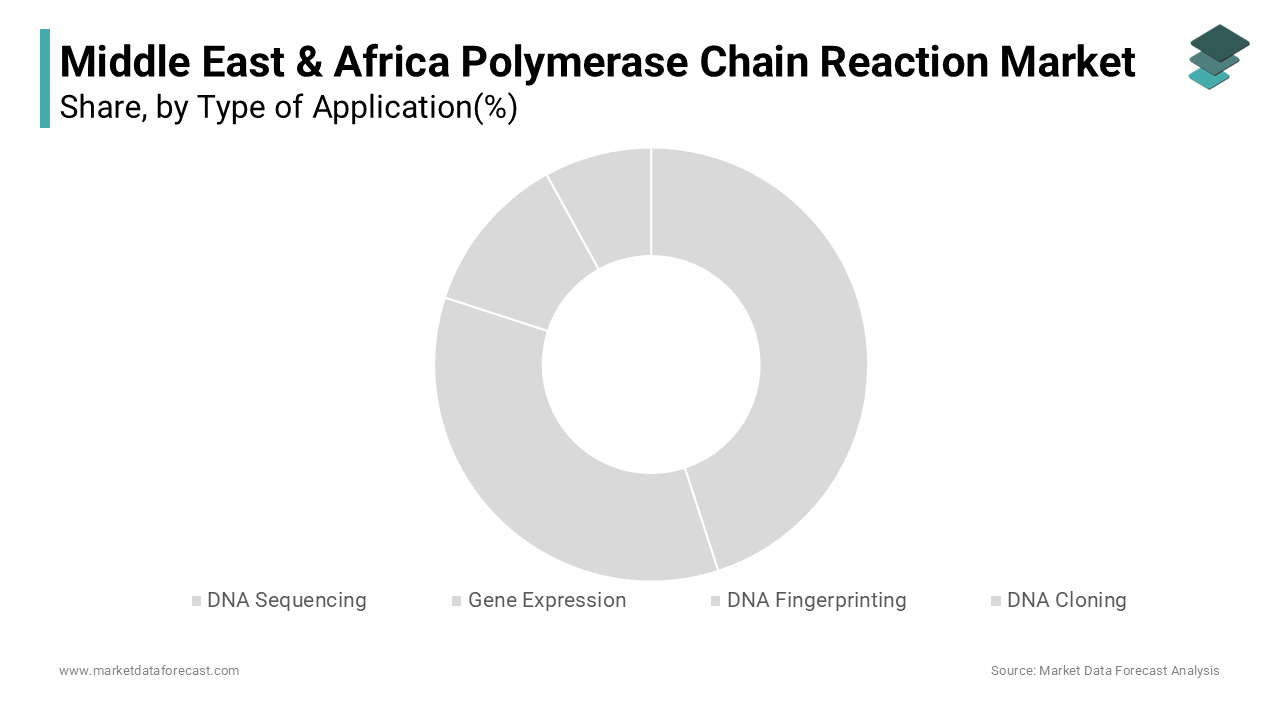
The gene expression segment is experiencing the fastest growth in the Middle East & Africa polymerase chain reaction market due to expanding research into molecular mechanisms of diseases and drug development. Quantitative PCR qPCR is the gold standard for measuring gene activity and is increasingly used in pharmaceutical research and clinical trials across the region. According to reports, the execution of quantitative polymerase chain reaction assays for monitoring persistent viral strains plays a significant role in managing long-term patient therapeutic protocols. This clinical application requires precise quantification of genetic material to assess treatment efficacy and disease progression. As per studies, domestic research institutions continuously expand their investigative focus toward examining diagnostic proteins, mutational profiles, and inheritance patterns for severe malignancies. These facilities utilise gene expression analysis to identify potential therapeutic targets and understand disease pathways. The rise of biotechnology startups in Israel and South Africa further accelerates demand for specialised qPCR assays and reagents. Pharmaceutical companies are conducting local clinical trials which require rigorous gene expression profiling for regulatory approval. The ability of qPCR to provide rapid and sensitive results makes it indispensable for modern research. Funding from international health organisations supports capacity building in gene expression analysis. This segment benefits from the growing expertise in molecular biology among regional scientists. The trend toward personalised medicine drives the need for detailed genetic profiling.
COUNTRY ANALYSIS
Saudi Arabia Polymerase Chain Reaction Market Analysis
Saudi Arabia was the dominant country in the Middle East & Africa polymerase chain reaction market and captured a significant share in 2025. This supremacy of the Saudi market was propelled by massive government investments in healthcare transformation and genomic research. The Kingdom’s Vision 2030 initiative prioritises the development of a robust life sciences sector, including advanced diagnostic capabilities. According to sources, government-led expansion of specialised diagnostic laboratories remains a core component of state strategies to optimise diagnostic timelines and improve population health surveillance. This infrastructure expansion directly increases the demand for PCR instruments and consumables. As per research, dedicated funding for translational medicine is routinely directed toward assessing population-specific biological variables to improve precision healthcare systems. These research activities require high-throughput PCR systems for library preparation and validation. The prevalence of genetic disorders such as thalassemia and diabetes drives clinical demand for precise diagnostic testing. Regulatory bodies are streamlining approvals for new diagnostic technologies, facilitating market entry. The country serves as a regional hub for medical tourism, attracting patients seeking advanced genetic testing. Local partnerships with global technology providers ensure access to state-of-the-art equipment. The focus on preventive healthcare reinforces the importance of early detection through molecular diagnostics. Saudi Arabia’s strategic initiatives set the pace for PCR adoption in the Gulf region.
United Arab Emirates Polymerase Chain Reaction Market Analysis
The United Arab Emirates is a mature player within the Middle East and Africa polymerase chain reaction market. This growth is driven by advanced healthcare infrastructure and a focus on precision medicine. The country is home to world-class medical facilities that routinely employ molecular diagnostics for infectious diseases and oncology. According to sources, the deployment of standardised molecular diagnostics within primary public care pathways is intended to improve operational speed and clinical monitoring efficiency. This digital integration supports the widespread use of automated PCR platforms. As per studies, the implementation of rigorous clinical guidelines helps guarantee high-quality laboratory operations and baseline instrumentation compliance. The UAE hosts several international conferences on genomics and diagnostics, fostering knowledge exchange and technology adoption. The presence of multinational pharmaceutical companies conducting clinical trials boosts the demand for gene expression analysis. The government’s commitment to becoming a global healthcare hub attracts investment in research and development. Public awareness campaigns promote the benefits of genetic screening, encouraging proactive health management. The market benefits from a highly skilled workforce capable of operating complex molecular systems. The UAE serves as a gateway for introducing new PCR technologies to the wider Middle East region. Its strategic location facilitates efficient distribution and logistics.
Israel Polymerase Chain Reaction Market Analysis
Israel holds the second-largest position in the Middle East & Africa polymerase chain reaction market because of its robust biotechnology and life sciences ecosystem. The country is a global leader in molecular diagnostics innovation with numerous startups developing novel PCR applications and devices. According to the Israel Innovation Authority, health-tech and life sciences startups drew $1.6 billion in investments in 2025, which represented a 40% decline from 2024, though the authority continued to support the ecosystem by investing approximately NIS 560 million into health-tech. This financial backing accelerates the commercialisation of new PCR technologies. As per research, national healthcare networks prioritise the systemic implementation of advanced testing frameworks to optimise patient treatment outcomes and manage infectious disease diagnostics. Research institutions collaborate closely with industry partners to translate scientific discoveries into clinical products. The country’s expertise in bioinformatics enhances the interpretation of PCR data, enabling personalised treatment plans. Export of Israeli diagnostic technologies to other regions contributes significantly to the market dynamics. The regulatory framework encourages rapid adoption of innovative solutions while maintaining safety standards. High levels of scientific literacy among healthcare professionals facilitate the use of complex molecular assays. Israel serves as a centre of excellence for PCR research and development. Its contributions influence global trends in molecular diagnostics.
South Africa Polymerase Chain Reaction Market Analysis
South Africa is quickly accelerating within the Middle East & Africa polymerase chain reaction market due to a well-developed healthcare system and strong research capabilities. The country serves as a hub for molecular diagnostics serving both domestic needs and neighbouring regions. According to sources, institutional development funds target high-burden pathogens to integrate specialised genetic amplification mechanisms for measuring resistance profiles. This focus on major public health challenges drives consistent demand for reliable diagnostic tools. As per the National Health Laboratory Service, the network of public laboratories performs millions of PCR tests annually, ensuring widespread access to molecular diagnostics. The private healthcare sector also adopts advanced PCR technologies for oncology and genetic disorders. Academic institutions collaborate with international partners to develop locally relevant diagnostic solutions. Regulatory frameworks are aligned with international standards, ensuring quality and safety. The presence of local manufacturing facilities for certain reagents reduces dependency on imports. Challenges related to funding and infrastructure in rural areas persist, but urban centres are well served. South Africa leads in capacity building and training for molecular biology in Africa. Its experience informs best practices for other countries in the region.
Ethiopia Polymerase Chain Reaction Market Analysis
Ethiopia is moving ahead at a slow pace in the Middle East and Africa polymerase chain reaction market. This position is supported by government efforts to strengthen disease surveillance and control programs. The country faces a high burden of infectious diseases, which necessitates scalable diagnostic solutions. According to reports, expanding state-level laboratory infrastructure aims to modernise infectious disease response pathways and improve localised tracking metrics. This initiative relies on the deployment of PCR instruments in regional laboratories. As per studies, technical resource allocation and hardware provision from global development partners support the integration of automated diagnostic systems at specialised local clinical centres. These investments aim to reduce turnaround times for test results and improve patient management. Training programs for health workers are essential to ensure proper operation and maintenance of equipment. The government prioritises local production of basic diagnostics but relies on imports for advanced PCR reagents. Supply chain challenges remain a barrier, but improvements in logistics are ongoing. Awareness of molecular diagnostics among clinicians is growing, leading to increased test requests. Ethiopia offers significant potential for market growth as infrastructure develops. Partnerships with global health agencies continue to drive progress.
Kenya Polymerase Chain Reaction Market Analysis
Kenya is a rising frontier within the Middle East & Africa polymerase chain reaction market owing to a vibrant private healthcare sector and active research community. The country is a regional hub for medical services attracting patients from neighbouring countries. According to sources, national health entities apply molecular classification tools and biological research pipelines to map out transmission patterns and generate regional clinical profiles. This research activity drives demand for high-quality reagents and instruments. As per the Kenya Ministry of Health guidelines, clinical strategies targeted at preventing mother-to-child transmission of HIV recommend routine viral load monitoring for pregnant and breastfeeding women to guide clinical action. This public health program ensures steady demand for diagnostic services. The private sector offers advanced genetic testing services catering to a growing middle class. Regulatory bodies are working to streamline the approval process for new diagnostic kits. Local distributors play a crucial role in ensuring product availability and technical support. Challenges related to cost and insurance coverage limit access for some populations. However, the trend toward universal health coverage may expand access in the future. Kenya serves as a model for integrating molecular diagnostics into primary care. Innovation in mobile health solutions complements laboratory testing.
COMPETITIVE LANDSCAPE
The competition in the Middle East & Africa Polymerase Chain Reaction Market is characterized by the presence of global multinational corporations and emerging regional players who compete on technology and service quality. Large international firms dominate the market due to their extensive product portfolios and established brand reputation. They leverage their global research capabilities to introduce innovative PCR solutions tailored to local needs. Regional distributors and smaller biotechnology companies compete by offering personalized customer service and competitive pricing. These entities often have better understanding of local regulatory requirements and cultural nuances. Price sensitivity is a significant factor in many African countries leading to intense competition for public tenders. Strategic alliances between manufacturers and local partners are common to overcome logistical challenges. Regulatory compliance acts as a barrier to entry favoring established players with robust quality assurance systems. The market sees increasing interest in point of care diagnostics driving innovation in portable PCR devices. Companies that provide comprehensive training and technical support gain a competitive advantage. The landscape is dynamic with continuous entry of new technologies and applications. This diversity ensures a vibrant market environment focused on improving healthcare outcomes. Collaboration with international health organizations further influences competitive dynamics.
KEY MARKET PLAYERS
Key Market Companies dominating the Middle East & Africa Polymerase Chain Reaction Market include
- Beckman Coulter
- Becton, Dickinson and Company
- Cepheid
- Clontech Laboratories
- Eppendorf
- Fluidigm
- PerkinElmer
- bioMérieux
- GE
- Harvard Bioscience
- Maxim Biotech
- Promega
- Kapa Biosystems
- RainDance Technologies
- Siemens Healthcare
Top Players in the Middle East & Africa Polymerase Chain Reaction Market
Thermo Fisher Scientific Inc
Thermo Fisher Scientific Inc serves as a global leader in life sciences with a strong presence in the Middle East and Africa polymerase chain reaction sector. The company provides comprehensive solutions including instruments reagents and consumables for molecular diagnostics and research. Thermo Fisher recently expanded its distribution network in South Africa to improve supply chain efficiency and customer support. This strategic move ensures timely delivery of critical PCR products to laboratories across the region. The company collaborates with local governments to enhance genomic surveillance capabilities for infectious diseases. Their advanced real time PCR systems are widely used in public health laboratories for pathogen detection. Thermo Fisher offers extensive training programs for laboratory personnel to ensure optimal instrument utilization. By focusing on innovation and reliability the company maintains its position as a trusted partner. Their commitment to quality and regulatory compliance supports market growth. These efforts strengthen their leadership in the regional diagnostic landscape.
Qiagen NV
Qiagen NV plays a pivotal role in the Middle East and Africa polymerase chain reaction market by offering specialized sample preparation and detection technologies. The company focuses on providing robust solutions for infectious disease testing and genetic analysis. Qiagen recently launched automated PCR platforms tailored for high throughput testing in reference laboratories across the Gulf region. This innovation helps healthcare providers manage large volumes of samples efficiently during outbreak situations. The company partners with local distributors to expand access to its molecular diagnostic kits in remote areas. Qiagen emphasizes ease of use and rapid turnaround times which are critical for clinical decision making. Their portfolio includes assays for respiratory pathogens and sexually transmitted infections addressing key public health needs. The company invests in regulatory approvals to ensure其产品 meet local standards. By delivering consistent performance Qiagen builds trust with healthcare professionals. These actions reinforce its reputation for quality and innovation in the market.
Bio Rad Laboratories Inc
Bio Rad Laboratories Inc contributes significantly to the Middle East and Africa polymerase chain reaction market through its diverse range of life science and clinical diagnostic products. The company is known for its reliable PCR instruments and high quality reagents used in research and clinical settings. Bio Rad recently established a technical support center in Dubai to provide faster assistance to customers in the Middle East. This initiative enhances customer satisfaction and reduces equipment downtime for laboratories. The company offers customized solutions for cancer research and genetic disorder screening which are growing areas of interest in the region. Bio Rad collaborates with academic institutions to promote education and training in molecular biology techniques. Their focus on affordability and accessibility makes their products suitable for resource limited settings. The company actively participates in regional conferences to showcase new technologies. By prioritizing customer engagement Bio Rad strengthens its market presence. These strategies ensure long term sustainability and growth.
Top Strategies Used by Key Market Participants
Key players in the Middle East & Africa Polymerase Chain Reaction Market primarily focus on strategic partnerships and localized support to enhance market penetration. Companies collaborate with local distributors and government agencies to navigate complex regulatory environments and improve supply chain efficiency. This approach ensures timely availability of critical diagnostic products in remote areas. Investment in training and capacity building is another major strategy where firms educate laboratory personnel on advanced PCR technologies. This initiative addresses the shortage of skilled workforce and promotes proper instrument utilization. Product customization for regional disease profiles such as tuberculosis and malaria drives demand for specific assays. Firms also prioritize after sales service and technical support to build long term customer relationships. Digital integration of diagnostic data supports public health surveillance efforts. Pricing strategies are adapted to accommodate varying economic conditions across different countries. These multifaceted approaches enable companies to overcome infrastructure challenges and foster sustainable growth in the dynamic regional landscape.
MARKET SEGMENTATION
This research report on the Middle East & Africa Polymerase Chain Reaction Market has been segmented and sub-segmented into the following categories.
By Type of Application
- DNA Sequencing
- Gene Expression
- DNA Fingerprinting
- DNA Cloning
By Types
- PCR Consumables
- PCR Instruments
By Country
- KSA
- UAE
- Israel
- The rest of the GCC countries
- South Africa
- Ethiopia
- Kenya
- Egypt
- Sudan
- Rest of MEA