- Product Description Description
- Table of Contents TOC
- List of Table & Figure LOT
- Get Free Sample PDF Sample PDF
Market Size, 2025
$5.12 BnMarket Estimate, 2026
$5.26 BnMarket Forecast, 2034
$6.48 BnCAGR, 2026–2034
2.65%Middle East and Africa (MEA) Psychiatry Therapies Market Size, Share, Trends & Forecast (2026–2034)
- Market Scope: Comprehensive regional analysis of the MEA psychiatry therapies market covering treatment types, therapy modalities, medication classes, and country-level health transformations.
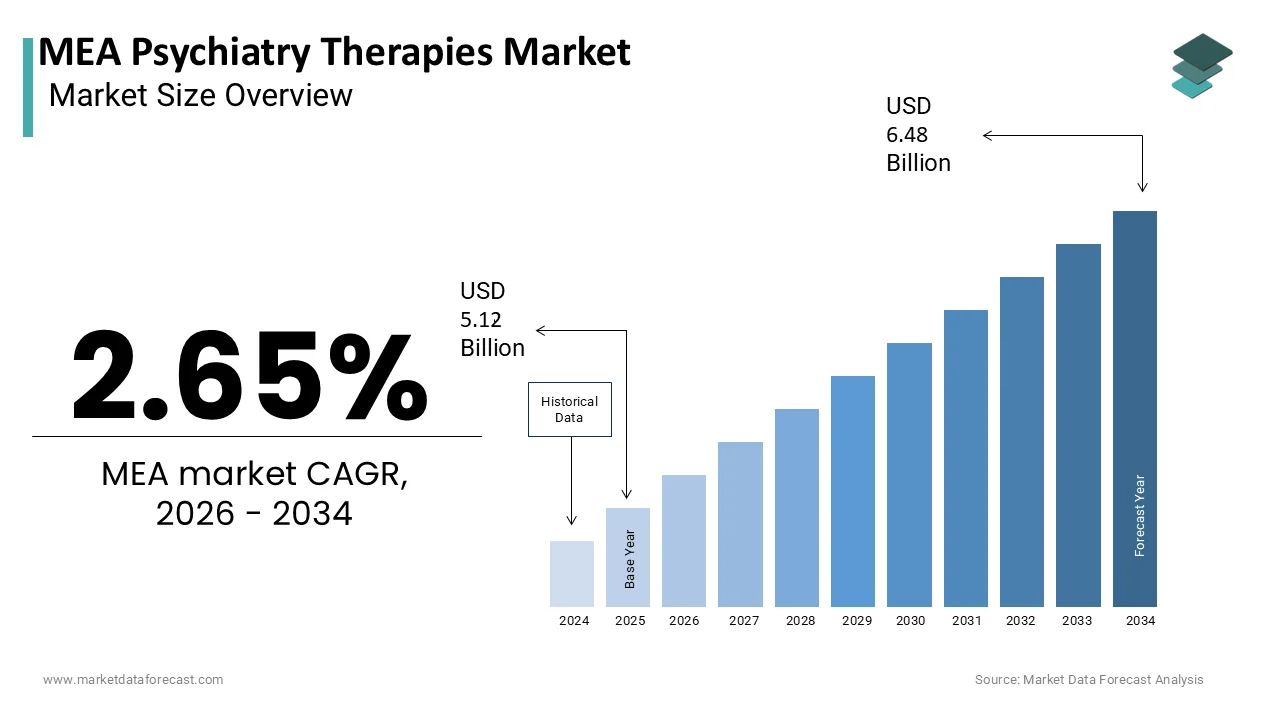
- Market Valuation: Valued at USD 5.12 billion in 2025, estimated at USD 5.26 billion in 2026, and projected to reach USD 6.48 billion by 2034, growing at a steady CAGR of 2.65% from 2026 to 2034.
- Primary Growth Drivers: High regional demand driven by conflict-induced trauma, refugee displacement, and national mental health policy reforms (such as Saudi Arabia's Vision 2030).
Key MEA Psychiatry Therapies Market Segment Metrics (2026–2034)
| Category | Leading Segment (2025 Position) | Fastest-Growing Segment |
|---|---|---|
| By Type | Biological psychology segment (dominated in 2025 due to pragmatic alignment with severe workforce shortages and primary care integration) | Social psychology segment (predicted to witness the highest CAGR of 14.8% due to international investments in community psychosocial support) |
| By Type of Therapy | Cognitive behavioural therapy segment (led in 2025 supported by a robust evidence base and feasible task-shifting frameworks) | Behavioral activation segment (estimated to register the fastest CAGR of 16.2% owing to its simplicity and cultural neutrality) |
| By Type of Medication | Antidepressants segment (held the majority share in 2025 driven by high depression prevalence and primary care accessibility) | Stimulants segment (anticipated to witness the fastest CAGR of 18.9% propelled by rising pediatric ADHD diagnoses and academic pressures) |
Major MEA Market Players & Competitive Structure
Market Structure: Evolving landscape defined by sovereign healthcare investments, public-private health modernizations, and humanitarian interventions addressing critical treatment gaps.
Key Market Leaders: AstraZeneca plc, Universal Health Services, Inc., Johnson & Johnson, Pfizer Inc., GlaxoSmithKline plc, Eli Lilly and Company, Bristol-Myers Squibb Company, Wyeth, Astellas Pharma Inc., and others.
 Download Free Sample Report
MEA Psychiatry Therapies Market Size
The MEA Psychiatry Therapies Market is projected to grow from USD 5.12 billion in 2025 to USD 5.26 billion in 2026 and reach USD 6.48 billion by 2034, registering a CAGR of 2.65% from 2026 to 2034.
Psychiatric therapies are medical and psychological treatments used by psychiatrists to diagnose, manage, and cure mental health conditions. They combine biological tools like prescription medications with talk therapies and advanced brain stimulation procedures to treat emotional, behavioral, and mental disorders. This field operates within complex sociopolitical environments where conflict displacement and rapid urbanization significantly influence disease burden and treatment accessibility. According to the World Health Organization, an estimated 1 in 5 people living in settings affected by armed conflict suffer from a mental health condition such as depression, anxiety, post-traumatic stress disorder, bipolar disorder, or schizophrenia, driving an escalating demand for community-level psychiatric services. As per the United Nations High Commissioner for Refugees, global displacement numbers reaching historic highs are intensifying the demand for expanded infrastructure, specialized psychosocial services, and scaled-up psychiatric therapies across regional humanitarian networks. According to the World Health Organization Regional Office for Africa, mental, neurological, and substance use disorders generate a substantial proportion of the non-communicable disease burden in sub-Saharan Africa, while domestic health budget allocations for psychiatric care remain below 1% in most member countries. This market is defined not merely by commercial transactions but by systemic efforts to bridge massive treatment gaps through innovative delivery models adapted to resource-constrained and culturally diverse contexts. Understanding this landscape requires analyzing epidemiological urgency, infrastructure deficits, and evolving policy commitments rather than conventional revenue metrics alone.
MARKET DRIVERS
Conflict-Induced Trauma Generating Urgent Clinical Demand
Prolonged armed conflicts and political instability across multiple nations in the region drive the growth of the Middle East and Africa psychiatry therapies market. This creates sustained high-volume demand for trauma-focused psychiatric therapies and psychotropic medications. According to the World Health Organization, an estimated 22% of people living in areas affected by conflict suffer from a mental health condition ranging from depression and anxiety to schizophrenia, driving critical demand for scalable local clinical therapies. As per the United Nations, intensive conflicts and recurring displacement are forcing over 90% of children in Gaza to exhibit extreme psychological stress and behavioral shifts, which expands the critical regional demand for targeted pediatric psychological support programs. According to Médecins Sans Frontières, extreme cycles of conflict, violence, and economic displacement in South Sudan continue to drive an escalating public demand for mental health consultations and community-based psychosocial group discussions across local field installations. The demand is structurally embedded rather than cyclical, as intergenerational trauma accumulates and health systems attempt reconstruction. Consequently, psychiatric therapies function as essential humanitarian commodities in these contexts,s with utilization driven by epidemiological necessity rather than discretionary healthcare consumption patterns observed in stable markets.
National Mental Health Policy Reforms Expanding Public Sector Coverage
Government-led mental health policy reforms across the region are systematically integrating psychiatric therapies into universal health coverage frameworks, which further propels the Middle East and Africa psychiatry therapies market. This generates predictable public sector demand. According to the World Health Organization, implementation under the global Mental Health Action Plan is expanding public sector health governance structures and driving the systematic integration of priority therapeutic protocols into regional healthcare delivery channels. As per the Health Sector Transformation Program of Saudi Arabia, extensive public health infrastructure modernizations and virtual hospital investments under Vision 2030 are actively accelerating community access to specialized clinical consultations and digital healthcare services. According to the South African National Department of Health, the National Mental Health Policy Framework and Strategic Plan is driving the systematic integration of psychiatric therapies into primary healthcare networks to combat severe human resource and clinical specialist deficits. The policy shifts transform psychiatric therapies from peripheral specialty services into core components of publicly funded health benefits packages. Unlike markets driven primarily by private insurance reimbursement, growth here stems from sovereign commitment to mental health as a development priority, creating sustainable demand anchored in legislative mandates rather than transient donor funding cycles.
MARKET RESTRAINTS
Critical Workforce Shortages Limiting Service Delivery Capacity
Severe shortages of trained psychiatrists, psychologists, and psychiatric nurses restrict the growth of the Middle East and Africa psychiatry therapies market. This fundamentally constrains the effective deployment of psychiatric therapies regardless of medication availability or policy intent. According to the World Health Organization, global disparities in the psychiatric workforce severely constrain localized mental healthcare, with low-income nations averaging a fraction of a psychiatrist per 100,000 population compared to much higher ratios in high-income regions. As per the World Health Organization, the availability of specialized mental health professionals in sub-Saharan Africa sits at approximately one psychiatrist per one million people, creating immense resource deficits for prescription therapies and specialist clinical services. The human capital deficit shows that even fully stocked pharmacies cannot translate medication supply into effective therapy since dosing, titration, side-effect management, ent and adherence counseling require skilled personnel. Workforce development must accelerate through expanded training programs, retention incentives, and task-shifting models. Until then, psychiatric therapy utilization will remain artificially suppressed below epidemiological demand levels across the region.
Persistent Stigma Suppressing Help Seeking Behavior
Deeply entrenched cultural stigma surrounding mental illness continues to suppress help-seeking behavior, which is among the major limitations for the Middle East and Africa psychiatry therapies market. This reduces effective demand for psychiatric therapies despite increasing service availability. As per studies, persistent socio-cultural misconceptions regarding the origins of psychiatric conditions create severe treatment-seeking delays and drive a substantial portion of local populations to consult traditional healers before seeking clinical care. According to the United Nations Population Fund, integrated maternal and reproductive healthcare initiatives are actively designed to expand community-based psychosocial counseling for women facing severe domestic and postpartum stress within fragile settings. As per national epidemiological evaluations in Nigeria, a vast majority of individuals suffering from severe depressive disorders remain entirely disconnected from formal psychiatric care networks due to structural scarcity, profound systemic resource constraints, and localized social stigma. This stigma operates independently of economic or geographic access barriers, meaning that supply-side improvements alone cannot unlock latent demand. Effective therapy utilization requires parallel investment in community education, religious leader engagement, and anti-stigma campaigns addressing sociocultural beliefs that currently render available treatments socially inaccessible for the majority of affected populations.
MARKET OPPORTUNITIES
Digital Mental Health Platforms Overcoming Geographic Barriers
Rapid mobile penetration and digital health innovation create transformative opportunities for delivering these therapies to underserved populations across vast geographic distances in the region, which is expected to fuel the growth of the Middle East and Africa psychiatry therapies market. According to the International Telecommunication Union, expanding mobile infrastructure and accelerating digital investments are actively shrinking connectivity gaps across Africa, driving a steady increase in the continent's baseline internet penetration rate. As per the World Health Organization, implementation of global digital health frameworks is systematically driving the integration of evidence-based psychological interventions and scalable mental health modules into national health systems. According to the Ministry of Health of Egypt, national e-health initiatives and digital platform expansions are actively modernizing patient triage, expanding teleconsultation pipelines, and reinforcing regional healthcare connectivity. These digital pathways circumvent physical infrastructure limitations and partially mitigate workforce shortages by enabling task shifting to lower cadre providers supervised remotely. Growth opportunity lies not in replacing traditional care but in extending therapeutic reach to populations historically excluded by geography and scarcity, creating entirely new addressable segments beyond conventional clinic catchment areas.
Integration With Non-Communicable Disease Programs Creating Synergies
Embedding psychiatric therapies within existing non-communicable disease management platforms paves the way to leverage established infrastructure and reduce incremental costs of mental health service delivery, which is anticipated to accelerate the Middle East and Africa market expansion. According to the World Health Organization, individuals living with severe non-communicable diseases experience significantly higher rates of comorbid depression and anxiety, which actively reduces treatment adherence and exacerbates chronic disease outcomes. As per the South African National Department of Health, the integration of universal mental health screenings within primary care settings is strategically prioritized to overcome massive personnel shortfalls and optimize rural therapeutic pipelines. As per the Ministry of Health of Jordan, national health infrastructure networks actively implement systematic mental health screening protocols to elevate clinical entry rates and support vulnerable refugee populations across the kingdom. This integration opportunity transforms psychiatric therapies from siloed specialty services into value-adding components of broader chronic care ecosystems. Success depends on adapting existing workflows rather than building parallel systems, making expansion fiscally sustainable even in resource-constrained settings where standalone mental health budgets remain inadequate.
MARKET CHALLENGES
Supply Chain Fragility Causing Medication Stockouts
Chronic supply chain vulnerabilities across the region cause frequent stockouts of essential psychiatric medications, which challenge the growth of the Middle East and Africa psychiatry therapies market. This undermines treatment continuity and therapeutic effectiveness despite adequate policy commitment and funding allocations. According to the World Health Organization, extensive vulnerabilities in public health supply chains across sub-Saharan Africa cause frequent regional stockouts of essential psychotropic treatments, creating severe therapeutic gaps for vulnerable mental health patients. As per the United Nations, heavy customs bureaucracy, acute foreign exchange shortages, and administrative regulatory bottlenecks actively delay import clearance times for vital medical goods across highly unstable regional humanitarian environments. These supply chain failures mean that nominal market access does not translate to reliable therapeutic access. Addressing this challenge requires systemic logistics reform, regional buffer stock mechanisms, and local manufacturing incentives rather than simply increasing procurement volumes,s which accumulate unused in central warehouses while peripheral facilities remain empty.
Regulatory Heterogeneity Impeding Regional Scalability
Extreme regulatory fragmentation across jurisdictions in the region creates prohibitive compliance burdens in the Middle East and Africa psychiatry therapies market. This prevents efficient scaling of psychiatric therapy products and services across national borders. According to the African Medicines Agency, ongoing regional efforts to establish unified continent-wide regulatory standards are actively aimed at harmonizing disparate national review pipelines and accelerating access to essential medical therapies. As per the Secretariat General of the Gulf Cooperation Council, integrated regional regulatory mechanisms are actively unifying pharmaceutical authorization protocols across member states to streamline import pathways for multi-market clinical therapeutic deployments. The regulatory mosaic prevents manufacturers from achieving the economies of scale necessary for affordable pricing in low-income markets. Until mutual recognition agreements expand and regional pooled procurement mechanisms mature, each country remains an isolated market fragment, sustaining high prices and limited product availability despite aggregate regional demand justifying the investment.
REPORT COVERAGE
| REPORT METRIC | DETAILS |
| Market Size Available | 2025 to 2034 |
| Base Year | 2025 |
| Forecast Period | 2026 to 2034 |
| Segments Covered | By Type, Type of Therapy, Type of Medication, and Region. |
| Various Analyses Covered | Global, Regional, and Country-Level Analysis, Segment-Level Analysis, Drivers, Restraints, Opportunities, Challenges; PESTLE Analysis; Porter’s Five Forces Analysis, Competitive Landscape, Analyst Overview of Investment Opportunities |
| Countries Covered | Saudi Arabia |
| Market Leaders Profiled |
|
SEGMENTAL ANALYSIS
By Type Insights
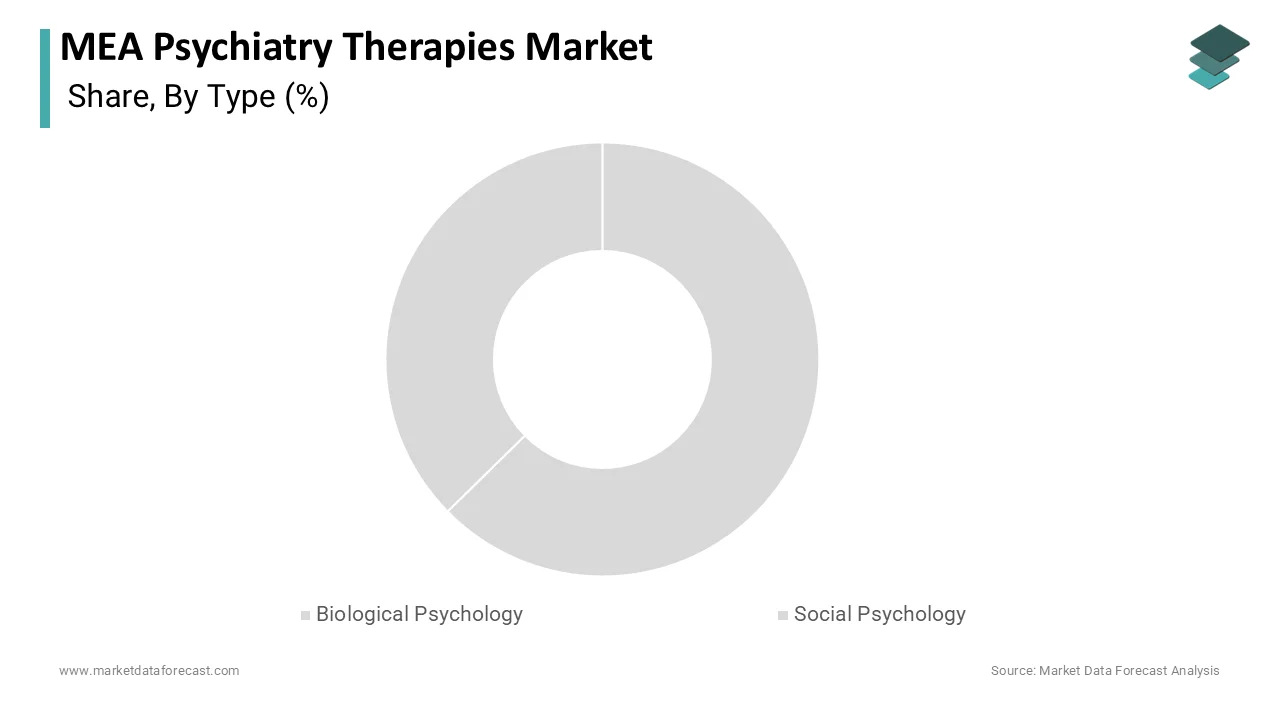
The biological psychology segment dominated the Middle East and Africa psychiatry therapies market and accounted for a substantial share in 2025. This segment dominated because severe shortages of trained mental health professionals make biologically oriented pharmacological interventions the only scalable treatment option for millions of patients. According to the World Health Organization, the massive shortage of mental health professionals across low- and middle-income countries leaves most regions with less than one psychiatrist per 100,000 population, compounding the public need for non-specialist care delivery frameworks. As per the African Union, progressive health frameworks actively support the scaling of integrated community services and non-specialist mental health training programs to address foundational gaps across sub-Saharan Africa. This structural reality means biological psychology frameworks emphasizing neurochemical etiology and pharmaceutical management align with available human capital, unlike psychodynamic or cognitive models requiring specialized practitioners. According to the Ministry of Health and Population of Egypt, national public health infrastructure utilizes centralized psychiatric hospital networks alongside growing primary healthcare centers to dispense standard essential medications and localized mental health assessments. Consequently, biological psychology maintains dominance not through superior efficacy evidence but through pragmatic alignment with resource limitations defining regional healthcare delivery realities across both conflict-affected and developing nations throughout the Middle East and Africa.
Biological psychology retains market dominance through systematic integration with general medical platforms where psychiatric conditions are managed as chronic diseases alongside diabetes, hypertension, and HIV using similar biological treatment paradigms. According to the World Health Organization, regular country profile assessments show that integrating mental healthcare into existing primary care pipelines significantly optimizes long-term therapeutic coordination for patients living with chronic non-communicable diseases. As per the South African National Department of Health, the progressive integration of clinical mental health screening within chronic illness services aims to bridge steep resource gaps and secure robust, localized treatment pathways. According to the Ministry of Health of Jordan, armed forces medical departments implement coordinated psychological support systems and structured primary care interventions to expand therapy adherence and elevate resilience across target populations. This medical model compatibility makes biological psychology administratively convenient for health ministries managing integrated service delivery. Unlike standalone psychological services requiring separate infrastructure, biological approaches leverage existing chronic disease platforms, creating sustainable adoption pathways even when dedicated mental health budgets remain inadequate across the region.
The social psychology segment is predicted to witness the highest CAGR of 14.8% from 2026 to 2034, due to massive international investment in community-based psychosocial support programs for conflict-affected and displaced populations. According to the United Nations High Commissioner for Refugees, global humanitarian mental health interventions prioritize scalable, community-based psychological first aid and group psychosocial support models to address unprecedented population displacement demands. As per the World Health Organization, scalable psychological interventions like Problem Management Plus are systematically deployed through non-specialist providers to secure cost-effective reductions in anxiety and depression across low-resource settings. According to Médecins Sans Frontières, emergency mental health programs in intense conflict environments actively focus on low-intensity psychological care, family counseling, and structured psychosocial coping groups to optimize community resilience. This growth stems from recognition that trauma in these contexts is fundamentally social, requiring interventions addressing family dynamics, community cohesion, and socioeconomic stressors rather than purely intrapsychic processes. Donor funding priorities increasingly favor these approaches, creating sustained demand acceleration independent of domestic health budget allocations.
The swift expansion of this segment gains further momentum from its emphasis on interpersonal relationships. This community context aligns more closely with collectivist cultural norms prevalent across the Middle East and African societies than with individually focused Western psychological models. As per peer-reviewed global health trials, culturally adapted formats of group psychological treatments demonstrate strong community retention rates and significant symptom reductions among distressed refugee cohorts residing within regional host countries. According to studies in Tunisia, embedding targeted psychological counseling protocols into public maternal health services optimizes treatment enrollment and significantly improves postpartum depression screening metrics. This cultural resonance transforms social psychology from an imported Western concept into a locally meaningful practice. Growth accelerates as implementers recognize that therapeutic effectiveness depends on cultural fit not just technical fidelity, making socially embedded approaches uniquely positioned to scale up across diverse Middle East and African communities where individualistic models consistently fail to achieve population-level impact.
By Type Of Therapy Insights
The cognitive behavioural therapy segment led the Middle East and Africa psychiatry therapies market and captured a significant share in 2025. This leading position of the segment was attributed to its extensive evidence base, which satisfies rigorous evaluation requirements of international donors and government health ministries allocating scarce mental health resources. According to the World Health Organization Mental Health Gap Action Programme (mhGAP) guidelines, cognitive behavioural therapy is integrated within global scaling frameworks alongside other evidence-based psychological interventions to treat common mental disorders in low- and middle-income nations. As per the United States Agency for International Development (USAID), funded health programs prioritize the deployment of evidence-based psychological care models to improve clinical outcomes across emergency and resource-limited territories. According to Egypt's Ministry of Health and Population, public healthcare expansion strategies utilize localized psychological support programs to expand primary care options for common mental illnesses within national hospitals. This evidence advantage creates self-reinforcing cycles where cognitive behavioural therapy receives disproportionate training funding and implementation support regardless of whether alternative approaches might be equally effective but less studied. Dominance reflects evidentiary hegemony rather than inherent superiority in all cultural contexts.
The leading position of this segment is bolstered by the proven feasibility of task shifting to non-specialist providers, addressing critical workforce shortages limiting access to specialized psychotherapy across the region. According to the World Health Organization, task-sharing strategies utilizing brief psychological treatment manuals enable community health workers to expand local healthcare access and successfully deliver scalable treatments for depression and anxiety. As per the United Nations Children's Fund (UNICEF), regional education and child protection programs are increasing the training of local educators to provide fundamental mental health and psychosocial support (MHPSS) to school-aged children. According to Jordan's Ministry of Health, national workforce training initiatives are expanding mental health awareness integration within family medicine clinical curricula to improve patient referral pathways. This scalability makes cognitive behavioural therapy administratively attractive for health systems unable to recruit sufficient specialists. Unlike psychodynamic or humanistic therapies requiring years of supervised training, cognitive behavioural therapy’s manualized structure enables rapid workforce expansion, creating sustainable delivery capacity even in severelyresource-constrainedd settings throughout the Middle East and Africa.
The behavioral activation segment is estimated to register the fastest CAGR of 16.2% during the forecast period, owing to its exceptional simplicity and cultural neutrality, making it uniquely suitable for diverse linguistic, religious, and educational contexts across the region. According to an implementation study published in BMJ Global Health, low-intensity psychological protocols such as behavioral activation function as highly scalable interventions that reduce training barriers for non-specialist lay counselors in low-resource environments. As per Ethiopia's Federal Ministry of Health, the national mental health strategy focuses on utilizing community-embedded health extension workers to scale up basic psychosocial packages across diverse regional populations. This operational advantage translates into accelerated scale-up as implementers prioritize interventions minimizing adaptation complexity. Growth reflects pragmatic recognition that theoretical elegance matters less than implementability in contexts where every additional training day delays service delivery to populations in urgent need.
The fast development of this segment is heightened by its focus on valued action and meaningful activity, which aligns naturally with religious and community value systems central to daily life across Middle Eastern and African societies, reducing resistance encountered by secular Western therapeutic models. According to the Islamic Development Bank, incorporating cultural and spiritual values within local healthcare infrastructure projects dramatically enhances community engagement and treatment compliance among patient cohorts in member countries. As per Morocco's Ministry of Endowments and Islamic Affairs, national religious infrastructure networks support social awareness and wellness programs to promote public health guidance across urban and rural communities. This value congruence transforms behavioral activation from a foreign psychological technique into a culturally resonant practice. Growth accelerates as faith leaders and community elders become active promoters rather than skeptics, recognizing therapy as supporting rather than challenging traditional worldviews,s making it uniquely positioned for widespread acceptance across religiously diverse Middle East and African populations.
By Type Of Medication Insights
In 2025, the antidepressants segment held the majority share in the Middle East and Africa psychiatry therapies market because of high depression prevalence combined with systematic integration into primary care platforms where these medications are most frequently prescribed. According to the World Health Organization, depressive disorders represent a leading cause of disability worldwide, driving a widespread regional emphasis on mental health integration within primary medical infrastructure throughout the Middle East and Africa. As per South Africa's National Department of Health, primary care guidelines prioritize the integration of mental health screening to improve diagnostic and treatment rates for common outpatient depressive conditions. According to Kenya's Ministry of Health, the national essential medicines list integrates critical mental health drugs to expand clinical treatment options inside sub-county primary care facilities. This volume dominance stems from the epidemiological reality that depression affects far larger population segments than psychotic or bipolar disorders combined. Additionally, lower regulatory restrictions on antidepressant prescribing versus controlled substances like benzodiazepines make them logistically simpler to distribute through decentralized supply chains serving remote populations across the region.
The prominence of this segment is further reinforced by extensive generic availability and affordability, enabling widespread access even in severely resource-constrained health systems across the Middle East and Africa. According to Ethiopia's Federal Ministry of Health, public pharmaceutical supply systems favor low-cost generic procurement strategies to make long-term therapeutic options financially accessible for patients in rural populations. As per the Global Fund, multi-country pooled procurement systems utilize large-scale volume aggregation to reduce procurement pricing for critical health commodities across sub-Saharan African nations. According to Sudan's Federal Ministry of Health, state procurement systems prioritize international chemical sourcing diversification to maintain drug availability during times of distribution disruption. This affordability advantage means antidepressants remain accessible even when health budgets contract, whereas newer agents face immediate rationing. Market dominance reflects not clinical superiority but economic sustainability, ty enabling continuous treatment for chronic conditions requiring years of medication adherence in populations where out-of-pocket expenditure would otherwise render therapy inaccessible.
The stimulants segment is anticipated to witness the fastest CAGR of 18.9% between 2026 and 2034. This swift expansion of the segment is propelled by rapidly increasing pediatric attention deficit hyperactivity disorder diagnosis rates previously suppressed by awareness gaps and diagnostic capacity limitations. According to the World Federation of ADHD, global consensus highlights that untreated childhood attention-deficit/hyperactivity disorder impairs academic achievement and long-term socio-emotional development, emphasizing the need for comprehensive diagnostic screening. As per Saudi Arabia's Ministry of Education, targeted professional development programs train local school educators to identify student behavioral indicators and coordinate clinical assessment channels. According to the Dubai Health Authority, healthcare modernization policies target the expansion of early childhood intervention centers to streamline diagnostics and decrease treatment wait times for pediatric populations. This growth reflects correction of historical underdiagnosis rather than true incidence increase. As child mental health awareness expands through school-based programs and parent education campaigns, stimulant demand will continue accelerating toward epidemiological prevalence levels, representing a multi-year catch-up phase distinct from mature markets.
Growth in this segment is propelled by intensifying academic performance pressures across the competitive Middle East and African education systems that increase parental help-seeking for attention and learning difficulties previously attributed to laziness or poor discipline. According to the Arab League Educational, Cultural and Scientific Organization, regional education ministries are modernizing university entrance tracking systems to accommodate expanding student enrollment and enhance domestic career readiness. As per the United Nations Educational, Scientific and Cultural Organization, global household spending on supplementary education programs continues to rise as parents seek out academic achievement paths for their children within highly competitive educational landscapes. According to the Independent Examinations Board, academic accommodation guidelines ensure equitable access for matriculation candidates displaying verified developmental and learning barriers. This performance-driven demand differs fundamentally from Western markets where quality-of-life concerns predominate. Growth reflects instrumental valuation of cognitive function as human capital investment, making stimulants acceptable to families previously resistant to psychiatric labeling due to tangible educational returns justifying treatment decisions.
COUNTRY LEVEL ANALYSIS
Kingdom Of Saudi Arabia Psychiatry Therapies Market Analysis
The Kingdom of Saudi Arabia was the top performer in the Middle East and Africa psychiatry therapies market and accounted for a 24.7% share in 2025. This dominance of the Saudi market was driven by unprecedented Vision 2030 health transformation investments and high per capita healthcare spending. According to the Ministry of Health of Saudi Arabia, public health modernizations under the Health Sector Transformation Program are actively expanding centralized behavioral care capacity, including multi-year public-private partnerships to construct and operate large-scale specialized mental health infrastructure in Riyadh. As per macroeconomic indicators from the World Bank, high baseline income levels and expanding public healthcare expenditures across the Gulf region are actively driving strong commercial incentives for multinational pharmaceutical companies to coordinate early regional therapeutic launches. According to the Saudi Food and Drug Authority, the strategic implementation of accelerated Priority Review pathways and specialized Breakthrough Medicine designations actively compresses standard assessment timelines by roughly 40% for critical innovative therapies. However, cultural stigma remains a significant barrier. Recent anti-stigma campaigns featuring religious scholars and athletes aim to address this gap. Saudi Arabia’s market leadership stems from sovereign wealth enabling simultaneous infrastructure, workforce,ce and awareness investments, creating a comprehensive ecosystem unmatched elsewhere in the region, though sustainability depends on maintaining fiscal commitment beyond the current planning horizon.
United Arab Emirates Psychiatry Therapies Market Analysis
The United Arab Emirates was positioned second in the Middle East and Africa psychiatry therapies market and captured an 18.1% share in 2025, due to an advanced, private-sector-dominated healthcare system and an expatriate population driving demand for international-standard psychiatric services. According to the Dubai Health Authority, rapid expansions in licensed clinical facilities and specialized mental health centers are actively transforming the city's private medical ecosystem to accommodate growing local and international patient needs. The country’s mandatory health insurance framework in Abu Dhabi and Dubai covers psychiatric medications and psychotherapy sessions, creating predictable reimbursement streams supporting private provider expansion. As per the Ministry of Health and Prevention of the United Arab Emirates, the comprehensive Federal Decree-Law on Mental Health establishes an advanced regulatory framework to guarantee modern patient protections and upgrade therapeutic delivery standards across all health sectors.However,e the transient expatriate population creates churn challenges. Emirati nationals show different utilization patterns, preferring the public sector and exhibiting higher stigma-related delays despite identical service availability. United Arab Emirates market functions as a premium tier,, serving an internationally mobile population willing to pay for convenience and confidentialit,y whilethe public system addresses citizen needs through separate, culturally adapted pathway,s creating dual market dynamics distinct from more homogeneous regional counterparts.
Israel Psychiatry Therapies Market Analysis
Israel plays a role in the Middle East and Africa psychiatry therapies market due to universal health coverage, mature mental health infrastructure, and strong domestic pharmaceutical innovation capacity. According to the Ministry of Health of Israel, the state-mandated National Health Insurance framework guarantees universal basket coverage for community mental health care and subsidized psychiatric medication across all four public health funds. The country’s robust biomedical research ecosystem produces indigenous psychiatric drug development, with Teva Pharmaceutical Industries maintaining global leadership in generic psychotropics while supplying the domestic market at preferential pricing. As per Clalit Health Services, the extensive deployment of internal artificial intelligence platforms and electronic medical records actively assists clinicians in detecting underlying patient health risks and tracking longitudinal health outcomes across its integrated network. However, the ongoing security situation creates cyclical demand surges for trauma-related services, straining capacity during conflict periods while diverting resources from routine care. According to studies, significant socioeconomic variations and socio-cultural barriers create prominent discrepancies in psychiatric care utilization between distinct Arab and Jewish community cohorts within the state insurance network. Israel’s market strength lies in systemic integration and domestic production ccapacityy creating resilience against external supply shocks, ks though geopolitical volatility introduces unique operational uncertainties absent in Gulf states.
South Africa Psychiatry Therapies Market Analysis
South Africa is also a key player in the Middle East and Africa psychiatry therapies market, owing to the most developed mental health policy framework in sub-Saharan Africa, despite persistent implementation gaps between legislative intent and service reality. As per the National Department of Health of South Africa, the updated National Mental Health Policy Framework and Strategic Plan drives the systemic integration of specialized community psychiatric services into public primary healthcare clinics to expand baseline treatment access. According to the South African National Department of Health, an estimated 26% to 38% of people living with HIV across the country experience a concurrent common mental disorder, intensifying the demand for integrated neuropsychiatric counseling and primary care therapy models. As per localized mental health non-governmental reports, extreme structural imbalances between the well-funded private medical tier and under-resourced public psychiatric facilities undermine equitable universal coverage ambitions across rural provinces. South Africa’s market exemplifies a policy implementation paradox where excellent legislative frameworks coexist with inadequate execution, creating opportunities for private sector and donor-supported initiatives filling public sector gaps while highlighting the need for strengthened health system governance beyond policy enactment.
COMPETITIVE LANDSCAPE
Competition in the Middle East and Africa psychiatry therapies market occurs across multiple tiers reflecting extreme economic and infrastructural heterogeneity across the region. Multinational innovator companies compete primarily in high-income Gulf states and private sectors of middle-income countries where premium pricing is viable and regulatory pathways are established. Generic manufacturers from India, South Afric,,a and Israel dominate public sector tenders anlower-incomeme markets through cost leadership and WHO prequalification status,, enabling participation idonor-fundeded procurement. Regional players leverage local relationships, cultural understanding,g and distribution networks to serve niches inaccessible to larger competitors lackinground-levelel presence. Competition increasingly centers on access enablers, including supply chchain reliability healthcare professional training,,n g and patient support services rather than product differentiation alone since most psychiatric medications are off patent. Humanitarian organizations function as both competitors and customers,mers creating complex dynamics where commercial and aid objectives intersect. Regulatory ffragmentation prevents pan-regionalstrategies, forcing participants to maintain country-specific approaches, increasing operational complexity. Success requires balancing scale efficiencies with local responsiveness,s making this market uniquely challenging compared to more homogeneous regions where standardized approaches suffice.
KEY MARKET PLAYERS
Some of the companies that are playing a dominating role in the Middle East & Africa Psychiatry Therapies Market include:
- AstraZeneca plc
- Universal Health Services, Inc.
- Johnson & Johnson
- Pfizer Inc.
- GlaxoSmithKline plc
- Eli Lilly and Company
- Bristol-Myers Squibb Company
- Wyeth
- Astellas Pharma Inc.
TOP LEADING PLAYERS IN THE MARKET
- Teva Pharmaceutical Industries maintains significant involvement in the Middle East and Africa psychiatry therapies market through extensive generic psychotropic manufacturing and regional supply chain leadership. The company operates production facilities in Israel and South Africa, ensuring localized antidepressant and antipsychotic availability,y reducing import dependencies across volatile markets. Teva recently expanded its portfolio of WHO prequalified generic psychiatric medications,ons specifically targeting African procurement agencies and national essential medicines programs. These initiatives demonstrate commitment to affordable access and supply resilience, positioning Teva as a critical infrastructure provider rather tthan a onventional commercial player in resource-constrained environments throughout the diverse Middle East and Africa region.
- Lundbeck contributes specialized psychiatric expertise to the Middle East and Africa psychiatry therapies market through a focused neuropsychiatric portfolio and healthcare professional education programs addressing diagnostic capacity gaps. Lundbeck established dedicated medical affairs teams in Saudi Arabia and South Africa, providing clinical training to primary care physicians managing complex psychiatric cases beyond specialist reach. Recent partnerships with academic institutions in Egypt and Kenya support local research on population-specific treatment responses, generating evidence for contextually appropriate prescribing. These actions reflect strategy prioritizing knowledge transfer and system strengthening over product promotion alone, recognizing that sustainable market development requires building clinical competency alongside medication access across heterogeneous Middle East and Africa healthcare landscapes.
- Cipla Limited strengthens the Middle East and Africa psychiatry therapies market through affordable generic psychotropic manufacturing and innovative access models tailored to low-resource settings. The company supplies over 60 percent of antidepressants consumed in sub-Saharan Africa via tiered pricing agreements enabling public sector procurement at sustainable costs. These initiatives demonstrate commitment to frugal innovation and equitable access, aligning commercial operations with public health priorities across price-sensitive Middle East and Africa markets where affordability determines actual therapeutic reach more than regulatory approval status alone.
TOP STRATEGIES USED BY KEY MARKET PARTICIPANTS
Key players in the Middle East and Africa psychiatry therapies market prioritize tiered pricing strategies offering differentiated price points across income segments,s enabling public sector access while maintaining private sector profitability through cross-subsidization models. Companies increasingly pursue local manufacturing partnerships or facility acquisitions, reducing currency exposure and import clearance delays that frequently cause stockouts in import-dependent markets. Strategic focus on healthcare professional education addresses diagnostic and prescribing capacity gaps, creating sustainable demand through improved clinical competency rather than promotional activities alone. Manufacturers actively engage with international procurement agencies and donor-funded programs, securing volume commitments that justify market entry despite uncertain domestic reimbursement environments. Companies invest in culturally adapted treatment guidelines and educational material,s demonstrating respect for local contexand ts building trust with regulato,rs prescriber,s and patien,ts essential flong-termerm acceptance. Regulatory engagement strategies emphasize alignment with national mental health plans, positioning companies as implementation partners rather than external vendors. Supply chain diversification through multiple sourcing and regional buffer stocks mitigates geopolitical and logistical disruptions endemic to fragile states. Digital health integration enables remote monitoring and adherence support, extending therapeutic reach beyond physical infrastructure limitations. These multifaceted approaches recognize that success requires balancing commercial viability with developmental imperatives across extraordinarily diverse Middle East and Africa operating environments.
MARKET SEGMENTATION
This research report on the Middle East and Africa Psychiatry Therapies Market is segmented and sub-segmented into the following categories.
By Type
- Biological Psychology
- Social Psychology
- Others
By Type of Therapy
- Cognitive Behavioural Therapy
- Behavioral Activation
- Others
By Type of Medication
- Antidepressants
- Stimulants
- Others
By Country
- Saudi Arabia
- United Arab Emirates
- Israel
- South Africa
- Egypt
- Rest of Middle East and Africa