Global Psychiatry Therapies Market Size, Share, Trends & Growth Forecast Report By Type (Social Psychology, Abnormal Psychology, Biological Psychology and Others), Type Of Medication (Antidepressants, Antipsychotics, Depressants, Anxiolytics, Mood Stabilizers, Stimulants and Others), Type Of Therapy (Counseling, Cognitive Behavioural Therapy, Family Therapy, Psychotherapy, Group Therapy, Relationship Counselling, Interpersonal Therapy, Behavioral Activation and Others) and Region (North America, Europe, Asia Pacific, Latin America, and Middle East & Africa) - Industry Analysis (2026 to 2034)
Market Size, 2025
$95.24 BnMarket Estimate, 2026
$99.34 BnMarket Forecast, 2034
$139.23 BnCAGR, 2026–2034
4.31%Executive Summary: Global Psychiatry Therapies Market
- Market Scope: Global market analysis covering psychological orientations, medication classes, therapeutic modalities, regional distributions, and digital health adoption metrics.
- Market Valuation: Valued at USD 95.24 billion (2025), estimated at USD 99.34 billion (2026), and projected to reach USD 139.23 billion by 2034, growing at a CAGR of 4.31% (2026–2034).
- Primary Growth Drivers: Escalating prevalence of mental-health conditions (>970 million people globally in 2023), widespread adoption of telepsychiatry, emerging digital therapeutics, and advanced neuromodulation techniques. Secondary market indicators note that 22% of U.S. high-school students reported persistent sadness/hopelessness, while digital adoption saw over 60% of urban Indian mental-health consultations occur via telehealth in 2023 (vs. 18% in 2020), with guided digital therapy yielding a 34% reduction in depressive symptoms over eight weeks.
Key Market Segment Metrics (2026–2034)
| Category | Leading Segment (2025 Position) | Fastest-Growing Segment |
|---|---|---|
| By Psychology / Orientation | Abnormal Psychology (43.3% market share in 2025) | Biological Psychology (9.6% CAGR) |
| By Medication / Therapy | Antidepressants (38.25% of medication market); Cognitive Behavioural Therapy / CBT (35.4% share) | Anxiolytics (8.1% CAGR); Behavioral Activation (10.3% CAGR) |
| By Region | North America (53.2% share; telepsychiatry represented 40% of consultations and 76% of large U.S. companies offered EAPs; Europe second at 28.3%) | — |
Major Market Players & Market Structure
Market Structure: Highly competitive pharmaceutical and healthcare service ecosystem focused on long-acting therapeutic formulations, digital therapeutics integration, seamless telehealth infrastructure, comprehensive patient-support services, and hybrid pharmacological-behavioral intervention models.
Key Companies: AstraZeneca, Universal Health Services Inc., Johnson & Johnson, Pfizer, GlaxoSmithKline, Eli Lilly, Bristol-Myers Squibb, Wyeth, and Astellas Pharma Inc.
Global Psychiatry Therapies Market Size
The Global Psychiatry Therapies Market is projected to grow from USD 95.24 billion in 2025 to USD 99.34 billion in 2026 and reach USD 139.23 billion by 2034, registering a CAGR of 4.31% from 2026 to 2034.
The psychiatry therapies are to diagnose, manage, and treat mental health disorders, including psychotherapies, pharmacological treatments, neuromodulation techniques, and digital therapeutic platforms. These modalities address conditions such as major depressive disorder, bipolar disorder, schizophrenia, anxiety, and post-traumatic stress disorder. As per the World Health Organization, one in eight people globally lives with a diagnosed mental health condition, amounting to over 970 million individuals in 2023.
MARKET DRIVERS
Rising Prevalence of Mental Health Disorders Among Adolescents and Young Adults
A significant surge in mental health conditions among younger populations is amplifying the growth of the psychiatric therapies marekt. According to the United States Centers for Disease Control and Prevention, 22% of high school students in the U.S. reported persistent feelings of sadness or hopelessness in 2023, an increase from 16% in 2011. This trend is mirrored globally; as per UNICEF’s 2023 global youth well-being survey, mental distress is the leading impediment to adolescent development in 56% of the 140 countries assessed. Academic pressure, social media exposure, and economic uncertainty are contributing to elevated rates of anxiety and depression. In the United Kingdom, referrals to child and adolescent mental health services (CAMHS) reached 1.2 million in 2023, a 40% rise since 2019, according to NHS Digital. These developments have prompted governments and healthcare providers to expand early intervention programs, school-based counseling, and telepsychiatry services, which is accelerating the adoption of structured therapeutic models and scalable digital solutions.
Integration of Digital Health Technologies in Psychiatric Care Delivery
The adoption of digital therapeutics and telepsychiatry platforms is transforming access to and delivery of psychiatric care in underserved regions, which is escalating the growth of the psychiatry therapies market. As per the World Economic Forum, over 60% of mental health consultations in urban India were conducted via telehealth platforms in 2023, up from 18% in 2020, driven by improved internet penetration and smartphone ownership. Digital cognitive behavioral therapy (CBT) apps such as Woebot and Talkspace have demonstrated clinical efficacy, with a 2023 study published in The Lancet Digital Health showing a 34% reduction in depressive symptoms among users after eight weeks of guided digital therapy. The U.S. Food and Drug Administration has cleared over 15 prescription digital therapeutics for mental health conditions since 2020, signaling regulatory validation. These technologies reduce wait times, lower costs, and enable continuous monitoring, making them a pivotal force in scaling evidence-based psychiatric interventions across diverse populations.
MARKET RESTRAINTS
Persistent Stigma and Cultural Barriers to Mental Health Treatment
The societal stigma surrounding mental illness continues to impede treatment-seeking behavior in conservative and collectivist societies. According to a 2023 study by the Global Burden of Disease project, over 60% of individuals with diagnosed depression in Southeast Asia and the Middle East do not seek professional help due to fear of social judgment or familial dishonor. In rural China, stigma contributes to underreporting, with the National Mental Health Survey indicating that 79% of affected individuals receive no formal treatment.
Shortage of Trained Mental Health Professionals
The psychiatric care providers severely limits the scalability of therapy delivery, especially in low- and middle-income countries, which is also limiting the growth of the psychiatry therapies market. As per the World Health Organization, there is an average of 1.3 mental health workers per 100,000 population in low-income nations, compared to 70 per 100,000 in high-income countries. In sub-Saharan Africa, 71% of countries have fewer than one psychiatrist per million people, according to the African Union’s 2023 health workforce report. Even in developed economies, workforce shortages persist; the U.S. Department of Health and Human Services estimates a deficit of 6,000 psychiatrists as of 2023, with rural areas disproportionately affected.
MARKET OPPORTUNITIES
Expansion of Public-Private Partnerships to Scale Mental Health Services
The collaborations between governments, non-governmental organizations, and private healthcare providers are solely to expand the growth of the psychiatry therapies market in next coming years. According to the World Bank, 32 countries in Africa and South Asia launched public-private mental health initiatives between 2021 and 2023, which is aiming to integrate psychiatric care into primary health systems. In India, the National Tele-Mental Health Programme (e-Sanjeevani) partnered with private platforms like Practo and Apollo 24/7 to deliver over 1.8 million consultations in 2023, as reported by the Ministry of Health and Family Welfare. Similarly, Australia’s partnership with digital therapy provider SilverCloud Health has extended cognitive behavioral interventions to remote communities.
Advancements in Neuromodulation Therapies for Treatment-Resistant Conditions
The neuromodulation techniques such as transcranial magnetic stimulation (TMS), electroconvulsive therapy (ECT), and emerging modalities like focused ultrasound are gaining traction for patients unresponsive to conventional therapies is also to escalate the growth of the psychiatry therapies market. As per the American Psychiatric Association, repetitive TMS has demonstrated a 58% response rate in treatment-resistant depression, with over 2.1 million sessions administered globally in 2023. The U.S. FDA approved the first at-home TMS device in 2023, expanding accessibility beyond clinical settings. In Europe, the Horizon Europe research initiative allocated EUR 85 million to neuromodulation innovation in 2024, supporting trials on closed-loop deep brain stimulation for obsessive-compulsive disorder. These technologies offer non-pharmacological alternatives with fewer systemic side effects by appealing to patients averse to long-term medication use.
MARKET CHALLENGES
Regulatory Heterogeneity in Approval and Reimbursement of Digital Therapeutics
The inconsistent regulatory frameworks and limited insurance coverage is inhibiting the growth of the psychiatry therapies market. As per the Digital Therapeutics Alliance, only 12 countries have established formal reimbursement pathways for prescription digital therapeutics as of 2024. In Germany, the DiGA program allows reimbursement for approved apps, leading to over 300,000 prescriptions for mental health apps in 2023, according to the Federal Institute for Drugs and Medical Devices. In contrast, most Asian and African nations lack regulatory categories for software-based treatments, preventing market entry.
Long Development Cycles and High Failure Rates in Psychopharmacology
The development of novel psychiatric medications remains fraught with scientific and logistical hurdles, which is resulting in prolonged timelines and high attrition rates. According to a 2023 analysis by the Tufts Center for the Study of Drug Development, the average time to bring a new psychiatric drug to market exceeds 12 years, with a clinical trial failure rate of 85% the highest among therapeutic areas. Challenges include the complexity of the blood-brain barrier, lack of predictive biomarkers, and subjective endpoints in efficacy measurement. In 2023, only three new molecular entities for psychiatric disorders were approved globally, as reported by the International Council for Harmonisation.
REPORT COVERAGE
| REPORT METRIC | DETAILS |
| Market Size Available | 2025 to 2034 |
| Base Year | 2025 |
| Forecast Period | 2026 to 2034 |
| Segments Covered | By Psychology Type, Type of Medication, Type of therapy, and Region |
| Various Analyses Covered | Global, Regional & Country Level Analysis, Segment-Level Analysis, Drivers, Restraints, Opportunities, Challenges; PESTLE Analysis; Porter's Five Forces Analysis, Competitive Landscape, Analyst Overview of Investment Opportunities |
| Regions Covered | North America, Europe, APAC, Latin America, Middle East & Africa |
| Key Market Players | AstraZeneca, Universal Health Services Inc., Johnson & Johnson, Pfizer, GlaxoSmithKline, Eli Lilly, Bristol-Meyer Squibb, Wyeth, and Astellas Pharma Inc. |
SEGMENTAL ANALYSIS
By Psychology Type Insights
The abnormal segment was accounted in holding 43.3% of the global psychiatry therapies market share in 2025 with its central role in diagnosing and treating clinically significant mental disorders such as schizophrenia, bipolar disorder, and major depressive disorder. The segment's preeminence is reinforced by its integration into clinical psychiatry training and healthcare delivery systems worldwide. According to the World Health Organization, over 280 million people globally suffer from depression, and 48 million from bipolar and psychotic disorders, necessitating structured diagnostic frameworks rooted in abnormal psychology. In the United States, 92% of licensed clinical psychologists utilize diagnostic criteria from the DSM-5, which is grounded in abnormal psychology principles, as noted by the American Psychiatric Publishing.
The biological psychology segment is expected to register a CAGR of 9.6% from 2025 to 2033 owing to the advancements in neuroimaging, genetic research, and pharmacogenomics that are reshaping psychiatric treatment paradigms. Functional MRI and PET scans are increasingly used to identify neural biomarkers for depression and anxiety, enabling more precise interventions, as demonstrated in a 2023 multicenter study published in Nature Neuroscience. The U.S. National Institute of Mental Health allocated USD 420 million in 2023 to the Research Domain Criteria (RDoC) initiative, which applies biological psychology to redefine mental disorders based on neurobiological data rather than symptoms alone.

By Type of Medication Insights
The antidepressants segment was the largest by accounting for 38.25 of the global psychiatry therapies medication market share in 2025. Selective serotonin reuptake inhibitors (SSRIs) and serotonin-norepinephrine reuptake inhibitors (SNRIs) dominate prescriptions due to their favorable safety profiles and broad regulatory approvals. In 2023, over 250 million antidepressant prescriptions were dispensed in the European Union alone, according to the European Medicines Agency, reflecting entrenched clinical reliance. The U.S. Centers for Disease Control and Prevention reported that 13.2% of Americans aged 18 and over used antidepressants between 2020 and 2022, a 65% increase since the early 2000s.
The anxiolytics segment is projected to witness a CAGR of 8.1% from 2025 to 2033 owing to the escalating global anxiety levels and evolving treatment protocols. According to the World Health Organization, the number of people living with anxiety disorders rose to 301 million in 2023, a 26% increase from 2019, with younger populations disproportionately affected. Benzodiazepines remain widely prescribed despite concerns about dependency, with over 120 million daily doses administered in Japan annually, as reported by the Japanese Ministry of Health, Labour and Welfare. However, newer agents such as buspirone and off-label use of beta-blockers are gaining traction due to lower addiction potential. Digital health platforms are also integrating pharmacological support, with apps like Calm and Headspace partnering with telepsychiatry services to facilitate prescription access.
By Type of Therapy Insights
The cognitive behavioural therapy segment was the largest by capturing 35.4% of the psychiatry therapies market share in 2024 with the extensive clinical validation, structured delivery, and adaptability across disorders including depression, anxiety, and PTSD. A 2023 meta-analysis in JAMA Psychiatry found that CBT achieves a 50–60% response rate in treating moderate depression, comparable to pharmacotherapy but with lower relapse rates. The UK’s National Institute for Health and Care Excellence recommends CBT as a first-line psychological intervention, leading to over 1.1 million referrals through the Improving Access to Psychological Therapies (IAPT) program in 2023, as reported by NHS England.
The behavioral activation segment is anticipated to grow at a CAGR of 10.3% during the forecast period due to its efficacy, simplicity, and cost-effectiveness in treating depression. Unlike complex psychotherapies, BA focuses on re-engaging patients in meaningful activities to counteract withdrawal and anhedonia. A 2023 study published in The Lancet demonstrated that BA was non-inferior to CBT in treating severe depression, with 49% of participants achieving remission over 16 weeks. This evidence has prompted integration into low-intensity mental health services, particularly in resource-limited settings. In South Africa, the Department of Health trained 1,200 community health workers in BA techniques in 2023, as reported by the Human Sciences Research Council, enabling scalable delivery in rural clinics.
REGIONAL ANALYSIS
North America Psychiatry Therapies Market Insights
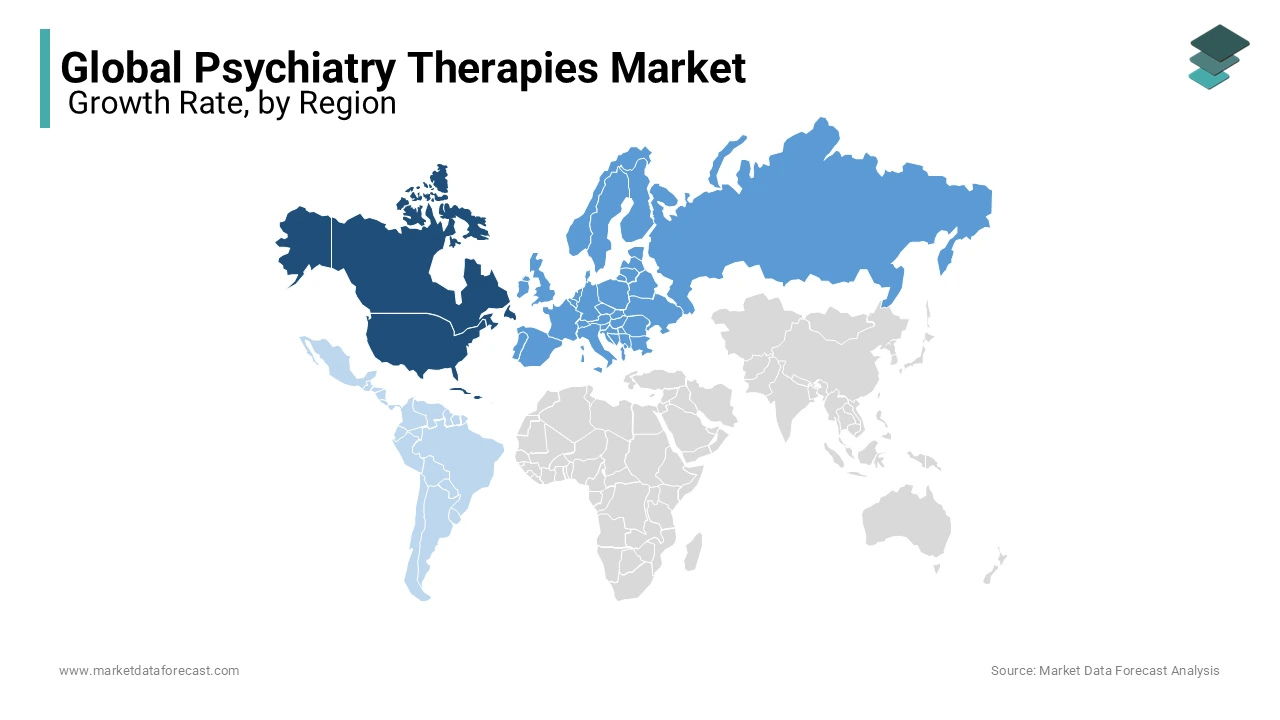
North America was the top performer of the global psychiatry therapies market with 53.2% of the share in 2025. The integration of mental health into employer-sponsored wellness programs has expanded access, with 76% of large U.S. companies offering Employee Assistance Programs (EAPs), according to the Society for Human Resource Management. Canada’s public health system has also increased funding, allocating CAD 5 billion under the 2023 Mental Health Transfer to provinces. Telepsychiatry adoption surged post-pandemic, with 40% of psychiatric consultations conducted virtually in 2023, as reported by the American Telemedicine Association.
Europe Psychiatry Therapies Market Insights
Europe psychiatry therapies market held 28.3% of the share in 2025. Western European nations like Germany, France, and the UK maintain robust public mental health infrastructure, with the UK’s NHS delivering over 1.3 million CBT sessions in 2023 through its IAPT program. However, Eastern Europe faces challenges; Romania and Bulgaria have fewer than two psychiatrists per 100,000 people, according to the European Observatory on Health Systems and Policies. The EU’s 2023 Mental Health Action Plan has catalyzed cross-border collaboration, including digital therapy harmonization under the Digital Europe Programme.
Asia Pacific Psychiatry Therapies Market Insights
Asia Pacific psychiatry therapies market growth is lucratively to have a significant CAGR with a high-growth region amid rising awareness and urbanization. Japan leads in psychiatric service penetration, with over 30,000 psychiatrists and a national mandate for workplace mental health checks, according to Japan’s Ministry of Health. India’s mental health care gap remains vast, with only 0.75 psychiatrists per 100,000 people, as reported by the Indian Psychiatric Society, but digital platforms like InnerHour and Wysa are bridging access through AI-driven CBT. Government initiatives, such as Singapore’s National Mental Health Strategy, are expanding community-based care.
Latin America Psychiatry Therapies Market Insights
Latin America psychiatry therapies market growth is majorly driven by the evolving mental health infrastructure. Brazil leads the region with over 12,000 psychiatrists and a national network of Psychosocial Care Centers (CAPS), serving 1.4 million patients in 2023, according to the Brazilian Ministry of Health. Argentina has integrated mental health into primary care, with 68% of public clinics offering psychological services, as reported by the National Ministry of Health. However, access remains inequitable; in rural Peru, 85% of individuals with depression receive no treatment, according to the Peruvian Institute of Mental Health.
Middle East Psychiatry Therapies Market Insights
The Middle East and Africa psychiatry therapies market growth is anticipated to grow in the next coming years. In Saudi Arabia, Vision 2030 includes a national mental health strategy, with USD 1.2 billion allocated to expand psychiatric services by 2030, according to the Saudi Ministry of Health. The UAE has mandated mental health training for school counselors, reaching over 1,200 institutions in 2023, as reported by the Dubai Health Authority. However, sub-Saharan
Africa Psychiatry Therapies Market Insights
Africa faces acute shortages; in Ethiopia, there are only 12 psychiatrists for a population of 120 million, according to the Ethiopian Federal Ministry of Health. Task-shifting models using trained lay counselors have shown promise, with the Friendship Bench program in Zimbabwe delivering CBT to over 50,000 patients since 2020, as documented by the London School of Hygiene & Tropical Medicine.
KEY MARKET PLAYERS
The companies leading the global psychiatry therapies market profiled in this report are AstraZeneca, Universal Health Services Inc., Johnson & Johnson, Pfizer, GlaxoSmithKline, Eli Lilly, Bristol-Meyer Squibb, Wyeth, and Astellas Pharma Inc.
TOP LEADING PLAYERS IN THE MARKET
Johnson & Johnson (Janssen Pharmaceuticals)
Johnson & Johnson, through its Janssen Pharmaceuticals division, plays a pivotal role in advancing psychiatric therapeutics in the Asia Pacific region, particularly in the treatment of schizophrenia and mood disorders. The company has introduced innovative antipsychotics such as paliperidone palmitate, a long-acting injectable that improves medication adherence, which is in markets like India and Indonesia where follow-up care is inconsistent. In 2023, Janssen partnered with Thailand’s Ministry of Public Health to support mental health training for primary care physicians, enhancing treatment capacity. It also launched patient support programs in Australia and Japan to improve access to its psychiatric medications through co-payment assistance and digital adherence tools.
Otsuka Pharmaceutical Co., Ltd.
Otsuka Pharmaceutical has established a dominant presence in the Asia Pacific psychiatry therapies landscape through its development and commercialization of aripiprazole, a leading atypical antipsychotic used in schizophrenia and bipolar disorder. As a Japan-based company, Otsuka leverages deep regional insights to tailor its outreach, including culturally adapted patient education materials in countries like Malaysia and South Korea. In 2023, it expanded its Abilify Maintena® long-acting injectable program in urban clinics across China, improving treatment continuity for patients with chronic conditions. Otsuka also collaborates with digital health firms to integrate remote monitoring tools with its therapies. Its investment in the digital therapeutic platform reSET® for substance use disorder, approved in Taiwan and under regulatory review in Singapore, reflects its commitment to hybrid treatment models.
Lundbeck
Lundbeck has significantly influenced the psychiatry therapies market in Asia Pacific by focusing on neuroscience-specific research and expanding access to treatments for depression, schizophrenia, and obsessive-compulsive disorder. The company has intensified its presence in high-growth markets such as India, Vietnam, and the Philippines through strategic partnerships with local distributors and medical associations. In 2023, Lundbeck launched educational campaigns in collaboration with the Philippine Psychiatric Association to reduce stigma and improve diagnosis rates. It also introduced vortioxetine, an antidepressant with cognitive-enhancing properties, in major urban hospitals across Southeast Asia, targeting professionals affected by work-related stress.
TOP STRATEGIES USED BY KEY MARKET PARTICIPANTS
Key players in the psychiatry therapies market are deploying multifaceted strategies to consolidate their positions, including the development of long-acting injectables to improve treatment adherence, expansion into digital therapeutics and prescription apps, and strategic collaborations with healthcare systems and governments. Companies are investing in real-world evidence studies to demonstrate clinical outcomes and support reimbursement. Geographic expansion focuses on emerging markets in Asia Pacific and Latin America through localized pricing and physician education programs. Partnerships with digital health platforms enable integrated care models, combining medication with behavioral interventions. Additionally, firms are enhancing patient support services, including telehealth access and adherence tracking, to improve treatment continuity and brand loyalty in a highly sensitive and relationship-driven therapeutic area.
COMPETITION OVERVIEW
The competition in the psychiatry therapies market is characterized by a convergence of pharmaceutical innovation, digital health integration, and patient-centric care models. While multinational corporations dominate drug development and distribution, a new wave of digital therapeutics companies and telepsychiatry platforms is challenging traditional treatment paradigms. The Asia Pacific region has become a strategic battleground, with firms adapting therapies to local cultural contexts and leveraging public-private partnerships to expand access. Differentiation increasingly hinges on treatment adherence tools, real-world effectiveness data, and hybrid care delivery combining pharmacology with psychotherapy. Regulatory divergence, reimbursement limitations, and workforce shortages create entry barriers, yet unmet clinical demand fuels aggressive innovation.
RECENT MARKET DEVELOPMENTS
- In January 2023, Johnson & Johnson launched a mental health literacy initiative in partnership with India’s National Institute of Mental Health and Neurosciences to train 5,000 primary care providers in early detection and management of psychosis, enhancing frontline psychiatric care capacity across tier-2 and tier-3 cities.
- In March 2023, Otsuka Pharmaceutical expanded the availability of Abilify Maintena® in major hospitals in Guangzhou and Chengdu, China, introducing a cold-chain distribution network to support the rollout of this long-acting injectable antipsychotic for patients with schizophrenia.
- In July 2023, Lundbeck collaborated with the Vietnam Psychiatric Association to conduct a nationwide symposium series on depression management, reaching over 1,200 clinicians and disseminating updated treatment guidelines incorporating vortioxetine into therapeutic protocols.
- In October 2023, Johnson & Johnson initiated a digital adherence pilot in Australia, integrating its antipsychotic medications with a mobile app developed in partnership with Telstra Health to monitor dosing patterns and provide real-time patient support.
- In February 2024, Otsuka Pharmaceutical received regulatory approval for the reSET® digital therapeutic in Taiwan, marking its first market entry in Asia for this FDA-cleared cognitive behavioral therapy app designed to treat substance use disorder, thereby expanding its portfolio beyond pharmacological interventions.
MARKET SEGMENTATION
This research report on the global psychiatry therapies market has been segmented and sub-segmented based on the psychology type, type of medication, type of therapy, and region.
By Psychology Type
- Social Psychology
- Abnormal Psychology
- Biological Psychology
- Others
By Type of Medication
- Antidepressants
- Antipsychotics
- Depressants
- Anxiolytics
- Mood stabilizers
- Stimulants
- Others
By Type of Therapy
- Counseling
- Cognitive Behavioural Therapy
- Family Therapy
- Psychotherapy
- Group Therapy
- Relationship Counselling
- Interpersonal Therapy
- Behavioral Activation
- Others
By Region
- North America
- Europe
- Asia Pacific
- Latin America
- Middle East and Africa
Frequently Asked Questions
1.What is driving the growth of the psychiatry therapies market?
The growing prevalence of mental health disorders, the rising demand for effective therapy options, and the growing awareness and acceptance of mental health issues are primarily promote the market growth.
2.What are the major players in the psychiatry therapies market?
Pfizer Inc., Johnson & Johnson, Bristol-Myers Squibb, and Eli Lilly and Company are the key market participants in the psychiatry therapies market.
3.What are some challenges faced by the psychiatry therapies market?
The stigma surrounding mental health disorders, the lack of access to mental health services in certain regions, and the high cost of certain therapy options are the major challenges to the market growth.
4.What types of medications are used in the Psychiatry Therapies Market?
Antidepressants, antipsychotics, anxiolytics, mood stabilizers, and stimulants are common medications in the Psychiatry Therapies Market.
5.How does technology impact the Psychiatry Therapies Market?
Mobile apps and personalized treatment technologies are changing patient care in the Psychiatry Therapies Market.
6.Is counseling part of the Psychiatry Therapies Market?
Yes, counseling is a key therapy offered in the Psychiatry Therapies Market for various psychological disorders.
7.What age groups are served by the Psychiatry Therapies Market?
The Psychiatry Therapies Market supports children, adolescents, adults, and elderly patients with mental health needs.
8.Are telepsychiatry services included in the Psychiatry Therapies Market?
Telepsychiatry is growing in the Psychiatry Therapies Market, providing remote access to mental health care.
9.How are anxiety disorders treated in the Psychiatry Therapies Market?
Psychiatrists in the Psychiatry Therapies Market use therapy and medication to treat anxiety disorders effectively.
10.What trends are shaping the Psychiatry Therapies Market?
Trends include digital therapies, precision medicine, and increased mental health investments in the Psychiatry Therapies Market.
Related Reports
Access the study in MULTIPLE FORMATS
Purchase options starting from
$ 2500
Didn’t find what you’re looking for?
TALK TO OUR ANALYST TEAM
Need something within your budget?
NO WORRIES! WE GOT YOU COVERED!
Call us on: +1 888 702 9696 (U.S Toll Free)
Write to us: sales@marketdataforecast.com