- Product Description Description
- Table of Contents TOC
- List of Table & Figure LOT
- Get Free Sample PDF Sample PDF
Market Size, 2025
$8.67 BnMarket Estimate, 2026
$9.18 BnMarket Forecast, 2034
$14.57 BnCAGR, 2026–2034
5.94%Global Neuropathic Pain Market Report Summary
The global neuropathic pain market was valued at USD 8.67 billion in 2025, is estimated to reach USD 9.18 billion in 2026, and is projected to reach USD 14.57 billion by 2034, growing at a CAGR of 5.94% during the forecast period from 2025 to 2033. The growth of the global neuropathic pain market is driven by the rising prevalence of diabetes and cancer, increasing geriatric population, expanding pain management infrastructure, and continuous advancements in pharmacological therapies. Neuropathic pain, caused by damage or dysfunction of the nervous system, represents a significant unmet medical need due to its chronic nature and complex treatment pathways. Growing awareness of pain management, improved diagnosis rates, and increased access to specialized pain clinics are further supporting market expansion worldwide.
Key Market Trends
- Rising incidence of diabetic neuropathy and cancer-related nerve damage
- Growing adoption of non-opioid and targeted neuropathic pain therapies
- Expansion of pain management clinics and specialized neurology centers
- Increased focus on personalized treatment approaches
- Rapid growth of online pharmacies improving access to chronic pain medications
Segmental Insights
- Based on drug class, the tricyclic antidepressants segment is expected to grow at the fastest rate during the forecast period. The dominance of this segment is attributed to their long-established efficacy in modulating pain pathways, wide clinical acceptance, cost-effectiveness due to generic availability, and broad use across multiple neuropathic pain conditions.
- Based on indication, the diabetic neuropathy segment is anticipated to dominate the global neuropathic pain market throughout the forecast period. The rising global burden of diabetes, sedentary lifestyles, and increasing awareness of diabetic complications are significantly driving demand for effective neuropathic pain therapies. Improved screening and early intervention strategies further strengthen this segment’s growth.
- The chemotherapy-induced peripheral neuropathy segment is projected to register healthy growth owing to the expanding cancer patient population, increasing survival rates, and heightened focus on improving quality of life during and after cancer treatment.
- Based on distribution channel, the online pharmacies segment is expected to hold a leading share during the forecast period. The rapid digitalization of healthcare services, convenience of home delivery, and improved access to long-term medications have accelerated the adoption of online pharmacies, particularly for chronic pain management.
Regional Insights
- North America held the largest share of the global neuropathic pain market and is expected to maintain its dominance during the forecast period. The region benefits from a high prevalence of chronic diseases, advanced pain management infrastructure, strong reimbursement frameworks, and the presence of major pharmaceutical companies. The United States remains the primary contributor due to high healthcare spending and increased focus on pain management solutions.
- Europe represents the second-largest market for neuropathic pain, supported by rising awareness of neurological disorders, strong clinical guidelines for pain management, and increasing collaboration between healthcare institutions and pharmaceutical manufacturers. Germany leads the European market due to its well-developed healthcare system, aging population, and early adoption of advanced pain therapies.
- The Asia-Pacific region is anticipated to witness the fastest growth during the forecast period. Rapid urbanization, increasing prevalence of diabetes and cancer, expanding healthcare infrastructure, and rising healthcare expenditure in countries such as China, India, and Japan are driving market growth across the region.
- Latin America and the Middle East & Africa are expected to experience steady growth, supported by improving access to healthcare services, rising awareness of chronic pain conditions, and gradual expansion of pharmaceutical distribution networks.
Competitive Landscape
The global neuropathic pain market is moderately competitive, with established pharmaceutical companies focusing on expanding their product portfolios through research and development, regulatory approvals, and strategic collaborations. Market participants are increasingly prioritizing non-opioid therapies, improved safety profiles, and patient-centric treatment options. The development of novel molecules and reformulated drugs is expected to intensify competition while addressing unmet clinical needs in neuropathic pain management. Prominent companies operating in the global neuropathic pain market include Sanofi, Abbott, Astellas Pharma, Eli Lilly, Mallinckrodt Pharmaceuticals, Pfizer Inc., Novartis AG, and Teva Pharmaceutical Industries Ltd.
 Download Free Sample Report
Global Neuropathic Pain Market Size
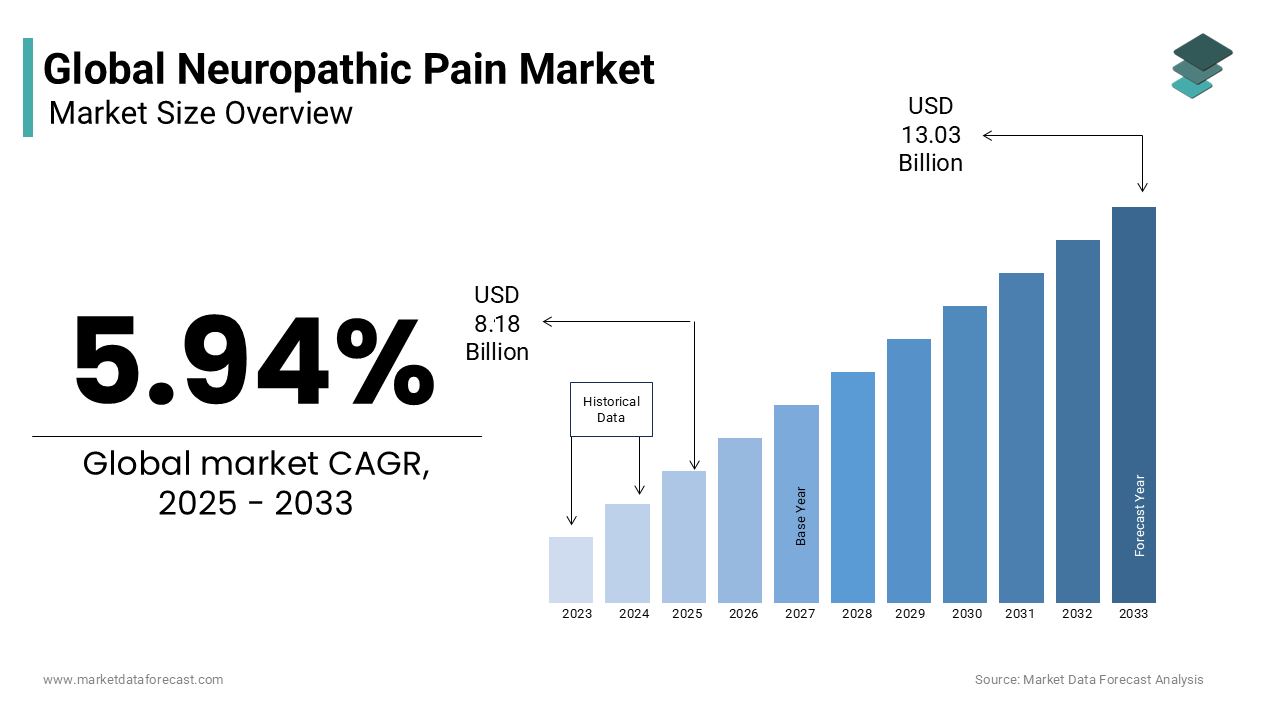
The global neuropathic pain market size was valued at USD 9.67 billion in 2025 and is estimated to reach USD 14.57 billion by 2034 from USD 9.18 billion in 2026, registering a CAGR of 5.94% from 2026 to 2034.
MARKET DRIVERS
The growing prevalence of diabetes and cancer worldwide is one of the major factors propelling the neuropathic pain market. In a report published by the CDS in 2022, it was revealed that more than 135 million adults had been diagnosed with diabetes and prediabetes thus the symptoms associated with diabetes and cancer demand the appropriate therapies. Neuropathic pain arises due to damage to the nervous system, this condition can be caused due to conditions such as diabetes and cancer. Due to a rise in blood level leading to nerve damage, this condition is known as diabetic neuropathy which causes pain, numbness, and tingling particularly in the feet and hands. It is estimated that about 50% of people with diabetes may develop diabetic neuropathy at some point, certain types of cancer can lead to nerve damage, resulting in neuropathic pain, also some cancer treatments including chemotherapy, radiotherapy can damage nerves, causing neuropathic pain as a side effect, thus rising prevalence of diabetes and cancer contributes to the overall burden of neuropathic pain, this neuropathic pain need appropriate treatment boosting the growth of neuropathic pain market in upcoming years.
The growing efforts from the key market participants to develop novel neuropathic pain treatments contribute to the neuropathic pain market growth. The approval of new medications or treatments gives medical professionals more alternatives for treating neuropathic pain. Having more treatment alternatives enables more individualized treatment plans that are catered to specific patient needs because different patients may react differently to different treatments. Comparing novel treatments to existing ones, they might be more effective and safer. These developments may improve pain alleviation and minimize adverse effects, improving patient experiences and overall therapeutic results.
The growing number of pain management clinics worldwide supports the neuropathic pain market growth. Neuropathy pain is one of the many types of chronic pain that pain management clinics specialize in diagnosing, treating, and managing. Pain management clinics provide professional care and information on how to manage chronic pain, including neuropathic pain. These clinics usually work with dedicated medical professionals with knowledge of the diagnosis and management of neuropathic pain. Around 35% of the population now relies on pain management clinics for the treatment of neuropathic pain and this expert care may lead to better patient outcomes and neuropathic pain management.
The growing population, increasing number of R&D activities, growing prevalence of cancer and diabetes, well-established healthcare infrastructure, increasing demand for neuropathic pain treatment, and the introduction of the latest product for the treatment of neuropathic pain further promote the neuropathic pain market.
MARKET RESTRAINTS
The potent side effects of opioids and steroids, the sharp increase in the price of branded medications primarily hamper the market growth. Cost-benefit evaluations may be performed by payers and healthcare providers when evaluating the usage of branded medications. Healthcare practitioners may decide to use less expensive generic equivalents or other forms of therapy if the price of a specific medicine outweighs its alleged benefits or if there are more cost-effective alternatives available. This may result in a decrease in the use of name-brand medications to treat neuropathic pain. The side effect of neuropathic pain medicine further impedes market growth.
REPORT COVERAGE
| REPORT METRIC | DETAILS |
| Market Size Available | 2025 to 2034 |
| Base Year | 2025 |
| Forecast Period | 2026 to 2034 |
| Segments Analysed | By Drug Class, Based on Indication, Distribution Channel, and Region |
| Various Analyses Covered | Global, Regional & Country Level Analysis, Segment-Level Analysis, Drivers, Restraints, Opportunities, Challenges; PESTLE Analysis; Porter's Five Forces Analysis, Competitive Landscape, Analyst Overview of Investment Opportunities |
| Regions Analysed | North America, Europe, Asia Pacific, Latin America, the Middle East, and Africa |
| Market Leaders Profiled | Sanofi, Abbott, Astellas, Eli-Lily, Mallinckrodt Pharmaceuticals, Pfizer Inc., Novartis AG, and Teva Pharmaceutical Industries Ltd. |
SEGMENTAL ANALYSIS
By Drug Class Insights
Based on drug class, the tricyclic antidepressants segment is expected to grow at the fastest CAGR during the forecast period. Antidepressants that selectively block serotonin and norepinephrine reuptake (SNRIs) and tricyclic antidepressants (TCAs) are useful in treating neuropathic pain and can aid in the neurological system's modulation of pain signals. The established efficacy of tricyclic antidepressants in managing neuropathic pain by altering neurotransmitter activity drives segmental growth. The broad clinical experience and historical use of tricyclic antidepressants in various neuropathic pain conditions and the availability of generic formulations further fuel the growth rate of the segment.

By Indication Insights
Based on the indication, the diabetic neuropathy segment is expected to dominate the market during the forecasted period owing to the growing burden of targeted diseases and unhealthy lifestyles. The rising awareness about pain management strategies for diabetic complications and an increasing number of advances in neuropathic pain therapies tailored specifically for diabetic neuropathy further boost the growth rate of the diabetic neuropathy segment in the global market.
The chemotherapy-induced peripheral neuropathy segment is projected to witness a healthy CAGR in the coming years owing to the growing cancer patient population worldwide, rising demand for effective pain management solutions to improve patients' quality of life during and after cancer treatment and research focus on developing therapies to mitigate or prevent CIPN-related neuropathic pain.
By Distribution Channel Insights
Based on the distribution channel, the online pharmacies segment is expected to dominate the neuropathic pain market during the forecast period. The pandemic situation strengthened the digital commerce platform which sustained the rapid growth of online pharmacies thus this segment is expected to dominate the market during the forecasted period.
The hospital pharmacies segment is anticipated to account for a substantial share of the global market in the coming years.
REGIONAL ANALYSIS
The North American region held the major share of the worldwide market in 2022 and is expected to dominate the market during the forecast period. The growing geriatric population prone to neuropathic pain conditions, the availability of advanced pain management therapies and treatments, high healthcare expenditure and reimbursement coverage for pain management interventions drive the North American market. The U.S. is anticipated to account for the major share of the North American market in the coming years owing to the presence of a well-established healthcare infrastructure, high prevalence of chronic diseases, and increasing focus on pain management.
Europe is the second largest regional market worldwide and is expected to record a promising CAGR during the forecast period. Factors such as the growing prevalence of neuropathic pain due to chronic diseases like diabetes and cancer, rising emphasis on early diagnosis and pain management in neurology practice and increasing number of collaborations between healthcare institutions and pharmaceutical companies for novel pain therapies propel the growth of the European market. Germany led the market in Europe in 2024 and is estimated to capture the leading share of the European market in the coming years. Rapid adoption of pain management guidelines and protocols in Germany, growing awareness, the presence of a well-developed healthcare system and an increasing aging population drive the growth of the German market.
Asia-Pacific is the most lucrative regional market worldwide and is anticipated to witness the highest CAGR during the forecast period. The growing prevalence of chronic diseases leading to neuropathic pain, increasing healthcare expenditure, growing number of improvements in the development of infrastructure across the Asia-Pacific region and rapid adoption of advanced pain management techniques in emerging economies propel the growth of the APAC market. China, India, and Japan are predicted to hold the leading share of the APAC market in the coming years.
The Latin America and Middle East-Africa region is also expected to grow at a healthy CAGR during the forecasted period in the neuropathic pain market.
KEY MARKET PLAYERS
Some of the noteworthy companies in the global neuropathic pain market include
- Sanofi
- Abbott
- Astelles
- Eli-Lily
- Mallinckrodt Pharmaceuticals
- Pfizer Inc.
- Novartis AG
- Teva Pharmaceutical Industries Ltd
RECENT MARKET HAPPENINGS
- In July 2022, Novarmed AG and NeuroFront Therapeutics (Hong Kong) Limited signed an exclusive collaboration and commercialization agreement for Novamed’s innovative non-opioid investigational drug, NRD.E1, being developed for the treatment of diabetes-related neuropathic pain and other neuropathic pain indications. As per the agreement, Novaremed is eligible to receive from NeuroFront over USD 130 million in option and exercise fees as well as development, regulatory, and sales milestone payments plus royalties on net sales.
- In March 2022, Daiichi Sankyo Company, Limited received approval in Japan to change the indication of the analgesic “Tarlige Tablets” (mirogabalin besilate) from “peripheral neuropathic pain” to “neuropathic pain.”
MARKET SEGMENTATION
This research report on the global neuropathic pain market has been segmented and sub-segmented based on the following categories.
By Drug Class
- Tricyclic Antidepressants
- Opioids
- Capsaicin Cream
- Steroids
- Others
By Indication
- Diabetic Neuropathy
- Spinal Stenosis
- Chemotherapy- Induced Peripheral Neuropathy
- Others
By Distribution Channel
- Hospital Pharmacies
- Retail Pharmacies
- Online Pharmacies
By Region
- North America
- Europe
- Asia-Pacific
- Latin America
- Middle East and Africa