- Product Description Description
- Table of Contents TOC
- List of Table & Figure LOT
- Get Free Sample PDF Sample PDF
Market Size, 2025
$2602 MnMarket Estimate, 2026
$2825 MnMarket Forecast, 2034
$5467 MnCAGR, 2026–2034
8.6%Executive Summary: Global Spinal Cord Stimulation Market
- Market Scope: Global analysis of the spinal cord stimulation (SCS) market covering product types, chronic pain indications, clinical end-users, and regional performances.
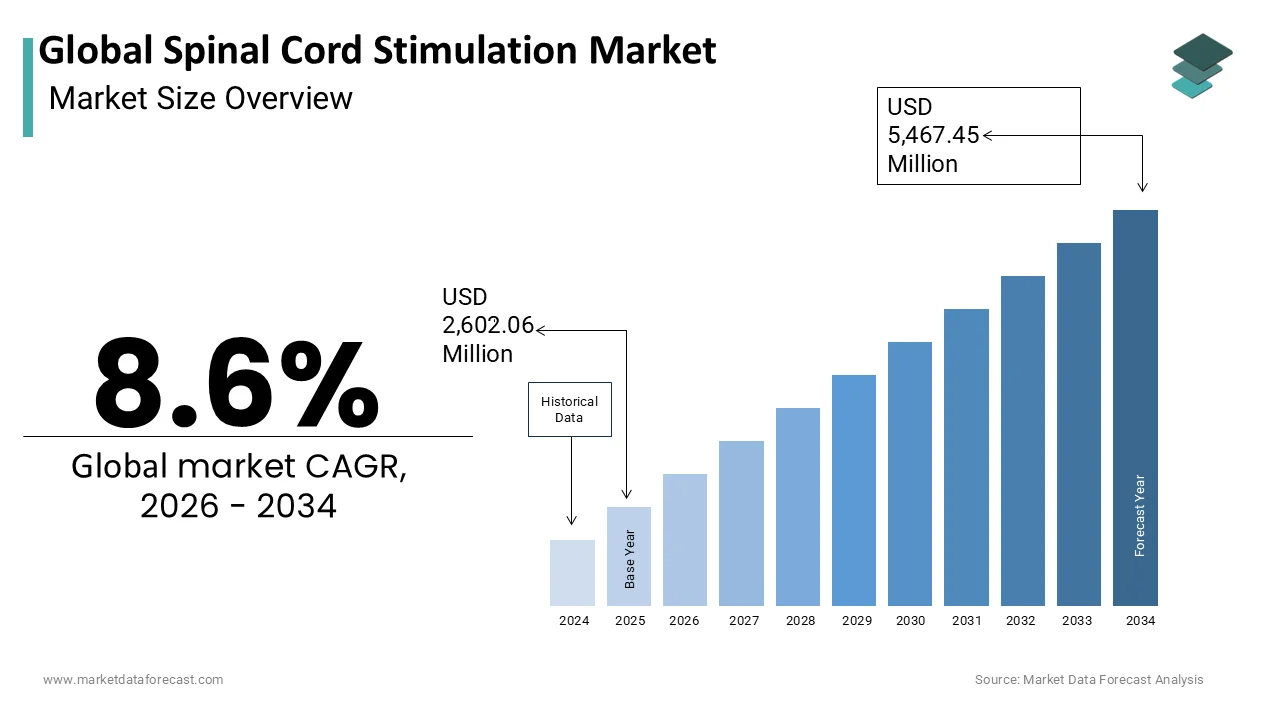
- Market Valuation: Valued at USD 2,602.06 million in 2025, estimated at USD 2,825.85 million in 2026, and projected to reach USD 5,467.45 million by 2034, registering a CAGR of 8.6% during the forecast period (2026–2034).
- Primary Growth Drivers: Escalating global prevalence of chronic neuropathic pain conditions, strategic healthcare shifts away from opioids toward minimally invasive neuromodulation therapies, and technological advancements like AI-driven adaptive stimulation.
Key Market Segment Metrics (2026–2034)
| Category | Leading Segment (2025/2026 Position) | Fastest-Growing Segment |
|---|---|---|
| By Product Type | Rechargeable Systems (held 58.2% market share in 2025, favored for extended operational life spans of 9–12 years) | Non-Rechargeable Systems (growing steadily due to simplicity and appeal among older or less active patient groups) |
| By Application | Failed Back Surgery Syndrome / FBS (captured 42.3% share in 2025, driven by high post-surgical chronic pain instances) | Complex Regional Pain Syndrome / CRPS (fastest-growing at a 9.1% CAGR via heightened diagnostic awareness) |
| By End User | Hospitals (dominated market share due to complex multidisciplinary care, advanced imaging, and surgical safety requirements) | Ambulatory Surgery Centers / ASCs (fastest-growing at a 10.3% CAGR, propelled by cost efficiency and outpatient preference) |
| By Region | North America (market leader holding 47.3% share in 2025, backed by robust insurance reimbursement and advanced networks) | Asia-Pacific (fastest-growing regional market driven by rising healthcare investments and aging demographics in Japan and South Korea) |
Major Market Players & Market Structure
Market Structure: Highly competitive medical device sector featuring major global health corporations competing through continuous product innovations, artificial intelligence integration, and targeted regional expansion.
Key Companies: Medtronic, Abbott (St. Jude Medical), Boston Scientific, Nevro Corp, Greatbatch, and Stimwave.
Global Spinal Cord Stimulation Market Size
The global spinal cord stimulation market is projected to grow from USD 2,602.06 million in 2025 to USD 2,825.85 million in 2026 and reach USD 5,467.45 million by 2034, registering a CAGR of 8.6% during the forecast period from 2026 to 2034.
The Spinal Cord Stimulation (SCS) is an implantable neurostimulation devices that deliver low-voltage electrical impulses to the dorsal columns of the spinal cord to modulate pain signals in patients with chronic neuropathic conditions. These systems are primarily indicated for failed back surgery syndrome, complex regional pain syndrome, and other intractable pain disorders unresponsive to conventional therapies.
MARKET DRIVERS
Rising Prevalence of Chronic Pain Conditions and Post-Surgical Neuropathy
The escalating burden of chronic pain, particularly neuropathic pain following spinal surgeries, is elevating the growth of the Spinal Cord Stimulation (SCS) Market. According to the Centers for Disease Control and Prevention, 20% of U.S. adults experience chronic pain, with 7% suffering from high-impact pain that severely limits daily activities. According to the American Academy of Pain Medicine, over 600,000 spinal surgeries are performed annually in the U.S., with a significant subset developing persistent pain. Clinical trials by the Mayo Clinic have shown that SCS reduces pain scores by at least 50% in 74% of FBSS patients by enabling reduced opioid dependence and improved functionality.
Shift Toward Minimally Invasive and Non-Opioid Pain Management Therapies
The healthcare system’s strategic pivot away from opioid-based pain control due to widespread misuse and regulatory scrutiny is expected to further escalate the growth of the Spinal Cord Stimulation (SCS) Market. According to the National Institute on Drug Abuse, nearly 50,000 deaths in 2022 were attributed to prescription opioid overdoses, prompting federal and state initiatives to promote alternative treatments. The Centers for Medicare & Medicaid Services now incentivizes non-opioid pain management through value-based care models, increasing reimbursement for neuromodulation procedures. A 2023 study in JAMA Neurology found that patients receiving SCS were 62% less likely to fill opioid prescriptions six months post-implantation. Additionally, advancements in percutaneous lead placement and recharge-free devices have reduced procedural risks and improved patient compliance.
MARKET RESTRAINTS
High Upfront Costs and Limited Insurance Coverage for SCS Implantation
The significant financial burden associated with SCS systems, including device costs, surgical implantation, and follow-up care, is solely restricting the growth of the Spinal Cord Stimulation (SCS) Market. According to the Healthcare Cost and Utilization Project, the average total cost of an SCS implantation in the U.S. exceeds $45,000, with out-of-pocket expenses deterring many patients despite clinical eligibility. As per a 2023 analysis by the American Association of Neurological Surgeons, 38% of initial SCS claims were denied by commercial payers, leading to delays or abandonment of treatment. In Canada, provincial health plans cover SCS only in select centers, creating geographic disparities in access.
Risk of Device-Related Complications and Revision Surgeries
The potential for adverse events associated with SCS systems, including lead migration, infection, and hardware malfunction, which may necessitate revision surgeries, is also degrading the growth of the Spinal Cord Stimulation (SCS) Market. According to a multicenter study published in Neurosurgery, lead displacement occurs in 12% to 18% of SCS patients within the first year, often requiring repositioning or replacement. Additionally, battery depletion in non-rechargeable systems typically necessitates generator replacement every 5–7 years, increasing long-term procedural burden. These complications not only affect patient satisfaction but also increase healthcare costs and provider hesitancy in risk-averse clinical settings.
MARKET OPPORTUNITIES
Integration of Artificial Intelligence and Adaptive Stimulation Algorithms
The development of AI-driven SCS systems capable of real-time pain pattern recognition and automatic parameter adjustment is setting up new opportunities for the growth of the Spinal Cord Stimulation (SCS) Market. Medtronic’s Intellis platform, as validated in a 2023 trial by the Cleveland Clinic, utilizes machine learning to adapt stimulation based on patient activity and posture, improving pain relief consistency by 39% compared to static programming. According to the IEEE Transactions on Biomedical Engineering, closed-loop SCS systems that respond to neural biomarkers reduce energy consumption by up to 30%, which extends battery life and minimizes manual recalibration.
Expansion into New Indications and Underpenetrated Patient Populations
The emerging clinical applications are opening significant growth avenues beyond traditional neuropathic pain, which is expected to bolster the growth of the Spinal Cord Stimulation (SCS) Market. According to the European Journal of Pain, pilot studies demonstrate the efficacy of SCS in treating refractory angina, with 68% of patients reporting reduced cardiac pain and improved exercise tolerance. The National Multiple Sclerosis Society reports that early-phase trials show promise in using SCS to alleviate spasticity and bladder dysfunction in MS patients. Additionally, underdiagnosed populations such as veterans with combat-related nerve injuries and diabetic neuropathy patients represent untapped markets.
MARKET CHALLENGES
Regulatory Hurdles and Lengthy Approval Timelines for Next-Generation Devices
The rigorous and protracted regulatory pathway for advanced SCS technologies for those incorporating AI or closed-loop functionality is challenging the growth of the Spinal Cord Stimulation (SCS) Market. According to the U.S. Food and Drug Administration, the average premarket approval (PMA) process for a novel neuromodulation device takes 36 to 48 months, involving extensive clinical trials and post-market surveillance requirements. In Europe, the transition to the Medical Device Regulation (MDR) has increased scrutiny, with notified bodies demanding higher levels of clinical evidence, delaying CE mark approvals by up to 18 months, as reported by the European Confederation of Medical Device Industries. These extended timelines increase R&D costs and delay patient access, discouraging smaller companies from entering the market.
Shortage of Trained Implanting Physicians and Specialized Pain Centers
The limited availability of physicians qualified to implant and program SCS devices in rural and underserved areas additionally impedes the growth of the Spinal Cord Stimulation (SCS) Market. According to the American Society of Interventional Pain Physicians, fewer than 2,500 physicians in the U.S. are certified in advanced neuromodulation techniques, despite over 10 million patients being potential candidates.
REPORT COVERAGE
| REPORT METRIC | DETAILS |
| Market Size Available | 2025 to 2034 |
| Base Year | 2025 |
| Forecast Period | 2026 to 2034 |
| Segments Covered | By Product Type, Application, End Users, and Region |
| Various Analyses Covered | Global, Regional & Country Level Analysis, Segment-Level Analysis; DROC; PESTLE Analysis; Porter's Five Forces Analysis, Competitive Landscape, Analyst Overview of Investment Opportunities |
| Regions Covered | North America, Europe, APAC, Latin America, Middle East & Africa |
| Key Market Players | Boston, Medtronic, Nevro, St. Jude Medical, Greatbatch, and Stimwave. |
SEGMENTAL ANALYSIS
By Product Type Insights
The rechargeable segment was the largest and held 58.2% of the global Spinal Cord Stimulation (SCS) Market share in 2025, with the longer operational lifespans and reduced need for replacement surgeries. Rechargeable devices typically last 9 to 12 years before battery depletion, compared to 5 to 7 years for non-rechargeable units, according to clinical data published in Neuromodulation: Technology at the Neural Interface.
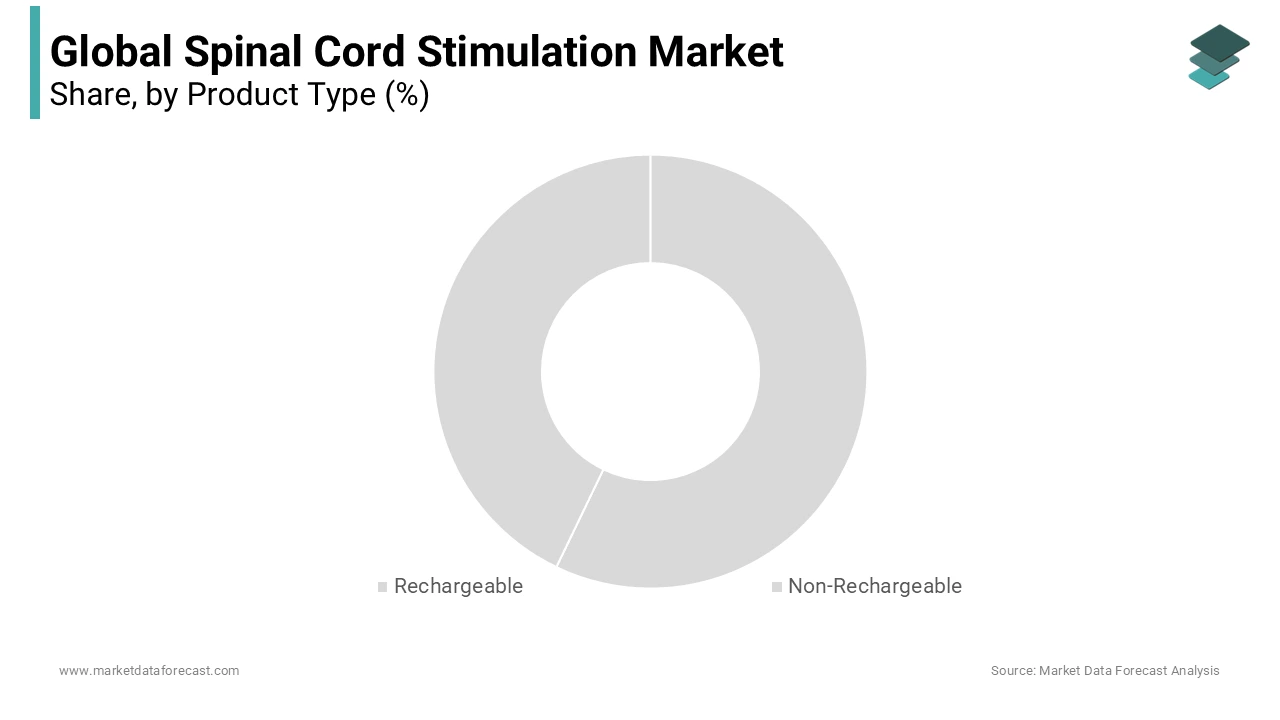
The Non-rechargeable SCS devices segment is likely to grow with an expected CAGR of 8.4% from 2025 to 2033, with their appeal to elderly and less physically active patients who prefer simplicity over extended battery life. The American Geriatrics Society emphasizes that ease of use is paramount in older adults, making non-rechargeable systems preferable despite shorter lifespans. Furthermore, advancements in battery efficiency have extended device longevity, while streamlined implant procedures in ambulatory settings are reducing recovery times and increasing adoption among primary care-referred patients.
By Application Insights
The Failed Back Syndrome (FBS) segment accounted in holding 42.3% of the Spinal Cord Stimulation (SCS) Market share in 2025, with the high incidence of persistent pain following lumbar spine surgeries, which affects 10% to 40% of patients according to a meta-analysis in The Spine Journal. SCS has demonstrated superior efficacy in this population, with a multicenter trial published in JAMA Neurology showing a 50% or greater pain reduction in 76% of FBS patients after 12 months. Additionally, the Centers for Medicare & Medicaid Services recognizes FBS as a reimbursable indication, which is facilitating insurance coverage and clinical adoption.
The Complex Regional Pain Syndrome (CRPS) segment is likely to grow with a projected CAGR of 9.1% during the forecast period, with the heightened diagnostic awareness and compelling clinical outcomes in early intervention. CRPS affects an estimated 200,000 individuals annually in the U.S. alone, as reported by the National Institute of Neurological Disorders and Stroke, with symptoms including severe limb pain, swelling, and autonomic dysfunction.
By End Users' Insights
The hospitals segment held a significant share of the Spinal Cord Stimulation (SCS) Market in 2025, with the complexity of SCS procedures, which require advanced imaging, multidisciplinary coordination, and access to emergency care in case of complications. Most SCS implants are performed in academic medical centers or tertiary care hospitals where pain specialists, neurosurgeons, and anesthesiologists collaborate on patient selection and programming. Additionally, hospitals are primary sites for trial stimulations and long-term follow-up, with electronic health record integration enabling comprehensive patient monitoring.
The Ambulatory Surgery Centers (ASCs) segment is expected to grow with a CAGR of 10.3% from 2025 to 2033, driven by cost efficiency, streamlined reimbursement, and patient preference for outpatient settings. ASCs offer SCS implantation at 25% to 35% lower costs than hospitals, as documented in a 2023 Centers for Medicare & Medicaid Services comparative analysis. With advancements in percutaneous lead placement and local anesthesia protocols, many SCS procedures no longer require general anesthesia or overnight stays.
REGIONAL ANALYSIS

North America Spinal Cord Stimulation Market Analysis
North America accounted in holding 47.3% of the global spinal cord stimulation market share in 2025. The United States was the largest contributor to a robust network of pain management centers, favorable reimbursement policies, and strong regulatory support for innovation. According to the U.S. Food and Drug Administration, over 15 SCS devices have received premarket approval or Breakthrough Device Designation since 2020. As per the American Chronic Pain Association, more than 70,000 SCS implants are performed annually in the U.S. and Canada, with adoption rates increasing by 6% per year. Medicare and major private insurers cover SCS for approved indications, reducing financial barriers.
Europe Spinal Cord Stimulation Market Analysis
Europe market was positioned second, with a highly regulated healthcare landscape and strong clinical adoption in Western nations. Germany, the UK, and France lead in implant volume, supported by national health systems that cover neuromodulation under specific criteria. According to the European Pain Federation, over 22,000 SCS procedures were performed in the EU in 2023, with growth concentrated in countries with established pain societies and training programs. The transition to the EU Medical Device Regulation (MDR) has increased scrutiny but also enhanced device safety and transparency.
Asia Pacific Spinal Cord Stimulation Market Analysis
The Asia Pacific Market growth is likely to grow with the rising healthcare expenditure and growing awareness of chronic pain management. Japan and South Korea are the most advanced markets, with government-approved reimbursement for SCS in refractory neuropathic pain. According to Japan’s Ministry of Health, Labour and Welfare, over 3,500 SCS implants were performed in 2023, a 12% increase from the previous year. In India, the Indian Council of Medical Research has initiated pilot programs to evaluate neuromodulation in diabetic neuropathy, a condition affecting over 70 million people.
Latin America Spinal Cord Stimulation Market Analysis
Latin America Market growth is likely to grow with Brazil and Mexico leading adoption amid expanding private healthcare infrastructure and rising chronic disease prevalence. According to the Brazilian Ministry of Health, chronic pain affects over 35% of adults, yet neuromodulation remains underutilized due to cost and specialist shortages. However, private hospitals in São Paulo and Mexico City are increasingly offering SCS, often catering to medical tourists from North America seeking lower-cost alternatives. According to the Latin American Alliance for Neuropathic Pain, fewer than 1,000 SCS implants were performed across the region in 2023.
Middle East & Africa Spinal Cord Stimulation Market Analysis
The Middle East and Africa collectively account for 3% of the global SCS market, with limited but strategic adoption concentrated in affluent Gulf nations. The UAE and Saudi Arabia are pioneering neuromodulation services, integrating SCS into specialized pain clinics within major hospitals in Dubai and Riyadh. According to the Gulf Pain Initiative, over 80% of SCS procedures in the region are performed on expatriates or patients referred from neighboring countries. The Saudi Vision 2030 healthcare modernization plan includes investments in advanced neurology and pain management, with the King Faisal Specialist Hospital launching a dedicated neuromodulation unit in 2023. In South Africa, Groote Schuur Hospital performs SCS implants for select CRPS and spinal injury patients, supported by academic research.
COMPETITIVE LANDSCAPE
The competition in the spinal cord stimulation market is intense, driven by technological innovation and expanding chronic pain prevalence. Medtronic, Abbott, and Boston Scientific dominate with advanced neuromodulation systems, continuously enhancing device capabilities. These companies compete on features like battery longevity, MRI compatibility, wireless control, and personalized therapy options. The Asia Pacific region has become a strategic battleground, with firms investing in regulatory clearances, local partnerships, and physician training. Emerging players are entering with cost-effective solutions, increasing competitive pressure.
KEY MARKET PLAYERS
A few notable global spinal cord stimulation market companies are
- Boston
- Medtronic
- Nevro
- St. Jude Medical
- Greatbatch
- Stimwave.
TOP LEADING PLAYERS IN THE MARKET
- Medtronic is a global leader in medical technology and a pioneer in spinal cord stimulation (SCS) therapies. The company offers advanced SCS systems such as the Intellis™ platform and Senza® with BurstDR™ stimulation, designed to manage chronic pain. In the Asia Pacific region, Medtronic has strengthened its presence through strategic collaborations with hospitals and pain clinics, along with extensive clinical training programs for physicians. Recently, the company launched next-generation devices with AI-driven programming and remote monitoring capabilities in Japan and Australia. Medtronic also invested in local regulatory approvals and expanded its sales force across Southeast Asia to improve market access by ensuring long-term growth and clinician adoption in emerging economies.
- Abbott has emerged as a key innovator in the spinal cord stimulation market with its Proclaim™ portfolio, including the Proclaim XR and DRG Therapy systems. The company focuses on minimally invasive neuromodulation solutions that offer sustained pain relief. In the Asia Pacific market, Abbott has increased its footprint by partnering with regional healthcare providers and launching educational initiatives for pain specialists in India, South Korea, and China. Recently, Abbott received regulatory approval for its wireless SCS systems in Japan, which is enabling broader patient access. The company also conducted clinical trials in Australia to validate long-term efficacy, supporting adoption. Abbott continues to enhance its digital health integration, offering patient-centric apps that improve therapy management and adherence across the region.
- Boston Scientific is a major contributor to the spinal cord stimulation market with its Precision™ portfolio, including the Spectra™ and WaveWriter™ systems. The company emphasizes personalized pain therapy through advanced programming options and MRI-compatible devices. In the Asia Pacific region, Boston Scientific has expanded through direct sales teams and distributor networks in countries like China, India, and Thailand. The company recently launched its WaveWriter Alpha system in Australia and South Korea, featuring smaller implantable pulse generators and enhanced battery life. Boston Scientific also initiated training programs for physicians and invested in real-world evidence studies to support clinical adoption.
TOP STRATEGIES USED BY THE KEY MARKET PARTICIPANTS
Key players in the spinal cord stimulation market employ several strategic initiatives to maintain competitiveness. Product innovation remains a core focus, with companies launching next-generation devices featuring wireless charging, MRI compatibility, and AI-based programming. Geographic expansion, especially in high-growth Asia Pacific markets, is pursued through regulatory approvals and local partnerships. Strategic collaborations with healthcare institutions and pain management centers enhance clinical adoption. Companies also invest in robust clinical trials to demonstrate long-term efficacy and safety, supporting reimbursement approvals. Digital health integration, including patient apps and remote monitoring, improves therapy adherence and patient engagement. Training programs for physicians ensure proper device utilization and build trust. Mergers, acquisitions, and partnerships with tech firms enable faster innovation.
GLOBAL SPINAL CORD STIMULATION MARKET NEWS
- In February 2020, the Spine and Nerve Centre Organization released the results of their double-blind trials; the results suggest that ESAP-controlled closed-loop spinal cord stimulation is more effective than open-loop stimulation. In addition, the responder threshold of leg and back pain is enhanced in patients who underwent closed-loop stimulation.
- In February 2020, the researchers conducted studies to analyze the durability and efficacy of BurstDR spinal cord stimulation devices in analgesic consumption and abdominal pain reduction. They have reviewed the patient's medical records that affected different diseases related to abdominal pain. After completing the trial stimulation period, the researchers collected the data from those three patients. The data showed that two patients were entirely relieved from pain within two years, while the third still showed signs of illness with less frequency and severity.
MARKET SEGMENTATION
This research report on the global spinal cord stimulation market has been segmented and sub-segmented based on the product type, application, end-user, and region.
By Product Type
- Rechargeable
- Non-Rechargeable
By Application
- Degenerative Disk Disease (DDD)
- Failed Back Syndrome (FBS)
- Unsuccessful Disk Surgery
- Complex Regional Pain Syndrome (CRPS)
- Multiple Back Operations
- Lumbar Adhesive Arachnoiditis
By End User
- Hospitals
- Ambulatory Surgery Centers (ASCs)
By Region
- North America
- Europe
- Asia Pacific
- Latin America
- Middle East and Africa