- Product Description Description
- Table of Contents TOC
- List of Table & Figure LOT
- Get Free Sample PDF Sample PDF
Market Size, 2025
$9.13 BnMarket Estimate, 2026
$10.23 BnMarket Forecast, 2034
$25.32CAGR, 2026–2034
12%Global Neuroprosthetics Market Size, Growth, Trends & Forecast (2026–2034)
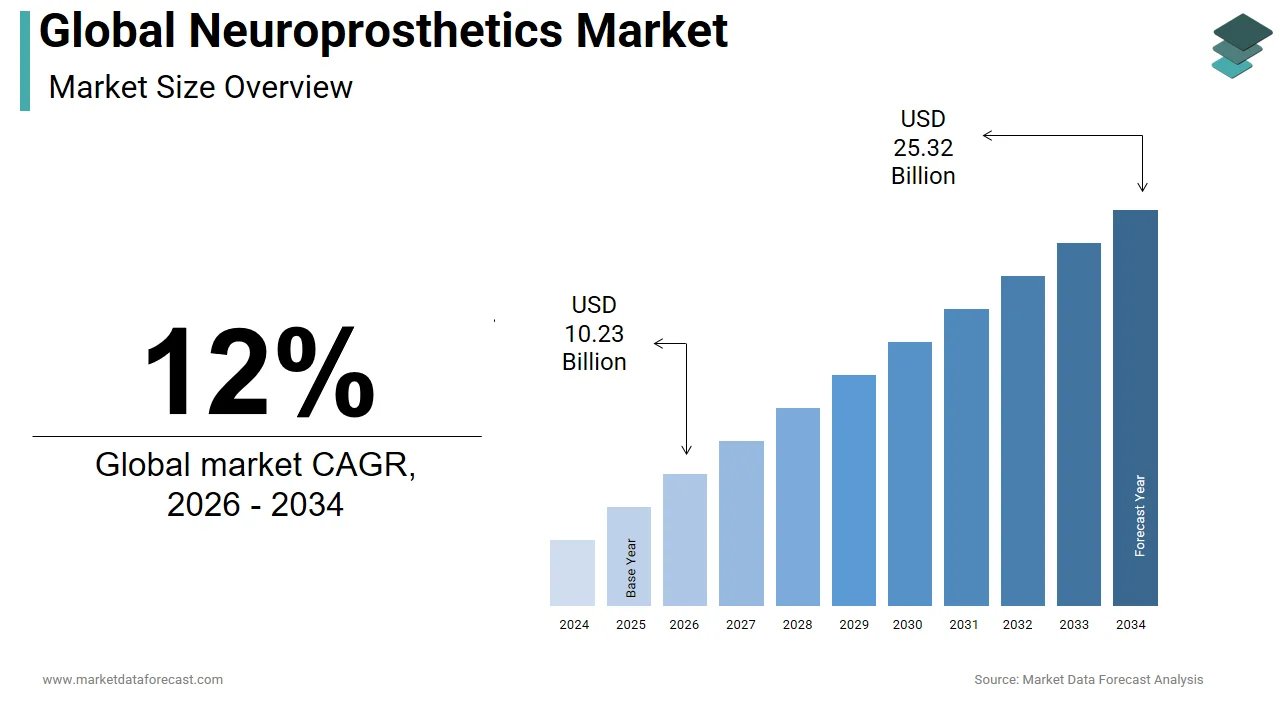
The global neuroprosthetics market size was valued at USD 9.13 billion in 2025, is anticipated to reach USD 10.23 billion in 2026, and is projected to scale up to USD 25.32 billion by 2034, registering a compound annual growth rate (CAGR) of 12% during the forecast period from 2026 to 2034. Driven by the rising patient population suffering from neurological disorders, technological advancements, increasing healthcare infrastructure, and government funding, the industry continues to expand steadily worldwide.
Key Executive Metrics (At-a-Glance)
- 2025 Base Valuation: USD 9.13 Billion
- 2026 Current Valuation: USD 10.23 Billion
- 2034 Forecast Valuation: USD 25.32 Billion
- Compound Annual Growth Rate (CAGR): 12% (2026–2034)
- Dominant Product/Type Segment: Motor Prosthetics (backed by the rising prevalence of Parkinson’s disease and epilepsy)
- Fastest-Growing Segment: Cognitive Disorders / Visual Prosthetics (propelled by rising incidence of cognitive impairments and retinal degenerative diseases)
- Dominant Region: North America (holding the major market share supported by key players and healthcare investments)
- Fastest-Growing Region: Asia-Pacific (propelled by growing populations, healthcare awareness, and expanding multinational establishments in countries like India and China)
Core Market Drivers
- Surging Neurological Disorders: Growing patient numbers affected by conditions such as Parkinson's disease, epilepsy, stroke, and traumatic brain injury.
- Technological Advancements: Continuous evolution of smaller, more sophisticated implantable devices with longer battery life and advanced data capabilities.
- Rising Healthcare Support: Increasing government funds, expanding healthcare infrastructure, and growing awareness regarding neurological diseases.
Primary Market Restraints & Challenges
- High Costs and Complex Procedures: Low acceptance rates driven by the expensive nature of neuroprosthetic devices, costly surgical procedures, and reimbursement issues.
- Adverse Effects: Potential medical risks and side effects associated with invasive implantation.
Global Neuroprosthetics Market Segmentation Breakdown
| Segment Category | Leading Sub-Segment (2025 Base) | Fastest-Growing Sub-Segment (2026–2034) |
|---|---|---|
| By Type | Motor Prosthetics (dominant share due to rising prevalence of Parkinson’s and epilepsy) | Visual / Cognitive Prosthetics (driven by demand for treating degenerative eye and cognitive ailments) |
| By Technology | Spinal Cord Stimulation (dominant technology for chronic pain and back surgery syndrome) | Deep Brain Stimulation / Sacral Nerve Stimulation (expanding via new clinical indications) |
| By Application | Physiological & Motor Neuron Disorders (major share driven by auditory loss and motor conditions) | Cognitive Disorders (fastest growth due to rise in Alzheimer’s and severe depression cases) |
| By Region | North America (major consumption hub backed by advanced infrastructure and key market players) | Asia-Pacific (fastest-growing regional market driven by rising patient populations in China and India) |
Major Industry Players Profiled
Key enterprises shaping the competitive global neuroprosthetics market include Cochlear Ltd., Boston Scientific Corporation, Cyberonics Inc., Medtronic plc, NDI Medical LLC, NeuroPace Inc., St. Jude Medical Inc., Nervo Corp., Retina Implant AG, Biomet Inc., and Sonova.
Global Neuroprosthetics Market Size
The size of the global neuroprosthetics market was worth USD 9.13 billion in 2025. The global market is anticipated to grow at a CAGR of 12% from 2026 to 2034 and be worth USD 25.32 billion by 2034 from USD 10.23 billion in 2026.
Neuroprosthetics are medical devices implanted into the body to restore the functioning of an organ system that has stopped due to diseases or injuries. It is a computer-aided device, and the primary aim is to restore the functionalities in patients suffering from losing motor control like spinal cord injury, sclerosis, stroke, etc. In addition, these devices are mainly used for treating neural ailments such as epilepsy, Parkinson’s disease, visual prosthetics, and more.
MARKET DRIVERS
The growing patient population suffering from neurological disorders, increasing awareness among people regarding neurological diseases, rising healthcare infrastructure, and rising government funds are majorly accelerating the growth rate of the global neuroprosthetics market. Additionally, factors such as growth in the aging population, technological advancements, a growing number of initiatives taken by various government and government associations, and an average increase in neurological diseases such as traumatic brain injury, stroke, and Parkinson’s disease are the factors further boosting the growth rate of the global neuroprosthetics market.
An increase in the incidence of hearing loss and a moderate rise in diabetes drive the global neuroprosthetics market. According to the US FDA, over 58,000 devices have been implanted in adults, and 38,000 children suffer from hearing problems. These electronic devices provide a sense of sound to the person who is deaf, and in the case of cases where children are born with hearing defects, about 2-3 of 1000 children with hearing loss in one or both ears. In addition, nearly 188,000 individuals are fitted with a cochlear implant.
Eliminating the need for high-risk and costly surgery to replace the discharged battery and controlling machinery helps develop global neuroprosthetics market growth prospects. The large, unexplored market in the neuroprosthetics of developing economies is creating many possibilities. Development facilities, advanced research, and new product development produce more than enough market growth opportunities.
MARKET RESTRAINTS
Factors such as low acceptance of neuroprosthetics due to the high cost of the device, reimbursement issues, and adverse effects pose significant limitations to market growth. The high cost of the procedure also restrains the Global Neuroprosthetics Market growth. Besides challenges, neuroprosthetics has enormous clinical potential, with the market expected to display a year-on-year increase. Devices used in the Global Neuroprosthetics Market are becoming smaller and smaller with more sophisticated features, longer battery life, and more important data and power use.
REPORT COVERAGE
| REPORT METRIC | DETAILS |
| Market Size Available | 2025 to 2034 |
| Base Year | 2025 |
| Forecast Period | 2026 to 2034 |
| Segments Covered | By Type, Technology, Application, End-User, and Region |
| Various Analyses Covered | Global, Regional & Country Level Analysis, Segment-Level Analysis, Drivers, Restraints, Opportunities, Challenges, PESTLE Analysis, Porter’s Five Forces Analysis, Competitive Landscape, Analyst Overview of Investment Opportunities |
| Regions Covered | North America, Europe, Asia Pacific, Latin America, the Middle East, and Africa |
SEGMENTAL ANALYSIS
By Type Insights
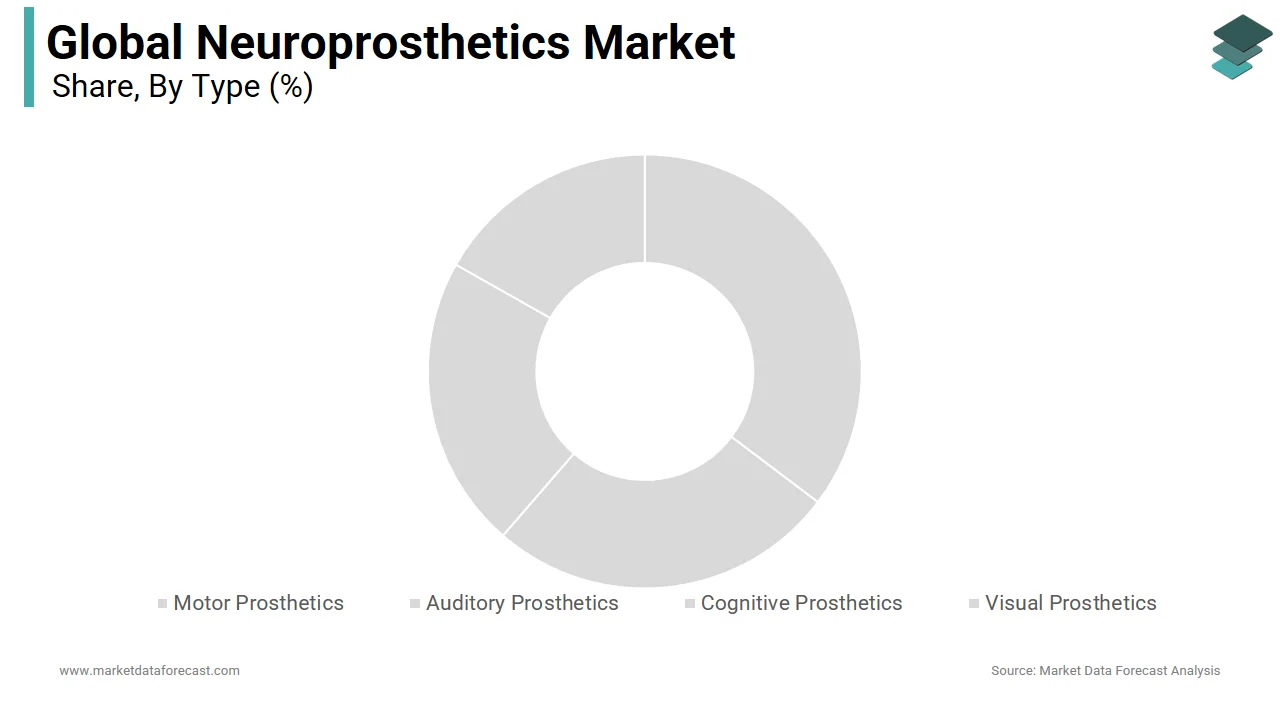
Based on type, the motor prosthetics segment accounts for the largest share in the global neuroprosthetics market due to the rising prevalence of Parkinson’s disease and Epilepsy across the globe. According to a report published by Parkinson’s Disease 2012, nearly 60,000 Americans were diagnosed with Parkinson’s disease. Furthermore, it is expected to increase more and more every year over the analysis period.
By Technology Insights
Based on technology, the spinal cord stimulation segment dominated the market in 2024 and is expected to continue its domination throughout the forecast period. Factors such as the growing number of people suffering from back surgery syndrome, ischemia, and chronic pain worldwide support this segment to lead the market. Furthermore, technological developments introduced in this segment further enhance the segment’s growth.
Due to various applications in chronic intractable pelvic aches and neurogenic bladder, the sacral nerve stimulation segment is likely to grow at a healthy CAGR.
By Application Insights
Based on application, physiological disorders, especially auditory disorders, hold the most substantial share value. This segment's growth is due to the increase in the number of people suffering from hearing loss.
Secondly, the motor neuron disorders segment is projected to showcase the fastest growth due to the increasing occurrence rate of neurological diseases such as Parkinson’s disease and epilepsy, fueling the market.
By End-user Insights
Based on the End-user, the hospital segment is forecasted to lead the market during the forecast period. This is because many hospitals across the globe and a massive number of patients prefer hospitals as they have well-established equipment and infrastructure to accelerate the market for this segment's growth.
REGIONAL ANALYSIS
Geographically, North America occupied most of the market share in 2024 in the global market. Factors such as critical players present in this region, huge investments from governmental and other private organizations, massive patient population, and the broad spectrum of advanced technologies are majorly fuelling the market growth in this region during the forecast period. Within North America, the U.S. is leading the North American market, followed by Canada.
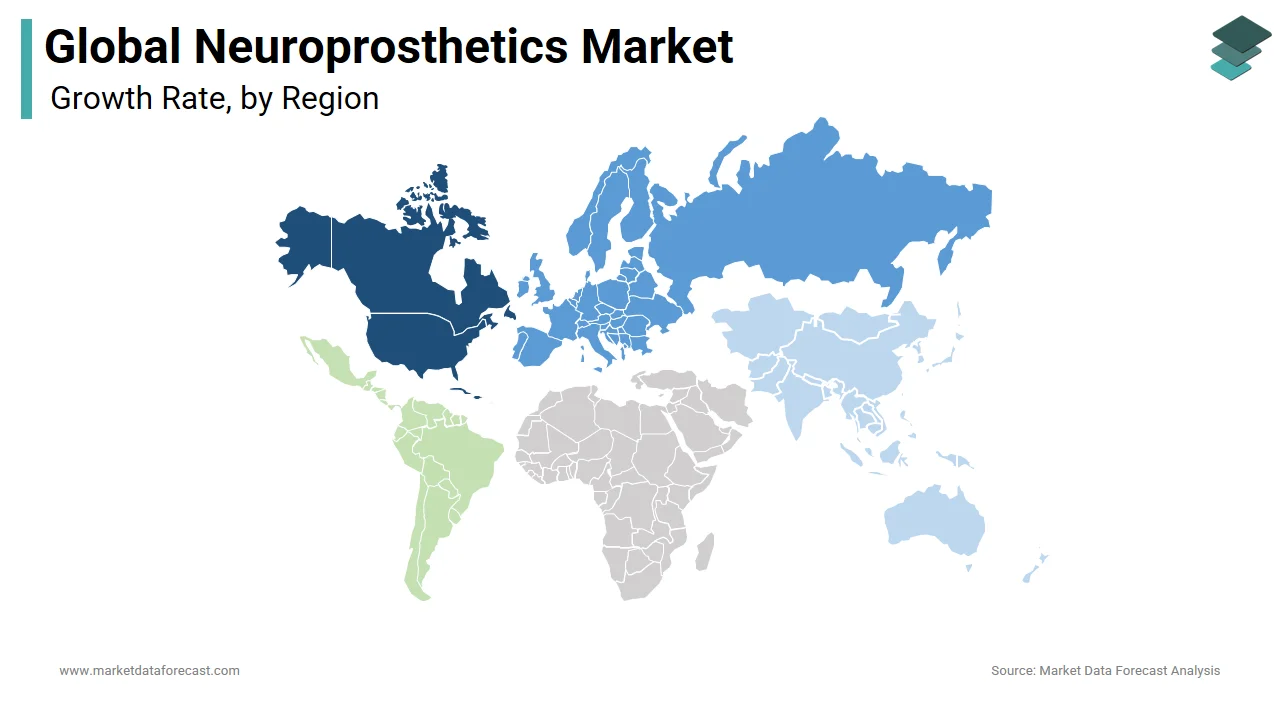
The European market covered the second largest share and is projected to have promising growth during the forecast period. The neuroprosthetics market in this region is strongly influenced by the growing elderly population and lower costs for the treatment process. European countries like the UK and Germany are the most lucrative due to the increasing burden of chronic neurological conditions fuelling the market. In recognized countries of the European region, the market growth remained steady throughout the period.
At the same time, Asia-Pacific is expected to witness a significant growth rate owing to the increasing population of countries like India and China, due to factors such as growing awareness among consumers and the multinational healthcare establishments across the countries of this region, which surge the market. Therefore, India and China are predicted to grow with the expansion rate of the neuroprosthetics market over the analysis period.
Latin America is expected to grow steadily in the neuroprosthetics market during the period. The development owes to improving healthcare infrastructure and increasing funds and investments from the government, propelling the market. However, strict regulations regarding approvals for product launches are hindering the market. Therefore, the market of this region has focused mainly on Mexico and Brazil, which are expected to have considerable growth.
The Middle East & Africa region is estimated to experience sluggish growth due to a slower demand for the neuroprosthetics market. However, inadequate reimbursement policies, high costs, and a lack of expert professionals are the factors restricting the market of this region.
KEY MARKET PARTICIPANTS
A few noteworthy companies in the global neuroprosthetics market profiled in this report are
- Cochlear Ltd.
- Boston Scientific Corporation
- Cyberonics Inc.
- Medtronic plc
- NDI Medical LLC
- NeuroPace Inc.
- St. Jude Medical Inc.
- Nervo Corp.
- Retina Implant AG
- Biomet Inc.
- Sonova
GLOBAL NEUROPROSTHETICS MARKET NEWS
- In December 2019, LivaNova recalled its Vagus nerve stimulation device, implanted in patients to treat major depressive episodes and control seizures associated with Epilepsy.
- In November 2019, Nevro said that it won FDA approval to launch the Senza Omnia Spinal Cord Stimulation System.
- In September 2019, LivaNova noted that it had enrolled its first patient to study vagus nerve stimulation therapy for treatment-resistant depression.
MARKET SEGMENTATION
This global neuroprosthetics market research report has been segmented and sub-segmented into the following categories.
By Type
- Motor Prosthetics
- Auditory Prosthetics
- Cognitive Prosthetics
- Visual Prosthetics
By Technology
- Deep Brain Stimulation
- Vagus Nerve Stimulation
- Spinal Cord Stimulation
- Sacral Nerve Stimulation
By Application
- Motor Neuron Disorders
- Physiological Disorders
- Cognitive Disorders
By End-user
- Hospitals
- Clinics
By Region
- North America
- Europe
- Asia Pacific
- Latin America
- The Middle East and Africa