- Product Description Description
- Table of Contents TOC
- List of Table & Figure LOT
- Get Free Sample PDF Sample PDF
Market Size, 2025
$18.19 BnMarket Estimate, 2026
$19.16 BnMarket Forecast, 2034
$29.06 BnCAGR, 2026–2034
5.34%Global Spinal Implants Market Report Summary
The Global Spinal Implants Market was valued at USD 18.19 billion in 2025 and is projected to reach USD 29.06 billion by 2034, growing from USD 19.16 billion in 2026 at a CAGR of 5.34% during the forecast period. Growth is driven by the rising prevalence of degenerative spinal disorders, increasing adoption of minimally invasive spine surgeries, and continuous technological advancements in spinal implant systems. High procedure costs, stringent regulatory requirements, and implant-related complications are shaping market dynamics.
Key Market Trends
- Rising adoption of minimally invasive spine surgery supported by robotic-assisted and navigation-guided technologies.
- Increasing integration of 3D printing for customized, patient-specific spinal implants.
- Growing demand for motion preservation and non-fusion technologies to maintain natural spinal mobility.
- Expansion of advanced biomaterials, including porous titanium and bioactive coatings, to improve osseointegration.
- Increasing investment in digital surgical planning and robotic-assisted spinal implant procedures.
Segmental Insights
- Based on surgery type, open surgeries held the majority share in 2025, driven by their effectiveness in treating complex spinal deformities, multi-level pathologies, and severe traumatic injuries.
- Based on technology, spinal fusion and fixation technologies held the largest share in 2025, supported by widespread adoption in degenerative spinal disorders and strong clinical evidence.
- Minimally invasive surgeries are the fastest-growing surgery type segment, projected to register a CAGR of 11.2%, driven by reduced tissue trauma, faster recovery, shorter hospital stays, and increasing adoption of robotic-assisted spine surgery.
Regional Insights
- North America led the market in 2025, accounting for 41.6% of the global market, supported by advanced healthcare infrastructure, favorable reimbursement policies, high surgical volumes, and strong technology adoption.
- Europe holds a significant share, driven by aging populations, established orthopedic care systems, and increasing adoption of minimally invasive spinal procedures.
- Asia Pacific is a prominent market, supported by improving healthcare infrastructure, expanding spine centers, rising disposable incomes, and increasing chronic spinal disorders.
- Latin America contributes notably through expanding healthcare access, growing private healthcare investments, and increasing awareness of advanced spinal care.
- Asia Pacific is the fastest-growing regional market, driven by rapid healthcare modernization, growing medical tourism, increasing insurance coverage, and strong investments in specialized spine care.
Competitive Landscape
The market is highly competitive, with leading orthopedic and medical device manufacturers competing through technological innovation, robotic-assisted surgery, advanced biomaterials, customized implants, and minimally invasive solutions. Companies are investing in research and development, strategic acquisitions, digital surgical planning, surgeon training programs, and expansion into emerging markets to strengthen their competitive position and improve patient outcomes.Prominent players in the market include Medtronic plc, DePuy Synthes (Johnson & Johnson), Stryker Corporation, NuVasive, Inc., Zimmer Biomet Holdings, Inc., Globus Medical, Inc., Alphatec Holdings, Inc., Orthofix Medical Inc., K2M Group Holdings, Inc. (Stryker Corporation), and RTI Surgical Holdings, Inc.
Global Spinal Implants Market Size
The global spinal implants market was valued at USD 18.19 billion in 2025, is estimated to reach USD 19.16 billion in 2026, and is projected to reach USD 29.06 billion by 2034, growing at a CAGR of 5.34% from 2026 to 2034.

According to the Global Burden of Disease Study, low back pain is the leading cause of disability worldwide, affecting approximately 619 million people globally. This pervasive health issue underscores the critical role of surgical intervention when conservative treatments fail. As per the World Health Organization, musculoskeletal conditions are a leading contributor to global disability, necessitating advanced surgical solutions. Furthermore, as per the American Academy of Orthopaedic Surgeons, more than 500,000 spinal fusion procedures are performed annually in the United States alone. This high volume of surgical interventions reflects the growing reliance on implantable devices to restore mobility and alleviate chronic pain. The integration of biomechanical engineering with clinical expertise has led to the development of sophisticated implants that mimic natural spinal motion while providing necessary support. As the population ages and lifestyle factors contribute to earlier onset of spinal degeneration, the demand for these specialized medical devices continues to rise across healthcare systems worldwide.
MARKET DRIVERS
Rising Prevalence of Degenerative Spinal Disorders
The escalating incidence of degenerative spinal disorders is propelling the growth of the global spinal implants market as these conditions frequently require surgical stabilization to prevent neurological damage and restore function. Degenerative disc disease, spinal stenosis, and spondylolisthesis are among the most common indications for spinal surgery, particularly in aging populations. According to the National Institute of Neurological Disorders and Stroke, approximately 80% of adults will experience back pain at some point in their lives, with a significant portion developing chronic conditions that do not respond to non-operative care. As per the Centers for Disease Control and Prevention, the prevalence of arthritis, which often affects the spine, increases dramatically with age, affecting nearly 50% of adults aged 65 years and older. This demographic shift creates a sustained demand for spinal implants as conservative management options become insufficient for severe cases. Additionally, the rising obesity epidemic contributes to increased mechanical stress on the vertebral column, accelerating degenerative changes. According to the World Health Organization, global obesity rates have more than tripled since 1975, which is leading to higher incidences of load-bearing joint and spine disorders. Surgical intervention using modern implants offers a viable solution for patients suffering from debilitating pain and loss of mobility. The ability of these devices to provide immediate stability and promote bone fusion makes them indispensable in the treatment of advanced degenerative conditions. As life expectancy increases, the window for developing these disorders widens further, driving the need for effective surgical solutions.
Advancements in Minimally Invasive Surgical Techniques
The rapid adoption of minimally invasive surgical techniques is further contributing to the global spinal implants market expansion by reducing recovery times, hospital stays, and postoperative complications for patients. These advanced procedures require specialized implants that are compatible with smaller incisions and reduced tissue disruption compared to traditional open surgeries. According to the Journal of Neurosurgery, minimally invasive spine surgery has grown significantly due to its proven benefits in patient outcomes and cost efficiency. As per the American Association of Neurological Surgeons, patients undergoing minimally invasive procedures experience 30% less blood loss and 40% shorter hospital stays on average. This clinical advantage encourages both surgeons and healthcare providers to prefer these techniques, thereby increasing the demand for compatible implant systems. Technological innovations such as tubular retractors and navigation-guided instrumentation have made complex spinal corrections feasible through minimal access points. The integration of robotic assistance in spine surgery further enhances precision, allowing for optimal placement of screws and cages. As per the Food and Drug Administration, numerous next-generation implants have been cleared specifically designed for minimally invasive applications, reflecting regulatory support for this trend. Hospitals are increasingly investing in these technologies to improve throughput and patient satisfaction metrics. The economic burden of prolonged rehabilitation is also mitigated by faster return-to-work rates associated with minimally invasive approaches. As surgical training programs incorporate these techniques more widely, the pool of qualified practitioners expands, thereby broadening market access and adoption rates globally.
MARKET RESTRAINTS
High Costs Associated with Spinal Implant Procedures
The substantial financial burden associated with spinal implant procedures is primarily hampering the spinal implants market expansion by limiting accessibility for uninsured or underinsured patients and straining healthcare budgets. Spinal surgeries involving implants are among the most expensive orthopedic procedures due to the high cost of the devices themselves and the complexity of the operation. According to the Healthcare Cost and Utilization Project, the average cost of a spinal fusion procedure in the United States exceeds 60,000 dollars, which includes surgeon fees, hospital charges, and implant costs. This high expense creates barriers for patients in regions with limited insurance coverage or high deductibles. As per the Commonwealth Fund, tens of millions of Americans remain uninsured or underinsured, which is making elective but medically necessary spinal surgeries financially prohibitive for a significant portion of the population. In developing countries, the lack of comprehensive healthcare reimbursement systems further restricts access to advanced spinal care. Insurance providers often impose strict prior authorization requirements and may deny coverage for certain types of implants deemed experimental or not medically necessary. As per the Administrative Office of the United States Courts, medical and insurance coverage disputes remain a notable category within legal and administrative case filings. These financial constraints force many patients to delay or forego surgery, leading to worsening conditions and higher long-term healthcare costs. The economic pressure on public healthcare systems also limits the adoption of newer, more expensive implant technologies in favor of cost-containment measures.
Stringent Regulatory Approval Processes
Rigorous regulatory approval processes constitute a significant restraint on the spinal implants market by prolonging time to market and increasing development costs for manufacturers. Medical devices classified as high risk, such as spinal implants, must undergo extensive clinical trials and regulatory reviews to demonstrate safety and efficacy. According to the Food and Drug Administration, the average time required to obtain premarket approval for a novel spinal implant can range from 3 to 7 years, depending on the complexity of the device and the quality of clinical data submitted. This lengthy timeline delays revenue generation and discourages investment in innovative technologies, particularly for smaller companies with limited resources. The European Union has recently implemented the Medical Device Regulation, which imposes stricter clinical evidence requirements and post-market surveillance obligations. As per the European Commission, these new regulations have increased the administrative burden on manufacturers, leading to adjustments in the number of new devices entering the European market. Compliance with varying international standards further complicates global expansion strategies for implant manufacturers. The need for continuous monitoring and reporting of adverse events adds to operational costs and legal liabilities. Regulatory uncertainties regarding the classification of new materials, such as bioabsorbable polymers, create additional hurdles for innovation. These regulatory challenges slow the pace of technological advancement and limit the availability of cutting-edge solutions for patients who could benefit from them.
MARKET OPPORTUNITIES
Integration of 3D Printing and Customized Implants
The emergence of three-dimensional printing technology is a promising opportunity for the spinal implants market by enabling the creation of patient-specific devices that match individual anatomical structures. Customized implants offer superior fit and biomechanical compatibility, which can enhance fusion rates and reduce the risk of hardware failure. According to the Additive Manufacturing Users Group, the use of 3D-printed medical devices has grown by over 20% annually, driven by advancements in metal printing technologies such as selective laser melting. As per the Food and Drug Administration, several 3D-printed spinal implants have received clearance, demonstrating regulatory acceptance of this innovative manufacturing approach. These customized solutions are particularly beneficial for patients with complex deformities or revision surgeries where standard off-the-shelf implants are inadequate. The ability to create porous structures that mimic bone trabeculae promotes osseointegration and accelerates healing. According to the National Institutes of Health, 3D-printed titanium implants show significantly better bone ingrowth compared to solid metal counterparts. This technology also allows for rapid prototyping and reduced material waste, lowering production costs for complex geometries. Surgeons can utilize preoperative imaging data to plan surgeries with greater precision, improving overall outcomes. As printing speeds increase and material options expand, the scalability of this technology improves, making it a viable option for broader clinical application. Collaborations between technology firms and medical device companies are accelerating the development of next-generation customized solutions.
Expansion into Emerging Markets with Growing Healthcare Infrastructure
The expansion of healthcare infrastructure in emerging markets offers substantial growth opportunities for the spinal implants market as access to advanced surgical care improves in these regions. Countries in Asia Pacific, Latin America, and the Middle East are investing heavily in modernizing their hospital facilities and training specialist surgeons. According to the World Bank, healthcare expenditure in lower-middle-income countries has increased steadily over the past decade, reflecting greater government commitment to health services. As per the Indian Ministry of Health and Family Welfare, the number of specialized spine centers in India has grown notably in recent years, catering to a large population with untreated spinal disorders. Rising disposable incomes and increasing health insurance penetration in these regions enable more patients to afford elective spinal surgeries. As per the Chinese National Health Commission, the volume of spinal surgeries in China has grown by 10% per year, driven by an aging population and improved surgical capabilities. International device manufacturers are establishing local manufacturing and distribution partnerships to reduce costs and navigate regulatory landscapes more effectively. Medical tourism in countries like Thailand and Malaysia attracts international patients seeking high-quality, affordable spinal care. These trends create a fertile environment for market expansion as unmet medical needs are addressed through improved access to technology and expertise. Government initiatives to reduce out-of-pocket expenses further stimulate demand for advanced medical devices.
MARKET CHALLENGES
Risk of Implant Failure and Revision Surgeries
The risk of implant failure and the subsequent need for revision surgeries is a major challenge for the spinal implants market, impacting patient outcomes and increasing healthcare costs. Implant failure can occur due to mechanical loosening, breakage, infection, or pseudoarthrosis, where the bone fails to fuse properly. According to the Spine Journal, revision rates for spinal fusion surgeries range from 10% to 20% within five years of the initial procedure, depending on the patient population and surgical technique. These complications necessitate additional surgeries, which are more complex, risky, and expensive than primary procedures. As per the Agency for Healthcare Research and Quality, revision spinal surgeries account for a substantial portion of total spinal procedure costs despite representing a smaller volume of cases. Patient factors such as smoking, obesity, and osteoporosis significantly increase the likelihood of implant failure, complicating clinical decision-making. The biological response to implant materials can also lead to adverse reactions, such as metallosis or inflammatory responses, that compromise stability. Manufacturers face liability risks and reputational damage when high failure rates are associated with their products. Regulatory bodies closely monitor post-market surveillance data to identify potential safety issues requiring costly recalls or design modifications. The psychological impact on patients undergoing multiple surgeries further underscores the severity of this challenge. Improving implant design and surgical techniques is essential to mitigate these risks, but complete elimination remains elusive.
Shortage of Trained Spine Surgeons and Specialists
The scarcity of adequately trained spine surgeons and specialists is further challenging the global market expansion by limiting the capacity to perform complex procedures safely and efficiently. Spinal surgery requires extensive fellowship training and ongoing education to master advanced techniques and handle intricate anatomical variations. According to the American Board of Orthopaedic Surgery, there is a distinct supply constraint of board-certified spine surgeons relative to the millions of patients suffering from spinal disorders. This disparity creates long wait times and limited access to care, particularly in rural and underserved areas. As per the World Health Organization, many low- and middle-income countries face severe shortages of specialized surgical personnel, restricting access to advanced spinal care. Training programs are resource-intensive and take years to complete, creating a bottleneck in workforce supply. The aging workforce of current spine surgeons exacerbates the shortage as retirement rates outpace the number of new graduates. Complex cases often require multidisciplinary teams, including neurosurgeons, orthopedic surgeons, and pain specialists, which are not available in all healthcare settings. The lack of standardized training protocols across different regions leads to variability in surgical outcomes and implant utilization. Manufacturers must invest in educational programs to support surgeon training, but this does not immediately resolve the workforce gap. Without sufficient skilled personnel, the potential market demand for spinal implants cannot be fully realized, limiting overall industry growth.
REPORT COVERAGE
| REPORT METRIC | DETAILS |
| Market Size Available | 2025 to 2034 |
| Base Year | 2025 |
| Forecast Period | 2026 to 2034 |
| Segments Analysed | By Technology, Product, and Region |
| Various Analyses Covered | Global, Regional & Country Level Analysis, Segment-Level Analysis, DROC, PESTLE Analysis, Porter’s Five Forces Analysis, Competitive Landscape, Analyst Overview of Investment Opportunities |
| Regions Analysed | North America, Europe, Asia Pacific, Latin America, Middle East & Africa |
| Companies Analysed | Medtronic, plc (Ireland), DePuy Synthes (U.S.), Stryker Corporation (U.S.), NuVasive, Inc. (U.S.), Zimmer Biomet Holdings, Inc. (U.S.), Globus Medical, Inc. (U.S.), Alphatec Holdings, Inc. (U.S.). |
SEGMENTAL ANALYSIS
By Surgery Type Insights
The open surgeries segment led the market by accounting for the leading share of the global market in 2025. The dominance of the open surgeries segment in the global market is attributed to its versatility in addressing complex spinal deformities and multi-level pathologies. This segment dominates because open procedures provide surgeons with direct visualization of the spinal anatomy, allowing for precise placement of implants and comprehensive decompression. According to the Journal of Neurosurgery, open spinal fusion remains a common procedure for treating severe scoliosis and traumatic fractures where extensive reconstruction is required. As per the American Board of Orthopaedic Surgery, a substantial proportion of all spinal surgeries performed globally are open procedures, highlighting their continued relevance in clinical practice. Complex cases involving multiple vertebral levels or significant deformity correction often necessitate the exposure provided by open surgery to ensure safe and effective outcomes. The availability of experienced surgeons trained in traditional techniques supports the sustained demand for this approach. Hospitals in developing regions predominantly rely on open surgeries due to lower equipment costs and fewer technical requirements compared to minimally invasive alternatives. According to the World Health Organization, resource-limited settings prioritize procedures with proven track records and lower dependency on advanced technology. Reimbursement policies in many countries favor open surgeries due to established coding and payment structures. The ability to address unforeseen intraoperative complications more easily in an open field adds to the security perceived by surgeons. Despite the rise of newer techniques, open surgery remains indispensable for high-complexity cases, ensuring its dominant market share.
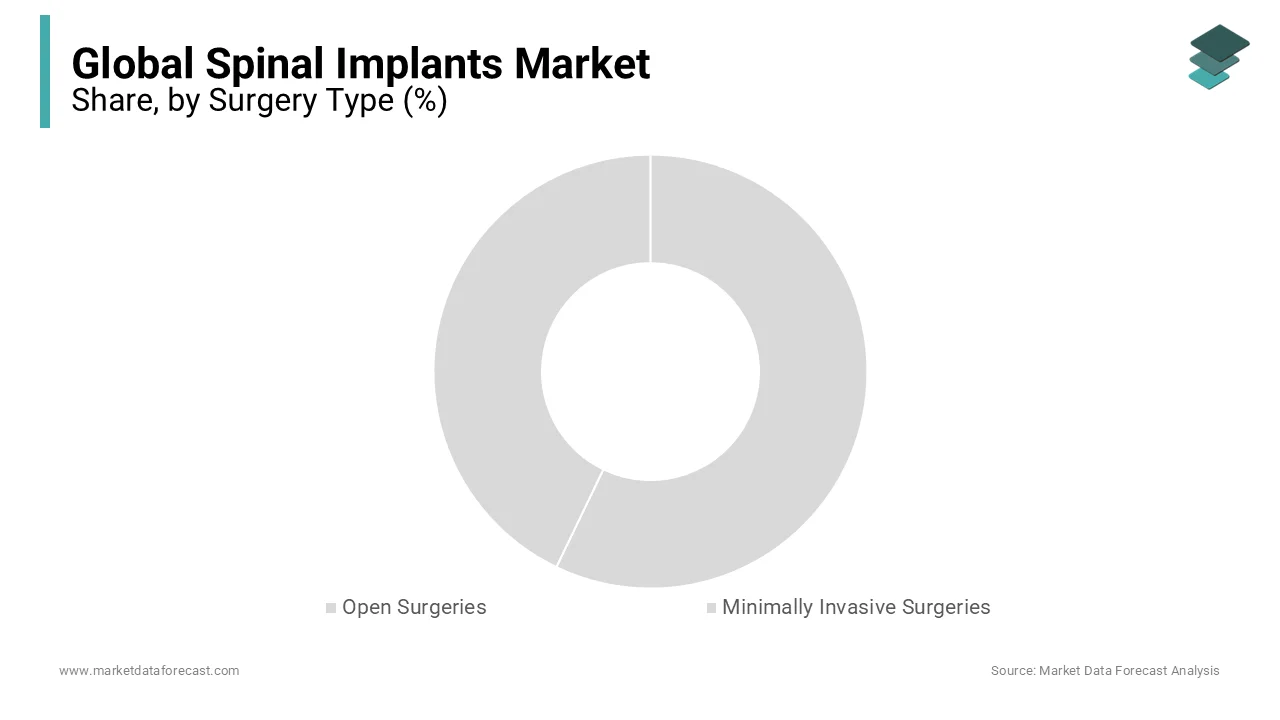
On the other end, the minimally invasive surgeries segment is expected to record a CAGR of 11.2% during the forecast period owing to the superior patient outcomes associated with reduced tissue trauma, shorter hospital stays, and faster recovery times. According to the Society for Minimally Invasive Spine Surgery, patients undergoing minimally invasive procedures experience 30% less blood loss and return to work significantly earlier on average than those undergoing open surgery. As per the American Association of Neurological Surgeons, the adoption of tubular retractors and endoscopic techniques has expanded the indications for minimally invasive approaches to include complex deformities. Technological advancements in navigation systems and robotic assistance have enhanced the precision of implant placement, reducing the risk of neurological injury. According to the Food and Drug Administration, numerous instruments have been cleared specifically designed for minimally invasive spine surgery, facilitating wider adoption. Patient preference for less scarring and reduced postoperative pain drives demand for these procedures. As per the Centers for Medicare and Medicaid Services, reimbursement frameworks continue to evolve to reflect the value of minimally invasive techniques, encouraging hospital adoption. Training programs for spine surgeons increasingly incorporate minimally invasive modules, ensuring a growing pool of qualified practitioners. The economic benefits of reduced length of stay appeal to healthcare administrators seeking to optimize resource utilization. As technology becomes more affordable and accessible, the penetration of minimally invasive surgeries continues to rise across diverse healthcare settings globally
By Technology Insights
The spinal fusion and fixation technologies segment dominated the market by commanding the largest share of the global market in 2025. The dominance of the spinal fusion and fixation technologies segment in the global market is attributed to its established efficacy in treating severe degenerative conditions and spinal deformities. This dominance is further driven by the high prevalence of conditions such as spondylolisthesis and degenerative disc disease, which require permanent stabilization of the vertebral column. According to the American Academy of Orthopaedic Surgeons, over 500,000 spinal fusion procedures are performed annually in the United States alone, reflecting the widespread acceptance of this surgical approach. The ability of fusion devices to provide immediate structural support and promote long-term bone healing makes them the gold standard for complex spinal pathologies. As per the National Institute of Neurological Disorders and Stroke, chronic low back pain affects approximately 80% of adults at some point in their lives, with a significant subset requiring surgical intervention. Furthermore, the aging global population contributes to higher incidence rates of spinal instability, necessitating robust fixation solutions. According to the Centers for Disease Control and Prevention, arthritis affects millions of adults in the United States, many of whom suffer from spinal involvement. Regulatory approvals for advanced materials, such as titanium alloys and polyetheretherketone, have enhanced the safety profile of fusion implants. Surgeons prefer these technologies due to extensive clinical data supporting their long-term outcomes. The reimbursement landscape in major markets also favors fusion procedures, ensuring financial viability for healthcare providers. Continuous innovation in screw designs and cage geometries further solidifies the leading position of this segment by improving surgical precision and patient recovery rates.
On the other side, the motion preservation and non-fusion technologies segment is expected to showcase a promising CAGR of 10.4% during the forecast period owing to the rising demand for surgeries that maintain natural spinal biomechanics and reduce adjacent segment disease. Unlike fusion, which eliminates motion at the treated level, artificial discs and dynamic stabilization devices allow for continued flexibility, thereby preserving normal movement patterns. According to the North American Spine Society, adjacent segment degeneration occurs in up to 25% of patients within ten years of fusion surgery, driving interest in alternative solutions. Clinical studies published in peer-reviewed journals demonstrate that total disc replacement can significantly improve functional outcomes and patient satisfaction compared to traditional fusion. As per the Food and Drug Administration, several next-generation motion preservation devices have been approved, expanding the range of treatable conditions, including cervical and lumbar disc herniations. Growing awareness among younger patients who wish to remain active post-surgery has accelerated adoption of these technologies. According to the American Association of Neurological Surgeons, there is a steady year-over-year increase in inquiries regarding non-fusion options. Advances in biomaterials have improved the durability and wear resistance of artificial joints, making them viable for long-term use. Insurance coverage for these procedures is gradually expanding as cost-effectiveness data emerges. The desire to avoid the limitations of fused spines, such as reduced range of motion, drives both patient and surgeon preference toward motion preservation techniques.
COUNTRY LEVEL ANALYSIS
North America Spinal Implants Market Analysis
North America held 41.6% of the global market share in 2025 and is likely to maintain its position as the dominant region in the global spinal implants market for the next few years. The United States serves as the primary contributor to this dominance due to its advanced healthcare infrastructure, high healthcare expenditure, and favorable reimbursement policies. According to the Agency for Healthcare Research and Quality, the United States performs a high volume of spinal surgeries per capita, driven by the prevalence of obesity and sedentary lifestyles. The presence of major medical device manufacturers in the region fosters continuous innovation and rapid adoption of new technologies. According to the American Academy of Orthopaedic Surgeons, over 1.5 million spinal procedures are performed annually in North America, creating substantial demand for implants. High patient awareness and access to specialized spine centers further support market growth. Canada also contributes significantly with increasing investment in healthcare modernization. The regulatory environment managed by the Food and Drug Administration ensures high safety standards, which builds trust among consumers and providers. Private insurance coverage in the United States facilitates access to premium implant options, including motion preservation devices. The region benefits from strong research collaborations between academic institutions and industry players, accelerating the development of next-generation solutions. An aging baby boomer population requires extensive spinal care, sustaining long-term demand.
Europe Spinal Implants Market Analysis
Europe is expected to exhibit steady, mature growth in the spinal implants market over the coming years, characterized by a well-established healthcare system and an increasing focus on cost-effective treatments. Germany, France, and the United Kingdom are the key contributors to regional growth due to their well-established orthopedic sectors and aging demographics. According to the European Federation of National Associations of Orthopaedics and Traumatology, the prevalence of degenerative spine diseases in Europe has increased over the past decade. As per the European Medicines Agency, stringent regulations under the Medical Device Regulation ensurehigh-qualityy and safety standards for implants. This regulatory framework encourages manufacturers to invest in robust clinical evidence supporting their products. The rising geriatric population in Europe, which suffers from osteoporosis and spinal stenosis, drives the need for surgical interventions. Government-funded healthcare systems in countries like France and Germany provide broad access to spinal surgeries, although budget constraints sometimes limit the adoption of newer, expensive technologies. The trend toward outpatient spinal surgeries is gaining traction in the region to reduce hospital burdens. Collaborative research initiatives across European universities promote innovation in biomaterials and surgical techniques. Patient mobility within the European Union allows individuals to seek specialized care in centers of excellence, further stimulating market activity.
Asia Pacific Spinal Implants Market Analysis
The Asia Pacific region is anticipated to experience rapid market expansion over the next few years owing to the improving healthcare infrastructure and rising disposable incomes. China, India, and Japan are at the forefront of this growth due to their large populations and increasing burden of chronic spinal disorders. According to the World Health Organization, the prevalence of low back pain in Asia Pacific has risen over the past two decades, creating a substantial need for surgical solutions. Government initiatives in countries like China and India to strengthen healthcare facilities have facilitated the expansion of spine centers. According to the Chinese National Health Commission, the volume of spinal surgeries in China has grown by 10% annually. Rising medical tourism in countries like Thailand and Singapore attracts international patients seeking high-quality, affordable care. Local manufacturing capabilities are improving, reducing dependency on imports and lowering costs. The aging population in Japan creates specific demand for geriatric-friendly spinal solutions. Increasing health insurance coverage in emerging economies enables more patients to afford elective surgeries. Awareness campaigns by healthcare providers are educating patients about the benefits of modern spinal care. The presence of international device manufacturers establishing local partnerships accelerates technology transfer and market penetration.
Latin America Spinal Implants Market Analysis
Latin America is projected to witness moderate yet consistent market growth over the next few years due to the expanding healthcare access and rising chronic disease prevalence. Brazil and Mexico are the primary markets in this region due to their large populations and developing pharmaceutical and medical device sectors. According to the Pan American Health Organization, noncommunicable diseases, including musculoskeletal disorders, account for a major share of health burdens in Latin America, driving the need for effective treatments. Economic improvements in certain countries have enabled greater investment in hospital infrastructure, including specialized spine units. Local regulations are evolving to accommodate advanced medical devices, although standardization remains a challenge in some areas. The growing number of private healthcare providers offering specialized services has increased the availability of spinal implants. Patient awareness about personalized medicine is gradually increasing, particularly in urban centers where access to advanced healthcare is better. Collaborations between international organizations and local hospitals are helping to transfer knowledge and best practices. The cost-effectiveness of locally assembled implants compared to imported branded devices is another factor driving adoption in price-sensitive markets. However, limited reimbursement coverage and regulatory inconsistencies pose challenges to broader market penetration. Efforts to harmonize regulations across the region could significantly accelerate growth.
Middle East and Africa Spinal Implants Market Analysis
The Middle East and Africa region is poised for gradual developmental acceleration in the spinal implants market over the coming years owing to the comprehensive healthcare modernization initiatives. Saudi Arabia, the United Arab Emirates, and South Africa are leading this expansion due to their investments in advanced medical facilities and specialist training. The Gulf Cooperation Council countries have been actively promoting medical tourism and specialized care as part of their healthcare transformation strategies. According to the World Bank, healthcare expenditure in the Middle East has increased steadily, reflecting greater commitment to improving patient outcomes. The rising prevalence of lifestyle-related diseases, such as obesity and diabetes, has created demand for tailored therapeutic solutions, including spinal care. In Africa, South Africa stands out with a more developed medical device sector that includes the distribution of spinal implants. However, the rest of the continent faces challenges related to infrastructure and regulatory frameworks. International partnerships and technology transfers are helping to build local capacity for complex spinal surgeries. The growing medical tourism industry in Dubai and Abu Dhabi has introduced high standards of personalized care, including advanced spinal interventions. Government efforts to reduce dependency on overseas treatment by supporting local healthcare development are also beneficial. As awareness grows and regulatory environments improve, the region is expected to witness accelerated adoption of spinal implants.
COMPETITIVE LANDSCAPE
The competition within the spinal implants market is characterized by intense rivalry among established multinational corporations and emerging niche players specializing in innovative technologies. Large companies leverage their extensive distribution networks and robust research capabilities to maintain dominance while smaller firms focus on disruptive innovations such as 3D-printed custom implants and biodegradable materials. Competitive dynamics are increasingly influenced by the ability to offer integrated solutions that combine hardware with digital surgical planning tools. Price pressure from group purchasing organizations and government reimbursement policies forces manufacturers to demonstrate superior clinical value and cost-effectiveness. Product differentiation through unique material properties and ergonomic designs serves as a key strategy to capture surgeon preference. The market sees frequent mergers and acquisitions as larger entities seek to acquire specialized technologies and expand their therapeutic coverage. Regulatory hurdles and lengthy approval processes act as barriers to entry for new competitors but also protect incumbent players with established portfolios. Collaboration with academic institutions for clinical validation enhances credibility and drives adoption. The shift toward outpatient surgeries and minimally invasive techniques requires companies to adapt their product lines rapidly. Intellectual property protection remains critical as patents expire and generic alternatives enter the market. Customer service and technical support quality significantly influence hospital procurement decisions in this highly technical field.
KEY MARKET PLAYERS
Some of the companies that are playing a dominating role in the Global Spinal Implants Market include
- Medtronic plc
- DePuy Synthes (Johnson & Johnson)
- Stryker Corporation
- NuVasive, Inc.
- Zimmer Biomet Holdings, Inc.
- Globus Medical, Inc.
- Alphatec Holdings, Inc.
- Orthofix Medical Inc.
- K2M Group Holdings, Inc. (Stryker Corporation)
- RTI Surgical Holdings, Inc.
TOP LEADING PLAYERS IN THE MARKET
- Medtronic plc stands as a global leader in spinal technologies, offering a comprehensive portfolio of implants, instruments ,ts, and biologics. The company focuses on integrating digital health solutions with surgical hardware to enhance procedural precision and patient outcomes. Medtronic has recently expanded itMazrobotic-assisteded surgery platform to support complex deformity corrections and minimally invasive procedures. Their commitment to clinical education and surgeon training programs strengthens relationships with healthcare providers worldwide. By investing in research and development, Medtronic continues to introduce innovative fixation systems and interbody devices that address unmet clinical needs. The company actively collaborates with academic institutions to validate new technologies through rigorous clinical trials. This strategic approach ensures sustained leadership in the evolving landscape of spinal care while maintaining high standards of safety and efficacy for patients globally.
- Stryker Corporation contributes significantly to the spinal implants market through its advanced orthopedic and neurotechnology divisions. The company specializes in developing minimally invasive solutions and motion preservation technologies that improve recovery times. Stryker has recently launchednext-generationn interbody cages made from proprietary materials that promote faster bone fusion. Their acquisition of specialized startups has enhanced their capabilities in navigation and robotics for spine surgery. The company emphasizes value-based healthcare by providing data-driven insights to hospitals for optimizing surgical workflows. Stryker also invests heavily in surgeon education centers to demonstrate best practices for implant placement. Their global distribution network ensures wide availability of products across diverse markets. By focusing on technological innovation and clinical excellence, Stryker maintains a strong competitive position in the spinal implants sector.
- Johnson & Johnson operates through its DePuy Synthes subsidiary,y which is a major provider of spinal stabilization and reconstruction products. The company offers a broad range of solutions,ns including pedicle scr,ew , rods and cervical plates designed for various surgical approaches. Johnson & Johnson has recently integrated artificial intelligence into its surgical planning tools to improve preoperative accuracy. The company focuses on expanding its presence in emerging markets by establishing local manufacturing facilities. Their recent partnerships with technology firms aim to enhance digital connectivity between implants and surgical teams. Johnson & Johnson prioritizes regulatory compliance and quality assurance to maintain trust among healthcare professionals. The company also supports extensive clinical research to demonstrate the long-term benefits of its spinal systems. These efforts reinforce its reputation as a reliable partner in delivering advanced spinal care solutions worldwide.
TOP STRATEGIES USED BY THE KEY MARKET PARTICIPANTS
Key players in the spinal implants market primarily employ strategies focused on technological innovation and strategic acquisitions to enhance their product portfolios and expand geographic reach. Companies invest heavily in research and development to create advanced materials such as porous titanium and bioactive coatings that improve osseointegration. Strategic partnerships with robotics firms enable the integration of navigation systems that increase surgical precision and reduce complications. Expansion into emerging markets through local manufacturing and distribution agreements helps overcome regulatory barriers and cost constraints. Educational initiatives targeting surgeons and healthcare providers foster brand loyalty and ensure proper utilization of complex devices. Regulatory approvals for minimally invasive and motion preservation technologies allow companies to differentiate their offerings from traditional fusion products. Digital health integration, including remote monitoring and data analytics, supportsvalue-basedd care models. These combined efforts drive sustainable growth and strengthen competitive positioning in a highly specialized medical device sector.
GLOBAL SPINAL IMPLANTS MARKET
- CarboFix Company developed a product called CarboClear Carbon Fiber vertebral body replacement (VBR) system to expand its spinal product portfolio, which the FDA approved on Oct 17, 2019.
- DePuy Synthes launched the CONDUIT interbody platform integrated with EIT cellular titanium technology in September 2019. Theelaboratee portfolio included a 3D-printed titanium interbody implant, which is applied to imitate natural bone and assist spinal fusion.
- Renovis Surgical Technologies Inc. collaborated with Kyocera Corporation in January 2019. Kyocera has expanded its product portfolio with this collaboration related to spinal and artificial joint products.
- Wishbone Medical acquired CSpine Inc. in May 2019. Wishbone has expanded its product portfolio regarding orthopedic and spinal instruments and implants with the acquisition of CCSpine
MARKET SEGMENTATION
This research report on the global spinal implants market has been segmented and sub-segmented based on the product, technology, and region.
By Technology
- Spinal Fusion and Fixation Technologies
- Vertebral Compression Fracture Treatment
- Motion Preservation/Non-Fusion Technologies
- Spinal Decompression
- Y-o-Y Growth Analysis, By Technology
- Market Attractiveness Analysis, By Technology
- Market Share Analysis, By Technology
By Product
- Thoracic Fusion and Lumbar Fusion Devices
- Posterior Thoracic Fusion and Lumbar Fusion Devices
- Interbody Thoracic Fusion and Lumbar Fusion Devices
- By Approach
- Anterior Lumbar Interbody Fusion Devices
- Posterior Lumbar Interbody Fusion Devices
- Transforaminal Lumbar Interbody Fusion Devices
- Axial Lumbar Interbody Fusion Devices
- By Material
- Non-Bone Interbody Fusion Devices
- Bone Interbody Fusion Devices
- Anterior Thoracic Fusion and Lumbar Fusion Devices
- Cervical Fusion Devices
- Anterior Cervical Fusion
- Anterior Cervical Plates
- Cervical Interbody Fusion Devices
- Anterior Cervical Screw Systems
- Posterior Cervical Fusion
- Posterior Cervical Plates
- Posterior Cervical Screws
- Posterior Cervical Rods
- Spine Biologics
- Demineralized Bone Matrix
- Bone Morphogenetic Proteins
- Bone Substitutes
- Machined Bones
- Cell-Based Matrices
- Allografts
- Vcf Treatment Devices
- Balloon Kyphoplasty Devices
- Vertebroplasty Devices
- Spinal Decompression
- Discectomy
- Laminoplasty, Laminectomy, and Laminotomy
- Foraminotomy and Foraminectomy
- Facetectomy
- Corpectomy
- Non-Fusion Devices
- Dynamic Stabilization Devices
- Interspinous Process Spacers
- Pedicle-Based Dynamic Rod Devices
- Facet Replacement Products
- Artificial Discs
- Artificial Cervical Discs
- Artificial Lumbar Discs
- Annulus Repair Devices
- Nuclear Disc Prostheses
- Spine Bone Stimulators
- Non-Invasive Spine Bone Stimulators
- Pulsed Electromagnetic Field Devices
- Cc and Cmf Devices
- Invasive Spine Bone Stimulators
- Y-o-Y Growth Analysis, By Product
- Market Attractiveness Analysis, By Product
- Market Share Analysis, By Product
By Surgery Type
- Open Surgeries
- Minimally Invasive Surgeries
By Region
- North America
- Europe
- Asia Pacific
- Latin America
- Middle East and Africa