- Product Description Description
- Table of Contents TOC
- List of Table & Figure LOT
- Get Free Sample PDF Sample PDF
Market Size, 2025
$62.11 BnMarket Estimate, 2026
$65.65 BnMarket Forecast, 2034
$102.3 BnCAGR, 2026–2034
5.7%Global Orthopedic Implants Market Report Summary
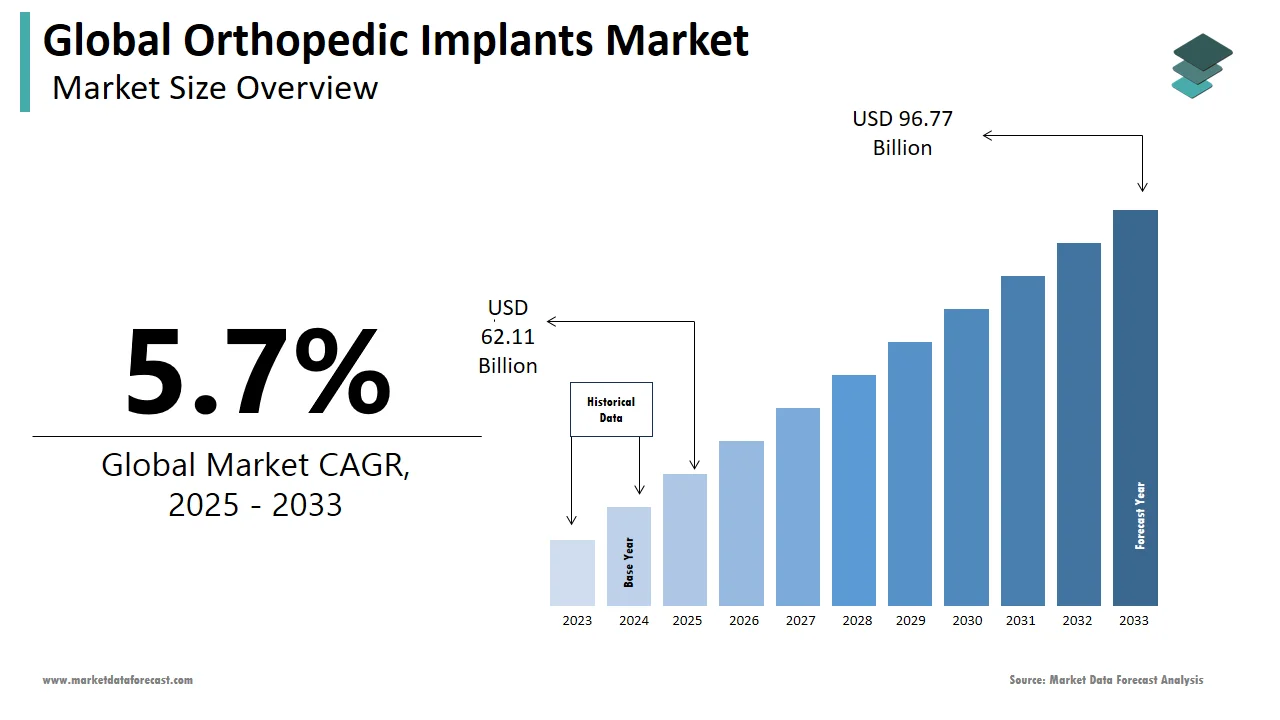
The global orthopedic implants market was valued at USD 62.11 billion in 2025 and is projected to grow from USD 65.65 billion in 2026 to USD 102.29 billion by 2034, registering a CAGR of 5.7% from 2026 to 2034. Market growth is driven by the increasing prevalence of musculoskeletal disorders, rising incidence of orthopedic injuries, and growing demand for joint replacement procedures among the aging population. Orthopedic implants play a vital role in restoring mobility, reducing pain, and improving quality of life for patients suffering from degenerative joint diseases, fractures, and trauma-related conditions. Advancements in implant materials, minimally invasive surgical techniques, and personalized orthopedic solutions are further supporting market expansion globally.
Key Market Trends
- Rising prevalence of osteoarthritis, osteoporosis, and other musculoskeletal disorders.
- Increasing demand for joint replacement and reconstruction procedures among aging populations.
- Growing adoption of minimally invasive orthopedic surgeries.
- Advancements in implant materials, 3D printing, and personalized orthopedic solutions.
- Expansion of outpatient orthopedic care and enhanced post-surgical rehabilitation programs.
Segmental Insights
- Based on product type, the joint reconstruction segment dominated the global orthopedic implants market by accounting for 35.4% market share in 2025, driven by the increasing volume of hip, knee, and shoulder replacement procedures worldwide.
- Based on application, the knee segment held the largest share of 53.2% in 2025, supported by the high prevalence of knee osteoarthritis, sports injuries, and age-related joint degeneration.
- Based on end user, the hospitals segment accounted for the dominant share of the global orthopedic implants market in 2025, owing to the availability of advanced surgical facilities, specialized orthopedic departments, and comprehensive postoperative care services.
Regional Insights
The global orthopedic implants market is witnessing steady growth across major regions, supported by increasing healthcare investments, growing orthopedic procedure volumes, and advancements in implant technologies.
- North America dominated the global market in 2025 with 32.1% share, driven by advanced healthcare infrastructure, high adoption of innovative orthopedic technologies, and a growing aging population requiring joint replacement procedures.
- Europe held the second-largest position with 22.1% share in 2025, supported by strong healthcare systems, increasing prevalence of musculoskeletal disorders, and favorable reimbursement frameworks for orthopedic procedures.
- Asia-Pacific is projected to register the fastest CAGR during the forecast period, driven by expanding healthcare infrastructure, rising healthcare expenditure, growing awareness of orthopedic treatments, and increasing demand for joint replacement surgeries.
Competitive Landscape
The global orthopedic implants market is characterized by intense competition among leading medical device manufacturers focusing on innovation, product quality, and surgical efficiency. Market participants are investing in advanced implant technologies, robotic-assisted surgical systems, and personalized orthopedic solutions to strengthen their market position. Strategic acquisitions, product launches, and collaborations with healthcare providers continue to shape competitive dynamics across the market.
Prominent companies operating in the global orthopedic implants market include Johnson & Johnson, Zimmer Biomet Holdings, Inc., Stryker Corporation, Medtronic Plc, Smith & Nephew Plc, Wright Medical Group N.V., CONMED Corporation, Arthrex, Inc., DJO Finance LLC, and Globus Medical Inc.
Global Orthopedic Implants Market Size
The global orthopedic implants market was worth US$ 62.11 billion in 2025 and is anticipated to reach a valuation of US$ 102.29 billion by 2034 from US$ 65.65 billion in 2026, and it is predicted to register a CAGR of 5.7% during the forecast period 2026 to 2034.
Orthopedic implants are manufactured, biocompatible medical devices that are surgically placed inside the human body to replace a missing joint or bone, or to reinforce and support a damaged bone. These devices are critical in restoring mobility, alleviating pain, and improving the quality of life for patients suffering from trauma, degenerative diseases, or congenital abnormalities. The scope includes reconstructive joint replacements, such as hips and knees, spinal fixation systems, trauma plates and screws, as well as sports medicine accessories. According to the World Health Organization musculoskeletal conditions affect approximately 1.71 billion people globally representing the leading contributor to disability worldwide. This vast patient pool underscores the clinical necessity for advanced implant solutions. In Europe, the demographic shift towards an aging population has intensified the prevalence of osteoarthritis, with data from the European Commission indicating that over 20 percent of adults aged 65 and older suffer from this debilitating condition. The technological evolution of these implants has transitioned from simple mechanical replacements to bioactive materials that promote osseointegration and reduce rejection risks. Regulatory bodies such as the Food and Drug Administration in the United States and the European Medicines Agency enforce stringent safety protocols, ensuring that only high-performance devices reach the market. The integration of digital health technologies with implantable devices is redefining post-operative care, enabling remote monitoring and personalized rehabilitation strategies. This convergence of material science, engineering, and clinical expertise defines the current landscape where precision and durability are paramount. The market operates at the intersection of surgical innovation and patient-centric care, driving continuous advancements in design and functionality.
MARKET DRIVERS
Rising Prevalence of Age-Related Musculoskeletal Disorders
The escalating incidence of age-related musculoskeletal disorders is driving the expansion of the orthopedic implants market. As global life expectancy increases, the proportion of elderly individuals susceptible to degenerative joint diseases such as osteoarthritis and osteoporosis grows substantially. According to the Global Burden of Disease Study, low back pain and neck pain remain the leading causes of years lived with disability, affecting hundreds of millions of individuals annually. Osteoarthritis alone affects over 300 million people worldwide, creating a sustained demand for joint replacement surgeries. The natural wear and tear of cartilage in weight-bearing joints like hips and knees necessitates surgical intervention when conservative treatments fail. In developed nations, the aging baby boomer generation is reaching the age bracket where joint deterioration becomes clinically significant, driving up procedure volumes. Also, the Centers for Disease Control and Prevention (CDC) indicates that approximately 21% of adults in the United States have been diagnosed with some form of arthritis. This high prevalence represents the core patient demographic driving long-term orthopedic implant utilization rates. The increasing willingness of older adults to maintain active lifestyles further motivates them to seek surgical solutions rather than accepting limited mobility. Healthcare systems are adapting by expanding orthopedic departments and training specialists to handle the growing caseload. This demographic inevitability ensures a steady pipeline of patients requiring implants, making it a resilient driver unaffected by short-term economic fluctuations. The clinical urgency to restore function and independence in the elderly population underpins the consistent growth trajectory of this medical device sector.
Technological Advancements in Biomaterials and Implant Design
Continuous innovation in biomaterials and implant design significantly propels the orthopedic implants market. This enhances clinical outcomes and patient satisfaction. Modern implants utilize advanced materials such as titanium alloys, cobalt chromium, and highly cross-linked polyethylene, which offer superior biocompatibility, wear resistance, and longevity. According to research published in the Journal of Orthopaedic Research, the development of porous metal structures facilitates better bone ingrowth, reducing the risk of aseptic loosening, which is a common cause of revision surgery. The introduction of ceramic-on-ceramic bearings in hip replacements has dramatically reduced wear debris generation, extending the lifespan of the implant beyond 20 years in many cases. Computer-aided design and additive manufacturing techniques allow for the creation of patient-specific implants that match individual anatomical variations precisely, improving fit and stability. Robotic-assisted surgery systems integrated with smart implants provide real-time feedback during procedures, ensuring optimal placement and alignment. These technological enhancements reduce recovery times and complication rates, making surgery a more attractive option for patients. Regulatory approvals for new materials and designs encourage manufacturers to invest heavily in research and development, fostering a competitive environment driven by innovation. Surgeons prefer using advanced implants that offer predictable performance and ease of installation, further driving adoption. The ability to customize implants for complex revisions or traumatic injuries expands the addressable patient population. The cost of production decreases as technology matures. Consequently, these advanced solutions become more accessible to global healthcare markets.
MARKET RESTRAINTS
High Cost of Procedures and Reimbursement Constraints
The substantial financial burden associated with these implant surgeries and restrictive reimbursement policies is a significant restraint to the growth of the orthopedic implants market. This is particularly true in developing regions. The total cost of joint replacement surgery includes the price of the implant, hospital stay, surgeon fees, and post-operative rehabilitation, which can amount to tens of thousands of dollars per procedure. According to data from the Healthcare Cost and Utilization Project, the average cost of a total knee replacement in the United States exceeds 30000 USD, placing it out of reach for uninsured or underinsured patients. In many countries, public healthcare systems face budgetary pressures, leading to strict caps on reimbursement rates for orthopedic procedures. Governments and insurance providers are increasingly implementing value-based purchasing models that prioritize cost-effectiveness over premium-priced implants. This trend forces manufacturers to compete on price, potentially compromising profit margins and limiting investment in innovation. In emerging economies, the lack of comprehensive health insurance coverage means that most patients must pay out of pocket, resulting in low penetration rates for advanced implants. Delayed or denied claims create cash flow challenges for hospitals, discouraging them from stocking high-end inventory. Price transparency initiatives and bundled payment schemes further squeeze manufacturer revenues by holding them accountable for overall episode costs, including complications. The economic disparity between regions creates a fragmented market where access to state-of-the-art implants is uneven. These financial barriers prevent a large segment of the eligible population from receiving timely surgical intervention, thereby restraining overall market volume expansion despite clinical need.
Stringent Regulatory Approval Processes and Compliance Burdens
The rigorous regulatory landscape governing medical devices imposes significant delays and costs on the development and commercialization of these implants, which hampers the expansion of the orthopedic implants market. Manufacturers must navigate complex approval pathways such as the Premarket Approval process in the United States and the Medical Device Regulation in Europe, which require extensive clinical trials and documentation. According to FDA medical device classification guidelines, high-risk Class III medical devices subjected to the Premarket Approval (PMA) pathway require an average regulatory review window of 12 to 24 months. The comprehensive testing, clinical trial phases, and technical reviews required before final market clearance, however, frequently extend the total development cycle beyond three years. The transition to the European Union Medical Device Regulation has increased the evidentiary requirements for conformity assessment, leading to longer certification timelines and higher compliance costs. Small and medium-sized enterprises often struggle to meet these demanding standards, limiting their ability to enter the market or introduce innovative products. Post-market surveillance requirements mandate continuous monitoring of device performance and adverse events, adding to the operational burden. Any deviation from regulatory standards can result in product recalls, fines, or legal liabilities, damaging brand reputation and financial stability. The harmonization of global regulations remains incomplete, forcing companies to adapt to varying national requirements, which increases administrative complexity. The uncertainty surrounding regulatory outcomes discourages investment in high-risk novel technologies. Additionally, changes in classification rules may reclassify existing devices requiring renewed assessments and additional data submission. These regulatory hurdles slow down the pace of innovation and market entry, creating a barrier that favors established players with substantial resources while stifling competition from newer entrants.
MARKET OPPORTUNITIES
Expansion into Emerging Markets with Improving Healthcare Infrastructure
Emerging nations in the Asia Pacific, Latin America, and the Middle East offer substantial growth opportunities for the orthopedic implants market. This is due to improving healthcare infrastructure and rising medical tourism. Countries such as China, India, and Brazil are witnessing rapid urbanization and an increase in disposable incomes, which enhances access to advanced medical treatments. According to the World Bank, health expenditure per capita in these regions has been growing steadily, enabling greater investment in hospital facilities and surgical capabilities. The rise of medical tourism allows patients from developed nations to seek affordable, high-quality orthopedic care in these countries, driving demand for international standard implants. Local governments are implementing health insurance schemes that cover major surgeries, expanding the insured population base. Manufacturing hubs in these regions offer cost advantages for global companies seeking to optimize supply chains and reduce production expenses. Partnerships with local distributors and hospitals facilitate market entry and brand recognition among regional surgeons. The increasing prevalence of lifestyle-related orthopedic conditions due to sedentary habits and obesity in these populations creates a new patient demographic. Educational programs and surgeon training initiatives supported by multinational corporations help build clinical expertise and confidence in using advanced implants. The untapped potential in rural areas as healthcare networks expand offers long-term growth prospects. By tailoring products to meet local needs and price points, companies can capture significant market share in these high-growth economies. This geographic diversification reduces dependence on saturated mature markets and ensures sustainable revenue streams.
Integration of Digital Health and Smart Implant Technologies
The convergence of these implants with digital health technologies opens a pathway for personalized care and improved clinical outcomes, which is likely to fuel the expansion of the orthopedic implants market. Smart implants equipped with sensors can monitor parameters such as load distribution, temperature, and movement, providing real-time data to clinicians and patients. According to research, the integration of Internet of Things devices in healthcare is expected to revolutionize postoperative management by enabling early detection of complications. Remote monitoring capabilities allow for timely interventions, reducing hospital readmissions and enhancing patient recovery experiences. Data collected from smart implants contributes to large-scale registries that inform evidence-based practice and future product development. Artificial intelligence algorithms can analyze this data to predict implant failure risks and optimize rehabilitation protocols. Telemedicine platforms integrate with implant data to facilitate virtual consultations, reducing the need for frequent clinic visits. This digital ecosystem creates new revenue streams through software subscriptions and data analytics services, complementing traditional hardware sales. Patients benefit from greater engagement in their recovery process through mobile applications that track progress and provide educational content. Surgeons gain insights into implant performance in real-world settings, enabling continuous improvement in surgical techniques. Regulatory bodies are beginning to establish frameworks for digital health devices, paving the way for broader adoption. Companies that successfully integrate hardware with software solutions will differentiate themselves in a competitive market, offering holistic value propositions that extend beyond the physical implant.
MARKET CHALLENGES
Risk of Implant Failure and Revision Surgeries
The persistent risk of implant failure and the subsequent need for revision surgeries is a significant clinical and economic challenge to the orthopedic implants market. Despite advancements in materials and design, complications such as infection, loosening, dislocation, and wear remain prevalent issues. According to the American Academy of Orthopaedic Surgeons, approximately 10 percent of total joint replacements require revision within 10 years due to various causes. Revision surgeries are technically more complex, costly, and associated with higher morbidity rates compared to primary procedures. Periprosthetic joint infections, although rare, occur in 1 percent to 2 percent of cases and can lead to severe outcomes, including amputation or death if not managed aggressively. Aseptic loosening caused by biological reactions to wear particles remains a leading cause of long-term failure, necessitating ongoing research into biocompatible materials. Patient factors such as obesity, diabetes, and smoking further exacerbate the risk of complications, challenging surgical success. The psychological impact of failed implants on patients is profound, leading to loss of trust in medical interventions. Manufacturers face liability claims and reputational damage when failure rates exceed expectations, prompting rigorous quality control measures. The financial burden of revision surgeries strains healthcare systems and insurance providers, leading to stricter scrutiny of implant performance. Addressing these challenges requires multidisciplinary collaboration between engineers, clinicians, and researchers to develop next-generation solutions that minimize risks. The threat of revision remains a critical hurdle that negatively impacts patient confidence and market dynamics. This threat will persist until failure rates are significantly reduced.
Shortage of Skilled Orthopedic Surgeons and Training Gaps
The global shortage of skilled orthopedic surgeons and inadequate training infrastructure further impede the expansion of the orthopedic implants market. These factors limit the widespread adoption of advanced orthopedic implants. Complex procedures such as robotic-assisted joint replacements and spinal reconstructions require specialized expertise that is not uniformly available across all regions. According to the Association of American Medical Colleges, there is a projected shortfall of up to 124000 physicians in the United States by 2034, with surgical specialties being particularly affected. In developing countries, the ratio of orthopedic surgeons to population is critically low, limiting access to specialized care. The steep learning curve associated with new technologies and implant systems requires extensive training and proctoring, which many healthcare institutions cannot afford. Without adequate training, surgeons may hesitate to adopt innovative implants, preferring familiar techniques even if they are less effective. This hesitation slows down the diffusion of technological advancements and limits patient access to superior care options. Mentorship programs and fellowship opportunities are insufficient to meet the growing demand for skilled practitioners. The burnout rate among surgeons is high due to demanding workloads, further exacerbating the workforce crisis. Educational institutions need to update curricula to include training on digital tools and minimally invasive techniques. Industry-led training initiatives help bridge the gap but cannot fully replace formal medical education. Addressing this human resource constraint is essential for realizing the full potential of the orthopedic implants market and ensuring equitable access to quality surgical care globally.
REPORT COVERAGE
| REPORT METRIC | DETAILS |
| Market Size Available | 2025 to 2034 |
| Base Year | 2025 |
| Forecast Period | 2026 to 2034 |
| Segments Covered | By Product Type, Application, End-user, and Region. |
| Various Analyses Covered | Global, Regional and Country-Level Analysis, Segment-Level Analysis, Drivers, Restraints, Opportunities, Challenges; PESTLE Analysis; Porter’s Five Forces Analysis, Competitive Landscape, Analyst Overview of Investment Opportunities |
| Regions Covered | North America, Europe, Asia Pacific, Latin America, the Middle East, and Africa |
| Market Leaders Profiled | Johnson & Johnson (DePuy Synthes), Zimmer Biomet Holdings, Inc., Stryker Corporation, Medtronic Plc, Smith and Nephew Plc., Wright Medical Group N.V., CONMED Corporation, Arthrex, Inc, DJO Finance LLC, and Globus Medical Inc., and Others. |
SEGMENTAL ANALYSIS
By Product Type Insights
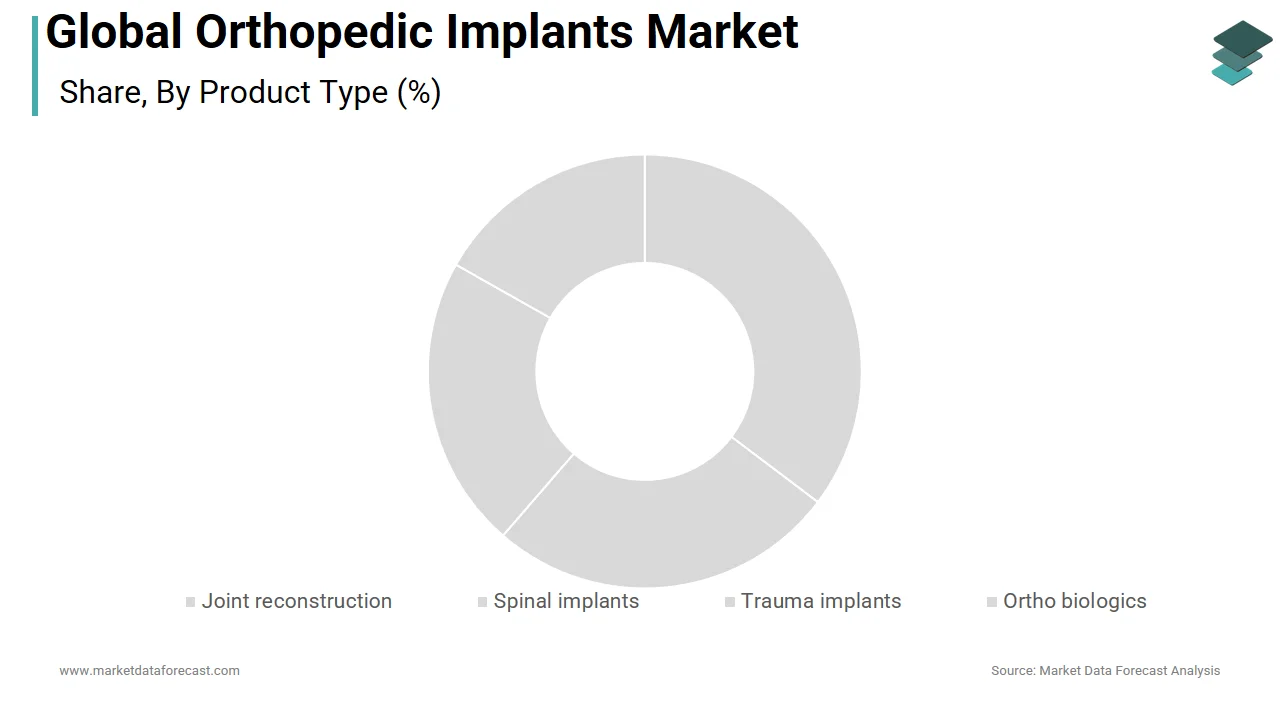
The joint reconstruction segment dominated the global orthopedic implants market and accounted for a 41.7% share in 2025. This dominance of the segment was mainly driven by the high prevalence of osteoarthritis and degenerative joint diseases among the aging global population, which necessitates surgical intervention for pain relief and mobility restoration. According to data from the Centers for Disease Control and Prevention, over 32 million adults in the United States alone suffer from osteoarthritis, creating a substantial patient pool requiring hip and knee replacements. The effectiveness of modern joint implants in improving the quality of life has increased patient willingness to undergo elective surgeries. Technological advancements such as robotic-assisted surgery and patient-specific instrumentation have enhanced surgical precision and implant longevity, encouraging wider adoption. Reimbursement policies in developed nations generally cover these procedures, making them accessible to a broad demographic. The standardization of surgical protocols and extensive surgeon training programs ensures consistent outcomes, further reinforcing trust in joint reconstruction solutions. Manufacturers continuously innovate with materials like highly cross-linked polyethylene and ceramic bearings to reduce wear rates, extending the lifespan of implants beyond 20 years. This reliability reduces the need for revision surgeries, which are more complex and costly. The demographic shift towards an older population in North America and Europe ensures sustained demand as baby boomers reach the age where joint deterioration becomes clinically significant. These factors collectively establish joint reconstruction as the cornerstone of the orthopedic implants industry, generating the highest revenue share globally.
On the other hand, the ortho biologics segment is predicted to witness the highest CAGR of 11.5% during the forecast period. The rapid expansion of this segment is fuelled by the increasing preference for minimally invasive treatments that promote natural healing and tissue regeneration rather than mechanical replacement. As per the American Academy of Orthopaedic Surgeons, there is a growing clinical focus on biological solutions such as bone grafts, stem cells, and platelet-rich plasma to enhance fusion rates and accelerate recovery. Patients and surgeons are seeking alternatives to traditional hardware to avoid complications associated with metal implants, such as stress shielding and allergic reactions. The rise in sports injuries among active populations drives demand for biologics that facilitate faster return to play. Regulatory approvals for new biological products have streamlined market entry, allowing manufacturers to introduce innovative therapies. Investment in research and development by major medical device companies has led to improved formulation stability and efficacy of biological agents. The integration of biologics with synthetic scaffolds offers hybrid solutions that combine structural support with biological activity, appealing to complex case management. Rising disposable incomes enable patients to opt for premium biological treatments, often not fully covered by insurance but valued for superior outcomes. This trend towards regenerative medicine positions ortho biologics as a key driver of future market growth and innovation.
By Application Insights
The knee application segment led the global orthopedic implants market and captured a 38.5% share in 2025. This leading position of the segment was attributed to the high incidence of knee osteoarthritis and traumatic injuries affecting mobility in a large portion of the global population. According to the Global Burden of Disease Study, knee pain is one of the most common musculoskeletal complaints worldwide, affecting hundreds of millions of individuals and significantly impacting daily activities. The knee joint bears substantial weight and stress, making it particularly susceptible to wear and tear over time. Total knee arthroplasty has become a highly standardized and successful procedure with predictable outcomes, driving high procedure volumes. The aging population in developed countries contributes significantly to this demand as cartilage degradation accelerates with age. Obesity rates are rising globally, which places additional mechanical load on knee joints, exacerbating degeneration and increasing the likelihood of surgical intervention. The World Health Organization indicates that obesity has nearly tripled since 1975, creating a parallel epidemic that fuels knee implant demand. Advances in unicompartmental knee replacement techniques offer less invasive options for patients with localized damage, expanding the treatable population. Surgeon familiarity with knee anatomy and established surgical workflows ensures efficient procedure times and reduced hospital stays. Reimbursement structures in major markets support knee replacement surgeries, ensuring financial accessibility for patients. These clinical and demographic factors solidify the knee segment as the dominant application area in the orthopedic implants landscape.
However, the spinal application segment is estimated to register the fastest CAGR of 7.8% from 2026 to 2034. The swift growth of this segment is propelled by the increasing prevalence of degenerative spinal conditions such as herniated discs, spinal stenosis, and scoliosis among both aging and younger populations. As per the National Institute of Neurological Disorders and Stroke, back pain is a leading cause of disability globally, prompting more patients to seek surgical solutions when conservative treatments fail. Technological innovations in minimally invasive spine surgery have reduced recovery times and complication rates, making spinal procedures more attractive to patients. The adoption of advanced imaging technologies and navigation systems enhances surgical precision, allowing for safer and more effective interventions. Rising awareness of spinal health and ergonomic issues in workplace environments contributes to earlier diagnosis and treatment. The expansion of ambulatory surgery centers facilitates outpatient spinal procedures, reducing costs and improving access. Demographic trends show an increase in life expectancy, meaning more people are living long enough to develop age-related spinal degeneration. Additionally, the rise in sports-related spinal injuries among active individuals drives demand for stabilization and fusion devices. Manufacturers are introducing motion preservation technologies such as artificial discs, which offer alternatives to traditional fusion, appealing to younger patients seeking to maintain flexibility. These dynamics position the spinal segment as a high-growth area with significant potential for technological advancement and market expansion.
By End User Insights
In 2025, the hospitals segment held the majority share of 50.6% of the global orthopedic implants market because of the comprehensive infrastructure, specialized surgical teams, and advanced equipment available in hospital settings, which are essential for complex orthopedic procedures. According to the American Hospital Association, hospitals perform the majority of total joint replacements and spinal surgeries due to their capability to manage perioperative care and potential complications effectively. Patients prefer hospitals for major surgeries because of the perceived safety and availability of intensive care units if needed. Reimbursement policies often favor hospital-based procedures, ensuring financial viability for both providers and patients. The concentration of skilled orthopedic surgeons in hospital environments creates a hub for high-volume surgeries, driving bulk procurement of implants. Teaching hospitals also serve as centers for innovation and clinical trials, facilitating the adoption of new technologies. The ability of hospitals to offer multidisciplinary care, including physical therapy and pain management, supports holistic patient recovery, enhancing satisfaction and outcomes. Large hospital networks negotiate favorable contracts with implant manufacturers, securing steady supply chains and cost efficiencies. The trust associated with established hospital brands encourages patients to choose these facilities for elective orthopedic surgeries. Furthermore, hospitals are better equipped to handle emergency trauma cases requiring immediate surgical intervention, which constitutes a significant portion of orthopedic implant usage. These structural and operational advantages ensure that hospitals remain the primary destination for orthopedic care globally.
Conversely, the ambulatory services segment is anticipated to witness the fastest CAGR of 6.9% over the forecast period, owing to the shift towards value-based care and cost containment strategies that favor outpatient settings over inpatient hospital stays. As per data from the Medicare Payment Advisory Commission, ambulatory surgery centers offer lower procedural costs and reduced risk of hospital-acquired infections, making them an attractive option for payers and patients. Advancements in minimally invasive surgical techniques and anesthesia protocols have enabled safe performance of joint replacements and spinal procedures in outpatient settings. Patients benefit from shorter recovery times and the comfort of returning home on the same day, which improves overall satisfaction. Insurance providers are increasingly incentivizing outpatient surgeries through lower copayments and streamlined approval processes. The proliferation of specialized orthopedic ambulatory centers equipped with state-of-the-art technology supports this transition. Surgeons appreciate the efficiency and focused environment of ambulatory centers, which allow for higher throughput and personalized care. The aging population prefers less disruptive healthcare experiences, further driving demand for outpatient options. Regulatory changes in various countries have expanded the list of approved procedures for ambulatory settings, facilitating market growth. This trend reflects a broader transformation in healthcare delivery towards accessibility, efficiency, and patient-centric models.
REGIONAL ANALYSIS
North America Orthopedic Implants Market Analysis
North America remained the top performer in the orthopedic implants market and accounted for a 45.3% share in 2025. Its prominent status is supported by highly advanced healthcare infrastructure, robust procedure rates, and strong reimbursement frameworks. The region remains the largest single market for orthopedic devices. According to the Agency for Healthcare Research and Quality, millions of orthopedic procedures are performed annually in the US, supported by widespread insurance coverage and high consumer spending on health. The presence of leading medical device manufacturers fosters continuous innovation and rapid adoption of new technologies such as robotic-assisted surgery. High prevalence of obesity and sedentary lifestyles contributes to elevated rates of joint degeneration, sustaining demand for replacements. The aging baby boomer population requires extensive musculoskeletal care, ensuring a steady pipeline of patients. Favorable regulatory pathways facilitated by the Food and Drug Administration encourage product launches and competitive dynamics. Private healthcare systems prioritize efficiency and quality, driving investment in premium implant solutions. Academic medical centers collaborate with industry partners to conduct clinical trials, accelerating evidence generation. The robust distribution network ensures the wide availability of products across urban and rural areas. High physician density and specialized training programs maintain high standards of care. These factors collectively reinforce North America's leadership in the global orthopedic implants landscape.

Europe Orthopedic Implants Market Analysis
Europe was positioned second in the orthopedic implants market and captured a 30.1% share in 2025. Universal healthcare and an aging population drive significant demand in the region. This position is supported by countries such as Germany, France, and the United Kingdom. According to Eurostat, the proportion of individuals aged 65 and older in the EU is projected to reach 30 percent by 2050, creating substantial pressure on orthopedic services. Strict regulatory standards under the European Union Medical Device Regulation ensure high safety and performance benchmarks, influencing product design and marketing. Public healthcare systems manage costs through tendering processes and price negotiations, favoring cost-effective solutions while maintaining quality. High awareness of musculoskeletal health and access to specialized care drive procedure volumes. The region is a hub for research and development with many universities and institutes focusing on biomaterials and tissue engineering. Cross-border collaboration facilitates knowledge exchange and harmonization of clinical practices. Economic variability among member states affects purchasing power, but overall demand remains resilient due to demographic necessities. Sustainability initiatives are gaining traction, influencing packaging and manufacturing practices. The integration of digital health records supports data-driven decision-making and post-market surveillance. These elements position Europe as a critical market balancing innovation with regulatory rigor and cost containment.
Asia Pacific Orthopedic Implants Market Analysis
Asia Pacific is emerging as a high-growth region in the orthopedic implants market due to improving healthcare infrastructure, rising disposable incomes, and increasing medical tourism. The region currently holds around 15 percent of the global market share but is expected to expand rapidly due to large population bases in China, India, and Japan. According to the World Bank, health expenditure in the Asia Pacific has been growing steadily, enabling greater access to advanced surgical treatments. The rising prevalence of lifestyle-related disorders such as obesity and diabetes contributes to a higher incidence of joint diseases. Government initiatives in countries like China and India aim to upgrade rural healthcare facilities, expanding access to orthopedic care. Medical tourism attracts patients from Western countries seeking affordable, high-quality surgeries, boosting demand for international standard implants. Local manufacturing hubs reduce costs and improve supply chain efficiency, making implants more accessible. Increasing awareness of joint health and the availability of trained surgeons support market penetration. The young demographic in some countries drives demand for sports medicine and trauma implants due to active lifestyles. Regulatory frameworks are evolving to align with global standards, facilitating market entry for multinational companies. Urbanization leads to changes in physical activity patterns, influencing injury rates. These dynamics position the Asia Pacific as a key growth engine for the global orthopedic implants industry.
Latin America Orthopedic Implants Market Analysis
Latin America holds a promising position in the global orthopedic implants market, with significant potential for future expansion. Economic dynamics and varying levels of healthcare access play a major role in the region's performance. According to the Pan American Health Organization, efforts to strengthen public health systems are improving access to surgical services in countries like Brazil and Mexico. Economic volatility impacts purchasing power, but private healthcare sectors continue to invest in advanced technologies catering to affluent populations. The rising middle class seeks a better quality of life, driving demand for elective orthopedic procedures. Medical tourism in countries like Costa Rica and Colombia attracts international patients, offering cost-competitive solutions. Local distributors partner with global manufacturers to navigate regulatory landscapes and ensure product availability. Training programs for surgeons help build expertise in complex procedures, enhancing clinical outcomes. Government procurement programs provide opportunities for volume sales, although price sensitivity remains a challenge. Infrastructure improvements in hospitals and clinics support the adoption of modern implant technologies. Cultural attitudes towards aging and mobility are shifting, encouraging older adults to seek surgical interventions. These factors collectively suggest a gradual but steady growth trajectory for the orthopedic implants market in Latin America.
Middle East and Africa Orthopedic Implants Market Analysis
The Middle East and Africa region grew steadily in the global orthopedic implants market owing to unique cultural and economic characteristics. However, growth is constrained by uneven healthcare infrastructure and economic disparities. According to the World Health Organization, investments in healthcare infrastructure in Gulf Cooperation Council countries are driving demand for premium medical devices, including orthopedic implants. The high prevalence of diabetes and obesity in the Middle East contributes to increased rates of musculoskeletal complications requiring surgical intervention. In Africa, limited access to specialized care restricts market growth, but initiatives by non-governmental organizations and government partnerships are improving surgical capacity. Medical tourism in countries like the UAE and South Africa catalyzes the adoption of advanced technologies. Regulatory frameworks are developing to ensure the safety and quality of imported medical devices. Local manufacturing is minimal, leading to reliance on imports, which can be costly. Awareness campaigns about joint health and injury prevention are beginning to take root. The young population in Africa presents long-term potential as sports participation increases. Strategic collaborations between international companies and local entities help overcome logistical and regulatory hurdles. Despite challenges, the region offers untapped opportunities for companies willing to invest in long-term development and capacity building.
COMPETITIVE LANDSCAPE
The competition in the Orthopedic Implants Market is intense and characterized by a few dominant multinational corporations alongside numerous specialized regional players vying for technological leadership and market share. Established giants leverage their extensive distribution networks, robust research capabilities, and strong brand recognition to maintain dominance in key segments such as joint reconstruction and spinal implants. Innovation serves as the primary battleground with companies racing to develop robotic-assisted surgery systems, smart implants, and bioactive materials that offer superior clinical outcomes. Price pressure from group purchasing organizations and government tenders forces manufacturers to balance profitability with affordability, particularly in cost-sensitive markets. Smaller niche players compete by offering highly specialized products or customized solutions that address specific clinical needs unmet by larger firms. Regulatory hurdles and lengthy approval processes create barriers to entry, favoring incumbents with substantial resources. Strategic mergers and acquisitions are common as companies seek to consolidate their positions and acquire disruptive technologies. The shift towards value-based care encourages collaboration between manufacturers and healthcare providers to demonstrate cost-effectiveness and improved patient metrics. This dynamic environment fosters continuous improvement and drives the adoption of advanced technologies that benefit patients and surgeons alike.
KEY MARKET PLAYERS
Some of the top companies leading the global orthopedic implants market profiled in this report are
- Johnson & Johnson
- Zimmer Biomet Holdings, Inc.
- Stryker Corporation
- Medtronic Plc
- Smith and Nephew Plc.
- Wright Medical Group N.V.
- CONMED Corporation
- Arthrex, Inc.
- DJO Finance LLC
- Globus Medical Inc.
TOP PLAYERS IN THE MARKET
- Stryker Corporation stands as a global leader in the orthopedic implants sector offering a comprehensive portfolio of joint reconstruction spinal and trauma products. The company is renowned for its innovation in robotic assisted surgery systems which enhance precision and patient outcomes. Recent strategic initiatives include expanding its Mako smart robotics platform to new indications and integrating artificial intelligence into surgical planning tools. Stryker actively invests in research and development to create advanced biomaterials that improve implant longevity and biocompatibility. The company strengthens its market position through targeted acquisitions of specialized technology firms that complement its existing offerings. By focusing on digital health integration Stryker provides end to end solutions that support surgeons throughout the patient journey. Their commitment to sustainability and operational excellence ensures consistent product quality and supply chain reliability across global markets.
- Zimmer Biomet Holdings plays a pivotal role in the global orthopedic implants market by delivering personalized healthcare solutions designed to restore mobility and improve quality of life. The company specializes in knee hip shoulder and spine implants utilizing data driven insights to customize treatments. Recent actions involve launching the Rosa knee system which combines robotics with preoperative planning for enhanced accuracy. Zimmer Biomet has expanded its digital ecosystem through the ZB Edge platform enabling real time data exchange between hospitals and manufacturers. The company focuses on value based care models partnering with healthcare providers to optimize clinical pathways and reduce costs. Strategic collaborations with academic institutions drive innovation in regenerative medicine and biologics. Zimmer Biomet maintains a strong competitive edge by prioritizing patient-centric design and surgeon education. In turn, this approach fosters long-term loyalty among healthcare professionals worldwide.
- Johnson and Johnson MedTech contributes significantly to the global orthopedic implants market through its DePuy Synthes division which offers a broad range of reconstructive and trauma solutions. The company leverages its extensive resources to drive innovation in minimally invasive techniques and smart implant technologies. Recent developments include the expansion of its Attune knee system and the introduction of advanced spinal fixation devices. Johnson and Johnson focuses on integrating digital tools such as augmented reality and predictive analytics into surgical workflows to improve efficiency. The company actively engages in training programs for surgeons ensuring proper adoption of new technologies. Strategic partnerships with healthcare systems facilitate the implementation of bundled payment models and outcome tracking. Trusted partnerships and sustainable growth in diverse regions require a firm commitment to patient care. Therefore, Johnson & Johnson reinforces its reputation in musculoskeletal care by prioritizing clinical evidence and safety.
TOP STRATEGIES USED BY KEY MARKET PARTICIPANTS
Key players in the Orthopedic Implants Market employ product innovation as a primary strategy to differentiate their offerings and improve clinical outcomes. Companies invest heavily in research and development to create advanced materials such as porous metals and bioactive coatings that promote osseointegration. Strategic acquisitions allow firms to expand their portfolios and access new technologies such as robotic surgery systems and digital health platforms. Partnerships with hospitals and ambulatory surgery centers facilitate the adoption of value based care models and streamline supply chains. Manufacturers focus on surgeon training and education to ensure proper utilization of complex devices and build brand loyalty. Expansion into emerging markets through local manufacturing and distribution networks helps capture growing demand in developing regions. Regulatory compliance and quality assurance remain critical to maintaining market access and consumer trust. Digital integration enables remote monitoring and data analytics enhancing post operative care and patient engagement. These multifaceted approaches enable companies to maintain competitiveness and drive long term growth in a dynamic healthcare landscape.
MARKET SEGMENTATION
The global orthopedic implants market research report has been segmented by product type, application, end-user, and region.
By Product Type
- Joint reconstruction
- Spinal implants
- Trauma implants
- Ortho biologics
By Application
- Knee
- Spinal
- Hip
- Dental
- S.E.T (sports medicine, Extremities, Trauma)
By End-user
- Hospitals
- Orthopedic clinics
- Ambulatory services
By Region
- North America
- Europe
- Asia Pacific
- Latin America
- The Middle East and Africa