- Product Description Description
- Table of Contents TOC
- List of Table & Figure LOT
- Get Free Sample PDF Sample PDF
Market Size, 2025
$25.64 BnMarket Estimate, 2026
$27 BnMarket Forecast, 2034
$40.78 BnCAGR, 2026–2034
5.29%Executive Summary: Europe Chronic Pain Market
- Market Scope: Comprehensive regional analysis of the European chronic pain market covering indication segments, product types (drugs and interventional devices), demographic trends, non-opioid therapeutics, and multidisciplinary care pathways.
- Market Valuation: Valued at USD 25.64 billion (2025), estimated at USD 27.00 billion (2026), and projected to reach USD 40.78 billion by 2034, registering a steady CAGR of 5.29% (2026–2034).
- Primary Growth Drivers: Aging population (over 20% of EU citizens aged 65+), rising prevalence of osteoarthritis and neuropathic conditions, and strict regulatory restrictions on opioid prescribing shifting demand toward non-opioid therapies and neuromodulation.
Key Market Segment Metrics (2026–2034)
| Category | Leading Segment (2025 Position) | Fastest-Growing Segment |
|---|---|---|
| By Indication & Product | Arthritis Pain (dominated indication segment with a 32.1% share in 2025) & Pharmaceutical Drugs | Neuropathic Pain (estimated to register the fastest CAGR of 9.4%) & Interventional Devices |
| By Treatment Approach | First-Line Pharmacological Analgesics & Certified Pain Clinic Protocols | Neuromodulation Devices & Digital Therapeutics / Remote Patient Monitoring |
| By Region / Country | Germany (led regionally with a 22.6% share via G-BA reimbursement pathways) & France (18.9% share) | United Kingdom (NHS non-pharmacological alternatives) & Italy (integrated multidisciplinary models) |
Major Market Players & Market Structure
Market Structure: Highly competitive European healthcare and pharmaceutical landscape featuring leading global drug manufacturers and medical device innovators competing intensely on non-opioid therapies, digital health integration, and physician training centers of excellence.
Key Companies: Pfizer Inc., Novartis International AG, Johnson & Johnson, Medtronic plc, Grünenthal Group, and Eli Lilly and Company.
 Download Free Sample Report
Europe Chronic Pain Market Size
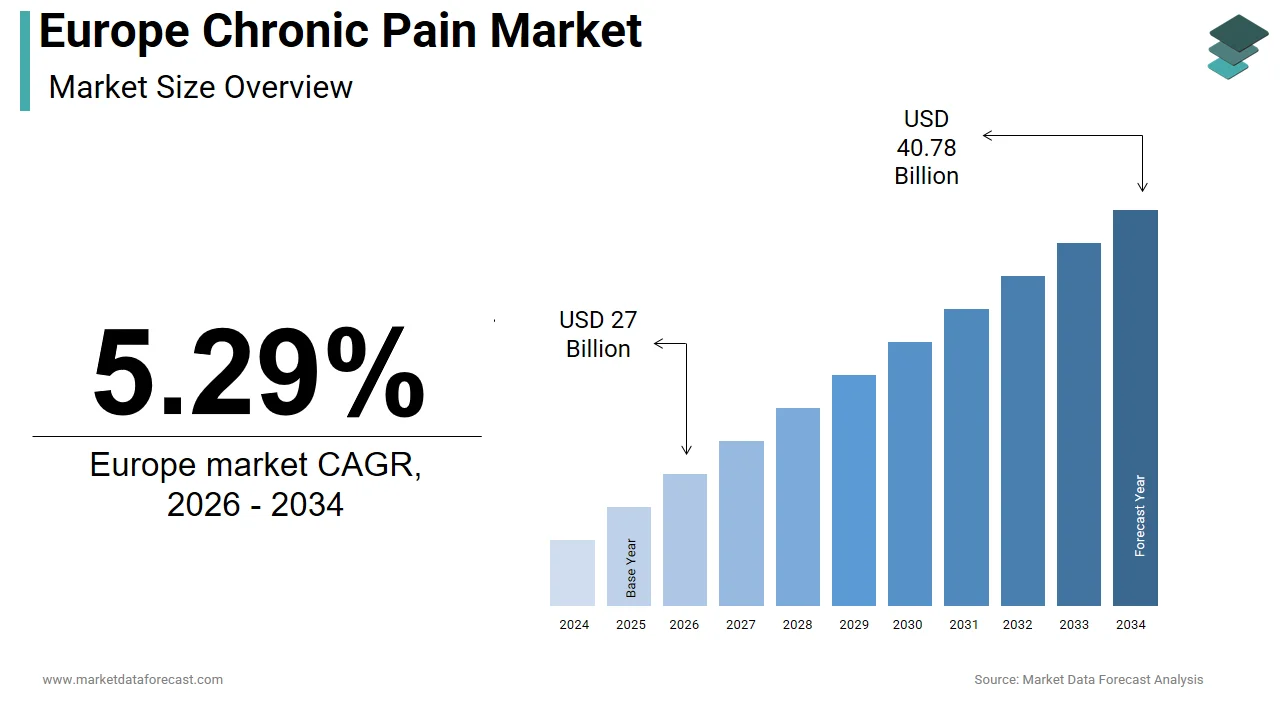
The size of the Europe chronic pain market was valued at USD 25.64 billion in 2025. This market is expected to grow at a CAGR of 5.29% from 2026 to 2034, reaching USD 40.78 billion by 2034 from USD 27 billion in 2026.
Chronic pain is medically defined as pain that persists or recurs for longer than 3 months. Unlike acute pain, which acts as a temporary "alarm" for injury, chronic pain often continues long after the initial cause has healed and can become a disease in its own right. The market includes a wide array of therapeutic approaches, from pharmaceuticals and medical devices to interventional procedures and multidisciplinary pain programs. The market’s urgency is defined by the immense and often hidden burden of this condition across the continent. According to the European Pain Federation, a substantial segment of the adult population in Europe is impacted by persistent, moderate-to-severe pain. This widespread, long-term condition significantly burdens both individuals and healthcare systems, often resulting in reduced quality of life and considerable economic strain across the region. Furthermore, as per the World Health Organization’s European Regional Office, chronic pain is a leading cause of disability, contributing significantly to lost productivity and reduced quality of life. This widespread prevalence, coupled with an aging population and rising rates of associated comorbidities like arthritis and diabetes, positions chronic pain not as a niche concern but as a major public health priority that demands a coordinated and innovative healthcare response.
MARKET DRIVERS
Aging Population and Rising Prevalence of Age-Related Musculoskeletal Disorders
The continent’s profound demographic shift toward an older population directly correlates with a higher incidence of chronic pain conditions, particularly those of musculoskeletal origin, which is a key and fast-moving trend for the Europe chronic pain market. Age-related degeneration of the musculoskeletal system causes accelerated cartilage breakdown, significantly increasing the risk of osteoarthritis and, more specifically, spondylosis in the spine. The statistics are stark: more than twenty percent of the EU’s population is aged sixty-five or over, and this figure is projected to rise to over thirty percent by 2050, according to Eurostat. This demographic reality translates into a massive and growing patient pool. For instance, the burden of joint pain in Europe is heavily connected to an aging demographic, with the prevalence of debilitating osteoarthritis increasing sharply among older residents and significantly impacting long-term mobility. This structural trend creates a sustained, long-term demand for effective pain management solutions, from non opioid analgesics and physical therapy to advanced interventional procedures and joint replacement surgeries, making demographic aging the single most powerful force fueling market expansion.
Increased Recognition of Chronic Pain as a Distinct Disease Entity
A fundamental shift in the medical and regulatory understanding of chronic pain is acting as a powerful driver for the Europe chronic pain market growth. Historically viewed as a mere symptom of another underlying condition, chronic pain is now increasingly recognized by European health authorities and professional bodies as a complex disease in its own right, requiring dedicated diagnostic criteria and specialized treatment pathways. This paradigm shift has profound implications. It has led to the development of national pain strategies in countries like Germany, France, and the UK, which mandate the establishment of specialized pain clinics and the training of pain medicine specialists. The European Union's enhanced focus on non-communicable diseases has increasingly highlighted chronic pain as a major public health concern, strengthening the argument for dedicated resources in research and improved care delivery across Europe. For millions living with persistent pain, this growing attention from health leaders brings hope for better understanding and more effective treatment options. This change in perception moves treatment beyond simple pharmacotherapy and drives demand for a holistic, multimodal approach that includes psychological support, physical rehabilitation, and advanced neuromodulation technologies, thereby expanding the entire scope and value of the market.
MARKET RESTRAINTS
Stringent Regulatory Scrutiny and Restrictions on Opioid Prescribing
The exceptionally stringent regulatory environment surrounding the use of opioid analgesics is a serious obstacle to the Europe chronic pain market. This is driven by a strong public health policy focus on preventing addiction and misuse. In stark contrast to other regions, European countries have implemented some of the world’s most restrictive prescribing guidelines for opioids in non-cancer pain. Strict, carefully monitored, and short-term initial prescribing practices in France and Germany help doctors keep a closer eye on patient pain management and minimize the risks of long-term reliance. According to the European Union Drugs Agency, these cautious approaches across Europe generally prevent the widespread, high-level prescription abuse seen in other parts of the world, fostering a safer, more controlled medical environment. However, they also create a significant therapeutic gap for patients with severe, refractory pain who may benefit from carefully managed opioid therapy. This regulatory climate forces clinicians to rely on less effective alternatives, potentially leading to undertreated pain, and severely limits the market potential for new opioid-based therapies, regardless of their safety profile, thereby constraining a major segment of the pharmaceutical market.
Fragmented Reimbursement Policies Across Member States
A highly fragmented and inconsistent reimbursement landscape, where coverage decisions for treatments, especially newer and more expensive ones, vary dramatically from one country to another, hampers the expansion of the Europe chronic pain market. A novel neuromodulation device or a biologic therapy approved by the European Medicines Agency may be fully reimbursed in Germany but denied coverage in Italy or Spain due to differing health technology assessment (HTA) criteria and budget constraints. According to research, this lack of harmonization creates significant delays in patient access to innovative therapies and imposes a heavy administrative burden on manufacturers, who must navigate a complex web of national pricing and reimbursement negotiations. This fragmentation stifles investment in research and development for the European market, as companies cannot rely on a unified commercial pathway, and ultimately results in inequitable access to care for patients based solely on their country of residence, acting as a major brake on market growth and innovation.
MARKET OPPORTUNITIES
Integration of Digital Therapeutics and Remote Patient Monitoring
The convergence of chronic pain management with digital health technologies offers new routes for the growth of the Europe chronic pain market. Digital therapeutics (DTx), which are software-based interventions delivered through apps or online platforms, offer scalable, non-pharmacological solutions for pain management. These can include cognitive behavioral therapy modules, guided mindfulness exercises, and personalized exercise programs, all proven to be effective in managing chronic pain. The opportunity is amplified by the integration of remote patient monitoring via wearable sensors that track activity levels, sleep patterns, and physiological markers of stress. This data provides clinicians with real-world insights into a patient’s condition between visits, enabling more proactive and personalized care adjustments. European Union initiatives are actively validating AI-driven digital therapeutic solutions for chronic pain management. These efforts are moving towards integrating technology-enabled care into national healthcare systems, creating pathways for reimbursed, clinician-approved, and patient-centered digital treatments to become standard practice. This model promises to improve access to evidence-based care, reduce the burden on specialist clinics, and empower patients to take an active role in their own management, opening a vast new frontier for the market.
Development of Non Opioid, Targeted Biologic and Gene Therapies
The urgent need for effective, non addictive pain treatments paves the way for the development of next-generation, targeted biological and gene therapies, which are anticipated to escalate the expansion of the Europe chronic pain market. Research is increasingly focused on identifying specific molecular pathways involved in chronic pain signaling, such as nerve growth factor (NGF) or sodium channels, and developing monoclonal antibodies or gene editing techniques to modulate them precisely. These therapies aim to provide potent pain relief without the systemic side effects or addiction risk of traditional drugs. The European regulatory environment, while strict on opioids, is supportive of such innovative approaches for unmet medical needs. According to sources, several anti-NGF monoclonal antibodies are in late-stage clinical trials for osteoarthritis pain. Success in this area would not only address a critical therapeutic gap but also command premium pricing and strong reimbursement, given their potential to significantly improve patient outcomes and reduce long-term healthcare costs associated with chronic pain disability.
MARKET CHALLENGES
Persistent Stigma and Underdiagnosis of Chronic Pain
A deep-rooted societal and clinical stigma surrounding chronic pain remains a formidable challenge to the Europe chronic pain market. This leads to widespread underdiagnosis and undertreatment across the region. Many patients, particularly men and older adults, are reluctant to report their pain, fearing they will be perceived as weak or complaining. Simultaneously, some healthcare professionals still view chronic pain through an outdated lens, attributing it to psychological factors or malingering rather than a legitimate neurobiological condition. Many individuals living with persistent, long-term pain across Europe continue to feel that their symptoms are overlooked or invalidated during consultations with healthcare professionals, hindering effective care. This lack of validation creates a barrier to seeking care and receiving appropriate treatment. The resulting delay in diagnosis and intervention allows the condition to become more entrenched and difficult to manage, increasing the overall burden on the healthcare system and perpetuating a cycle of suffering that is both a human tragedy and a high economic cost.
Shortage of Specialized Pain Management Professionals
A severe shortage of healthcare professionals with specialized training in pain medicine inhibits the expansion of the Europe chronic pain market. Managing chronic pain effectively requires a multidisciplinary approach involving physicians, nurses, psychologists, and physiotherapists, all with specific expertise in pain mechanisms and treatments. However, formal pain medicine is not yet a recognized medical specialty in many European countries, and training programs are limited. According to sources, there is an estimated shortfall of over ten thousand certified pain specialists across the EU. This scarcity means that most patients are managed in primary care settings by general practitioners who often lack the time, resources, or specialized knowledge to provide optimal, multimodal care. The result is a reliance on simple pharmacotherapy, frequent referrals to already overburdened specialists, and long waiting times for comprehensive pain programs, which collectively undermine treatment efficacy and patient satisfaction, capping the market’s ability to deliver its full potential of care.
REPORT COVERAGE
| REPORT METRIC | DETAILS |
| Market Size Available | 2025 to 2034 |
| Base Year | 2025 |
| Forecast Period | 2026 to 2034 |
| Segments Covered | By Indication, Product, and Country. |
| Various Analyses Covered | Global, Regional, and Country-Level Analysis, Segment-Level Analysis, Drivers, Restraints, Opportunities, Challenges; PESTLE Analysis; Porter’s Five Forces Analysis, Competitive Landscape, Analyst Overview of Investment Opportunities |
| Countries Covered | UK, France, Spain, Germany, Italy, Russia, Sweden, Denmark, Switzerland, Netherlands, Turkey, Czech Republic, and the Rest of Europe. |
| Market Leaders Profiled | Pfizer Inc., Novartis International AG, Johnson & Johnson, Medtronic plc, Grünenthal Group, and Eli Lilly and Company |
SEGMENTAL ANALYSIS
By Indication Insights
The arthritis pain segment led the Europe chronic pain market by accounting for a 32.1% share in 2025. The leading position of the arthritis pain segment is attributed to the high prevalence of osteoarthritis and rheumatoid arthritis across the continent’s aging population. Moreover, this segment is backed by the strong correlation between age and joint degeneration; as the European population ages, the incidence of these conditions rises dramatically. According to the European Alliance of Associations for Rheumatology, a vast number of Europeans live with the pain of osteoarthritis. This, the most common form of arthritis, is projected to see a substantial increase in cases within the coming years. This upward trend is primarily driven by the region's rapidly aging population and growing obesity rates, which place increasing strain on joints. This vast and growing patient pool creates a sustained, massive demand for a wide range of pain management solutions, from over-the-counter analgesics and prescription non-steroidal anti-inflammatory drugs to intra-articular injections and surgical interventions. The chronic, progressive nature of arthritis ensures that patients require long-term, often escalating, therapeutic strategies, making it the single largest and most consistent driver of the entire chronic pain market.
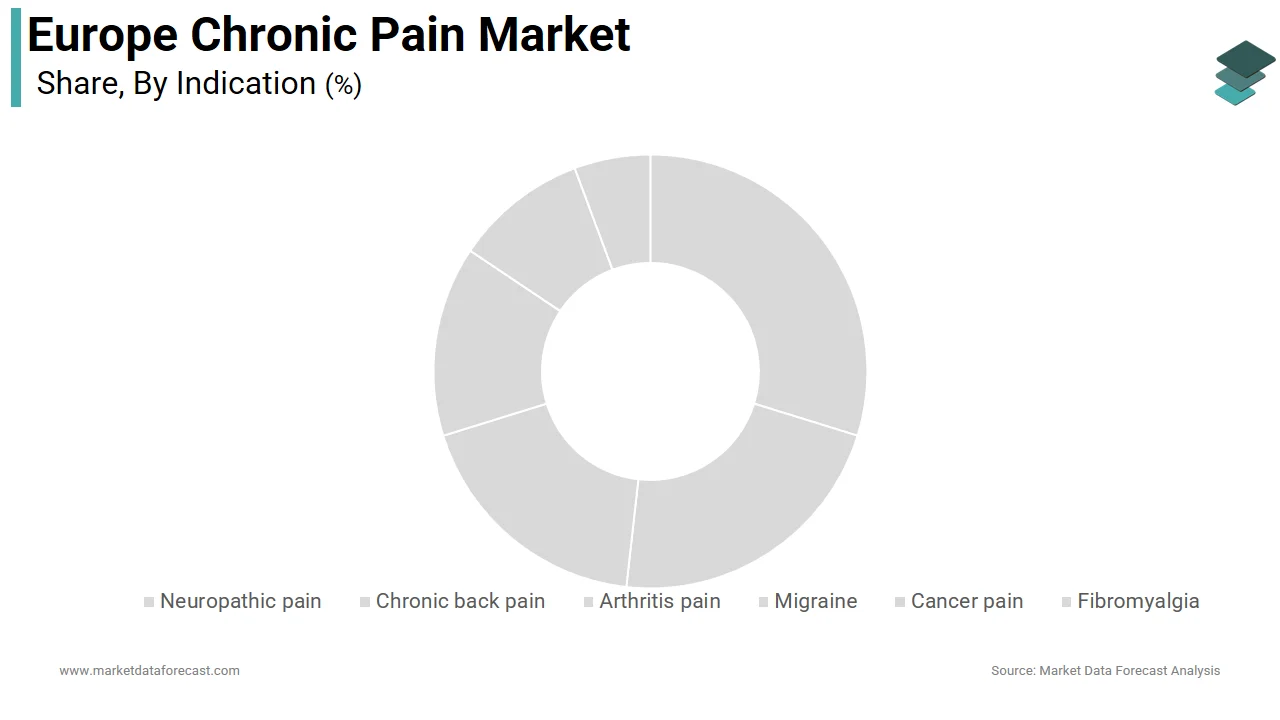
The neuropathic pain segment is estimated to register the fastest CAGR of 9.4% from 2026 to 2034 due to the rising prevalence of underlying conditions that cause nerve damage, most notably diabetes and the long-term neurological sequelae of cancer treatments. The European diabetes epidemic is a key factor. According to the International Diabetes Federation, a significant and growing number of adults across Europe are living with diabetes, of whom a substantial portion will develop painful nerve damage, making it a major cause of chronic discomfort. Simultaneously, as cancer survival rates improve, a growing number of patients are living with chemotherapy-induced peripheral neuropathy. This expanding patient base, combined with a greater clinical awareness of neuropathic pain as a distinct entity, is driving demand for specialized, often expensive, pharmacotherapies like gabapentinoids and serotonin norepinephrine reuptake inhibitors. The unmet need for more effective and better-tolerated treatments in this complex area is creating a powerful growth dynamic that outpaces other chronic pain indications.
By Product Insights
The drugs segment held the majority share of the Europe chronic pain market in 2025 because of the foundational role of pharmacotherapy as the first line of treatment for the vast majority of chronic pain conditions. Furthermore, a major force in this segment is the accessibility and established clinical protocols for a wide array of pharmaceutical options, ranging from simple analgesics like paracetamol to more complex regimens involving antidepressants, anticonvulsants, and topical agents. For common conditions like arthritis and back pain, drug therapy is the initial and often sole management strategy employed by primary care physicians. Across Europe, millions of people seeking relief from daily aches, pains, and long-term discomfort are frequently prescribed non-opioid medications or adjuvant therapies, emphasizing a reliance on these options as a primary way to improve comfort and quality of life. This massive scale of use, combined with the recurring nature of medication needs for chronic conditions, ensures that the pharmaceutical segment remains the financial backbone of the market, providing a stable and predictable revenue stream that underpins the entire pain management ecosystem.
The devices segment is anticipated to witness the fastest CAGR of 12.1% over the forecast period, owing to a powerful shift toward non-pharmacological and minimally invasive treatment modalities, spurred by the desire to avoid the side effects and regulatory restrictions associated with long-term drug use, particularly opioids. A key factor is the increasing adoption of advanced neuromodulation technologies, such as spinal cord stimulators and peripheral nerve stimulators, which offer targeted pain relief for refractory conditions like failed back surgery syndrome and complex regional pain syndrome. According to the European Society of Regional Anaesthesia and Pain Therapy, more clinicians across Europe are adopting advanced, technology-driven pain management, driving a substantial rise in neurostimulation procedures for patients suffering from chronic discomfort. Furthermore, the rise of wearable electrotherapy devices for home use provides a convenient, drug-free option for managing musculoskeletal pain. This trend toward personalized, technology-driven solutions that empower patient self-management is creating a robust and expanding market for innovative pain relief devices.
COUNTRY LEVEL ANALYSIS
Germany Chronic Pain Market Analysis
Germany dominated the Europe chronic pain market by holding a 22.6% share in 2025. The dominance of the German market is driven by its large, aging population and its world-class, highly accessible healthcare system. Germany has a strong tradition of specialized pain medicine, with a well-established network of certified pain clinics and a formal recognition of pain therapy as a medical specialty. A key driver is the nation’s proactive approach to health technology assessment. The Federal Joint Committee (G-BA) regularly evaluates new pain therapies for reimbursement, creating a clear pathway for innovation. According to sources, millions of Germans suffer from chronic pain severe enough to require medical intervention. This combination of a vast patient base, a sophisticated healthcare infrastructure, and a supportive regulatory environment for evidence-based treatments ensures Germany remains the single most important and dynamic market for chronic pain solutions in Europe.
France Chronic Pain Market Analysis
France was the second largest in the Europe chronic pain market by capturing a share of 18.9% in 2025. The expansion of the French market is propelled by its centralized healthcare system and a strong public health focus on reducing opioid dependence. A major factor is the government’s national strategy against pain, which mandates the integration of pain assessment into all clinical pathways and promotes multidisciplinary care. This policy has led to the creation of hundreds of specialized pain centers across the country. In France, a vast portion of the population lives with persistent, long-term pain that significantly impacts daily life. A significant segment of these individuals, particularly those facing cancer or nerve-related conditions, requires specialized, multidisciplinary care to manage their debilitating symptoms. The market is also characterized by a high level of research activity, with French institutions being at the forefront of clinical trials for novel non opioid analgesics. This blend of top-down policy support, a large affected population, and a strong research culture makes France a critical and highly regulated market for pain management innovations.
United Kingdom Chronic Pain Market Analysis
The United Kingdom is also a major player in the Europe chronic pain market due to the NHS’s strategic shift away from prescribing opioids for chronic non-cancer pain, as outlined in its 2022 clinical guidelines. This has created a massive push toward non-pharmacological alternatives, including physiotherapy, psychological therapies, and digital health solutions. The UK market is defined by the National Health Service (NHS), which provides universal coverage but operates under significant budget constraints. According to research, millions of adults in England alone live with chronic pain. The market is also seeing increased investment in integrated pain management services that combine physical and mental health support. This focus on cost-effective, holistic, and non-drug approaches shapes a unique market that prioritizes value-based care and service innovation over high-cost pharmaceuticals.
Italy Chronic Pain Market Analysis
Italy occupies a noteworthy position in the Europe chronic pain market owing to its very old population. It has one of the highest proportions of citizens aged sixty-five and over in the EU, leading to a high prevalence of age-related pain conditions like osteoarthritis and chronic back pain. A key factor is the cultural preference for pharmaceutical interventions, with Italy having one of the highest per capita consumption rates of analgesics in Europe. According to a study, millions of Italians report suffering from chronic pain. However, the market is also facing pressure to modernize, with recent government initiatives aiming to establish a national network of pain clinics to provide more comprehensive, multidisciplinary care. This transition from a primarily drug-based model to a more integrated approach is creating new opportunities for both pharmaceutical and non-pharmaceutical solutions in a large and evolving market.
Spain Chronic Pain Market Analysis
Spain is likely to expand in the Europe chronic pain market from 2026 to 2034, owing to a high burden of chronic pain, particularly among its aging population and those with high rates of obesity, which is a major risk factor for musculoskeletal pain. A major driver is the country’s recent efforts to formalize pain medicine as a recognized medical specialty, which is expected to improve diagnosis and access to specialized care. According to research, chronic pain affects millions of people in Spain, with a significant economic impact due to lost productivity. The market is also seeing growth in the adoption of interventional pain procedures and physical therapy services, as the public healthcare system seeks to reduce reliance on long-term medication. This focus on building a structured, multidisciplinary pain care system is laying the foundation for a more robust and diverse market in the coming years.
COMPETITIVE LANDSCAPE
The competitive landscape of the Europe chronic pain market is highly dynamic and segmented, characterized by a clear division between large multinational pharmaceutical companies and specialized medical device firms. Pharmaceutical giants like Pfizer and Novartis compete fiercely in the drug segment, focusing on developing next-generation, non opioid molecules and navigating the stringent regulatory environment. Simultaneously, medical technology leaders like Medtronic dominate the high-value device segment with sophisticated neuromodulation systems. The market is further complicated by the presence of generic drug manufacturers, which exert significant price pressure on established pharmaceuticals. Competition is intense but centers on innovation, clinical evidence, and the ability to demonstrate long-term value to cost-conscious healthcare systems. The overarching trend is a strategic pivot away from simple pharmacotherapy toward integrated, multimodal solutions that address the complex biopsychosocial nature of chronic pain, creating a challenging yet opportunity-rich arena for all participants.
KEY MARKET PLAYERS
The leading companies operating in the Europe chronic pain market include:
- Pfizer Inc.
- Novartis International AG
- Johnson & Johnson
- Medtronic plc
- Grünenthal Group
- Eli Lilly and Company
TOP PLAYERS IN THE MARKET
- Pfizer is a global pharmaceutical leader with a significant footprint in the European chronic pain market, offering a broad portfolio that includes legacy analgesics and novel non opioid therapies. The company has been actively reshaping its pain franchise to align with Europe’s strict regulatory stance on opioids. A key recent action was the strategic expansion of its European commercial team for its nerve growth factor inhibitor program. This move signals a strong commitment to bringing a next-generation, non addictive biologic therapy to European patients, directly addressing the continent’s urgent need for safer, more effective pain management solutions.
- Novartis, headquartered in Switzerland, is a major force in the European chronic pain landscape through its innovative neuroscience and radiopharmaceutical divisions. The company leverages its deep expertise in targeted therapies to address complex pain conditions like migraine and neuropathic pain. In a decisive move to strengthen its position, Novartis launched a pan-European digital health platform dedicated to migraine management. This platform integrates its CGRP inhibitor treatments with patient education, remote monitoring, and telehealth services, creating a holistic care model that enhances patient adherence and outcomes while building a sticky, value-based relationship with healthcare providers across the region.
- Medtronic is a world leader in medical technology and holds a dominant position in Europe’s interventional chronic pain market, particularly in neuromodulation. Its portfolio of spinal cord and peripheral nerve stimulators offers advanced solutions for patients with refractory pain who have failed conservative therapies. To solidify its leadership, Medtronic inaugurated a new European Center of Excellence for Pain Management. This center serves as a hub for physician training, clinical research, and the development of new implantation techniques, reinforcing Medtronic’s role as a partner in advancing the standard of care for complex chronic pain across the continent.
TOP STRATEGIES USED BY THE KEY MARKET PARTICIPANTS
Key players in the Europe chronic pain market are primarily deploying three core strategies to navigate the complex therapeutic and regulatory landscape. First, they are aggressively shifting their pipelines away from traditional opioids toward non addictive, targeted therapies such as monoclonal antibodies, gene therapies, and advanced neuromodulation devices. Second, they are integrating digital health technologies into their offerings to create comprehensive, value-based care models that improve patient outcomes and support reimbursement. Third, they are investing in specialized education and training programs for healthcare professionals to build expertise in multidisciplinary pain management, thereby expanding the market for their advanced and often complex therapeutic solutions.
MARKET SEGMENTATION
This research report on the Europe chronic pain market has been segmented and sub-segmented into the following categories.
By Indication
- Neuropathic pain
- Chronic back pain
- Arthritis pain
- Migraine
- Cancer pain
- Fibromyalgia
- Others
By Product
- Drugs
- Devices
By Country
- UK
- France
- Spain
- Germany
- Italy
- Russia
- Sweden
- Denmark
- Switzerland
- Netherlands
- Turkey
- Czech Republic
- Rest of Europe