- Product Description Description
- Table of Contents TOC
- List of Table & Figure LOT
- Get Free Sample PDF Sample PDF
Market Size, 2025
$0.35 BnMarket Estimate, 2026
$0.38 BnMarket Forecast, 2034
$0.67 BnCAGR, 2026–2034
7.3%Middle East and Africa qPCR Reagents Market Summary
Market Size and Growth
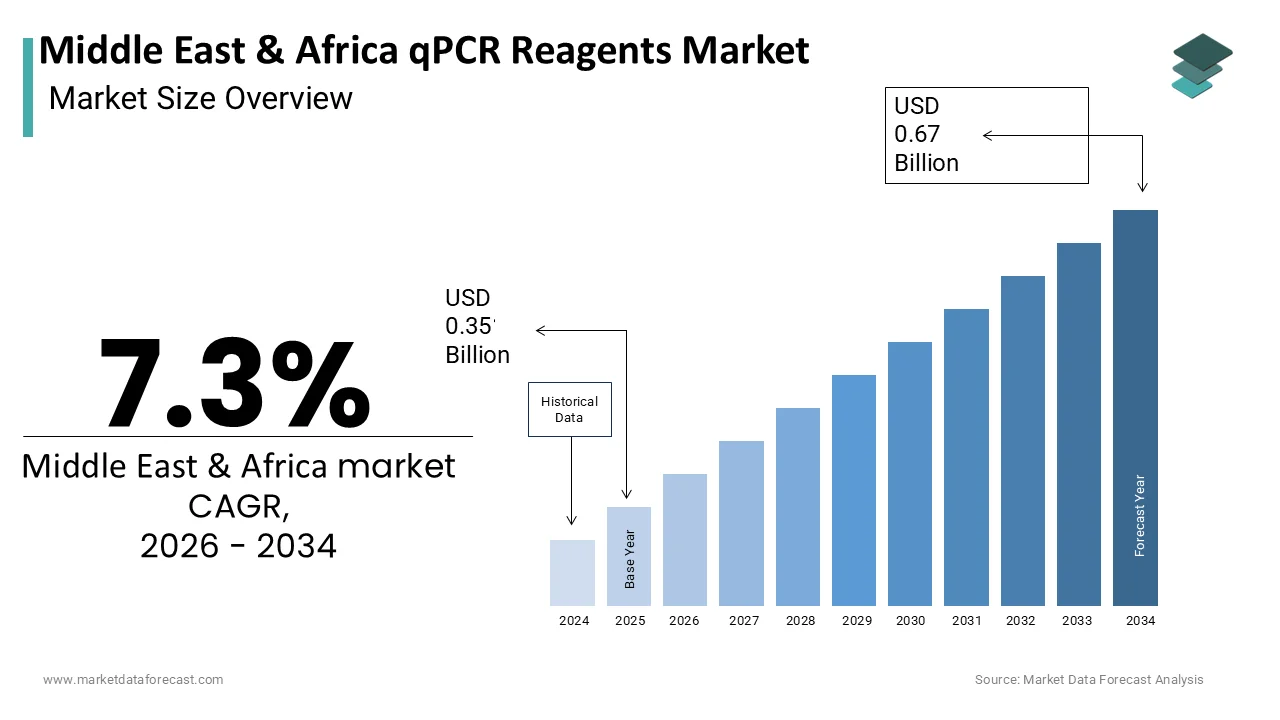
- The Middle East and Africa qPCR reagents market was valued at USD 0.35 billion in 2025.
- Expected to reach USD 0.67 billion by 2034, growing at a CAGR of 7.3% from 2026 to 2034.
- Saudi Arabia held the largest country share at 22.2% in 2025.
- The United Arab Emirates is the fastest-growing country market from 2026 to 2034.
Key Market Segments
- By Detection Method: Dye-Based qPCR Reagents (dominant in 2025); Probes and Primer-Based qPCR Reagents (fastest-growing, CAGR of 9.2% from 2026 to 2034).
- By Packaging Type: qPCR Mastermixes led with 39.5% share in 2025; qPCR Core Kits is fastest-growing at a CAGR of 8.5% from 2026 to 2034.
- By End User: Hospitals and Diagnostic Centers held 45.3% share in 2025; Pharmaceutical and Biotechnology Companies is fastest-growing at a CAGR of 10.1% from 2025 to 2034.
- By Application: Diagnostics segment dominated in 2025; Research segment is fastest-growing at a CAGR of 8.8% from 2026 to 2034.
- By Geography: Saudi Arabia leads; UAE is fastest-growing.
Key Drivers
- High burden of infectious diseases including tuberculosis, malaria, and HIV requiring precise molecular diagnostics across MEA.
- Expansion of genomic research and academic infrastructure, with government funding in South Africa, Kenya, and Saudi Arabia.
- Integration of qPCR reagents with point-of-care and portable diagnostic devices enabling access in remote and underserved areas.
- Localization of manufacturing under Saudi Vision 2030 and African Union Agenda 2063 policies.
Key Players
Thermo Fisher Scientific Inc., Bio-Rad Laboratories Inc., QIAGEN N.V., F. Hoffmann-La Roche Ltd., Agilent Technologies Inc., Takara Bio Inc., Promega Corporation, Sigma-Aldrich Corporation.
Middle East & Africa qPCR Reagents Market Size
The Middle East & Africa qPCR Reagents Market is projected to grow from USD 0.35 billion in 2025 to USD 0.38 billion in 2026 and reach USD 0.67 billion by 2034, registering a CAGR of 7.3% during the forecast period from 2026 to 2034.
The qPCR reagents are the molecular diagnostics focused on the chemical components required for quantitative polymerase chain reaction assays. These reagents, include DNA polymerases, primers, probes, master mixes nd fluorescent dyes that enable the amplification and detection of specific nucleic acid sequences with high sensitivity and specificity. According to the World Health Organization, the Middle East and Africa region bears a disproportionate burden of infectious diseases,, with tuberculosis, malaria,, and HIV accounting for sign,,ificant morbidit,y, and mortality rates necessitating robust diagnostic infrastructure. The establishment of regional reference laboratories has accelerated the adoption of molecular testing methods to combat emerging pathogens and antimicrobial resistance.
MARKET DRIVERS
Escalating Burden Of Infectious Diseases And Epidemic Preparedness
The persistent and escalating burden of infectious diseases, coupled with the urgent need for epidemicpreparedness, is a primary driver for the growth of Middle East and Africa qPCR reagents market. The endemic challenges from pathogens, such as Mycobacterium, tuberculosis, Plasmodium species, and Human Immunodeficiency Virus, which require precise molecular detection for effectiveement and containment. The qPCR technology offers superior sensitivity compared to traditional microscopy enabling the detection of low level parasitemia and d,, rug resistant strains. Follow-level recurrence of outbreaks such as Ebola, Lassa fever, and Cholera has underscored the importance of rapid and accurate pathogen identification. Data from the Africa Centres for Disease Control and Prevention reveal that the capacity for molecular surveillance has expanded significantly, with over 40 national public health institutes now equipped with real-time PCR capabilities. Government initiatives aimed at strengthening health security under the International Health Regulations have led to increased procurement of diagnostic kits and reagents. The investments in diagnostic systems for HIV and tuberculosis have surged ensuring a steady supply chain for essential molecular consumables.
Expansion Of Genomic Research And Academic Infrastructure
The rapid expansion of genomic research initiatives and the modernization of academic infrastructure are significantly driving the adoption of qPCR reagents across universities and research institutions in the Middle East and Africa. Governments and private entities are increasingly recognizing the strategic importance of biotechnology and genomics in addressing regional health and agricultural challenges. In countries like South Africa Kenya and Saudi Arabia, substantial funding has been allocated to biomedical research projects focusing on genetic predisposition to diseases and crop improvement. Furthermore, collaborations with international organizations such as the Wellcome Trust and the Bill and Melinda Gates Foundation have facilitated technology transfer and training programs for local scientists. The number of postgraduate students enrolled in life sciences programs has grown substantially creating a consistent baseline demand for educational and research-grade qPCR reagents.
MARKET RESTRAINTS
High Research-Grade Reagents And Currency Volatility
The prohibitive cost of imported qPCR reagents and significant currency volatility in low and middle-income countries are restricting the growth of the middle-income and African qPCR reagents market. Most high-quality enzyme probes and master mixes are manufactured by multinational corporations in North America, Europe, and Asia, requiring importation, which incurs substantial tariffs,,bstant,,ial tariff,,s taxes and logistics expenses. For publicly funded laboratories and academic institutions operating on fixed budgets this financial strain limits the volume of experiments and diagnostic tests that can be performed. Furthermore, the lack of local manufacturing capabilities for specialized molecular biology enzymes forces reliance on external suppliers who may adjust prices based on global market dynamics. The frequent price fluctuations make long term planning difficult leading to intermittent long-term substitution with lower quality alternatives. This economic instability restricts the widespread adoption of standardized qPCR protocols and hinders the scalability of molecular diagnostics in resource constrained settings.
Inadequate Cold Chain Iresource-constrainedresource-constrainedpply Chain Disruptions
The inadequate cold chain infrastructure and frequent supply chain disruptions is also declining the growth of the Middle East and Afareeca qPCR reagents market. Many components, such as DNA, polymerases, and fluorescent probes are temperature sensitive requiring strict storage conditions between 20 degrees Celsius and- 80 degrees Celsius to maintain stability and activity. The logistical challenges in remote areas of Africa often result in temperature excursions during transit compromising the integrity of these delicate substances. Data from the World Health Organization indicates that nearly 30% of medical products in some Sub-Saharan countries are degraded due to poor storage and transportation conditions leading to wasted resources and inaccurate test resu,lts. Furthermore, geopolitical tensions port congestion and customs delays frequently disrupt the supply chain causing prolonged stockouts of essential materials. Three laboratory managers in East Africreport that report that lead times for reagent deliveries can extend beyond eight weeks forcing laboratories to halt operations or ration supplies. The lack of reliable backup power sources in many facilities also threatens the integrity of stored reagents during outages.
MARKET OPPORTUNITIES
Localization Of Manufacturing And Assembly Facilities
The localization of manufacturing and assembly facilities by reducing dependency on imports and enhancing supply chain resilience is likely to set up the growth of the Middle East and Africa qPCR-driven market. Several governments in the region are implementing policies to promote local production of medical devices and diagnostics under industrialization agendas, such as Saudi Vision 2030 and the African Union’s Agenda 2063. The incentives for local manufacturing include tax exemptions and streamlined regulatory approvals, which encourage multinational companies to establish regional production hubs. In South Africa and Egypt, the existing pharmaceutical and biotechnology firms are expanding their capabilities to include the formulation and packaging of molecular diagnostic kits. Furthermore, partnerships between international reagent manufacturers and local distributors facilitate technology transfer and capacity building, enabling the production of standardized master mixes and primers tailored to regional pathogen profiles.
Integration With Point Of Care And Portable Diagnostic Devices
The integration of qPCR reagents with point-of-care and portable diagnostic devices for expanding molecular testing access to remote and underserved areas is expected toboost thee growth of the Middle East qPCR reagents market. Traditional qPCR requires sophisticated laboratory infrastructure, but advancements in microfluidics and lyophilized reagent technologies have enabled the development of compact battery-operated instruments suitable for field use. Several cartridge-based molecular tests utilizing stabilized qPCR reagents have received prequalification for use in decentralized settings for diseases like tuberculosis and HIV. These innovations eliminate the need for complex sample preparation and cold chain storage as lyophilized reagents remain stable at ambient temperatures for extended periods. Data from pilot programs in rural Kenya and Uganda demonstrate that point-of-care molecular testing can significantly reduce diagnosis times to hours, improving patient outcomes and treatment initiation rates. Furthermore, the growing mobile health sector supports the deployment of these devices in community health centers and mobile clinics. As per the Global Fund, strategic investments in decentralized diagnostics are prioritizing technologies that offer laboratory quality results in resource-limited environments, to tap into new market segments beyond central reference laboratories, driving demand for specialized, robust, and user-friendly qPCR reagent formulations, designed for portable platforms.
MARKET CHALLENGES
Regulatory Heterogeneity And Complex Registration Processes
Navigating the fragmented and heterogeneous regulatory landscape, across the Middle East and Africa poses a significant challenge for manufacturers and distributors of qPCR reagents. Each country maintains distinct regulatory authorities with varying requirements for product registration, quality control, and clinical validation, leading to prolonged approval timelines and increased compliance costs. According to the African Medicines, while efforts toward harmonization are underway the current system requires separate submissions for each jurisdiction, which can take anywhere from 12 to 24 months. In the Gulf Cooperation Council countries, regulations are stringent and aligned with international standards, but differences in documentation and labeling requirements persist among member states. Furthermore, the lack of clear guidelines for in vitro diagnostic reagents in some Sub-Saharan countries creates uncertainty and inconsistent enforcement. The small and medium-sized enterprises often lack the resources to navigate these complex bureaucratic processes, limiting competition and innovation. This regulatory fragmentation hinders the rapid deployment of new and improved reagent formulations and restricts patient access to advanced molecular diagnostics particularly during public health emergencies when speed is critical.
Shortage Of Skilled Technical Personnel And Training Gaps
A critical shortage of skilled technical personnel and significant gaps in training are also expected to act as ama major challenge to the growth of the gMiddleEast a Africchallengesagents market. The successful execution of quantitative PCR assays requires specialized knowledge in molecular biology techniques, data analysis, and quality assurance, which is often lacking in peripheral laboratories. There is a severe deficit of trained biomedical scientists with expertise in molecular diagnostics, cs with some countries having fewer than five qualified specialists per million population. This skills gap leads to improper handling of reagents,s incorrect protocol execution, and misinterpretation of results, compromising diagnostic accuracy and patient care. Furthermore, continuous professional development programs are limited due to budget constraints and a lack of institutional support. Many facilities struggle to maintain competency in advanced molecular techniques, resulting in underutilization of expensive equipment and reagents.
SEGMENTAL ANALYSIS
By Detection Method Insights
The dye based qPCR reagents segment was accounted in holdye-based dye-based of the Middle East and Africa market share in 2025 due to their cost effectiveness ease of use and versatility in genecost-effectiveness,n analysis. These reagents utilize intercalating dyes, such as SYBR Green which bind to double-stranded DNA, allowing for the detection of double-strandedroduct w,,ithout the need for specific probes. The major academic institutions in South Africa and Egypt dye based kits are significantly more affordable than dye-based alternatives, making them the preferred choice for high-volume screening and educational purposes. The simplicity of assay design eliminates the need for expensive custom probe synthesis, which is a significant barrier in resource-constrained settings. Furthermore, the flexibility of dye-based systems allows researchers to optimize primers for multiple targets using the same master mix, reducing inventory complexity. The demand for bulk dye based master mixes remains robust driven by unidye-based research grants and government-funded surveillance programs, that priorigovernment-fundednd affordability over multiplexing capabilities.
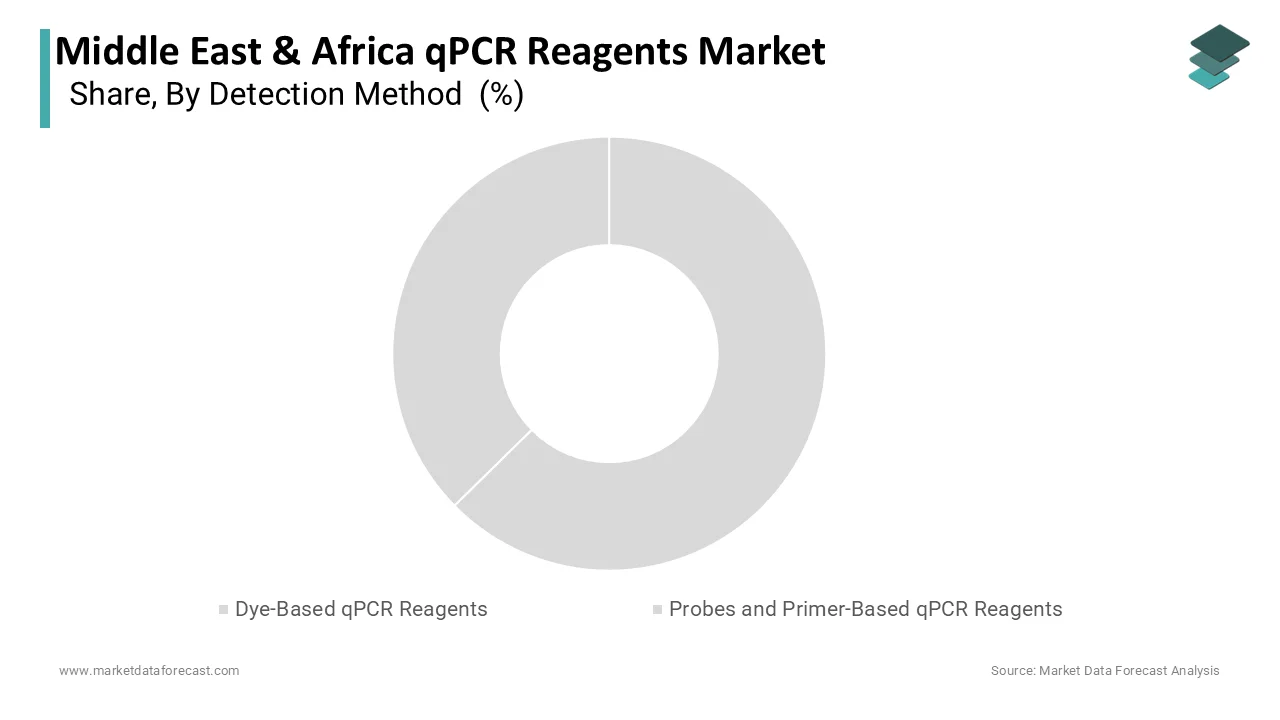
The probes and primer based qPCR reagents segment is expected to witness a CAGR of 9.2% during the expected period due to increasing demand for high specificity multiplexing capabilities and absolute quantification required for complex diagnostic applications, such as viral load monitoring and genetic variant detection. The management of chronic infections like HIV and Hepatitis C requires precise quantitative measurements that are best achieved using TaqMan or hydrolysis probe technologies. The ability to detect multiple targets in a single reaction reduces sample consumption and turnaround time which is critical in high burden settings. The rise of personalized medicine in the Gulf region necessitates the use of highly specific probes for detecting single-nucleotide polymorphisms associated with drug response. The introduction of pre-validated probe sets for regional pathogens has simplified assay development, encouraging wider adoption.
By Packaging Type Insights
The qPCR mastermixes segment was the largest by capturing 39.5% of the Middle East and Africa pQCR reagents market share in 2025 due to their convenience consistency and reduced risk of contamination. Mast, ermixes co,ntain all essential reaction components including DNA polymerase dNTPs magnesium chlorid,e an,d buffer in a single ready,, to use format requiring only the addition of template and primers. According to survey data from laboratory managers in Kenya and Nigeria, the adoption of mastermixes has increased significantly as they minimize pipetting errors and improve reproducibility across different operators. This standardization is crucial for multicenter studies and routine diagnostic testing, ng where result comparability is essential. Data from global reagent suppliers indicates that mastermixes account for the majority of recurring purchases in both academic and clinical settings due to their stability and ease of storage. Furthermore, the availability of specialized mastermixes for difficult templates, such as GC-rich regions and low-copy-number target sequences, addresses C-rich technical challenges faced by researchers in this region. The shift towards automated liquid handling systems in larger laboratories further drives the demand for standardized mastermix formats that are compatible with robotic workflows.
The qPCR core kits segment is likely to witness a fastest CAGR of 8.5% from 2026 to 2034, with the need for comprehensive solutions that include optimized primers, probes, and controls. These kits provide a complete workflow solution, reducing the time and expertise required for assay development and validation. The inclusion of validated positive and negative controls within the kit enhances quality assurance, which is increasingly mandated by regulatory bodies for diagnostic approvals. Furthermore, the customization options available in core kits allow researchers to target specific regional pathogens or genetic markers without starting from scratch. The availability of kits tailored for emerging infectious diseases, such as Lassa fever and Rift Valley fever,r has expanded access to reliable diagnostic tools in endemic areas.
By End User Insights
The hospitals and diagnostic centers segment accounted in holding 45.3% of the Middle East and qPCR reagents market share in 2025, with the role of molecular diagnostics in clinical decision making for infectious diseases, oncology, and genetic disorders. According to the Ministry of Health in Saudi Arabia, the expansion of specialized diagnostic centers has led to a substantial increase in the volume of qPCR tests performed annually for conditions such as tuberculosis and hepatitis. The integration of molecular testing into routine clinical pathways ensures consistent demand for high-quality reagents. Furthermore, national health insurance schemes in countries like Qatar and Kuwait cover molecular diagnostic tests, encouraging wider utilization. The need for timely results in emergency and care settings drives hospitals to maintain robust inventory levels of qPCR reagents.
The pharmaceutical and biotechnology companies are likely to exhibit the fastest CAGR of 10.1% from 2025 to 2034, owing to the expanding pharmaceutical industry in the region, particularly in countries like Egypt, Israel, and South Africa. Drug discovery and development activities are intensifying. The local manufacturing and research investments have increased significantly requiring advanced analytical tools for quality control and efficacy studies. qPCR is essential for gene expression analysis, biomarker validation, and safety assessments during preclinical and clinical phases. Furthermore, the establishment of clinical trial networks in the region has increased the demand for standardized molecular assays to monitor patient responses. The multinational pharmaceutical companies are expanding their R&D facilities in the Middle East to leverage local talent and patient populations.
By Application Insights
The diagnostics segment was accounted in occupying a dominant share of the Mi East and Aforeagents market in 2025, with the high prevalence of infectious disease,s antheee need for accurate and rapid identification of pathogens. According to the World Health Organization, the region bears a significant burden of tuberculosis, malaria, and HIV necessitating widespread molecular testing, diagnosis, and treatment monitoring. qPCR offers superior sensitivity and specificity compared to traditional methods, making it the gold standard for many diagnostic protocols. Data from national public health institutes in countries like Kenya and Ethiopia show that millions of qPCR tests are conducted annually for disease surveillance and case management. Furthermore, the COVID 19 pandemic accelerated the adoption of moleculaCOVID-19COVID-19stics infrastructure, leaving a legacy of enhanced capacity for other infectious diseases.
The research segment is anticipated to register the fastest CAGR of 8.8% during the forecast period, owing to the increased funding for scientific research and the expansion of academic institutions focused on genomics and molecular biology. Several countries have prioritized research capacity building, leading to the establishment of new laboratories and research centers. Universities in South Africa Nigeria and Saudi Arabia are actively engaged in pr,ojects re,,lated to agricultural biotechnology,cancerr genetic,s and infectious disease mechanisms. Furthermore, international collaborations with global research institutions have facilitated technology transfer and training, enhancing local expertise.
COUNTRY LEVEL ANALYSIS
Saudi Arabia qPCR Reagents Market Analysis
Saudi Arabia was the largest contributor in the Middle East and Africa qPCR reagents market by accounting for 22.2% of the share in 2025 owing to the robust healthcare infrastructure and significant government investment in biomedical research under Vision 2030. The Kingdom has established numerous specialized reference laboratories equipped with advanced molecular diagnostics capabilities. The high prevalence of genetic disorders and infectious diseases drives consistent demand for qPCR reagents. The presence of major pharmaceutical companies and research institutions fosters a dynamic environment for molecular biology applications. As per reports, the expansion of genomic medicine initiatives has increased the utilization of qPCR for personalized medicine and pharmacogenomics.
United Arab Emirates qPCR Reagents Market Analysis
The United Arab Emirates qPCR market growth is expected to witness a fastest CAGR from 2026 to 2034, owing to the advanced healthcare system and medical tourism industry. The high concentration of private diagnostic centers and world-class hospitals offering comprehensive molecular testing services. The emirate has invested heavily in digital health and precision medicine promoting the adoption of advanced diagnostic technologies. Data from local laboratories shows a high volume of qPCR tests for infectious diseases and oncology markers catering to a diverse population. Furthermore, the UAE serves as a regional hub for medical conferences and training facilitating knowledge exchange and technology adoption. The presence of international reagent manufacturers’ regional offices ensures easy access to innovative products.
Israel qPCR Reagents Market Analysis
Israel's qPCR reagents market growth is driven by the thriving biotechnology sector and strong research ecosystem. The intense innovation in molecular diagnostics and therapeutic development is also driving the growth of the market. The country is a global leader in life sciences with numerous startups developing novel qPCR applications and reagents. Data from academic and industrial laboratories indicate high utilization of advanced molecular techniques for drug discovery and agricultural biotechnology. Furthermore, the universal healthcare system ensures broad access to diagnostic services, driving consistent reagent consumption.
South Africa qPCR Reagents Market Analysis
South Africa's qPCR reagents market growth is likely to be driven by the well-developed private healthcare sector and established research institutions. The dual system, where advanced private facilities coexist with resource-constrained public hospitals. The burden of HIV, tuberculosis, and other infectious diseases necessitates widespread molecular testing is accelerating the growth of the market. Data from which major pathology groups indicate high volumes of qPCR tests performed annually, serving both local and neighboring countries. Furthermore, the presence of leading universities and research councils fosters expertise in molecular biology.
Egypt qPCR Reagents Market Analysis
Egypt qPCR reagents market growth is likely to grow with Egypt's large population and growing pharmaceutical industry. The efforts to expand health insurance coverage and improve laboratory infrastructure. The aim to provide comprehensive diagnostic services, including molecular testing is ascribed to boost the growth of the market in this region. Data from university hospitals shows high prevalence of infectious diseases, driving demand for qPCR screening. Furthermore, local manufacturing of some diagnostic reagents helps reduce costs. The number of private diagnostic centers in Cairo and Alexandria has increased offering competitive pricing.
COMPETITIVE LANDSCAPE
The competition in the Middle East and Africa qPCR Reagents Market is characterized by the dominance of established global life science corporations alongside emerging regional distributors who adapt international technologies to local needs. Major multinational companies leverage their extensive product portfolios, brand reputation, and technical expertise to secure contracts in well-funded healthcare systems within the Gulf Cooperation Council countries. In contrast, smaller players and local agents focus on affordability and accessibility to price-sensitive markets in Sub-Saharan Africa, where budget constraints are significant. The competitive landscape is further shaped by the need for regulatory compliance across fragmented jurisdictions, prompting companies to invest in registration and certification processes. Differentiation increasingly relies on integrated solutions combining reagents, instruments, software, and training rather than standalone products. As governments prioritize health security and diagnostic capacity building, vendors must demonstrate value through improved reliability and supply chain stability.
KEY MARKET PLAYERS
Some of the companies that are playing a dominating role in the Middle East & Africa qPCR Reagents Market include
- Thermo Fisher Scientific Inc.
- Bio-Rad Laboratories, Inc.
- QIAGEN N.V.
- F. Hoffmann-La Roche Ltd.
- Agilent Technologies, Inc.
- Takara Bio Inc.
- Affymetrix, Inc.
- Promega Corporation
- Sigma-Aldrich Corporation
- Quanta Biosciences, Inc.
TOP LEADING PLAYERS IN THE MARKET
- Thermo Fisher Scientific maintains a dominant presence in the Middle East and Africa qPCR reagents market through its comprehensive portfolio of Applied Biosystems products and high quality enzymes. The company provides essential high-quality primers and probes that support both clinical diagnostics and academic research across the region. Recent initiatives include the expansion of technical support centers in Saudi Arabia and South Africa to ensure rapid response to customer needs and minimize equipment downtime. Thermo Fisher has also launched specialized training programs for laboratory personnel focusing on assay optimization and data interpretation.
- Bio Rad Laboratories is a key contributor to the Middle East and Africa qPCR reagents market known for its robust CFX real-time CR systems and reliable SSsoAdvanceduniversal timesupermix T T.Thee companyactively engagess with regional distributors to ensure a consistent supply of reagents despite logistical challenges. Recently, Bio Rad introduced lyophilized reagent formats designed to withstand higher temperatures addressing cold chain limitations in remote areas. They have also strengthened their position by collaborating with public health agencies to support infectious disease surveillance programs. These strategic moves enhance product accessibility and reliability enabling laboratories in resource-constrained settings to perform accurate molecular testing. Bio Rad continues to invest in educational workshops that build local capacity and promote best practices in quantitative PCR applications.
- Qiagen plays a pivotal role in the Middle East and Africa qPCR reagents market by offering integrated solutions for sample preparation and detection including the QIAamp DNA kits and QuantiTect probe PCR kits. The company focuses on providing high purity nucleic acids which are critical for sensitive qPCR assays in complex biological samples. Recent actions include the establishment of regional warehousing facilities in the United Arab Emirates to improve delivery times and reduce supply chain disruptions. Qiagen has also partnered with local manufacturers to explore opportunities for kit assembly and packaging within the region. These initiatives aim to lower costs and increase availability of standardized reagents.
TOP STRATEGIES USED BY KEY PLAYERS PARTICIPANTS
Key players in the Middle East And Africa qPCR Reagents Market primarily focus on strategic partnerships and localized distribution networks to navigate regulatory complexities and infrastructure limitations. Companies invest heavily in technical training and capacity building programs to address the shortage of skilled laboratory personnel ensuring proper utilization of their products. Manufacturers also prioritize supply chain resilience by establishing regional warehousing hubs and exploring local assembly options to mitigate import delays and currency fluctuations. Furthermore, firms align their product portfolios with public health priorities such as infectious disease surveillance to secure government contracts. Developing robust and temperature stable reagent formulations tailored for challenging environmental conditions enables companies to expand their reach into remote areas while maintaining product integrity and customer trust.
MARKET SEGMENTATION
This research report on the Middle East and Africa qPCR reagents market is segmented and sub-segmented into the following categories.
By Detection Method
- Dye-Based qPCR Reagents
- Probes and Primer-Based qPCR Reagents
By Packaging Type
- qPCR Core Kits
- qPCR Mastermixes
By End User
- Hospitals & Diagnostic Centre
- Research Laboratories & Academic Institutes
- Pharmaceutical and Biotechnology Companies
- Clinical Research Organizations
- Forensic Laboratories
By Application
- Diagnostic
- Research
- Forensic
By Country
- KSA
- UAE
- Israel
- rest of GCC countries
- South Africa
- Ethiopia
- Kenya
- Egypt
- Sudan
- Rest of MEA