- Product Description Description
- Table of Contents TOC
- List of Table & Figure LOT
- Get Free Sample PDF Sample PDF
Market Size, 2025
$20.85 MnMarket Estimate, 2026
$34.85 MnMarket Forecast, 2034
$2,118.26 MnCAGR, 2026–2034
67.1%Executive Summary: MEA Smart Inhalers Market
- Market Scope: In-depth examination of the Middle East and Africa (MEA) smart inhalers market categorized by product types, medical disorders, end-users, and country markets.
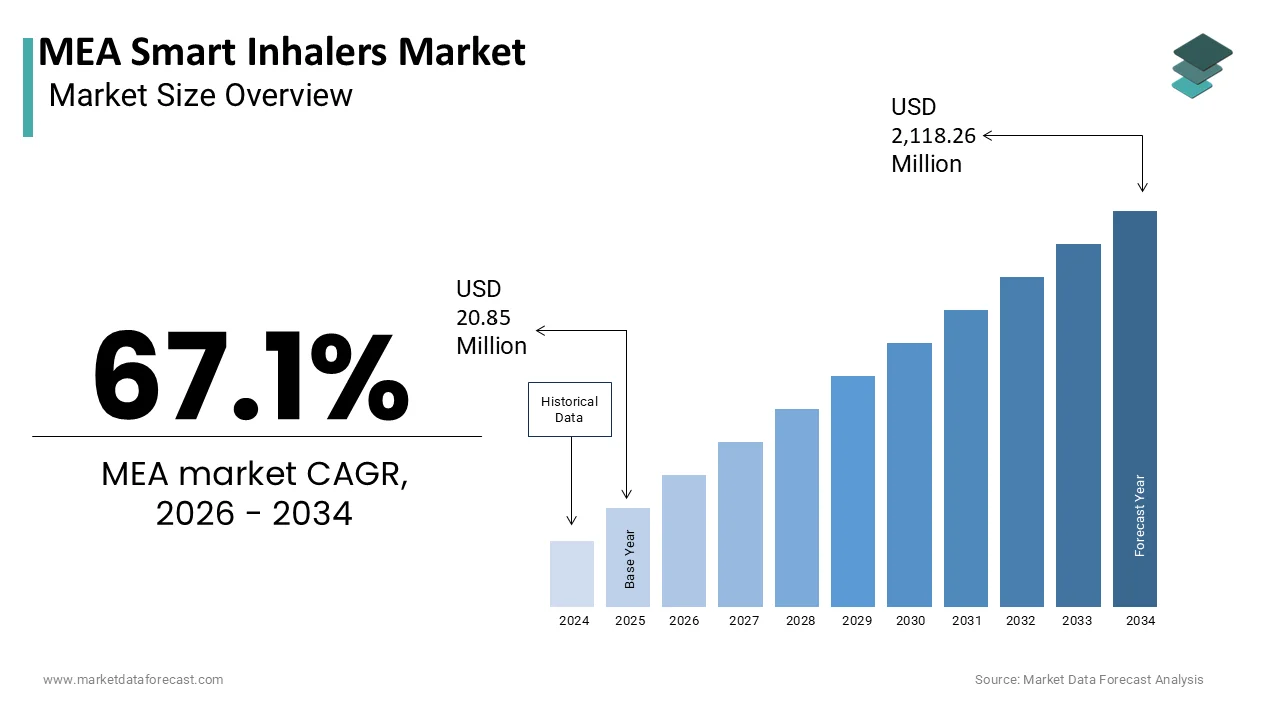
- Market Valuation: Valued at USD 20.85 million in 2025, estimated at USD 34.85 million in 2026, and projected to reach USD 2,118.26 million by 2034, scaling at an extraordinary compound annual growth rate (CAGR) of 67.1% from 2026 to 2034.
- Primary Growth Drivers: High prevalence of chronic respiratory disorders (affecting ~60 million people in the Middle East), growing geriatric population, rising environmental pollution and urbanization, and integration of advanced technologies like AI and personalized digital health monitoring.
Key Market Segment Metrics (2026–2034)
| Category | Leading Segment Focus | Detailed Taxonomy & Sub-Segments |
|---|---|---|
| By Product Type | Smart Inhalers & Nebulizers | Nebulizers & Inhalers |
| By Disorder | Asthma & COPD Management | Chronic Obstructive Pulmonary Disease (COPD), Asthma, & Others |
| By End-User | Patients & Clinical Research | Patients, R&D, & Others |
| By Country Focus | UAE & Saudi Arabia (Substantial share) / Egypt (Healthy growth) | KSA, UAE, Israel, Rest of GCC countries, South Africa, Ethiopia, Kenya, Egypt, Sudan, & Rest of MEA |
Regional Insights & Market Dynamics
UAE & Saudi Arabia: Hold substantial market shares in the MEA region driven by heavy investments from local market players, advanced healthcare infrastructure, and high asthma incidence rates (~14% in the UAE).
Egypt: Poised for healthy CAGR growth underpinned by a high prevalence of asthma (~7% of the population) and rising mortality rates associated with unmanaged respiratory disorders.
Market Restraints & Challenges: High device acquisition costs, limited consumer awareness, restricted product availability in rural areas, and lengthy regulatory approval timelines for novel medical devices.
Key Market Leaders Profiled: Vectura Group plc, Teva Pharmaceutical Industries Ltd., GlaxoSmithKline plc, Boehringer Ingelheim GmbH, AstraZeneca plc, Adherium Limited, Cohero Health, LLC, Propeller Health, and OPKO Health, Inc.
 Download Free Sample Report
MEA Smart Inhalers Market Size
The MEA Smart Inhalers Market is projected to grow from USD 20.85 million in 2025 to USD 34.85 million in 2026 and reach USD 2,118.26 million by 2034, registering a CAGR of 67.1% from 2026 to 2034.
Smart inhalers are enhanced medical devices that use digital sensors and Bluetooth technology to connect standard inhalers to a mobile phone or tablet. This market is gaining traction as healthcare providers in the Middle East and Africa seek solutions to address the high burden of chronic obstructive pulmonary disease and asthma. According to the World Health Organisation, chronic respiratory diseases (CRDs) affect over half a billion people worldwide, rather than 235 million, and they constitute a leading cause of disability and premature death. As per the Global Asthma Network, data from childhood asthma surveys (such as the ISAAC Phase III project transitioned under the network) indicate that asthma prevalence exceeds 10% among children and adolescents in several Middle Eastern and Eastern Mediterranean countries, including Qatar, Saudi Arabia, Iraq, and Oman. These epidemiological realities drive the adoption of smart inhalers equipped with sensors that track usage patterns and provide real-time feedback to patients and clinicians. Governments in nations like Saudi Arabia and the United Arab Emirates are incorporating digital health initiatives into their national transformation programs to improve healthcare outcomes. The clinical utility of these devices lies in their ability to reduce hospital admissions through better medication compliance. As regulatory frameworks evolve to accommodate connected medical devices, the market is poised for structured growth. The integration of these technologies with telemedicine platforms further enhances their value proposition in remote and underserved areas across the region.
MARKET DRIVERS
Rising prevalence of respiratory diseases fuels demand for connected solutions.
The escalating burden of respiratory conditions across the region amplifies the growth of the MEA smart inhalers market. In response to this crisis, healthcare systems are actively working to improve patient outcomes. According to the Global Burden of Disease (GBD) 2021 study, chronic obstructive pulmonary disease (COPD) accounted for an estimated 3.7 million deaths worldwide in 2021 rather than over 4 million, with substantial geographical variations driven heavily by particulate matter pollution. This surge places immense pressure on healthcare infrastructure, necessitating tools that can monitor patient behaviour and prevent exacerbations. As per research, the rise in respiratory conditions within Saudi Arabia is highly significant, with over 1.5 million cases of asthma reported annually across the country's healthcare system. Such high volume demands innovative interventions that smart inhalers provide by sending reminders and tracking dosage accuracy. According to studies, elevated ambient air pollution levels in rapidly growing metropolitan areas are consistently linked to heightened emergency department utilisation and hospital admissions for acute respiratory distress. These facts underscore the critical role of proactive management in reducing acute episodes and healthcare costs. Smart inhalers enable continuous monitoring without requiring frequent clinic visits, making them ideal for managing chronic conditions in large populations. The demographic shift toward younger populations in Africa who are increasingly exposed to indoor allergens further exacerbates asthma rates. Healthcare payers are recognising the long term cost savings associated with improved adherence through digital tools.
Government digital health initiatives support technology adoption.
Strategic government investments in digital health infrastructure and smart city projects significantly bolster the adoption of connected medical devices, which propels the expansion of the Middle East and Africa smart inhalers market. The Saudi Vision 2030 initiative allocates billions of dollars to healthcare digitisation with a specific focus on remote patient monitoring and preventive care technologies. This funding facilitates the integration of Internet of Things devices in public hospitals and primary care centres, enhancing the capacity for data-driven decision-making. The United Arab Emirates Ministry of Health and Prevention launched a national telehealth strategy that encourages the use of connected devices for chronic disease management. According to the Ministry of Health and Prevention (MoHAP), the United Arab Emirates provides clear regulatory frameworks to actively encourage digital health platforms, while broader healthcare market dynamics target expanding health insurance coverage to 90% of the population. South Africa’s National Digital Health Strategy includes provisions for the deployment of connected devices in rural clinics to bridge the gap in specialist access. These policy frameworks create a favourable environment for manufacturers to introduce innovative products while ensuring interoperability with existing electronic health records. The establishment of regulatory sandboxes in countries like Bahrain allows for faster testing and validation of new digital health solutions. Public-private partnerships are increasingly common as governments seek to leverage private sector expertise in deploying scalable digital health infrastructure. Awareness campaigns funded by state authorities also play a crucial role in educating patients about the benefits of connected care.
MARKET RESTRAINTS
High cost of advanced devices limits accessibility in low-income regions.
The prohibitive cost of these inhalers significantly restricts their accessibility, particularly in low-income countries within the Middle East and Africa smart inhalers market. In these nations, healthcare budgets are constrained. According to the World Bank, out-of-pocket health expenditure in the Sub-Saharan Africa regional aggregate consistently accounts for approximately 35% to 38% of total health expenditure, with multiple individual nations across the region exceeding the 40% threshold. Smart inhalers can cost more than conventional inhalers, which creates a significant barrier for the majority of the population who rely on public healthcare systems. In Nigeria, the average monthly income is insufficient to cover the recurring costs of both medication and the connected device component. This price disparity prevents widespread adoption despite the clear clinical benefits of improved adherence and monitoring. The lack of comprehensive reimbursement policies in most African nations further exacerbates this issue, leaving patients to bear the full financial burden. Healthcare providers in rural areas often lack the budget to procure expensive digital devices for their patient cohorts. The maintenance and software subscription costs associated with some smart inhaler platforms add another layer of financial strain on already resource-constrained facilities. Pharmaceutical companies face challenges in pricing their connected products competitively while maintaining profitability in price-sensitive markets. This economic reality slows down the penetration of smart inhalers in regions with the highest unmet need for respiratory care. Efforts to develop lower-cost sensor attachments are ongoing, but market availability remains limited.
Limited digital infrastructure and connectivity hinder functionality.
The inadequate digital infrastructure and inconsistent internet connectivity in many parts of the region severely hinder the effective functioning of smart inhalers in the Middle East and Africa market. According to the International Telecommunication Union (ITU), the average internet penetration across the entire African continent remains at 36%, meaning that regional infrastructure constraints leave overall device connectivity below 40%. Smart inhalers rely on stable Bluetooth and cellular connections to sync usage data with mobile applications and healthcare provider portals. In rural areas of Ethiopia and Sudan, frequent power outages and network coverage gaps disrupt the continuity of data transmission. This technical limitation reduces the reliability of the monitoring system and diminishes the trust of both patients and clinicians in the technology. The lack of standardised digital health platforms across different healthcare providers creates interoperability issues that prevent seamless data sharing. Many elderly patients in the region also lack the digital literacy required to operate smartphone applications paired with these devices. Healthcare facilities often lack the IT support necessary to troubleshoot connectivity issues or integrate device data into electronic medical records. The fragmentation of telecommunications infrastructure across borders complicates the deployment of regional digital health solutions. These infrastructural deficits create a significant barrier to the scalable implementation of smart inhaler technologies. Robust connectivity is essential to maintain the system's core value proposition. In its absence, both real-time monitoring and immediate feedback mechanisms are severely compromised.
MARKET OPPORTUNITIES
Integration with telemedicine platforms expands reach and utility.
The rapid expansion of telemedicine services in the region offers a substantial opportunity for the Middle East and Africa smart inhalers market. This paves the way to integrate smart inhalers into broader remote care ecosystems. According to data published by the Asian Development Bank (ADB), developing member countries across Asia and the Pacific experienced an unprecedented surge in telehealth and digital platform delivery during the pandemic, transforming long-term regional patient care models. Smart inhalers are ideally suited for remote monitoring as they provide objective data on medication adherence that can be reviewed during virtual consultations. In the United Arab Emirates, platforms like Malaffi enable seamless sharing of diagnostic and device data between specialists and primary care physicians, facilitating coordinated care. This digital infrastructure supports the management of chronic respiratory conditions without the need for frequent physical visits. The convenience factor appeals to patients in remote areas of Oman and Qatar where travel to specialised clinics can be burdensome. Insurance providers are increasingly covering telemedicine visits that include remote monitoring components, recognising their potential to reduce hospital readmissions. The proliferation of smartphone-enabled health applications in Egypt and Kenya empowers patients to track their health metrics and share data with doctors conveniently. This trend aligns with the broader movement toward preventive healthcare and patient-centric care models. Diagnostic and pharmaceutical companies are partnering with telehealth providers to offer bundled services that include device provisioning and virtual coaching. This ecosystem approach enhances patient engagement and improves long term disease management outcomes.
Growing focus on personalised medicine drives innovation.
The increasing emphasis on personalised medicine and precision healthcare in the region creates fertile ground for the adoption of these inhalers in the Middle East and Africa smart inhalers market. These advanced devices offer tailored therapeutic insights to patients. According to sources, individual patient therapeutic responses to respiratory therapies show considerable variation governed by complex interactions between genetic factors and environmental exposures. Smart inhalers generate detailed usage profiles that allow clinicians to adjust dosages and timing based on actual patient behaviour rather than self-reported data. In Israel, which is often grouped with regional markets for technological analysis, researchers have developed algorithms that correlate inhaler usage patterns with environmental triggers to predict exacerbations. This level of granularity supports the development of personalised action plans that improve clinical outcomes. The growing availability of genomic data in countries like Saudi Arabia enables the combination of genetic profiling with behavioural data from smart devices. Startups in the region are developing proprietary analytics platforms that interpret inhaler data to provide actionable insights for both patients and providers. Venture capital investment in health tech in the Gulf reached significant levels in recent years, indicating strong investor confidence in digital health innovations. These advancements enable the creation of dynamic treatment protocols that adapt to changing patient needs. The synergy between personalised medicine and smart device data promises to transform respiratory care delivery models in the region.
MARKET CHALLENGES
Data privacy and security concerns impede patient trust.
The complex landscape of data privacy regulations and cybersecurity threats is a significant challenge to the Middle East and Africa smart inhaler market. The General Data Protection Regulation has influenced local laws, but implementation varies widely across countries, creating uncertainty for manufacturers and healthcare providers. Patients are increasingly concerned about the security of their personal health data transmitted via wireless connections from inhalers to cloud servers. According to sources, a significant portion of patients express hesitation about adopting connected health products due to underlying concerns over privacy risks and potential data breaches. This lack of trust hinders willingness to adopt smart inhalers even when they are available and affordable. In countries like South Africa, the Protection of Personal Information Act imposes strict requirements on data handling that many smaller healthcare providers struggle to meet. The risk of cyberattacks on medical devices is a growing concern as hackers target vulnerable Internet of Things endpoints. Healthcare institutions often lack the robust cybersecurity infrastructure needed to protect sensitive patient data from unauthorised access. The absence of harmonised regional standards for data encryption and storage complicates compliance for multinational companies. These security concerns delay procurement decisions by hospitals and insurance providers who prioritise patient safety. Addressing these vulnerabilities requires significant investment in secure platform development and transparent communication with users.
Lack of standardised clinical guidelines limits professional adoption.
The absence of unified clinical guidelines for the use of these inhalers creates significant ambiguity that hinders their integration into standard respiratory care protocols across the region and ultimately impedes the expansion of the Middle East and Africa smart inhalers market. The Global Initiative for Asthma provides general recommendations but does not specifically mandate the use of connected devices in routine practice, leading to varied adoption rates. Physicians in many Middle Eastern and African countries are unfamiliar with interpreting the data generated by smart inhalers or incorporating it into treatment decisions. The lack of training programs for healthcare professionals on digital health tools results in underutilization of the technology even when devices are prescribed. In Egypt, the Ministry of Health has not yet issued specific guidelines on the reimbursement or clinical validation of smart inhaler data. This regulatory vacuum leaves clinicians hesitant to rely on device metrics for making critical treatment adjustments. The variability in data formats across different manufacturer platforms further complicates the integration of information into electronic health records. Academic institutions in the region have been slow to update curricula to include digital health competencies for future physicians. The resulting knowledge gap limits the ability of healthcare systems to realise the full potential of smart inhalers. Standardisation efforts by professional societies are ongoing, but progress is gradual due to differing national priorities. This lack of consensus slows down the transition from traditional to digital respiratory care models.
REPORT COVERAGE
| REPORT METRIC | DETAILS |
| Market Size Available | 2025 to 2034 |
| Base Year | 2025 |
| Forecast Period | 2026 to 2034 |
| Segments Covered | By Product Type, Disorder, End-user, and Region |
| Various Analyses Covered | Global, Regional, and Country-Level Analysis, Segment-Level Analysis, Drivers, Restraints, Opportunities, Challenges; PESTLE Analysis; Porter’s Five Forces Analysis, Competitive Landscape, Analyst Overview of Investment Opportunities |
| Countries Covered | KSA, UAE, Israel, Rest of GCC countries |
| Market Leaders Profiled | Vectura Group plc |
SEGMENTAL ANALYSIS
By Product Type Insights
The inhalers segment dominated the MEA smart inhaler market and accounted for a substantial share in 2025. This dominance was driven by its status as the primary maintenance therapy for asthma, which affects millions across the region. According to the Global Asthma Network, the verified prevalence rate of childhood asthma exceeds 10% in multiple Gulf Cooperation Council and Eastern Mediterranean nations, representing an extensive baseline population that requires standard daily maintenance medications. This high volume necessitates portable and convenient devices that integrate seamlessly into patient lifestyles without disrupting daily routines. Smart metered-dose inhalers address critical adherence gaps by providing real-time feedback on inhalation technique, which is often poor in pediatric and elderly populations. As per facts published by the World Health Organisation, a fundamental barrier to asthma control is poor inhalation technique, with multiple foundational clinical tracking studies indicating that over 50% of patients do not execute correct inhaler technique in routine practice. Manufacturers have responded by embedding sensors directly into pressurised metered-dose inhaler canisters, making the technology unobtrusive and familiar to existing users. Regulatory bodies in Saudi Arabia and the UAE have prioritised the approval of connected inhalers over nebulisers due to their superior portability and lower environmental impact. The cost-effectiveness of smart inhalers compared to smart nebulisers further accelerates adoption in price-sensitive African markets where out-of-pocket spending remains high. Pharmaceutical companies increasingly bundle digital adherence tools with branded inhaler medications to differentiate products in competitive tenders. This strategic alignment between drug delivery and digital monitoring solidifies the dominance of the inhaler segment.

Advancements in sensor miniaturisation and battery efficiency have propelled inhalers to the forefront of the MEA smart inhalers market by eliminating previous usability barriers. According to The Evolving Landscape of Digital Inhaler Platforms, modern low-profile digital add-on devices are engineered with advanced ultra-light microelectronics that maintain an average service life of 12 to 24 months powered by standalone lithium coin cells. This technological leap addresses historical complaints about bulkiness and frequent charging that hindered earlier generations of connected devices. Patients in mobile-centric societies across the Gulf and North Africa prefer lightweight attachments that do not alter the tactile feel of their standard rescue or maintenance inhalers. As per studies, implementing automated, ultra-light tracking sensors on conventional inhalers has been shown to consistently improve raw compliance and tracking continuity within diverse urban respiratory cohorts. The ability to retrofit existing approved inhalers with smart caps reduces regulatory hurdles and speeds up time to market for manufacturers. This modularity allows healthcare systems to upgrade their formulary gradually without replacing entire drug inventories. Connectivity protocols have also evolved to support low-energy Bluetooth, ensuring reliable syncing even in areas with intermittent internet access. These engineering improvements make smart inhalers a practical rather than novel solution for chronic respiratory management. The convergence of user-centred design and robust electronics has transformed the inhaler from a simple delivery device into an intelligent health companion.
The smart nebulisers segment is predicted to witness the highest CAGR of 18.4% from 2026 to 2034 due to the rising incidence of severe respiratory conditions. According to studies, structural shifts toward chronic obstructive pulmonary disease management across Middle Eastern metropolitan clinical facilities are marked by heightened emergency presentation trends and growing longitudinal utilisation of acute care services. Patients with advanced COPD or cystic fibrosis often require high-dose aerosolised therapy that only nebulisers can deliver effectively. Traditional nebuliser treatments are lengthy and unsupervised, leading to significant nonadherence and treatment failure in home settings. Smart mesh nebulisers now incorporate flow sensors and medication tracking to ensure complete dose delivery during each session. As per sources, utilising advanced nebulization tech systems (such as adaptive aerosol or vibrating mesh technology) allows clinicians to closely monitor inhalation time and therapy adherence for young patients. This institutional endorsement validates the clinical utility of smart nebulization for complex cases. The ageing population in Israel and the Gulf states contributes to higher rates of comorbidities that necessitate intensive respiratory support. Hospitals are increasingly prescribing smart nebulisers for discharge planning to reduce readmission rates associated with post acute exacerbations. The premium pricing of these devices is offset by their potential to prevent costly emergency interventions. This economic value proposition drives rapid uptake despite higher upfront costs compared to smart inhalers.
The accelerating shift toward home-based respiratory care in the MEA region propels the growth of smart nebulisers as healthcare systems seek to decongest hospitals. According to research, severe capacity and bed utilisation challenges within major regional metropolitan medical centres create high pressure to move clinically stable chronic care patients to home-based or decentralised monitoring models. Smart nebulisers enable clinicians to remotely verify that patients are receiving prescribed therapies correctly at home, bridging the supervision gap. As per studies, leveraging localised medical device leasing, rental platforms, or tier-structured device access models enables consumer families to secure costly specialised medical hardware while bypassing high up-front retail procurement expenses. This service model lowers financial barriers and expands the addressable market beyond affluent urban centres. Telehealth platforms in the UAE now integrate nebuliser data streams, enabling virtual consultations that replicate in-clinic assessments. The ability to detect early signs of deterioration through usage pattern analysis allows for proactive intervention before crises occur. According to sources, implementing structured remote physiological monitoring billing codes and clear technical validation standards forms a necessary foundation for the commercial expansion of connected respiratory devices. Manufacturers are developing ruggedised versions suitable for dusty environments and unstable power grids common in rural African contexts. These adaptations enhance reliability and trust in non-clinical settings. The synergy between decentralised care models and connected device capabilities creates a powerful growth engine for the smart nebuliser segment.
By Disorder Insights
The asthma segment led the MEA smart inhalers market and captured a significant share in 2025. This leading position of the segment was attributed to its disproportionate impact on children, who represent a vulnerable demographic requiring meticulous adherence monitoring. According to the Global Asthma Network, childhood asthma prevalence ranges approximately between 8% and 15% across several Middle Eastern populations, with individual city-level surveys often exposing significantly higher localised tracking metrics. Parents and caregivers are highly motivated to adopt technologies that provide objective confirmation of medication intake, reducing anxiety about missed doses. Smart inhalers offer peace of mind through mobile alerts and adherence reports that facilitate better communication between families and physicians. As per the World Health Organization, chronic asthma is responsible for more than 450,000 deaths annually on a global scale, with low- and middle-income countries disproportionately bearing over 95% of this total mortality toll. Early intervention enabled by smart devices can prevent irreversible lung function decline in developing children. School-based health programs in the UAE and Saudi Arabia have begun piloting smart inhaler initiatives to manage asthma in educational environments. This institutional integration normalises the technology and builds long-term user familiarity. The episodic nature of asthma makes objective tracking particularly valuable for identifying triggers and adjusting preventive therapy. Pharmaceutical companies prioritise asthma indications for digital companion apps due to the large addressable patient pool. The combination of clinical need, parental concern, and systemic support cements asthma as the primary driver of smart inhaler adoption.
Intense environmental challenges across the MEA region reinforce asthma’s position as the leading disorder segment for smart inhalers by necessitating dynamic disease management. According to the United Nations Environment Programme (UNEP), the extreme frequency and intensity of regional sand and dust storms severely compromise ambient air quality, triggering massive spikes in acute respiratory emergencies and localised healthcare facility admissions. These unpredictable environmental events require patients to adjust medication frequency rapidly based on real-time symptom and exposure data. Smart inhalers equipped with geolocation and environmental sensors can correlate usage patterns with local air quality indices, providing actionable insights. As per sources, the arrival of dry, dust-laden seasonal winds introduces intense particulate matter concentrations that provoke severe asthma exacerbations, necessitating proactive respiratory management protocols during high-exposure seasons. The arid climate and high temperatures in many MEA countries also affect inhaler performance and medication stability, adding another layer of complexity to management. Connected devices can alert users to suboptimal storage conditions or technique errors exacerbated by heat. Urbanisation trends in Africa are increasing exposure to traffic-related pollution, which acts as a potent asthma trigger for millions. The inability to control external environmental factors shifts the focus to optimising individual response through precise adherence. Smart inhalers serve as personal environmental health monitors, empowering patients to navigate hazardous conditions safely. This adaptive capability makes them indispensable tools for asthma management in the unique MEA context.
The chronic obstructive pulmonary disease segment is estimated to register the fastest CAGR of 16.7% during the forecast period owing to escalating tobacco use and ageing populations. According to the World Health Organisation, male tobacco smoking prevalence rates across several Middle Eastern and North African countries remain critically elevated, heavily exceeding 30% in multiple territories and compounding future regional risk for chronic obstructive pulmonary disease (COPD). Unlike asthma, which often presents in youth, COPD manifests later in life, coinciding with age-related cognitive and physical declines that impair inhaler technique. Smart devices compensate for these deficits through audio-visual cues and simplified dosing schedules, improving therapeutic efficacy. As per the Global Initiative for Chronic Obstructive Lung Disease (GOLD), mastering correct delivery technique is essential for effective inhaler therapy, though structural device mishandling and high usage error rates remain widespread among vulnerable elderly demographics. In South Africa, the burden of COPD is compounded by historical occupational exposures in mining communities, creating distinct high-risk clusters. Healthcare systems are increasingly recognising that preventing COPD exacerbations through better adherence is more cost-effective than treating acute hospitalisations. Insurance providers in Israel and the Gulf are beginning to incentivise smart inhaler use for COPD patients to reduce long-term claims. The progressive nature of COPD means patients will require monitoring for decades, ensuring sustained demand. This demographic and epidemiological convergence positions COPD as the key growth vector for connected respiratory care.
The high rate of multimorbidity among COPD patients in the MEA region accelerates the adoption of smart inhalers as part of holistic chronic disease management strategies. According to studies, managing chronic obstructive pulmonary disease is frequently complicated by high rates of systemic multimorbidity, with a significant majority of afflicted patients suffering from concurrent metabolic, cardiovascular, or mental health disorders. Managing multiple medications increases the risk of confusion and non-adherence, making automated tracking essential for safety. Smart inhalers can integrate with other connected health devices such as glucometers and blood pressure monitors to provide a unified view of patient health. As per research, major national healthcare integration systems are evaluating technical device interoperability frameworks to seamlessly connect distinct medical platforms, thereby streamlining treatment for complex multimorbid patient demographics. The polypharmacy burden is particularly severe in elderly populations where cognitive load limits self-management capacity. Digital reminders and simplified interfaces reduce the mental effort required to maintain complex therapy schedules. Clinicians can identify correlations between respiratory adherence and other health metrics, enabling more personalised interventions. The economic impact of unmanaged comorbidities drives payer interest in integrated digital solutions that improve overall outcomes. As healthcare systems move toward value-based care models, the ability to manage the whole patient rather than just the lung disease becomes paramount. This systems-level perspective favours smart inhalers that function as nodes in broader digital health ecosystems.
By End User Insights
In 2025, the patients segment held the majority share within the MEA smart inhaler market. Its position as the primary beneficiaries and direct operators of connected respiratory devices drove this market share. The World Health Organization emphasizes that patient empowerment is central to effective chronic disease management, shifting the locus of control from clinics to homes. Smart inhalers are designed specifically for lay users with intuitive interfaces and mobile applications that translate complex data into understandable feedback. According to research, a high percentage of patients express interest in using intuitive mobile applications if they reduce the cognitive burden or complexity of standard chronic medication schedules. This consumer readiness creates a pull effect that drives manufacturer investment in user experience design. The proliferation of smartphones across the MEA region provides the necessary infrastructure for patient-facing applications without requiring additional hardware. In Kenya, mobile health penetration exceeds 80 per cent, enabling widespread access to adherence tracking even in low-income settings. Patient-generated data is increasingly valued by clinicians for informing treatment decisions, creating a virtuous cycle of engagement. Support groups and online communities amplify awareness and peer recommendation of smart inhaler technologies. The emotional benefit of reassurance and self-efficacy resonates strongly with chronic disease sufferers seeking agency over their condition. This human-centric value proposition ensures patients remain the dominant force in market adoption.
The pervasive problem of medication non-adherence in the MEA region solidifies patients as the primary end-user segment for smart inhalers. According to the Annals of Thoracic Medicine, respiratory medication adherence is poor across the Middle East and Africa, with low adherence tracking alongside unsatisfactory control rates, where over two-thirds of the evaluated patient demographic remain uncontrolled. Traditional education and counselling have proven insufficient to sustain long-term behavioural change, necessitating technological augmentation. Smart inhalers provide immediate corrective feedback at the point of use, addressing technique errors in real time rather than retrospectively. As per studies, using integrated audiovisual reminders and real-time electronic reinforcement can significantly improve proper user technique retention and adherence compared to traditional passive instructional training. The gamification features in some patient apps leverage behavioural psychology to reinforce positive habits through rewards and social comparison. Forgetting doses is a universal challenge that automated reminders effectively mitigate regardless of health literacy levels. The privacy of home-based monitoring reduces stigma associated with visible medical device use in public spaces. Payers and providers recognise that investing in patient-facing adherence tools yields higher returns than downstream acute care. The direct link between patient behaviour and health outcomes makes this segment the logical focal point for digital intervention. Without solving the adherence problem at the patient level, systemic improvements remain elusive.
The research and development segment is anticipated to witness the fastest CAGR of 22.3% between 2026 and 2034. This rapid expansion of the segment is propelled by the increasing use of connected devices in clinical trials. The National Institutes of Health notes that pharmaceutical companies are prioritising objective adherence data to reduce noise in respiratory drug efficacy studies. Traditional self-reported adherence in trials is notoriously unreliable, often inflating treatment effects and leading to failed Phase III studies. Smart inhalers provide timestamped granular data that enables per-protocol analyses and more accurate dose-response modelling. Israel functions as an important epicentre for digital respiratory innovation, hosting the native engineering and clinical testing of advanced smart inhaler platforms, such as Teva Pharmaceuticals' Digihaler system, which records precise physiological parameters like peak inspiratory flow. The MEA region offers diverse genetic and environmental backgrounds, making it attractive for global multicenter studies requiring representative data. Regulatory agencies in the Gulf are harmonising guidelines with international standards, facilitating cross-border trial conduct. Contract research organisations are building local expertise in digital endpoint validation to support sponsor needs. The cost savings from smaller sample sizes and reduced trial duration justify the investment in smart device infrastructure. As precision medicine advances, the need for high-fidelity phenotypic data from real-world and trial settings grows. This scientific imperative positions R&D as a high-velocity growth segment independent of commercial sales cycles.
The growing emphasis on real-world evidence for regulatory and reimbursement decisions propels the R&D segment’s rapid growth in the MEA smart inhalers market. According to standard health economics and outcomes research (HEOR) paradigms, health technology assessment bodies and healthcare payers globally are intensifying demands for real-world evidence and post-marketing effectiveness data to justify the high pricing of speciality therapeutics. Smart inhalers deployed in routine care generate longitudinal datasets that reflect actual usage patterns outside controlled trial environments. In Saudi Arabia, the Vision 2030 health transformation agenda includes funding for real-world evidence generation to inform national formulary decisions. Researchers can analyse aggregated anonymised data to identify subpopulations that benefit most from specific interventions. The heterogeneity of the MEA population provides unique opportunities to study gene-environment interactions affecting drug response. Academic institutions are partnering with manufacturers to establish registries that leverage smart inhaler data for epidemiological research. Post-authorisation safety studies mandated by regulators often require active surveillance that connected devices can automate. The ability to detect rare adverse events or effectiveness signals in diverse settings enhances drug safety profiles. This evidentiary value extends beyond initial approval, supporting lifecycle management and label expansions. As health technology assessment becomes more sophisticated in the region, the demand for high-quality observational data will continue to surge.
COUNTRY LEVEL ANALYSIS
KSA Smart Inhaler Market Analysis
Saudi Arabia was the top performer in the MEA smart inhaler market and occupied a commanding share in 2025. This prominence of the Saudi market was driven by substantial government healthcare spending and a high prevalence of respiratory diseases. According to the Global Asthma Report, asthma affects more than 2 million citizens across the Kingdom, with regional or urban childhood surveys documenting localised prevalence rates that can exceed 23% to 25%. This significant disease burden creates immediate demand for adherence solutions within the public and private sectors. The Vision 2030 healthcare transformation program allocates billions toward digital health infrastructure, including remote patient monitoring for chronic diseases. As per studies, local clinical guidelines like the Saudi Initiative for Asthma (SINA) provide standardised protocols for clinical staging and aerosol device selection, though universal integration of connected smart inhalers remains unmandated across standard public hospital pathways. The establishment of the Seha Virtual Hospital demonstrates commitment to scalable telehealth solutions that incorporate connected devices. Local distribution partnerships ensure supply chain reliability across the vast geographic territory. Regulatory approvals for digital therapeutics are streamlined through the Saudi Food and Drug Authority, encouraging market entry. High smartphone penetration and tech-savvy demographics facilitate rapid user adoption of companion apps. Insurance coverage under the new mandatory health insurance scheme is expanding to include digital health tools. The convergence of policy funding and clinical need solidifies KSA as the regional market leader.
UAE Smart Inhaler Market Analysis
The United Arab Emirates was positioned second in the MEA smart inhaler market in 2025. This standing was supported by the early adoption of digital health innovations. According to sources, long-term chronic non-communicable illnesses represent a premier target for public health intervention, prompting local administrative agencies to heavily incentivise efficient therapeutic monitoring systems. The country’s smart city initiatives create a fertile ecosystem for Internet of Things medical devices, including connected inhalers. As per research, regional health authorities are systematically examining transition protocols toward value-based reimbursement matrices that link capital allocation directly to empirical wellness indicators and enhanced long-term patient compliance. The Malaffi unified health information exchange enables seamless data sharing between public and private providers, enhancing care coordination. Medical tourism hubs attract international patients seeking cutting-edge respiratory care, including digital monitoring solutions. A high expatriate population brings diverse expectations and familiarity with global health technologies. Government-sponsored innovation funds support local startups developing respiratory digital health solutions. Regulatory sandboxes allow rapid testing of new connected device business models. The mature telecommunications infrastructure ensures reliable connectivity for real-time data transmission. Premium healthcare spending capacity supports adoption of higher-cost smart devices. These factors combine to make the UAE a trendsetting market for the region.
Israel Smart Inhaler Market Analysis
Israel plays a major role in the MEA smart inhaler market. The nation actively leverages its robust biomedical innovation ecosystem and advanced healthcare system to maintain this position. According to studies, the underlying prevalence of chronic asthma across the general Israeli population is approximately 7%, featuring stable long-term diagnosis matrices and broad treatment coverage. Israel’s four institutional health maintenance organisations (HMOs) leverage centralised electronic health records (EHRs) to fully synchronise standard patient diagnostic histories, while active data pipelines are increasingly being adapted to ingest data from consumer digital therapeutics. Strong venture capital activity supports domestic development of respiratory digital health technologies. Clinical research infrastructure is world-class, facilitating validation of new devices and algorithms. Regulatory alignment with European and US standards accelerates product availability. High health literacy among patients promotes acceptance of technology-enabled care. Reimbursement policies increasingly cover digital health interventions for chronic respiratory diseases. Collaboration between academia, industry, and healthcare providers fosters continuous innovation. The ageing population drives demand for COPD management solutions alongside asthma care. Export orientation of local companies ensures access to global best practices. These structural advantages position Israel as a knowledge hub and early adopter market.
South Africa Smart Inhaler Market Analysis
South Africa is also a key player in the Middle East and Africa smart inhalers market due to its dual public-private healthcare system. According to the official South African Thoracic Society (SATS) position statements, the general prevalence of asthma symptoms among adolescents ranges from 13.6% to 20.1%. The private healthcare sector serves as the primary early adopter due to better affordability and infrastructure. Discovery Health and other insurers have begun piloting smart inhaler programs to reduce hospital admissions. The public sector faces budget constraints but recognises potential for long term cost savings. High mobile phone penetration enables app-based solutions even in resource-limited settings. Local manufacturing and distribution capabilities improve supply chain resilience. The regulatory framework through SAHPRA is evolving to accommodate digital health devices. Urban concentration in Gauteng and Western Cape facilitates initial rollout and user support. HIV and TB comorbidities complicate respiratory care, increasing the need for integrated management. Non-governmental organisations play a role in patient education and access programs. Market growth depends on balancing premium private offerings with affordable public sector solutions.
Ethiopia Smart Inhaler Market Analysis
Ethiopia exhibits emerging potential within the MEA smart inhalers market despite enduring significant infrastructure limitations. However, ongoing health system strengthening efforts continue to bolster its long-term market viability. As per the Ethiopian Federal Ministry of Health, there is formal recognition and institutional priority mapping for chronic non-communicable diseases (NCDs), including chronic respiratory illnesses such as asthma, to combat the country's shifting epidemiological burden. Urban centres like Addis Ababa show rising asthma prevalence linked to urbanisation and air pollution. Limited specialist workforce makes task shifting and technology-enabled care attractive solutions. International donor funding supports chronic disease program development, including respiratory care. Mobile health initiatives demonstrate feasibility of digital interventions in low-resource settings. Power and connectivity challenges require offline-capable device designs. Out-of-pocket expenditure dominates, limiting the market to an affluent urban minority initially. Government commitment to universal health coverage creates long term opportunity for scaled solutions. Local pharmaceutical production could potentially extend to device components. Awareness-raising among healthcare workers is a prerequisite for adoption. Market development will likely follow public health program integration rather than commercial retail channels. Patience- and partnership-oriented approaches are essential for sustainable entry.
COMPETITIVE LANDSCAPE
The competition in the MEA smart inhalers market is characterized by a mix of global pharmaceutical giants and specialized digital health startups vying for dominance in a rapidly evolving sector. Established players leverage their extensive drug portfolios and distribution networks to bundle smart sensors with existing medications, creating high barriers to entry forpure-playy technology firms. However, agile startups offer platform-agnostic solutions that appeal to healthcare systems seeking flexibility without changing formulary preferences. Regulatory heterogeneity across Middle Eastern and African countries creates a fragmented landscape where local compliance expertise becomes a critical competitive advantage. Price sensitivity in many African nations forces competitors to innovate on cost structures while maintaining technological sophistication. Strategic alliances with telecom providers and insurance companies are increasingly common as firms seek to embed their solutions into broader digital health ecosystems. Intellectual property disputes over sensor designs and data algorithms occasionally arise, highlighting the importance of proprietary technology. Customer retention depends heavily on the reliability of connectivity and the intuitive nature of user interfaces. Regional distributors play a crucial role in navigating logistical challenges and building trust with local stakeholders. The market sees continuous evolution as new entrants introduce novel features such as environmental sensing and predictive analytics. Success requires balancing clinical efficacy with commercial viability in diverse economic contexts.
KEY MARKET PLAYERS
Some of the companies that are playing a dominating role in the MEA Smart Inhalers Market include:
- Vectura Group plc
- Teva Pharmaceutical Industries Ltd.
- GlaxoSmithKline plc
- Boehringer Ingelheim GmbH
- AstraZeneca plc
- Adherium Limited
- Cohero Health, LLC
- OPKO Health, Inc.
TOP LEADING PLAYERS IN THE MARKET
- Teva Pharmaceutical Industries Ltd plays a pivotal role in the MEA smart inhalers market by integrating digital sensors into its widely used generic respiratory medications. The company actively collaborates with technology partners to developadd-onn devices that track inhalation technique and adherence for asthma and COPD patients. Recent initiatives include launching connected versions of its ProAir inhaler in select Middle Eastern markets to support remote patient monitoring programs. Teva has established partnerships with regional healthcare providers in Saudi Arabia and the UAE to demonstrate clinical value through real-world data collection. The firm invests in user-friendly mobile applications that provide immediate feedback to patients, enhancing their self-management capabilities. By focusing on affordability and accessibility, Teva ensures that smart inhaler technology reaches broader patient populations across diverse economic settings in the region. Its robust distribution network facilitates rapid deployment of these innovative solutions in both public and private healthcare sectors.
- Propeller Health Inc contributes significantly to the MEA smart inhalers market by offering a platform-agnostic sensor solution that attaches to existing inhalers from various manufacturers. The company focuses on delivering actionable insights to patients and clinicians through its cloud-based analytics engine, which identifies environmental triggers and usage patterns. Recent actions involve partnering with government health authorities in Qatar and Bahrain to implementpopulation-levell respiratory health management programs. Propeller Health has expanded its presence in South Africa by collaborating with local insurers to reduce hospital readmissions for asthma patients. The firm emphasizes data interoperability, ensuring seamless integration with electronic health records used by major hospitals in the region. Its approach reduces the barrier to entry for healthcare systems by avoiding the need to switch medication brands. This flexibility accelerates adoption rates among providers seeking cost-effective digital health interventions for chronic respiratory diseases.
- Chiesi Farmaceutici SpA strengthens its position in the MEA smart inhalers market through its proprietary BeCloud digital ecosystem, which connects its Foster and Trimbow inhalers to mobile devices. The company prioritizes clinical evidence generation by conducting studies in the Gulf region to validate the impact of digital adherence tools on patient outcomes. Recent strategies include launching educational campaigns for healthcare professionals in Egypt and Kenya to promote the benefits of connected respiratory care. Chiesi has invested in local regulatory approvals to ensure its smart inhalers meet specific country requirements across the Middle East and Africa. The firm collaborates with telemedicine platforms to enable remote consultation services supported byreal-timee inhaler data. By combining high-quality pharmaceutical products with advanced digital capabilities, Chiesi offers a comprehensive solution for respiratory disease management. Its commitment to innovation drives the adoption of smart technologies in emerging markets where respiratory burden is high.
TOP STRATEGIES USED BY KEY MARKET PARTICIPANTS
Key players in the MEA smart inhalers market employ strategic partnerships with local healthcare providers and government entities to facilitate market entry and adoption. These collaborations help navigate complex regulatory landscapes and secure reimbursement pathways in diverse national healthcare systems. Companies focus on developing culturally adapted mobile applications that support multiple languages and align with local patient behaviors. Investment in clinical trials within the region generatesreal-worldd evidence demonstrating cost-effectiveness and improved health outcomes. Manufacturers increasingly offer flexible pricing models, includingsubscription-basedd services, to address affordability concerns inlower-incomee segments. Integration with existing telemedicine platforms ensures seamless data flow and enhances the utility of smart inhalers for remote care. Training programs for healthcare professionals build confidence in interpreting digital data and incorporating it into treatment decisions. Local manufacturing or assembly partnerships reduce costs and improve supply chain resilience against global disruptions. Marketing efforts emphasize patient empowerment and ease of use to drive consumer acceptance. Continuous innovation in sensor technology and battery life addresses usability challenges in harsh environmental conditions. These multifaceted strategies enable participants to establish sustainable footholds in the evolving MEA digital health landscape.
MARKET SEGMENTATION
This research report on the MEA smart inhalers market has been segmented and sub-segmented into the following categories
By Product Type
- Nebulizers
- Inhalers
By Disorder
- Chronic Obstructive Pulmonary Disease
- Asthma
- Others
By End-user
- Patients
- R&D
- Others
By Country
- KSA
- UAE
- Israel
- reRestf GCC countries
- South Africa
- Ethiopia
- Kenya
- Egypt
- Sudan
- Rest of MEA