- Product Description Description
- Table of Contents TOC
- List of Table & Figure LOT
- Get Free Sample PDF Sample PDF
Market Size, 2025
$146 MnMarket Estimate, 2026
$154.61 MnMarket Forecast, 2034
$245 MnCAGR, 2026–2034
5.9%Executive Summary: Middle East and Africa Surface Plasmon Resonance Market
- Market Scope: Comprehensive Middle East and Africa surface plasmon resonance (SPR) market analysis covering product types, application areas, regional country frameworks, and label-free biomolecular interaction adoption metrics.
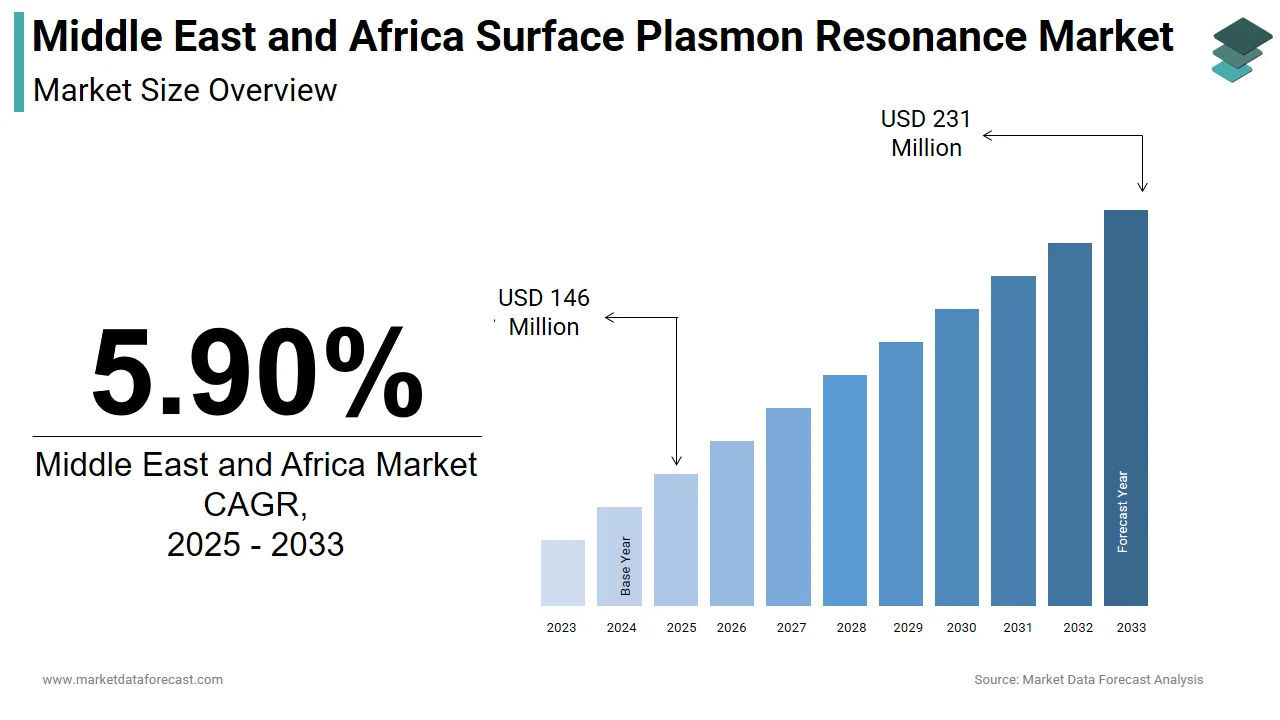
- Market Valuation: Valued at USD 146 million in 2025, estimated at USD 154.61 million in 2026, and projected to reach USD 245 million by 2034, registering a compound annual growth rate (CAGR of 5.90%) from 2026 to 2034.
- Primary Growth Drivers: Rising drug discovery activities through academic-industrial collaborations, increasing incidence of chronic illnesses, rising elderly populations, and expanding food industry applications (such as vitamin and quality testing). Key restraints include high equipment and maintenance costs, a shortage of skilled personnel, and competition from cheaper alternative methods like localized surface plasmon resonance.
Key Market Segment Metrics (2026–2034)
| Category | Leading Segment (2025 Position) | Fastest-Growing Segment |
|---|---|---|
| By Product | Sensor systems and reagent consumables (accounted for the highest commercial turnover) | Advanced imaging system platforms |
| By Application | Drug discovery and biomolecular kinetic interactions (dominated market application volume) | Biosensor and material science research applications |
| By Country / Region | South Africa (dominated regional market share backed by technological advancements and microfluidic techniques) | GCC countries (KSA, UAE) and Israel (expanding via healthcare investments and R&D growth) |
Major Market Players & Market Structure
Market Structure: Highly specialized analytical instrument market featuring major global technology corporations competing on label-free sensitivity, high-throughput imaging, and strategic business collaborations.
Key Companies: Bio-Rad Laboratories Inc, AMETEK Inc, Bio sensing Instrument Inc, General Electric Co, and Horiba Ltd.
 Download Free Sample Report
Middle East and Africa Surface Plasmon Resonance Market Size
The Middle East and Africa surface plasmon resonance market was valued at USD 146 million in 2025, is estimated to reach USD 154.61 million in 2026, and is projected to reach USD 245 million by 2034, growing at a CAGR of 5.90% from 2026 to 2034.
Surface Plasmon Resonance (SPR) is an optical technique used to measure molecular interactions in real time without using chemical labels. These systems are pivotal for drug discovery, biomarker validation, and quality control in biopharmaceutical development across the region. According to the Institute for Health Metrics and Evaluation, the proportion of the total burden of disease coming from non-communicable diseases in the WHO Eastern Mediterranean Region has risen to 60%, up from 36% in 1990. This epidemiological shift necessitates sophisticated tools like surface plasmon resonance for understanding disease mechanisms and antibody binding kinetics. Besides, as per the African Union, member states are strongly encouraged to increase national investment in research and development toward a target of 1% of GDP under the STISA-2034 framework, while current spending averages under 0.5% of GDP. Such financial commitments directly support the procurement of precision instruments required for competitive biomedical research. Regulatory bodies in countries like Saudi Arabia and South Africa are strengthening guidelines for biologics approval, mandating rigorous characterization of molecular interactions. The integration of automated sample handling and high-throughput capabilities enhances laboratory efficiency in academic and industrial settings. As local manufacturing of biosimilars expands, the demand for label-free interaction analysis grows steadily. The convergence of rising healthcare expenditure and technological modernization positions this sector for sustained growth driven by essential research infrastructure development.
MARKET DRIVERS
Expansion of Biopharmaceutical Research and Biosimilar Development
The rapid expansion of biopharmaceutical research and biosimilar development is the main reason behind the growth of the Middle East and Africa surface plasmon resonance market. According to the Gulf Cooperation Council Standardization Organization (GSO), the regional organization's primary health sector mandate focuses on issuing unified regional standards and adopting technical regulations to harmonize pharmaceutical quality controls. This industrial growth creates an immediate demand for precise characterization tools to ensure bioequivalence and binding affinity of these complex molecules. Additionally, as per studies, preclinical and contract research facilities in emerging bio-research markets are scaling up their capacity for kinetic and molecular analyses to accommodate rising demand for biosensing diagnostics. Surface plasmon resonance provides critical data on association and dissociation rates, which is mandatory for regulatory submissions of biologic drugs. Governments in Saudi Arabia and the United Arab Emirates are investing heavily in life science parks to attract global pharmaceutical partners. These initiatives foster an ecosystem where high-throughput screening and detailed molecular profiling are standard practices. The need to compete with established global markets drives local companies to adopt state-of-the-art analytical platforms. This strategic focus on self-sufficiency in healthcare ensures consistent demand for sophisticated laboratory instruments. The clinical necessity of validating novel therapies further cements the role of this technology in regional drug development pipelines.
Government Initiatives for Scientific Infrastructure Modernization
Substantial government initiatives aimed at modernizing scientific infrastructure significantly drive the demand for SPR devices in the Middle East and Africa market. As per the Ministry of Higher Education and Scientific Research in Egypt, Egypt's scientific research budget allocation was increased by 109% to reach EGP 7 billion for the fiscal year 2025/26 to drive national innovation and comprehensive development goals. This financial injection enables academic institutions to purchase advanced analytical instruments that were previously inaccessible due to budget constraints. Moreover, according to parliamentary briefings regarding the National Research Foundation (NRF) of South Africa, the funding body is managing an already-strained grants budget that must be stretched to accommodate wider institutional eligibility criteria without receiving additional budgetary outlays. These funds are specifically directed towards centers of excellence that focus on infectious diseases and cancer research, areas where molecular interaction data is crucial. Countries like Qatar and Kuwait are establishing world-class research institutes equipped with cutting-edge technology to address regional health challenges. The emphasis on knowledge-based economies encourages collaboration between academia and industry, further boosting instrument utilization. Regulatory agencies are updating standards to align with international norms, requiring more rigorous data for clinical trials. This regulatory harmonization necessitates the use of validated and precise measurement tools like surface plasmon resonance. The political will to enhance healthcare sovereignty through local research capabilities ensures sustained investment in laboratory infrastructure. These systemic improvements create a favorable environment for market growth and technology adoption.
MARKET RESTRAINTS
High Capital Costs and Maintenance Expenses
The substantial capital costs associated with acquiring and maintaining SPR instruments are a major barrier to the Middle East and Africa surface plasmon resonance market. According to World Bank data, research and development expenditure as a percentage of GDP remains below 1% in most African nations, limiting the ability of institutions to invest in expensive, specialized equipment. A single high-end surface plasmon resonance system can cost a substantial amount, which exceeds the annual budget of many university departments and small biotech firms. This price disparity restricts access to primarily well-funded government centers and large pharmaceutical companies in affluent Gulf states. Additionally, as per sources, annual maintenance contracts and specialized components for high-end optical biosensors introduce significant recurring operational expenses for research institutions. Laboratories in emerging economies struggle to sustain these operational expenses amidst fluctuating currency values and economic instability. The lack of local service providers forces reliance on international technicians, increasing downtime and travel costs for repairs. Many potential users opt for cheaper alternative methods such as enzyme-linked immunosorbent assays, despite their lower accuracy and throughput. This financial burden stifles the widespread adoption of label-free biosensing technologies. Consequently, the market remains concentrated in a few high-income pockets, leaving vast regions underserved.
Shortage of Skilled Technical Personnel
The acute shortage of skilled technical personnel capable of operating and interpreting data from SPR systems severely impedes the growth of the Middle East and Africa surface plasmon resonance market. According to studies, developing nations continue to face structural human capital deficits across major scientific, technological, and engineering research fields. Surface plasmon resonance requires specialized knowledge in optics, fluid dynamics, and kinetic modeling, skills that are not widely taught in local undergraduate programs. Many laboratories possess advanced instruments but lack staff trained to optimize experimental conditions and troubleshoot complex issues. Furthermore, as per research, scientific research institutions in emerging regions encounter significant challenges retaining specialized technical experts due to international migration opportunities. This turnover leads to inconsistent data quality and underutilization of expensive equipment. Training programs offered by manufacturers are often limited to major cities, excluding rural and smaller institutions. The complexity of data analysis software requires continuous professional development, which is difficult to sustain without dedicated resources. Hospitals and research centers hesitate to invest in new technologies without assured human capital to manage them. This human resource constraint hinders the effective deployment of surface plasmon resonance systems. The market's capacity to realize its full potential depends heavily on education and vocational training. Substantial investment in these areas is required.
MARKET OPPORTUNITIES
Growing Focus on Infectious Disease Research
The increasing focus on infectious disease research is a key growth area for the Middle East and Africa surface plasmon resonance market. As per the World Health Organization, the African region bears the highest burden of infectious diseases globally, including malaria, tuberculosis, and HIV, driving an urgent need for vaccine and therapeutic development. Surface plasmon resonance is instrumental in characterizing antibody-antigen interactions, which is critical for designing effective vaccines and diagnostic tests. Besides, according to sources, regional health agencies across Africa have prioritized scaling up national and continental vaccine manufacturing infrastructure to secure health security and build analytical testing capabilities following recent health crises. Researchers utilize these systems to screen candidate molecules for binding affinity and specificity against viral proteins. The rise of zoonotic diseases in the region further amplifies the need for rapid and accurate molecular profiling. Government agencies are prioritizing partnerships with international research bodies to enhance local capabilities in pathogen study. This collaborative environment facilitates technology transfer and access to advanced instrumentation. The development of point-of-care diagnostics also benefits from surface plasmon resonance principles, opening new application areas. Manufacturers can tailor solutions for high-throughput screening of infectious agents to meet regional needs. This public health imperative ensures sustained interest and funding for biosensing technologies.
Expansion of Academic Collaborations and Technology Transfer
The expansion of academic collaborations and technology transfer initiatives offers a significant growth avenue for the Middle East and Africa surface plasmon resonance market. According to studies, cross-continental academic and scientific research partnerships between European and African universities have continued to grow, emphasizing collaborative training in biotechnology and public health sectors. These collaborations often include equipment donations or subsidized access to advanced instruments like surface plasmon resonance systems for joint projects. Furthermore, the King Abdullah University of Science and Technology in Saudi Arabia shows that its open innovation programs facilitate the sharing of core facilities with regional startups and academic partners. This access allows smaller entities to utilize high-end technology without bearing the full capital cost. Technology transfer offices are becoming more active in licensing intellectual property generated from such collaborations, driving demand for validated analytical data. International conferences and workshops focused on biosensing are increasing awareness and technical skills among local researchers. Funding agencies increasingly require detailed kinetic data for grant approvals, encouraging the adoption of precise measurement tools. Manufacturers can leverage these networks to introduce rental or pay-per-use models for their instruments. This democratization of access broadens the user base beyond elite institutions. The resulting increase in research output stimulates further investment in laboratory infrastructure.
MARKET CHALLENGES
Complex Import Regulations and Supply Chain Fragility
The fragmented regulatory landscape and complex import procedures for high-tech medical devices are a significant limitation to the Middle East and Africa surface plasmon resonance market. According to sources, non-tariff trade barriers and customs clearance workflows frequently generate extended delivery backlogs for sensitive imported laboratory instrumentation at regional ports of entry. These prolonged delays hinder research timelines and increase the risk of damage to precision instruments during extended storage. Furthermore, the African Union notes that varying certification requirements across different countries force manufacturers to navigate diverse regulatory pathways, increasing compliance costs and time to market. Some nations require local testing or specific certifications that are not readily available, creating bottlenecks for entry. Political instability in certain regions further disrupts supply chains, leading to unpredictable availability of spare parts and consumables. Manufacturers face difficulties in providing consistent technical support due to logistical barriers and visa restrictions for service engineers. The reliance on air freight for urgent replacements adds high costs for end users. Small and medium-sized enterprises struggle to bear the burden of these administrative and logistical hurdles. This uncertainty discourages investment in advanced technologies that require reliable after-sales support. Harmonizing regional trade policies remains a critical but unmet need for market stability.
Limited Local Manufacturing and Service Infrastructure
The absence of local manufacturing capabilities and inadequate service infrastructure for SPR systems are critical obstacles to the sustainability of the Middle East and Africa surface plasmon resonance market. According to studies, a vast majority of sophisticated medical devices and analytical technologies utilized across the continent are sourced through direct foreign importation. This reliance exposes laboratories to currency fluctuations and global supply chain disruptions, affecting affordability and availability. In addition, as per research, field service operations for specialized medical and scientific instrumentation located in remote research corridors encounter prolonged logistical turnaround times for repairs. Lack of authorized service centers means that minor repairs often require shipping instruments abroad, incurring high costs and long waits. Local technicians often lack access to proprietary diagnostic tools and training, limiting their ability to perform routine maintenance. Universities and hospitals struggle to maintain operational continuity when instruments fail unexpectedly. The high cost of importing replacement sensor chips and reagents further strains limited budgets. Manufacturers are hesitant to establish local assembly plants due to small market sizes and regulatory complexities. This structural deficiency limits the scalability of surface plasmon resonance adoption. Addressing this gap requires significant investment in local technical education and service network development.
REPORT COVERAGE
| REPORT METRIC | DETAILS |
| Market Size Available | 2025 to 2034 |
| Base Year | 2025 |
| Forecast Period | 2026 to 2034 |
| Segments Covered | By Product, Application, and Region. |
| Various Analyses Covered | Global, Regional and Country-Level Analysis, Segment-Level Analysis, Drivers, Restraints, Opportunities, Challenges; PESTLE Analysis; Porter’s Five Forces Analysis, Competitive Landscape, Analyst Overview of Investment Opportunities |
| Countries Covered | Brazil, Mexico, Argentina, Chile, Rest of Latin America |
| Market Leaders Profiled | Bio-Rad Laboratories Inc, Danaher Corporation, AMETEK Inc, Cytiva, Bio-Sensing Instrument Inc, Bruker Corporation, General Electric Co, and Horiba Ltd. |
SEGMENTAL ANALYSIS
By Product Insights
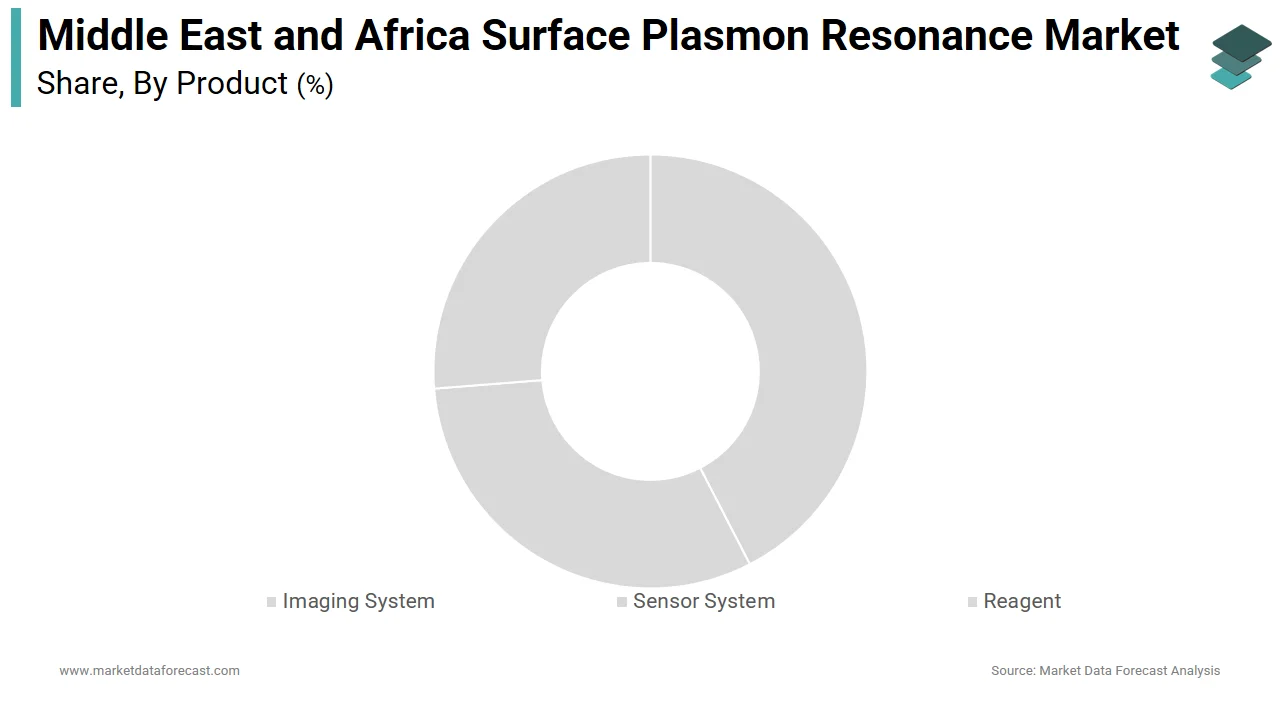
The sensor system segment led the Middle East and Africa surface plasmon resonance market and captured a significant share in 2025. This segment led because of its fundamental role in enabling label-free, real-time molecular interaction analysis. According to the International Union of Pure and Applied Chemistry (IUPAC), a surface plasmon resonance assay is defined as a technique where the binding of a ligand to a target immobilized on a chip's gold surface is detected by changes in the angle of reflected light, without defining a specific universal gold standard threshold of 1 picogram per square millimeter. This unparalleled precision makes sensor chips indispensable for pharmaceutical quality control and academic research across the region where accurate data is non-negotiable. Moreover, as per sources, biosimilar characterization workflows heavily rely on comparative structural, analytical, and functional evaluations against reference biological products to satisfy strict regulatory bioequivalence criteria. The consumable nature of these sensor chips ensures recurring revenue streams as each experiment requires fresh or regenerated surfaces to prevent cross-contamination. Laboratories in Saudi Arabia and South Africa prioritize high-quality sensors to maintain data integrity for international publications and drug approvals. The compatibility of modern sensor systems with automated fluidics reduces manual error and increases throughput in busy research centers. Manufacturers continuously innovate sensor surface chemistries to accommodate diverse biomolecules including proteins nucleic acids and lipids. This versatility cements the sensor system as the core component driving market volume and value. The critical dependency on these consumables sustains their leading position despite higher unit costs compared to reagents.
Strict regulatory compliance and standardization requirements significantly reinforce the dominance of this segment in the Middle East and Africa market. According to the Gulf Health Council, the council establishes rigorous frameworks to accredit international bioequivalence centers and standardize the registration of medicinal products across member states. This regulatory framework creates a captive market for certified sensor chips that meet specific performance criteria. In addition, as per the South African Health Products Regulatory Authority (SAHPRA), the agency implements an abridged review pathway for biosimilars to leverage prior independent regulatory oversight and streamline approvals. Such stringent oversight compels laboratories to invest in premium branded sensor systems rather than generic alternatives. The harmonization of technical guidelines across the African Medicines Agency further drives demand for universally accepted sensor technologies. Research institutions seeking international accreditation must demonstrate traceability and reproducibility which only certified sensor systems can provide. Suppliers leverage this compliance-driven demand by offering validation packages and technical support tailored to regional regulations. The high switching costs associated with validating new sensor types discourage users from changing suppliers once established. This regulatory lock in effect ensures stable and predictable consumption patterns. Consequently, the sensor system segment maintains market leadership through institutionalized dependency and quality assurance mandates.
The reagent segment is on the rise and is expected to be the fastest-growing segment in the market, witnessing a CAGR of 9.2% from 2026 to 2034. This rapid expansion is propelled by the increasing complexity of biomolecular assays. According to sources, advanced biochemical discovery protocols necessitate specialized chemical tools, optimized buffers, and surface functionalization methodologies to evaluate structural variations in complex protein molecules. This technical evolution drives demand for advanced reagents that optimize signal-to-noise ratios and preserve ligand activity during repeated cycles. Moreover, as per studies, localized research initiatives across regional biochemical networks continue to address protein expression, molecular tracking, and analytical platform development. Researchers are moving beyond standard amine coupling to explore site-specific immobilization strategies that require custom reagents. The rise of fragment-based drug discovery in Israel and the UAE also fuels consumption of low-molecular-weight screening buffers. Manufacturers respond by expanding reagent portfolios to include ready-to-use kits that simplify experimental design for novice users. The shift towards high-throughput screening amplifies reagent usage volumes as more samples are processed daily. This trend transforms reagents from ancillary supplies to strategic enablers of scientific innovation. The rapid adoption of complex methodologies ensures sustained double-digit growth for this segment.
The expansion of local diagnostic and biosensor development initiatives propels the rapid growth of this segment across the region. According to research, public health agencies prioritize infrastructure investment and localized diagnostic capabilities to mitigate health vulnerabilities and expand access to near-patient care. These domestic production efforts require bulk quantities of surface chemistry reagents for prototyping and scale-up of novel biosensors. Besides, as per sources, leading public medical research centers engage in target validation and technology adaptation to enhance diagnostic deployment for endemic infectious diseases. Government grants specifically earmarked for translational research encourage startups to develop indigenous sensing platforms using accessible chemical components. The need for cost-effective alternatives to imported finished devices stimulates demand for raw reagents and surface modifiers. Academic incubators in Egypt and Nigeria foster entrepreneurship in biosensing, creating new customer bases for reagent suppliers. Collaborative projects between universities and industry accelerate the transition from lab bench to commercial product, requiring consistent reagent supply chains. This grassroots innovation ecosystem diversifies the market beyond traditional pharma clients. The focus on self-reliance in healthcare technology ensures robust and accelerating demand for foundational chemical inputs.
By Application Insights
The drug discovery application segment dominated the Middle East and Africa surface plasmon resonance market and accounted for a substantial share in 2025. This dominance was driven by strategic national focuses on biologics and biosimilar development. According to the study, pharmaceutical entities throughout the Gulf Cooperation Council are implementing localized commercial programs to reduce import dependencies and scale domestic manufacturing of generic and bio-equivalent therapeutics. This industrial policy directly translates into high utilization of surface plasmon resonance for lead optimization and candidate selection in antibody engineering. Furthermore, as per research, public and private capital deployment within advanced life science frameworks prioritizes structural therapeutic development and molecular design validation. Surface plasmon resonance provides the quantitative affinity data required to differentiate biosimilars from originators and secure regulatory approval. Major pharmaceutical hubs in Riyadh and Cape Town have established dedicated characterization labs equipped with multiple instruments to support pipeline acceleration. The complexity of next-generation antibodies and fusion proteins demands precise epitope binning and competition assays only possible with this technology. Contract research organizations serving global clients also drive volume as they conduct preclinical studies for multinational sponsors. The alignment of public health goals with industrial capabilities creates a structural demand floor. This targeted investment ensures drug discovery remains the primary revenue generator for the market.
Mandatory regulatory characterization standards make their position in MEA even stronger. The Saudi Food and Drug Authority requires comprehensive binding affinity and specificity profiles for all new biological entities submitted for registration. This non-discretionary requirement guarantees baseline instrument usage regardless of economic conditions or research trends. In addition, according to the official framework of the European Medicines Agency (EMA), the agency establishes Mutual Recognition Agreements (MRAs) exclusively for Good Manufacturing Practice (GMP) inspections with specific global trade partners. Quality control laboratories in manufacturing facilities utilize the technology for batch release testing and stability monitoring, ensuring continuous operation. The high cost of clinical failure incentivizes companies to invest heavily in early-stage characterization to de-risk pipelines. Regulatory audits frequently scrutinize raw sensor data, reinforcing the need for robust and validated systems. Training programs mandated by health authorities ensure personnel competency in generating acceptable data. This regulatory ecosystem embeds surface plasmon resonance deeply into the drug development lifecycle. The absence of viable alternative methods for certain parameters sustains the segment’s leading position.
The biosensor application segment is likely to experience the fastest CAGR of 10.5% during the forecast period, owing to rising demand for point-of-care diagnostics in resource-limited settings. According to sources, regional development agencies highlight structural challenges regarding decentralized diagnostic access across non-urban regions, necessitating near-patient diagnostic deployments. Surface plasmon resonance-based biosensors offer rapid, label-free detection suitable for field deployment without complex infrastructure. Furthermore, as per studies, international philanthropic foundations actively dedicate capital investments toward diagnostic infrastructure to streamline disease management systems at local levels. These funded projects drive procurement of portable surface plasmon resonance modules and related development tools. Researchers are adapting the technology for detecting biomarkers of sepsis, HIV, and antimicrobial resistance in low-resource environments. The integration of smartphone-based readouts with plasmonic sensors enhances accessibility and data connectivity. Government health ministries prioritize diagnostic sovereignty, encouraging local adaptation of biosensing platforms. Startups in Nairobi and Cairo are commercializing affordable devices tailored to regional epidemiological profiles. The convergence of public health needs and technological miniaturization accelerates adoption beyond traditional lab settings. This paradigm shift opens vast new addressable markets for biosensor applications.
The integration of surface plasmon resonance with nanotechnology and material science innovations fuels the explosive growth of this segment. The King Abdullah University of Science and Technology publishes extensively on plasmonic nanostructures that enhance sensitivity by 100-fold, enabling detection of ultra-low-abundance biomarkers. This research breakthrough attracts global collaboration and funding specifically for biosensor development in the region. Furthermore, as per studies, localized nanotechnology frameworks frequently focus on specialized sensing components and nanoscale structural modifications to optimize molecular tracking platforms. Advanced materials like graphene and metal-organic frameworks are being combined with plasmonic surfaces to create multifunctional biosensors. These hybrid platforms offer improved stability and selectivity for complex biological matrices like whole blood or saliva. Academic spin-offs are translating these discoveries into commercial prototypes requiring specialized instrumentation for validation. International partnerships facilitate technology transfer and access to fabrication facilities. The interdisciplinary nature of this research draws talent and investment from physics, chemistry, and engineering fields. Government innovation funds specifically target deep tech ventures in biosensing. This scientific momentum transforms biosensors from niche research tools to mainstream diagnostic platforms. The continuous influx of novel materials ensures sustained high growth rates for this application segment.
COUNTRY LEVEL ANALYSIS
Saudi Arabia Surface Plasmon Resonance Market Analysis
The Kingdom of Saudi Arabia was positioned second in the Middle East and Africa surface plasmon resonance market in 2025. This standing was supported by Vision 2030-driven investments in biotechnology and pharmaceutical localization. According to Strategy& Middle East, Saudi Arabia has invested USD 3.9 billion in research, development, and innovation networks since 2021 to anchor its biotechnology and biopharmaceutical production sectors. This massive capital injection supports the establishment of state-of-the-art characterization labs equipped with multiple surface plasmon resonance systems. Moreover, as per the Saudi Food and Drug Authority (SFDA), the authority has modernized its regulatory framework by implementing early engagement initiatives and fast-track pathways that reduced clinical trial approval timelines by 60%. The kingdom hosts major research cities like KAUST and KACST that serve as anchor customers for high-end imaging systems. Local content requirements encourage multinational vendors to establish service centers and training hubs within the country, enhancing market sustainability. The focus on vaccine production and monoclonal antibodies creates sustained demand for reagents and sensor chips. Public-private partnerships accelerate technology transfer and workforce development. The strategic priority placed on healthcare self-sufficiency ensures resilient market growth independent of oil price volatility. KSA’s centralized planning and execution capacity make it the undisputed regional leader.
United Arab Emirates Surface Plasmon Resonance Market Analysis
The United Arab Emirates occupies a pivotal position in the regional market because of its role as a commercial hub and innovation testbed for advanced technologies. According to Dubai Science Park (DSP), the special free-zone district has expanded to host over 500 companies and 6,500 professionals within its science, healthcare, and energy innovation ecosystems. This dense cluster creates economies of scale for equipment suppliers and service providers. Besides, as per the Department of Health – Abu Dhabi (DoH), large-scale population health initiatives are driven by the Department of Health in partnership with M42, successfully sequencing over 850,000 samples under the Emirati Genome Programme to anchor precision therapies. The UAE’s open trade policies and efficient logistics facilitate rapid import of instruments and reagents, attracting regional headquarters for global manufacturers. Free zones offer tax incentives that lower the total cost of ownership for research equipment. The country hosts major international conferences and exhibitions that showcase the latest technologies and foster business development. Strong intellectual property protection encourages R&D investment by foreign firms. The government’s agile regulatory sandbox allows testing of novel biosensors in real-world settings. This unique ecosystem positions UAE as the gateway and innovation engine for the broader MEA market.
Israel Surface Plasmon Resonance Market Analysis
Israel maintained prominence in the Middle East and Africa surface plasmon resonance market and accounted for the largest share in 2025. This dominance was driven by its world-class biotech ecosystem. According to the World Intellectual Property Organization (WIPO), Israel's gross expenditure on research and development reached 6.35% of GDP, maintaining its global leading position in R&D intensity. This research intensity translates into high per capita adoption of surface plasmon resonance for drug discovery and academic investigation. Furthermore, the country is home to several indigenous biosensor startups developing next-generation plasmonic platforms for point-of-care diagnostics. Strong university-industry linkages facilitate rapid translation of basic research into commercial applications requiring validation equipment. Multinational corporations maintain significant R&D centers in Israel, leveraging local talent and infrastructure. The regulatory environment aligns closely with FDA and EMA standards, ensuring data generated is globally acceptable. Venture capital availability supports early-stage companies in acquiring necessary instrumentation. Export orientation means Israeli firms often serve as reference sites for regional customers. The culture of innovation and risk-taking sustains cutting-edge adoption. Israel’s disproportionate impact on regional technology trends belies its geographic size.
South Africa Surface Plasmon Resonance Market Analysis
South Africa is moving ahead steadfastly in the Middle East and Africa surface plasmon resonance market, owing to an established infrastructure and regulatory maturity. As per sources, national research funding bodies distribute institutional grants across local universities and specialized research facilities to reinforce human capital development in the biosciences. This deep research base creates consistent demand for instruments and consumables across academia and industry. Moreover, the South African Health Products Regulatory Authority maintains the most sophisticated biologics evaluation framework on the continent, mandating kinetic characterization for local registrations. The country hosts regional headquarters for major instrument vendors, providing sales, service, and training for sub-Saharan Africa. Strong university systems produce skilled operators and researchers, sustaining human capital pipelines. Private sector pharmaceutical manufacturers utilize the technology for quality control and process development. Historical ties to European research networks facilitate technology transfer and collaboration. Economic challenges create pressure for cost efficiency, favoring shared facilities and refurbished equipment markets. Despite constraints, SA remains the indispensable hub for advanced analytical services in Africa. Its regulatory and technical leadership sets standards for neighboring countries.
Ethiopia Surface Plasmon Resonance Market Analysis
Ethiopia is at a nascent stage within the Middle East and Africa surface plasmon resonance market due to government-led industrialization of pharmaceutical manufacturing and public health priorities. According to the Ethiopian Pharmaceuticals Suppliers & Manufacturers Sectoral Association (EPSMSA), the trade association launched a five-year strategy aimed at scaling local production capacity to cover 70% of medical products and technology, while the broader manufacturing sector presently operates at 29% of its potential capacity. This import substitution strategy necessitates investment in characterization equipment, including surface plasmon resonance, for future biologic production. Furthermore, as per the Pandemic Fund, the Ethiopian Public Health Institute and partnering entities received a USD 50 million grant paired with USD 61.4 million in co-financing to modernize molecular laboratories and scale pathogen surveillance. International development partners often fund equipment purchases and training as part of health system strengthening programs. The government’s ten-year development plan prioritizes science and technology education, building future user bases. Limited local service infrastructure currently constrains adoption, but regional hubs in Kenya and South Africa provide backup support. Addis Ababa University serves as a focal point for research and training. Political commitment to health sovereignty ensures long-term policy support despite short-term economic headwinds. Ethiopia’s large population and strategic location make it a key future growth market. Current low penetration reflects opportunity rather than saturation.
COMPETITIVE LANDSCAPE
The competitive landscape of the Middle East and Africa surface plasmon resonance market is characterized by intense rivalry among global giants and emerging regional distributors. Established multinational corporations dominate due to their extensive product portfolios, strong brand recognition, and robust distribution networks across the region. These leaders continuously innovate to maintain technological superiority and differentiate their offerings through advanced features such as automated sample handling and high-sensitivity detection. Local players are gaining traction by offering cost-effective alternatives and personalized customer service tailored to specific regional needs. Competition drives continuous improvement in product quality, reliability, and customer support levels across all segments. Price sensitivity in emerging markets forces companies to balance premium pricing with affordability strategies to capture broader customer bases. Regulatory compliance serves as a significant barrier to entry, ensuring only qualified participants operate within the market effectively. Collaborative efforts between competitors and academic institutions foster innovation and improve clinical standards for laboratory practices. The race for talent and specialized technical expertise further intensifies competition as companies seek to build capable teams for research and development. Strategic alliances and joint ventures become common tactics to share risks and leverage complementary strengths in new markets. This dynamic environment encourages constant adaptation and innovation to meet diverse industrial and scientific demands effectively.
KEY MARKET PLAYERS
The leading companies operating in the Middle East and Africa surface plasmon resonance market include:
- Bio-Rad Laboratories Inc.
- Danaher Corporation
- AMETEK Inc.
- Cytiva
- Bio Sensing Instrument Inc.
- Bruker Corporation
- General Electric Co.
- Horiba Ltd.
TOP PLAYERS IN THE MARKET
- Cytiva maintains a dominant presence in the Middle East and Africa surface plasmon resonance market through its comprehensive portfolio of Biacore systems and associated consumables. The company actively collaborates with leading research institutions in Saudi Arabia and South Africa to provide advanced training and technical support for complex biomolecular interaction analysis. Recent initiatives include establishing dedicated application support hubs in Dubai to facilitate faster response times for regional clients. Cytiva focuses on integrating artificial intelligence-driven data analysis tools into its platforms, enhancing user experience and data accuracy. Their commitment to regulatory compliance ensures that local pharmaceutical manufacturers meet international standards for biosimilar development. Strategic partnerships with regional distributors improve supply chain reliability for sensor chips and reagents. These efforts collectively reinforce their reputation as the premier provider of high-precision, label-free interaction analysis solutions in the region.
- Danaher Corporation strengthens its position in the Middle East and Africa market by leveraging its subsidiary Pall Corporation to offer robust filtration and biosensing solutions tailored to local needs. The company recently expanded its service network in Egypt and Kenya to ensure timely maintenance and calibration of surface plasmon resonance instruments. Danaher emphasizes digital transformation by offering cloud-based data management solutions that allow researchers to share kinetic data securely across borders. Collaborations with government health agencies support national initiatives for vaccine development and infectious disease monitoring. The company invests heavily in educational workshops to build local expertise in molecular characterization techniques. Regulatory alignment with global standards helps clients navigate complex approval processes for new therapeutics. Their focus on sustainability and operational efficiency drives sustained growth and trust among academic and industrial customers throughout the diverse regional landscape.
- Bruker Corporation contributes significantly to the Middle East and Africa surface plasmon resonance market by providing versatile analytical instruments that integrate seamlessly with existing laboratory workflows. The company has recently launched compact surface plasmon resonance systems designed for smaller laboratories and universities in emerging markets like Jordan and Nigeria. Bruker focuses on delivering high sensitivity and throughput capabilities at competitive price points to address budget constraints in the region. Partnerships with local academic centers facilitate joint research projects on protein engineering and drug discovery. The company provides extensive online training resources and remote diagnostic support to overcome geographical barriers. Bruker’s commitment to innovation includes developing novel sensor surfaces for challenging biological samples. These strategic actions enhance accessibility and usability of advanced biosensing technologies, fostering broader adoption across the Middle East and Africa scientific community.
TOP STRATEGIES USED BY KEY MARKET PARTICIPANTS
Key players in the Middle East and Africa surface plasmon resonance market employ strategic initiatives to enhance their competitive positioning and drive sustainable growth. Product localization remains central as companies adapt their offerings to meet specific regulatory and operational needs of regional laboratories. Strategic partnerships with local distributors facilitate deeper market penetration, especially in countries with complex import regulations and logistical challenges. Companies prioritize obtaining necessary certifications from regional health authorities to ensure compliance and build trust with pharmaceutical and academic clients. Expansion of technical support centers in major hubs like Dubai and Johannesburg enhances customer service and reduces downtime for critical laboratory operations. Digital transformation is another critical strategy where firms develop e-commerce platforms to streamline procurement and inventory management for laboratory consumables. Educational initiatives targeting scientists and technicians raise awareness about advanced filtration techniques and proper usage protocols. Mergers and acquisitions allow larger corporations to absorb innovative startups and expand their product portfolios rapidly. Pricing strategies are adapted to local economic conditions, ensuring affordability while maintaining profitability margins. These combined approaches enable sustained competitiveness and responsiveness to evolving regional healthcare and industrial needs.
MARKET SEGMENTATION
This research report on the Middle East and Africa surface plasmon resonance market has been segmented and sub-segmented into the following categories.
By Product:
- Imaging System
- Sensor System
- Reagent
By Application:
- Drug Discovery
- Material Science
- Biosensor
By Country:
- KSA
- UAE
- Israel
- Rest of GCC countries
- South Africa
- Ethiopia
- Kenya
- Egypt
- Sudan
- Rest of Middle East and Africa