- Product Description Description
- Table of Contents TOC
- List of Table & Figure LOT
- Get Free Sample PDF Sample PDF
MEA Surgical Staplers Market Size
The MEA surgical staplers market was valued at USD 0.22 billion in 2025 and increased to USD 0.24 billion in 2026. The market is projected to reach USD 0.39 billion by 2034, growing at a CAGR of 6.45% during the forecast period from 2026 to 2034.
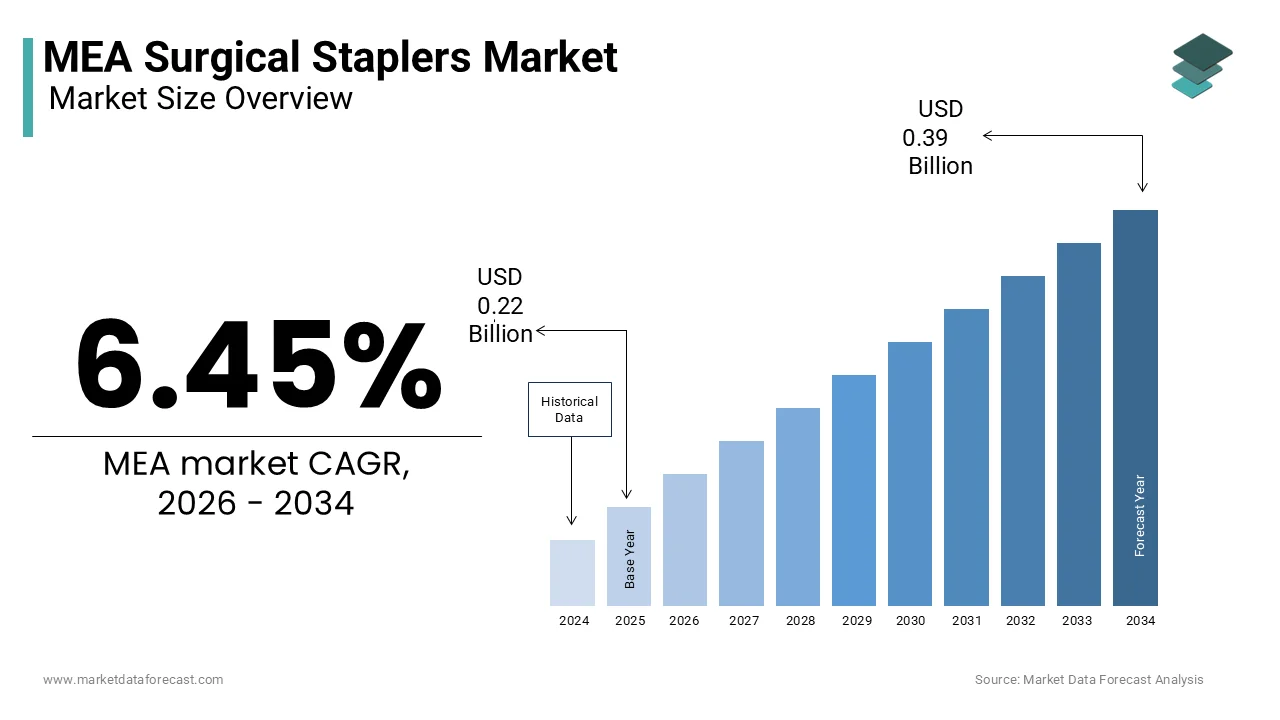
Surgical staplers are specialized medical devices used in place of sutures to close skin wounds or connect/resect internal organs during surgery. These instruments, ranging from manual linear cutters to advanced powered circular staplers, serve as indispensable tools for general surgery, bariatric interventions, and thoracic operations. The definition extends beyond mere mechanical fastening to include technologies that ensure hemostasis and minimize air leaks in delicate tissues. Current healthcare scenarios in the region reveal a significant transition from traditional suturing to stapling techniques, driven by the need for reduced operative times and standardized outcomes. According to the World Health Organization, Reports from the World Health Organization indicate that the burden of non-communicable diseases in the Eastern Mediterranean region is rising sharply, with cancer incidence projected to more than double over the next several decades, increasing the need for advanced surgical interventions for cancer treatment. Furthermore, research indicates that accelerating urbanization is leading to lifestyle changes associated with rising obesity levels, which is creating a long-term need for expanded metabolic and weight-management healthcare services. As per the Global Surgery 2030 initiative, the volume of essential surgical procedures in low and middle-income countries within the region is expanding, creating a foundational need for reliable closure technologies. The regulatory landscape varies significantly, with Gulf Cooperation Council nations enforcing stringent conformity assessments while other areas focus on basic safety standards, shaping a diverse market environment defined by infrastructural disparities and evolving clinical capabilities.
MARKET DRIVERS
Escalating Prevalence of Gastrointestinal Malignancies and Bariatric Conditions
The surging incidence of gastrointestinal cancers and obesity-related disorders drives the growth of the MEA surgical staplers market. The region faces a unique epidemiological shift where dietary changes and sedentary lifestyles have led to a dramatic rise in colorectal, gastric, and esophageal cancers, all of which require precise tissue resection and anastomosis, typically achieved using stapling technology. According to the International Agency for Research on Cancer, colorectal cancer rates in countries like Kuwait and Saudi Arabia have risen sharply over the last decade, driving a corresponding need for advanced surgical interventions. Simultaneously, the obesity epidemic in the Gulf states has reached critical levels, with national health surveys indicating that over 35% to 40% of the adult population in nations such as Qatar and the United Arab Emirates is obese, fueling a boom in bariatric procedures like sleeve gastrectomy and gastric bypass. These surgeries heavily depend on linear and circular staplers to create secure staple lines and prevent leaks. As per clinical data from regional medical centers, the volume of bariatric surgeries in the Middle East has grown at a double-digit annual rate, outpacing global averages. This dual burden of oncology and metabolic disease creates a sustained and growing demand for high-quality stapling devices, pushing hospitals to upgrade their inventories to handle complex cases with greater safety and efficiency.
Expansion of Healthcare Infrastructure and Surgical Capacity in GCC Nations
The aggressive expansion of healthcare infrastructure and the strategic enhancement of surgical capacity within the Gulf Cooperation Council nations propel the expansion of the MEA surgical staplers market. Governments in Saudi Arabia, the United Arab Emirates, and Qatar are investing billions of dollars to transform their healthcare systems into regional hubs for medical tourism and advanced care, directly increasing the availability of operating theaters equipped with modern instrumentation. According to the Saudi Vision 2030 health sector transformation program, the kingdom is establishing several new specialized medical cities and expanding its healthcare infrastructure, requiring a large-scale procurement of surgical equipment and consumables. The United Arab Emirates has similarly launched initiatives to attract international patients, resulting in the construction of state-of-the-art private hospitals that prioritize the latest minimally invasive technologies. As per reports from regional construction and healthcare consultancies, numerous new healthcare facilities are currently under development or in the planning stages across the GCC, creating a massive pipeline for device acquisition. These new institutions often mandate the use of premium single-use staplers to ensure consistency and reduce infection risks, moving away from reusable models. The government-led push to localize manufacturing also encourages partnerships with global device makers, ensuring a steady supply chain. This infrastructural boom provides the physical platform necessary for the increased utilization of surgical staplers, making the GCC the most dynamic growth engine in the regional market.
MARKET RESTRAINTS
High Cost of Advanced Powered Stapling Systems and Consumables
The prohibitive cost of advanced powered surgical stapling systems and their proprietary cartridges acts as a significant barrier to the MEA surgical staplers market. This is particularly true in resource-constrained settings across Africa and less affluent Middle Eastern nations. Powered staplers, which offer consistent firing speeds and reduced surgeon fatigue, command price points that are substantially higher than manual alternatives, while the recurring cost of single-use cartridges places a heavy burden on hospital operating budgets. According to studies conducted in sub-Saharan Africa, the per-procedure cost of using premium stapling devices can exceed the monthly healthcare budget allocated for surgical supplies in many district hospitals, forcing clinicians to revert to traditional suturing or reuse devices despite safety risks. In public healthcare systems across the region, strict procurement caps and tender processes often prioritize the lowest bid, excluding innovative but expensive technologies from consideration. As per various sources, the cost of a single load of an advanced stapler can equate to several days of wages for the average citizen in countries like Egypt or Kenya, limiting accessibility for private patients as well. The lack of comprehensive insurance coverage for high-cost surgical consumables in many African nations further exacerbates this issue, leaving patients to bear the full financial burden. This economic disparity creates a fragmented market where cutting-edge stapling technology is confined to elite private institutions in major cities, while the broader population remains underserved, stifling overall market penetration and volume growth.
Shortage of Skilled Surgeons and Specialized Training Programs
The lack of surgeons trained in advanced minimally invasive techniques, along with a shortage of modern staplers, is severely hindering the growth of the MEA surgical stapler market. Consequently, optimal device utilization is limited across the MEA region. Effective use of sophisticated stapling systems, particularly in laparoscopic and robotic surgeries, requires specialized fellowship training and extensive hands-on experience to avoid complications such as staple line failures or tissue damage. According to the College of Surgeons of East, Central,l and Southern Africa, the ratio of surgeons to population in many African countries remains critically low, with some nations having fewer than 0.5 to 1 surgeon per 100000 people, far below the recommended threshold. Even in the Middle East, while the number of surgeons is higher, there is a notable gap in proficiency with newer powered and articulating staplers due to insufficient continuous medical education programs. As per a study, the lack of structured proctorship and simulation-based training centers means that many practitioners rely on older manual techniques or hesitate to adopt new devices due to fear of misuse. This skills gap leads to underutilization of available technology and higher complication rates, which in turn discourages hospital administrators from investing in expensive stapling portfolios. The potential of the surgical staplers market remains capped. This is due to a lack of a robust pipeline for trained professionals and accessible educational resources, which are essential for safe deployment.
MARKET OPPORTUNITIES
Rise of Medical Tourism and Center of Excellence Initiatives
The burgeoning medical tourism industry and the strategic establishment of Centers of Excellence in the Middle East are creating significant possibilities for the expansion of the MEA surgical staplers market. Countries like Turkey, the United Arab Emirates, and Saudi Arabia are actively positioning themselves as global destinations for complex surgical procedures, attracting thousands of international patients annually who seek high-quality care at competitive prices. According to the Turkish Ministry of Health, the country hosts a very large number of international health tourists annually, with many seeking bariatric and oncological procedures that require the use of advanced surgical devices. To support this influx, governments and private investors are establishing specialized centers dedicated to specific disciplines such as colorectal surgery and weight loss, which mandate the use of top-tier surgical instruments to maintain international accreditation and reputation. As per sources, these centers often partner with leading global device manufacturers to secure exclusive access to the latest stapling technologies, creating a premium segment within the regional market. The drive to meet international patient expectations forces these facilities to adopt single-use, high-reliability staplers that minimize complications and ensure rapid recovery times. Furthermore, the revenue generated from medical tourism allows these institutions to reinvest in cutting-edge equipment, creating a virtuous cycle of technology adoption. This trend offers manufacturers a pathway to introduce high-margin products in a region otherwise sensitive to price, leveraging the prestige of medical tourism to drive volume and brand loyalty.
Adoption of Minimally Invasive Surgery in Private Healthcare Sectors
The rapid adoption of minimally invasive surgery (MIS) within the expanding private healthcare sector across the region offers a significant growth avenue for manufacturers within the MEA surgical staplers market. As the middle class expands and private insurance coverage becomes more prevalent in nations like South Africa, Nigeria, and the Gulf states, there is a growing patient preference for laparoscopic procedures that offer smaller incisions, less pain, and faster return to work. According to research, the number of laparoscopic cholecystectomies and appendectomies in Africa has increased in the last five years, reflecting a broader shift toward MIS across general surgery. These procedures inherently require the use of specialized endoscopic staplers that can navigate tight spaces and articulate around organs, creating a direct demand for advanced device portfolios. As per studies, private hospitals are increasingly willing to invest in premium stapling systems to differentiate their services and attract affluent patients who demand the latest technology. The shift is also supported by the entry of international private hospital chains into the African market, which bring with them standardized protocols that favor the use of disposable staplers over sutures. This privatization and modernization of surgical care create a fertile ground for the introduction of next-generation stapling solutions, allowing manufacturers to tap into a high-growth segment that values innovation and clinical outcomes over initial cost savings.
MARKET CHALLENGES
Fragmented Regulatory Landscapes and Registration Delays
The highly fragmented regulatory environment across the region is a hurdle for manufacturers in the MEA surgical staplers market. This leads to prolonged registration timelines and inconsistent market access. Unlike the unified frameworks seen in Europe or North America, the MEA region comprises dozens of countries with distinct regulatory authorities, varying documentation requirements, and disparate approval processes that complicate product launches. In the Middle East, while the Gulf Cooperation Council has a centralized process, individual member states may still impose additional local requirements or delays. The lack of transparency in some regulatory bodies further increases the risk of unexpected rejections or demands for redundant clinical data, escalating costs for market entry. This fragmentation forces companies to maintain complex supply chains and dedicated regulatory teams for each jurisdiction, straining resources and slowing down the overall pace of market penetration. The regulatory maze remains a persistent barrier to efficient commercialization and equitable access to advanced surgical tools. Greater harmonization is needed to overcome this challenge.
Prevalence of Counterfeit Devices and Informal Procurement Channels
The pervasive presence of counterfeit surgical staplers and reliance on informal procurement channels are critical challenges to the MEA surgical staplers market. This crisis undermines patient safety and erodes trust in legitimate brands within the regional market. In many parts of Africa and some Middle Eastern regions, weak enforcement of intellectual property rights and porous borders allow substandard and fake medical devices to infiltrate the supply chain, often sold at significantly lower prices than genuine products. According to sources, a substantial percentage of medical devices in circulation in certain African countries are falsified or fail to meet quality standards, posing severe risks of staple malfunction, tissue necrosis, and infection. The prevalence of tender processes that prioritize the lowest bid without rigorous quality verification further incentivizes the purchase of these inferior products by cash-strapped public hospitals. In addition, the informal nature of some distribution networks makes it difficult to trace the origin of these devices or hold vendors accountable. This challenge not only endangers patients but also damages the reputation of authentic manufacturers who struggle to compete on price against illicit operators. Combating this issue requires significant investment in anti-counterfeiting technologies and stronger collaboration with local governments, yet the scale of the problem remains a daunting obstacle to market integrity.
REPORT COVERAGE
| REPORT METRIC | DETAILS |
| Market Size Available | 2025 to 2034 |
| Base Year | 2025 |
| Forecast Period | 2026 to 2034 |
| Segments Covered | By Type, Product, End User, and Region. |
| Various Analyses Covered | Global, Regional, and Country-Level Analysis, Segment-Level Analysis, Drivers, Restraints, Opportunities, Challenges; PESTLE Analysis; Porter’s Five Forces Analysis, Competitive Landscape, Analyst Overview of Investment Opportunities |
| Countries Covered | KSA, UAE, Israel, rest of GCC countries, South Africa, Ethiopia, Kenya, Egypt, Sudan, rest of MEA |
| Market Leaders Profiled | Ethicon Inc., Medtronic plc, CONMED Corporation, Smith & Nephew, Purple Surgical Inc., Intuitive Surgical Inc., Welfare Medical Ltd., Reach Surgical Inc., Merril Life Science Pvt. Ltd., Grena Ltd., B. Braun Melsungen AG, Dextera Surgical Inc., Frankenman International, and Becton & Dickinson. |
SEGMENTAL ANALYSIS
By Type Insights
The disposable stapler segment was the largest in the MEA surgical staplers market and occupied a substantial share in 2025. This prominence of the segment is mainly supported by the critical imperative to minimize surgical site infections and the logistical advantages of single-use devices in regions with varying sterilization capabilities. A leading factor is the stringent infection control protocols adopted by major hospital chains in the Gulf Cooperation Council and South Africa, which prioritize patient safety over equipment reuse costs. According to the World Health Organization, surgical site infections affect a portion of surgical patients in low and middle-income countries, a statistic that has compelled healthcare administrators to shift decisively toward sterile, single-use instruments to mitigate this risk. Furthermore, the complexity of modern stapler mechanisms, particularly those with articulating heads and fine gauge staples, makes effective reprocessing difficult and costly, often exceeding the price of a new unit. The convenience of having preloaded, ready-to-use devices also reduces operating room turnover time, a crucial metric for high-volume centers. This combination of infection prevention, regulatory compliance, and operational efficiency solidifies the disposable segment as the market leader, overshadowing reusable alternatives, which are increasingly confined to basic procedures in resource-constrained settings.
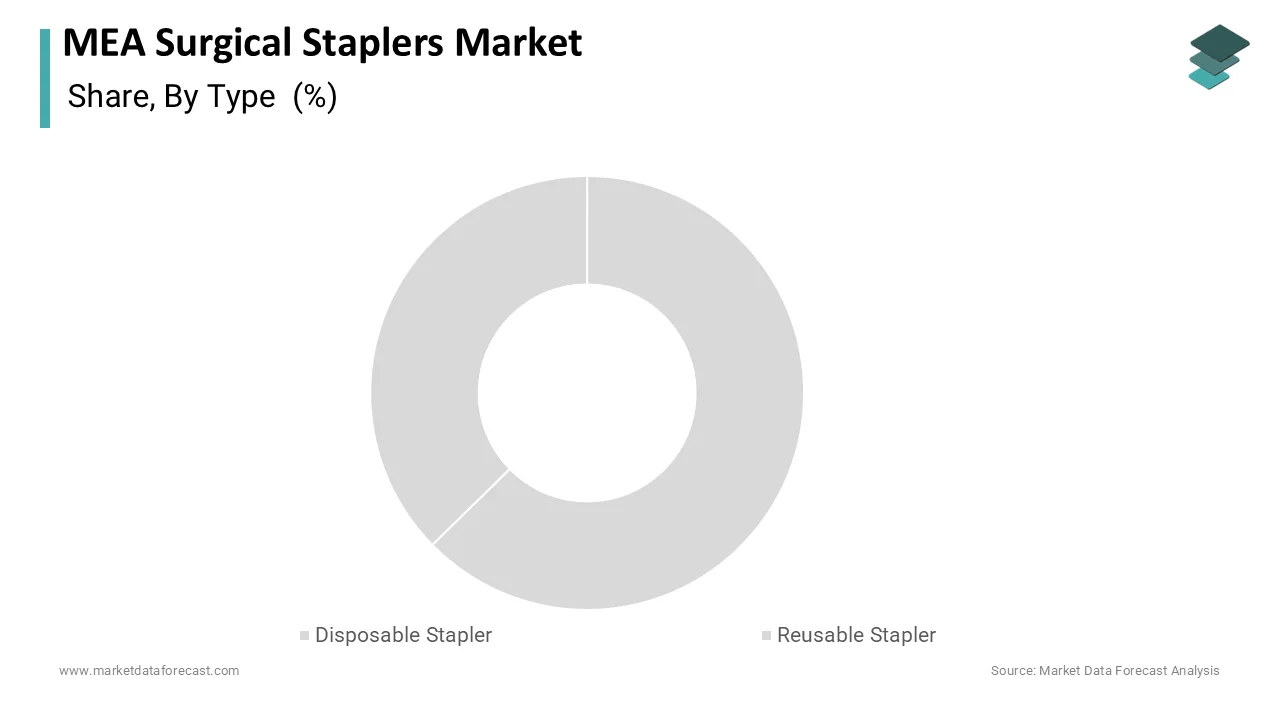
The reusable stapler segment is anticipated to witness the fastest CAGR of 4.2% from 2026 to 2034 due to cost containment strategies in public healthcare systems across Africa and parts of the Middle East. While disposable units dominate the premium sector, the economic reality in many government-funded hospitals necessitates the continued use and refurbishment of durable stainless steel staplers to manage tight budgets. The primary driver for this growth is the implementation of centralized sterilization supply departments in large public teaching hospitals, which have improved the reliability and safety of reprocessed instruments. Additionally, advancements in cleaning and inspection technologies have extended the usable life of these devices, ensuring they meet safety standards for repeated use. This economic pragmatism, coupled with improved reprocessing infrastructure, ensures that the reusable segment maintains a steady growth trajectory in price-sensitive markets where volume is high but funding is limited.
By Product Insights
The manual surgical stapler segment held the majority share of the MEA surgical staplers market in 2025. This supremacy of the segment is credited to the widespread availability of skilled surgeons proficient in manual techniques and the significantly lower cost point compared to powered alternatives. A key growth aspect is the economic accessibility of manual devices, which do not require batteries, charging stations, or complex maintenance, making them ideal for the diverse range of healthcare facilities from rural clinics to urban hospitals across the continent. Manual staplers are also versatile and robust, capable of functioning in environments with unstable electricity supplies, which are still common in parts of the region. The extensive distribution network for manual staplers ensures that they are available even in remote areas where supply chains for electronic devices are weak. Furthermore, the clinical efficacy of manual staplers for standard resections and anastomoses is well established, reducing the perceived need for upgrading to powered systems for routine cases. This blend of affordability, reliability, and clinical sufficiency ensures that manual staplers remain the workhorse of the MEA surgical landscape.
The powered surgical stapler segment is on the rise and is expected to be the fastest-growing segment in the market by witnessing a CAGR of 9.8% over the forecast period, due to the increasing adoption of minimally invasive and robotic-assisted surgeries in the Gulf region and top-tier private hospitals in South Africa and Israel, where precision and ergonomics are paramount. The primary driver is the superior performance of powered devices in complex procedures, offering consistent firing speeds, reduced hand fatigue for surgeons, and the ability to fire through thicker tissue loads with greater reliability. Moreover, the growing number of bariatric centers of excellence in the Middle East, catering to both local and medical tourism patients, specifically mandates powered technology to ensure optimal outcomes and maintain international accreditation. Additionally, manufacturers are introducing battery-free motorized systems that reduce long-term costs, making them more accessible to a broader range of institutions. This convergence of technological superiority, procedural complexity, and the rise of high-end surgical centers positions powered staplers as the most dynamic growth engine in the product segmentation.
By End User Insights
The hospitals segment led the MEA surgical staplers market and accounted for a significant share in 2025. This dominance of the segment is attributed to the fact that the vast majority of complex surgical procedures requiring stapling, such as oncological resections, bariatric surgeries, and trauma repairs, are performed in inpatient settings equipped with full operating theaters and intensive care units. The main driving factor is the concentration of surgical volume in public and private hospitals, which serve as the central hubs for secondary and tertiary care across the region. Hospitals also possess the financial capacity and procurement frameworks to purchase bulk quantities of staplers and manage the inventory of various sizes and types needed for diverse surgical specialties. As per research, the trend toward centralizing surgical services in large medical cities and university hospitals further consolidates demand within this segment. The presence of specialized surgical departments and the availability of multidisciplinary teams in hospitals ensure a consistent and high-volume utilization of stapling devices. Furthermore, government tenders and group purchasing organizations typically operate at the hospital level, streamlining the acquisition process for these institutions. This centralization of care and resources ensures that hospitals will remain the primary revenue generator for the surgical staplers market in the foreseeable future.
The Ambulatory Surgical Centers (ASCs) segment is expected to exhibit a noteworthy CAGR of 11.5% between 2026 and 2034. This rapid surge is driven by a strategic shift toward outpatient care models in the Middle East and South Africa, aimed at reducing healthcare costs and improving patient throughput for elective procedures. A major factor fuelling this growth is the increasing preference for minimally invasive surgeries, such as laparoscopic cholecystectomies and hernia repairs, which can be safely performed on a same-day basis using advanced stapling technologies. According to research, there is a strong governmental push in the United Arab Emirates and Israel to migrate suitable surgical cases from inpatient hospitals to ASCs to alleviate bed shortages and optimize resource allocation. These centers prioritize efficiency and speed, favoring powered and disposable staplers that minimize setup time and ensure rapid patient discharge. The rising insurance coverage for outpatient procedures and the growing demand from patients for convenient, hotel-like surgical experiences further fuel this expansion. This structural transformation in healthcare delivery creates a vibrant new channel for stapler manufacturers, offering high growth potential as the volume of outpatient surgeries continues to climb.
COUNTRY LEVEL ANALYSIS
Saudi Arabia Surgical Staplers Market Analysis
Saudi Arabia dominated the MEA surgical staplers market and occupied a 28.7% share in 2025. This position of the country’s market is supported by its massive healthcare infrastructure and aggressive localization initiatives. The market status is characterized by high adoption rates of advanced powered and disposable staplers, driven by the Vision 2030 health sector transformation program, which aims to privatize healthcare and increase surgical capacity. One of the major driving factors is the booming bariatric surgery sector, as the kingdom has one of the highest obesity rates globally, necessitating thousands of sleeve gastrectomies and gastric bypasses annually that rely heavily on stapling devices. The push for local manufacturing under the National Industrial Development and Logistics Program also encourages global players to establish production or assembly lines, ensuring supply security. As per studies, healthcare spending in the kingdom has grown consistently, with a significant portion allocated to surgical equipment and consumables. The concentration of world-class medical cities in Riyadh, Jeddah, and Dammam attracts patients from across the region, further amplifying demand. This combination of demographic necessity, government investment, and strategic vision ensures Saudi Arabia remains the most lucrative and influential market for surgical staplers in the Middle East and Africa.
United Arab Emirates Surgical Staplers Market Analysis
The United Arab Emirates was the second largest country in the MEA surgical staplers market and captured a 22.7% share in 2025 because of its status as a premier destination for medical tourism and a testing ground for cutting-edge surgical technologies. The market status here is defined by a high prevalence of private healthcare facilities that prioritize premium, single-use, and powered stapling systems to maintain international accreditation and attract affluent patients. A key force behind this growth is the government's strategy to position the UAE as a global hub for medical excellence, leading to the establishment of specialized centers for oncology and bariatrics that utilize the latest stapling innovations. According to sources, the emirate hosts hundreds of thousands of medical tourists annually, many undergoing complex gastrointestinal procedures that drive the consumption of high-end staplers. The proactive regulatory environment facilitates the rapid approval and introduction of new devices, allowing manufacturers to launch next-generation products sooner than in other regional markets. As per sources, the density of ambulatory surgical centers in Dubai and Abu Dhabi is among the highest in the region, fostering a culture of minimally invasive surgery that favors advanced stapling tools. The high per capita healthcare expenditure and the presence of multinational hospital chains ensure a steady demand for premium products. This focus on quality, innovation, and service excellence makes the UAE a critical market for manufacturers aiming to showcase their most advanced surgical stapling solutions.
South Africa Surgical Staplers Market Analysis
South Africa is also a major player in the MEA surgical staplers market by serving as the most developed healthcare market on the African continent and a gateway for sub-Saharan operations. The market status is bifurcated, with a sophisticated private sector that mirrors global standards in stapler usage and a public sector that relies on cost-effective manual and reusable options. The main driving factor is the robust private healthcare industry, which caters to a significant portion of the population and medical tourists from neighboring countries, driving demand for disposable and powered staplers for complex surgeries. According to research, medical aid membership in South Africa covers millions of individuals, providing the financial backing necessary for the procurement of advanced surgical consumables. The country also boasts a high number of trained specialist surgeons and accredited hospitals capable of performing advanced laparoscopic and robotic procedures. As per studies, efforts to strengthen the public health system include periodic bulk tenders for surgical supplies, providing volume opportunities for manufacturers offering competitive pricing. The presence of major medical device distributors with pan-African networks further solidifies South Africa's role as a logistics and commercial hub. This dual market dynamic, combined with its advanced medical infrastructure, ensures South Africa remains a pivotal player in the African surgical staplers landscape.
Egypt Surgical Staplers Market Analysis
Egypt expanded steadily in the MEA surgical staplers market due to its large population base and the government's ambitious plans to universalize health insurance and upgrade medical infrastructure. The market status is characterized by a high volume of procedures performed in both public university hospitals and a rapidly expanding private sector, creating a diverse demand profile for various types of staplers. A major driving factor is the Universal Health Insurance Law, which aims to provide coverage to all citizens, leading to increased access to surgical care and a corresponding rise in the consumption of surgical consumables, including staplers. The country also faces a high burden of gastrointestinal diseases and trauma, necessitating a steady supply of stapling instruments for emergency and elective surgeries. Besides, the strategic location of Egypt as a bridge between Africa and the Middle East also makes it a key distribution point. This combination of population scale, regulatory reform, and infrastructure development positions Egypt as a high-potential market for volume-driven growth.
Israel Surgical Staplers Market Analysis
Israel is anticipated to grow significantly in the MEA market from 2026 to 2034, owing to its highly advanced medical ecosystem, strong emphasis on research and development, and early adoption of innovative surgical technologies. The market status is defined by a concentration of world-class medical centers that routinely perform complex oncological and minimally invasive procedures, driving demand for the most sophisticated powered and robotic compatible staplers. The primary driving factor is the country's leadership in medical innovation and its integration of digital health solutions into surgical workflows, which favors devices with smart features and connectivity. According to sources, the nation has one of the highest densities of surgeons and operating rooms per capita globally, ensuring high utilization rates of advanced surgical tools. The strong presence of local medtech startups and collaboration between hospitals and industry fosters a culture of continuous improvement and rapid uptake of new products. The focus on precision medicine and optimal patient outcomes means that cost is often secondary to performance, allowing manufacturers to introduce high-margin products. This technologically advanced environment makes Israel a unique and valuable market for testing and deploying the next generation of surgical stapling innovations.
COMPETITIVE LANDSCAPE
The competition in the MEA surgical staplers market is characterized by a dynamic interplay between global giants and emerging regional players vying for dominance through innovation and localized strategies. Major corporations leverage their extensive resources to introduce advanced powered and robotic compatible staplers that cater to high-end private hospitals and medical tourism hubs in the Gulf. Intense rivalry exists in the public sector, where price sensitivity drives competition toward cost-effective manual and reusable devices that meet basic safety standards. Companies constantly strive to differentiate their offerings through superior ergonomics, consistent firing mechanisms, and comprehensive surgeon training programs. The market sees frequent strategic alliances with local distributors to overcome logistical hurdles and navigate diverse regulatory requirements across numerous countries. Price competition remains fierce in commoditized segments, forcing manufacturers to optimize supply chains and explore local manufacturing opportunities to maintain margins. Regulatory compliance acts as a significant barrier to entry,y favoring established players with robust quality management systems and clinical data portfolios. Customer loyalty is built through long-term relationships with hospital procurement departments and key opinion leaders who influence purchasing decisions. This complex environment fosters continuous adaptation as participants balance the need for focusing on-edge technology with the economic realities of developing healthcare systems across the vast Middle East and African continent.
KEY MARKET PLAYERS
Some of the major companies in the MEA surgical staplers market include
- Ethicon Inc.
- Medtronic plc
- CONMED Corporation
- Smith & Nephew
- Purple Surgical Inc.
- Intuitive Surgical Inc.
- Welfare Medical Ltd.
- Reach Surgical Inc.
- Merril Life Science Pvt. Ltd.
- Grena Ltd.
- B. Braun Melsungen AG
- Dextera Surgical Inc.
- Frankenman International
- Becton Dickinson
TOP LEADING PLAYERS IN THE MARKET
- Medtronic stands as a preeminent force in the MEA surgical staplers market through its comprehensive portfolio of manual and powered devices tailored for diverse surgical needs. The company leverages its global scale to introduce advanced technologies like the Signia stapling system, which offers real-time feedback to surgeons. Recent actions include strategic partnerships with regional distributors to expand access in remote African nations and the launch of localized training programs in Saudi Arabia to enhance surgeon proficiency. Medtronic actively invests in clinical education initiatives that demonstrate the safety and efficacy of its disposable staplers in complex bariatric and oncological procedures. Their commitment to innovation drives the development of ergonomic designs that reduce hand fatigue during lengthy operations. By establishing regional hubs in Dubai and Johannesburg, the company ensures robust supply chain resilience and rapid response to market demands. This holistic approach solidifies their leadership position by addressing both the high-end private sector needs and the volume requirements of public health systems across the Middle East and Africa.
- Johnson and Johnson MedTech operates as a critical supplier in the MEA surgical staplers market via its Ethicon brand, which is synonymous with quality and reliability in surgical closure. The company utilizes its extensive distribution network to deliver a wide array of manual and powered staplers to hospitals throughout the Gulf and Sub-Saharan Africa. Recent strategic moves involve the introduction of next-generation powered staplers with adaptive firing technology designed to handle varying tissue thicknesses common in regional patient demographics. Johnson and Johnson MedTech has expanded its footprint by collaborating with government health ministries to support universal health coverage initiatives in Egypt and Kenya. Their focus on sustainability drives the optimization of packaging to reduce medical waste while maintaining sterility. The company actively sponsors surgical conferences and workshops to train the next generation of surgeons on minimally invasive techniques. Johnson & Johnson MedTech prioritizes product availability and clinical support. In doing so, they reinforce their reputation as a trusted partner in improving surgical outcomes and expanding access to advanced care across the MEA region.
- Braun Melsungen distinguishes itself in the MEA surgical staplers market through its dedication to high-quality German engineering and cost-effective solutions suitable for varied economic environments. The company offers a specialized range of manual and reusable staplers that appeal to budget-conscious public hospitals while maintaining rigorous safety standards. Recent actions include the expansion of manufacturing capabilities to serve the African continent more efficiently and the launch of integrated surgical portfolios that combine staplers with other essential operative tools. B. Braun aggressively invests in local assembly projects in South Africa and the UAE to comply with regional localization mandates and reduce import costs. Their commitment to education is evident in the establishment of simulation centers that allow surgeons to practice with their devices before clinical use. The company leverages its strong presence in the dialysis and infusion sectors to cross-sell surgical products to existing hospital clients. B. Braun maintains a competitive edge through value-based healthcare and reliable supply chains. These efforts drive growth and foster long-term stakeholder relationships in the dynamic MEA market.
TOP STRATEGIES USED BY KEY MARKET PARTICIPANTS
Key players in the MEA surgical staplers market primarily employ strategic partnerships with local distributors to navigate complex regulatory landscapes and ensure widespread product availability. Companies heavily invest in surgeon education and training programs to build brand loyalty and demonstrate the clinical benefits of advanced powered stapling systems. Product localization through regional assembly or packaging helps manufacturers comply with government mandates and reduce costs for price-sensitive markets. Many participants focus on expanding their portfolios to include both premium disposable devices for private hospitals and durable reusable options for public sector tenders. Digital integration, such as smart staplers with data connectivity,y serves as a differentiation strategy to attract top-tier medical centers. Expanding into emerging African economies through targeted marketing and affordable pricing models allows firms to tap into untapped patient populations. These combined approaches enable market leaders to overcome infrastructure challenges and drive the adoption of modern surgical technologies across the diverse Middle East and Africa region.
MARKET SEGMENTATION
This research report on the MEA Surgical Staplers Market has been segmented and sub-segmented into the following categories.
By Type
- Disposable Stapler
- Reusable Stapler
By Product
- Manual Surgical Stapler
- Powered Surgical Stapler
By End User
- Hospitals
- Ambulatory Surgical Centers
- Clinics
By Application
- Pelvis
- Abdominal
- Thoracic
- Cardiac
- Hemorrhoids
- Paediatric
- Cosmetic
- General Surgery Segments
By Country
- KSA
- UAE
- Israel
- rest of the GCC countries
- South Africa
- Ethiopia
- Kenya
- Egypt
- Sudan
- rest of MEA