- Product Description Description
- Table of Contents TOC
- List of Table & Figure LOT
- Get Free Sample PDF Sample PDF
Market Size, 2025
$4.93 BnMarket Estimate, 2026
$5.3 BnMarket Forecast, 2034
$9.46 BnCAGR, 2026–2034
7.5%Executive Summary: Global Surgical Staplers Market
- Market Scope: Comprehensive global evaluation of specialized medical closure devices—including manual, powered, and robotic-compatible surgical staplers—designed to facilitate tissue approximation, resection, and anastomosis with precision.
- Market Valuation: Valued at USD 4.93 billion in 2025, reaching USD 5.30 billion in 2026, and projected to expand to USD 9.46 billion by 2034, registering a compound annual growth rate (CAGR) of 7.5% from 2026 to 2034.
- Primary Growth Drivers: Escalating volume of minimally invasive and robotic-assisted surgical procedures, rising global prevalence of chronic diseases and cancer requiring complex resections, and demand for ergonomic efficiency in the operating room.
Key Market Segment Metrics (2026–2034)
| Category | Leading Segment / Core Focus | Fastest-Growing / Key Segments |
|---|---|---|
| By Product & Type | Manual Staplers (largest product segment at 59.1% share in 2025) & Disposable Staplers (dominant type due to infection control imperatives) | Powered Staplers (fastest-growing product CAGR of 9.4% due to reduced surgeon fatigue) & Reusable Staplers (fastest type CAGR of 6.8% driven by sustainability) |
| By Application / End-Use | Abdominal Surgery (largest segment holding 35.7% share in 2025, driven by gastrointestinal resections and bariatric procedures) | Thoracic Surgery (fastest-growing application segment, fueled by increasing lung cancer resections and chronic respiratory interventions) |
| By Region | North America (top performer, holding 42.3% of the market share in 2025 owing to advanced healthcare infrastructure and high surgical volume) | Asia-Pacific (projected for significant expansion driven by improving hospital capacities, medical tourism, and rising chronic disease burdens) |
Major Market Players & Industry Landscape
Competitive Structure: Intense global competition dominated by key multinational medical device corporations focusing on digital connectivity, robotic integration, and enhanced ergonomics to minimize intraoperative complications.
Key Companies Profiled: Medtronic plc, Ethicon Inc. (Johnson & Johnson), Becton Dickinson, CONMED Corporation, Smith & Nephew, Intuitive Surgical Inc., Purple Surgical Inc., B. Braun Melsungen AG, and Welfare Medical Ltd.
Global Surgical Staplers Market Size
The global surgical staplers market was valued at USD 4.93 billion in 2025. The global market is anticipated to grow at a CAGR of 7.5% from 2026 to 2034 and be worth USD 9.46 billion by 2034 from USD 5.30 billion in 2026.
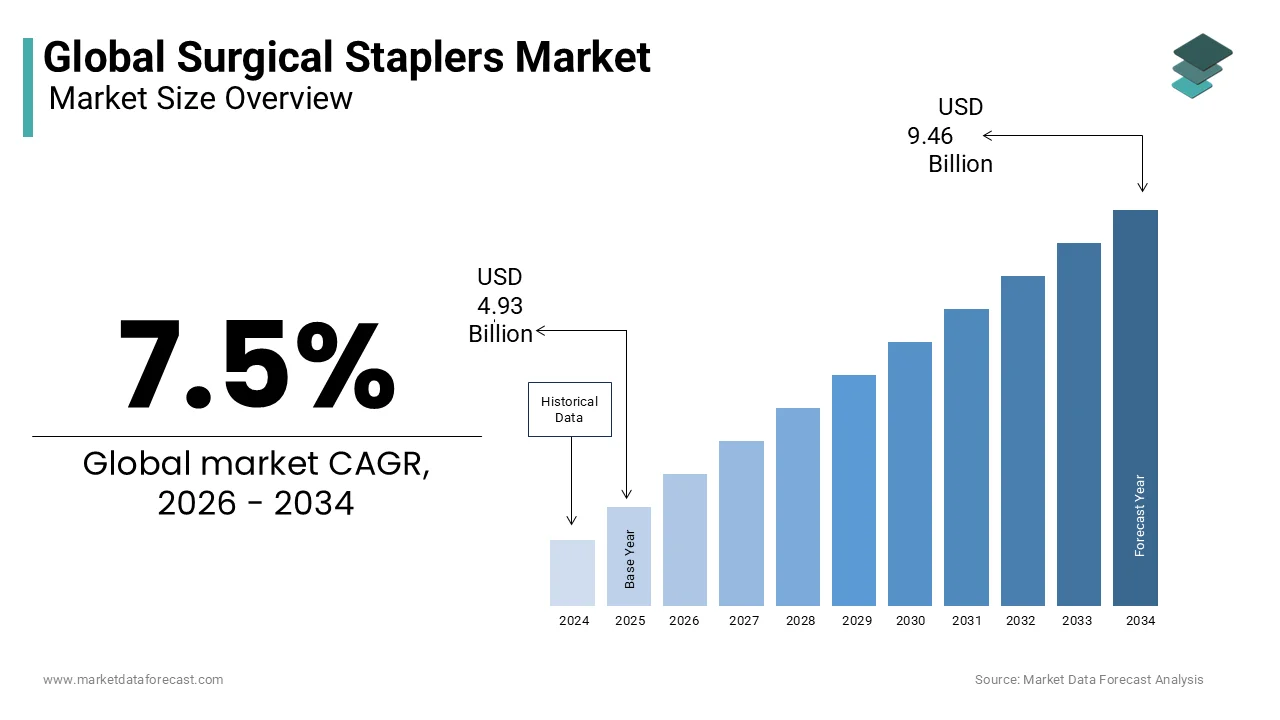
The surgical staplers are specialized medical devices designed to facilitate tissue approximation, resection, and anastomosis during surgical procedures with greater speed and precision than traditional suturing. These instruments deploy rows of metallic or polymeric staples to close incisions or connect hollow organs, significantly reducing operative time and minimizing tissue trauma. The global reliance on these devices is underscored by the sheer volume of surgical interventions performed annually, with the World Health Organization estimating that approximately 310 million major surgical procedures occur worldwide each year. As per data from the Centers for Disease Control and Prevention, over 48 million inpatient surgeries are conducted annually in the United States alone, creating a massive baseline demand for reliable closure technologies. The prevalence of conditions necessitating surgical intervention remains high, with the Global Cancer Observatory reporting nearly 20 million new cancer cases globally in 2022, many of which require complex resections involving stapling devices. Furthermore, the rise in gastrointestinal disorders affects millions, as the World Gastroenterology Organisation notes that digestive diseases account for a significant portion of hospital admissions globally. Regulatory bodies like the Food and Drug Administration maintain strict oversight, having cleared thousands of specific stapler models to ensure patient safety during these critical interventions.
MARKET DRIVERS
Escalating Volume of Minimally Invasive Surgical Procedures Drives Adoption
The exponential growth in minimally invasive surgical procedures for advanced surgical staplers across healthcare facilities globally is elevating the growth of the surgical staplers market. Unlike open surgeries, minimally invasive techniques such as laparoscopy and thoracoscopy rely heavily on specialized stapling devices that can operate through small incisions while providing precise tissue manipulation and closure. The Society of American Gastrointestinal and Endoscopic Surgeons indicates that over 90% of cholecystectomies in developed nations are now performed using laparoscopic methods, a procedure that invariably requires the use of endoscopic staplers. Additionally, the number of bariatric surgeries has surged, with the American Society for Metabolic and Bariatric Surgery reporting that approximately 256000 such procedures were performed in the United States in 2023 alone, each necessitating multiple firings of sophisticated stapling units. The clinical benefits of reduced postoperative pain, shorter hospital stays, and faster recovery times drive both surgeons and patients to prefer these techniques. According to the National Center for Health Statistics, the rate of outpatient surgeries has increased over the last decade, further amplifying the need for efficient closure tools. As surgical training programs increasingly focus on laparoscopic skills, the proficiency and comfort levels of surgeons with these devices improve, leading to higher utilization rates.
Rising Prevalence of Chronic Diseases and Cancer Necessitates Complex Resections
The increasing global burden of chronic diseases and malignancies, by escalating the number of complex resections requiring secure tissue closure, is elevating the growth of the urological staplers market. Cancer remains a leading cause of morbidity and mortality, with the International Agency for Research on Cancer stating that there were nearly 9.7 million cancer deaths globally in 2022, many of which involved surgical tumor removal. Colorectal cancer, for instance, frequently requires bowel resection and anastomosis, procedures where surgical staplers are the gold standard for ensuring leak-proof connections. The American Cancer Society projects that the number of new colorectal cancer cases will continue to rise, particularly in younger populations, thereby sustaining demand for gastrointestinal stapling devices. Similarly, the prevalence of inflammatory bowel diseases such as Crohn's disease and ulcerative colitis affects millions, with the Crohn's and Colitis Foundation estimating that up to 1.6 million people in the United States suffer from these conditions, often requiring surgical intervention. Lung cancer surgeries also contribute significantly, as the World Health Organization reports lung cancer as the most common cancer worldwide in terms of incidence and mortality. These complex oncological procedures demand high precision and reliability to prevent complications like anastomotic leaks, which can be fatal. Consequently, the rising incidence of these pathologies directly correlates with increased consumption of surgical staplers in operating rooms globally.
MARKET RESTRAINTS
High Costs Associated with Powered and Robotic Stapling Systems
The substantial financial burden associated with acquiring and utilizing powered and robotic surgical stapling systems, particularly in resource-constrained healthcare settings, is hampering the growth of the surgical staplers market. While these advanced devices offer superior ergonomics and consistent staple formation, their upfront acquisition costs and recurring expenses for proprietary batteries and reloads are considerably higher than manual alternatives. A single powered stapler handle can cost several thousand dollars, and the disposable reloads often range from 200 to 500 dollars per unit, creating a heavy operational expense for hospitals. According to data from the Healthcare Financial Management Association, surgical supply costs represent one of the largest variable expenses for hospitals, prompting administrators to scrutinize the usage of high-cost disposables. In developing nations, where healthcare budgets are tight, the adoption of these premium technologies is often delayed or limited to tertiary care centers. The World Bank notes that health expenditure per capita in low-income countries remains significantly lower than in high-income nations, restricting the ability of these regions to invest in expensive surgical technologies. Furthermore, the lack of comprehensive reimbursement policies for specific powered stapling procedures in certain jurisdictions discourages widespread adoption. Hospitals may opt for cheaper manual staplers despite the potential ergonomic benefits of powered versions, thereby slowing the overall market growth for high-end segments.
Risk of Device Malfunction and Complications Limiting Clinical Confidence
The concerns regarding device malfunctions, including misfiring, jamming, and incomplete staple formation, are impacting surgeon confidence and patient safety outcomes, hampering the growth of the surgical staplers market. Although rare, mechanical failures in surgical staplers can lead to severe complications such as anastomotic leaks, bleeding, and the need for reoperation, which carry significant morbidity and mortality risks. These incidents often result in heightened scrutiny from hospital credentialing committees and can lead to the temporary suspension of specific product lines. The variability in tissue thickness and vascularity among patients further complicates the reliable performance of stapling devices, requiring surgeons to exercise extreme caution. According to the Institute for Safe Medication Practices, human factors and device design flaws often interact to cause errors, prompting calls for more rigorous testing and design improvements. The fear of litigation and reputational damage associated with device failure makes some surgeons hesitant to adopt newer or less proven stapling technologies.
MARKET OPPORTUNITIES
Integration of Smart Connectivity and Data Analytics in Surgical Devices
The emergence of smart surgical staplers equipped with connectivity and data analytics capabilities to enhance procedural precision and postoperative outcomes is greatly influencing the growth of the surgical staplers market. These next-generation devices integrate sensors that measure tissue compression, thickness, and staple formation in real time, providing immediate feedback to the surgeon to optimize firing conditions. The concept of the connected operating room is gaining traction, with the Association of Perioperative Registered Nurses highlighting that digital integration can reduce errors and improve workflow efficiency. Manufacturers are increasingly partnering with technology firms to develop cloud-based platforms that aggregate this data, allowing for continuous improvement of device algorithms. This shift towards data-driven surgery aligns with the broader trend of value-based healthcare, where outcomes are meticulously tracked and optimized. The ability to remotely monitor device status and predict maintenance needs also reduces downtime and ensures equipment readiness.
Expansion of Single Port and Robotic-Assisted Surgical Platforms
The rapid advancement and adoption of single-port and robotic-assisted surgical platforms for the development of specialized miniaturized stapling instruments is also expected to escalate the growth of the surgical staplers market. As surgeons seek to further reduce invasiveness, single incision laparoscopic surgery (SILS) and robotic procedures require staplers with enhanced articulation, smaller profiles, and greater dexterity than conventional tools. The Intuitive Surgical da Vinci system, which dominates the robotic surgery landscape, has facilitated hundreds of thousands of procedures globally, creating a robust ecosystem for compatible robotic staplers. According to the Society of Surgical Oncology, the use of robotic assistance in complex cancer surgeries is increasing due to its superior visualization and range of motion. This trend drives the need for staplers that can navigate tight anatomical spaces and articulate at extreme angles without compromising staple line integrity. Manufacturers are responding by designing dedicated robotic stapling end effectors that integrate seamlessly with these advanced platforms. The market for single-port accessories is expanding as well, with the European Association for Endoscopic Surgery noting a surge in trials and adoption of SILS techniques for various indications.
MARKET CHALLENGES
Complexity of Sterilization and Reprocessing Protocols for Reusable Components
The intricate and stringent requirements for sterilizing and reprocessing reusable components of surgical staplers in healthcare facilities and manufacturers alike are one of the major challenges for the growth of the surgical staplers market. While many staplers are single-use, certain handles and robotic end effectors are designed for multiple uses, necessitating rigorous cleaning and sterilization cycles to prevent cross-contamination. The Association for the Advancement of Medical Instrumentation outlines complex guidelines for reprocessing surgical instruments, which can be difficult to follow consistently in high-volume operating rooms. Failure to adequately clean lumens and moving parts can lead to bioburden retention and subsequent surgical site infections, posing severe risks to patients. According to the Centers for Disease Control and Prevention, surgical site infections remain a leading cause of healthcare-associated infections, driving intense scrutiny on instrument processing protocols. The labor-intensive nature of manual cleaning, combined with the risk of human error,r makes compliance challenging, especially in understaffed facilities. Additionally, repeated sterilization cycles can degrade the mechanical integrity of reusable components, potentially affecting their performance and safety. The Food and Drug Administration has issued warnings regarding the reprocessing of certain devices, urging manufacturers to provide clearer instructions and validation data.
Environmental Impact and Waste Management of Single-Use Devices
The extensive reliance on single-use surgical staplers generates a substantial volume of medical waste, creating a pressing environmental challenge that the industry must address. This factor additionally impedes the growth of the surgical staplers market. Each procedure often involves the disposal of multiple plastic and metal cartridges, handles, and packaging materials, contributing significantly to the healthcare sector's carbon footprint. The World Health Organization estimates that the health care sector is responsible for approximately 5% of global greenhouse gas emissions, with disposable medical devices being a major contributor. The complex composition of stapler cartridges, which often combines plastics, metals, and residual biological material, makes recycling difficult and costly. According to the Environmental Protection Agency, medical waste disposal requires specialized treatment methods such as incineration or autoclaving, which release pollutants and consume significant energy. Growing regulatory pressure and societal demand for sustainability are forcing hospitals to reevaluate their procurement policies and seek greener alternatives. However, the imperative for sterility and infection control often conflicts with environmental goals, limiting the feasibility of reusable options in many scenarios. Manufacturers face the dual challenge of maintaining product safety and performance while innovating towards more sustainable materials and designs. The lack of standardized recycling programs for medical devices further exacerbates the issue, leaving many facilities with few options other than landfill or incineration. Addressing this environmental dilemma requires collaborative efforts across the supply chain to develop circular economy solutions without compromising patient safety.
REPORT COVERAGE
| REPORT METRIC | DETAILS |
| Market Size Available | 2025 to 2034 |
| Base Year | 2026 |
| Forecast Period | 2026 to 2034 |
| Segments Analysed | By Type, Product, End-User, Application, and Region |
| Various Analyses Covered | Global, Regional & Country Level Analysis, Segment-Level Analysis, Drivers, Restraints, Opportunities, Challenges; PESTLE Analysis, Porter's Five Forces Analysis, Competitive Landscape, Analyst Overview of Investment Opportunities |
| Regions Analysed | North America, Europe, Asia Pacific, Latin America, the Middle East, and Africa |
| Key Market Players | Becton Dickinson, Ethicon Inc. (U.S.), Medtronic plc (Ireland), CONMED Corporation (U.S.), Smith & Nephew (U.K.), Purple Surgical Inc. (U.K.), Intuitive Surgical Inc. (U.S.), Welfare Medical Ltd. (U.K.). |
SEGMENTAL ANALYSIS
By Type Insights
The disposable staplers segment accounted for a dominant share of the surgical staplers market in 2025, owing to the global imperative to eliminate cross-contamination and surgical site infections, which remain a leading cause of patient morbidity. Reusable instruments carry an inherent risk of inadequate sterilization due to complex internal mechanisms that can harbor biological debris despite rigorous cleaning protocols. The Centers for Disease Control and Prevention reports that surgical site infections affect approximately 2% to 5% of patients undergoing inpatient surgery in the United States alone, prompting hospitals to adopt strict single-use policies for critical devices. The Association for the Advancement of Medical Instrumentation emphasizes that the complexity of reprocessing surgical staplers often leads to failures in cleaning validation, thereby increasing the risk of pathogen transmission. Disposable units arrive pre-sterilized and sealed, guaranteeing sterility until the moment of use and removing the variable of human error in reprocessing. According to the World Health Organization, the implementation of single-use devices for high-risk procedures has been correlated with a measurable reduction in healthcare-associated infections. Furthermore, regulatory bodies like the Food and Drug Administration have issued increasingly stringent guidelines regarding the reprocessing of single-use devices, effectively making disposable options the safest and most compliant choice for healthcare providers.
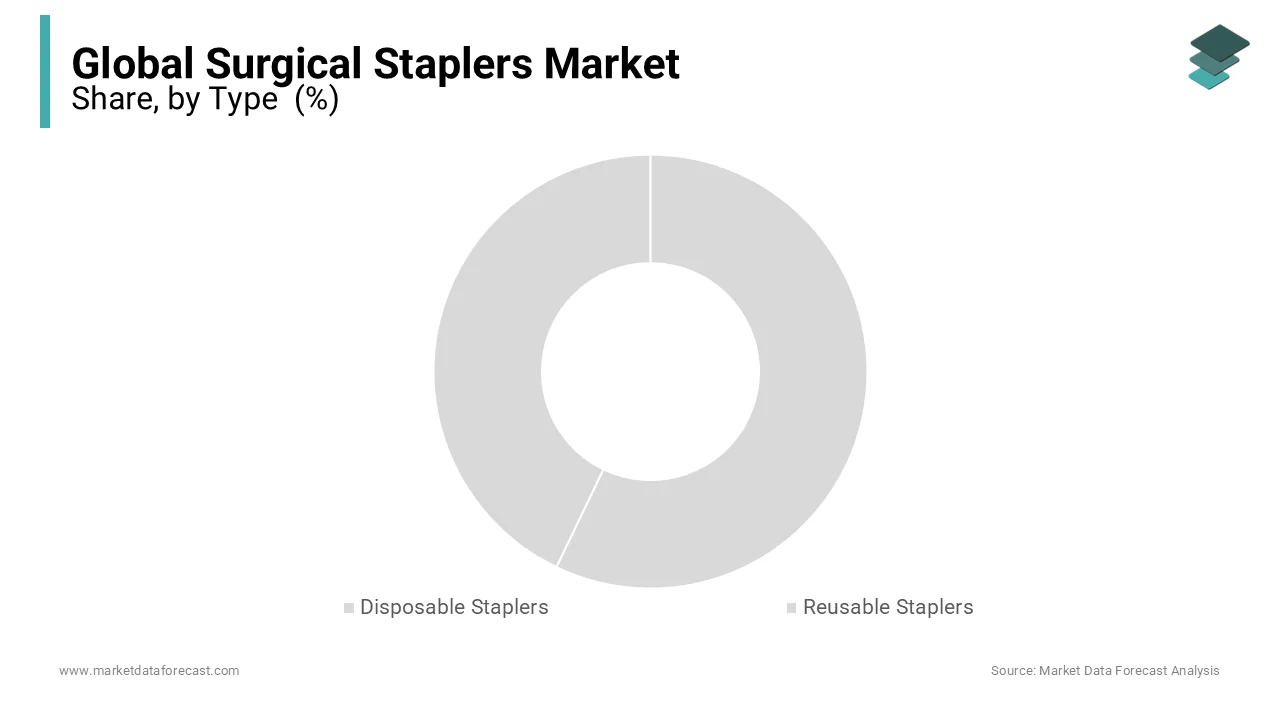
The reusable staplers segment is anticipated to witness the fastest CAGR of 6.8% during the forecast period, owing to the intensifying global pressure to reduce the massive environmental footprint of the healthcare industry. Single-usee medical devices generate enormous volumes of non-biodegradable waste, contributing significantly to landfill accumulation and greenhouse gas emissions from incineration. The World Health Organization estimates that the health care sector is responsible for nearly 5% of global net carbon emissions, with disposable plastics being a major contributor. In response, government agencies and hospital networks in Europe and North America are implementing aggressive zero-waste targets and circular economy frameworks. The European Union's Green Deal explicitly encourages the shift towards reusable medical devices where clinically safe to do so, prompting procurement policies that favor durable instruments. Manufacturers are responding by engineering reusable staplers with advanced materials that withstand hundreds of sterilization cycles without compromising performance. The development of closed-loop recycling programs for end-of-life reusable devices further enhances their sustainability profile.
By Product Insights
The manual staplers segment was the largest by capturing 59.1% of the surgical staplers market share in 2025, with their exceptional versatility and complete independence from batteries or electrical consoles, ensuring functionality in any surgical environment. Unlike powered devices,s which may fail due to battery depletion or mechanical glitches, manual staplers rely solely on the surgeon's physical actuation, providing a reliable fallback and primary tool for a wide range of procedures. The American College of Surgeons notes that manual instruments remain the standard for training residents and are essential in emergencies where power sources may be unavailable or unreliable. Their lightweight design and ergonomic handles allow for precise tactile feedback, enabling surgeons to feel tissue resistance and adjust compression accordingly. According to the Joint Commission, the simplicity of manual devices reduces the risk of user error associated with complex electronic interfaces, making them safer for general use across various skill levels. Furthermore, manual staplers are compatible with a vast array of reload sizes and types, allowing a single handle to be used for multiple applications ranging from skin closure to visceral anastomosis. This adaptability minimizes the need for multiple specialized devices in the operating room, streamlining instrument trays. The global prevalence of manual staplers in both open and minimally invasive surgeries ensures their continued dominance, particularly in regions where infrastructure limitations preclude the consistent use of powered technologies.
The powered staplers segment is anticipated to register the fastest CAGR of 9.4% from 2026 to 2034 due to their ability to significantly reduce hand strain and fatigue for surgeons performing lengthy or complex minimally invasive procedures. Manual firing of staplers, especially in thick tissue or confined spaces, requires substantial grip strength, which can lead to hand fatigue, tremors, and inconsistent staple formation over time. Powered staplers utilize electric motors to drive the staple firing sequence with uniform force, eliminating the physical variability associated with manual actuation. Studies published in the Journal of Surgical Research indicate that the use of powered devices reduces the peak force required by the surgeon by up to 80%, thereby preserving dexterity and control. This ergonomic advantage is particularly critical in robotic and laparoscopic surgeries where the surgeon operates through ports with a limited range of motion. As the average duration of complex oncological and bariatric procedures increases, the demand for tools that mitigate physical strain becomes paramount.
By End User Insights
The abdominal surgery segment was the largest by holding 35.7% of the surgical staplers market share in 2025, owing to the escalating global burden of gastrointestinal diseases and malignancies,s which frequently require surgical intervention using stapling devices. Conditions, such as colorectal cancer, gastric cancer, and inflammatory bowel disease,se necessitate complex resections and anastomoses where surgical staplers are the gold standard. The International Agency for Research on Cancer reports that colorectal cancer is the third most commonly diagnosed cancer worldwide, with nearly 2 million new cases identified annually, each typically requiring multiple staple firings. Additionally, the prevalence of obesity has spurred a surge in bariatric procedures being performed annually, all of which rely heavily on abdominal staplers for stomach partitioning and intestinal rerouting. The World Gastroenterology Organisation indicates that digestive diseases account for a significant proportion of hospital admissions globally, creating a consistent and high-volume demand for reliable closure technologies. The complexity of abdominal anatomy requires staplers that can navigate tight spaces and secure thick tissue bundles, making advanced stapling systems indispensable.
The thoracic surgery segment is likely to witness the fastest CAGR of 8.4% of share in 2025, owing to the increasing global incidence of lung cancer and chronic respiratory conditions that require surgical resection. Lung cancer remains the leading cause of cancer death worldwide, and surgical removal of the tumor via lobectomy or segmentectomy is the primary curative treatment for early-stage disease. The World Health Organization reports that lung cancer accounts for approximately 1.8 million deaths annually, driving a high volume of thoracic interventions. These procedures heavily rely on surgical staplers for dividing fissures, sealing bronchial stumps, and resecting lung parenchyma, often requiring multiple firings of specialized thoracic staplers. Furthermore, the rise in chronic obstructive pulmonary disease and emphysema has led to an increase in lung volume reduction surgeries, which also utilize stapling technology. The American Cancer Society projects that the number of new lung cancer cases will continue to rise, particularly among aging populations, ensuring sustained demand for thoracic stapling devices.
REGIONAL ANALYSIS
North America Surgical Staplers Market Analysis
North America was the top performer in the global surgical staplers market by holding 42.3% ofthe share in 2025, owing to its advanced healthcare infrastructure, high adoption rate of cutting-edge surgical technologies, and a robust reimbursement framework. The United States serves as the primary engine of this growth, hosting a vast network of ambulatory surgical centers and hospitals that perform millions of procedures annually. According to the Centers for Disease Control and Prevention, over 48 million inpatient surgeries are conducted in the US each year, creating a massive baseline demand for surgical consumables. The presence of leading market players and a strong culture of innovation fosters the rapid introduction of powered and robotic stapling systems. The Food and Drug Administration's streamlined approval pathways for novel devices encourage manufacturers to launch their latest technologies in this market first. Furthermore, the high prevalence of chronic conditions such as obesity and cancer drives the volume of bariatric and oncological surgeries, which are heavy users of stapling devices. As per data from the American College of Surgeons, the shift towards minimally invasive techniques is more advanced in North America than in any other region, further amplifying the demand for sophisticated endoscopic staplers.
Europe Surgical Staplers Market Analysis
Europe's surgical staplers market was ranked second by holding 26.4% of the market share in 2025, with a mature healthcare sector and a strong emphasis on standardization and patient safety. The widespread adoption of minimally invasive surgical techniques across major economies such as Germany, France, and the United Kingdom is fuelling the growth of the market. The European Union's regulatory framework, governed by the Medical Device Regulation, ensures high standards of device quality and safety, fostering trust in advanced stapling technologies. According to the European Association for Endoscopic Surgery, the penetration of laparoscopic and robotic surgeries in Europe has reached levels comparable to those in North America, particularly in colorectal and bariatric procedures. As per reports from the Organisation for Economic Co-operation and Development, healthcare spending in Western European nations remains robust, supporting the procurement of premium surgical devices. Additionally, the region is witnessing a growing trend towards sustainability, with several countries implementing initiatives to reduce medical waste, which is influencing the mix between disposable and reusable staplers. The presence of renowned research institutions and collaboration between academia and industry further propel the development and adoption of innovative stapling solutions.
Asia Pacific Surgical Staplers Market Analysis
The Asia Pacific surgical staplers market is likely to experience significant growth in the coming years, with the rapidly improving healthcare infrastructure, rising medical tourism, and increasing awareness of advanced surgical options in countries like China, India, and Japan. The sheer size of the population and the rising prevalence of lifestyle-related diseases such as diabetes and obesity are driving a surge in surgical volumes. According to the World Health Organization, the number of surgical procedures performed in the Asia Pacific region has increased significantly as governments invest in expanding hospital capacity and training skilled surgeons. Japan, with its advanced healthcare system and aging demographic, is a key contributor to the demand for high-precision robotic and powered staplers. In India and China, the expansion of private healthcare networks and government initiatives to universalize health coverage are making advanced surgeries more accessible to the masses. As per data from the Asian Society for Cardiovascular and Thoracic Surgery, the adoption of minimally invasive techniques is accelerating rapidly in the region, creating new opportunities for endoscopic staplers.
Latin America Surgical Staplers Market Analysis
Latin America's surgical staplers market growth is likely to have prominent growth opportunities with the improvements in healthcare access and the gradual adoption of minimally invasive surgical practices. Brazil and Mexico are the dominant markets within the region, benefiting from relatively sophisticated healthcare systems and active government programs to combat chronic diseases. According to the Pan American Health Organization, efforts to reduce the burden of non-communicable diseases have led to an increase in surgical interventions for cancer and cardiovascular conditions. The rising middle class in urban areas is demanding higher-quality healthcare services, prompting private hospitals to invest in modern surgical technologies, including powered staplers. As per reports from the Brazilian Ministry of Health, the expansion of the public health system (SUS) has increased the volume of surgeries performed, creating a larger market for essential surgical consumables. The growing presence of international medical device manufacturers in the region is also improving product availability and training for local surgeons.
Middle East And Africa Surgical Staplers Market Analysis
The Middle East and Africa surgical staplers market growth is likely to grow with a diverse landscape ranging from highly advanced systems in the Gulf Cooperation Council countries to developing infrastructures in Sub-Saharan Africa. Countries such as Saudi Arabia and the United Arab Emirates are investing billions in building world-class medical cities and attracting top-tier medical talent, driving the adoption of the latest surgical technologies, including robotic staplers. According to the World Health Organization Regional Office for the Eastern Mediterranean, there is a concerted effort to reduce the burden of disease through expanded surgical services, which includes the procurement of essential devices like staplers. In Africa, organizations like Doctors Without Borders and various governmental partnerships are working to establish basic surgical capabilities, increasing the demand for reliable and durable stapling instruments. As per data from the African Union, the launch of the Continental Free Trade Area is expected to improve the supply chain and reduce the cost of medical imports. The high prevalence of certain cancers and trauma cases in the region necessitates robust surgical solutions.
COMPETITIVE LANDSCAPE
The competition in the surgical staplers market is intense and characterized by a few dominant multinational corporations that continuously vie for leadership through technological innovation and strategic expansion. Major players compete primarily on the reliability, ergonomic design, and versatility of their stapling systems, with a strong emphasis on reducing intraoperative complications like leaks or misfires. The landscape is dynamic as companies strive to integrate digital health features such as connectivity and data tracking into their devices to differentiate their offerings. High barriers to entry exist due to stringent regulatory requirements and the need for extensive clinical validation, which favors established firms with robust quality management systems. Recent trends show a shift towards robotic-compatible staplers, prompting traditional manufacturers to either develop their own robotic platforms or form alliances with robotics leaders. Price competition remains relevant in emerging markets, while developed regions focus on premium features and value-added services.
KEY MARKET PLAYERS
A list of crucial participants leading the global surgical sutures market profiled in this report is
- Becton Dickinson
- Ethicon Inc.
- Medtronic plc
- CONMED Corporation
- Smith & Nephew
- Purple Surgical Inc.
- Intuitive Surgical Inc.
- Welfare Medical Ltd.
- Reach Surgical Inc.
- Merril Life Science Pvt. Ltd.
- Grena Ltd.
- B. Braun Melsungen AG
- Dextera Surgical Inc.
- Frankenman International
TOP LEADING PLAYERS IN THE MARKET
- Medtronic plc stands as a global pioneer in the surgical staplers market by offering an extensive portfolio that spans manual, powered, and robotic stapling solutions. The company consistently drives innovation through its Signia and Tri-Staple technologies,s which enhance tissue compression and staple formation reliability. Medtronic recently strengthened its market position by expanding its robotic-assisted surgery ecosystem with the launch of new stapling end effectors compatible with its Hugo system. The firm actively collaborates with surgical societies to provide training programs that promote the adoption of minimally invasive techniques globally. By integrating smart sensors into its powered staplers, Medtronic provides real-time feedback to surgeons, ensuring optimal performance during complex procedures.
- Ethicon Inc, a subsidiary of Johnson and Johnson, is a leading force in the surgical staplers market, renowned for its Echelon and Cordis product lines that set industry standards for precision and reliability. The company focuses heavily on advancing minimally invasive surgery through its powered stapling platforms that reduce surgeon fatigue and improve consistency. Ethicon recently launched next-generation staplers featuring adaptive firing technology, which automatically adjusts to tissue thickness to prevent malfunctions. The firm has also expanded its manufacturing capabilities to ensure a robust supply chain capable of meeting global demand surges. Ethicon strengthens its position by partnering with healthcare providers to implement comprehensive surgical education initiatives that highlight the benefits of advanced stapling techniques.
- Intuitive Surgical Inc dominates the robotic surgery segment and significantly influences the surgical staplers market through its proprietary endoscopic wristed stapling instruments designed for the da Vinci system. The company contributes to the global market by enabling complex minimally invasive procedures that were previously difficult or impossible to perform with traditional tools. Intuitive Surgical recently introduced enhanced stapler cartridges with improved articulation range,s allowing surgeons to access tight anatomical spaces with greater ease. The firm continues to invest heavily in research to refine the ergonomics and functionality of its robotic stapling end effectors.
TOP STRATEGIES USED BY KEY MARKET PARTICIPANTS
Key players in the surgical staplers market primarily employ strategies such as aggressive research and development to launch innovative powered and robotic stapling devices that offer superior precision and ergonomics. Companies frequently pursue strategic acquisitions of smaller technology firms to integrate smart sensors and data analytics into their product portfolios. Expanding global distribution networks and establishing local manufacturing hubs are common tactics used to penetrate emerging markets and reduce supply chain costs. Major participants also focus on extensive surgeon training programs and clinical partnerships to drive the adoption of minimally invasive techniques that rely on advanced staplers. Regulatory approvals for new indications and product variations serve as a critical strategy to maintain competitive advantage and extend product lifecycles. Additionally, firms are increasingly investing in sustainability initiatives to develop eco-friendly packaging and reusable options where feasible to address environmental concerns.
RECENT HAPPENINGS IN THIS MARKET
- In February 2020, a new generation of peri strips dry with Veritas collagen matrix product (PSDV) was launched by Baxter International. PSDV has a secure grip for reliable staple line reinforcement in surgical procedures.
- In December 2020, an EEA circular stapler with Tri-staple technology was launched by Medtronic India. The Tri-staple technology comprises a sloped cartridge face that delivers less stress on the Tissue. The EEA circular stapler with Tri-staple technology stipulated for colorectal procedures requires a safer anastomosis to avoid leaks. This product launch is to escalate the product portfolio of the company.
- Baxter International, a global leader in advanced surgical innovations, announced 510k clearance from the Food and Drug Administration in the U.S. for a new generation of its Peri-strips dry with Veritas collagen matrix. The new generation of PSDV is twice as fast as the earlier version and is another staple line reinforcement product. Unfortunately, modern stapling technology used in bariatric procedures results in high morbidity, and mortality persists. Staple line Bleeding and leaks are the most prevalent complications while performing stapling.
MARKET SEGMENTATION
This research report on the global surgical staplers market has been segmented and sub-segmented based on type, product, application, end-user, and region.
By Type
- Disposable Staplers
- Reusable Staplers
By Product
- Manual
- Powered
By Application
- Pelvis
- Abdominal
- Thoracic
- Cardiac
- Hemorrhoids
- Pediatric
- Cosmetic
- General Surgery
By End User
- Hospitals
- Ambulatory Surgical Centers
- Clinics
By Region
- North America
- Europe
- Asia Pacific
- Latin America
- Middle East and Africa