Europe Surgical Staplers Market Size, Share, Trends & Growth Forecast Report By Type, Product, End Users, Application & Country (United Kingdom, France, Spain, Germany, Italy, Russia, Sweden, Denmark, Switzerland, Netherlands and Rest of Europe), Industry Analysis From 2026 to 2034.
Market Size, 2025
$1.56 BnMarket Estimate, 2026
$1.68 BnMarket Forecast, 2034
$2.97 BnCAGR, 2026–2034
7.4%Europe Surgical Staplers Market Report Summary
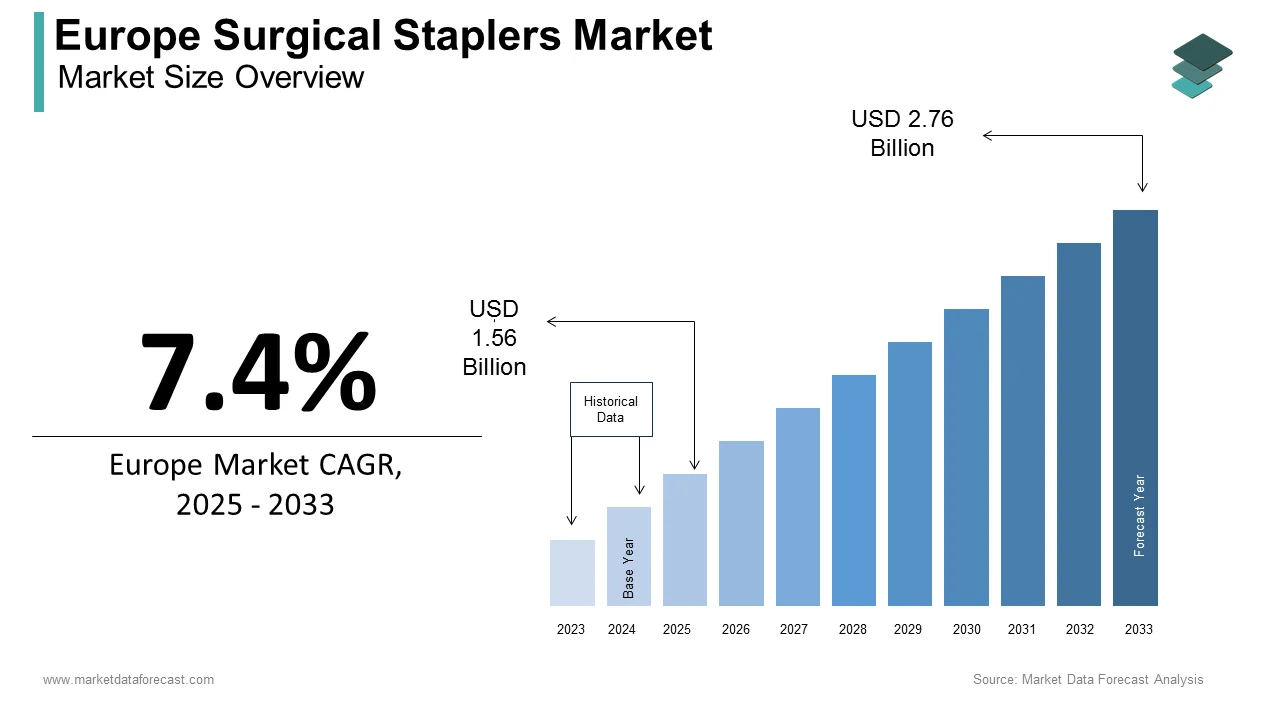
The European surgical staplers market was valued at USD 1.56 billion in 2025, is estimated to reach USD 1.68 billion in 2026, and is projected to reach USD 2.97 billion by 2034, growing at a CAGR of 7.4% during the forecast period from 2026 to 2034.
The growth of the European surgical staplers market is driven by the rising volume of surgical procedures, increasing demand for minimally invasive surgeries, and the adoption of advanced stapling technologies. The shift toward disposable staplers, strong hospital infrastructure, and focus on improving surgical efficiency and patient safety are further accelerating market expansion across the region.
Key Market Trends
- Rising preference for minimally invasive and laparoscopic procedures supports steady demand for surgical staplers.
- Growing adoption of disposable staplers to reduce infection risk and enhance hygiene standards.
- Continuous technological advancements in powered and ergonomic stapler designs are improving surgical precision.
- Expanding hospital and outpatient surgical center networks are driving the use of stapling devices.
- Increasing collaboration among medical device manufacturers to innovate hybrid and automated stapling systems.
Segmental Insights
- Based on type, the disposable surgical staplers segment accounted for the largest share of the European surgical staplers market in 2024, driven by their single-use design, infection control benefits, and growing adoption across high-volume healthcare facilities.
- Based on product, the manual surgical staplers segment held a 9% share in 2024, supported by their wide clinical application, affordability, and ease of use in both open and minimally invasive surgeries.
- Based on end user, the hospitals segment dominated the European surgical staplers market in 2024, owing to the high number of surgical procedures performed, availability of advanced equipment, and growing adoption of robotic-assisted technologies in hospital settings.
Regional Insights
The European surgical staplers market is witnessing steady growth across major economies, supported by rising healthcare investments and the modernization of surgical facilities.
- Germany led the market in 2024, capturing a 7% share, attributed to advanced surgical infrastructure and widespread adoption of powered staplers.
- France ranked second in the regional market, driven by strong demand for innovative surgical tools and growing healthcare spending.
- The United Kingdom is expected to record a notable CAGR over the forecast period, supported by healthcare digitalization and robotic surgery adoption.
- Italy is projected to exhibit a prominent CAGR from 2026 to 2034, while Spain is anticipated to hold a noteworthy market share due to rising hospital capacity and increased access to elective surgeries.
Competitive Landscape
The European surgical staplers market is moderately consolidated, with key players focusing on product innovation, portfolio expansion, and regional partnerships to enhance market presence. Companies are investing in ergonomic design development, automation technologies, and infection-control solutions to meet growing surgical demands and regulatory standards.
Prominent players in the European surgical staplers market include Ethicon Inc., Johnson & Johnson MedTech, Medtronic plc, CONMED Corporation, Smith & Nephew, Purple Surgical Inc., Intuitive Surgical Inc., Welfare Medical Ltd., Reach Surgical Inc., Merril Life Science Pvt. Ltd., Grena Ltd., B. Braun Melsungen AG, Dextera Surgical Inc., Frankenman International, and Becton & Dickinson.
Europe Surgical Staplers Market Size
The size of the surgical staplers market in Europe was valued at USD 1.56 billion in 2025. The European market is further estimated to grow at a CAGR of 7.4% from 2026 to 2034 and be worth USD 2.97 bn by 2034 from USD 1.68 billionn in 2026.
Surgical staplers are instruments designed to join tissues or seal blood vessels during surgical procedures. These devices are widely employed in general, bariatric, colorectal, thoracic, and gynecological surgeries that offer advantages over manual suturing, such as reduced operative time, enhanced precision, and lower variability in outcomes. According to Eurostat, more than 21 million inpatient surgical procedures were performed across the European Union in 2023, which provides a substantial procedural base for the adoption of surgical staplers. In addition, data from the European Centre for Disease Prevention and Control (ECDC) indicated that surgical site infections accounted for around 20% of all healthcare-associated infections in acute care hospitals in 2022. These infection rates highlight the growing clinical preference for closed stapling systems that reduce tissue exposure and the risk of contamination. Together, these epidemiological and infrastructural dynamics define the operational landscape of the Europe surgical staplers market.
MARKET DRIVERS
Rising Volume of Minimally Invasive Surgeries Fuels Adoption
The sustained shift toward minimally invasive surgical techniques across European healthcare systems is driving the growth of the European surgical staplers market. Laparoscopic and robotic-assisted procedures require specialized stapling instruments capable of functioning within confined anatomical spaces. According to the Organisation for Economic Co-operation and Development (OECD), Germany recorded a steady increase in laparoscopic cholecystectomy procedures, which reflects the broader European shift toward minimally invasive surgical techniques. Similarly, as per the French National Authority for Health, an increase in the adoption of robotic-assisted colorectal surgeries was seen over recent years. In addition, according to the European Association for Endoscopic Surgery (EAES), laparoscopic methods now account for a majority of elective abdominal surgeries in Western Europe, with this share continuing to rise as hospitals modernize their surgical infrastructure. This evolution has driven demand for articulating, reloadable, and powered surgical staplers that provide secure anastomoses while minimizing incision size. In response, device manufacturers are developing advanced stapling platforms designed for compatibility with robotic systems and enhanced ergonomic control, aligning closely with the workflow and precision requirements of contemporary operating theatres.
Aging Population and Escalating Burden of Chronic Surgical Conditions
The aging demographic profile of Europe is amplifying the incidence of diseases requiring stapler-assisted interventions, which is further boosting the expansion of the surgical staplers market. According to Eurostat, individuals aged 65 and older represented about 21% of the European Union population in 2024, and this figure is projected to rise further by 2030. This aging demographic faces higher incidences of colorectal cancer, obesity-related conditions, and gastrointestinal disorders, all of which frequently require surgical interventions involving mechanical stapling devices. According to the European Cancer Information System, colorectal cancer remains among the most commonly diagnosed malignancies in Europe, with surgical resection serving as the primary curative approach. According to the World Health Organization’s Regional Office for Europe, high obesity prevalence among middle-aged and older adults was reported, which is contributing to the growing demand for bariatric procedures. Surgical associations in countries such as Italy and Spain note steady increases in bariatric operations, including sleeve gastrectomy and gastric bypass, which rely extensively on linear and circular staplers for gastrointestinal reconstruction. Collectively, these demographic and epidemiological trends are sustaining consistent growth in the consumption of surgical stapling devices across Europe.
MARKET RESTRAINTS
Stringent Regulatory Oversight Under EU MDR Delays Product Approvals
The European Union Medical Device Regulation has significantly extended the time to market for new surgical staplers due to heightened clinical evidence and conformity assessment requirements, which are impeding the growth of the European surgical staplers market. According to the European Commission, certification timelines for higher-risk medical devices have lengthened significantly under the current EU Medical Device Regulation framework due to increased documentation and review requirements. As per a 2023 survey by the European Association of Medical Technology Industries (MedTech Europe), a majority of manufacturers experienced CE marking delays of more than six months, which is citing limited notified body capacity and shifting interpretations of clinical evidence standards as key factors. These regulatory bottlenecks have slowed the market introduction of advanced stapling systems incorporating features such as bioabsorbable materials and enhanced safety mechanisms. As a result, many hospitals continue to rely on older-generation devices, constraining the adoption of innovative technologies and complicating procurement and inventory management across both public and private healthcare networks.
High Incidence of Stapler-Related Complications Undermines Clinical Confidence
Surgical staplers remain associated with adverse events that affect surgeon trust and patient outcomes, which further hinders the growth of the surgical staplers market in Europe. According to the U.S. Food and Drug Administration, its analysis of 2011–2018 reports identified over 41,000 adverse event reports for surgical staplers and implantable staples, including more than 9,000 serious injuries and over 32,000 malfunctions. Common issues include misfiring, incomplete staple formation, and tissue tearing. According to sources, anastomotic leak rates in colorectal resections can differ between mechanical staplers and hand-sewn techniques in high-volume centers. As per the European Society of Coloproctology, managing a single leak adds approximately €21,500 to episode costs. National surgical associations in the Netherlands and Sweden have issued cautious guidance on stapler use in high-risk anatomies, which is prompting some surgeons to revert to manual suturing. This persistent safety concern, validated by real-world data, curtails broader adoption even as procedural volumes grow.
MARKET OPPORTUNITIES
Integration of Smart Technologies Presents a Transformative Growth Vector
The incorporation of digital and sensor-based technologies into surgical staplers is creating a new frontier for performance enhancement and data-driven care. Modern platforms now feature real-time feedback on tissue thickness, compression force, and staple deployment dynamics, enabling adaptive firing to reduce mechanical failure. According to the European Society of Surgical Oncology (ESSO), ongoing multicenter research across multiple EU countries has shown that digital and sensor-assisted stapling systems can help reduce intraoperative complications compared with conventional devices. Similarly, according to a 2023 study by the Karolinska Institute, the use of AI-supported surgical decision systems improved intraoperative precision and reduced bleeding risks in bariatric procedures. The European Commission’s Digital Europe Programme has also committed more than €180 million since 2022 toward the advancement of smart surgical and robotic technologies, which is reinforcing the EU’s focus on value-based healthcare and surgical quality assurance. As hospitals increasingly prioritize reproducibility, traceability, and outcome-linked procurement, intelligent staplers capable of capturing and analyzing procedural data are emerging as a premium segment within Europe’s surgical device market.
Expansion of Ambulatory Surgical Centers Creates New Demand Channels
The rapid growth of outpatient surgical facilities across Europe is diversifying stapler deployment beyond traditional hospital settings, which is expected to be another potential opportunity for the surgical staplers market in Europe. The Ambulatory Surgical Centers now perform an expanding range of complex procedures, including hernia repairs and bariatric surgeries, due to the cost efficiency and patient preference. According to the European Health Management Association (EHMA), the number of accredited outpatient and day-surgery centers across the European Union has continued to expand in recent years due to the health system reforms and efficiency goals. According to the European Association of Private Hospitals (UEHP), a growing share of elective general surgeries in Western Europe now takes place in day-surgery facilities, which reflects a shift toward minimally invasive and cost-efficient care models. In response to this structural change, manufacturers are developing compact, single-use staplers that eliminate the need for device reprocessing and support streamlined inventory management. Moreover, under reimbursement frameworks such as Germany’s G-DRG system, hospitals receive financial incentives for same-day discharge across numerous surgical categories. This broader transition toward decentralized, outpatient surgical care presents a scalable and sustainable growth channel for the surgical stapler market across Europe.
MARKET CHALLENGES
Surgeon Training Gaps Limit Optimal Utilization of Advanced Staplers
Inconsistent and non-standardized training in stapler use across European surgical education systems hampers the effective deployment of advanced devices, which is one of the key challenges to the expansion of the European surgical staplers market. According to the European Board of Surgery, a significant portion of surgical trainees across Europe receive limited formal instruction on the mechanics, troubleshooting, and safe use of surgical staplers during residency programs. Access to simulation-based training remains uneven, particularly in Eastern and Southern European regions. As per the European Society of Minimally Invasive Surgery (ESMIS), a considerable share of stapler-related complications stems from operator error, including improper cartridge selection and misalignment during use. As stapling systems become more advanced, featuring articulation, powered firing, and adaptive staple heights, the need for structured, competency-based training becomes increasingly critical. Without standardized educational requirements incorporated into national surgical curricula, the full clinical and economic potential of next-generation staplers will remain underused, which is limiting market growth despite significant technological progress.
Price Sensitivity in Publicly Funded Healthcare Systems Constrains Premium Adoption
The predominant public healthcare financing model of Europe prioritizes upfront cost over long-term value, which is limiting the adoption of high-end staplers and challenging the further expansion of the regional market. According to the European Commission’s 2023 report on public procurement in healthcare, acquisition price remains the dominant criterion in approximately three-quarters of medical device purchasing decisions across EU hospitals, which reflects a strong emphasis on cost containment over innovation. National health technology assessment (HTA) agencies, such as the UK’s National Institute for Health and Care Excellence (NICE) and France’s Haute Autorité de Santé (HAS), require comprehensive cost-effectiveness and outcomes data to justify premium pricing, which often results in preference for reusable or lower-cost alternatives. In Italy and Greece, centralized tender systems typically prioritize the lowest bids that frequently exclude innovative yet higher-priced technologies. Even in Germany, hospitals are increasingly adopting bundled or outcome-based payment models, which are creating further challenges for revenue predictability among manufacturers. This procurement landscape slows the adoption of advanced staplers capable of reducing complications and readmissions, which is reinforcing the continued reliance on older, less efficient systems and impeding Europe’s transition toward value-based healthcare.
REPORT COVERAGE
| REPORT METRIC | DETAILS |
| Market Size Available | 2025 to 2034 |
| Base Year | 2025 |
| Forecast Period | 2026 to 2034 |
| Segments Covered | By Tye, Product, End User, Application, and Country. |
| Various Analyses Covered | Global, Regional, and Country-Level Analysis, Segment-Level Analysis, Drivers, Restraints, Opportunities, Challenges; PESTLE Analysis; Porter’s Five Forces Analysis, Competitive Landscape, Analyst Overview of Investment Opportunities |
| Countries Covered | UK, France, Spain, Germany, Italy, Russia, Sweden, Denmark, Switzerland, Netherlands, Turkey, Czech Republic, and the Rest of Europe. |
| Market Leaders Profiled | Ethicon Inc., Johnson & Johnson MedTech, 5. Medtronic plc, Medtronic plc, CONMED Corporation, Smith & Nephew, Purple Surgical Inc., Intuitive Surgical Inc., Welfare Medical Ltd., Reach Surgical Inc., Merril Life Science Pvt. Ltd., Grena Ltd., B. Braun Melsungen AG, Dextera Surgical Inc., Frankenman International, and Becton & Dickinson. |
SEGMENT ANALYSIS
By Type Insights
The disposable surgical staplers segment accounted for the most significant share of the European surgical staplers market in 2024. The dominance of the disposable surgical staplers segment in the European market is attributed to the growing infection control protocols, streamlined logistics, alignment with single-use device mandates in high-volume surgical settings, and infection prevention imperatives in post-pandemic healthcare. The emphasis on reducing healthcare-associated infections has accelerated the shift toward single-use staplers across European hospitals. According to the European Centre for Disease Prevention and Control (ECDC), surgical site infections remain one of the most frequent healthcare-associated infections in Europe, which is representing a significant proportion of all hospital-acquired cases reported across acute care facilities. Reusable instruments, even after thorough reprocessing, can pose residual contamination risks, particularly in complex mechanical devices such as staplers with internal joints and moving parts. As per a report from Germany’s Robert Koch Institute, ongoing challenges in ensuring full decontamination of surgical instruments, which is emphasize the need for stricter sterilization standards. In response, national infection control authorities in countries including France, the Netherlands, and Sweden have updated guidelines recommending the use of single-use staplers for high-risk procedures such as oncological and colorectal surgeries. Supported by the EU Medical Device Regulation’s emphasis on standardized sterilization and traceability, these measures have made disposable staplers the preferred option across much of Europe’s hospital network for high-risk surgical interventions, which is primarily contributing to the domination of the disposable surgical staplers segment in the European market.
The reusable surgical staplers segment is anticipated to record a CAGR of 5.12% over the forecast period in the regional market, owing to the strategic adoption of reusable surgical staplers in specialized, low-volume centers focused on sustainability and cost amortization over time. Sustainability initiatives in Nordic and Alpine healthcare systems are also contributing to the growth of the reusable surgical staplers segment in the European market. Environmental concerns are prompting select European institutions to reconsider reusable platforms. According to the World Health Organization’s 2023 “Health Care Climate Footprint” report, surgical services account for a substantial share of hospital-generated plastic waste, which is prompting several European countries to implement sustainability initiatives. In Sweden, the National Board of Health and Welfare launched the Green Surgery Initiative in 2023 with an aim to reduce single-use plastic waste from operating rooms by 30% by 2030. As part of this framework, Karolinska University Hospital began reintroducing titanium-based reusable staplers for selected thoracic procedures, which is reporting notable reductions in annual medical waste. Likewise, Switzerland’s Federal Office of Public Health has supported circular economy programs with multiple cantonal hospitals transitioning to reusable surgical staplers in 2024. Although reusable systems require higher initial costs, their lifecycle becomes more cost-effective after approximately 15 uses, particularly in high-volume surgical centers performing complex reconstructions.
By Product Insights
The manual surgical staplers segment held 58.9% of the European market share in 2024, owing to the cost accessibility, procedural familiarity, and broad applicability across general surgery domains. Cost constraints in publicly funded healthcare systems have also contributed to the segmental domination in the European market. Manual staplers remain the default in budget-conscious settings due to their significantly lower price point. According to the European Commission’s 2023 report on medical device procurement trends, manual surgical staplers generally cost between €250 and €400 per unit, while powered variants range from approximately €1,800 to €3,500, which reflects a significant price differential that shapes purchasing decisions. In Southern European countries such as Spain and Italy, where public hospital budgets were reduced following post-pandemic fiscal consolidation measures, a large proportion of general surgery departments continue to rely primarily on manual stapling systems. Similarly, as per the data from France’s Ministry of Health, the majority of stapler acquisitions in public hospitals remain manual due to centralized tender processes that prioritize the lowest-cost compliant products. This financial and policy environment has sustained the widespread use of manual staplers across Europe, even as powered systems offer potential advantages in precision and consistency, which is majorly driving the growth of the manual segment in the European market.
The powered surgical staplers segment is growing exponentially and is estimated to exhibit a CAGR of 9.8% over the forecast period in the European market due to the integration with robotic platforms and demand for procedural standardization and synergy with robotic-assisted surgery expansion. Powered staplers are integral to robotic surgery ecosystems, where consistent, automated firing enhances precision. According to Intuitive Surgical’s 2024 annual report, robotic-assisted procedures across Europe have grown steadily, particularly in urology and gynecology, where powered staplers play a central role in ensuring consistent and automated tissue closure. As per the European Association of Urology, a marked increase was noted in robotic-assisted prostatectomies in recent years, which reflects the rapid integration of robotic systems such as da Vinci, Medtronic’s Hugo, and CMR Surgical’s Versius. In the Netherlands, according to the Dutch Health Care Institute, robotic-assisted surgeries now account for a significant share of urological and gynecological oncology operations, accompanied by a parallel rise in powered stapler utilization. These devices eliminate operator-dependent variability in staple formation, which is a key advantage in anatomically constrained spaces like the pelvis. As robotic surgery programs expand into colorectal and bariatric specialties, the powered surgical staplers segment is anticipated to register promising growth in the European market.
By End User Insights
The hospitals segment accounted for the dominating share of the European market in 2024. The dominance of the hospitals segment in the European market is driven by their role as primary sites for complex, inpatient surgical interventions requiring advanced instrumentation. The concentration of high complexity surgical volumes that can only be performed in hospital settings is further contributing to the expansion of the hospitals segment in the European market. Hospitals perform the vast majority of stapler-intensive procedures such as oncological resections, organ transplants, and emergency trauma surgeries. According to Eurostat, the vast majority of complex gastrointestinal and bariatric surgeries across the European Union are performed in hospital settings, which reflects the continued centralization of high-acuity surgical care. These procedures frequently require multiple stapler types, linear, circular, and vascular, within a single operation to manage diverse tissue structures. In France, as per the data from the Fédération Hospitalière de France (FHF), public hospitals perform the overwhelming majority of stapler-dependent surgeries each year, which is indicating their dominance in advanced surgical services. The concentration of specialized expertise, imaging infrastructure, and intensive care resources within hospital systems ensures that these facilities remain indispensable for complex interventions, thereby sustaining consistent and long-term demand for surgical staplers across Europe and boosting the growth of the hospitals segment in the European market.
The ambulatory surgical centers segment is expected to showcase a promising CAGR of 12.4% over the forecast period in the European surgical staplers market over the forecast period owing to the policy shifts, patient preferences, and procedural scope expansion. According to the UK National Health Service (NHS) Elective Care Recovery Plan, the government aims to shift a substantial share of low-risk general surgeries to outpatient and ambulatory facilities by targeting nearly half of such procedures by the mid-2020s to ease hospital workloads. Similarly, as per Spain’s Ministry of Health, a steady rise was seen in the number of accredited Ambulatory Surgical Centers (ASCs) in recent years due to the efficiency initiatives and minimally invasive surgical advances. These facilities now routinely handle procedures such as laparoscopic cholecystectomies, hernia repairs, and sleeve gastrectomies, all of which depend on surgical staplers. According to the European Health Management Association (EHMA), ambulatory centers will continue to increase their share of elective stapler-based operations over the coming years, which reflects a systemic shift toward decentralized, day-surgery models that support faster recovery times and lower healthcare costs, which propels the further expansion of the ASCs segment in the European market.
COUNTRY LEVEL ANALYSIS
Germany Surgical Staplers Market Analysis
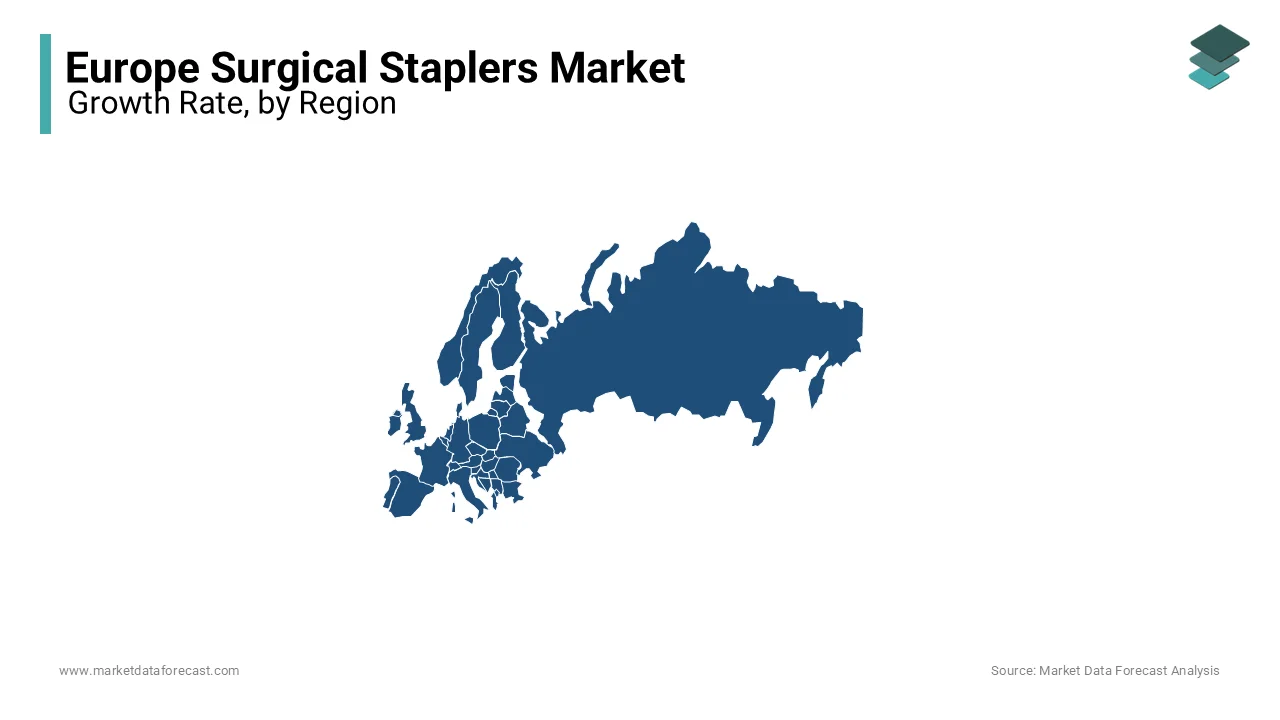
Germany commanded the leading share of 23.7% of the European market in 2024. The leading position of Germany in the European surgical staplers market is primarily due to the high volume of complex surgeries, advanced healthcare infrastructure, and early adoption of robotic platforms. According to the German Hospital Federation (Deutsche Krankenhausgesellschaft), millions of inpatient surgical procedures are performed annually in Germany, with a substantial share utilizing stapling devices for tissue closure and reconstruction. Germany’s strong medtech manufacturing ecosystem enables efficient integration of advanced stapler technologies into surgical practice. The Federal Joint Committee’s (G-BA) Innovation Fund has also supported reimbursement pilots for digital and “smart” stapling systems that enhance surgical precision and reduce postoperative complications, particularly in university hospitals. With more than 60 robotic surgery systems installed nationwide and colorectal cancer incidence continuing to rise, Germany retains a dominant position in Europe’s surgical stapler market.
France Surgical Staplers Market Analysis
France accounted for the second-largest share of the European market in 2024. The growth of the French market in Europe is attributed to the universal healthcare system that ensures consistent surgical access. The centralized procurement model of France through the Union of Public Hospital Purchasing Groups enables bulk acquisition of cost-effective staplers, which are predominantly disposable manual types. According to France’s National Cancer Plan 2023–2027, the government is allocating approximately €120 million annually to modernize surgical oncology units and strengthen cancer care infrastructure, which indirectly supports demand for advanced surgical devices such as staplers. According to the French Society of Digestive Surgery (SFCD), mechanical stapling has become the predominant technique in colectomies, which reflects the broader national trend toward minimally invasive approaches. Bariatric surgery volumes in France continue to rise, which is supported by growing adoption of laparoscopic methods and improved access to specialized centers. The public investment in surgical modernization, the procedural shift toward laparoscopy, and the increasing role of mechanical stapling are driving steady and long-term expansion of the French surgical stapler market.
United Kingdom Surgical Staplers Market Analysis
The United Kingdom is anticipated to exhibit a notable CAGR in the European surgical staplers market over the forecast period. Despite Brexit-related regulatory divergence, the UK maintains high surgical standards and rapid adoption of innovative devices. According to the UK’s National Institute for Health and Care Excellence (NICE), powered surgical staplers are now referenced in clinical guidance for complex gastrointestinal resections due to their improved consistency and safety profile compared to manual devices. The National Health Service (NHS) conducts more than a million general surgical procedures annually, with staplers widely used in abdominal and gastrointestinal operations. The UK government has also expanded its Early Access to Medicines and Medical Devices Scheme, allowing innovative, high-risk technologies to reach hospitals more quickly following evidence of clinical benefit. Furthermore, with the NHS elective surgery backlog exceeding 7 million patients as of 2025, hospitals are investing heavily in tools that enhance operating room efficiency. Reloadable stapling systems that reduce operative time and waste are increasingly being adopted to help meet growing procedural demand across the UK healthcare system.
Italy Surgical Staplers Market Analysis
Italy is predicted to showcase a prominent CAGR in the European surgical stapler market during the forecast period, owing to the growing aging population and increasing demand for cancer and obesity related surgeries in this country. According to the Italian National Cancer Institute (Istituto Superiore di Sanità), colorectal cancer remains one of Italy’s most prevalent malignancies, with tens of thousands of new cases diagnosed annually, and surgical resection serving as the primary treatment for most localized tumors. Italy’s public healthcare system, which performs the overwhelming majority of major surgeries, has increasingly adopted disposable staplers to mitigate infection risks, particularly in immunocompromised oncology patients. The Ministry of Health’s 2024 Surgical Modernization Fund allocated €85 million to upgrade operating theatres with advanced stapling and minimally invasive platforms, reflecting ongoing national investment in surgical innovation. The Italian surgical stapler market continues to expand at a resilient pace due to the growing number of bariatric surgeries in this country.
Spain Surgical Staplers Market Analysis
Spain is expected to hold a noteworthy share of the European surgical stapler market during the forecast period, owing to the structural shift toward outpatient surgery. This transition drives demand for compact, single-use staplers designed for day surgery workflows. According to Spain’s Ministry of Health, the National Health System performs more than a million surgical procedures annually that rely on stapling technology, with hernia repairs and cholecystectomies representing some of the highest-volume operations. The government’s Strategic Plan for Medical Devices 2023–2026 emphasizes technologies that shorten recovery times and reduce hospital stays, objectives that directly support the wider adoption of advanced stapling systems. In addition, leading public hospitals in Madrid and Barcelona have partnered with device manufacturers to pilot AI-assisted staplers capable of providing real-time tissue feedback to surgeons, to reduce complication rates in complex procedures by 2027. This integration of cost-conscious policy and clinical innovation underscores Spain’s emergence as one of Europe’s most dynamic and forward-looking markets for surgical stapling technologies.
COMPETITIVE LANDSCAPE
The Europe Surgical Staplers Market features intense competition among global medtech leaders and specialized regional players. Competition centers on technological differentiation, clinical evidence generation, and alignment with evolving healthcare policies. Major companies leverage their established distribution channels and regulatory expertise to maintain a presence while investing heavily in next-generation platforms that offer real-time feedback connectivity and enhanced safety. The shift toward value-based procurement has intensified pressure to demonstrate cost-effectiveness through reduced complications and shorter hospital stays. Simultaneously, emerging players focus on niche segments such as eco-friendly reusable systems or low-cost disposables for price-sensitive markets. Regulatory complexity under the EU Medical Device Regulation acts as both a barrier and a filter, favoring well-resourced firms. Overall, the competitive landscape is dynamically shaped by innovation policy and changing surgical practice patterns across diverse European healthcare systems.
KEY MARKET PLAYERS
Some of the companies that are playing a dominating role in the Europe surgical staplers market include
- Ethicon Inc.
- Medtronic plc
- CONMED Corporation
- Johnson & Johnson MedTech
- Medtronic plc
- Smith & Nephew
- Purple Surgical Inc.
- Intuitive Surgical Inc.
- Welfare Medical Ltd.
- Reach Surgical Inc.
- Merril Life Science Pvt. Ltd.
- Grena Ltd.
- B. Braun Melsungen AG
- Dextera Surgical Inc.
- Frankenman International
- Becton & Dickinson
TOP PLAYERS IN THE MARKET
- Johnson & Johnson MedTech maintains a prominent position in the Europe Surgical Staplers Market through its Ethicon division, which offers a comprehensive portfolio of advanced stapling platforms. The company has reinforced its presence by launching next-generation powered staplers integrated with real-time tissue sensing technology across major European markets in 2024. It actively collaborates with academic medical centers in Germany and the United Kingdom to validate clinical outcomes and support surgeon training programs. Recent regulatory approvals under the EU Medical Device Regulation have enabled broader distribution of its bioabsorbable staple cartridges. These initiatives underscore its commitment to innovation and alignment with Europe’s value-based healthcare objectives.
- Medtronic plc plays a pivotal role in the Europe Surgical Staplers Market with its Signia and Endo GIA stapling systems known for precision and compatibility with robotic platforms. The company has intensified its focus on digital integration by embedding data capture capabilities into its staplers to support hospital quality improvement initiatives. In 2024, Medtronic expanded its training academies in France and Italy, offering hands-on simulation modules for complex stapling scenarios. It also partnered with European surgical societies to develop standardized competency frameworks. These efforts enhance clinical adoption while reinforcing Medtronic’s reputation for reliability and educational support in advanced surgical environments.
- Becton Dickinson contributes significantly to the Europe Surgical Staplers Market through its acquisition of C. R. Bard, which expanded its surgical portfolio to include advanced stapling solutions. The company emphasizes infection prevention and operational efficiency by promoting single-use disposable staplers tailored for ambulatory and high-volume hospital settings. In 2024, Becton Dickinson introduced a compact stapler system designed specifically for outpatient hernia and bariatric procedures across Southern and Eastern Europe. It also enhanced its direct sales and logistics network to ensure rapid device availability in decentralized care settings. These actions reflect its strategic alignment with evolving European surgical care models.
TOP STRATEGIES USED BY THE KEY MARKET PARTICIPANTS
Key players in the Europe Surgical Staplers Market employ several core strategies to sustain competitive advantage. They prioritize technological innovation by integrating sensors and digital feedback into stapling platforms to improve clinical outcomes. Strategic collaborations with hospitals and surgical societies facilitate real-world validation and training. Companies actively pursue regulatory compliance under the EU Medical Device Regulation to ensure uninterrupted market access. Expansion of direct sales and service networks enhances customer support in diverse healthcare settings. Additionally, they tailor product portfolios to align with regional trends such as ambulatory surgery growth and sustainability mandates. These multifaceted approaches enable robust market positioning across varied European healthcare landscapes.
MARKET SEGMENTATION
This research report on the European surgical staplers market is segmented and sub-segmented into the following categories.
By Type
- Disposable Stapler
- Reusable Stapler
By Product
- Manual Surgical Stapler
- Powered Surgical Stapler
By End User
- Hospitals
- Ambulatory Surgical Centers
- Clinics
By Application
- Pelvis
- Abdominal
- Thoracic
- Cardiac
- Hemorrhoids
- Paediatric
- Cosmetic
- General Surgery Segments
By Country
- UK
- France
- Spain
- Germany
- Italy
- Russia
- Sweden
- Denmark
- Switzerland
- Netherlands
- Turkey
- Czech Republic
- Rest of Europe
Frequently Asked Questions
1. What drives growth in the europe surgical staplers market?
Growth is fueled by rising minimally invasive surgeries, aging population, technological advancements, and demand for efficient wound closure
2. Which stapler types dominate the europe surgical staplers market?
Powered surgical staplers hold about 55% market share due to precision and use in complex surgeries
3. How does disposable surgical staplers influence the market?
Disposable staplers are highly adopted for their affordability and reduced cross-contamination risk in europe
4. Which segment shows fastest growth in europe surgical staplers?
Manual surgical staplers are the fastest-growing segment with a CAGR of 10.7%, favored by smaller healthcare facilities
5. What applications are key for europe surgical staplers?
Abdominal surgeries dominate, followed by cardiac and orthopedic procedures requiring advanced stapling technology
6. What role does technology play in the europe surgical staplers market?
Technology such as automated firing, adjustable pressure, and smart integration enhances surgical outcomes and surgeon ease
7. How does the aging population affect europe surgical staplers market?
An aging population increases surgery demand, driving stapler adoption for faster, safer procedures
8. What are market challenges in europe surgical staplers?
Challenges include regulatory compliance, cost-containment policies, and need for ongoing innovation
9. How do robotics influence surgical stapler usage?
Robotic surgery integration boosts demand for precise, compatible stapling devices in europe
10. What future trends will shape europe surgical staplers market?
Growth in AI-driven systems, digital surgery integration, and eco-friendly stapler design are key trends
Related Reports
Access the study in MULTIPLE FORMATS
Purchase options starting from
$ 2000
Didn’t find what you’re looking for?
TALK TO OUR ANALYST TEAM
Need something within your budget?
NO WORRIES! WE GOT YOU COVERED!
Call us on: +1 888 702 9696 (U.S Toll Free)
Write to us: sales@marketdataforecast.com