Europe Surgical Lamps Market Size, Share, Trends & Growth Forecast Report By Technology, Type Of Lights, Type Of Lamp and Country (UK, France, Spain, Germany, Italy, Russia, Sweden, Denmark, Switzerland, Netherlands, Turkey, Czech Republic and Rest of Europe) - Industry Analysis, From (2026 to 2034)
Market Size, 2025
$0.67 BnMarket Estimate, 2026
$0.70 BnMarket Forecast, 2034
$0.99 BnCAGR, 2026–2034
4.39%Europe Surgical Lamps Market Report Summary
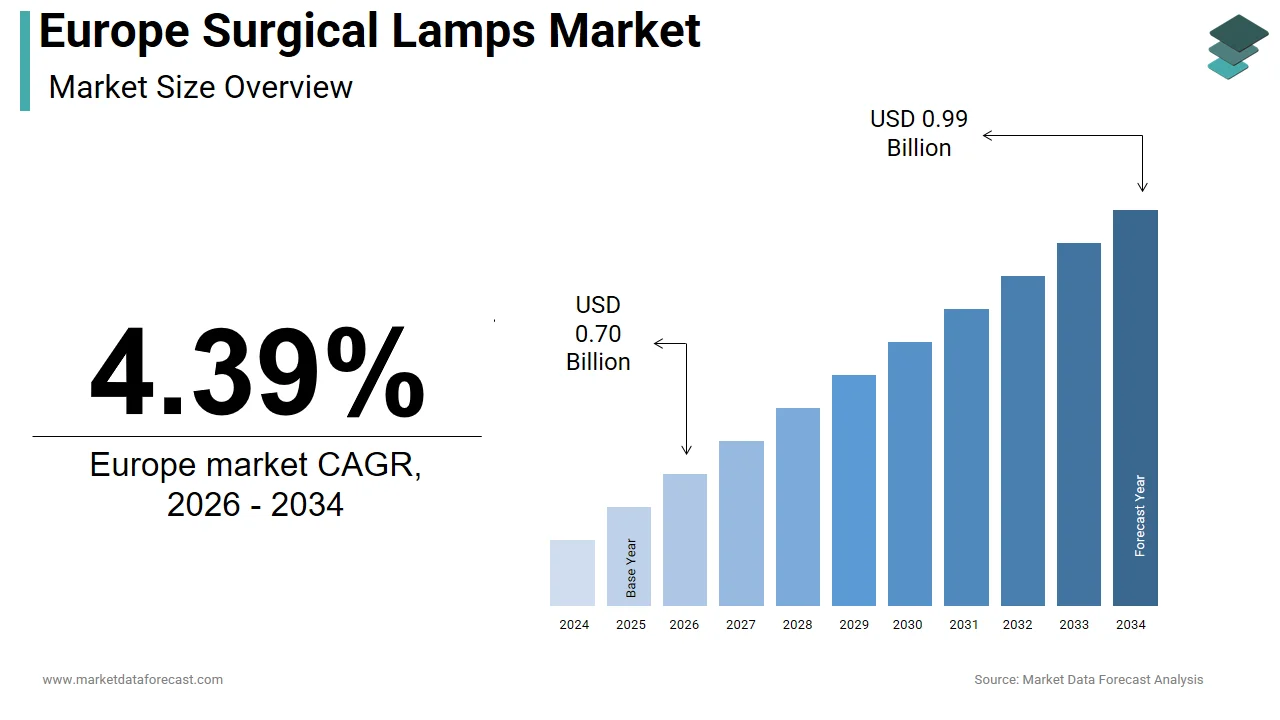
The Europe surgical lamps market was valued at USD 0.67 billion in 2025, is anticipated to reach USD 0.70 billion in 2026, and is projected to reach USD 0.99 billion by 2034, growing at a CAGR of 4.39% from 2026 to 2034. Market growth is driven by the rising volume of surgical procedures, increasing adoption of minimally invasive and outpatient surgeries, and growing investments in hospital infrastructure modernization. Healthcare facilities across Europe are prioritizing advanced surgical lighting systems to enhance visibility, reduce shadow formation, and improve procedural accuracy. Continuous advancements in LED technology, ergonomic designs, and infection-control features are further supporting market expansion.
Key Market Trends
- Rising adoption of LED-based surgical lighting systems for energy efficiency and long operational life.
- Increasing demand for high color rendering index (CRI) lighting to improve tissue differentiation during procedures.
- Growing investments in hybrid operating rooms and advanced surgical suites.
- Expansion of ambulatory surgical centers and day-care surgery units.
- Strengthening focus on shadow-free illumination, thermal management, and sterility compliance.
Segmental Insights
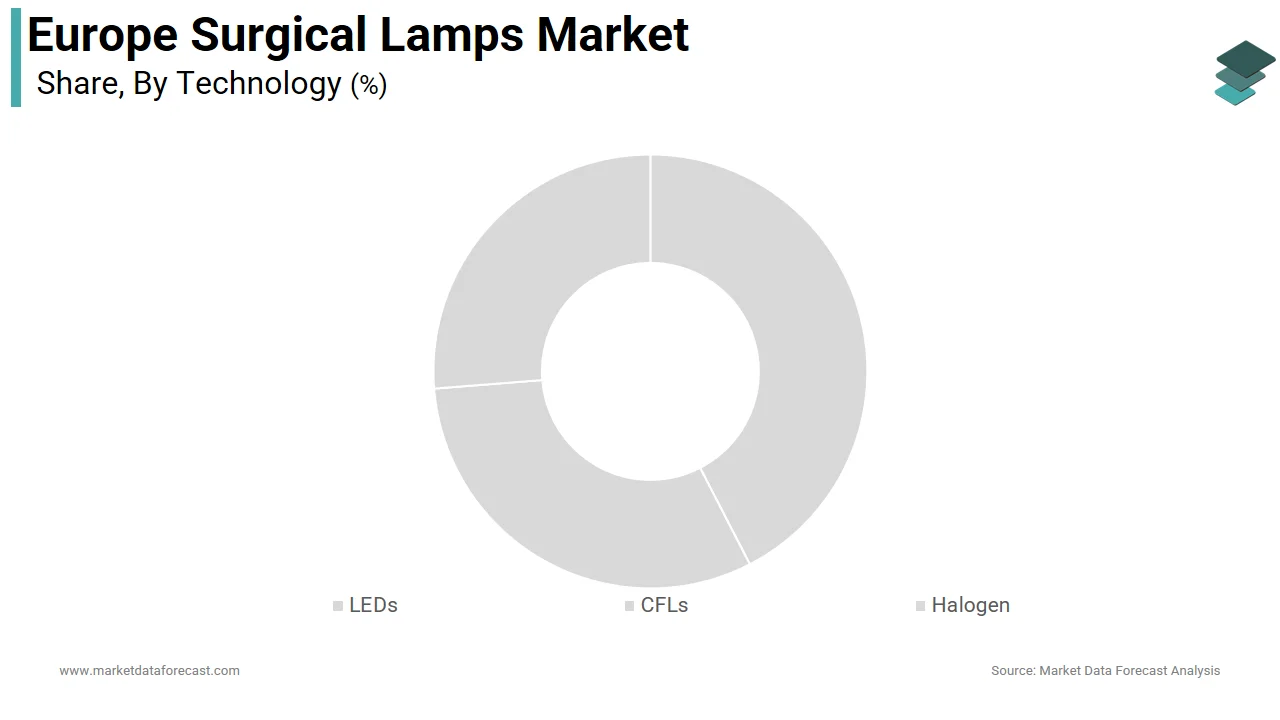
- Based on technology, the LEDs segment dominated the market in 2025 by holding 80.4% market share, driven by superior brightness, low heat emission, and reduced maintenance requirements.
- Based on type of lights, the high CRI light segment commanded the highest share of 60.5% in 2025, supported by the growing need for accurate color perception in complex surgical procedures.
- Based on type of lamp, the ceiling-mounted segment led the market by accounting for 55.8% share in 2025, driven by its space-saving design, stability, and suitability for high-volume operating rooms.
Regional Insights
The Europe surgical lamps market is witnessing steady growth across major economies, supported by healthcare infrastructure upgrades, rising surgical volumes, and increasing focus on clinical efficiency.
- Germany led the regional market in 2025 with 25.8% share, driven by advanced hospital facilities, high healthcare spending, and strong medical device adoption.
- France accounted for 18.8% share in 2025, supported by government investments in healthcare modernization and expanding surgical capacities.
- The United Kingdom is anticipated to register a promising CAGR over the forecast period, driven by integrated NHS procurement systems and a strong focus on outpatient surgical efficiency.
Competitive Landscape
The Europe surgical lamps market is characterized by strong competition among global medical equipment manufacturers and specialized healthcare lighting providers. Market players are focusing on developing high-performance LED systems, improving ergonomic flexibility, and enhancing infection-control features. Strategic partnerships, product innovations, and investments in smart operating room technologies are strengthening competitive positioning across the region.
Prominent companies operating in the Europe surgical lamps market include Integra LifeSciences Corporation, Koninklijke Philips N.V., Dr. Mach GmbH & Co. KG, Welch Allyn, A-dec, Inc., STERIS Corporation, Skytron, DRE Inc., Herolux GmbH, Stryker Corporation, KLS Martin Group, and Herbert Waldmann GmbH & Co. KG.
Europe Surgical Lamps Market Size
The size of the Europe surgical lamps market was valued at USD 0.67 billion in 2025. This market is expected to grow at a CAGR of 4.39% from 2026 to 2034 and be worth USD 0.99 billion by 2034 from USD 0.70 billion in 2026.
Surgical lamps comprise advanced illumination systems engineered to deliver high-intensity shadow free and color-accurate lighting during surgical and diagnostic procedures across operating rooms, outpatient clinics, and emergency departments. These devices are designed to meet stringent performance standards for illuminance, color rendering index, and thermal management to ensure optimal visual clarity and tissue differentiation. Under the European Union Medical Device Regulation 2017 745, surgical lamps are classified as Class IIa or IIb devices requiring rigorous conformity assessment for optical safety, biocompatibility, and electromagnetic compatibility. The market is shaped by Europe’s aging population, rising surgical volumes, and the continent’s emphasis on minimally invasive and precision surgery, where visual fidelity directly impacts clinical outcomes. As per Eurostat, millions of inpatient surgical procedures are performed annually in EU hospitals, with laparoscopic and robotic interventions increasingly accounting for a significant share of general surgeries. Concurrently, the European Commission’s Health Infrastructure Modernization Fund allocated hundreds of millions of euros in 2023 to upgrade operating theaters across multiple member states, with energy-efficient LED surgical lighting prioritized for its longevity and reduced heat emission. This convergence of clinical necessity, regulatory oversight, and infrastructure investment defines a market where surgical lamps are not mere utilities but critical enablers of surgical precision and patient safety.
MARKET DRIVERS
Rising Volumes of Minimally Invasive and Robotic Surgeries Across European Hospitals
The shift toward minimally invasive and robotic surgical techniques has intensified demand for high-performance surgical lamps that provide deep cavity illumination without generating excess heat, which is a key factor driving the growth of the European surgical lamps market. As per the European Association of Robotic Surgery, robotic systems have been increasingly installed in European hospitals, with annual procedure volumes showing double-digit growth, particularly in urology, gynecology, and colorectal specialties. These interventions require surgical lamps with adjustable focus, a high color rendering index above 95, and illuminance exceeding 160,000 lux to visualize fine anatomical structures through small incisions. As per the German Hospital Federation, many university hospitals in Germany now use dual or triple LED surgical light arrays in robotic suites to eliminate shadows cast by instrument arms. Similarly, the French National Authority for Health mandated that all new operating rooms funded under national modernization grants must be equipped with CE-certified LED surgical lamps meeting IEC 60601 2 41 standards. This procedural transformation, combined with policy-driven infrastructure upgrades, ensures sustained and growing demand for advanced illumination systems that support the visual demands of modern surgery.
Integration of Energy-Efficient LED Technology Aligned with EU Green Hospital Initiatives
The rapid adoption of LED surgical lamps is driven by Europe’s commitment to sustainable healthcare infrastructure under the EU Green Deal and national decarbonization strategies, which are further contributing to the surgical lamps market expansion in Europe. Traditional halogen and xenon lamps consume hundreds of watts per unit and require frequent replacement due to short lifespans. In contrast, modern LED surgical lamps operate at significantly lower wattage with lifespans exceeding 50,000 hours, reducing both energy consumption and waste. As per the European Environment Agency, hospitals account for around 5% of EU public sector energy use, with lighting representing a notable share of that load. According to the Dutch Healthcare Infrastructure Agency, switching to LED surgical lights in hospitals reduced annual electricity consumption, equivalent to powering thousands of homes. Furthermore, the European Commission’s Green Public Procurement Criteria for Healthcare Facilities now require new surgical lighting to meet minimum efficacy thresholds of 100 lumens per watt. With national health systems in Sweden, Denmark, and the Netherlands tying hospital sustainability scores to funding allocations, LED surgical lamps have become both a clinical and environmental imperative, accelerating market transition beyond mere cost savings.
MARKET RESTRAINTS
Stringent and Prolonged Conformity Assessment Under EU Medical Device Regulation
The European Union’s Medical Device Regulation has significantly extended the time and complexity of bringing new surgical lamp models to market due to rigorous requirements for risk management, clinical evaluation, and post-market surveillance, which is hindering the European surgical lamps market growth. As per the Medical Devices Coordination Group of the European Commission, the average review period for Class IIa surgical lighting devices now exceeds a year, with notified bodies conducting in-depth assessments of optical performance, thermal emission, and electromagnetic interference. Data from Team NB, the European association of notified bodies, indicates that many novel LED surgical lamp applications face delays in first-round approval. This bottleneck disproportionately affects small and medium enterprises lacking dedicated regulatory teams and slows the introduction of innovations such as tunable white light or integrated camera systems. Furthermore, the regulation mandates ongoing performance monitoring after market entry, increasing long-term compliance costs. These barriers stifle iterative improvement and deter investment in next-generation lighting platforms, particularly those targeting niche applications like pediatric or ophthalmic surgery, where volumes are lower but technical demands are higher.
High Upfront Investment and Budget Constraints in Public Healthcare Systems
Despite long-term operational savings, the significant capital cost of advanced LED surgical lamps remains a barrier to adoption in publicly funded European healthcare systems facing fiscal pressure, which is hampering the European surgical lamps market growth. A high-end ceiling-mounted LED surgical light system typically costs several times more than legacy halogen units, as documented by the European Health Management Association’s Medical Equipment Cost Benchmark. In countries like Spain, Greece, and Portugal, where hospital budgets have not fully recovered from post-pandemic deficits, procurement committees often delay upgrades or opt for lower specification models. As per the Italian Ministry of Health, many regional hospitals have yet to meet national targets for replacing halogen surgical lights due to funding shortfalls. Furthermore, public tender processes prioritize the lowest price over lifecycle value, leading to fragmented purchasing and inconsistent quality across operating theaters. Without dedicated capital grants or leasing models that spread costs over time, many facilities continue to rely on outdated lighting that compromises visual performance and increases heat-related discomfort for surgical teams, undermining both clinical and energy efficiency objectives.
MARKET OPPORTUNITIES
Expansion of Hybrid Operating Rooms Requiring Advanced Multimodal Illumination
Europe’s investment in hybrid operating rooms is creating demand for surgical lamps with integrated connectivity and adaptive lighting capabilities, which is a promising opportunity in the European surgical lamps market. As per the European Society of Radiology, hundreds of hybrid ORs were operational in the EU by 2024, with Germany, France, and the Netherlands leading deployment. These environments require surgical lamps that do not interfere with imaging equipment and can adjust intensity and color temperature based on the procedural phase. The University Hospital Heidelberg’s implementation of a hybrid neurosurgical suite featured a surgical lamp with automatic dimming during fluoroscopy to prevent glare on monitors and enhanced red spectrum lighting during vessel anastomosis to improve tissue contrast. As per the European Commission’s Digital Europe Programme, tens of millions of euros were allocated in 2023 to support hybrid OR development, with lighting systems required to comply with electromagnetic compatibility standards IEC 60601 1 2. As cardiovascular, neurosurgical, and orthopedic interventions increasingly shift to hybrid settings, surgical lamps evolve from standalone devices to intelligent components of integrated procedural ecosystems, which is opening a high-value niche for manufacturers with cross-domain engineering expertise.
Adoption of Smart Surgical Lighting with Integrated Sensors and Data Connectivity
The integration of sensors and digital interfaces into surgical lamps is transforming them into data-generating nodes within the smart operating room, which is a notable opportunity in the European surgical lamps market. New generation lamps now feature embedded cameras, motion sensors, and ambient light detectors that automatically adjust beam focus and intensity based on the surgeon's position and tissue reflectance. As per the European Association of Endoscopic Surgeons, trials at leading hospitals demonstrated that AI-guided surgical lights reduced manual repositioning and improved illumination consistency during laparoscopic procedures. Furthermore, these systems log usage data, enabling predictive maintenance and energy optimization as features aligned with EU hospital sustainability mandates. As per the European Medicines Agency, streamlined pathways for software-controlled medical devices accelerate certification for lamps with adaptive algorithms. With national digital health strategies in Denmark and Estonia mandating interoperability with hospital data platforms, smart surgical lighting is transitioning from passive illumination to active procedural support, which is creating opportunities for manufacturers who combine optical engineering with digital health capabilities to deliver context-aware intelligent lighting solutions.
MARKET CHALLENGES
Interoperability Gaps Between Surgical Lamps and Integrated Operating Room Systems
Despite the rise of smart operating rooms, surgical lamps often operate as isolated devices due to incompatible communication protocols and proprietary software architectures, which is challenging the growth of the European surgical lamps market. As per the European Institute for Health Records, only a minority of EU hospitals use operating room integration platforms that support standardized data exchange with surgical lighting via HL7 or IEEE 11073 standards. This disconnect forces surgical teams to manually control lamp settings during procedures, disrupting workflow and increasing cognitive load. A usability audit by the French Agency for Digital Health found that in many hybrid ORs, surgeons relied on foot pedals or assistants to adjust lighting because voice or gesture control systems were not synchronized with the lamp’s firmware. Furthermore, legacy lamps retrofitted with sensors often lack the processing power to support real-time adaptation. Until surgical lamps are designed as native components of unified digital OR ecosystems, their potential to enhance procedural efficiency and data capture remains unrealized and hinders the full benefit of advanced illumination technologies in modern surgical practice.
Shortage of Biomedical Engineering Expertise for Installation and Maintenance
Europe faces a critical deficit in biomedical engineers and clinical technicians qualified to install, calibrate, and maintain advanced surgical lighting systems, which is also challenging the expansion of the European surgical lamps market. As per the European Federation of Clinical Engineering Societies, fewer than half of EU hospitals employ staff with specialized training in optical medical devices, with shortages most acute in Eastern and Southern Europe. This gap leads to prolonged installation timelines, improper alignment of lamp arrays, and suboptimal maintenance, compromising performance and safety. Reports from hospital federations indicate that newly installed LED surgical lamps often require recalibration within months due to incorrect initial setup. Furthermore, complex features such as color temperature tuning and camera integration remain underutilized because staff lack training. As per the European Commission’s Workforce Development Initiative, surgical lighting has been identified as a priority area for technical upskilling, yet training programs remain fragmented. Without coordinated investment in human capital, the clinical and operational benefits of next-generation surgical lamps will not be fully realized across Europe’s diverse healthcare infrastructure.
REPORT COVERAGE
| REPORT METRIC | DETAILS |
| Market Size Available | 2025 to 2034 |
| Base Year | 2025 |
| Forecast Period | 2026 to 2034 |
| Segments Covered | By Technology, Type of Lights, Type of Lamp, and Country. |
| Various Analyses Covered | Global, Regional, and Country-Level Analysis, Segment-Level Analysis, Drivers, Restraints, Opportunities, Challenges; PESTLE Analysis; Porter’s Five Forces Analysis, Competitive Landscape, Analyst Overview of Investment Opportunities |
| Countries Covered | UK, France, Spain, Germany, Italy, Russia, Sweden, Denmark, Switzerland, Netherlands, Turkey, Czech Republic, and the Rest of Europe. |
| Market Leaders Profiled | Integra LifeSciences Corporation, Koninklijke Philips N.V., Dr Mach GmbH & Co KG, Welch Allyn, A-dec, Inc., Steris Corporation, Skytron, DRE INC., Herolux GmbH, Stryker Corporation, KLS Martin Group, and Herbert Waldmann GmbH & Co. KG, among others. |
SEGMENTAL ANALYSIS
By Technology Insights
The LEDs segment dominated the regional market in 2025 by holding 80.4% of the regional market share. LED technology dominates the European surgical lamps market due to its unmatched combination of high illuminance, color accuracy, and minimal infrared radiation, which are critical attributes in modern operating environments. As per the International Electrotechnical Commission standard IEC 60601 2 41, surgical LEDs must deliver illuminance between 40,000 and 160,000 lux with a color rendering index of at least 90 to ensure accurate tissue differentiation. Modern LED surgical lamps exceed these thresholds with CRI values above 95 and correlated color temperatures of 4,500 to 5,000 Kelvin, closely mimicking natural daylight. As per the European Society of Surgical Oncology, surgeons using high CRI LED lamps reported improved visualization of tumor margins compared to halogen systems. Additionally, LEDs emit negligible heat at the surgical site, reducing the risk of tissue desiccation and improving patient comfort during prolonged procedures. With many new operating rooms in Germany, France, and the Netherlands mandated to install LED lighting under national hospital modernization programs, this optical superiority ensures LEDs remain the undisputed standard for clinical excellence.
By Type of Lights Insights
The high CRI Light segment commanded the highest share of 60.5% of the regional market in 2025. The growth of the high CRI light segment in the European market is attributed to its essential role in enabling accurate visual assessment of tissue viability, vascular integrity, and pathological margins during surgery. The International Electrotechnical Commission mandates a minimum CRI of 90 for surgical lamps, but leading European hospitals now specify systems with a CRI above 95 to support complex oncological and reconstructive procedures. As per the European Society of Surgical Oncology, surgeons using high CRI LED lamps achieved higher accuracy in identifying ischemic bowel segments compared to standard CRI 90 systems. Similarly, the German Society of Neurosurgery documented that high CRI illumination improved differentiation between tumor and healthy brain tissue in glioma resections, reducing residual tumor volume. National clinical guidelines in France and Italy now require high CRI lighting in all operating rooms performing cancer surgery or organ transplantation. This integration into evidence-based surgical protocols ensures that high CRI lighting is not optional but a standard of care for precision surgery across Europe’s advanced healthcare systems.
The vein lighting technology segment is the fastest-growing segment in the Europe surgical lamps market and is expected to witness a CAGR of 15.5% over the forecast period, owing to the increasing difficulty of venous access in Europe’s aging and overweight patient populations. As per Eurostat, over one fifth of the EU population was aged 65 or older in 2024, while obesity rates remain significant as both factors that reduce vein visibility and increase cannulation failure. According to the European Society of Anaesthesiology, first attempt success rates for peripheral IV placement drop considerably in older patients compared to younger adults. In response, hospitals across Sweden, Germany, and the Netherlands are deploying near-infrared vein visualization lamps in emergency departments, preoperative units, and dialysis centers. Clinical studies have demonstrated that vein lights reduce cannulation attempts and patient anxiety in geriatric populations. With national nursing protocols in France and Italy now recommending vein visualization for patients with difficult access, this technology is transitioning from niche tool to standard clinical equipment.
By Type of Lamp Insights
The ceiling mount segment led the market by accounting for 55.8% of the regional market share in 2025. Ceiling-mounted surgical lamps remain the backbone of European operating room design due to their fixed positioning, high output, and integration with overhead utility systems. As per the European Hospital Design Guidelines published by the European Health Property Network, most main ORs in EU hospitals are constructed with integrated ceiling tracks that support surgical lights, cameras, and gas outlets as a unified overhead workstation. As per the German Hospital Federation, a majority of inpatient surgeries in 2024 were performed under ceiling-mounted LED arrays delivering 120,000 to 160,000 lux with shadow-free multi-beam optics. These systems are essential for complex procedures such as open cardiac surgery, organ transplantation, and major trauma, where consistent high-intensity illumination over large fields is non-negotiable. National health infrastructure programs in France, Italy, and Spain mandate ceiling-mounted lighting in all new OR constructions funded by public grants. This architectural entrenchment ensures ceiling-mounted lamps remain the default choice for core surgical environments despite growth in portable alternatives.
The surgical headlight lamps segment is the fastest growing segment in the Europe surgical lamps market and is expected to record a CAGR of 12.2% over the forecast period, owing to their indispensable role in specialties where surgeon mobility and direct line of sight are critical, such as otolaryngology, neurosurgery, plastic surgery, and dentistry. Unlike overhead systems, headlights provide shadow-free coaxial illumination that moves with the surgeon’s gaze, enabling precise work in deep, narrow cavities like the ear canal or oral cavity. As per the European Academy of Facial Plastic Surgery, many rhinoplasty surgeons in Germany and Italy use LED headlights with 4,500 Kelvin color temperature for optimal cartilage visualization. Furthermore, advancements in battery technology now enable lithium-ion headlights to deliver 50,000 lux for several hours without cable tethering, which is enhancing ergonomics and reducing OR clutter. As per Eurostat, millions of specialized microsurgical procedures are performed annually in Europe, driving demand for personal illumination that supports dexterity and visual acuity across niche surgical disciplines.
COUNTRY-LEVEL ANALYSIS
Germany Surgical Lamps Market Analysis
Germany captured the leading position in the European surgical lamps market in 2025 by holding 25.8% of the regional market share. The advanced hospital infrastructure, high surgical volumes, and leadership in medical technology manufacturing are fuelling the surgical lamps market growth in Germany. As per the German Hospital Federation, millions of inpatient surgeries were performed in 2024, with a majority conducted in operating rooms equipped with CE-certified LED ceiling-mounted systems meeting IEC 60601 2 41 standards. The country is home to leading surgical lamp manufacturers, including Dr Mach and KLS Martin, which export globally while serving domestic demand. Germany’s Hospital Structural Fund allocated significant investment in 2024 to modernize operating rooms with energy-efficient LED lighting and smart integration capabilities. Furthermore, national clinical guidelines from the German Society of Surgery mandate CRI ≥ 95 and illuminance ≥ 120,000 lux for cancer and transplant procedures, ensuring consistent high-end specifications. This combination of domestic production, clinical rigor, and public investment solidifies Germany’s position as Europe’s surgical lighting leader in both volume and technological sophistication.
France Surgical Lamps Market Analysis
France commanded the highest share of 18.8% of the European surgical lamps market in 2025. The growth of France in the European surgical lamps market is driven by the centralized healthcare planning and aggressive OR modernization under national hospital reform. As per the French National Authority for Health, millions of surgeries were performed in public hospitals in 2024, with most new operating rooms required to install high CRI LED surgical lamps as part of the “Hospital of Tomorrow” initiative. The French Ministry of Health’s decree mandates that all surgical lighting in university hospitals achieve a minimum luminous efficacy of 100 lumens per watt, aligning with EU Ecodesign Directive objectives. France is also a major market for surgical headlights, with widespread adoption among otolaryngologists and plastic surgeons. The National Agency for Medicines and Health Products Safety maintains a streamlined certification pathway for innovative lighting devices, accelerating market entry. With strong policy alignment between energy efficiency, clinical standards, and surgical specialty needs, France maintains a balanced and expanding market for both fixed and mobile illumination solutions.
United Kingdom Surgical Lamps Market Analysis
The United Kingdom is predicted to showcase a promising CAGR in the European surgical lamps market over the forecast period, owing to its integrated National Health Service procurement and focus on outpatient surgical efficiency. As per NHS England, millions of procedures were delivered in 2024 across acute hospitals and ambulatory surgical centers, with lighting specifications standardized through NHS Supply Chain framework agreements. The NHS Long Term Plan mandates that all new OR builds include LED surgical lamps with CRI ≥ 95 and integrated energy monitoring to support net zero targets by 2040. The UK’s Medicines and Healthcare products Regulatory Agency offers expedited approval for surgical lamps under its Innovation Passport scheme, reducing time to market for smart and adaptive systems. Additionally, the Royal College of Surgeons has endorsed vein visualization lamps for geriatric and obese patients, leading to nationwide deployment in emergency departments. Despite post Brexit regulatory divergence, the UK remains a high-value market due to its centralized purchasing power, clinical standardization, and commitment to surgical innovation.
Italy Surgical Lamps Market Analysis
Italy is anticipated to account for a notable share of the European surgical lamps market during the forecast period due to its regional healthcare autonomy and strong demand for specialized surgical lighting in high-volume centers. As per the Italian National Institute of Statistics, millions of surgeries were performed in 2024, with Lombardy and Emilia Romagna reporting per capita rates well above the national average. These regions lead in adopting high-end ceiling-mounted LED arrays with multi-beam shadow reduction for complex oncological and cardiovascular procedures. The Italian Medicines Agency classifies surgical lamps as Class IIa devices requiring rigorous conformity assessment, but allows regional health authorities to fast-track procurement for accredited centers of excellence. The National Recovery and Resilience Plan allocated hundreds of millions of euros in 2024 to upgrade operating rooms in Southern Italy, reducing geographic disparities in surgical infrastructure. Furthermore, Italy has a high concentration of dental and maxillofacial surgeons, driving demand for portable headlights and dental-specific lamps. This blend of centralized funding, regional innovation, and specialty care sustains Italy’s significant role in the European surgical lighting ecosystem.
Netherlands Surgical Lamps Market Analysis
The Netherlands is estimated to witness a healthy CAGR in the European surgical lamps market during the forecast period due to its leadership in sustainable healthcare infrastructure and smart operating room integration. As per the Netherlands Healthcare Authority, over a million surgeries were performed in 2024, with most new operating rooms featuring LED surgical lamps compliant with national Green Public Procurement criteria requiring ≥100 lumens per watt efficacy. The Dutch government’s “Digital OR 2030” strategy has equipped university and general hospitals with integrated lighting systems that communicate with anesthesia and imaging platforms via standardized HL7 FHIR protocols. The Netherlands is also a pioneer in vein visualization adoption, with dialysis centers and emergency departments widely using near-infrared lamps to support vascular access in aging populations. Furthermore, Dutch biomedical engineers lead in ergonomic headlight design, with companies exporting across Europe. With compact high-density healthcare delivery and strong policy alignment between sustainability, digitalization, and clinical quality, the Netherlands punches above its population weight as a model market for next-generation surgical lighting innovation and deployment.
COMPETITIVE LANDSCAPE
Competition in the Europe Surgical Lamps Market is characterized by a concentrated landscape of established German and European manufacturers competing on optical precision, regulatory compliance, and integration with modern operating room ecosystems. The market is highly regulated under the EU Medical Device Regulation, requiring extensive clinical and technical documentation, which favors companies with robust quality management systems and engineering heritage. Differentiation arises through advanced optical performance, such as multi-beam shadow reduction, high CRI lighting, and thermal management, rather than price. While ceiling-mounted LED systems dominate main operating rooms, innovation thrives in specialized segments like surgical headlights and vein visualization lamps. Competition is further shaped by national hospital procurement policies that prioritize energy efficiency, interoperability, and lifecycle cost over initial purchase price. Companies that combine German engineering, reliability, digital connectivity, and sustainability credentials gain preferential access to public tenders and academic medical centers. The market rewards those who can translate optical science into clinically validated, reliable, and future-proof illumination solutions across Europe’s diverse and technologically advanced surgical environments.
KEY MARKET PLAYERS
The leading companies operating in the Europe surgical lamps market include:
- Integra LifeSciences Corporation
- Koninklijke Philips N.V.
- Mach GmbH & Co. KG
- Welch Allyn
- A-dec, Inc.
- STERIS Corporation
- Skytron
- DRE Inc.
- Herolux GmbH
- Stryker Corporation
- KLS Martin Group
- Herbert Waldmann GmbH & Co. KG
TOP PLAYERS IN THE MARKET
- Dr Mach GmbH & Co KG is a leading German manufacturer of high-precision surgical lighting systems with a strong presence across European hospitals and global export markets. The company contributes to the global surgical lamps industry through its innovative LED ceiling-mounted systems featuring adaptive optics, high color rendering index, and integrated smart controls compliant with the EU Medical Device Regulation. Dr Mach specializes in shadow-free multi-beam technology tailored for complex surgical specialties, including neurosurgery and organ transplantation. Recently, the company strengthened its position by launching the LumaSurg Pro series with real-time color temperature adjustment and antimicrobial surface coatings. It also expanded its digital integration capabilities to support communication with hospital data platforms in line with Germany’s smart operating room initiative and EU interoperability standards.
- KLS Martin Group is a prominent European medical technology company headquartered in Germany with deep expertise in surgical lighting and OR integration solutions. The company contributes globally by offering modular ceiling-mounted LED surgical lamps that combine high illuminance, low thermal emission, and ergonomic design for prolonged procedures. KLS Martin’s systems are widely used in trauma, orthopedic, and cardiovascular surgery across Europe due to their robust build and compliance with IEC 60601 standards. To reinforce its market presence, the company recently introduced the LUXION EVO platform featuring AI-guided beam focusing and wireless remote control. It also partnered with university hospitals in France and the Netherlands to validate energy savings and surgical workflow improvements in hybrid operating rooms, enhancing clinical credibility and adoption.
- Herolux GmbH is a specialized German manufacturer known for high-performance surgical headlights and portable examination lamps used in otolaryngology, dentistry, and plastic surgery across Europe. The company contributes to the global market by pioneering lightweight cordless LED headlights with integrated magnification and HD recording capabilities tailored for microsurgical precision. Herolux devices are valued for their ergonomic design, long battery life, and consistent color fidelity, meeting stringent EU optical safety requirements. Recently, the company strengthened its position by launching the VISIONAIR X2 headlight with 50,000 lux output, four-hour runtime, and Bluetooth-enabled camera streaming. It also achieved ISO 13485 certification for its new clean room assembly line, ensuring higher sterility compliance and supporting expansion into hospital procurement tenders in Scandinavia and Benelux countries.
TOP STRATEGIES USED BY THE KEY MARKET PARTICIPANTS
Key players in the Europe Surgical Lamps Market focus on achieving full compliance with the EU Medical Device Regulation and IEC 60601 2 41 standards to ensure market access and clinical trust. They invest in LED optical engineering to deliver a high color rendering index above 95, illuminances exceeding 120,000 lux, and minimal infrared emission for tissue safety. Companies integrate smart features such as adaptive beam control, wireless connectivity, and data logging to align with EU digital operating room initiatives. Strategic partnerships with university hospitals support clinical validation and workflow studies that demonstrate efficiency and energy savings. Product portfolios are segmented to serve both main operating rooms with ceiling-mounted systems and specialized fields with portable headlights. Sustainability is embedded through energy-efficient designs compliant with the EU Ecodesign Directive and Green Public Procurement criteria, enhancing appeal in publicly funded healthcare systems.
MARKET SEGMENTATION
This Europe surgical lamps market research report is segmented and sub-segmented into the following categories.
By Technology
- LEDs
- CFLs
- Halogen
By Type of Lights
- High Cri Light
- Special Germicidal UV Ray Light
- Vein Light
- Homogenous Light
By Type of Lamp
- Ceiling Mount Surgical Lamp
- Surgical Headlight Lamps
- Dental Light Lamps
- Laser Light Lamps
By Country
- UK
- France
- Spain
- Germany
- Italy
- Russia
- Sweden
- Denmark
- Switzerland
- Netherlands
- Turkey
- Czech Republic
- Rest of Europe
Frequently Asked Questions
What is the Europe surgical lamps market?
The Europe surgical lamps market provides focused illumination for operating rooms. LED systems dominate due to energy efficiency and longevity advantages.
What drives the Europe surgical lamps market?
Aging populations and surgical volume growth propel the Europe surgical lamps market. Minimally invasive procedures demand precise lighting solutions.
Which types lead the Europe surgical lamps market?
LED surgical lamps hold majority share in the Europe surgical lamps market offering cool light and adjustable color temperatures for various procedures.
Why Germany dominates the Europe surgical lamps market?
Germany's precision manufacturing leads the Europe surgical lamps market producing advanced shadowless systems for high-volume surgical centers.
What role do ceiling-mounted lamps play in the Europe surgical lamps market?
Ceiling-mounted lamps provide flexibility in the Europe surgical lamps market positioning over multiple OR tables seamlessly.
How does LED technology impact the Europe surgical lamps market?
LED reduces operating costs in the Europe surgical lamps market with 50,000-hour lifespans and minimal heat generation during procedures.
Which applications define the Europe surgical lamps market?
General surgery, orthopedics, and neurosurgery characterize the Europe surgical lamps market requiring high-intensity focused illumination.
What challenges face the Europe surgical lamps market?
High upfront costs challenge the Europe surgical lamps market though lifecycle savings justify LED investments for hospitals.
Why mobile lamps growing in the Europe surgical lamps market?
Mobile surgical lamps offer versatility in the Europe surgical lamps market suiting ambulatory centers and emergency procedures.
How do regulations shape the Europe surgical lamps market?
EU Medical Device Regulation standardizes the Europe surgical lamps market ensuring light intensity and color rendering safety standards.
Related Reports
Access the study in MULTIPLE FORMATS
Purchase options starting from
$ 2000
Didn’t find what you’re looking for?
TALK TO OUR ANALYST TEAM
Need something within your budget?
NO WORRIES! WE GOT YOU COVERED!
Call us on: +1 888 702 9696 (U.S Toll Free)
Write to us: sales@marketdataforecast.com