- Product Description Description
- Table of Contents TOC
- List of Table & Figure LOT
- Get Free Sample PDF Sample PDF
Market Size, 2025
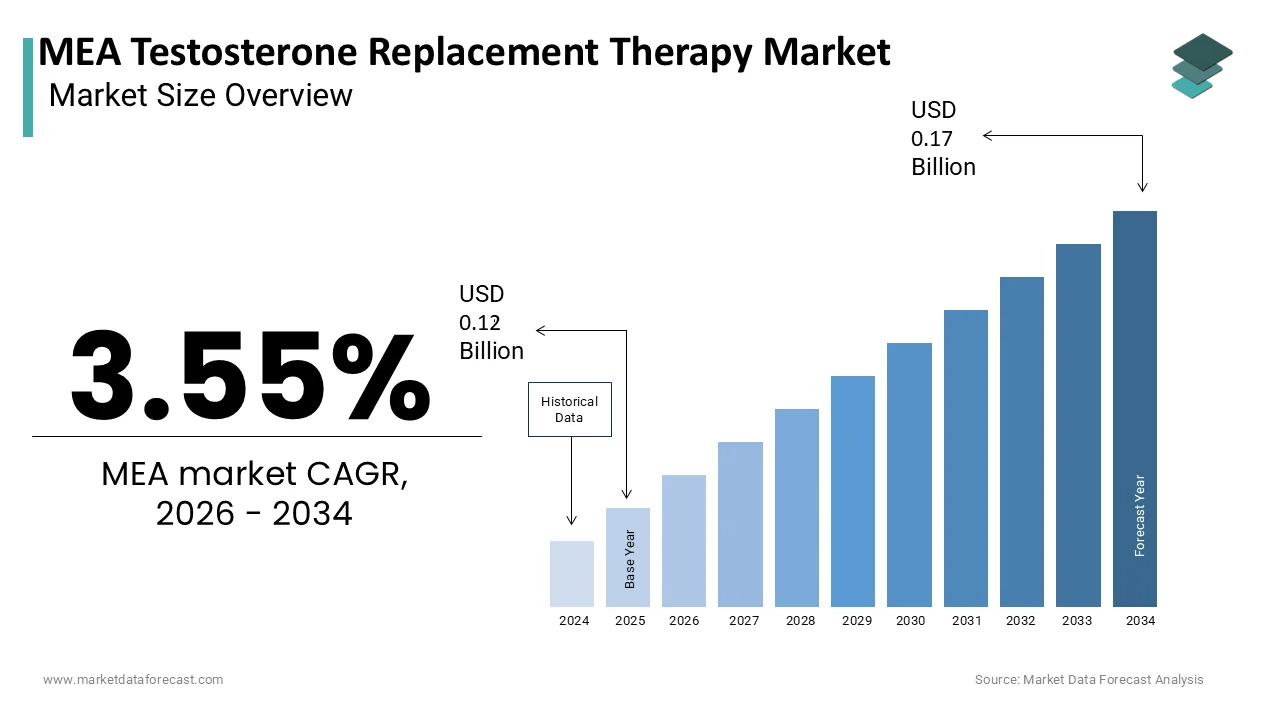
$0.12 BnMarket Estimate, 2026
$0.13 BnMarket Forecast, 2034
$0.17 BnCAGR, 2026–2034
3.55%Executive Summary: Middle East & Africa (MEA) Testosterone Replacement Therapy Market
- Market Scope: Overview of the MEA testosterone replacement therapy market spanning product types, active ingredients, distribution systems, and major geographic country sectors (KSA, UAE, Israel, South Africa, etc.).
- Market Valuation: Valued at USD 0.12 billion in 2025, estimated at USD 0.13 billion in 2026, and projected to reach USD 0.17 billion by 2034, growing at a steady CAGR of 3.55% over the forecast period from 2026 to 2034.
- Primary Growth Drivers: High prevalence of diabetes and metabolic syndrome causing secondary hypogonadism, increasing aging demographics, and progressive destigmatization of male sexual health and aging wellness across conservative societies.
Key Market Segment Metrics (2026–2034)
| Category | Leading Segment (Base Position) | Fastest-Growing / High-Growth Segment |
|---|---|---|
| By Product Type | Injectable Testosterone Formulations (dominant baseline share due to high cost-effectiveness and clinical familiarity) | Transdermal Testosterone Patches & Gels (projected at a rapid CAGR of 12.5% driven by needle-free preferences among urban populations) |
| By Active Ingredient | Testosterone Enanthate (commands highest market share backed by decades of clinical use and inclusion in national formularies) | Testosterone Undecanoate (estimated at a CAGR of 12.4% due to extended dosing intervals of 10 to 14 weeks improving compliance) |
| By Country / Region | Kingdom of Saudi Arabia (leads MEA market share backed by Vision 2030 men's health initiatives and specialized andrology clinics) | United Arab Emirates (fast-growing hub for premium innovations, telemedicine, and medical tourism) |
Major Market Players & Industry Landscape
Market Structure: Fragmented yet competitive landscape featuring global pharmaceutical multinationals and regional leaders investing in local manufacturing, digital health integration, and physician education.
Key Companies: Pfizer Inc., Allergan plc, AbbVie Inc., Bayer AG, Eli Lilly and Company, Endo Pharmaceuticals Inc., Kyowa Kirin International plc, Novartis AG, Mylan N.V., Organon LLC, and SPIMACO.
 Download Free Sample Report
MEA Testosterone Replacement Therapy Market Size
The MEA Testosterone Replacement Therapy Market is projected to grow from USD 0.12 billion in 2025 to USD 0.13 billion in 2026 and reach USD 0.17 billion by 2034, registering a CAGR of 3.55% from 2026 to 2034.
According to the International Diabetes Federation Atlas 2023, the Middle East and North Africa region has the highest global prevalence of diabetes at 16.2% among adults aged 20 to 79, creating a massive secondary patient pool for hormonal therapy due to the established bidirectional link between insulin resistance and low testosterone. Furthermore, as per the World Health Organization Regional Office for the Eastern Mediterranean, life expectancy in the region increased by 14 years between 2000 and 2021, which is resulting in a rapidly expanding geriatric demographic seeking quality of life interventions previously considered taboo. The United Nations Population Division projects that the population aged 60 and over in Northern Africa will double to 38 million by 2050, fundamentally altering healthcare demand structures. This market definition extends beyond mere prescription volumes to include diagnostic infrastructure availability, specialist access patterns, and regulatory frameworks governing controlled substances that vary drastically from highly regulated Gulf states to fragmented sub-Saharan systems.
MARKET DRIVERS
Metabolic Syndrome Epidemic Creating Secondary Hypogonadism Patient Pools
The escalating crisis of obesity and metabolic syndrome across the Middle East is majorly driving the growth of the Middle East and Africa testosterone replacement therapy market. According to the World Obesity Federation Global Report 2024, Kuwait and Saudi Arabia exhibit adult male obesity rates exceeding 35% and 32% respectively significantly above global averages and directly correlating with suppressed hypothalamic pihypothalamic-pituitary-gonadal According to the research published in the Journal of Endocrinology, obese men have 25% to 30% lower total testosterone levels compared to lean counterparts, converting lifestyle relatelifestyle-relatednto endocrine disorders requiring pharmacological intervention. The Dubai Health Authority reported in 2023 that 48% of Emirati men presenting with erectile dysfunction had concurrent undiagnosed hypogonadism linked to metabolic comorbidities, prompting integrated screening protocols in primary care settings. Unlike age related decage-relatedage-relatedis gradual, metabolic dysfunction presents acutely with severe symptoms, driving immedi, ate treatment seektreatment-seekingpt’s Ministry of Health documented a 22% year on year inyear-on-yeardocrinology referrals for male hormonal evaluation in 2024, attributing this surge directly to rising visceral adiposity rates. This epidemiological reality ensures sustained demand growth independent of aging demographics because metabolic risk factors are accelerating faster than population aging in many regional nations.
Destigmatization of Male Sexual Health and Aging Wellness
Progressive destigmatization surrounding male sexual health and vitality is unlocking latent demand for testosterone replacement therapy across culturally conservative societies in the Middle East and Africa, which is further aiding the regional market expansion. According to a 2024 survey by the Pan Arab Urological Association, 68% of men in the Gulf Cooperation Council countries now view erectile dysfunction and fatigue as treatable medical conditions rather than personal failures or inevitable aging consequences, representing a significant shift from historical silence. Social media health influencers and telemedicine platforms have normalized discussions about male hormones, with Arabic-language testosterone health content generating over 45 million views in 2023 according to regional digital analytics firms. South Africa’s Men’s Health Foundation reported that clinic visits for male hormonal complaints increased by 35% between 2022 and 2024 following public awareness campaigns featuring prominent athletes and community leaders. Private hospital groups in Bahrain and Qatar have established dedicated men’s health clinics offering discreet consultation environments, addressing privacy concerns that historically prevented care seeking.This care-seeking evolution converts unexpressed suffering into clinical encounters, expanding the addressable patient base beyond those with severe pathology to include men seeking preventive wellness and quality of life optimization. The trend is particularly pronounced among urban professionals aged 40 to 55 who possess both health literacy and financial capacity to pursue elective hormonal therapies.
MARKET RESTRAINTS
Diagnostic Infrastructure Gaps and Specialist Shortages
Severe deficiencies in specialized endocrinology workforce and standardized laboratory testing infrastructure are major impediments to the Middle East and Africa testosterone replacement therapy market. According to the African Society of Endocrinology 2024 Workforce Census, there is only 1 endocrinologist per 2.8 million people in sub Saharan Afrisub-Saharan general practitioners lack specialized training to manage complex hormonal cases, or leave patients untreated. In rural Ethiopia and Sudan, access to reliable serum test testosterotestosterone testually non-existent due to lack of cold chain logistics for sample transport and absence of calibrated immunoassay analyzers, leading to empirical prescribing based on symptoms alone, which carries safety risks. Even in wealthier nations like Oman and Jordan, wait times for endocrinology consultations exceed 4 months according to National Health Service operational data, delaying diagnosis and treatment initiation. The World Health Organization notes that only 12 African countries have national reference laboratories capable of performing gold standard liquid chromatography mass spectrometry testing for accurate testosterone measurement. Without reliable diagnostics, clinicians cannot distinguish true hypogonadism from functional causes or monitor therapy safely, suppressing legitimate prescriptions due to fear of adverse events. This infrastructure deficit creates an artificial ceiling on market growth regardless of underlying disease prevalence or patient willingness to seek care.
Regulatory Restrictions and Controlled Substance Classification Barriers
Testosterone’s classification as a controlled substance or narcotic in multiple Middle East and Africa jurisdictions creates significant administrative and legal barriers to legitimate therapeutic access, which is further impeding the regional market growth. According to the International Narcotics Control Board 2024 technical report, 18 countries in the region classify testosterone preparations under Schedule III or IV narcotics regulations originally designed for opioid management, requiring special prescription pads, triplicate documentation, and monthly dispensing limits that discourage both prescribers and pharmacists. Nigeria’s National Agency for Food and Drug Administration and Control seized over 5,000 units of legitimate testosterone products in 2023 due to importers failing to navigate complex controlled substance licensing requirements, causing supply disruptions for genuine patients. In Iran and Pakistan, physicians face potential legal scrutiny for prescribing testosterone without exhaustive justification documentation, creating chilling effects on clinical practice even when medically indicated. These regulatory frameworks often fail to distinguish between abuse potential and therapeutic necessity, applying blanket restrictions that impede chronic disease management. Updating scheduling to reflect modern endocrine understanding requires legislative processes that move slower than clinical evidence evolution. Consequently, many eligible patients remain untreated or resort to unregulated black markets where product quality and dosing accuracy cannot be guaranteed, undermining both public health outcomes and legitimate market development.
MARKET OPPORTUNITIES
Telemedicine and Digital Health Platforms Expanding Discreet Access
Digital health platforms represent a promising opportunity for the Middle East and Africa testosterone replacement therapy market. According to the Arab Health Digital Transformation Report 2024, telehealth consultations for men’s health grew 180% year on year in the UAE and Saudi Arabia, with hormonal therapy inquiries constituting 35% of all male wellness visits. Platforms like Okadoc and Vezeeta enable anonymous initial assessments and follow up monifollow-upeducing psychological barriers for patients uncomfortable discussing sexual health in traditional face to face seface-to-faceh Africa’s Discovery Health integrated virtual men’s health services into insurance benefits in 2024, resulting in 42% higher diagnosis rates for hypogonadism among policyholders using digital versus physical pathways. Remote prescribing protocols validated by Gulf health authorities allow licensed endocrinologists to serve patients in underserved governorates and provinces without local specialists. E-pharmacy ensures confidential home delivery, avoiding pharmacy counter interactions that deter many men. This digital infrastructure converts previously inaccessible demand into realized prescriptions by aligning service delivery with patient preferences for privacy and convenience. Early movers establishing trusted telehealth brands can capture loyal patient bases before traditional providers adapt, creating sustainable competitive advantages in the emerging virtual care segment.
Integration with Metabolic Disease Management Programs
Strategic integration of testosterone replacement therapy into comprehensive metabolic disease management programs offers a promising opportunity for the Middle East and Africa testosterone replacement therapy market. According to the Emirates Diabetes Society 2024 Clinical Guidelines update, routine testosterone screening is now recommended for all diabetic men over 40 with symptoms, creating systematic identification pathways within existing chronic care infrastructure. Integrated clinics in Riyadh and Cairo combining endocrinology, nutrition, and urology services reported 55% higher TRT initiation rates among diabetic patients compared to siloed specialty practices during 2023 pilot programs. An insurance provider in Bahrain and Kuwait began covering bundled metabolic plus hormonal care packages in 2024, recognizing that testosterone optimization improves glycemic control and reduces cardiovascular event risks according to regional health economic studies. Pharmaceutical companies partnering with diabetes device manufacturers to offer co-branded educational materials and adherence support tools create synergistic value propositions. This integration transforms TRT from standalone elective treatment intoan essential component of chronic disease management, improving reimbursement eligibility and patient retention through demonstrated systemic health benefits. Capturing even 15% of the region’s 45 million diabetic men would dramatically expand addressable market beyond traditional hypogonadism-focused segments.
MARKET CHALLENGES
Proliferation of Counterfeit and Unregulated Hormone Products
Widespread availability of counterfeit and unregulated testosterone products through informal channels poses an existential threat to legitimate market integrity and patient safety across the Middle East and Africa, which is a notable challenge for the regional market. According to the World Health Organization Global Surveillance System 2024, approximately 35% of hormone products seized in West African ports were falsified or substandard, containing incorrect active ingredients, wrong dosages, or harmful contaminants like heavy metals. Online marketplaces and social media vendors operate with minimal oversight, offering injectable testosterone at prices 60% to 80% below pharmacy rates, attracting cost sensitive cost-sensitivere of safety risks. Egypt’s Ministry of Interior confiscated 12,000 vials of counterfeit testosterone in 2023 distributed through gym networks and unlicensed clinics, highlighting penetration into fitness communities where bodybuilding use overlaps with therapeutic demand. Adverse event reporting systems in Kenya and Tanzania documented 85 cases of severe injection site infections and hormonal imbalances linked to black market products in 2024 alone. Legitimate prescribers face credibility challenges when patients compare regulated product costs and access difficulties against readily available gray market alternatives. Until enforcement strengthens and affordable legitimate options expand, counterfeit proliferation will continue suppressing formal market growth while endangering public health through unsafe self-medication practices.
Cardiovascular Safety Concerns and Conservative Prescribing Practices
Persistent debate regarding the cardiovascular safety of testosterone replacement therapy is further challenging the Middle East and Africa testosterone replacement therapy market growth. According to the Saudi Heart Association 2024 Position Statement, 62% of cardiologists in the Kingdom remain reluctant to endorse TRT for hypogonadal men with established cardiovascular disease due to conflicting international trial data and fear of medico-legal liability. Regional clinical guidelines often adopt more conservative stances than Western counterparts, reflecting limited local safety data and higher baseline cardiovascular risk profiles in Middle Eastern populations with elevated diabetes and smoking prevalence. A 2023 multicenter study published in the Eastern Mediterranean Health Journal found that 45% of eligible hypogonadal patients were denied therapy due to physician safety concerns rather than contraindications. Continuing medical education on updated safety evidence reaches limited audiences, perpetuating outdated risk perceptions formed from early flawed studies. This clinical conservatism artificially suppresses appropriate prescribing even when patients meet diagnostic criteria and would benefit symptomatically. Until region-specific safety registries generate locally relevant evidence and guideline harmonization occurs, therapeutic inertia will persist as a significant barrier to optimal care delivery and market realization.
REPORT COVERAGE
| REPORT METRIC | DETAILS |
| Market Size Available | 2025 to 2034 |
| Base Year | 2025 |
| Forecast Period | 2026 to 2034 |
| Segments Covered | By Product Type, Active Ingredient, and Region. |
| Various Analyses Covered | Global, Regional, and Country-Level Analysis, Segment-Level Analysis, Drivers, Restraints, Opportunities, Challenges; PESTLE Analysis; Porter’s Five Forces Analysis, Competitive Landscape, Analyst Overview of Investment Opportunities |
| Countries Covered | KSA, UAE, Israel, Rest of GCC countries, South Africa |
| Market Leaders Profiled | Pfizer Inc., Allergan plc, AbbVie Inc., Bayer AG |
SEGMENTAL ANALYSIS
By Product Type Insights
The injectable testosterone formulations segment had the major share of the Middle East and Africa market in 2025 and is estimated to maintain unequivocal dominance in the regional market over the forecast period due to superior cost-effectiveness and clinical familiarity across both affluent and resource-constrained regions. According to the World Health Organization Essential Medicines List 2024 update for the Eastern Mediterranean Region, injectable testosterone enanthate and cypionate remain first-line therapies due to monthly treatment costs averaging 8 to 15 US dollars versus 80 to 150 US dollars for transdermal alternatives, making them accessible to public health systems serving the majority of the regional population. Egypt’s Unified Procurement Authority reported that injections constituted 78% of all government-funded acquisitions in 2023, reflecting budgetary realities where oral or transdermal options would consume disproportionate shares of limited endocrinology pharmaceutical budgets. South Africa’s National Department of Health standard treatment guidelines designate intramuscular injections as the preferred modality for primary care level prescribing, enabling nurse-led administration without specialist oversight required for implant insertion or complex transdermal titration. Private clinics in Gulf states also favor injections for patients preferring less frequent dosing intervals ranging from 2 to 12 weeks depending on ester type, improving adherence compared to daily topical applications. This economic and practical versatility ensures the injection segment retains leadership despite the emergence of more convenient delivery methods, particularly in markets where out-of-pocket healthcare financing dominates.
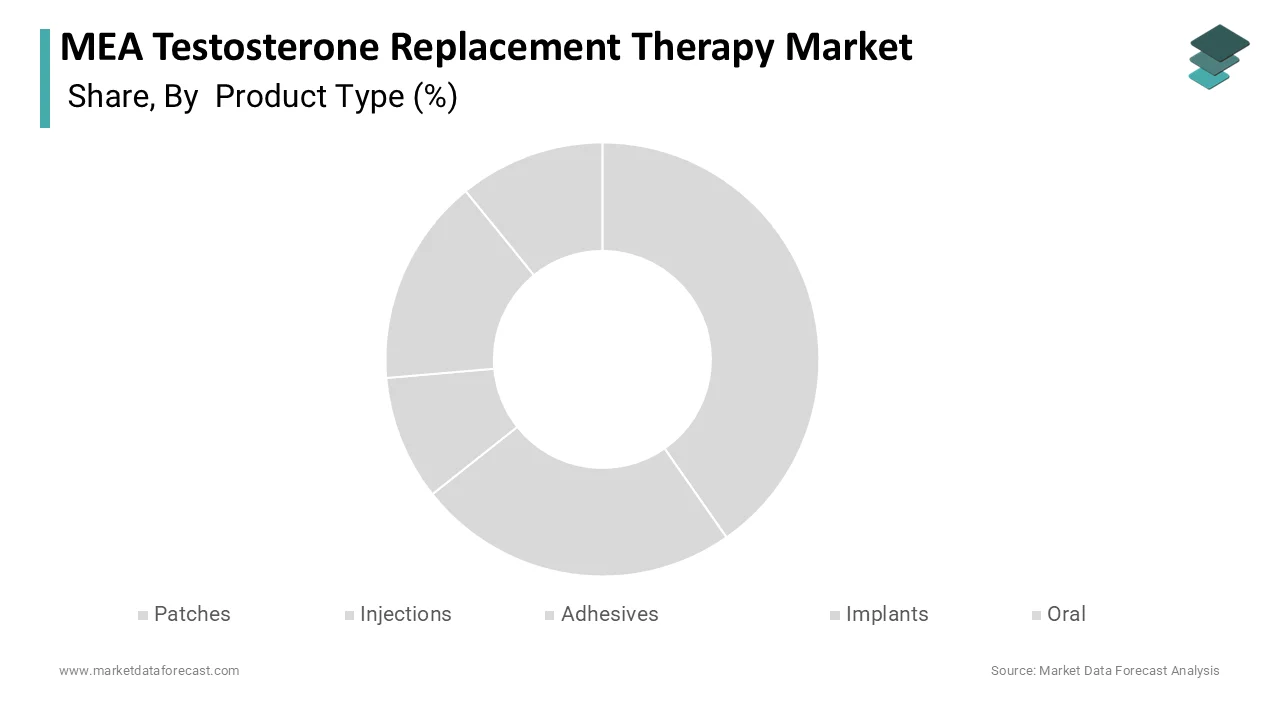
On the other side, the transdermal testosterone patches segment is expected to exhibit a CAGR of 12.5% over the forecast period, which is significantly outpacing overall market expansion due to rising patient preference for needle-free delivery among educated urban populations with disposable income. According to the Gulf Health Council Men’s Wellness Survey 2024, 68% of men aged 40 to 60 in UAE and Qatar expressed strong preference for non injectable non-injectablery when presented with efficacy equivalence data, driving demand for patch formulations despite higher costs. Dubai Health Authority documented 45% year-on-year increase in transdermal testosterone prescriptions at private endocrinology clinics in 2024, correlating with expanded insurance coverage for premium formulations under enhanced men’s health benefits packages. Telemedicine platforms report that patch-seeking constitute 52% of all online TRT inquiries in Saudi Arabia, according to Vezeeta 2024 digital health analytics, indicating digital native patients actively research alternative delivery methods before clinic visits. Manufacturer-sponsored campaigns highlighting steady state phsteady-statecs and avoidance of injection site injection-siteted perceptions among younger cohorts entering treatment. While absolute volume remains below injections, growth trajectory reflects structural shifshiftard convenience-oriented patterns as middle class expands and health literacy improves across Gulf Cooperation Council nations and select African urban centers.
By Active Ingredient Insights
The testosterone enanthate segment commanded the highest share of the regional market in 2025 due to six decades of clinical use, establishing it as the reference standard against which all newer formulations are benchmarked across the Middle East and Africa. According to the Endocrine Society Clinical Practice Guideline adapted for the Eastern Mediterranean Region 2024, testosterone enanthate remains preferred in initial therapy for adult male hypogonadism due to an extensive safety database spanning diverse ethnic populations and comorbidity profiles prevalent in region. Egyptiathe n Ministry of Health national formulary lists enanthate as sole testosterothe ne ester available at primary healthcthe are level, restricting access to alternative esters to tertiary centers and effectively channeling majority of public sector prescriptions toward this molecule. South African Medicines Control Council approved generic enanthate products from 6 manufacturers, creating a competitive pricing environment with monthly therapy costs below 10 US dollars, ensuring affordability for uninsured populations constituting 65% of the national patient base according to Statistics South Africa 2024 health survey. Medical school curricula across the region teach enanthate dosing and monitoring as a foundational endocrinology competency, perpetuating prescribing habits among new graduates unfamiliar with newer esters. This institutionalized familiarity creates substantial switching inertia where clinicians continue selecting known entities despite the statistical advantages of alternatives, sustaining enanthate dominance through path dependence rather than contemporary comparative effectiveness evidence.
However, the testosterone undecanoate segment is estimated to register a CAGR of 12.4% over the forecast period and is outpacing other esters due to extended dosing intervals of 10 to 14 weeks that dramatically improve patient adherence and reduce healthcare system burden. According to the Saudi Endocrine Society Real World Evidence Registry 2024, patients on undecanoate demonstrated 89% treatment persistence at 12 months versus 54% for enanthate requiring biweekly injections, translating to superior long term outcolong-termlong-termeduced dropout relateddropout-related UAE’s Department of Health calculated that switching stable patients to undecanoate reduced annual clinic visits by 65% per patient, freeing nursing capacity for new diagnoses and complex cases amid workforce shortages documented in 2024 workforce planning reports. Kenya’s NHIF began covering undecanoate in 2024, specifically citing adherence improvement and total cost of care reduction as justification despite higher unit price, signaling payer recognition of value beyond acquisition cost. Patient satisfaction surveys across Gulf private clinics show 78% prefer quarterly undecanoate over frequent injections when offered choice, driving organic demand through word of mouth and online community recommendations. This adherence advantage converts theoretical pharmacokinetic benefits into measurable real-world value propositions justifying premium positioning and accelerating adoption across both public and private sectors seeking efficiency gains.
COUNTRY LEVEL ANALYSIS
Saudi Arabia Testosterone Replacement Therapy Market Analysis
The Kingdom of Saudi Arabia held the leading share of the MEA market in 2025 and is expected to maintain its preeminent position during the forecast period due to a high disease burden, advanced healthcare infrastructure, and proactive men’s health initiatives under the Vision 2030 transformation agenda. According to the Saudi Ministry of Health Statistical Yearbook 2024, diagnosed hypogonadism cases increased 32% annually since 2021 following nationwide screening integration into primary care chronic disease programs, converting previously hidden prevalence into documented treatment demand. National Transformation Program allocated 1.2 billion riyals specifically for men’s health infrastructure, including 45 dedicated andrology clinics opened between 2022 and 2024, expanding specialist access beyond Riyadh and Jeddah to secondary cities. Private insurance mandate covering 12 million beneficiaries includes comprehensive hormonal therapy benefits with minimal copayments, removing financial barriers for the employed population. Local pharmaceutical manufacturers SPIMACO and Tabuk produce 60% of national testosterone supply under SFDA fast track regifast-trackensuring availability despite global supply chain disruptions. However, cultural conservatism still prevents 35% of symptomatic men from seeking care, according to a King Saud University 2024 community survey, representing significant untapped potential as destigmatization progresses. KSA’s scale and modernization velocity make it an indispensable market anchor whose policy decisions influence regional pricing benchmarks and technology adoption trajectories across the Gulf Cooperation Council.
United Arab Emirates Testosterone Replacement Therapy Market Analysis
The United Arab Emirates is projected to serve as a leading regional hub for premium testosterone replacement therapy innovation and medical tourism through high per capita spending, advanced digital health integration, and expatriate-driven demand diversity. According to Dubai Health Authority Annual Health Statistics 2024, TRT prescription volume grew 28% year on year, with transdermal and long-acting formulations capturing 65% of new prescriptions, reflecting patient preference for convenience over cost. Medical tourism attracted 85,000 men seeking discreet hormonal treatments in 2024, according to Department of Economy and Tourism data, generating premium revenue streams supporting advanced formulation availability absent in neighboring markets. Telehealth platforms Okadoc and HealthHub processed 12,000 virtual men’s health consultations in 2024, with 45% resulting in TRT initiation, demonstrating digital pathway efficacy for stigma sensitivity. Insurance regulators mandated men’s health coverage enhancements in 2024, requiring all licensed insurers to include hormonal therapy without prior authorization for diagnosed hypogonadism, expanding access for 3.5 million insured residents. However, the transient expatriate population creates demand volatility tied to employment cycles and visa status changes. UAE’s role as an innovation testbed and premium service exporter positions it as a trendsetter whose adoption patterns signal future trajectories for broader Gulf market maturation.
Israel Testosterone Replacement Therapy Market Analysis
Israel is expected to maintain its strong standing through a technologically advanced healthcare system and universal coverage model despite a smaller population, backed by evidence-based prescribing, integrated electronic health records, and robust generic competition. According to the Israel Central Bureau of Statistics Health Expenditure Survey 2024, per capita TRT spending reached 45 US dollars annually with 92%costsstss covered by four health maintenance organizations, ensuring equiequitableess regardless of socioeconomic status. Clalit and Maccabi HMOs implemented algorithmic screening protocols flagging potential hypogonadism cases from routine lab panels, increasing diagnosis rates by 40% between 2022 and 2024 according to internal quality metrics. Domestic generic manufacturers Teva and Unipharm supply 85% of national testosterone volume at prices 70% below branded equivalents, maintaining affordability while sustaining local production capacity. Academic medical centers conduct internationally recognized endocrinology research influencing regional guideline development and positioning Israeli clinicians as knowledge leaders. However, the security situation periodically disrupts supply chains and clinic operations, creating episodic access challenges absent in stable markets. Israel’s efficiency-oriented universal model demonstrates how mature systems optimize resource allocation for hormonal therapy, providing a benchmark for other nations pursuing coverage expansion.
TOP LEADING PLAYERS IN THE MARKET
- Bayer AG maintains significant involvement in the Middle East and Africa Testosterone Replacement Therapy Market through its long-acting testosterone undecanoate injection platform, serving as a premium standardacrossstandard acrossion Council nations and private healthcare sectors. The company recently expanded medical education programs, training otwor wo thousand endocrinologists in extended dosing protocols during 2024 to improve patient adherence and clinical outcomes. Bayer partnered with the Saudi Endocrine Society to develop regional treatment guidelines incorporating local epidemiological data and cultural considerations for men’s health management. Their patient support initiatives provide discreet counseling services addressing stigma barriers preventing treatment initiation in conservative societies. Digital engagement platforms deliver personalized adherence reminders and educational content in Arabic and English languages enhancing therapy persistence. These multifaceted strategies reinforce Bayer's position as a clinical partner supporting comprehensive care pathways rather than a mere product supplier throughout diverse regional markets with varying healthcare infrastructure maturity levels.
- Organon LLC contributes substantially to the Middle East and Africa Testosterone Replacement Therapy landscape through a diversified portfolio spanning injectable esters and oral formulations addressing heterogeneous affordability and access needs across public and private sectors. The company completed regulatory registrations for testosterone undecanoate capsules in six African countries during early 2024, expanding non-injectable, needle-averse patients in resource constrresource-constrainednon established a regional distribution hub in Dubai, improving supply chain resilience against currency volatility and customs delays affecting neighboring markets. Strategic collaborations with South African medical aid schemes enabled formulary inclusion for chronic medicine benefits covering three million beneficiaries. MedicalAffairs team coAffairs forty five contforty-fivecation workshops across Egypt and Kenya, building prescriber confidence in appropriate patient selection and monitoring protocols. Manufacturing partnerships with local producers in Nigeria and Egypt reduce import dependencies, ensuring consistent availability despite foreign exchange restrictions. These localized adaptation efforts demonstrate commitment to addressing diverse market realities through flexible product portfolios and supply chain innovations tailored to regional constraints.
- SPIMACO strengthens its position in the Middle East and Africa Testosterone Replacement Therapy Market through domestic manufacturing capacity, ensuring affordable supply security for the Saudi Arabian public health system and export markets across Gulf region. The company upgraded Riyadh productiits its on facility in mid 2024 increamid-2024, increasing testosterone enanthate output by forty percent to meet growing national demand under Vision 2030 men’s health initiatives. SPIMACO signed technology transfer agreements with Egyptian and Jordanian manufacturers,s enabling regional production expansion, reducing logistics costs, an c urrency exposure for North African markets. Regulatory approvals obtained in twelve African countries during 2024 opened new export channels, leveraging WHO prequalification statusforr government tender eligibility. Educational partnerships with King Saud University integrate practical pharmacology training into medical curricula, building next-generation familiarity with locally produced therapies. Pricing strategies aligned with public sector procurement budgets ensure accessibility while maintaining sustainable margins through volume efficiencies. These strategic investments position SPIMACO as a regional champion supporting national health security objectives while expanding commercial footprint beyond domestic borders through competitive cost structures and regulatory credentials.
TOP STRATEGIES USED BY KEY MARKET PARTICIPANTS
Key players employ localized manufacturing partnerships to mitigate currency risks and ensure supply continuity across volatile economies. Companies invest heavily in specialist education programs, building clinical competencies while embedding brand prefeevidence-based developmentce-basedlopment. Regulatory engagement strategies prioritize harmonized registration pathways, accelerating multi-country market access for new formulations. Patient support initiatives address cultural stigma through discreet digital platforms and community awareness campaigns normalizing men’s health discussions. Insurance negotiation efforts secure formulary inclusion by demonstrating total cost of care benefits beyond unit price considerations. Supply chain diversification establishes regional distribution hubs buffering against geopolitical disruptions and customs delays. Product portfolio adaptation balances premium innovation with affordable generics, addressing heterogeneous purchasing power across public and private sectors. Telemedicine collaborations enable virtual consultation ppathways,expandipathways t o underserved populations while maintaining prescribing compliance; evidence generation using local patient data supports reimbursement submissions and guideline updates reflecting regional epidemiology. Strategic acquisitions of local distributors provide immediate market access and existing relationships, accelerating commercial scaling without organic development timelines.
COMPETITIVE LANDSCAPE
Competition in the Middle East and Africa Testosterone Replacement Therapy Market exhibits pronounced stratification between multinational pharmaceutical leaders dominating premium segments and regional manufacturers capturing volume-driven tenders through cost competitiveness. Global players leverage clinical evidence generation and specialist education to justify premium positioning in private hospitals and insured populations seeking international standard therapies. Domestic producers compete aggressively on price and local supply reliability in government procurement channels where standardized specifications limit differentiation opportunities. Emerging Indian and Chinese manufacturers increasingly penetrate mid tier marketmid-tierng acceptable quality at an intermediate price point, challenging ttraditionalbinary competition structures. Innovation competition focuses on delivery convenience and adherence improvement rather than novel molecular entities due to mature therapeutic class and regulatory conservatism. Geographic coverage capabilities often outweigh technological superiority in determining commercial success given infrastructure limitations across vast territories. Cultural adaptation of marketing and patient support creates competitive advantages in conservative societies where trust and discretion influence prescribing decisions. Competitive dynamics continue evolving as universal health coverage exexpands reating new institutional buyers with distinct procurement criteria differing from historical private sector patterns. Currency volatility periodically reshuffles competitive positions by advantaging locally manufactured products over imports during depreciation cycles.
KEY MARKET PLAYERS
Some of the companies that are playing a dominating role in the Middle East & Africa Testosterone Replacement Therapy Market include:
- Pfizer Inc.
- Allergan plc
- AbbVie Inc.
- Bayer AG
- Eli Lilly and Company
- Endo Pharmaceuticals Inc.
- Kyowa Kirin International plc
- Novartis AG
- Mylan N.V.
MARKET SEGMENTATION
This research report on the MEA TRT market has been segmented & sub-segmented into the following categories:
By Product Type
- Patches
- Injections
- Adhesives
- Implants
- Oral
By Active Ingredient
- Testosterone Undecanoate
- Testosterone Enanthate
- Testosterone Cypionate
- Methyl Testosterone
By Country
- KSA
- UAE
- Israel
- Rest of GCC countries
- South Africa
- Ethiopia
- Kenya
- Egypt
- Sudan
- rest of MEA