- Product Description Description
- Table of Contents TOC
- List of Table & Figure LOT
- Get Free Sample PDF Sample PDF
Market Size, 2025
$2.66 BnMarket Estimate, 2026
$2.81 BnMarket Forecast, 2034
$4.40 BnCAGR, 2026–2034
5.78%Executive Summary: Middle East Chocolate Market
- Market Scope: Comprehensive market analysis of the Middle East chocolate industry covering confectionery variants (dark chocolate, milk & white chocolate), distribution channels (supermarkets/hypermarkets, convenience stores, online retail stores, others), and regional landscapes across KSA, UAE, Israel, Rest of GCC countries, and Rest of Middle East.
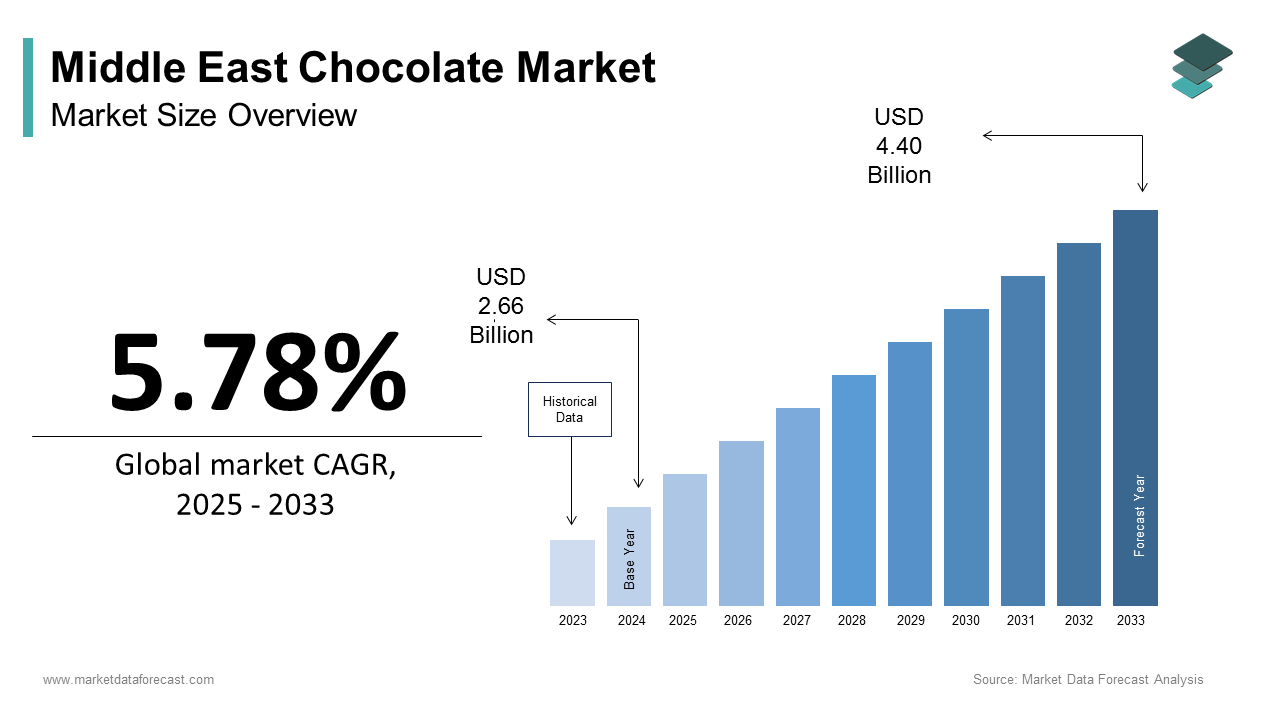
- Market Valuation: Valued at USD 2.66 billion in 2025, estimated at USD 2.81 billion in 2026, and projected to reach USD 4.40 billion by 2034, registering a steady CAGR of 5.78% during the forecast period.
- Primary Growth Drivers: Rising disposable incomes and rapid urbanization driving luxury and premium consumption; deep cultural significance of chocolate in religious and social customs (Eid, Ramadan, weddings); and the expansion of modern retail infrastructure and e-commerce platforms.
Key Market Segment Metrics (2026–2034)
| Category | Leading Segment / Position | Growth Dynamics |
|---|---|---|
| By Confectionery Variant | Milk and White Chocolate (dominated the market in 2025 due to consumer preference for sweeter profiles and traditional gifting formats) | Dark chocolate is estimated to register the fastest CAGR of 9.1%, driven by increasing health consciousness and low-sugar functional choices. |
| By Distribution Channel | Supermarkets and Hypermarkets (held 45.9% market share in 2025 through major retail chains like Carrefour and Lulu Group) | Online retail stores are projected to register the highest CAGR of 14.6%, fueled by mobile commerce, gifting services, and delivery apps. |
| By Region | United Arab Emirates (top performer with 28.3% market share in 2025, supported by high per capita consumption and luxury tourism) | Egypt is expected to register the highest regional CAGR during the forecast period, backed by a growing middle class and expanding retail hubs. |
Major Market Players & Market Structure
Market Structure: Intense and highly dynamic competitive landscape featuring global confectionery giants, established regional manufacturers, and emerging boutique/artisanal chocolatiers competing via flavor localization and omnichannel strategies.
Key Companies: Mars, Nestlé, Ferrero, Mondelez International, Patchi, Al Nassma, Godiva, Hershey, Lindt & Sprüngli, and Meiji Holdings.
Middle East Chocolate Market Size
The chocolate market size in the Middle East was valued at USD 2.66 billion in 2025 and is expected to reach USD 4.40 billion by 2034 from USD 2.81 billion in 2026. The market is projected to grow at a CAGR of 5.78%.
Chocolate holds a prominent place in festive occasions such as Eid, weddings, and Ramadan, where it is often included in gift baskets and luxury hampers. Artisanal and imported chocolates have become more popular in the region as result of the growing urban population and more exposure to international trends in food.
MARKET DRIVERS
Rising Disposable Incomes and Urbanization
The significant rise in disposable incomes and rapid urbanization are propelling the chocolate market in Middle East. The financial capability makes it possible for a larger portion of the population to purchase luxury chocolate goods in addition to simple candies. Additionally, European and Swiss chocolate brands are now more accessible because to the growth of modern retail infrastructure, such as duty-free stores and luxury malls, particularly in locations like Dubai and Doha. As per Euromonitor International, the demand for luxury chocolates from brands like Lindt, Godiva, and Ferrero has grown significantly especially during festive periods. The Middle East chocolate market demand is further increased by the rise in affluent millennials and Gen Z consumers who prioritize aesthetic and experiential consumption.
Cultural Significance and Gifting Traditions
The cultural significance of chocolate in social customs and gift-giving traditions is additionally to fuel the growth of the Middle East chocolate market. In many Middle Eastern societies, chocolates are not just consumed but also exchanged as tokens of goodwill mainly during religious festivals, weddings, and family gatherings. Retailers respond to this interest by launching festive assortments and limited-edition packaging, which fuels seasonal sales increases. Additionally, the rise of premium and personalized chocolate boxes often featuring Arabic calligraphy or culturally inspired motifs has added a new dimension to the market. Chocolate is becoming an integral part of corporate and personal gifts, and its role in reinforcing brand loyalty and consumer engagement continues to grow.
MARKET RESTRAINTS
Health Awareness and Obesity Concerns
Growing awareness of obesity and health issues in Gulf Cooperation Council (GCC) nations is slowly to restraint he growth of the Middle East chocolate market. Governments across the region have implemented public health campaigns and introduced sugar taxes to curb excessive sugar consumption which has had a direct impact on chocolate sales. According to the World Health Organization (WHO) report, several Middle Eastern nations including Saudi Arabia and the UAE have some of the highest rates of diabetes and obesity, which globally prompting consumers to seek healthier alternatives. Furthermore, regulatory bodies such as the Saudi Food and Drug Authority (SFDA) have mandated nutritional labeling and imposed restrictions on marketing sugary foods to children.
Economic Volatility and Currency Fluctuations
Economic volatility and currency fluctuations pose a significant challenge to the growth of the Middle East chocolate market in countries heavily reliant on oil exports. Many regional economies, including Saudi Arabia, Kuwait, and Bahrain experience fluctuating shares based on global oil prices, which directly impacts consumer spending power and import dynamics. This downturn has led to cautious consumer behavior, especially regarding discretionary purchases such as premium chocolates. Additionally, currency devaluations in some Middle Eastern countries have increased the cost of imported chocolates making them less accessible to a broader customer base. According to a Bloomberg report from early 2025, the ongoing cash-based crisis in Lebanon has significantly limited the supply of luxury products which includes chocolates. Retailers have raised prices due to inflationary pressures, which has slowed demand even in more stable economies like the UAE.
MARKET OPPORTUNITIES
Expansion of E-commerce and Digital Confectionery Retail
The rapid development of e-commerce sites along with digital candy stores offer the most lucrative opportunities for the Middle East perfume market. Online shopping has increased significantly in the area due to a tech-savvy youth demographics, high internet penetration, and smartphone usage. The convenience of online shopping, coupled with personalized recommendations and subscription-based models have made digital platforms a preferred channel for chocolate purchases among millennials and Gen Z consumers. According to Euromonitor International, traditional retail channels have been beaten by online chocolate sales in the United Arab Emirates, which increased by 21% in 2023. Moreover, local e-commerce giants such as Namshi, Noon, and Amazon.ae have expanded their gourmet chocolate offerings, while international players like Godiva and Lindt have strengthened their digital presence in the region. Social media marketing, influencer collaborations, and targeted advertising campaigns have further boosted brand visibility and consumer engagement which creates vast opportunities for continued digital-driven growth.
Rise of Premium and Artisanal Chocolate Brands
The growing popularity of premium and artisanal chocolate brands presents a substantial opportunity for the Middle East chocolate market. Premium chocolates focus on craftsmanship exclusivity and high-quality ingredients which aligns well with the region’s appreciation for luxury and indulgence. Consumers in the Gulf area, particularly those from the United Arab Emirates and Saudi Arabia have shown a significant preference for personalized and limited-edition chocolate experiences, which are frequently purchased from independent chocolatiers in the Middle East and Europe. The increasing number of luxury concept stores, pop-up boutiques, and curated online platforms offering artisanal chocolates has further fueled this trend. Additionally, the revival of traditional Middle Eastern flavor pairings such as rose, saffron, and cardamom-infused chocolates has attracted a new generation of discerning consumers seeking authenticity and heritage-driven products.
MARKET CHALLENGES
Intense Competition and Market Saturation
The increased competition among an increasing number of local and international companies competing for consumers' attention is one of the main issues facing the Middle East chocolate market. The region has become a battleground for global confectionery giants such as Nestlé, Mondelez, and Mars, alongside established Middle Eastern brands like Al Nassma and Al Foah. This resulted in market saturation and diminishing differentiation among products. This overcrowding forces companies to engage in aggressive pricing strategies and extensive promotional campaigns to maintain visibility and market share. Additionally, the influx of counterfeit and grey-market chocolate products poses a significant threat to brand equity and consumer trust.
Changing Consumer Preferences Toward Health-Conscious Snacking
A growing focus on health and wellness is presenting a significant challenge for the Middle East chocolate market, mainly for traditional chocolate manufacturers reliant on high-sugar and high-fat formulations. Consumers, especially younger demographics are becoming more conscious about the nutritional value of their snacks and are shifting toward functional, plant-based, and low-sugar alternatives. This shift is prompting brands to reformulate their offerings, adopt clean labels, and enhance transparency in ingredient sourcing changes that come with increased production costs and supply chain complexities. However, balancing indulgence with health considerations remains a delicate task, where chocolate is often associated with celebration and luxury rather than nutrition. Balancing heritage with evolving expectations remains a critical challenge for both global and regional players in the Middle East chocolate market.
REPORT COVERAGE
| REPORT METRIC | DETAILS |
| Market Size Available | 2025 to 2034 |
| Base Year | 2025 |
| Forecast Period | 2026 to 2034 |
| CAGR | 5.78% |
| Segments Covered | By Confectionery Variant, Distribution Channel, and Country |
| Various Analyses Covered | Regional and Country Level Analysis; Segment-Level Analysis; DROC; PESTLE Analysis; Porter’s Five Forces Analysis; Competitive Landscape; Analyst Overview of Investment Opportunities |
| Regions Covered | KSA, UAE, Israel, Rest of GCC countries, and Rest of Middle East |
| Market Leaders Profiled | Mars, Nestlé, Ferrero, Mondelez International, Patchi, Al Nassma, Godiva, Hershey, Lindt & Sprüngli, Meiji Holdings |
SEGMENTAL ANALYSIS
By Confectionery Variant Insights
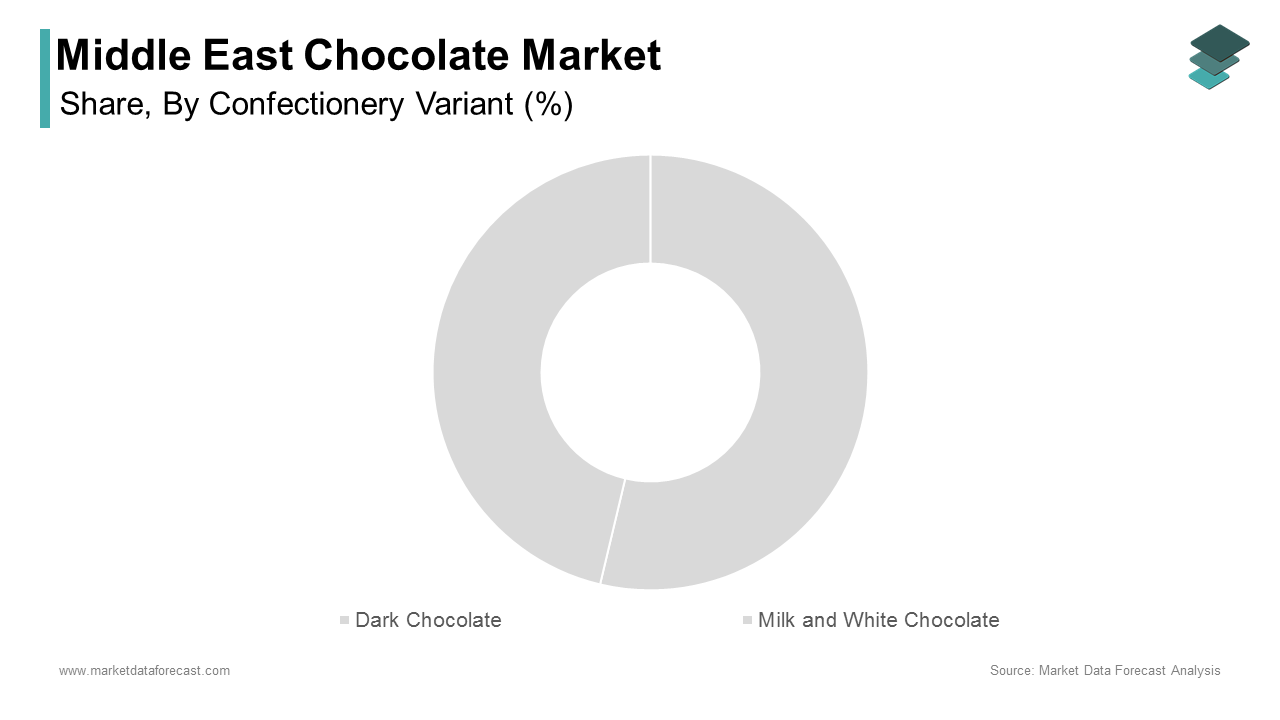
The milk and white chocolate segment dominated the Middle East chocolate market by capturing a significant share in 2025. The growth of the segment is driven by primarily attributed to consumer preference for sweeter, creamier textures that align with regional taste profiles. According to Euromonitor International, milk chocolate remains the most consumed variant across all GCC countries, especially among younger consumers and families. These chocolates are widely available in gifting formats during Ramadan, Eid, and weddings, which reinforces their cultural significance. Additionally, leading brands such as Nestlé, Cadbury, and Ferrero have customized their product lines to include local flavor infusions like dates, saffron, and rosewater, enhancing appeal. The widespread presence of these variants in supermarkets, convenience stores, and duty-free outlets further supports their dominance.
The dark chocolate segment is estimated to register a fastest CAGR of 9.1% over the forecast period 2026 to 2034 due to the increasing health consciousness and the rising demand for functional foods rich in antioxidants and lower in sugar content. Health-conscious millennials and fitness enthusiasts in urban centers like Dubai and Tel Aviv are particularly drawn to high-cocoa-content bars, often marketed as “low-sugar” or “superfood-infused.” Government-backed initiatives promoting healthier diets and awareness campaigns on diabetes prevention have also contributed to this shift. Brands such as Lindt, Godiva, and local artisan producers are capitalizing on this trend by launching premium dark chocolate collections with halal certification and eco-friendly packaging that appeal to both wellness-focused and luxury-seeking consumers.
By Distribution Channel Insights
The supermarkets and hypermarkets segment was the largest and held 45.9% of Middle East Chocolate market share in 2025 with the widespread availability of chocolate products in major retail chains such as Carrefour, Lulu Group, and Waitrose which offer a broad range of international and domestic brands. According to Euromonitor International, nearly 60% of chocolate purchases in the region occur through large-format retailers due to their accessibility, promotional offers, and strategic placement near checkout counters. Moreover, supermarkets frequently introduce limited-edition holiday-themed chocolates, driving incremental sales.
The online retail stores segment is likely to register a CAGR of 14.6% from 2026 to 2034 with the digital transformation of retail and the increasing reliance on e-commerce platforms for personalized and convenient shopping experiences. Platforms like Amazon.ae, Noon, and Namshi have increased the variety of gourmet chocolates they offer by offering curated assortments from both global and niche brands. As per Euromonitor International, mobile commerce accounted for over 65% of online chocolate purchases in the UAE in 2023, driven by Gen Z and millennial consumers who rely on social media influencers and digital reviews before making decisions. Subscription-based models, gift personalization services, and same-day delivery options have further enhanced the appeal of online chocolate shopping.
REGIONAL ANALYSIS
United Arab Emirates Chocolate Market Insights
UAE was the top performer in the regional market and held a 28.3% market share in 2025 with the highest per capita chocolate consumptions worldwide driven by a cosmopolitan population and a robust tourism sector. The country’s status as a tax-free destination encourages luxury spending, while major events like Dubai Shopping Festival and Ramadan promotions drive seasonal spikes in chocolate sales.
Saudi Arabia Chocolate Market Insights
Saudi Arabia was positioned next in the MEA chocolate market with a share of 24.3% in 2025 with the prominence of chocolate gifting during Eid and Ramadan has led to a surge in premium boxed chocolates from European and Japanese brands. Government support for halal-certified food products has also encouraged domestic and international chocolate manufacturers to tailor their offerings to Islamic dietary laws.
Egypt Chocolate Market Insights
Egypt chocolate market growth is expected to grow with the highest CAGR during the forecast period 2026-2034. Egypt offers a vast consumer base with a growing middle class increasingly exposed to international chocolate trends. Cairo and Alexandria serve as key retail hubs, where both global and local brands compete for market share.
Israel Chocolate Market Insights
Israel chocolate market growth is expected to have steady growth with technologically advanced and design-oriented player in the confectionery environment. The country’s well-educated, fashion-conscious population drives demand for innovative and unconventional chocolate flavors, which are frequently purchased from independent European and local chocolatiers. Israel’s thriving startup ecosystem has also given rise to homegrown chocolate brands that leverage sustainability, plant-based ingredients, and biotech innovations as core selling propositions. According to a report by Start-Up Nation Central, over 10 new chocolate tech startups emerged in the past two years, which mainly focusing on functional formulations and ethical sourcing. Israel is becoming a distinctive and significant chocolate market in the MEA region as wellness and self-expression get more attention.
LEADING PLAYERS IN THE MIDDLE EAST CHOCOLATE MARKET
Nestlé S.A.
Nestlé is a dominant force in the Middle East chocolate market leveraging its global expertise and extensive product portfolio to cater to diverse consumer preferences. The company’s regional presence is marked by well-established brands such as KitKat, Nesquik, and Smarties, which are widely available across supermarkets, convenience stores, and online platforms. Nestlé has successfully localized its offerings by incorporating traditional flavors like dates, pistachio, and rose into its chocolate lines, aligning with local tastes. Its commitment to sustainability and responsible sourcing further enhances brand appeal among environmentally conscious consumers. Globally, Nestlé remains a leader in confectionery innovation by influencing its trends in functional chocolates and plant-based alternatives.
Mondelez International
Mondelez International plays a crucial role in shaping the Middle East chocolate landscape through iconic brands such as Cadbury, Toblerone, and Milka. The company has strategically positioned itself in key markets like the UAE and Saudi Arabia by focusing premium quality and indulgent packaging, especially during festive seasons. Mondelez has invested heavily in digital marketing and e-commerce expansion to connect with younger demographics who prefer convenience and novelty. It also collaborates with local retailers to optimize shelf presence and seasonal promotions. Mondelez continues to lead in chocolate innovation particularly in dark and low-sugar variants that align with evolving health-conscious consumer behavior.
Lindt & Sprüngli
Lindt & Sprüngli has carved a niche in the Middle East by offering high-end, luxury chocolate experiences that appeal to affluent consumers and expatriates. The Swiss chocolatier has expanded its presense through flagship stores in Dubai, Riyadh, and Doha, where it showcases artisanal chocolates, pralines, and personalized gift sets. The company, which is well-known for its fine craftsmanship and distinctive Lindor truffles, meets the need for premium products as well as the gift-giving culture of the region. Lindt has embraced digital transformation by enhancing its online presence and launching exclusive collections specilized to local tastes.
TOP STRATEGIES USED BY KEY MARKET PARTICIPANTS
One major strategy employed by key players in the Middle East chocolate market is product localization, where international brands tailor their formulations, packaging, and flavor profiles to align with regional taste preferences and cultural traditions. This includes incorporating ingredients like saffron, cardamom, and dates to create chocolates that resonate more deeply with local consumers.
Another strategy is expanding through omnichannel retail, wherein companies integrate physical and digital touchpoints to enhance customer experience. This includes investing in flagship stores, pop-up boutiques, and duty-free counters while simultaneously strengthening online platforms with subscription models, gift personalization, and fast delivery options.
KEY MARKET PLAYERS AND COMPETITIVE OVERVIEW
Major Players of the Middle East Chocolate Market include Mars, Nestlé, Ferrero, Mondelez International, Patchi, Al Nassma, Godiva, Hershey, Lindt & Sprüngli, Meiji Holdings
The competition in the Middle East chocolate market is intense and highly dynamic, which is shaped by the coexistence of global confectionery giants, regional manufacturers and emerging boutique chocolatiers. International players such as Nestlé, Mondelez, and Lindt leverage their brand equity, advanced production capabilities, and global supply chains to capture both mass-market and premium segments. At the same time, local brands like Al Nassma and Al Foah maintain strong consumer loyalty by capitalizing on cultural relevance and heritage-driven storytelling. The Middle East chocolate market is further fragmented by the rapid rise of artisanal and health-focused chocolate brands that cater to evolving consumer preferences for clean labels, organic ingredients, and functional benefits. Retailers and distributors play a critical role in shaping brand visibility, often curating multi-brand portfolios that create additional layers of competition. Growing competition created by e-commerce and digital engagement forces firms to constantly innovate in product development, packaging, and customer experience in order to distinguish themselves in a saturated marketplace.
RECENT HAPPENINGS IN THE MARKET
- In February 2025, Lindt expanded its position in the Saudi luxury chocolate market by opening a new concept shop at Riyadh Front, which offers limited-edition regional flavor releases, personalized gift-wrapping services, and an immersive chocolate tasting experience.
- In May 2025, Nestlé launched a halal-certified line of date-infused chocolates under its Nesquik brand, which mainly targets health-conscious consumers and aligning with local flavor preferences across the GCC.
- In July 2025, Cadbury partnered with a leading Emirati lifestyle influencer to launch an Eid-themed chocolate gifting campaign that combines traditional aesthetics with modern branding to engage younger audiences.
- In September 2025, Al Nassma, a well-known Middle Eastern artisan chocolate company has extended its distribution network to Egypt and Jordan in order to meet the rising demand for high-quality confections in the area and to increase its market share outside of the Gulf.
- In November 2025, Godiva introduced a direct-to-consumer online platform in the UAE, which offers personalized chocolate boxes, express delivery, and virtual chocolate-tasting sessions to enhance digital engagement and expand its customer base.
MARKET SEGMENTATION
This research report on the Middle East Chocolate Market has been segmented and sub-segmented based on confectionery variant, distribution channel and region.
By Confectionery Variant
- Dark Chocolate
- Milk and White Chocolate
By Distribution Channel
- Convenience Store
- Online Retail Store
- Supermarket/Hypermarket
- Others
By Region
- KSA
- UAE
- Israel
- Rest of GCC countries
- Rest of Middle East