- Product Description Description
- Table of Contents TOC
- List of Table & Figure LOT
- Get Free Sample PDF Sample PDF
Market Size, 2025
$27.8 BnMarket Estimate, 2026
$29.3 BnMarket Forecast, 2034
$44.8 BnCAGR, 2026–2034
5.45%Executive Summary: Global Motorsport Components Market
- Market Scope: Comprehensive global motorsport components market analysis covering product categories, application segments, regional leadership frameworks, technological spillover, and specialized high-performance racing demands.
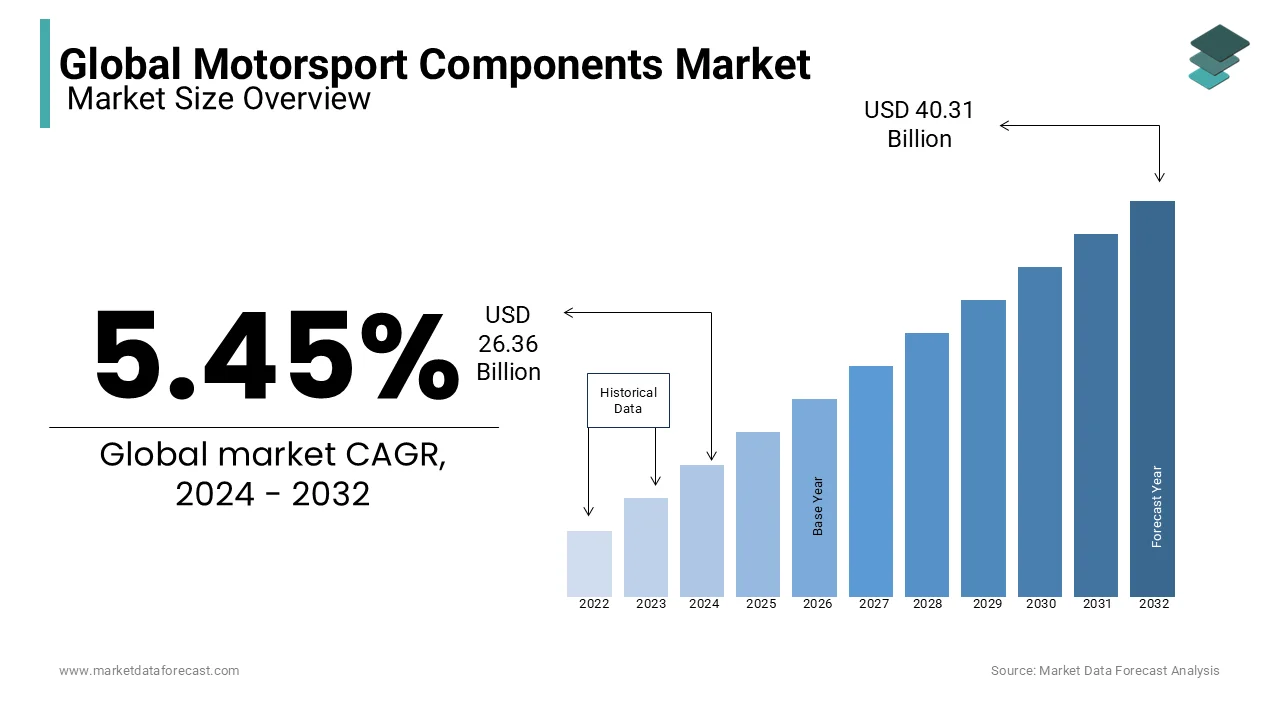
- Market Valuation: Valued at USD 27.80 billion (2025), estimated at USD 29.32 billion (2026), and projected to reach USD 44.82 billion by 2034, registering a CAGR of 5.45% (2026–2034).
- Primary Growth Drivers: Technological spillover between motorsport and the broader automotive industry (such as hybrid powertrains and lightweight composite materials), increasing global participation in amateur and semi-professional racing, and expanding interest in electric and virtual racing series.
Key Market Segment Metrics (2026–2034)
| Category | Leading Segment (2025 Position) | Fastest-Growing Segment |
|---|---|---|
| By Product | Brakes (dominated due to critical importance in safety, thermal management, and race outcomes) | Electronics (predicted to witness the highest CAGR of 7.8% driven by hybrid powertrains and telemetry) |
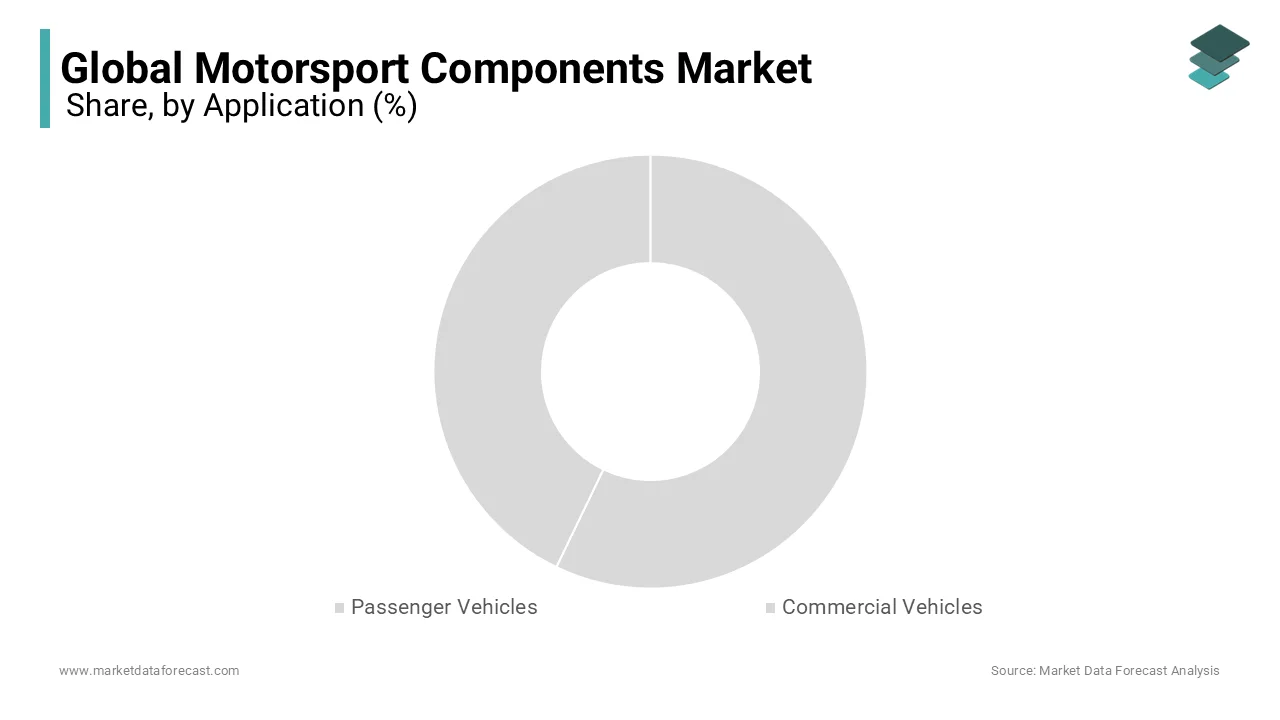
| By Application | Passenger Vehicles (captured a significant share in 2025 via amateur club racing and track days) | Commercial Vehicles (estimated at a 6.5% CAGR driven by truck and bus racing series) |
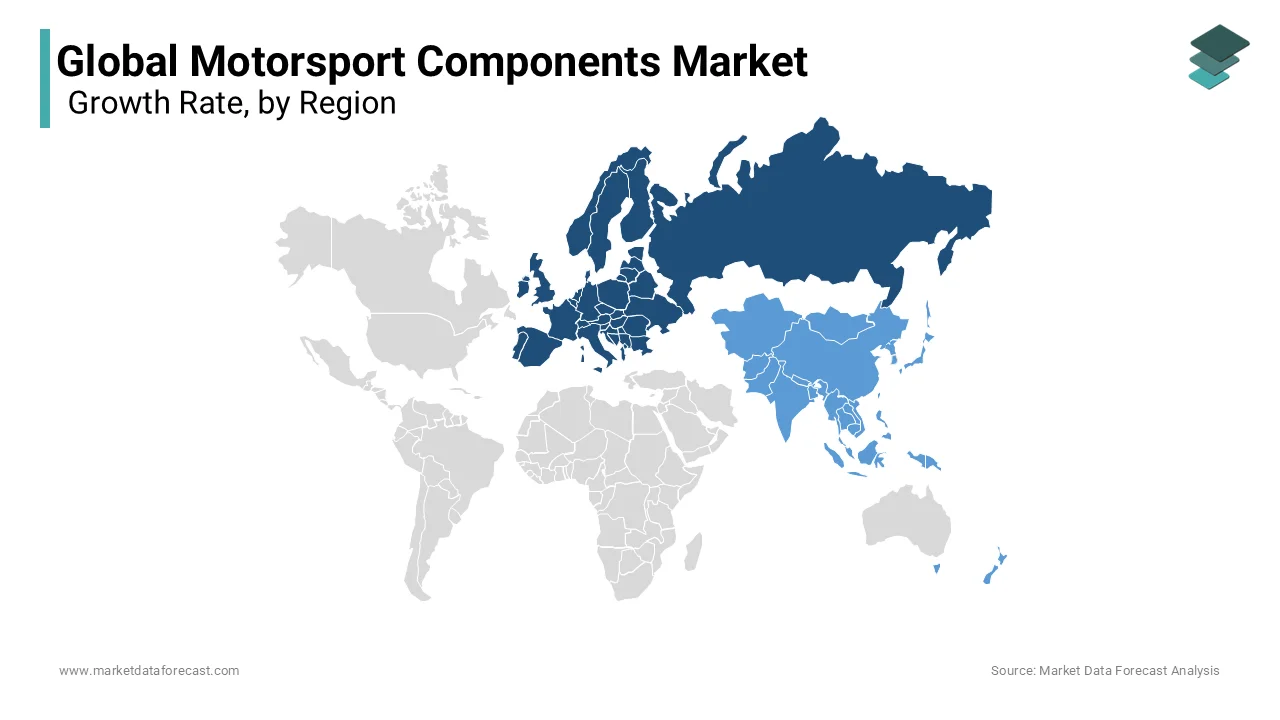
| By Region | North America (top performer with a 35.7% share in 2025, driven by NASCAR, IndyCall, and grassroots motorsport) | Asia-Pacific (high-growth region driven by infrastructure investments, rising disposable incomes, and domestic manufacturing) |
Major Market Players & Market Structure
Market Structure: Intense and highly competitive market landscape characterized by a mix of specialized engineering firms and large automotive suppliers vying for technological leadership, team contracts, and compliance with strict regulatory cost caps.
Key Companies: ZF Friedrichshafen, BBS Kraftfahrzeugtechnik AG, SKF, Magneti Marelli, Penske Racing Shocks, Pirelli, Mercedes, Toyota, Ferrari, Goodyear, Lear Corporation, Ford, Renault, Chevrolet, and Bosch.
 Download Free Sample Report
Global Motorsport Components Market Size
The global motorsport components market was valued at USD 27.80 billion in 2025 and is anticipated to reach USD 29.32 billion in 2026 from USD 44.82 billion by 2034, growing at a CAGR of 5.45% during the forecast period from 2026 to 2034.
Introduction and Definition
Motorsport components refer to specialized, high-performance parts used in competitive racing vehicles. This market includes critical elements such as engine internals suspension systems braking assemblies aerodynamic bodywork and advanced electronic control units that are engineered to withstand extreme physical stresses and thermal loads. Unlike standard automotive parts these components prioritize weight reduction power output and durability under rigorous conditions. The market serves various racing disciplines including Formula 1 NASCAR rally and endurance racing where technological superiority directly influences competitive outcomes. According to the Fédération Internationale de l Automobile the global motorsport community engages millions of participants and spectators with major events like the Monaco Grand Prix attracting over 200000 attendees annually demonstrating the massive scale of engagement. In Europe the presence of historic circuits such as Silverstone and Monza fosters a dense ecosystem of engineering firms and suppliers. As per data from the European Commission the automotive supply chain which heavily overlaps with motorsport employs approximately 13 million people across the continent highlighting the industrial significance of this niche. The integration of composite materials like carbon fiber and titanium has revolutionized component design allowing for unprecedented strength to weight ratios. Regulatory bodies continuously update technical regulations to balance performance with safety and cost containment driving constant innovation. This market operates at the intersection of precision engineering and competitive sport requiring rapid prototyping and iterative development cycles to maintain a competitive edge in an environment where milliseconds determine victory.
MARKET DRIVERS
Technological Spillover and Automotive Industry Integration
The symbiotic relationship between motorsport and the broader automotive industry drives the growth of the motorsport components market. Racing teams and manufacturers utilize the track as a high stakes laboratory to test and refine technologies that eventually trickle down to consumer vehicles. According to research published by the Society of Automotive Engineers innovations in areas such as hybrid powertrains energy recovery systems and lightweight materials often originate in motorsport before being adapted for mass production. This technology transfer creates a steady demand for advanced components as automotive original equipment manufacturers seek partnerships with racing entities to validate new designs under extreme conditions. The development of efficient internal combustion engines and aerodynamic solutions in Formula 1 has directly influenced the design of modern road cars aiming for better fuel efficiency and lower emissions. Companies invest heavily in motorsport divisions to enhance their brand image and demonstrate engineering prowess which justifies the substantial costs associated with component development. The need for real time data acquisition and telemetry systems in racing has also accelerated advancements in sensor technology and software integration. As the automotive industry shifts towards electrification and autonomous driving motorsport provides a proving ground for high voltage battery management and electric motor efficiency. This continuous loop of innovation ensures that the demand for cutting edge motorsport components remains robust driven by the dual goals of competitive success and commercial application in the wider automotive sector.
Increasing Global Participation in Amateur and Semi Professional Racing
The expanding base of amateur and semi-professional racing enthusiasts further propels the expansion of the motorsport components market. This creates a diverse and voluminous customer segment beyond elite professional series. These participants require reliable and affordable performance parts to upgrade their vehicles for competition ranging from brake pads and suspension kits to roll cages and safety harnesses. The democratization of motorsport through accessible entry level categories such as karting and formula ford allows individuals to enter the sport at a younger age fostering long term engagement and component consumption. Social media platforms and online communities facilitate knowledge sharing and part sourcing making it easier for amateurs to access specialized components that were previously available only to professional teams. The rise of sim racing has also bridged the gap between virtual and physical motorsport encouraging enthusiasts to invest in real world hardware and vehicle modifications. Regional racing series in emerging markets are gaining popularity further expanding the geographic footprint of component demand. Manufacturers respond by offering tiered product lines that cater to different budget levels ensuring that both hobbyists and serious competitors can find suitable solutions. This broadening participation base ensures a consistent revenue stream for component suppliers who benefit from the recurring nature of maintenance and upgrades inherent in competitive racing activities.
MARKET RESTRAINTS
Stringent Regulatory Constraints and Cost Cap Implementations
The imposition of strict regulatory frameworks and financial caps by governing bodies is a major restraint to the motorsport components market. This limits spending and the standardization of parts. Organizations such as the Fédération Internationale de l Automobile have introduced cost cap regulations in premier series like Formula 1 to ensure competitive balance and financial sustainability among teams. The official financial regulations issued by the FIA Cost Cap Administration designated a baseline spending limit of USD 135 million for the 2023 season to restrict team outlays on performance-related development. This limitation forces teams to prioritize essential upgrades and reduces the frequency of introducing new parts thereby slowing down the overall volume of component procurement. Standardization mandates require certain components to be sourced from single suppliers or meet strict specification limits which reduces the diversity of products available in the market. These measures aim to prevent wealthier teams from dominating through excessive spending but inadvertently constrain the innovation cycle and reduce opportunities for smaller component manufacturers. The complexity of compliance requires extensive administrative oversight and auditing adding operational burdens to teams and suppliers. Additionally frequent changes in technical regulations create uncertainty making it difficult for manufacturers to plan long term production strategies. These restrictions are intended to promote fairness, but they can stifle technological advancement. This limits the market potential for custom, high-performance parts because teams must choose standardized solutions to stay within their financial limits.
High Operational Costs and Economic Volatility
The substantial financial burden of developing, manufacturing, and maintaining high-performance motorsport components is a persistent constraint to the growth of the global market. This issue is particularly difficult for smaller enterprises to overcome. The use of exotic materials such as carbon fiber composites titanium alloys and advanced ceramics involves expensive raw material procurement and specialized manufacturing processes like autoclave curing and precision machining. Economic volatility and inflationary pressures increase the cost of energy logistics and labor further squeezing profit margins for component suppliers. Many teams and privateers operate on tight budgets making them highly sensitive to price fluctuations and economic downturns which can lead to reduced spending on non essential upgrades or participation in fewer events. The high risk of component failure during races necessitates rigorous quality control and redundancy planning adding to the overall expense. Small and medium sized suppliers often struggle to secure financing for capital intensive equipment required for advanced manufacturing. Furthermore the seasonal nature of many racing series creates uneven cash flows complicating resource allocation and workforce management. These financial pressures force companies to carefully evaluate return on investment for new product developments potentially delaying innovation and limiting the introduction of novel technologies to the market until economic conditions stabilize and funding becomes more readily available.
MARKET OPPORTUNITIES
Expansion into Electric and Hybrid Racing Series
The rapid emergence of electric and hybrid racing categories offers a substantial opportunity for the motorsport components market. This helps to diversify and innovate in alignment with global sustainability trends. Series such as Formula E and Extreme E are gaining prominence attracting major automotive manufacturers and sponsors interested in showcasing electric vehicle technology. According to data from the International Energy Agency global electric car sales exceeded 10 million units in 2022 reflecting a broader societal shift that motorsport is mirroring through these new platforms. This transition creates demand for specialized components such as high voltage battery packs inverters electric motors and thermal management systems that differ significantly from traditional internal combustion engine parts. Suppliers who adapt their expertise to develop lightweight and efficient electrical systems can capture new revenue streams and establish themselves as leaders in next generation racing technology. The unique requirements of electric racing such as energy regeneration and power delivery optimization drive innovation in software and electronic control units. Additionally the focus on sustainability encourages the use of recyclable materials and eco friendly manufacturing processes opening avenues for green technology providers. Partnerships with technology firms specializing in energy storage and power electronics can accelerate product development and market entry. As more racing series adopt hybrid or fully electric formats, the addressable market for these specialized components will expand. This offers long-term growth potential for companies that proactively invest in electrification capabilities and align their product portfolios with the evolving landscape of sustainable motorsport.
Growth in Simulation and Virtual Racing Technologies
The integration of simulation technology and virtual racing paves the way for manufacturers to expand their reach beyond physical hardware into digital and hybrid domains, which is likely to boost the expansion of the motorsport components market. Sim racing has evolved from a niche hobby into a recognized discipline with professional leagues and substantial prize pools attracting millions of participants globally. According to research, the esports audience which includes sim racing fans exceeds 500 million people worldwide creating a vast market for related products. Component manufacturers can leverage this trend by developing haptic feedback systems motion platforms and realistic steering wheels that replicate the feel of actual racing cars. Collaborations with software developers allow for the creation of accurate digital twins of physical components enabling virtual testing and validation before physical production. This reduces development costs and time to market while providing valuable data on component performance. The demand for high fidelity simulation hardware drives innovation in precision engineering and material science as users seek authentic experiences. Additionally virtual racing serves as a marketing tool allowing brands to showcase their products to a global audience without the logistical constraints of physical events. Training programs using simulators help drivers improve skills reducing the learning curve and enhancing safety when transitioning to real vehicles. Motorsport component companies can diversify their offerings and engage with a younger, tech-savvy demographic by embracing digital transformation. Doing so ensures their continued relevance in an increasingly digital world.
MARKET CHALLENGES
Supply Chain Disruptions and Raw Material Scarcity
The vulnerability of these components' supply chain to global disruptions and raw material scarcity is a critical challenge that impacts production timelines and cost stability, and thereby impedes the growth of the motorsport components market. The reliance on specialized materials such as carbon fiber precursors rare earth metals for magnets and high grade aluminum alloys makes manufacturers susceptible to geopolitical tensions and trade restrictions. According to reports from the United Nations Conference on Trade and Development supply chain bottlenecks caused by pandemic aftermath and geopolitical conflicts have led to significant delays in the delivery of critical components. The concentration of processing capabilities for certain rare earth elements in specific regions creates dependency risks that can halt production if exports are restricted. Logistics challenges including shipping container shortages and increased freight costs further exacerbate the situation forcing companies to hold higher inventory levels which ties up capital. The just in time manufacturing models prevalent in motorsport leave little room for error when delays occur potentially causing teams to miss race deadlines. Quality consistency can also suffer when suppliers are forced to source alternative materials quickly to meet demand. These disruptions require manufacturers to rethink their sourcing strategies by diversifying supplier bases and investing in local production capabilities. However such transitions are costly and time consuming. The unpredictability of raw material availability complicates long term planning and contract negotiations making it difficult to guarantee delivery schedules to demanding racing teams who operate on strict timelines.
Intellectual Property Theft and Counterfeiting Issues
The pervasive issue of intellectual property theft and counterfeiting undermines the competitiveness and profitability of legitimate manufacturers in the motorsport components market. High performance parts often involve proprietary designs and advanced engineering solutions that are costly to develop but easy to replicate once reverse engineered. According to the Organisation for Economic Co operation and Development illicit trade in counterfeit goods affects various sectors including automotive parts with significant implications for safety and brand reputation. Counterfeit components frequently fail to meet the rigorous safety and performance standards required in motorsport posing serious risks to drivers and teams. The presence of fake parts in the market erodes consumer trust and dilutes the value of authentic brands leading to lost revenue and increased legal expenses. Protecting intellectual property across different jurisdictions is complex and expensive particularly in regions with weak enforcement mechanisms. Online marketplaces facilitate the sale of counterfeit goods making it difficult for rights holders to monitor and remove infringing listings effectively. The rapid pace of innovation in motorsport means that designs become obsolete quickly giving counterfeiters a window to exploit popular items before new versions are released. Manufacturers must invest in anti counterfeiting technologies such as holographic labels and blockchain tracking to verify authenticity. However these measures add to production costs and do not completely eliminate the threat. The ongoing battle against IP theft diverts resources from research and development hindering the ability of genuine innovators to maintain their technological lead in a highly competitive industry.
REPORT COVERAGE
| REPORT METRIC | DETAILS |
| Market Size Available | 2025 to 2034 |
| Base Year | 2025 |
| Forecast Period | 2026 to 2034 |
| CAGR | 5.45% |
| Segments Covered | By Application, Product Type, and Region. |
|
Various Analyses Covered | Global, Regional, and Country Level Analysis, Segment-Level Analysis, DROC, PESTLE Analysis, Porter’s Five Forces Analysis, Competitive Landscape, Analyst Overview of Investment Opportunities |
| Regions Covered | North America, Europe, APAC, Latin America, Middle East & Africa |
| Market Leaders Profiled | ZFFriedrichschafen, BBSKraftfahrzeugtechnik AG, SKF, Magnetti Marelli, Penske Racing Shocks, Pirelli, Mercedes, Toyota, Ferrari, Goodyear, Lear Corporation, Ford, Renault, Chevrolet, Bosch, and Others. |
SEGMENT ANALYSIS
By Product Insights
The brakes segment dominated the global motorsport components market and accounted for a substantial share in 2025. This dominance of the segment was driven by the critical importance of braking performance in determining race outcomes and ensuring driver safety across all racing disciplines. In fundamental vehicle dynamics, optimizing braking components is critical because superior deceleration capabilities directly enable later braking points, faster corner entry speeds, and reduced lap times. High performance brake discs calipers and pads are subject to extreme thermal loads often exceeding 1000 degrees Celsius during intense competition requiring advanced materials such as carbon ceramic composites. The frequent replacement cycle of brake components due to wear and tear generates consistent recurring revenue for manufacturers. Teams invest heavily in brake cooling systems and aerodynamic ducts to manage heat dissipation which further expands the scope of this segment. Regulatory bodies mandate strict safety standards for braking efficiency ensuring that only high quality certified products are used in professional racing. The technological advancements developed for racing brakes frequently trickle down to high performance road cars creating additional demand and validation for these components. Major racing series like Formula 1 and NASCAR prioritize braking reliability as failures can lead to catastrophic accidents making it a non negotiable area of investment. The complexity of modern braking systems which integrate electronic control units for brake balance and energy recovery in hybrid vehicles adds value and sophistication to this segment. These factors collectively establish brakes as the cornerstone of the motorsport components industry driving substantial volume and value globally.
On the other hand, the electronics segment is predicted to witness the highest CAGR of 7.8% during the forecast period due to the increasing integration of sophisticated electronic control units sensors and telemetry systems in modern racing vehicles. The shift towards hybrid and electric powertrains in series like Formula E requires complex battery management systems inverters and motor controllers which fall under the electronics umbrella. Teams rely on electronic systems for traction control launch control and energy deployment strategies which provide competitive advantages. The miniaturization of sensors allows for more precise monitoring of tire pressure suspension movement and engine parameters enabling predictive maintenance and performance optimization. Cybersecurity concerns have also led to increased investment in secure communication protocols to protect sensitive data from interception. The rise of simulation and virtual testing relies heavily on electronic hardware to create accurate digital twins of physical vehicles. Manufacturers are innovating with faster processors and more robust connectivity solutions to handle the increasing data load. This technological evolution positions electronics as a key driver of future market growth and innovation in the motorsport sector.
By Application Insights
The passenger vehicles segment led the global motorsport components market and captured a significant share in 2025. This leading position of the segment was attributed to the vast number of amateur club racing events track days and privateer competitions that utilize modified production cars. According to the Sports Car Club of America there are tens of thousands of active members participating in various forms of club racing annually creating a substantial base for component demand. Enthusiasts invest in performance upgrades such as suspension kits brake systems and engine tuning parts to enhance the handling and speed of their personal vehicles for competitive purposes. The accessibility of entry level racing categories allows individuals to participate without the massive budgets required for professional prototype racing. Aftermarket suppliers cater specifically to this segment by offering bolt on components that improve performance while maintaining street legality for daily driving. The emotional connection owners have with their vehicles drives willingness to spend on high quality parts that offer tangible improvements in driving experience. Social media and online forums facilitate knowledge sharing and part recommendations fostering a vibrant community of DIY mechanics and racers. The longevity of popular platforms such as the Mazda MX 5 or Honda Civic ensures a steady supply of compatible performance parts. Regional racing series often mandate specific vehicle classes which standardizes component requirements and simplifies procurement for participants. This broad and engaged consumer base ensures that passenger vehicle applications remain the primary volume driver for the motorsport components industry.
However, the commercial vehicles segment is estimated to register the fastest CAGR of 6.5% from 2026 to 2034 owing to the emergence of specialized racing series for trucks and buses such as the FIA European Truck Racing Championship which has gained significant popularity in recent years. Racing trucks require robust components capable of withstanding heavy loads and high speeds prompting innovations in reinforced chassis suspension and braking systems. Manufacturers use these platforms to test new materials and designs that can later be applied to long haul freight vehicles improving fuel efficiency and safety. The spectacle of truck racing attracts large crowds and corporate sponsors providing financial incentives for teams to invest in advanced components. Additionally the rise of electric and hydrogen powered commercial vehicle prototypes in racing contexts drives demand for specialized powertrain and energy storage components. Regulatory pressures to reduce emissions in the commercial sector encourage the adoption of lightweight materials and aerodynamic enhancements developed in racing environments. This synergy between competitive sport and industrial utility positions commercial vehicles as a high growth area with significant potential for technological advancement and market expansion.
REGIONAL ANALYSIS
North America Market Analysis
North America was the top performer in the global motorsport components market and occupied a 35.7% share in 2025. This supremacy of the region’s market was propelled by a strong culture of oval track racing drag racing and grassroots motorsport. Its growth is primarily driven by the United States, home to premier racing leagues like NASCAR and IndyCar. Also, the Specialty Equipment Market Association (SEMA) confirms that the massive North American automotive culture, fueled by spectator sports like NASCAR, drives a multi-billion dollar aftermarket industry for performance upgrades and replacement components. The presence of numerous local short tracks and drag strips fosters a vibrant amateur racing community that consistently purchases components for maintenance and enhancement. The aftermarket industry in North America is highly developed with established distribution networks ensuring wide availability of products. Consumer preference for powerful V8 engines and customized vehicles drives demand for specialized engine internals and exhaust systems. The regulatory environment supports private ownership and modification of vehicles encouraging participation in various racing disciplines. Technological innovation is often driven by the need for durability and cost effectiveness in endurance racing formats. Major manufacturers maintain significant research and development facilities in the region leveraging local engineering talent. The integration of digital tools for fan engagement and data analysis is enhancing the spectator experience and driving interest in the technical aspects of the sport. These factors collectively sustain North Americas leadership in volume and diversity within the global motorsport components landscape.
Europe Market Analysis
Europe was positioned second in the global motorsport components market and 30.1% share in 2025. It boasts a deep heritage in formula racing, rally, and endurance events. Key contributors include the United Kingdom, Germany, and Italy, all of which host premier Formula 1 teams and suppliers. According to the Fédération Internationale de l Automobile Europe hosts the highest concentration of world championship events including the Monaco Grand Prix and the 24 Hours of Le Mans. The dense cluster of engineering firms in regions like Motorsport Valley in the UK facilitates collaboration and rapid innovation. Strict environmental regulations drive the adoption of hybrid and sustainable technologies influencing component design and material selection. The prevalence of circuit racing and rally championships creates diverse demand for specialized parts ranging from aerodynamic elements to rugged suspension systems. High standards of craftsmanship and precision engineering are hallmarks of European manufacturers who supply components globally. Government support for automotive research and development encourages investment in advanced manufacturing techniques such as additive manufacturing. The strong fan base and media coverage ensure sustained commercial interest and sponsorship funding. Cross border trade within the European Union simplifies logistics for component distribution. These elements position Europe as a hub for high technology and premium quality motorsport components.
Asia Pacific Market Analysis
Asia Pacific is a high growth region in the motorsport components market due to rising disposable incomes increasing urbanization and growing interest in motorsport entertainment. Rapid expansion is anticipated moving forward, driven by investments in infrastructure and racing facilities across China, Japan, and Australia. The establishment of new circuits and hosting of international events such as the Japanese Grand Prix and Australian Grand Prix raises awareness and stimulates local demand. Local manufacturers are improving quality to compete with international brands offering cost effective alternatives. The popularity of motorcycle racing and drifting cultures in Southeast Asia adds unique dimensions to component requirements. Government initiatives to promote tourism through motorsport events encourage infrastructure development. E commerce platforms facilitate access to imported parts expanding choices for enthusiasts. The young demographic profile ensures a steady influx of new participants into the sport. Rising automotive production in the region provides a strong industrial base for component manufacturing. These dynamics position Asia Pacific as a key engine for future volume growth in the global motorsport components industry.
Latin America Market Analysis
Latin America occupies a noteworthy position in the global motorsport components market. The region demonstrates significant potential for future expansion. Passionate fan bases and historic racing traditions in countries like Brazil and Argentina power the region's success. Local series such as Stock Car Brasil attract significant attention driving demand for affordable and durable components. The prevalence of rally racing in rugged terrains necessitates robust suspension and protection parts. Import dependencies expose the market to currency fluctuations affecting prices of international brands. Local assembly operations help mitigate costs and improve accessibility. Rising awareness of safety standards is gradually shifting preferences from basic repairs to certified performance parts. Digital connectivity is improving enabling online research and purchases among younger fans. Government support for sports tourism offers opportunities for event based growth. Despite economic hurdles the large youth population and gradual improvement in living standards offer long term growth opportunities for manufacturers who can balance affordability with quality.
Middle East and Africa Market Analysis
The Middle East and Africa region is expected to grow notably in the global motorsport components market during the forecast period. Unique cultural and economic dynamics define the region. Growth is constrained by infrastructure gaps but boosted by high-profile investments in the Gulf states. National strategic frameworks, such as Saudi Vision 2030, document that Middle Eastern nations are investing billions into premier motorsport infrastructure, including state-of-the-art circuits, as part of a broader economic diversification strategy to boost tourism and entertainment. These initiatives attract international teams and drivers creating demand for high end components and logistical support. The harsh climate conditions require specialized cooling and filtration systems for vehicles operating in desert environments. Off road racing and rally events are popular in North Africa driving demand for ruggedized parts. Limited local manufacturing capabilities lead to reliance on imports which can be costly. However strategic partnerships with global suppliers are improving availability. The growing interest in youth engagement programs aims to build a local talent pool and fan base. As infrastructure develops and the middle class expands, the region presents untapped potential. This creates an ideal environment for strategic market entry and long-term brand building in the motorsport components market.
COMPETITIVE LANDSCAPE
The competition in the Motorsport Components Market is intense and characterized by a mix of specialized engineering firms and large automotive suppliers vying for technological leadership and team contracts. Established players leverage their extensive experience and proven track records in premier racing series to secure long term partnerships with top teams. Innovation serves as the primary battleground with companies racing to develop lighter stronger and more efficient components that comply with strict regulations. Price sensitivity varies across segments with professional teams prioritizing performance over cost while amateur racers seek value driven solutions. Smaller niche manufacturers compete by offering customized bespoke parts that address specific technical challenges unmet by larger firms. The shift towards electrification forces traditional mechanical component suppliers to adapt or risk obsolescence creating opportunities for electronics specialists. Regulatory changes frequently disrupt established hierarchies requiring agile responses and rapid prototyping capabilities. Brand reputation built on race wins significantly influences purchasing decisions making consistent performance crucial. Strategic alliances with automotive original equipment manufacturers provide financial stability and resources for research. This dynamic environment fosters continuous improvement and drives the adoption of advanced technologies that benefit both competitive racing and broader automotive applications.
KEY MARKET PLAYERS
A few of the market-dominant players in the global motorsports market are
- ZFFriedrichschafen
- BBSKraftfahrzeugtechnik AG
- SKF
- AP Racing
- Bosch Motorsport
- Brembo S.p.A.
- Magnetti Marelli
- Penske Racing Shocks
- Pirelli
- Mercedes
- Toyota
- Ferrari
- Goodyear
- Lear Corporation
- Ford
- Renault
- Chevrolet
- Others.
Top Players In The Market
- Brembo S.p.A. stands as a global leader in braking systems for high performance vehicles and racing applications. The company supplies advanced carbon ceramic and steel brake solutions to premier series including Formula 1 and MotoGP. Recent strategic initiatives include expanding production capacity for sustainable braking technologies and investing in research for electric vehicle specific components. Brembo actively collaborates with top racing teams to refine thermal management and friction materials under extreme conditions. The company strengthens its market position through continuous innovation in lightweight designs that enhance vehicle dynamics. By integrating digital monitoring tools into braking systems Brembo provides real time data analytics to optimize performance. Their commitment to safety and precision engineering ensures they remain the preferred partner for elite motorsport competitors seeking reliable and superior stopping power.
- Bosch Motorsport plays a pivotal role in the global market by providing comprehensive electronic control units and sensor systems for diverse racing disciplines. The company specializes in engine management data acquisition and hybrid powertrain technologies that are critical for modern competitive racing. Recent actions involve developing specialized software for energy recovery systems in electric racing series like Formula E. Bosch strengthens its position by offering modular hardware platforms that allow teams to customize configurations quickly. The company invests heavily in cybersecurity measures to protect sensitive telemetry data from interference. Collaborations with automotive manufacturers facilitate technology transfer between track and road applications. By focusing on reliability and precision Bosch ensures that teams can maximize performance while maintaining operational efficiency during intense competition schedules worldwide.
- AP Racing contributes significantly to the global motorsport components market through its expertise in high performance clutch and braking systems. The brand is renowned for supplying durable and lightweight components to touring car rally and GT racing categories. Recent developments include launching new multi plate clutch assemblies designed for higher torque capacities in hybrid vehicles. AP Racing has expanded its technical support services to provide on site assistance during major racing events ensuring rapid problem resolution. The company focuses on material science innovations to reduce weight without compromising strength. Strategic partnerships with chassis manufacturers enable integrated solutions that improve overall vehicle balance. By prioritizing customer engagement and product durability AP Racing maintains a strong reputation among professional teams and amateur enthusiasts who demand consistent performance under rigorous racing conditions.
Top Strategies Used By Key Market Participants
Key players in the Motorsport Components Market employ technological innovation as a primary strategy to maintain competitive advantage and meet evolving regulatory standards. Companies invest heavily in research and development to create lightweight materials such as carbon fiber composites and titanium alloys that enhance vehicle performance. Strategic partnerships with racing teams provide real world testing environments for new products ensuring reliability and effectiveness. Diversification into electric and hybrid racing segments allows manufacturers to capture emerging opportunities in sustainable motorsport. Digital integration through telemetry and data analytics offers added value to customers by optimizing vehicle setup and strategy. Expansion into aftermarket sectors leverages racing heritage to sell high performance parts to consumer enthusiasts. Sustainability initiatives focus on recyclable materials and efficient manufacturing processes to align with environmental goals. These multifaceted approaches enable companies to differentiate their offerings and drive long term growth in a dynamic industry.
MARKET SEGMENTATION
This research report on the global motorsport components market has been segmented and sub-segmented based on application, product type, and region.
By Application
- Passenger Vehicles
- Commercial Vehicles
By Product Type
- Brakes
- Powertrain
- Engine
- Control and Communication
- Electronics
- Others
By Region
- North America
- Europe
- Asia Pacific
- Latin America
- Middle East & Africa