- Product Description Description
- Table of Contents TOC
- List of Table & Figure LOT
- Get Free Sample PDF Sample PDF
Market Size, 2025
$6.94 BnMarket Estimate, 2026
$7.19 BnMarket Forecast, 2034
$9.59 BnCAGR, 2026–2034
3.67%North America Butter Market Size
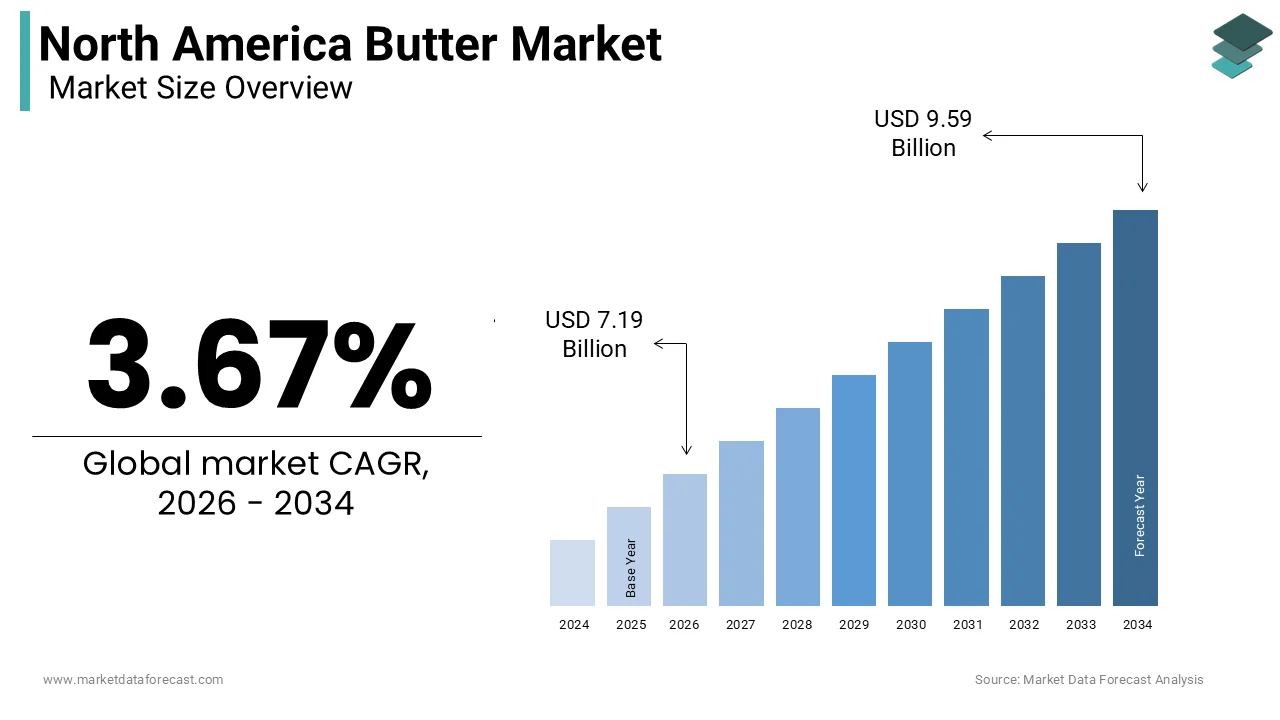
The size of the North American butter market was expected to be worth USD 6.94 billion in 2025 and is anticipated to be worth USD 9.59 billion by 2034, from USD 7.19 billion in 2026, growing at a CAGR of 3.67% during the forecast period.
Butter is a dairy product made by churning cream or milk. It can be used as a spread and as a regular ingredient in cooking. From a nutritional perspective, butter is a very good source of protein. It contains saturated fat made from the fresh cream and milk. Due to rising health consciousness among people, the demand for natural products has risen which in turn drives the butter market. A rise in the disposable incomes, especially in the developing countries, is another driver of this market. In developed countries, product innovation and the increased home baking further fuel the market. The availability of healthy alternatives to butter, such as margarine, along with government regulations in the production and distribution of butter restrain the market growth. Growing demand in developing countries can be considered as an opportunity for this market.
This research report on the North American butter market is segmented and sub-segmented into the following categories.
North American Butter Market By Processing
- Processed
- Non-Processed Butter
North America Butter Market By Type
- Cultured
- Uncultured
- Cream And Whipped
- Whey And Salted
North America Butter Market By Usage
- Spreadable
- Non-Spreadable
Non-spreadable butter segment dominates the market.
North America Butter Market By Distribution Channel
- Supermarkets
- Convenience Stores
- Grocery Stores
- Others
The supermarket segment dominates the global market.
North America Butter Market By Region
- U.S.A
- Canada
The Butter market was dominated by North America. The United States is a major market in this region. The increase in home-baking and the growing food industry further support the growth in this region.
KEY MARKET PLAYERS
Some of the major Butter Market leaders are Amul, Arla Foods UK Plc., Kraft Foods Inc., FrieslandCampina, and Dean Foods company.