- Product Description Description
- Table of Contents TOC
- List of Table & Figure LOT
- Get Free Sample PDF Sample PDF
Market Size, 2025
$938.10 MnMarket Estimate, 2026
$1,027.60 MnMarket Forecast, 2034
$2,130.12 MnCAGR, 2026–2034
9.54%North America Capecitabine Market Report Summary
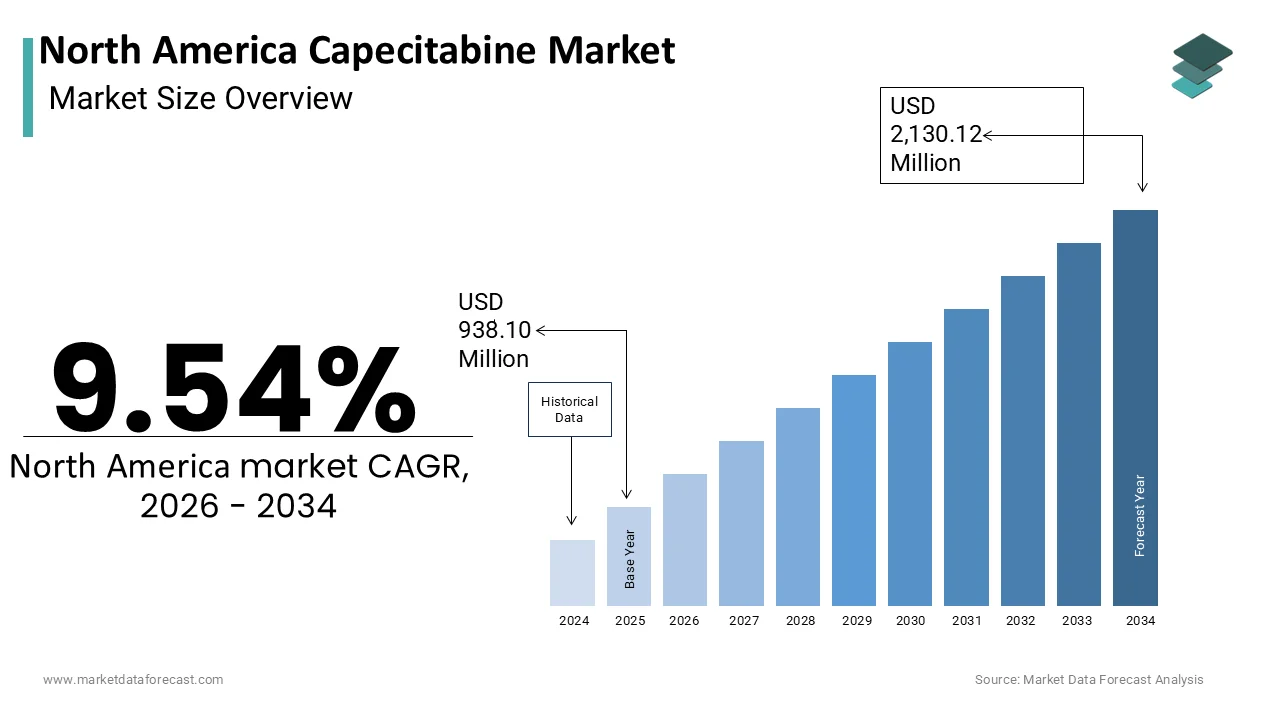
The North America Capecitabine Market was valued at USD 938.10 million in 2025 and is projected to reach USD 2,130.12 million by 2034, growing from USD 1,027.60 million in 2026 at a CAGR of 9.54% during the forecast period. Growth is driven by high colorectal and breast cancer incidence, preference for oral chemotherapy over IV infusions, and expanding home-based cancer care. Generic competition and combination-therapy research are further shaping the market landscape.
Key Market Trends
- Rising preference for oral chemotherapy enabling home-based cancer treatment
- Growing generic penetration driving significant price erosion post-patent expiration
- Expansion into combination regimens with immunotherapy and targeted agents
- Increasing R&D in enhanced formulations to reduce hand-foot syndrome and GI toxicity
- Rising insurance coverage favoring oral oncology regimens over infusion therapy
Segmental Insights
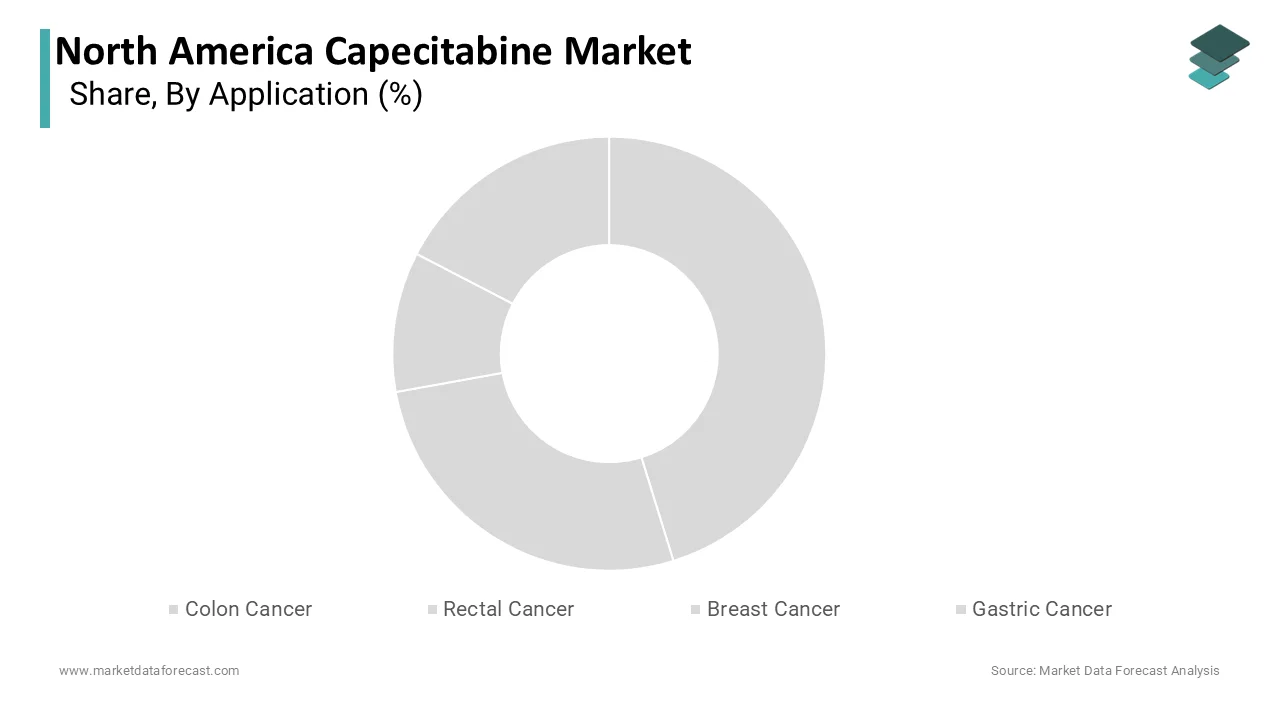
- Based on application, breast cancer dominated the market in 2025, driven by high incidence and capecitabine's established role in metastatic and triple-negative treatment.
- Based on drug formulation, tablets led the market in 2025, supported by ease of manufacturing, stability, and patient compliance.
- Gastric cancer is the fastest-growing application segment, projected at a CAGR of 8.5%, driven by growing use in first-line combination regimens.
Regional Insights
- United States led the market in 2025 by holding 85.3% of the regional market share, supported by advanced oncology infrastructure and high cancer incidence.
- Canada holds a significant share, driven by publicly funded healthcare and centralized drug procurement favoring capecitabine.
- Rest of North America is expected to see steady growth, supported by gradual expansion of oncology care access.
Competitive Landscape
The market is highly competitive, with intense price competition among generic manufacturers following patent expiration. Companies are focusing on supply chain resilience, formulation improvements, and value-added patient support services rather than price alone.
Prominent players in the market include Novartis AG, Sensus Healthcare Inc., RXi Pharmaceuticals Inc., Revitol Corporation, Avita Medical Inc., Sonoma Pharmaceuticals Inc., Perrigo Company plc, Bristol Myers Squibb Company, Bausch Health Companies Inc., and Pacific World Corporation.
North America Capecitabine Market Size
The North America Capecitabine Market is projected to grow from USD 938.10 million in 2025 to USD 1,027.60 million in 2026 and reach USD 2,130.12 million by 2034, registering a CAGR of 9.54% during the forecast period from 2026 to 2034.
Capecitabine is a prescription oral chemotherapy medication. Primarily indicated for metastatic colorectal cancer and advanced breast cancer, capecitabine offers a convenient alternative to intravenous infusions,s allowing patients to undergo treatment at home. This shift toward outpatient care significantly enhances quality of life while maintaining therapeutic efficacy. The American Cancer Society (ACS) tracked an estimated 153,020 new diagnoses of colorectal cancer across the United States, confirming a massive patient pool requiring systemic, first-line oral therapies. In addition, the American Cancer Society (ACS) estimated that over 310,000 new cases of invasive breast cancer would be diagnosed in the United States, positioning it as a leading driver for oral oncology chemotherapies. The drug’s approval by the Food and Drug Administration for multiple indications ensures broad clinical acceptance across hospitals and specialty clinics. The aging population in North America further amplifies incidence rates as age is a significant risk factor for both colorectal and breast malignancies. Healthcare providers increasingly prefer oral agents to reduce hospital congestion and lower administration costs. This strategic preference,ce coupled with robust clinical guidelines, supports the entrenched position of capecitabine in standard oncology practice throughout the region.
MARKET DRIVERS
High Prevalence of Colorectal and Breast Cancers
The escalating incidence of colorectal and breast cancers boosts the growth of the NA capecitabine market. The American Cancer Society (ACS) shows colorectal cancer ranks as the third most common cancer in the U.S., with lifetime development risks sitting at roughly 4.1% for men and 3.8% for women. This high prevalence creates a consistent and expanding patient base requiring effective systemic treatments. Similarly, breast cancer affects one in eight women during their lifetime, as per the Susan G Komen Foundation,n generating substantial volume for oral chemotherapy options. Capecitabine is often prescribed for metastatic stages or as adjuvant therapy following surgery,ry making it indispensable in comprehensive care plans. The aging demographic in North America exacerbates these statistics since the majority of diagnoses occur in individuals over 50 years old. Data from the Census Bureau indicates that the population aged 65 and older is projected to double by 2060, ensuringlong-termm demand stability. The reliability of the drug in improving survival rates and delaying progression drives physician confidence and prescription frequency. Consequently, the sheer volume of new diagnoses annually guarantees a steady stream of patients initiating capecitabine therapy.
Preference for Oral Chemotherapy and Home-Based Care
The growing patient and provider preference for oral chemotherapy formulations over intravenous infusions further accelerates the expansion of the NA capecitabine market. According to the Oncology Nursing Society,y oral agents offer greater convenience and autonomy, allowing patients to manage their treatment schedules without frequent hospital visits. This shift aligns with the broader healthcare trend toward value-based care, which emphasizes reducing hospital overhead and improving patient satisfaction. The Journal of Oncology Practice reveals that oral chemotherapy can reduce direct medical costs by up to 30 percent by eliminating infusion center fees and nursing time. Patients report higher quality of life scores when treated at home, as they avoid the discomfort and logistical burdens associated with venous access and prolonged clinic stays. The flexibility of oral dosing enables better integration into daily routines,s which improves adherence and psychological well-being. Healthcare systems benefit from reduced congestion in infusion units, allowing resources to be allocated to more complex cases. Furthermore,, theCOVID-199 pandemic accelerated the acceptance of remote monitoring and home-based therapies, cementing the role of oral drugs like capecitabine in modern oncology. Insurance providers increasingly recognize the cost-effectiveness of oral regimens, leading to favorable coverage policies. This convergence of clinical convenience,e economic efficiency and patient preference solidifies capecitabine as a preferred therapeutic option.
MARKET RESTRAINTS
Severe Adverse Effects and Safety Concerns
The occurrence of significant adverse effects associated with capecitabine is a major restraint to the North American market. This limits its widespread use and patient adherence. According to the Food and Drug Administration label, bel common side effects include hand-foot syndrome, diarrhea, stomatitis,,andnauseas,e, a which can be severe enough to require dose interruptions or discontinuation. The New England Journal of Medicine (NEJM) demonstrates that severe Grade 3 or 4 toxicities can impact over 30% of patients on standard capecitabine regimens, demanding aggressive clinical side-effect mitigation. Hand-foot syndrome, characterized by pain, swelling, and redness on the palms and soles, affects a substantial portion of users, impacting their ability to perform daily activities. These safety concerns often lead physicians to hesitate in prescribing capecitabine to elderly or frail patients who may have reduced tolerance. The need for proactive symptom management increases the burden on healthcare providers and caregivers. Additionally, ly rare but serious complications such as cardiotoxicity and severe dehydration pose significant risks requiring immediate medical intervention. Patient anxiety regarding potential side effects can result in refusal of therapy or poor compliance,e undermining treatment efficacy. The requirement for regular blood tests and clinical assessments to monitor toxicity adds to the overall treatment complexity. These safety profiles will continue to constrain market expansion and limit patient eligibility. This will remain true until mitigation strategies become more effective.
Generic Competition and Price Erosion
The entry of generic versions of capecitabine has led to intense price competition and significant erosion of revenue for original manufacturers, which hinders the expansion of the NA capecitabine market. According to the Generic Pharmaceutical Association, the availability of multiple generic alternatives has reduced the average wholesale price of capecitabine by over 80 percent since patent expiration. This drastic price decline limits the profit margins for pharmaceutical companies,s reducing their incentive to invest in further research or marketing efforts for the molecule. A study shows that generic capture rates for oral oncology drugs often exceed 90 percent within two years of launch, dominating prescription volume. While lower prices benefit payers and patients,s they create financial instability for suppliers who must compete on thin margins. Small manufacturers may struggle to maintain consistent supply chains due to cost pressures, leading to occasional shortages. The commoditization of capecitabine shifts the competitive focus from brand loyalty to price and availability,y which can disrupt market dynamics. Healthcare providers may face administrative challenges in managing multiple suppliers with varying quality standards. Furthermore, ore the reduced profitability discourages innovation in formulation improvements or new indication explorations. This highly competitive landscape restricts growth potential for individual players and transforms the market into a volume-driven commodity sector rather than a value-driven therapeutic niche.
MARKET OPPORTUNITIES
Expansion into Combination Therapies and New Indications
The integration of capecitabine into novel combination regimens and the exploration of new therapeutic indications offer a significant opportunity for the growth of the NA capecitabine market. According to the National Cancer Institute, ongoing clinical trials are evaluating capecitabine in combination with immunotherapy agents such as checkpoint inhibitors for various solid tumors, including gastric and pancreatic cancers. Data from ClinicalTrials.gov lists over 100 active studies investigating capecitabine in diverse oncology settings,s suggesting robust scientific interest. Successful outcomes in these trials could expand the labeled indications beyond colorectal and breast cancer, er thereby widening the addressable patient population. The synergistic effect of capecitabine with targeted therapies enhances tumor response rates, offering hope for refractory cases. Pharmaceutical companies are leveraging existing safety data to accelerate approval processes for these new combinations. Additionally,y the use of capecitabine in neoadjuvant settings to shrink tumors before surgery is gaining traction, improving surgical outcomes. The flexibility of oral administration allows for seamless integration with other oral targeted agents,nts facilitating complex multi-drug protocols. As precision medicine advances, biomarker-driven selection of patients for capecitabine-based combos optimizes efficacy. This strategic diversification reduces dependency on traditional indications and opens new revenue streams. Regulatory support for accelerated approvals in unmet medical needs further facilitates market entry.
Development of Enhanced Formulations and Delivery Systems
Innovation in drug formulation and delivery systems provides a lucrative prospect for the NA capecitabine market. This helps to improve the bioavailability and tolerability of capecitabine. According to the Journal of Controlled Release, researchers are developingnanoparticle-basedd carriers and lipid formulations that enhance tumor targeting while minimizing systemic exposure. These advanced delivery methods aim to reduce the incidence of hand-foot syndrome and gastrointestinal toxicity, which are major barriers to adherence. Studies indicate that modified release formulations can maintain therapeutic drug levels for longer durations,s allowing for less frequent dosing. Improved patient compliance directly translates to better clinical outcomes and reduced healthcare costs associated with managing side effects. Pharmaceutical companies are investing in proprietary technologies to differentiate their products in the generic-dominated market. Enhanced formulations may qualify for extended exclusivity or regulatory incentives, providing a competitive edge. The focus onpatient-centricc design includes easier-to-swallow tablets and better-tasting coatings, which appeal to pediatric or geriatric populations. Collaborations between academic institutions and industry players accelerate the translation of these innovations into commercial products. The demand for safer and more effective cancer treatments is on the rise. As a result, enhanced capecitabine variants are poised to capture premium market segments.
MARKET CHALLENGES
Complex Regulatory Compliance and Quality Standards
Navigating the stringent regulatory requirements for manufacturing and distributing oncology drugs is a significant hurdle for participants within the NA capecitabine market. According to the Food and Drug Administrationn, good manufacturing practice standards for cytotoxic drugs require rigorous control over contamination, potency,cy and purity to ensure patient safety. Data from FDA inspection reports reveals that non-compliance issues such as data integrity failures or equipment calibration errors can lead to warning letters or import bans disrupting supply chains. The complexity of validating analytical methods for capecitabine and its metabolites demands sophisticated laboratory infrastructure and skilled personnel. Manufacturers must continuously update their processes to meet evolving regulatory guidelines, which increases operational costs. The global nature of supply chains means that raw material sourcing must also comply with international standards, ds adding layers of scrutiny. Any deviation in quality can result in product recalls, which damage brand reputation and incur substantial financial penalties. The regulatory burden is particularly heavy for generic manufacturers who must demonstrate bioequivalence while maintaining cost efficiency. Keeping pace with changing regulations across different North American jurisdictions requires dedicated compliance teams. Failure to adhere to these strict standards can halt production and limit market access.
Supply Chain Vulnerabilities and Raw Material Sourcing
Reliance on global supply chains for active pharmaceutical ingredients creates vulnerability to disruptions, which challenges the expansion of the NA capecitabine market. Consequently, these vulnerabilities can directly impact Capecitabine availability. According to the Department of Health and Human Services,s a significant portion of key starting materials for oncology drugs is sourced from Asia, making the supply chain susceptible to geopolitical tensions and logistical bottlenecks. Disruptions such as natural disasters,s trade restrictions, or factory closures can lead to immediate shortages, forcing hospitals to ration doses or switch to alternative therapies. The limited number of qualified suppliers for high-purity capecitabine API exacerbates the risk of single-point failures. Inventory management becomes challenging as manufacturers balance just-in-time production with the need for safety stock. Fluctuations in raw material prices due to currency exchange rates or demand spikes further complicate procurement. Healthcare providers face uncertainty in treatment planning when supply reliability is compromised. Building resilient supply chains requires significant investment in dual sourcing and regional manufacturing, which many companies hesitate to undertake due to cost constraints. This fragility remains a persistent threat to market stability.
REPORT COVERAGE
| REPORT METRIC | DETAILS |
| Market Size Available | 2025 to 2034 |
| Base Year | 2025 |
| Forecast Period | 2026 to 2034 |
| Segments Covered | By Application, Drug Formulation, and Region |
| Various Analyses Covered | Global, Regional and Country-Level Analysis, Segment-Level Analysis, Drivers, Restraints, Opportunities, Challenges; PESTLE Analysis; Porter’s Five Forces Analysis, Competitive Landscape, Analyst Overview of Investment Opportunities |
| Countries Covered | U.S, Canada Rest of North America |
| Market Leaders Profiled |
|
SEGMENTAL ANALYSIS
By Application Insights
The breast cancer segment dominated the NA capecitabine market and accounted for a substantial share in 2025. This dominance of the segment was driven by the high incidence rates of the disease and the established role of capecitabine in treating metastatic and triple-negative subtypes. The primary driver is the widespread adoption of capecitabine as a standard of care for patients who have progressed after anthracycline and taxane therapies. According to the American Cancer Society, approximately 310720 new cases of invasive breast cancer are expected to be diagnosed in women in the United States in 202,4 creating a substantial patient pool requiring systemic treatment. Capecitabine is particularly valued for its efficacy in triple-negative breast cancer, where options are limited, ed and oral administration offers convenience during palliative care. The aging female population in North America further amplifies demand as age is a significant risk factor for breast cancer development. Additionally, the shift toward outpatient management favors oral chemotherapies that allow patients to maintain their daily routines while undergoing treatment. Clinical trials have demonstrated that capecitabine improves overall survival and quality of life in heavily pretreated patients, making it a preferred choice for second- and third-line therapy. The robust infrastructure for breast cancer screening and diagnosis ensures early detection and timely initiation of appropriate therapies, including capecitabine. This combination of high prevalence, clinical endorsement, and patient preference sustains the dominance of this segment.
The gastric cancer segment is predicted to witness the highest CAGR of 8.5% during the forecast period owing to increasing recognition of its efficacy in combination regimens. A key growth driver is the integration of capecitabine into first-line treatment protocols for advanced gastric and gastroesophageal junction adenocarcinomas, often in combination with platinum agents. According to the Surveillance Epidemiology and End Results program, while gastric cancer incidence is lower thathat of n breast or colorectal cancer, the mortality rate remains high, necessitating effective systemic therapies. Recent clinical studies published in the Journal of Clinical Oncology have validated the non-inferiority of capecitabine compared to intravenous 5-fluorouracil in gastric cancer trials, leading to broader acceptance among oncologists. The rising prevalence of Helicobacter pylori infection and obesity in North America contributes to increasing gastric cancer cases, especially in younger demographics. Pharmaceutical companies are actively promotingcapecitabine-basedd combinations for gastric indications, expanding their label usage. The convenience of oral administration is particularly beneficial for gastric cancer patients who may suffer from dysphagia or nutritional challenges, making intravenous access difficult. As awareness of these benefits grows and more clinical data supports its use,se the adoption of capecitabine for gastric cancer is accelerating rapidly.
By Drug Formulation Insights
The tablets segment led the NA capecitabine market and captured a significant share in 2025. This leading position of the segment was attributed to its ease of manufacturing, stability, and patient compliance. A major driver of this segment is the established preference for tablet formulations in oral chemotherapy, as they are easier to swallow and dose accurately compared to other forms. According to the Food and Drug Administration, the majority of approved capecitabine products,s including the brand name Xeloda and its generics, are available in tablet form, ensuring widespread availability. Research indicates that over 90 percent of oral chemotherapy prescriptions in North America are fulfilled as tablets, ts reflecting standard prescribing practices. Tablets offer better shelf life and resistance to moisture,ure which is crucial for maintaining the integrity of the active pharmaceutical ingredient. Patients find tablets more convenient to handle and store at home, reducing the risk of accidental exposure to caregivers. The cost-effectiveness of tablet production allows manufacturers to offer competitive pricing, which is critical in a generic-dominated market. Healthcare providers are accustomed to dosing calculations based on tablet strengths, simplifying prescription writing and verification processes. The uniformity of tablet content ensures consistent drug delivery,y which is vital for achieving therapeutic outcomes in cancer treatment. These practical advantages solidify the tablet formulation as the preferred choice for both manufacturers and consumers in the region.
The capsules segment is estimated to register the fastest CAGR of 6.2% from 2026 to 2034 due to innovations in drug delivery and patient-specific needs. The main reason this segment is growing is the development of specialized capsule formulations that improve bioavailability and reduce gastrointestinal irritation associated with standard tablets. This is particularly beneficial for cancer patients who often experience nausea and vomiting, making tablet ingestion difficult. Pharmaceutical companies are investing in capsule technology to differentiate their generic offerings in a crowded market. The ability to combine multiple ingredients or protect sensitive molecules within a capsule shell opens new avenues for formulation optimization. Regulatory approvals for novel capsule variants are increasing as manufacturers seek to extend product life cycles. Although the volume is smaller than the table, tits nicheappeal and potential for premium pricing drive faster growth rates. As personalized medicine gains traction, customized capsule formulations may become more prevalent, catering to individual patient tolerances.
COUNTRY LEVEL ANALYSIS
The United States Capecitabine Market Analysis
The United States was the top performer in the NA capecitabine market and occupied an 85.3% share in 2025 because of its advanced healthcare infrastructure and high cancer incidence rates. The country boasts a robust network of oncology centers and specialized clinics that facilitate early diagnosis and treatment. According to the American Cancer Society t, the US has one of the highest rates of cancer survival globally, which drives sustained demand for effective maintenance therapies like capecitabine. The presence of major pharmaceutical manufacturers and generic drug producers ensures a competitive supply chain with diverse product options. In addition, the Centers for Medicare and Medicaid Services indicates that comprehensive insurance coverage for oral chemotherapy has improved significantly, reducing financial barriers for patients. The FDA’s expedited approval pathways for oncology drugs encourage rapid introduction of new formulations and indications. High healthcare expenditure allows for the adoption of premium supportive care products alongside chemotherapy. Research and development investments in the US lead to continuous clinical trials exploring new uses for capecitabine. The large patient population and favorable reimbursement policies create a lucrative environment for market players. Strategic partnerships between hospitals and pharmacy benefit managers streamline distribution and ensure consistent availability. These factors collectively maintain the US as the central hub for capecitabine consumption and innovation in North America.
Canada Capecitabine Market Analysis
Canada was positioned second in the NA capecitabine market due to a publicly funded healthcare system that prioritizes equitable access to essential medicines. The country has strict regulatory standards enforced by Health Canada, which ensure high quality and safety of pharmaceutical products. Also, the Canadian Cancer Society (CCS) projected an estimated 247,100 new cancer diagnoses across Canada, showing a growing domestic patient volume that sustains demand for systemic oncology therapies. Provincial drug plans cover a significant portion of oral chemotherapy costs, although out-of-pocket expenses can vary by region. Historical regulatory data managed via the CADTH Reimbursement Review (formerly known as pCODR) establishes capecitabine as a recommended funding option for multiple oncology indications, supporting uniform public access across Canadian provinces. The centralized procurement processes help negotiate favorable prices with manufacturers, benefiting the public health budget. Canadian researchers actively participate in international clinical trials, ls contributing to global knowledge on capecitabine efficacy. The aging population in Canada increases the prevalence of colorectal and breast cancers, sustaining long-term demand. However, budget constraints sometimes limit the adoption of newer combination therapies compared to the US. Despite these challenges,s the strong emphasis on evidence-based medicine ensures that capecitabine remains a cornerstone of cancer care. The market is stable with predictable growth driven by demographic trends and government health initiatives.
COMPETITIVE LANDSCAPE
The competitive landscape of the NA capecitabine market is characterized by intense price competition among multiple generic manufacturers following the patent expiration of the originator product. Market dynamics are driven primarily by cost containment pressures from payers and group purchasing organizations that prioritize the lowest-price suppliers. Differentiation is limited due to bioequivalence requirements, making supply reliability and service quality key competitive factors. Originator companies retain niche presence through brand loyalty and integrated support programs but face significant volume erosion. New entrants must overcome substantial regulatory and manufacturing barriers to achieve sustainable scale. Consolidation among generic producers has reduced the supplier count, increasing concentration risk. Price volatility occurs frequently due to raw material shortages or manufacturing issues at key facilities. Hospitals and clinics often maintain multiple vendors to mitigate supply disruption risks. Innovation focuses on formulation improvements or combination therapies rather than the base molecule. Overall, the market operates as a mature commodity sector where operational excellence determines long-term viability rather than therapeutic differentiation.
KEY MARKET PLAYERS
Some of the companies that are playing a dominating role in the North American Capecitabine Market include
- Novartis AG
- Sensus Healthcare, Inc.
- RXi Pharmaceuticals, Inc.
- Revitol Corporation
- Avita Medical, Inc.
- Sonoma Pharmaceuticals, Inc.
- Perrigo Company plc
- Bristol Myers Squibb Company
- Bausch Health Companies Inc. (formerly Valeant Pharmaceuticals International, Inc.)
- Pacific World Corporation
TOP LEADING PLAYERS IN THE MARKET
- Genentech USA Inc remains a pivotal figure in the North American capecitabine landscape as the original developer of the brand-name product Xeloda. The company continues to influence clinical practice through extensive educational initiatives and support programs for oncology professionals managing complex chemotherapy regimens. Recent actions include updating patient assistance resources to improve adherence and safety monitoring for oral chemotherapy users. Genentech leverages its deep oncology expertise to maintain relevance despite generic competition by focusing on comprehensive care solutions rather than just the molecule itself. Their commitment to post-marketing surveillance ensures ongoing safety data collection, which supports regulatory compliance and physician confidence. This sustained engagement helps preserve the therapeutic standard established by their original innovation.
- Teva Pharmaceutical Industries Ltd is a dominant force in the generic capecitabine segment,t providincost-effectiveve alternatives that expand patient access across North America. The company utilizes its vast manufacturing network to ensure consistent supply and quality for this essential oncology medication. Recent strategic efforts involve optimizing production efficiency to maintain competitive pricing while adhering to stringent FDA standards. Teva actively engages with pharmacy benefit managers to secure favorable formulary placements, ensuring broad insurance coverage for patients. Their robust distribution channels enable rapid fulfillment of prescriptions minimizingg treatment delays. By prioritizing reliability and affordability,y Teva strengthens its position as a trusted supplier in the commoditized oral chemotherapy market.
- Sandoz Inc plays a critical role in the North American capecitabine market by offering high-quality generic versions that support healthcare system sustainability. The company focuses on biosimilar and generic oncology portfolios to address unmet needs in affordable cancer care. Recent actions include expanding its oral solid dosage manufacturing capacity to meet fluctuating demand for chemotherapy agents. Sandoz collaborates with healthcare providers to streamline procurement processes and reduce administrative burdens associated with oral anticancer drugs. Their emphasis on regulatory excellence ensures compliance with evolving Good Manufacturing Practice requirements. Through strategic partnerships and supply chain resilience, Sandoz enhances medication availability and supports continuity of care for cancer patients throughout the region.
TOP STRATEGIES USED BY KEY MARKET PARTICIPANTS
Key players in the NA capecitabine market primarily focus on supply chain resilience and cost optimization to maintain competitiveness in a generic-dominated environment. Manufacturers invest heavily in vertical integration to secure active pharmaceutical ingredient sourcing and mitigate shortage risks. Strategic partnerships with specialty pharmacies enhance patient adherence through counseling and refill management services. Companies differentiate through value-added services such as nurse support lines and digital adherence tools rather than product features alone. Regulatory compliance remains paramount with continuous investment in quality systems to avoid disruptions. Pricing strategies are dynamically adjusted based on tender outcomes and competitor movements. Portfolio diversification into supportive care products creates cross-selling opportunities. These approaches collectively enable participants to navigate margin pressures while ensuring reliable patient access to essential cancer therapies.
MARKET SEGMENTATION
This research report on the North America Capecitabine Market has been segmented and sub-segmented into the following categories.
By Application
- Colon Cancer
- Rectal Cancer
- Breast Cancer
- Gastric Cancer
- Others
By Drug Formulation
- Tablets
- Capsules
By Country
- U.S
- Canada
- Rest of North America