- Product Description Description
- Table of Contents TOC
- List of Table & Figure LOT
- Get Free Sample PDF Sample PDF
Market Size, 2025
$4.93 BnMarket Estimate, 2026
$5.39 BnMarket Forecast, 2034
$10.98 BnCAGR, 2026–2034
9.3%Executive Summary: North America Clostridium Botulinum Market
- Market Scope: Comprehensive regional analysis of the North American Clostridium botulinum market covering product types, clinical and aesthetic applications, distribution channels, country-level insights, and strict BSL-3 biosafety regulatory frameworks.
- Market Valuation: Valued at USD 4.93 billion in 2025, estimated at USD 5.39 billion in 2026, and projected to reach USD 10.98 billion by 2034, registering a strong CAGR of 9.30% from 2026 to 2034.
- Primary Growth Drivers: Expanding therapeutic applications of botulinum toxin across medical specialties (migraines, muscle spasms, neurology); rising consumer demand for non-invasive cosmetic and anti-aging treatments.
Key Market Segment Metrics (2026–2034)
| Category | Leading Segment (2025 Position) | Fastest-Growing Segment / Country |
|---|---|---|
| By Product Type | Botulinum Toxin Type A (dominated via flagship brands like Botox and Dysport, capturing over 90% of injectable operations) | Botulinum Toxin Type B (anticipated to witness an 11.6% CAGR driven by niche therapeutic needs like sialorrhea and lower antibody risk) |
| By Application | Therapeutic Applications (held 58.2% market share in 2025, driven by neurological, muscular, and autonomic disorder treatments) | Aesthetics (projected to experience a 12.3% CAGR fueled by rising non-invasive cosmetic demands among millennials and Gen Z) |
| By Distribution Channel | Hospitals (dominated with 46.8% share in 2025 via institutional and centralized pharmacy procurement for inpatient/outpatient neurology) | Clinics (growing at a 13.1% CAGR driven by outpatient dermatology, neurology, and specialized medispa expansions) |
| By Country | United States (top performer holding 72.6% market share in 2025 backed by advanced healthcare systems and high R&D spending) | Canada (19.1% share, growing via public-private healthcare integration and a 15% annual rise in cosmetic procedures) |
Major Market Players & Market Structure
Market Structure: Highly competitive landscape featuring established global leaders with long-standing portfolios and emerging biotech innovators introducing advanced formulations, peptide-based complexes, and targeted delivery mechanisms.
Key Companies: Allergan (AbbVie), Ipsen, Revance Therapeutics, XOMA Ltd., AlphaVax Inc., Cangene Corporation, Morphotek Inc., DynPort Vaccine Company LLC, and Emergent BioSolutions Inc.
North America Clostridium Botulinum Market Size
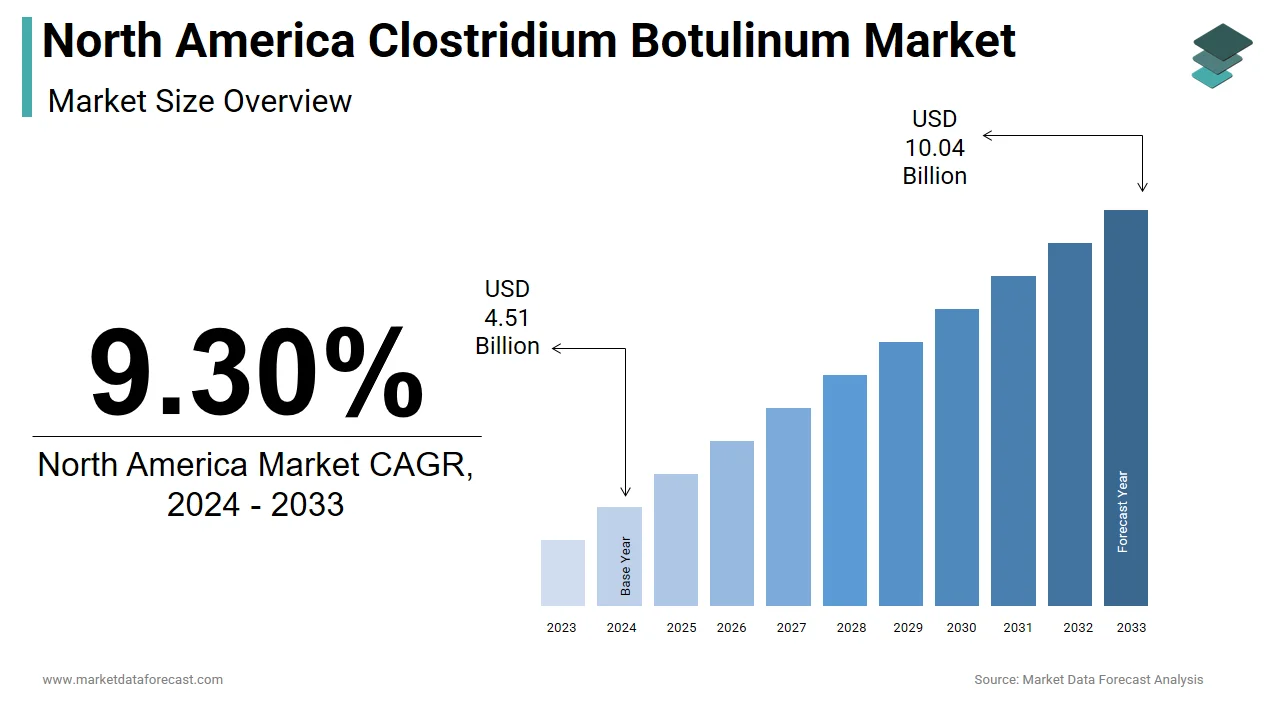
The North America clostridium botulinum market was valued at USD 4.93 billion in 2025. The market is estimated at USD 5.39 billion in 2026 and is projected to reach USD 10.98 billion by 2034, growing at a CAGR of 9.30% from 2026 to 2034.
Clostridium botulinum is a gram-positive, anaerobic bacterium responsible for producing botulinum toxin, one of the most potent neurotoxins. It is found naturally in soil and sea sediments, but under regulated conditions, it has found widespread usage in the fields of medicine and cosmetics. The market focuses mainly on the commercial production and purification of botulinum toxin for therapeutic and aesthetic purposes. The purified form of botulinum toxin, commonly marketed under brand names such as Botox and Dysport, is widely used to treat muscle spasms, chronic migraines, hyperhidrosis, and various neurological disorders, as well as for cosmetic wrinkle reduction.
MARKET DRIVERS
Increasing Therapeutic Applications of Botulinum Toxin across Medical Specialties
The growing medicinal applications of botulinum toxin beyond traditional usage are one of the main factors pushing the North America Clostridium Botulinum Market. Its use has expanded beyond treating strabismus and blepharospasm to treating persistent migraines, cervical dystonia, overactive bladder, stroke victims' discomfort, and even mental health issues, including depression. According to the American Migraine Foundation, more than 12% of the U.S. population suffers from migraines, and approximately 20% of chronic migraine sufferers receive botulinum toxin injections annually. Additionally, academic and clinical research institutions continue to explore novel indications. According to a 2023 study that was published in JAMA Neurology, botulinum toxin showed promising results in treating upper limb spasticity following a stroke, which confirms its use in rehabilitation therapy. The need for treatments based on botulinum toxin is growing due to rising patient awareness and physician adoption, which directly affects the expansion of the C. botulinum supply chain and related production capacities throughout North America.
Rising Demand in the Aesthetic Industry for Non-Invasive Cosmetic Procedures
Botulinum toxin-based non-invasive cosmetic treatments are becoming more popular is driving the North America Clostridium botulinum market. The growing focus on appearance in society has led to a trend for minimally invasive procedures that provide results right away and need little to no recovery time. According to the American Society of Plastic Surgeons (ASPS), over 4.7 million botulinum toxin injection procedures were performed in the U.S. in 2023, which is making it the most commonly performed non-surgical cosmetic procedure for the fifth consecutive year. This surge reflects shifting consumer behaviour toward proactive anti-aging interventions and the normalization of injectables among younger people. Moreover, the expansion of medispa services and the entry of dermatology-focused clinics into the aesthetics space have broadened access to these treatments. According to 2024 research by the Aesthetic Society, over 60% of board-certified dermatologists currently provide botulinum toxin injections, which raises the number of procedures performed. The market for C. botulinum-derived products is further strengthened by the growing demand for botulinum toxin and the emergence of innovative formulations and delivery techniques, such as topical and needle-free alternatives.
MARKET RESTRAINTS
Stringent Regulatory Requirements and Biosafety Concerns
The development of strict regulatory restrictions governing the production, processing, and distribution of botulinum toxin is a major restraint on the North American Clostridium Botulinum Market. Regulatory organizations like the U.S. Food and Drug Administration (FDA) and Health Canada maintain strict compliance criteria to ensure safety and stop accidental exposure or illegal usage due to their great strength and potential for misuse. According to the CDC’s 2023 Biotoxin Handling Guidelines, all facilities involved in the cultivation or processing of C. botulinum must operate under biosafety level 3 (BSL-3) conditions, which include specialized containment equipment, trained personnel, and strict inventory tracking systems. These measures significantly increase operational costs and limit the number of manufacturers capable of entering the market. Furthermore, regulatory scrutiny extends to clinical applications. For instance, off-label usage of botulinum toxin remains a point of contention among medical boards and insurance providers.
Limited Manufacturing Capacity and High Production Complexity
The lack of specialized manufacturing facilities equipped to handle the complex and hazardous nature of botulinum toxin production is another significant factor restraining the North America Clostridium Botulinum Market growth. Botulinum toxin requires carefully regulated conditions and advanced bioprocessing technology for fermentation, purification, and formulation. According to the Biotechnology Innovation Organization (BIO) in its 2023 industry outlook, only a handful of contract development and manufacturing organizations (CDMOs) in North America are certified to produce botulinum toxin at commercial scale, which results in capacity constraints. This scarcity leads to longer lead times, increased production costs, and supply chain vulnerabilities. Additionally, the multi-step purification process involves precision filtration, chromatography, and stability testing to ensure potency and safety. As per the Journal of Pharmaceutical Sciences in 2024, each batch of botulinum toxin requires up to 18 months of processing and quality assurance before reaching the market, which significantly delays the availability of the medicine.
MARKET OPPORTUNITIES
Expansion into New Therapeutic Indications through Clinical Research
The ongoing clinical research into new therapeutic indications is significantly to create huge opportunities for the North America Clostridium Botulinum Market. Scientists and pharmaceutical companies are increasingly investigating the efficacy of botulinum toxin in treating a wide range of conditions, including chronic pain syndromes, psychiatric disorders, gastrointestinal motility issues, and even certain types of cancer-related pain. According to a 2024 publication in Nature Reviews Neurology, multiple Phase II and III trials are underway to evaluate the use of botulinum toxin in managing refractory neuropathic pain and temporomandibular joint disorders. Furthermore, early study indicates that when injected into the muscles of the face, it may lessen the symptoms of depression; this is an area being investigated by top research institutes like Stanford University School of Medicine. The National Institutes of Health (NIH) has also funded several initiatives aimed at expanding the medical applications of botulinum toxin. Regulatory approvals for new indications are anticipated to follow as these studies move forward and provide favorable results, creating new income streams for manufacturers.
Technological Advancements in Precision Delivery and Alternative Formulations
Technological advancements in drug delivery systems and alternative formulations represent another significant growth opportunity for the North America Clostridium Botulinum Market. Innovations such as microencapsulation, transdermal patches, and sustained-release mechanisms aim to improve patient compliance, reduce injection frequency, and enhance the overall therapeutic profile of botulinum toxin. Recombinant botulinum toxins, which are modified copies of the native neurotoxin-associated proteins, are also becoming more popular because to their lower immunogenicity and better safety profiles. Companies like Revance Therapeutics and Allergan have invested heavily in these next-generation toxins, which implies a shift toward more precise and tailored therapeutic applications.
MARKET CHALLENGES
Risk of Immune Resistance and Neutralizing Antibodies
The development of immunological resistance and neutralizing antibodies in patients after repeated treatments with botulinum toxin is one of the main challenges facing the North American Clostridium Botulinum Market. Over time, some individuals develop an immune response that diminishes the effectiveness of the toxin, which demands higher doses or alternative therapies, which can compromise treatment outcomes. According to a 2023 review published in Toxicon, X, approximately 3–5% of patients receiving chronic botulinum toxin injections develop neutralizing antibodies, which makes further treatments ineffective. This issue is particularly prevalent in patients with neurological disorders requiring long-term therapy, such as cerebral palsy and spasticity. Factors contributing to immunogenicity include the protein load in different formulations, dosing frequency, and individual patient variability. The presence of accessory proteins in some botulinum toxin types has been linked to increased immune recognition. Consequently, scientists are investigating recombinant and purified forms of the toxin, as well as altered ones with less antigenicity. Immunological resistance continues to be a hindrance to reliable treatment effectiveness and market growth until a definitive solution is found.
Ethical and Legal Concerns Surrounding Off-Label Use
Ethical and legal concerns surrounding the off-label use of botulinum toxin pose a notable challenge to the North America Clostridium Botulinum Market. Concerns regarding patient safety, liability, and consistency of treatment are raised by the fact that many doctors use clinical judgment to administer botulinum toxin for unapproved reasons, yet these practices frequently lack official regulatory support. According to the American Medical Association (AMA) while off-label prescribing is legally permissible, it places the responsibility on physicians to ensure evidence-based decision-making and informed consent. However, this has led to inconsistencies in treatment approaches and variability in patient outcomes, particularly in emerging areas like psychiatric and gastrointestinal applications. Lawsuits have also been filed against manufacturers and practitioners when patients had negative side effects after receiving off-label injections.
REPORT COVERAGE
| REPORT METRIC | DETAILS |
| Market Size Available | 2025 to 2034 |
| Base Year | 2025 |
| Forecast Period | 2026 to 2034 |
| Segments Covered | By Product Type, Application, Distribution Channel, and Region. |
| Various Analyses Covered | Global, Regional and Country-Level Analysis, Segment-Level Analysis, Drivers, Restraints, Opportunities, Challenges; PESTLE Analysis; Porter’s Five Forces Analysis, Competitive Landscape, Analyst Overview of Investment Opportunities |
| Countries Covered | |
| Market Leaders Profiled | XOMA Ltd., AlphaVax, Inc., Cangene Corporation, Morphotek, Inc., DynPort Vaccine Company LLC, Emergent BioSolutions, Inc., Molecular Targeting Technologies, Inc., and many others. |
SEGMENTAL ANALYSIS
By Product Type Insights
The botulinum Toxin Type A segment dominated the North America Clostridium Botulinum Market in 2025 with its widespread adoption across both therapeutic and aesthetic applications. One of the key drivers is its extensive regulatory approval for a variety of medical conditions. Type A formulations such as onabotulinumtoxinA (Botox) and abobotulinumtoxinA (Dysport) are approved for treating chronic migraines, cervical dystonia, blepharospasm, and hyperhidrosis, among others. Additionally, in the aesthetics sector, Type A remains the gold standard for wrinkle reduction due to its rapid onset and well-established safety profile. According to the American Society of Plastic Surgeons (ASPS), Type A was utilized in over 90% of injectable operations carried out in 2023, which shows strong consumer trust and physician confidence.

The botulinum Toxin Type B segment is anticipated to witness a CAGR of 11.6% from 2026 to 2034 due to the increasing use in niche therapeutic applications where type A may be less effective or contraindicated. According to the Parkinson’s Foundation, approximately 70–80% of Parkinson’s patients experience sialorrhea, resulting in Type B, an essential treatment option in this population. Additionally, its lower risk of antibody development compared to Type A makes it suitable for long-term therapy in certain patient groups. Moreover, ongoing research into novel indications such as neuropathic pain and autonomic dysfunction is expanding its clinical utility. Increased interest in Type B for treating refractory cases of dystonia and gastrointestinal motility problems was observed in a 2025 review that was published in Neurotherapeutics.
By Application Insights
The therapeutic applications segment was the largest and held 58.2% of North America Clostridium Botulinum Market share in 2025, with the broad integration of botulinum toxin into medical treatments for neurological, muscular, and autonomic disorders. A major driver is the growing prevalence of chronic neurological conditions such as cervical dystonia, blepharospasm, and post-stroke spasticity. According to the American Academy of Neurology, neurologists treat almost 60% of instances of dystonia using botulinum toxin, showing the crucial role this treatment plays for managing the condition. Additionally, off-label usage in pain management and psychiatric applications is gaining traction. According to a 2023 study that was published in JAMA Psychiatry, botulinum toxin injections in the facial muscles showed encouraging benefits in lowering depressive symptoms.
The aesthetic application segment is likely to experience a CAGR of 12.3% in the coming years, owing to the rising consumer demand for non-invasive cosmetic procedures and the normalization of injectables across broader age demographics. According to the American Society of Plastic Surgeons (ASPS), over 4.7 million botulinum toxin procedures were performed in the U.S. in 2023, which represents a consistent rise over the previous ten years. Notably, younger consumers, especially millennials and Gen Z, are increasingly opting for "preventive Botox" to delay signs of aging. Additionally, the rise of social media-driven beauty standards has increased awareness and acceptance of injectables.
By Distribution Channel Insights
The hospitals segment dominated the North America Clostridium Botulinum Market with 46.8% of the total share in 2025. The growth of the segment can be attributed to be driven by the centralized procurement of botulinum toxin by hospital pharmacies for use in neurology, rehabilitation, and pain management departments. According to the Healthcare Distribution Alliance (HDA), over 60% of institutional botulinum toxin purchases occur through hospital supply chains, which ensures consistent availability for inpatient and outpatient treatments. Additionally, hospitals often serve as training centers for physicians who later integrate botulinum toxin into their private practice, which promotes reinforcing brand loyalty and repeat procurement.
The clinics segment is likely to grow with an expected CAGR of 13.1% from 2025 to 2033. This rapid growth is largely attributable to the proliferation of dermatology, neurology, and medispa clinics offering targeted botulinum toxin treatments in outpatient settings. These clinics benefit from lower overhead costs and greater flexibility in patient scheduling compared to hospitals. Additionally, direct-to-consumer marketing by pharmaceutical companies has encouraged clinic adoption of branded botulinum toxin products. Clinics are positioned to see substantial expansion as a result of growing customer demand for convenient, personalized medical care.
COUNTRY-LEVEL ANALYSIS
United States Clostridium Botulinum Market Insights
The United States was the largest contributor in the North America Clostridium Botulinum Market with 72.6% of the share in 2025. As the largest consumer of botulinum toxin products globally, the U.S. benefits from a mature healthcare system, high investment in biopharmaceutical innovation, and robust regulatory frameworks governing the safe and ethical use of the toxin. One of the primary drivers is the widespread integration of botulinum toxin into both therapeutic and aesthetic medicine. According to the American Academy of Neurology, over 3.5 million botulinum toxin procedures are conducted annually for neurological conditions such as chronic migraines and dystonia. In parallel, according to the American Society of Plastic Surgeons (ASPS), almost 5 million botulinum toxin injections were carried out in 2023, which makes them the most popular non-surgical cosmetic procedure. Furthermore, the presence of leading manufacturers such as Allergan (now AbbVie), Ipsen, and Revance Therapeutics ensures continuous product innovation and strong commercialization pipelines. As per the Biotechnology Innovation Organization (BIO), the U.S. accounts for over 60% of global R&D spending on botulinum toxin-based therapeutics, which further strengthens its market dominance.
Canada Clostridium Botulinum Market Insights
Canada was positioned second in the North American Clostridium botulinum market with 19.1% of share in 2025. While smaller in volume compared to the U.S., Canada demonstrates strong potential due to its publicly funded healthcare system, increasing private clinic adoption, and growing awareness of botulinum toxin’s therapeutic benefits. In addition, the aesthetics sector is gaining momentum, especially in urban centers such as Toronto, Vancouver, and Montreal. According to data from the Canadian Cosmetic Dermatology Association (CCDA), the majority of cosmetic injectable procedures were botulinum toxin-based, and the number of operations increased by 15% annually.
COMPETITIVE LANDSCAPE
The competition in the North America Clostridium Botulinum Market is characterized by a mix of established pharmaceutical giants and emerging biotech firms striving to expand their influence through innovation, regulatory success, and brand positioning. While legacy brands like Allergan and Ipsen dominate due to their long-standing reputation and broad product portfolios, newer entrants such as Revance are challenging the status quo with differentiated formulations and novel delivery mechanisms. The market is highly fragmented, with players competing not only on product efficacy but also on duration of effect, safety profile, and pricing strategies. Strategic acquisitions, collaborative research efforts, and targeted marketing campaigns are shaping the industry's evolution. Additionally, demand is being driven by rising off-label use and consumer interest in aesthetics, which is the reason businesses are investing in digital outreach, physician training, and education. The competitive environment is anticipated to become even more intense as new applications and regulatory environments develop, which will propel ongoing developments in formulation, application, and delivery technologies.
KEY MARKET PLAYERS
Some of the notable players operating in the North American clostridium botulinum infections market are
- XOMA Ltd.
- AlphaVax, Inc.
- Cangene Corporation
- Morphotek, Inc.
- DynPort Vaccine Company LLC
- Emergent BioSolutions, Inc.
- Molecular Targeting Technologies, Inc.
TOP LEADING PLAYERS IN THE MARKET
- Allergan, now part of AbbVie, is a global leader in the development and commercialization of botulinum toxin products. Its flagship product, Botox (onabotulinumtoxinA), has become synonymous with both therapeutic and aesthetic applications of Clostridium botulinum. The company has played a pivotal role in expanding clinical indications and driving global adoption through extensive research, regulatory approvals, and physician training programs.
- Ipsen is a key player known for Dysport (abobotulinumtoxinA), a widely used botulinum toxin Type A product. The company has consistently invested in clinical studies to validate new therapeutic uses and enhance product differentiation. Ipsen's position as a significant rival in the medical and cosmetic industries has been strengthened by its robust North American presence and strategic partnerships.
- Revance has emerged as an innovative force with its proprietary peptide-based formulation of botulinum toxin Type A, marketed as Daxxify. Revance's method, in contrast to conventional formulations, does not need protein complexing, which could reduce immunogenicity. The company’s focus on advanced delivery systems and long-lasting effects positions it as a disruptor in the evolving neuromodulator landscape.
TOP STRATEGIES USED BY KEY MARKET PARTICIPANTS
Leading players are investing heavily in clinical trials to secure additional FDA and Health Canada approvals for new therapeutic applications. Companies aim to broaden market access and increase prescription rates across diverse patient populations by demonstrating efficacy in treating conditions such as chronic pain, depression, and gastrointestinal disorders.
To strengthen their market reach, companies are forming alliances with healthcare providers, dermatology networks, and medispa chains. These collaborations facilitate better product integration into clinical settings and improve accessibility for both physicians and consumers through co-branded marketing and educational initiatives.
Innovation remains a core strategy, with firms developing next-generation botulinum toxin variants that offer extended duration, reduced immunogenicity, and improved safety profiles. These advancements not only differentiate products in a competitive landscape but also enhance patient compliance and physician preference.
RECENT MARKET DEVELOPMENTS
- In January 2024, Allergan (AbbVie) announced the launch of a new digital platform designed to support physicians in optimizing botulinum toxin treatment protocols and further develop patient engagement and streamlining injection scheduling.
- In March 2024, Ipsen Pharma entered into a collaboration with a leading U.S. neurology institute to conduct expanded clinical trials on the use of abobotulinumtoxinA in managing refractory neuropathic pain.
- In June 2024, Revance Therapeutics secured exclusive distribution rights for its Daxxify product in select Canadian province this action is an essential part of the company's approach to expand outside of the US.
- In September 2024, a joint initiative between Merz Aesthetics and a major pharmacy benefit manager was launched to improve insurance coverage for botulinum toxin prescriptions particularly for medically indicated treatments.
- In November 2024, a biotech startup specializing in recombinant botulinum toxins received a major investment from a global health tech venture fund with the goal of accelerating the development of synthetic alternatives with reduced immunogenic potential.
MARKET SEGMENTATION
This research report on the North America Clostridium botulinum market has been segmented and sub-segmented into the following categories.
By Product Type
- Botulinum Toxin Type A
- Botulinum Toxin Type B
By Application
- Aesthetics
- Therapeutics
By Distribution Channel
- Hospitals
- Clinics
- Retail pharmacies
By Country
- United States
- Canada
- Mexico
- Rest of North America