- Product Description Description
- Table of Contents TOC
- List of Table & Figure LOT
- Get Free Sample PDF Sample PDF
Market Size, 2025
$0.53 BnMarket Estimate, 2026
$0.55 BnMarket Forecast, 2034
$0.70 BnCAGR, 2026–2034
2.97%Executive Summary: North America Electrolyte Drinks Market
- Market Scope: North American electrolyte drinks market analysis covering drink formulation types, application sectors, retail distribution channels, national leadership shares, and hydration science metrics.
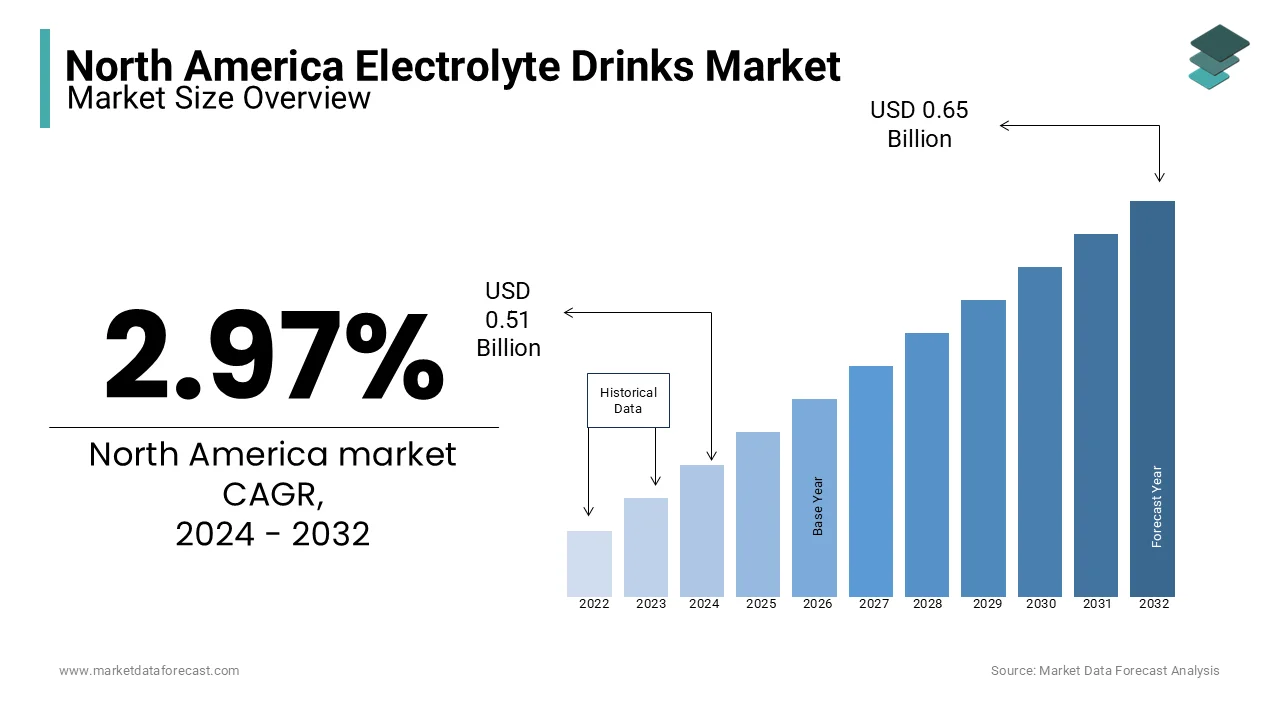
- Market Valuation: Valued at USD 0.53 billion (2025), estimated at USD 0.55 billion (2026), and projected to attain USD 0.70 billion by 2034, growing at a steady CAGR of 2.97% (2026–2034).
- Primary Growth Drivers: Growing awareness of hydration science, athletic performance optimization, prevention of heat-related illnesses, and the expanding application of electrolyte solutions in clinical wellness. Key nutritional and clinical parameters include mild dehydration defined as a 1–2% loss of body weight in fluids, recommended daily added-sugar limits of 25 grams for women and 36 grams for men (driving low-sugar product demand), and oral rehydration therapy proving 90–95% effective for mild-to-moderate dehydration caused by gastroenteritis.
Key Market Segment Metrics (2026–2034)
| Category | Leading Segment (2025 Position) | Fastest-Growing Segment |
|---|---|---|
| By Drink Type | Isotonic drinks (dominated with 63.6% of total market value in 2025) | Hypotonic drinks (projected to grow fastest at a 10.8% CAGR from 2026 to 2034) |
| By Application | Sports and athletic performance (accounted for 59.5% of the market in 2025) | Medical and clinical centers (forecast to expand at a 12.3% CAGR, supported by oral rehydration therapy efficacy) |
| By Distribution Channel | Supermarkets / hypermarkets (captured 54.7% of total sales in 2025) | Online stores and digital retail channels (projected to grow at a 13.6% CAGR) |
| By Country / Region | United States (dominated North America with 86.8% of regional market value in 2025) | North American regional markets emphasizing functional health and lifestyle hydration |
Major Market Players & Market Structure
Market Structure: Highly competitive North American electrolyte drinks landscape featuring prominent global beverage brands, specialized sports nutrition portfolios, and clinical rehydration manufacturers competing intensely on low-sugar formulations, scientific clinical validation, functional health benefits, e-commerce penetration, and lifestyle-focused product marketing.
Key Companies: Pocari Sweat, Gatorade, Danone, Wahaha Jihuo, Powerade, Powerade Zero, PediaLyte, Nongfuspring Jian Jiao, Nuun, and PURE Sports Nutrition.
North America Electrolyte Drinks Market Size
The electrolyte drinks market size in North America was valued at USD 0.53 billion in 2025. The North American market is predicted to be valued at USD 0.55 billion in 2026 and USD 0.70 billion by 2034, growing at a CAGR of 2.97% from 2026 to 2034.
Electrolyte drinks refer to the functional beverages designed to restore essential minerals, such as sodium, potassium, magnesium, and chloride, lost through sweat, illness, or dehydration. These products range from traditional sports drinks to low-sugar hydration solutions, effervescent tablets, and oral rehydration therapies, catering to athletes, active individuals, and health-conscious consumers. The National Institutes of Health (NIH) emphasizes that even mild dehydration, defined as a 1–2% loss of body weight in fluids.
MARKET DRIVERS
Expanding consumer focus on hydration science and athletic performance optimization is a pivotal driver of demand in the North American electrolyte drinks market. This behavior is reinforced by growing awareness of the physiological role of electrolytes in muscle function, nerve signaling, and fluid balance. Brands such as Gatorade and Pedialyte have capitalized on this trend by launching sport-specific formulations backed by clinical research. Additionally, wearable fitness trackers like Fitbit and Garmin now include hydration reminders based on real-time sweat loss estimates, further normalizing electrolyte drink consumption among non-elite athletes and daily exercisers.
The rising incidence of heat-related illnesses and extreme weather exposure is significantly increasing demand for electrolyte replacement solutions. In addition, employers in high-risk sectors are adopting hydration protocols. Additionally, public health agencies in states like Arizona and Texas have distributed oral rehydration solutions during heat emergencies, institutionalizing electrolyte drinks as essential public health tools.
MARKET RESTRAINTS
Growing regulatory scrutiny over sugar content and artificial additives presents a major restraint on conventional electrolyte drink formulations. The American Heart Association recommends no more than 25 grams of added sugar per day for women and 36 grams for men, meaning a single serving of many electrolyte drinks exceeds daily limits. These regulatory and consumer pressures force brands to reformulate products, often compromising taste and shelf stability, while increasing production complexity and cost.
Intense competition from alternative hydration solutions and functional beverages limits market expansion for traditional electrolyte drinks. Additionally, the rise of intravenous and injectable hydration clinics offers rapid repletion without oral consumption. Even tap water with added electrolyte tablets, such as those from Nuun and Liquid I.V., competes directly with ready-to-drink formats. This fragmentation forces traditional players to differentiate through clinical validation, flavor innovation, and targeted marketing, diluting brand loyalty and compressing margins.
MARKET OPPORTUNITIES
Innovation in low-sugar, clinically validated hydration products presents a significant growth opportunity. Companies have gained FDA recognition as medical foods for dehydration management, enabling sales in pharmacies and insurance reimbursement in select cases. Brands are leveraging this shift by incorporating prebiotics, B-vitamins, and plant-based electrolytes, transforming the category from performance enhancement to clinical wellness, thereby expanding into healthcare and preventive medicine domains.
Expansion into non-traditional consumer segments and lifestyle applications is unlocking new market potential. In response, companies have introduced bedtime-focused electrolyte blends designed to support muscle relaxation and hydration during sleep cycles. Additionally, the rise of alcohol-mitigation products has created a niche market. Brands have partnered with nightlife venues and ride-share services to distribute electrolyte drinks post-consumption. This diversification beyond sports and illness into sleep, recovery, and social wellness enables premium pricing and brand loyalty in lifestyle-driven markets.
MARKET CHALLENGES
Supply chain vulnerability and dependence on imported raw materials pose a persistent challenge for manufacturers. Sodium citrate, potassium gluconate, and magnesium lactate, key electrolyte compounds, are primarily sourced from specialty chemical suppliers in China, India, and Germany. Additionally, climate-related disruptions to salt mining in Mexico and lithium extraction in South America, used in some functional blends, have increased input costs. These dependencies complicate inventory planning and threaten product consistency, particularly for small and mid-sized brands without vertical integration.
Consumer skepticism toward marketing claims and the lack of standardized efficacy validation undermine trust in product performance. The absence of uniform clinical testing protocols allows brands to make unsubstantiated claims, leading to regulatory warnings. This credibility gap forces reputable manufacturers to invest heavily in third-party studies and transparent labeling, increasing R&D costs and slowing time-to-market for innovations.
REPORT COVERAGE
| REPORT METRIC | DETAILS |
| Market Size Available | 2025 to 2034 |
| Base Year | 2025 |
| Forecast Period | 2026 to 2034 |
| CAGR | 2.97% |
| Segments Covered | By Type, Application, Distribution Channel, And Region |
| Various Analyses Covered | Global, Regional & Country Level Analysis; Segment-Level Analysis; DROC, PESTLE Analysis; Porter’s Five Forces Analysis; Competitive Landscape; Analyst Overview of Investment Opportunities |
| Regions Covered | The U.S., Canada, Mexico, and the Rest of North America |
|
Market Leaders Profiled | Pocari Sweat, Gatorade, Danone, Wahaha Jihuo, Powerade, Powerade Zero, PediaLyte, Nongfuspring Jian Jiao, Nuun, and PURE Sports Nutrition |
SEGMENTAL ANALYSIS
By Type Insights
The Isotonic segment dominated the North American electrolyte drinks market by capturing 63.6% of the total value in 2025. These beverages, which match the body’s natural fluid concentration (osmolality of 270–330 mOsm/kg), are widely recognized for their rapid hydration and balanced electrolyte-carbohydrate profile, making them ideal for active individuals and general hydration needs. Its widespread adoption in athletic and fitness communities as the gold standard for hydration is a primary factor behind isotonic dominance. Gatorade, Powerade, and newer entrants like BodyArmor have built their formulations around this principle, supported by decades of sports science. A different critical driver is the integration of isotonic drinks into institutional and emergency health protocols. As per the Centers for Disease Control and Prevention (CDC), oral rehydration solutions (ORS) used in dehydration management are isotonic in composition, and their efficacy is well-documented in clinical settings. Additionally, emergency response units in states like Arizona and Florida distribute isotonic hydration packs during heat emergencies. This dual positioning, as both a performance enhancer and a medical intervention, solidifies isotonic drinks as the most versatile and trusted category in the market.
The Hypotonic segment is the fastest-growing segment and is projected to expand at a CAGR of 10.8% from 2026 to 2034. Hypotonic drinks, with osmolality below 270 mOsm/kg, are engineered for rapid fluid absorption, making them ideal for quick rehydration with minimal carbohydrate load. Their growth is fueled by rising demand for low-calorie, fast-acting hydration solutions among health-conscious and non-athletic consumers. A key driver is the increasing preference for rapid fluid replenishment without excess sugar or energy intake. Also, millions of American adults are managing overweight or diabetes, prompting a shift toward low-sugar hydration. Hypotonic drinks typically contain less than 3% carbohydrates, allowing faster gastric emptying and quicker cellular hydration. Brands like Nuun, Liquid I.V., and DripDrop ORS have capitalized on this with effervescent and powdered formulations that dissolve into hypotonic solutions. Another critical factor is the expansion of hypotonic products into clinical and preventive healthcare settings. Additionally, telehealth platforms like Teladoc and One Medical now prescribe hypotonic hydration packs as part of virtual care plans for gastroenteritis and heat exposure, accelerating adoption beyond traditional sports use.
By Application Insights
The Sports application segment led the market by accounting for 59.5% in 2025. This dominance is due to the entrenched use of electrolyte drinks among athletes, fitness enthusiasts, and organized sports programs, where rapid hydration and performance optimization are critical. The high participation rate in structured physical activity and competitive athletics is a primary driver. These individuals frequently rely on electrolyte drinks to replace sodium and potassium lost during training. Additionally, endurance events like marathons and triathlons feature branded hydration stations, reinforcing brand visibility and consumer loyalty. A different critical factor is the strategic sponsorship and branding by major electrolyte drink manufacturers in professional and amateur sports. Powerade has similar partnerships with USA Track & Field and youth soccer leagues. Additionally, wearable fitness devices like Garmin and Whoop now sync with hydration apps to recommend electrolyte intake based on sweat rate, further embedding these products into athletic routines. This ecosystem of education, access, and endorsement sustains the sports segment as the core application for electrolyte beverages.
The Medical Centers segment is the fastest-growing application and is projected to grow at a CAGR of 12.3% from 2026 to 2034. This surge is driven by the increasing use of oral rehydration therapy (ORT) in clinical settings for managing dehydration caused by illness, surgery, or medication side effects. The growing adoption of oral rehydration solutions (ORS) in hospitals and outpatient clinics as a first-line treatment for dehydration is a key driver. According to the CDC, ORT is 90–95% effective in managing mild to moderate dehydration from gastroenteritis, reducing the need for intravenous fluids. DripDrop ORS, recognized by the FDA as a medical food, is now used in numerous healthcare facilities across the U.S. An additional critical factor is the integration of electrolyte drinks into post-operative and chronic disease management protocols. The American Society of Anesthesiologists recommends pre-hydration with low-carbohydrate electrolyte solutions before surgery to improve outcomes. Additionally, patients undergoing chemotherapy or dialysis often experience electrolyte imbalances, prompting oncology and nephrology clinics to prescribe specialized hydration formulas. With rising healthcare costs, non-invasive hydration solutions are favored for reducing hospitalization duration and readmission rates, accelerating clinical adoption.
By Distribution Channel Insights
The supermarkets/Hypermarkets segment held the largest share of the distribution channel at 54.7% of total sales in 2025. These large-format retail outlets, such as Walmart, Kroger, and Costco, offer broad product availability, prominent shelf placement, and high consumer foot traffic, making them the primary point of purchase for both branded and private-label electrolyte drinks. A major factor driving supermarket dominance is their strategic placement in high-visibility beverage and wellness aisles, where electrolyte drinks are positioned alongside sports waters, functional beverages, and dietary supplements. Another critical driver is the integration of supermarkets into omnichannel retail ecosystems. Supermarkets leverage loyalty programs, such as Kroger Rewards and Safeway for U, to personalize promotions and collect consumer data. This seamless blend of physical and digital access ensures supermarkets maintain their stronghold despite the rise of alternative retail models.
The Online Stores segment is the fastest-growing distribution channel and is projected to expand at a CAGR of 13.6% from 2026 to 2034. This growth is fueled by the increasing consumer preference for convenience, subscription models, and direct access to niche and premium brands.
The expansion of direct-to-consumer (DTC) sales by specialized electrolyte brands is a key driver. Companies have built robust e-commerce platforms, offering subscription services that deliver products monthly with discounts. These brands leverage social media marketing, influencer collaborations, and educational content to build trust and drive conversions. An additional critical factor is the growing integration of online pharmacies and telehealth platforms with hydration product delivery. Additionally, subscription services like “Hydration Box” curate multi-brand electrolyte packs, appealing to consumers seeking variety and discovery. The convenience of home delivery, combined with personalized recommendations, positions online stores as the most dynamic and scalable channel in the market.
REGIONAL ANALYSIS
United States Electrolyte Drinks Market Insights
The United States held a dominant position in the North American electrolyte drinks market by capturing 86.8% of total regional value in 2025. As the largest consumer and producer of functional beverages in the region, the U.S. benefits from a highly developed sports culture, advanced healthcare infrastructure, and widespread consumer awareness of hydration science. Additionally, the FDA’s recognition of certain electrolyte drinks as medical foods has enabled their use in clinical settings. Major brands like Gatorade and DripDrop ORS are headquartered in the U.S., supported by extensive R&D and marketing investments. The country’s vast retail network and e-commerce penetration further solidify its position in both innovation and consumption.
Canada Electrolyte Drinks Market Insights
Canada is establishing itself as a significant player with a growing emphasis on health-focused hydration solutions. Canadian consumers exhibit a strong preference for low-sugar and natural formulations. Additionally, provinces like British Columbia and Ontario have integrated electrolyte solutions into public health campaigns during heatwaves. The Canadian Food Inspection Agency has strengthened labeling standards for “electrolyte content” and “hydration support,” enhancing consumer trust. Canadian brands like Cure Hydration have gained cross-border traction, reflecting the nation’s role as a testbed for clean-label innovation.
LEADING PLAYERS IN THE NORTH AMERICA ELECTROLYTE DRINKS MARKET
PepsiCo (Gatorade) is a dominant force in the North American electrolyte drinks market through its flagship brand Gatorade, which has long been synonymous with athletic hydration. The company leverages extensive sports partnerships, including sponsorships with the NFL, NCAA, and professional soccer leagues, to maintain deep integration within athletic ecosystems. The brand also introduced Gx, a personalized hydration platform that uses sweat testing and wearable data to recommend optimal electrolyte intake. Additionally, Gatorade strengthened its presence in medical applications by collaborating with sports medicine clinics to promote evidence-based hydration protocols, reinforcing its authority beyond retail and into clinical performance science.
DripDrop ORS has emerged as a key innovator by bridging the gap between medical-grade hydration and consumer accessibility. The company’s oral rehydration solution is FDA-recognized as a medical food, enabling its use in healthcare settings for dehydration management due to illness, heat, or surgery. The company also partnered with state health departments in Arizona and Texas to supply hydration packs during extreme heat events, aligning with public health initiatives. Through digital marketing and telehealth integrations, DripDrop has built a direct-to-consumer model that emphasizes medical credibility, rapid absorption, and ease of use, differentiating itself in a category dominated by sports-focused brands.
Liquid I.V. has redefined consumer engagement in the electrolyte space by championing the science of Cellular Transport Technology (CTT), a proprietary delivery system that enhances water and electrolyte absorption. The brand has gained traction through e-commerce, subscription models, and influencer-driven campaigns that emphasize wellness, recovery, and lifestyle integration. The company also intensified its sustainability efforts by introducing recyclable packaging and partnering with conservation nonprofits. Its presence on Amazon and Shopify has enabled rapid scalability, while retail partnerships with Target and Whole Foods have broadened mainstream access. By blending scientific claims with lifestyle branding, Liquid I.V. has cultivated a loyal consumer base that views hydration as a daily wellness ritual rather than a situational need.
TOP STRATEGIES USED BY KEY MARKET PARTICIPANTS
Key players in the North America electrolyte drinks market are deploying multifaceted strategies to strengthen their positioning in a competitive and evolving landscape. Leading companies are investing in scientific validation and clinical partnerships to establish credibility beyond sports performance. Expansion into medical, preventive, and lifestyle applications allows brands to diversify beyond traditional athletic use. Product innovation focuses on low-sugar, clean-label, and functional formulations that align with health trends. Direct-to-consumer e-commerce and subscription models enhance customer retention and data collection. Strategic retail partnerships with pharmacies and wellness chains improve accessibility and perceived legitimacy. Additionally, sustainability initiatives, including recyclable packaging and carbon-neutral operations, are becoming critical differentiators. Marketing leverages digital platforms, athlete endorsements, and educational content to build trust and drive consumer loyalty across diverse demographic segments.
KEY MARKET PLAYERS AND COMPETITION OVERVIEW
Major Players of the North America Electrolyte Drinks Market include Pocari Sweat, Gatorade, Danone, Wahaha Jihuo, Powerade, Powerade Zero, PediaLyte, Nongfuspring Jian Jiao, Nuun, and PURE Sports Nutrition.
The competitive landscape of the North American electrolyte drinks market is characterized by a dynamic interplay between legacy sports drink brands, clinically oriented startups, and wellness-focused disruptors. Established players like Gatorade dominate through scale, distribution, and decades of brand equity in athletic circles, while newer entrants such as DripDrop ORS and Liquid I.V. challenge them with medical validation, superior formulation science, and digital-first engagement. Competition is intensifying around product differentiation, particularly in sugar content, osmolality, and functional benefits. Retail and pharmacy placement, clinical endorsements, and e-commerce agility are becoming key battlegrounds. The market is shifting from a one-size-fits-all sports hydration model to a segmented ecosystem encompassing performance, recovery, illness management, and daily wellness, requiring brands to articulate clear value propositions and scientific backing to capture consumer trust and loyalty.
RECENT HAPPENINGS IN THE MARKET
- In January 2023, PepsiCo launched Gatorade Zero nationwide, a sugar-free isotonic drink formulated for athletes seeking hydration without added sugars, aligning with growing health consciousness and expanding Gatorade’s reach into metabolic wellness segments.
- In May 2023, DripDrop ORS secured placement in over 30,000 pharmacy locations across the U.S., including CVS and Walgreens, reinforcing its position as a medically trusted hydration solution and enhancing accessibility for clinical and home use.
- In August 2023, Liquid I.V. introduced its Sleep & Immunity line, integrating electrolytes with melatonin and vitamin C, broadening its application beyond hydration into holistic wellness and capturing new consumer use cases.
- In November 2023, Gatorade partnered with the Cleveland Clinic Sports Health team to launch the Gx Sweat Lab, offering personalized hydration assessments for athletes, strengthening its scientific credibility and consumer engagement.
- In March 2025, DripDrop ORS collaborated with the Arizona Department of Health Services to distribute 100,000 emergency hydration packets during a record-breaking heatwave, solidifying its role in public health and disaster response.
MARKET SEGMENTATION
This research report on the North American Electrolyte Drinks Market has been segmented and sub-segmented based on type, application, distribution channel, and region.
By Type
- Hypertonic
- Hypotonic
- Isotonic
By Application
- Sports
- Medical Centers
By Distribution Channel
- Supermarkets/Hypermarkets
- Pharmacies
- Online Stores
By Region
- The U.S.
- Canada
- Mexico
- Rest of North America